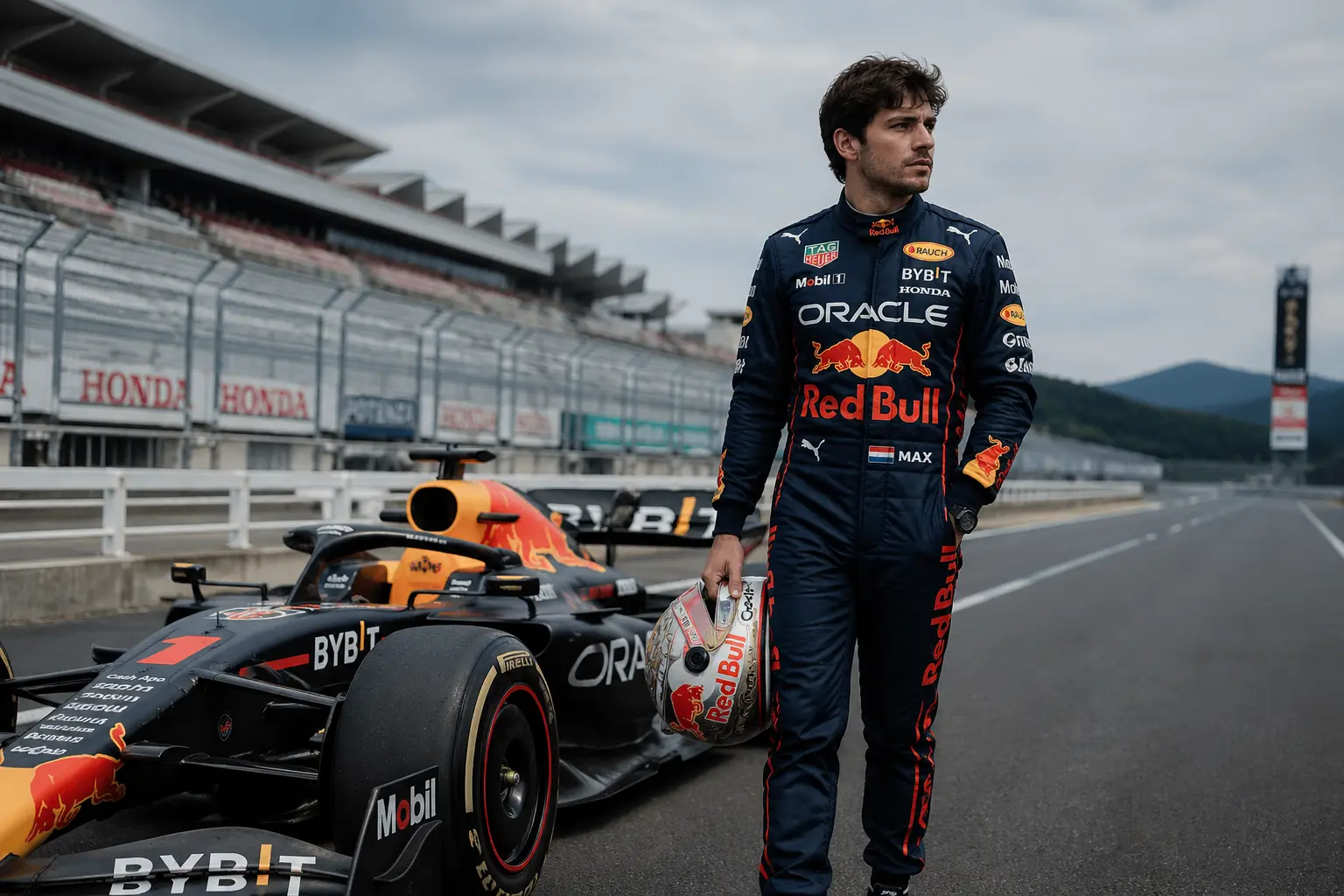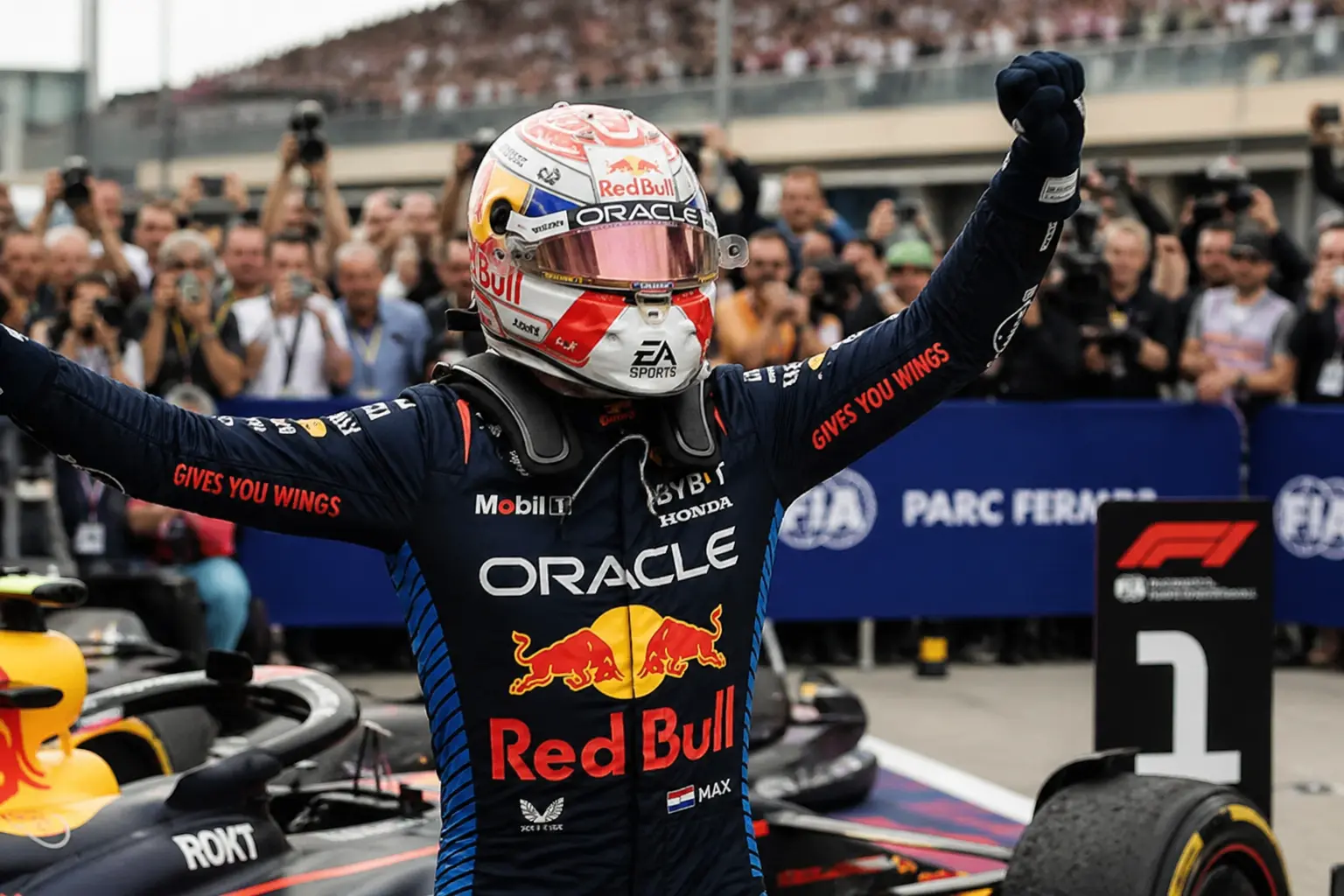

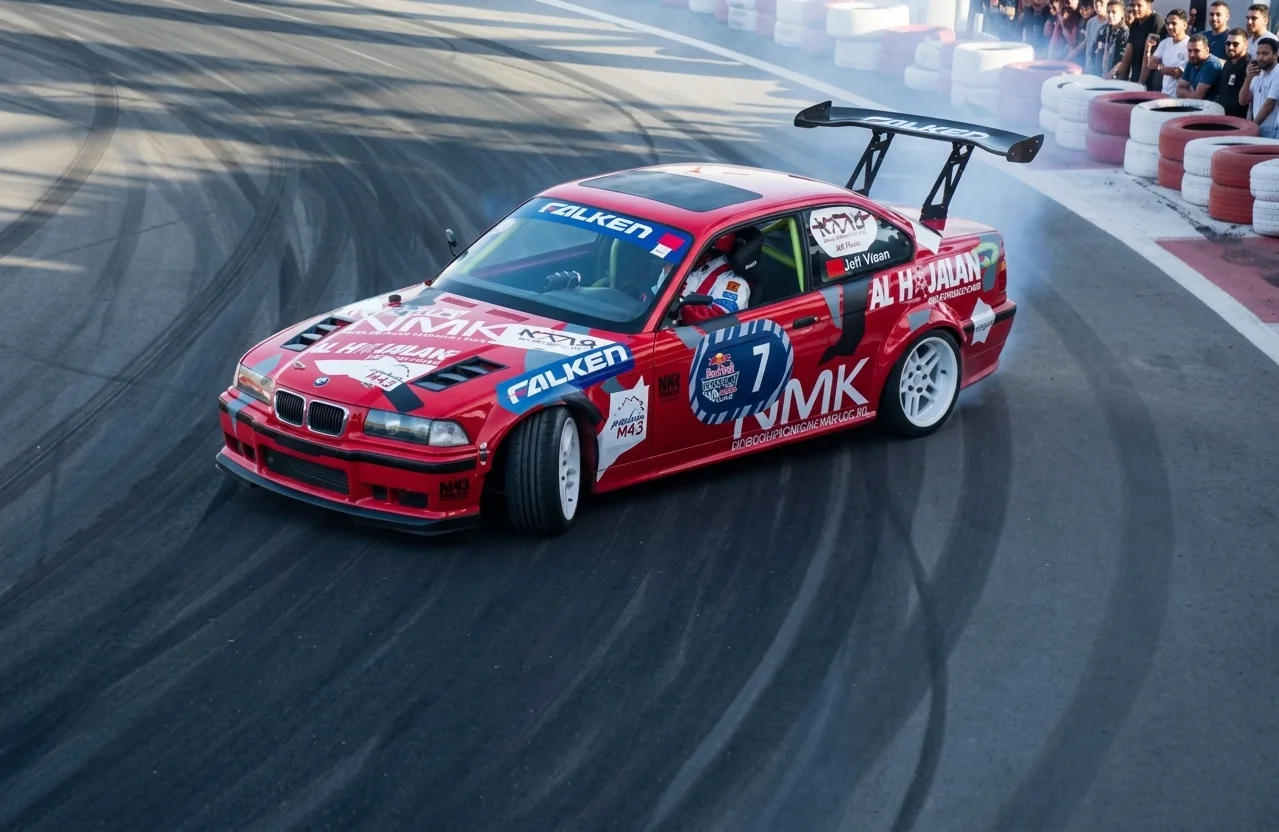
The roar of high-performance engines, the pungent scent of scorched rubber, and the blur of colors streaking past at 200 mph—car racing is more than just a hobby; it is a global phenomenon. Although it may look like drivers are simply “turning left” or driving in circles, motorsport is actually a high-speed chess match that competitors play with million-dollar machines. To understand how car racing works, one must look past the spectacle and into the intricate blend of human endurance, mechanical engineering, and pure physics.
Whether you are a casual viewer or an aspiring driver, this guide breaks down the complex world of motorsport from the grassroots level to the pinnacle of Formula 1.
What Is Car Racing?
At its simplest, auto racing is a competitive sport where drivers attempt to complete a set distance or time faster than their opponents. However, defining it solely by speed misses the point. It is a test of consistency, strategy, and the ability to manage a vehicle at the absolute limit of its physical capabilities. Is car racing a sport? This is a common question for beginners. The answer is a definitive yes.
Drivers endure extreme G-forces, lose significant body weight through perspiration during a single event, and must maintain heart rates similar to marathon runners—all while making split-second decisions that involve life-and-death consequences.
Various international and national bodies govern the sport, with the FIA (Fédération Internationale de l’Automobile) and NASCAR being the most prominent. These organizations create the “Rulebook” that ensures fair competition and, most importantly, driver safety through rigorous technical inspections.
How Car Racing Works (The Core Explanation)
Every race, regardless of the discipline, follows a fundamental structure. Most events take place on dedicated circuits (road courses) or ovals. The goal is to cross the finish line first after a predetermined number of laps, but getting there involves a massive support system.
The Race Format
Motorsport generally falls into two categories: sprint racing and endurance racing. Sprint races, like Formula 1, are short, high-intensity dashes lasting about 90 to 120 minutes. Endurance races, such as the 24 Hours of Le Mans, focus on reliability and stamina, often lasting anywhere from 4 to 24 hours.
The Role of the Team
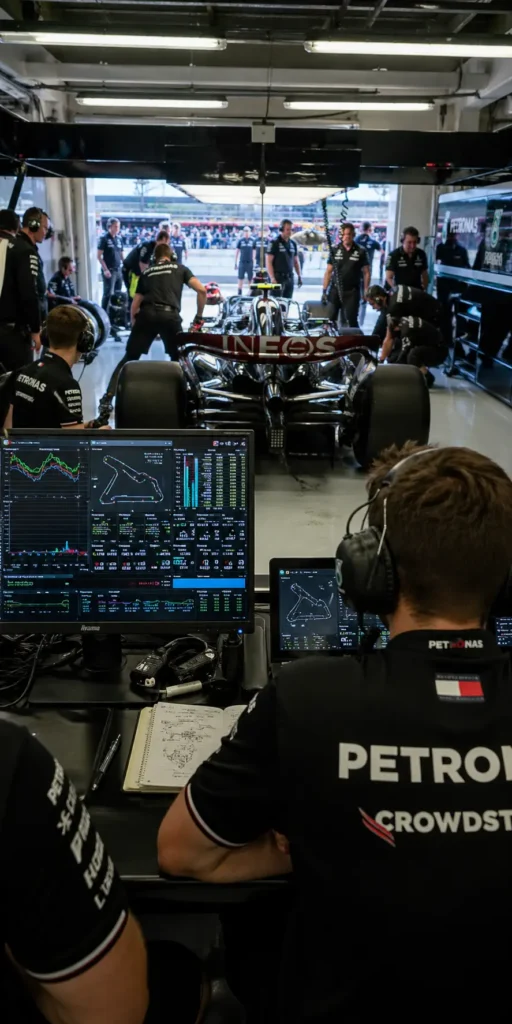
A driver is only as good as their car and the people behind it. Professional racing involves a crew of engineers, data analysts, and mechanics. While the driver is on track, engineers monitor thousands of data points via telemetry—checking engine health, tire wear, and fuel consumption in real-time to adjust strategies.
Car Setup and Tuning
No two tracks are the same. A “setup” is the specific configuration of the car’s suspension, wing angles, and gear ratios. For a high-speed track like Monza, teams minimize wings to reduce drag. For a twisty track like Monaco, they maximize “downforce” to help the car stick to the corners.
How Does a Racing Car Works? (Technical Breakdown)
If you have ever wondered how race cars work differently than the sedan in your driveway, the answer lies in specialization. Every component is designed for performance over comfort or longevity.
The Power Unit
Modern racing engines are marvels of efficiency. While many use internal combustion, elite series like F1 use hybrid systems that recover energy from heat and braking. These “Power Units” can produce over 1,000 horsepower from relatively small displacements, often just 1.6 liters.
Aerodynamics: The Invisible Force
Aerodynamics is arguably the most critical factor in modern racing. It involves two conflicting goals: downforce and drag. Downforce is the “invisible hand” that pushes the car into the pavement, allowing it to take corners at speeds that would flip a normal car. Drag is the air resistance that slows the car down on straights.
Tires and Grip Mechanics
In racing, tires are the only thing connecting the car to the ground. Unlike road tires, racing “slicks” have no tread. This provides a maximum “contact patch” with the asphalt. However, these tires only work within a specific temperature window. If they are too cold, they have no grip; if they are too hot, they melt and “blister.”
Braking Systems
Stopping a 1,600-pound car from 200 mph requires immense force. Elite racing cars use carbon-ceramic or carbon-carbon brakes. These materials can withstand temperatures exceeding 1,000°C without “fading,” often glowing bright orange during heavy braking zones.
Car Racing Physics Explained
To truly grasp how car racing works, physics must be respected. Drivers are essentially managing a constant battle between Newton’s laws of motion and the limits of friction.
Newton’s Laws in Racing
Newton’s First Law (Inertia) states that a car wants to keep moving in a straight line. To make it turn, a driver must use the steering wheel to create a force that overcomes this inertia. The Second Law ($F=ma$) explains why teams obsess over “lightweighting.” The less mass a car has, the less force (power) is required to accelerate it.
Traction and Friction
The “Circle of Friction” is a concept every pro driver masters. A tire only has a 100% “budget” of grip. If a driver uses 100% of that grip for braking, there is nothing left for steering. This is why you see drivers brake in a straight line and slowly “trail brake” into a corner.
Cornering Forces
When a car turns, it experiences centripetal force. The formula for this force is:
$$F_c = \frac{mv^2}{r}$$
Where $m$ is mass, $v$ is velocity, and $r$ is the radius of the turn. This explains why going twice as fast through a corner ($v^2$) requires four times as much grip from the tires.
How Car Racing Works for Beginners
If you are new to the sport, the “Race Weekend” structure can seem confusing. Most professional series follow a three-step progression designed to build tension and ensure the fastest cars start at the front.
- Practice: This is when teams “dial in” their car setups. Drivers learn the track conditions and engineers test different tire compounds to see how long they last.
- Qualifying: This is a high-pressure session where drivers try to set the fastest single lap possible. The fastest driver earns “pole position,” meaning they start the race at the very front.
- Race Day: The main event. Cars line up on the “grid” based on their qualifying times and race for the victory.
The Language of Flags
Flags are the primary way officials communicate with drivers.
- Green: The race has started or resumed.
- Yellow: Danger ahead; no overtaking allowed.
- Red: The race is stopped due to an accident or weather.
- Blue: A faster car is behind you; move over and let them pass.
- Checkered: The race is over.
Formula Car Racing Explained (F1, F2, F3, F4)
The “Formula” ladder is the path a driver takes to reach the top. Think of it like the minor leagues in baseball. These are “open-wheel” cars, meaning the wheels are outside the main body of the car.
- F4 (Entry Level): This is where young drivers (often as young as 15) move from go-karts to cars. It focuses on learning the basics of aerodynamics.
- F3 (Development): The competition gets fiercer. Cars are faster, and drivers begin racing on the same weekends as F1, putting them in front of big-team scouts.
- F2 (The Feeder): This is the final step. Cars are nearly as fast as F1 cars but use “spec” parts, meaning every car is identical. It is a pure test of driver talent.
- F1 (The Pinnacle): The highest level of motorsport. Only 20 drivers in the world compete here. Each team builds their own unique car, making it a war of engineering as much as driving.
NASCAR Racing Explained
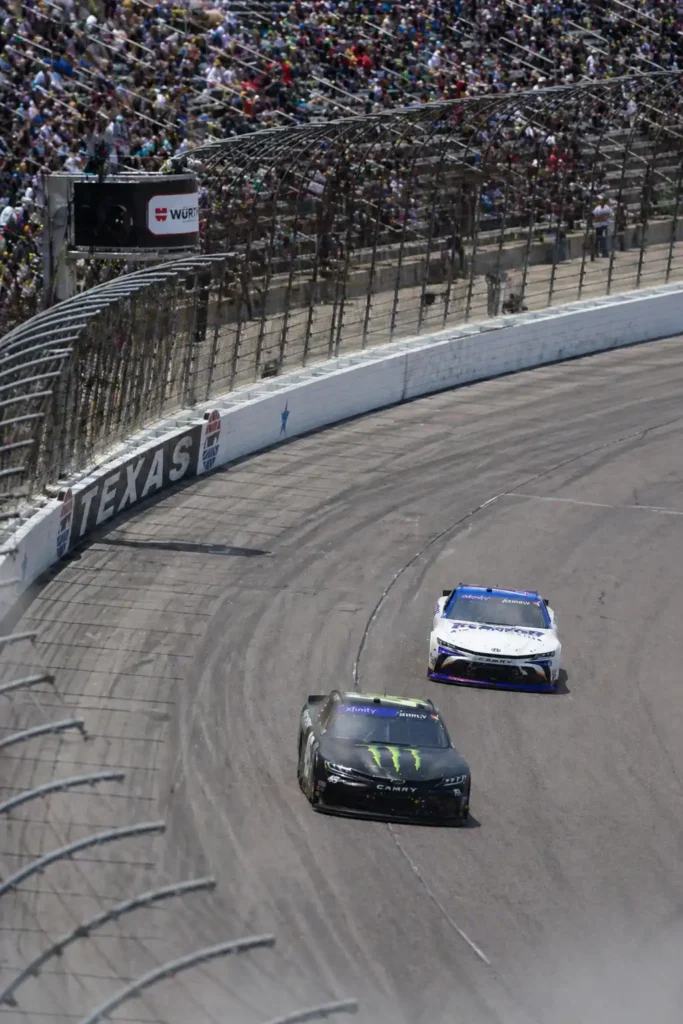
While Formula 1 represents the peak of surgical, aerodynamic precision, and this contrast is key to How Car Racing Works at the elite level, NASCAR is the undisputed king of high-speed, heavy-contact strategy. To understand how does a NASCAR race work, you must look at the unique psychology of oval racing. Unlike road courses with complex turns, NASCAR predominantly uses banked ovals where cars are driven at nearly 200 mph in a tight pack.
A defining characteristic of this series is the rolling start. If you wonder how do NASCAR races start, they do not use a grid of stationary cars. Instead, a pace car leads the field in formation. Once the pace car peels into the pits and the green flag drops, the race is officially “hot.” This ensures that the heavy stock cars are already at a manageable speed, preventing the massive transmission failures common in standing starts.
Modern NASCAR also uses a stage racing system. Races are divided into three segments, or stages. At the end of each stage, a “green-white-checkered” caution occurs, and points are awarded to the top ten drivers. This format encourages aggressive driving throughout the event rather than just in the final few laps, as drivers fight for “playoff points” that carry over into the championship hunt.
The secret to How Car Racing Works in NASCAR often comes down to “drafting.” Because the cars are so large and heavy, the leading vehicle punches a hole through the air. The car behind it can sit in that low-pressure pocket, saving fuel and gaining speed. This “bump drafting” requires immense trust between competitors, as a single wrong move at 190 mph can trigger a “Big One”—a massive multi-car pileup.
NASCAR Speed & Controversies
The history of stock car racing is filled with engineers trying to outsmart the rulebook. Perhaps the most famous example is the 1970 Plymouth Superbird and its sibling, the Dodge Charger Daytona. These “Winged Warriors” featured massive rear spoilers and pointed nose cones designed by rocket scientists.
If you are curious about what car was banned from NASCAR for being too fast, it was these aerodynamic monsters. They were the first to officially break the 200 mph barrier on a closed circuit. NASCAR officials, fearing that tires and safety barriers couldn’t keep up with the escalating speeds, implemented rules that essentially made the winged cars illegal to run with their high-displacement engines, effectively banning them from competitive glory after just one dominant season.
Today, safety is maintained through restrictor plates and tapered spacers. These devices limit the amount of air entering the engine, capping the horsepower. While this keeps speeds at a “safe” 190-200 mph, it also forces cars to stay in tight clusters, making the tactical “chess match” of drafting more important than ever.
Types of Car Racing Sports
The world of motorsport is vast, and knowing the different types of car racing sports helps you understand the varying skills required of drivers. While we have focused on Formula 1 and NASCAR, several other disciplines dominate the global stage.
Touring Car Racing
This is often described as “rubbing is racing.” Touring car racing features vehicles that look like the ones you buy at a dealership—BMW 3 Series, Honda Civics, or Hyundai Elantras—but are stripped down and reinforced for combat. Because the cars have fenders, drivers are much more likely to lean on each other through corners, leading to some of the most exciting door-to-door action in the sport.
Rally Racing
Rally is perhaps the ultimate test of car control. Unlike circuit racing, rally takes place on closed public roads, dirt paths, and snowy mountain passes. Drivers rely on a “co-driver” who reads “pace notes” to tell them exactly what lies around the next blind corner. If the notes say “Right 5 over crest, don’t cut,” the driver must trust them implicitly while sliding sideways at 80 mph.
Endurance Racing
Events like the 24 Hours of Le Mans or the Rolex 24 at Daytona are tests of mechanical and human longevity. Teams consist of three or four drivers who take turns in the cockpit. The goal isn’t just to be the fastest for one lap but to be the fastest over 3,000 miles without the car breaking down. During a visit to a GT3 garage last year, I spoke with a head mechanic who noted that they build these cars to be “mechanically bulletproof,” yet easy enough for a tired driver to operate at 3:00 AM.
Drag Racing
This is the sport of raw acceleration. Contested over a quarter-mile (or 1,000 feet for Top Fuel dragsters), these races last only a few seconds. The cars use specialized nitro-methane fuel and produce upwards of 11,000 horsepower. It is a game of reaction times and tire “wrinkle,” where the race is often won or lost at the starting line.
Karting
Every professional started here. Karting is the purest form of racing because the “power-to-weight” ratio is so high. Without the complex electronic aids of an F1 car, karts teach drivers how to feel the limit of the tires through their seats and steering wheels. It remains the most accessible and affordable entry point for anyone wondering how car racing works for beginners.
How Do Races Work in General?
Beyond the cars themselves, the infrastructure of a race is highly technical. Modern timing systems use transponders—small electronic devices mounted on each car that send a signal to a loop buried under the finish line. This allows officials to measure gaps between cars to the thousandth of a second ($0.001$).
If a driver breaks a rule, such as “weaving” on a straight or causing a collision, the race stewards step in. Penalties can range from a five-second time addition to a “drive-through,” where the driver must go through the pit lane at a restricted speed, losing valuable track position. The final classification is determined only after the lead car crosses the finish line on the final lap and passes “Post-Race Scrutineering,” where the car is weighed to ensure it hasn’t become too light by burning off fuel.
Frequently Asked Questions
Do I need ear protection at an NHRA race?
Yes, wearing proper ear protection is absolutely essential when attending any national drag racing event. A pair of nitro-burning engines launching off the starting line easily produces over 150 decibels of sound. Track vendors constantly sell earplugs and earmuffs to ensure fans enjoy the raw power safely.
Why are animations so popular for learning?
You may have seen a how car racing works animation on YouTube. These are incredibly effective because they show the “invisible” forces, like the air flowing over a wing or the way a suspension compresses during a turn. Visualizing these physics helps fans understand why a car might suddenly lose grip if it follows too closely behind another.
Is car racing a sport?
Yes. Professional drivers lose between 5 and 10 pounds of body weight in fluid during a hot race. The mental focus required to operate at those speeds, combined with the physical strength needed to fight G-forces, places them among the world’s elite athletes.
How do race cars work differently from normal cars?
Normal cars are built for comfort and fuel economy. Race cars are built for “downforce” and speed. A race car’s tires are made of soft rubber that would wear out in 50 miles on a highway but provides massive grip on a track.
How do NASCAR races start?
They use a rolling start behind a pace car. The field stays in two-by-two formation until the pace car exits and the green flag is waved, signaling that the race has officially begun.
Conclusion: The Ultimate High-Speed Pursuit
Understanding how car racing works is the first step toward appreciating the incredible complexity of the sport. It is a world where the laws of physics are pushed to their absolute breaking point and where success is measured in fractions of a second. From the tactical drafting of NASCAR to the high-tech hybrid systems of Formula 1, every discipline offers a unique challenge that requires a blend of bravery and intelligence.
Whether you are watching from the grandstands or analyzing the data on a screen, motorsport remains one of the most thrilling human endeavors on the planet. As technology continues to evolve with electric racing and advanced simulations, the core of the sport remains the same: the drive to be the fastest on the track.