
What is safety car in racing? So, you want to know exactly what is safety car in racing? Welcome to the pit wall. I spent years trackside calling race strategies, and I know exactly why races suddenly freeze at high speed. Why does this happen? We must balance driver safety against pure racing entertainment. Therefore, FIA regulations mandate strict track control during incidents.
First, we will define the Formula 1 safety car. Next, we explore the Virtual Safety Car (VSC). Ultimately, understanding what is safety car in racing changes how you watch the sport.
What is a Safety Car in Racing?
Let us answer the core question: what is safety car in racing? Basically, it is a physical vehicle that interrupts the normal race pace. Race control deploys it during serious crashes. Also, it appears when heavy rain ruins visibility.
Furthermore, debris on the track requires immediate neutralization. Thus, the safety car forces everyone to slow down safely. As an engineer, I know this creates massive tire temperature problems. However, preventing driver exposure to hazards remains paramount. What is safety car in racing? It is simply a lifesaver.
What is Safety Car in F1 (Detailed)
Now, let us explore what is safety car in F1 specifically. The Formula 1 safety car leads the pack at a controlled, specific pace. Consequently, no overtaking is allowed under these conditions.
This creates a massive field bunching effect. Therefore, a 20-second lead suddenly disappears entirely. For instance, I once watched our team’s guaranteed win vanish instantly due to a late crash. Drivers struggle with intense tire temperature management challenges. In summary, a safety car deployment forces a complete race reset.
F1 Safety Car Rules
You must understand F1 safety car rules completely to enjoy the sport. Can F1 cars overtake during safety car periods? No, absolutely not. First, drivers must maintain a strict delta time immediately.
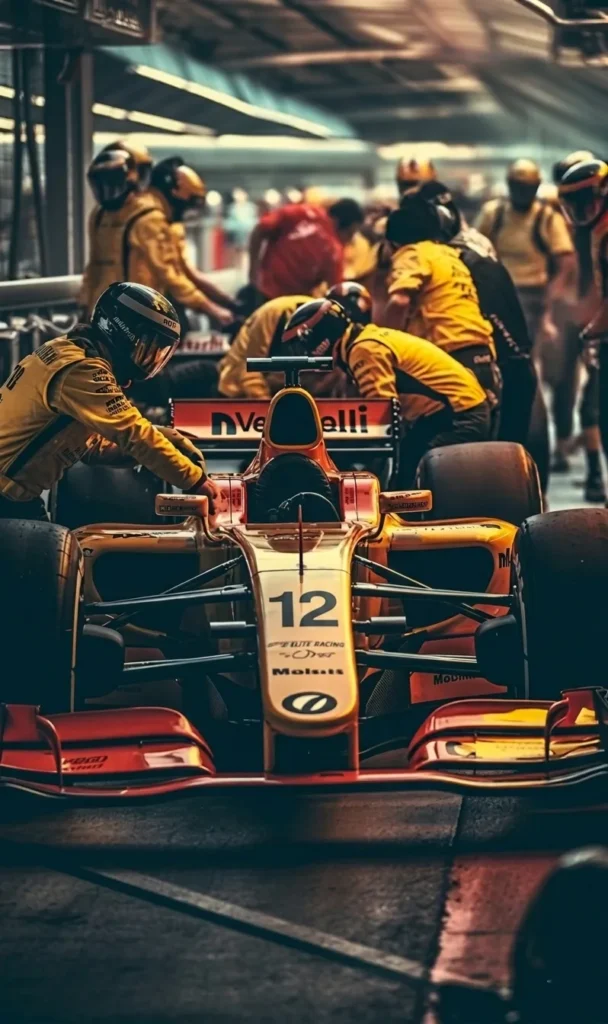
They must follow this until they catch the physical pack. However, lapped cars eventually get permission to unlap themselves. Also, the pit lane usually remains open for everyone. This creates massive strategic pit stop opportunities. Finally, the race leader dictates the restart tempo. What is safety car in racing without these rules? Complete chaos.
Safety Car Speed & Performance
How slow does the safety car go? It looks incredibly slow on television screens. However, the F1 safety car speed km/h is actually quite fast. Typically, it runs between 120 and 160 km/h. To a normal driver, this feels like highway speeding. But to an F1 car, it feels like crawling in traffic. Therefore, tire cooling risk becomes a major headache for teams. Furthermore, brake temperatures drop dangerously fast. Cold brakes mean zero stopping power into Turn 1.
Virtual Safety Car (VSC) vs Safety Car
What is Virtual safety car in F1 exactly? Let us compare Virtual safety car vs safety car.
| Feature | Safety Car | Virtual Safety Car |
| Track presence | Physical car | Digital delta system |
| Speed control | Pack bunching | Fixed lap delta |
| Overtaking | No | No |
| Restart | Rolling restart | Instant release |
First, the VSC uses an ECU-enforced speed limit. Next, race control uses it for less severe incidents. Therefore, it maintains the exact gaps between drivers. This reduces massive pit stop advantage swings. What is safety car in racing compared to this? The physical car completely bunches the field, while the VSC preserves the gaps.
Safety Car Restart Procedure
The safety car restart procedure is pure, high-stakes adrenaline. First, lapped cars unlap themselves to clear the grid. Next, the safety car lights go out completely. Then, the safety car dives into the pit lane. Now, the race leader completely controls the pacing. They wait for the accelerated restart zone. Finally, overtaking becomes legal at the control line. As a former strategist, this is always the most stressful moment. Restarts hold the highest crash probability of the entire race.
What Type of Car is the F1 Safety Car?
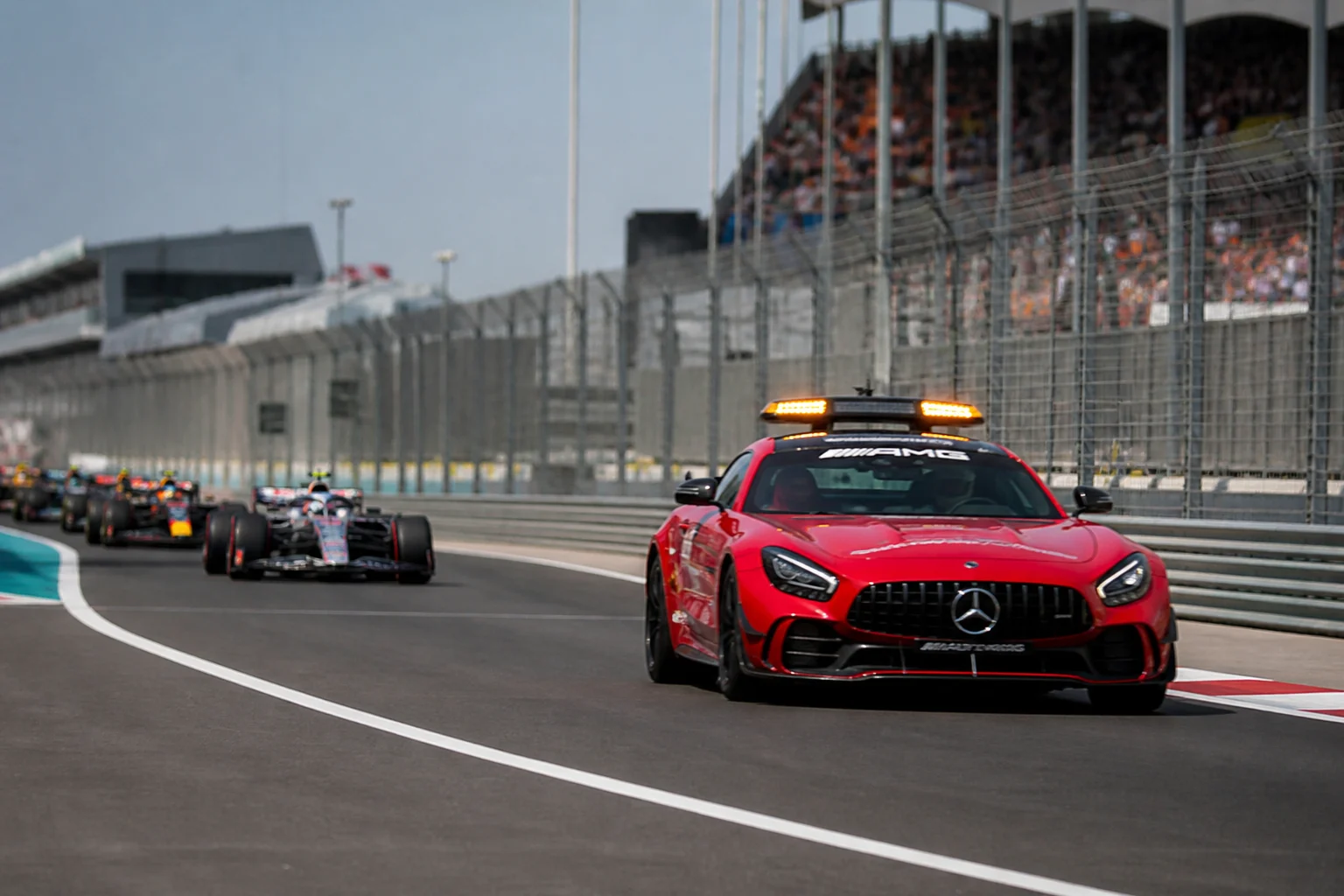
What type of car is the F1 safety car? Fans always ask what brand is the Safety Car in F1. Traditionally, it features high-performance Mercedes-AMG models. Also, Aston Martin recently joined the official roster.
These vehicles undergo heavy modifications for maximum track stability. Furthermore, they feature advanced communication systems inside. They include custom FIA lighting systems on the roof. Underneath, they boast reinforced braking and track-tuned suspension. What is safety car in racing without extreme performance? A roadblock.
Safety Car Crash Scenario
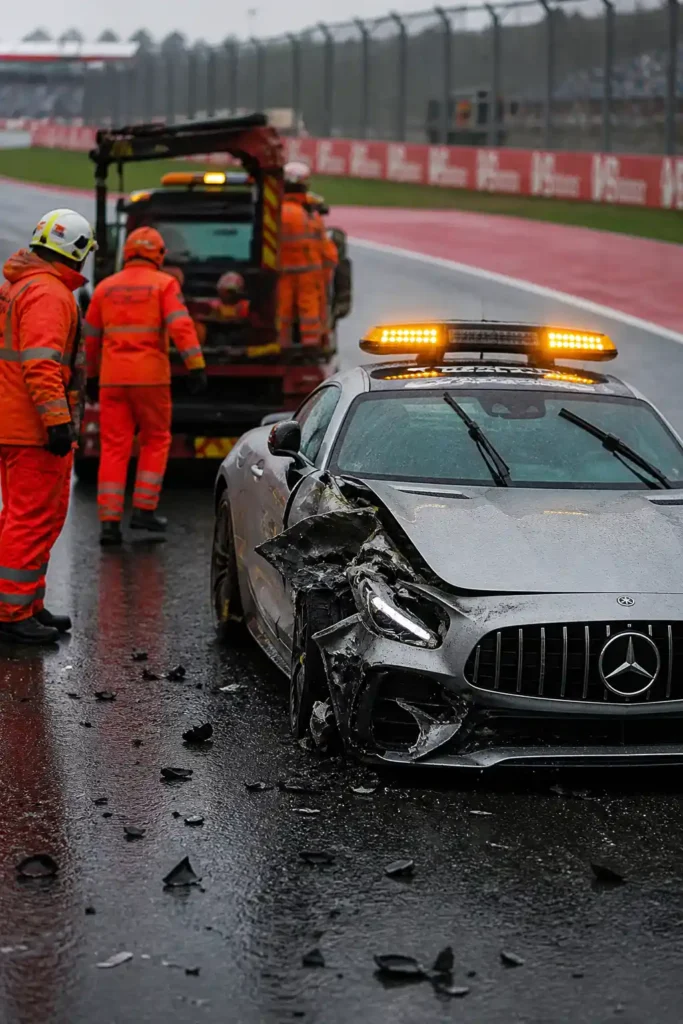
What happens if a safety car crashes in F1? This represents a rare but critical disaster. First, immediate race neutralization gets extended significantly. Usually, race control throws a red flag instantly. Then, they deploy a backup vehicle immediately.
Race control utilizes manual override protocols to secure the track. Fortunately, these extremely rare FIA contingency protocols rarely activate. However, teams always prepare for the worst. I remember reviewing these protocols weekly. What is safety car in racing? It is a machine, and machines can crash.
History of F1 Safety Cars
The F1 safety cars history is actually quite fascinating. First, early experimental deployments happened in the 1970s. However, they lacked proper organization and strict rules. Next, the modern FIA standardized safety car era began in 1993. Then, the Mercedes-AMG long-term partnership started in 1996. Over time, these cars became significantly faster and safer. What is safety car in racing today? It is a technological marvel compared to the past.
F1 Safety Car 2026 Update
Let us look at the upcoming F1 safety car 2026 updates. First, we expect increased hybrid integration. Next, new tracking systems will monitor cars perfectly. Also, improved track-to-car communication will reduce driver confusion. Therefore, we will see much faster deployment response times. Furthermore, enhanced VSC automation logic will improve sporting fairness. The sport constantly evolves its safety standards. What is safety car in racing tomorrow? A highly connected digital hub.
Broader Safety Concepts in Motorsport
We must also discuss broader safety track concepts globally. Automotive safety learned heavily from motorsport innovations. For example, crash structures and the HANS device saved countless lives. Furthermore, motorsport safety innovation influence on road cars is undeniable. Organizations like the FIA set global benchmarks continuously. Even US agencies draw NHTSA inspiration parallels from racing data. Therefore, safercar technology always starts directly on the track.
Autonomous & Future Safety Systems
What does the future hold for automotive safety? Soon, we might see autonomous racing safety vehicles. AI-controlled race pacing systems are already in active development. Next, the future of virtual race control looks fully automated. Also, predictive incident detection systems will deploy warnings instantly. Thus, advanced technology will eliminate human error completely. What is safety car in racing in twenty years? Probably a driverless drone car.
Reddit & Community Search Intent
Many passionate fans search what is safety car in racing reddit. Common misconceptions constantly flood online racing forums. “Why not red flag every crash?” angry fans ask. However, red flags completely ruin race flow and tire strategies. “Why does it ruin races?” is another very common complaint. In reality, it forces exciting strategic gambles. Our community debate summary proves safety must always win.
FAQs
What is a safety car in racing?
It is a physical vehicle that neutralizes a race. Race control deploys it during crashes or bad weather. Therefore, it forces all drivers to slow down safely.
Can F1 cars overtake during safety car?
No, absolutely not. Overtaking is strictly forbidden by the rules. However, race control eventually allows lapped cars to unlap themselves.
What is Virtual Safety Car in F1?
The VSC is a digital speed limit system. Drivers must drive to a strict delta time. Therefore, no physical car enters the track.
How fast does the F1 safety car go?
It typically drives between 120 and 160 km/h. This feels fast to general people on highways. Yet, it feels painfully slow for F1 cars.
What happens if the safety car crashes?
Race control immediately throws a red flag. Next, they deploy a fully prepared backup vehicle. Finally, the race remains paused until the track clears.
Conclusion
In summary, mastering track safety requires immense engineering skill. What is safety car in racing exactly? It is the ultimate tool for preserving life at extreme speeds. Therefore, it changes race outcomes entirely. Next, you must appreciate the strategic brilliance behind these deployments. For example, teams calculate tire degradation under safety car conditions instantly.
Furthermore, a perfectly timed pit stop wins championships. Overall, motorsport safety technology continues to evolve rapidly. Finally, I encourage you to dive deeper into race strategy. Explore our F1 tire strategy guide next. Also, compare different driver restart techniques. Thus, your understanding of the sport will grow exponentially. Now, get back to the track!
Evidence-Based References:
- Formula 1 (Official Website) The beginner’s guide to F1 flags
- Motorsport com F1 safety car: What is it and how does it work?
- The Race Details regarding F1 Safety Car vehicle specifications, speed
- Autosport History of safety devices in Formula 1: The halo, barriers & more
- Sky Sports F1 Safety car rules revised