
Understanding how racing flags work is essential for anyone following motorsport today. Drivers constantly race at speeds exceeding 300 km/h. Therefore, they need an instant, highly reliable communication system. Team radios often fail or suffer from heavy static interference. Consequently, trackside visual signals remain the ultimate authority during any race.
Exploring the racing flag’s meaning unlocks a deeper understanding of the sport. You will quickly see why these colorful signals dominate trackside operations. Furthermore, knowing how racing flags work gives you true insider knowledge. Additionally, the FIA and other governing bodies strictly control this communication system. Now, let us dive into the ultimate guide to the meaning of flags in racing.
What Are Racing Flags?
Racing flags serve as the primary visual communication tool between race control and the drivers. Essentially, they convey critical safety warnings, regulatory penalties, and session status updates. Thus, learning how racing flags work helps fans decode the exact flow of a race. Without these signals, high-speed racing would become incredibly dangerous.
Race marshals physically wave these flags at designated posts around the track. Moreover, these trained volunteers act as the eyes and ears of the race director. They control the flags used in racing based on strict organizational protocols. As a result, drivers always know what lies ahead in the next corner.
Different racing organizations share common signals but maintain unique variations. For example, the Fédération Internationale de l’Automobile (FIA) governs global standards. Meanwhile, NASCAR and MotoGP utilize slightly different race track flags, meaning interpretations. Ultimately, understanding how racing flags work bridges the gap between casual viewing and expert analysis.
How Racing Flags Work
Do you want to know exactly how racing flags work? The process relies on a strict chain of command. First, an incident occurs on the track, such as a crash or debris. Next, race control immediately evaluates the hazard level. Then, the race director instructs the specific marshal sectors to display the appropriate flag.
Therefore, understanding how racing flags work explained simply means looking at the track zones. The circuit divides into several distinct marshal sectors. Consequently, a driver might see a caution signal in sector two while sector three remains clear. Thus, knowing how racing flags work allows drivers to adjust their speed instantly.
Visual signals always override team radio communications during critical emergencies. Radios have delays, but a brightly colored flag provides instantaneous feedback. Furthermore, a strict safety hierarchy dictates exactly how racing flags work. The red flag completely stops the race, overriding everything. Meanwhile, the yellow flag demands caution, and the green flag restarts the action.
Types of Racing Flags
Breaking down the types of racing flags reveals three distinct categories. First, we have the safety flags, which dictate track conditions. Second, regulatory flags communicate directly with specific drivers. Finally, finish and session flags mark the beginning and end of track activities.
Safety flags include the green flag, yellow flag, and red flag. Specifically, the green flag indicates a clear track. Conversely, the yellow flag signals a hazard ahead. Furthermore, a double yellow flag warns of a blocked track. Additionally, the red flag stops the entire session immediately. Thus, learning how racing flags work requires mastering these safety signals.
Regulatory flags strictly enforce the racing rules. For instance, the black flag indicates a severe penalty. Additionally, the blue flag tells a slower driver to yield to faster traffic. Meanwhile, the white flag warns of a slow-moving vehicle ahead. Therefore, understanding all racing flags prevents dangerous on-track collisions.
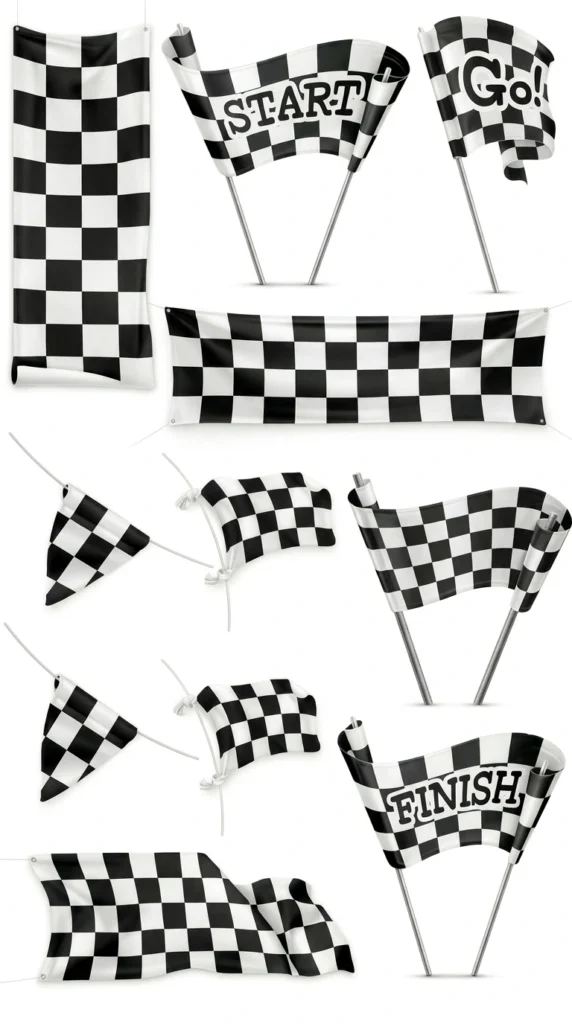
Finish flags celebrate the end of the competition. The checkered flag marks the official conclusion of the race. Also, the red and yellow striped flag warns drivers of a slippery track surface. Clearly, the flags used in racing cover every possible track scenario.
Yellow Flag Meaning
The yellow flag serves as the most common safety signal in motorsport. When you ask what does yellow flag mean in racing, the answer is caution. Specifically, it indicates a hazard located beside or directly on the track. Therefore, drivers must reduce their speed significantly.
Furthermore, strict no-overtaking rules apply under yellow flag conditions. If a driver passes an opponent here, they receive an immediate penalty. A single yellow flag means drivers must slow down and prepare to change direction. Conversely, a double yellow flag means drivers must prepare to stop completely.
Different series interpret these rules with slight variations. For example, F1 utilizes the Virtual Safety Car alongside yellow flags. Consequently, drivers must maintain a specific speed delta on their steering wheel screens. Thus, understanding how racing flags work helps you track these complex speed regulations.
Black Flag in Racing
The black flag in racing represents the ultimate nightmare for any driver. This severe regulatory flag demands immediate action from the penalized car. Specifically, the driver must return to the pit lane within a specified number of laps. Therefore, ignoring this flag leads to instant disqualification.
Race control issues this flag for several critical reasons. First, a driver might commit a dangerous rule violation. Alternatively, the car might suffer from a dangerous mechanical failure. For example, a leaking fluid line poses a severe hazard to other competitors.
Consequently, teams dread seeing their car number displayed next to this flag. It represents a rare but absolutely non-negotiable enforcement of the rules. Knowing how racing flags work means understanding that the black flag holds absolute authority.
Checkered Flag Meaning
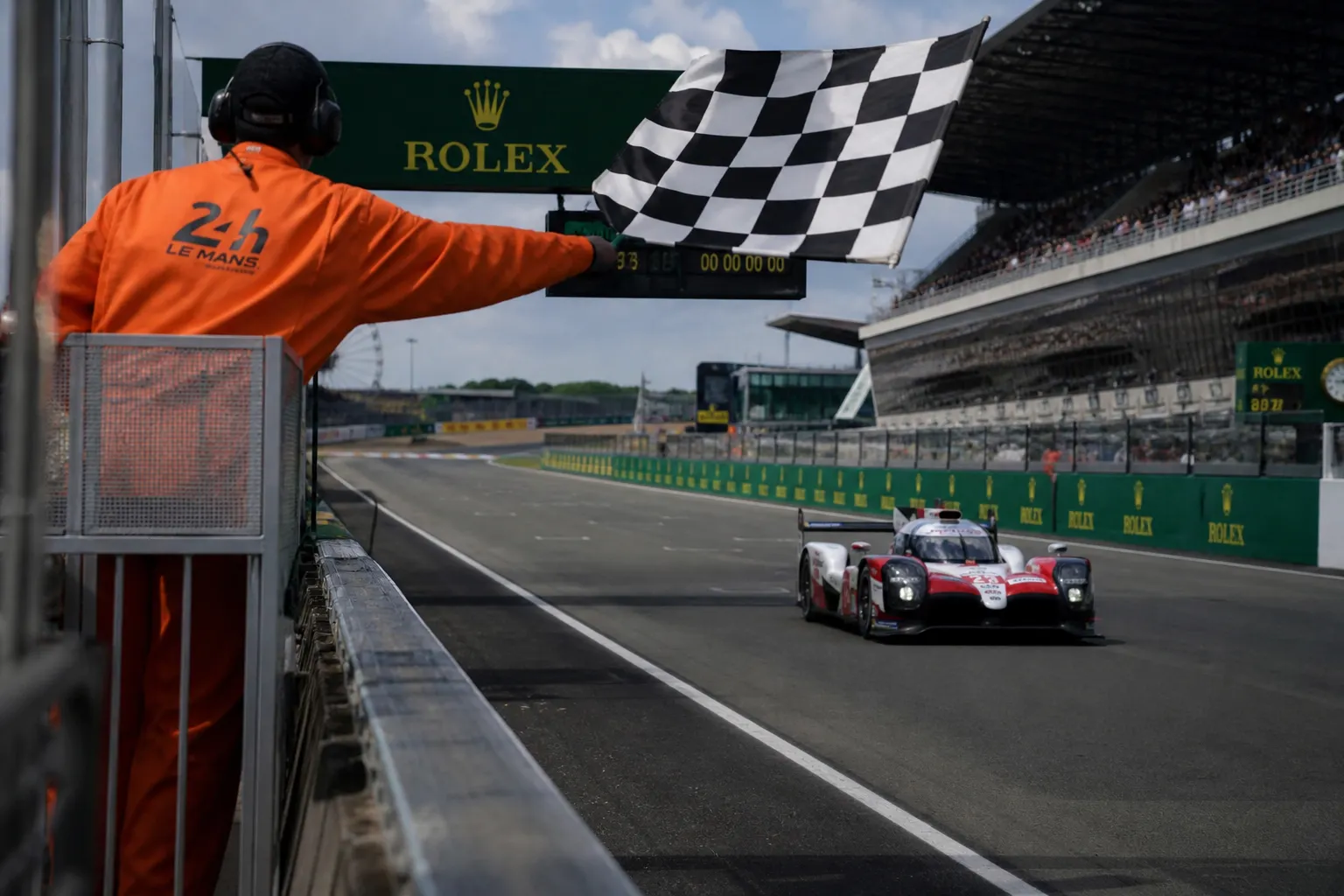
The checkered flag racing meaning universally signifies the end of a session. Race control waves this iconic black-and-white pattern as the winner crosses the finish line. Consequently, it stands as the most famous symbol in the entire automotive world. First used in early 20th-century rallies, its historical origin remains somewhat debated.
However, its impact on the sport remains absolutely undeniable. Drivers complete victory lap traditions after taking this flag. Furthermore, they wave to the crowd and often perform celebratory burnouts. Therefore, the checkered flag transforms a brutal endurance test into a glorious celebration.
Iconic motorsport symbolism relies heavily on this specific pattern. Every fan recognizes it, even if they do not know how racing flags work. Thus, the checkered flag transcends the sport, representing victory in everyday life.
Motorcycle Racing Flags
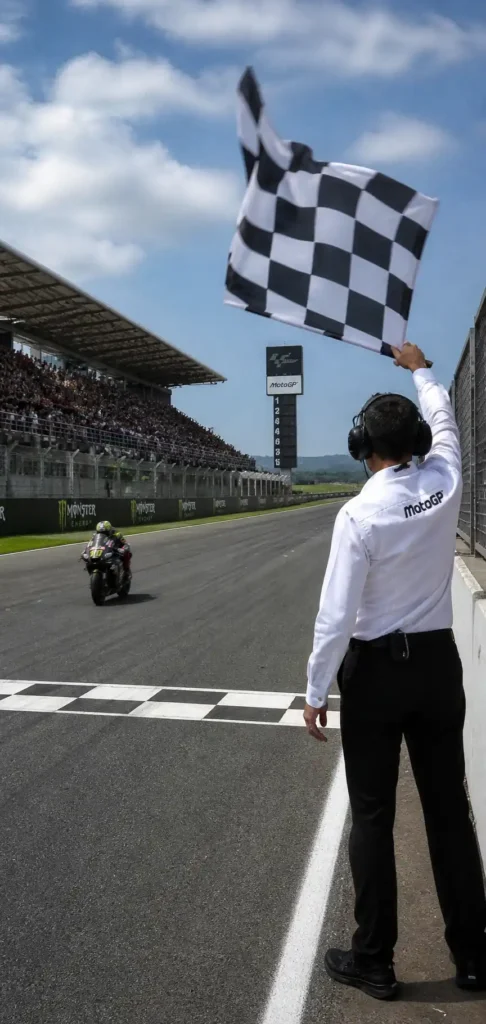
Motorcycle racing flag meanings share many similarities with four-wheeled motorsport. However, two-wheel racing places an even higher emphasis on immediate track safety. Because riders lack the protective cage of a car, hazards pose a much greater threat. Therefore, understanding how racing flags work in MotoGP requires noting these safety differences.
MotoGP utilizes a higher frequency of track marshals around the circuit. Consequently, riders receive warnings much faster than in some car series. Additionally, the white flag with a red cross specifically indicates an ambulance on track. Thus, safety remains the absolute priority in every single session.
Furthermore, rain flags play a crucial role in motorcycle racing. A white flag with a red diagonal cross warns riders of raindrops. Therefore, riders know exactly when grip levels will suddenly drop. Knowing how racing flags work saves lives in this dangerous sport.
F1 Flags Meaning
Formula 1 utilizes the most advanced trackside systems globally. However, the basic F1 flag meanings still rely on traditional colored fabrics. The FIA rigidly enforces these regulations across all global circuits. Therefore, drivers experience complete flag consistency whether they race in Monaco or Japan.
Formula 1-specific interpretations include complex penalty systems. For example, a black and white diagonally divided flag acts as a warning for unsportsmanlike behavior. Consequently, teams call this the “motorsport yellow card.” Furthermore, understanding how racing flags work in F1 involves integrating digital signals.
Light panels now supplement the physical flags at every marshal post. First, the marshal presses a button to activate the bright LED panel. Next, they wave the physical fabric flag as a backup. Thus, knowing how racing flags work in modern F1 means watching both the lights and the fabric.
Reddit & Real-World Confusion
Online forums often debate how racing flags work, Reddit-style. Fans frequently encounter common misconceptions during chaotic race weekends. For example, many beginners get confused when multiple flags fly simultaneously. Therefore, educating fans on how racing flags work clarifies the broadcast completely.
One major myth suggests the black flag equals an instant lifetime ban. Actually, it simply disqualifies the driver from that specific session. Furthermore, fans often misunderstand the blue flag rules during lapping procedures. Consequently, a community discussion summary’s tone often involves seasoned fans educating newcomers.
Learning how racing flags work eliminates this trackside confusion. When you know the rules, the strategic depth of the sport truly opens up. Thus, educated fans enjoy the racing spectacle much more thoroughly.
Racing Flag Color Meanings
Color psychology plays a massive role in motorsport communication. Therefore, racing flag color meanings utilize deeply ingrained human instincts. First, red universally signifies stop and immediate danger. Consequently, the red flag halts the entire racing field instantly.
Yellow instinctively communicates caution and hazard awareness. Therefore, the yellow flag slows the cars down safely. Next, green universally means “go” and “track clear.” Thus, the green flag unleashes the cars back to full racing speed. Knowing how racing flags work means trusting these psychological triggers.
Furthermore, blue tells a slower car to let a faster competitor pass. Meanwhile, black communicates severe penalties and rule enforcement. Additionally, white indicates a slow-moving vehicle occupying the racing line. Finally, the checkered pattern provides a high-contrast signal to end the event. Understanding the meaning of flags in racing starts with these basic colors.
Race Car with Checkered Flag
The image of a race car with a checkered flag defines motorsport victory. Photographers constantly chase this iconic celebration imagery. Therefore, it dominates branding in motorsport marketing campaigns globally. Sponsorship and victory symbolism intertwine deeply within this single visual moment.
Brands pay millions to associate their logos with this winning imagery. First, the car crosses the line. Next, the team erupts in joyous celebration. Finally, the driver holds the checkered fabric high on the podium. Thus, knowing how racing flags work leads directly to appreciating these historic moments.
Summary Table
Reviewing this table provides a quick reference for race day.
| Flag | Meaning | Action Required |
| Yellow | Hazard | Slow down immediately |
| Black | Penalty | Pit immediately |
| Blue | Being overtaken | Yield to faster car |
| Red | Stop racing. | Return to pit lane |
| Green | Track clear | Resume racing speed |
Therefore, keeping this guide handy helps you decode the broadcast. Understanding how racing flags work becomes much easier with quick visual references.
FAQs
What are all racing flags?
All racing flags include safety flags (green, yellow, red), regulatory flags (black, blue, white), and finish flags (checkered). Each organization uses slight variations of these core signals.
Why are flags still used in modern racing?
Flags provide instant, reliable visual communication. Team radios suffer from delays, static, and potential failures. Therefore, flags remain the ultimate fail-safe authority on track.
Can drivers ignore flags?
No, drivers cannot ignore flags under any circumstances. Ignoring safety or regulatory flags results in severe penalties. Consequently, race control will issue a black flag for non-compliance.
What happens if you ignore a black flag?
If a driver ignores a black flag, they face immediate disqualification. Furthermore, the governing body may issue hefty fines or race bans. Thus, compliance remains absolutely mandatory.
Are racing flags the same in all motorsports?
They share common core meanings, but minor differences exist. For instance, F1 and NASCAR handle blue flags differently. Therefore, understanding specific series rules is crucial.
Conclusion
In summary, visual communication dictates the entire flow of global motorsport. Learning how racing flags work reveals the hidden language of the track. Furthermore, these signals perfectly balance the pursuit of extreme speed with vital driver safety. Therefore, the marshals waving these fabrics hold the true power during a race.
Next time you watch a Grand Prix, watch the marshal posts closely. You will quickly notice how racing flags work in real-time to control the chaos. Additionally, understanding the racing flags meaning deepens your appreciation for race strategy. Finally, we hope this guide provides total clarity for beginners entering the thrilling world of motorsport.