

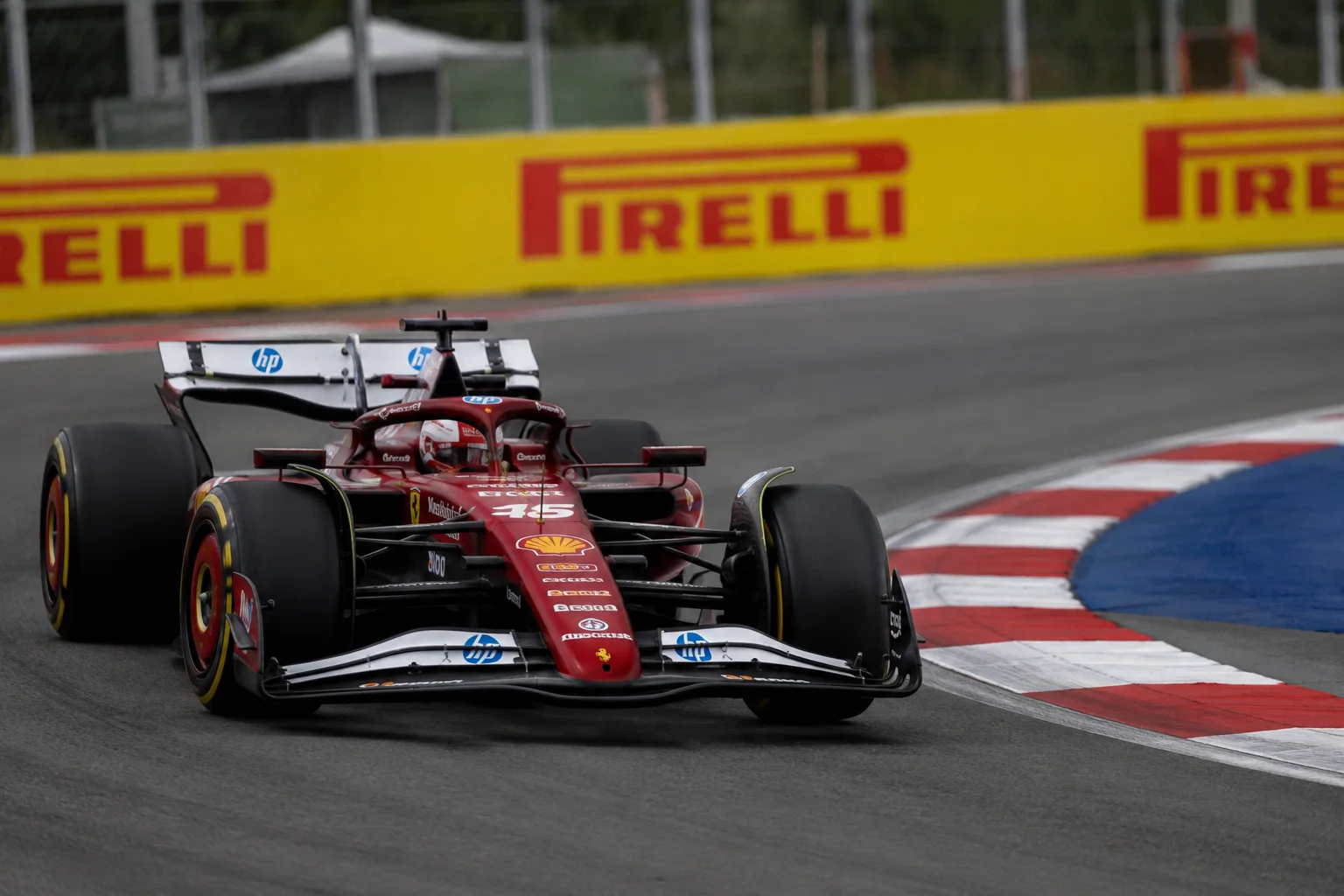
Many new motorsport fans often wonder exactly what is downforce when they first start watching high-speed racing. This fundamental aerodynamic concept dictates how fast vehicles can take corners without flying off the track. Furthermore, understanding what is downforce allows you to truly appreciate the engineering marvels behind modern racing machines. I recently spent a weekend at the Silverstone circuit interviewing a veteran track engineer. He explained that mastering what is downforce separates championship-winning teams from the rest of the grid.
From Formula 1 cars cornering at incredible speeds to virtual tuning in racing games, aerodynamics completely transform vehicle handling. Therefore, this guide will break down these complex physics into easily digestible concepts for beginners. Consequently, you will learn how engineers manipulate airflow to maximize tire grip and stability. Specifically, we will explore practical applications across various racing series and performance street cars.
What Is Downforce in Simple Terms?
If you want the simplest explanation, you must first ask what is downforce regarding basic physical pressure. Basically, it is an aerodynamic force that pushes a car downward onto the road surface while it moves. Moreover, this invisible pressure significantly increases tire traction without adding substantial physical weight to the vehicle. Therefore, knowing what is downforce helps you understand why race cars look so radically different from normal highway vehicles.
Engineers often compare race cars to airplanes when explaining this concept to newcomers. Airplanes use curved wings to create upward lift, which pulls the aircraft into the sky. Conversely, race cars use inverted wings to create negative lift, pushing the chassis firmly into the asphalt. Thus, when someone asks what is downforce, you can simply call it reverse airplane lift.
Consequently, this downward pressure improves cornering ability and helps racing cars stay incredibly stable at high speeds. Additionally, the effect increases exponentially as the vehicle drives faster down the straightaway.
How Is Downforce Created?
To grasp the mechanics, you need to understand exactly how engineers generate what is downforce using specific car components. Engineers design complex aerodynamic surfaces to manipulate the high-speed airflow traveling over and under the vehicle. Specifically, they utilize the Bernoulli principle, which states that faster-moving fluid creates lower pressure. Therefore, managing this air pressure difference effectively generates the necessary vertical load on the tires.
You might wonder how different parts contribute to what is downforce during a race. Front wings cut through the air first, directing the flow and pushing the front tires into the ground. Subsequently, rear wings capture the turbulent air at the back, planting the rear driving wheels firmly onto the track. Furthermore, modern racing cars rely heavily on ground effect aerodynamics underneath the chassis.
Engineers design specialized Venturi tunnels under the floor to accelerate airflow and suck the car downward. If you want the exact mathematical representation of what is downforce, physicists use a specific equation. The downforce formula is:
$$F_d = \frac{1}{2}\rho v^2 C_L A$$
In this physics equation, $\rho$ represents the air density, and $v$ represents the vehicle’s velocity. Additionally, $C_L$ stands for the lift coefficient, while $A$ represents the total surface area. Therefore, increasing the vehicle’s speed drastically multiplies the overall vertical force.
What Does Downforce Do in a Car?
Drivers instantly feel the benefits when they experience what is downforce during a high-speed corner. Primarily, it provides vastly superior cornering grip, allowing drivers to carry immense momentum through tight turns. Furthermore, this vertical pressure improves braking stability, helping the car stop in much shorter distances. Consequently, drivers achieve significantly faster lap times because they slide less and maintain better control.
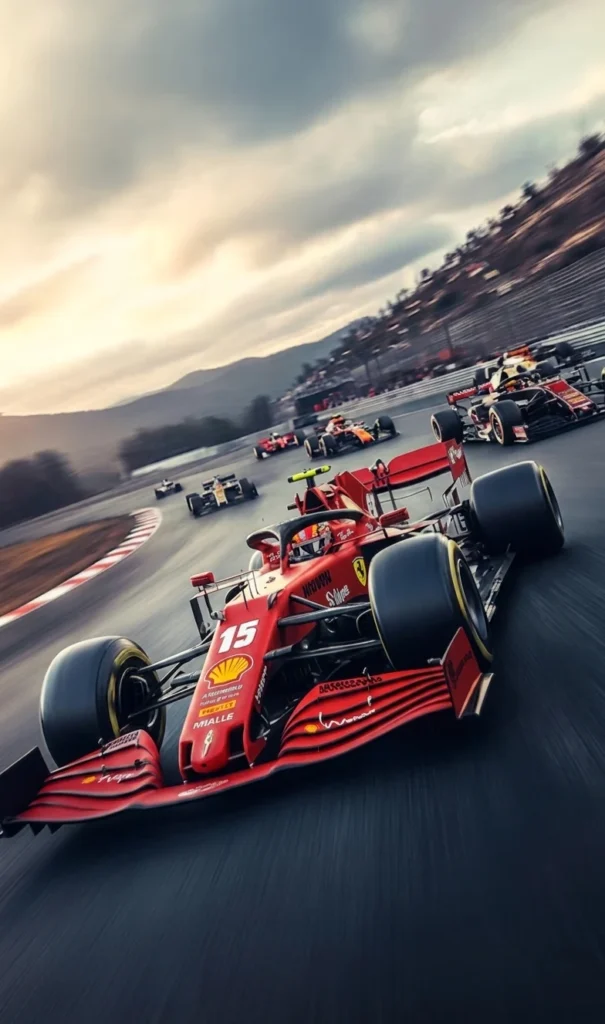
However, teams face a massive engineering trade-off when they increase what is downforce on their vehicles. Adding more aerodynamic elements inherently creates more aerodynamic drag, which acts like an invisible parachute. Therefore, pushing the car harder into the ground ultimately lowers its absolute top speed on straight sections. Moreover, this drag reduces fuel efficiency, forcing teams to balance cornering speed against straight-line performance.
You can see clear examples of this balance in top-tier endurance racing. Le Mans prototypes utilize highly refined bodywork to maintain stability through extremely fast sweeping curves. Similarly, GT racing cars feature large splitters and diffusers to maximize tire contact patches on the asphalt. Ultimately, mastering what is downforce dictates the entire setup philosophy for any professional racing team.
What Is Downforce in F1?
Formula 1 represents the absolute pinnacle of aerodynamic engineering and innovation. When fans ask what is downforce in this context, they refer to the most extreme application of air pressure in sports. F1 cars depend heavily on aerodynamic efficiency to survive corners at forces exceeding 5G. Furthermore, new ground effect regulations force teams to generate massive vertical loads primarily through the car’s floor.
The complexity of modern F1 aerodynamics constantly pushes the boundaries of physics. Front wing elements feature intricate flaps that direct clean air toward the crucial floor tunnels. Meanwhile, the rear diffuser expands the airflow rapidly, maximizing the suction effect underneath the driver. Consequently, understanding what is downforce helps explain why following another car closely causes severe aerodynamic turbulence.
Engineers love to share a famous hypothetical scenario regarding these incredible machines. F1 cars produce so much aerodynamic pressure that they could theoretically drive upside down on a tunnel ceiling. If you want to know what is downforce in terms of raw numbers, the statistics remain staggering. At high speeds, a modern Formula 1 car generates over 3,000 kg of downward pressure. Thus, this force vastly exceeds the car’s actual physical weight of around 798 kg.
Is Higher or Lower Downforce Better?
Track layouts completely dictate whether a high or low aerodynamic setup works best. When people ask what is downforce doing on a tight track, the answer focuses entirely on mechanical grip. A high aerodynamic setup benefits drivers by providing maximum stability and faster cornering capabilities. However, the severe disadvantage involves a massive reduction in straight-line speed due to extreme drag.
Conversely, a low aerodynamic setup prioritizes top speed over cornering agility. Teams trim their wings significantly to slice through the air with minimal resistance. Furthermore, this setup benefits drivers heavily on long straights, allowing for easier overtaking maneuvers. However, the main disadvantage requires drivers to wrestle with a car that possesses significantly less grip in the corners.
Therefore, engineers constantly tweak what is downforce to match the specific circuit characteristics perfectly. For example, teams run maximum wing angles at the tight, twisting streets of Monaco. Conversely, they run incredibly flat wings at the high-speed Monza circuit in Italy. Consequently, finding the perfect compromise defines the weekend’s success or failure.
What Is Downforce in NASCAR?
Stock car racing presents entirely different aerodynamic challenges compared to open-wheel series. If you ask what is downforce in NASCAR, you must look at how heavy stock cars navigate steep banked ovals. NASCAR aerodynamics focus heavily on maintaining stability while racing in tight, high-speed packs. Therefore, teams use large rear spoilers and front splitters to keep the 3,200-pound cars planted to the track.
Drafting plays a massive role in how these cars interact with the surrounding air. When multiple cars run nose-to-tail, they alter the airflow and drastically change what is downforce for the following vehicles. Furthermore, teams completely change their aerodynamic packages between short tracks and massive superspeedways. Specifically, short tracks require maximum grip, while superspeedways require extreme drag reduction to hit 200 mph.
Engineers face a delicate balancing act when tuning these heavy stock cars. Too much aerodynamic pressure severely slows the car down on the crucial backstretches. Conversely, stripping away too much of what is downforce makes the car dangerously unstable in the banking. Thus, tiny millimeter adjustments to the spoiler dictate who visits victory lane.
What Is Downforce in NFS Heat and Need for Speed?
Video games introduce many casual players to complex automotive tuning concepts. Players frequently search online to discover what is downforce when modifying their cars in games like NFS Heat. In these racing simulators, aerodynamic tuning directly changes your digital vehicle’s handling behavior on the streets. Specifically, sliding the tuning bar alters how the car responds to high-speed steering inputs.
Increasing the aerodynamic pressure in the game gives your car significantly more grip for sharp circuit racing. Furthermore, maximizing what is downforce prevents your supercar from sliding out of control during tight city turns. Conversely, lowering the aerodynamic pressure allows your vehicle to reach its absolute maximum top speed for highway sprints. Therefore, players must adapt their tuning setups based on the specific race event type.
Additionally, this setting heavily affects drifting mechanics in games like Need for Speed Payback. High aerodynamic grip makes initiating a long drift much more difficult. Consequently, players who want to slide around mountain passes should significantly reduce what is downforce in the garage menu. Ultimately, virtual tuning mimics real-world physics surprisingly well.
What Is Downforce Measured In?
Engineers require precise metrics to quantify aerodynamic efficiency accurately. When physics students ask what is downforce measured in, teachers explain the standard units of force. Globally, motorsport engineers measure this vertical pressure in kilograms (kg) or Newtons (N). Furthermore, American racing series like NASCAR frequently measure this force in pounds (lbs).
You will often hear racing commentators mention “points” when discussing car setups. In racing terminology, a “point” represents a specific incremental change in the aerodynamic balance of the vehicle. Therefore, adding a point of what is downforce usually means increasing the front wing flap angle by a single degree. This tiny adjustment shifts the aerodynamic center of pressure either forward or backward.
Teams utilize incredibly advanced technology to measure these invisible forces. They run countless Computational Fluid Dynamics (CFD) simulations before ever building a physical part. Subsequently, they place scale models in state-of-the-art wind tunnels to validate what is downforce accurately. Consequently, this meticulous data collection drives million-dollar engineering decisions.
Is Downforce Good for F1 and Racing?
Fans sometimes debate whether heavy reliance on aerodynamics hurts the racing product. Unquestionably, generating what is downforce allows for mind-boggling lap times and far safer cornering speeds. Drivers can execute precision handling maneuvers that would instantly crash a normal road car. Therefore, this technology pushes automotive engineering into exciting new territories.

However, extreme aerodynamic dependence creates a major negative side effect called dirty air. When a car cuts through the atmosphere, it leaves a turbulent wake of chaotic airflow behind it. Consequently, a following car loses a massive portion of what is downforce when it enters this turbulent wake. This sudden loss of grip makes overtaking incredibly difficult and dangerous for the trailing driver.
To combat this, the FIA introduced massive rule changes for the 2022 F1 season. Engineers redesigned the cars to generate grip primarily from the floor rather than the complex over-body wings. Ultimately, this shift in how they produce what is downforce significantly improved wheel-to-wheel racing action.
Final Thoughts on Aerodynamics
Understanding the physics behind racing transforms how you watch motorsport events. We have thoroughly explored what is downforce and how it glues high-performance vehicles to the asphalt. Teams continuously innovate their aerodynamic packages to find the perfect balance between drag and absolute speed. Therefore, this invisible force remains the ultimate performance differentiator on the track.
Whether you watch NASCAR, play racing video games, or follow Formula 1, aerodynamics dictate the winner. Next time you see a car fly through a high-speed corner, you will know exactly what keeps it grounded. Ultimately, mastering what is downforce represents the beautiful intersection where advanced physics meets competitive sports.
Frequently Asked Questions
What is downforce in simple terms?
It is an invisible aerodynamic pressure that pushes a moving car downward onto the road surface. This force significantly improves tire grip and overall high-speed stability without adding physical weight.
What does it do in a racing car?
It allows cars to corner at much higher speeds by maximizing tire traction on the asphalt. Furthermore, it improves braking performance, though it simultaneously creates drag that lowers top speed.
Is a higher or lower setup generally better?
It depends entirely on the specific track layout. Tight tracks like Monaco require high settings for cornering grip, while fast tracks like Monza require low settings for straight-line speed.
What is the maximum vertical pressure of an F1 car?
At maximum speed, a modern Formula 1 car can generate over 3,000 kilograms of downward pressure. This massive force allows them to corner at speeds exceeding 5G.
How do engineers create this aerodynamic effect?
Engineers shape wings and underbody Venturi tunnels to manipulate airflow using the Bernoulli principle. Fast-moving air under the car creates a low-pressure zone that sucks the vehicle toward the track.
Conclusion
Ultimately, grasping what is downforce fundamentally changes how you experience high-speed motorsport. Furthermore, this critical aerodynamic force dictates every major engineering decision across all professional racing series.
Therefore, teams spend millions of dollars perfecting their wind tunnel data to gain a tiny competitive advantage. Consequently, you can now truly appreciate the phenomenal physics keeping your favorite drivers safely glued to the asphalt at incredible speeds.