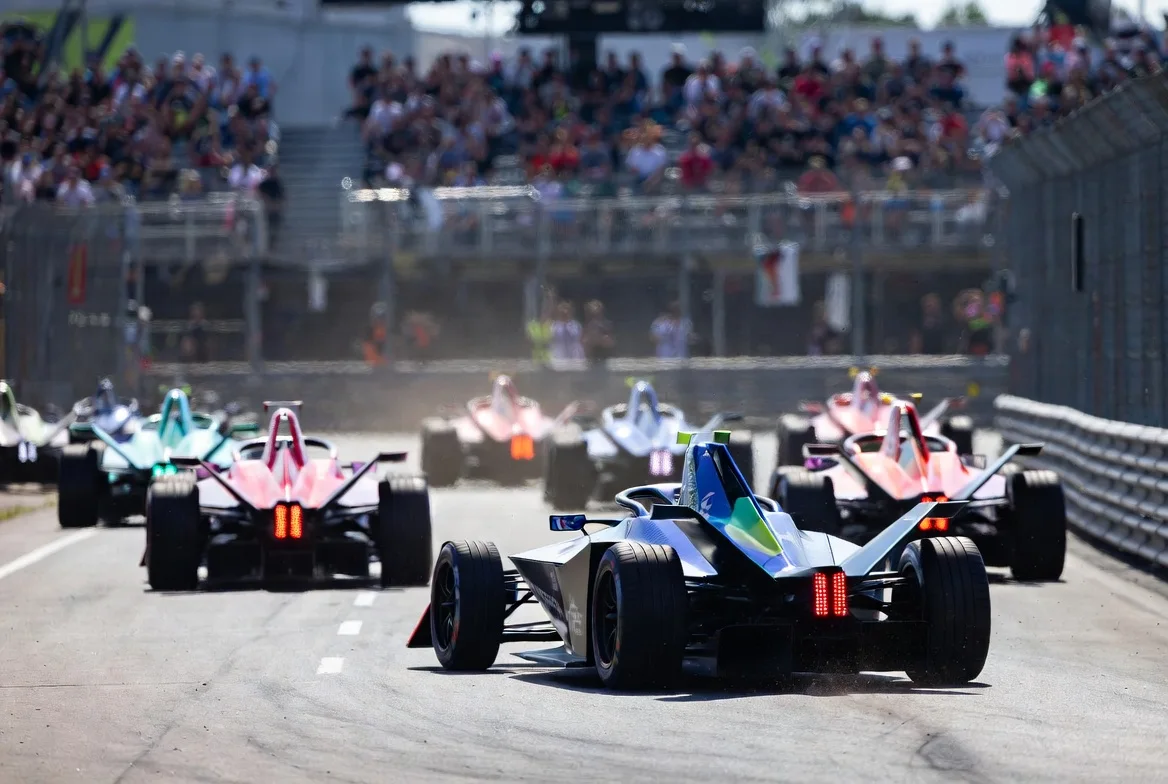

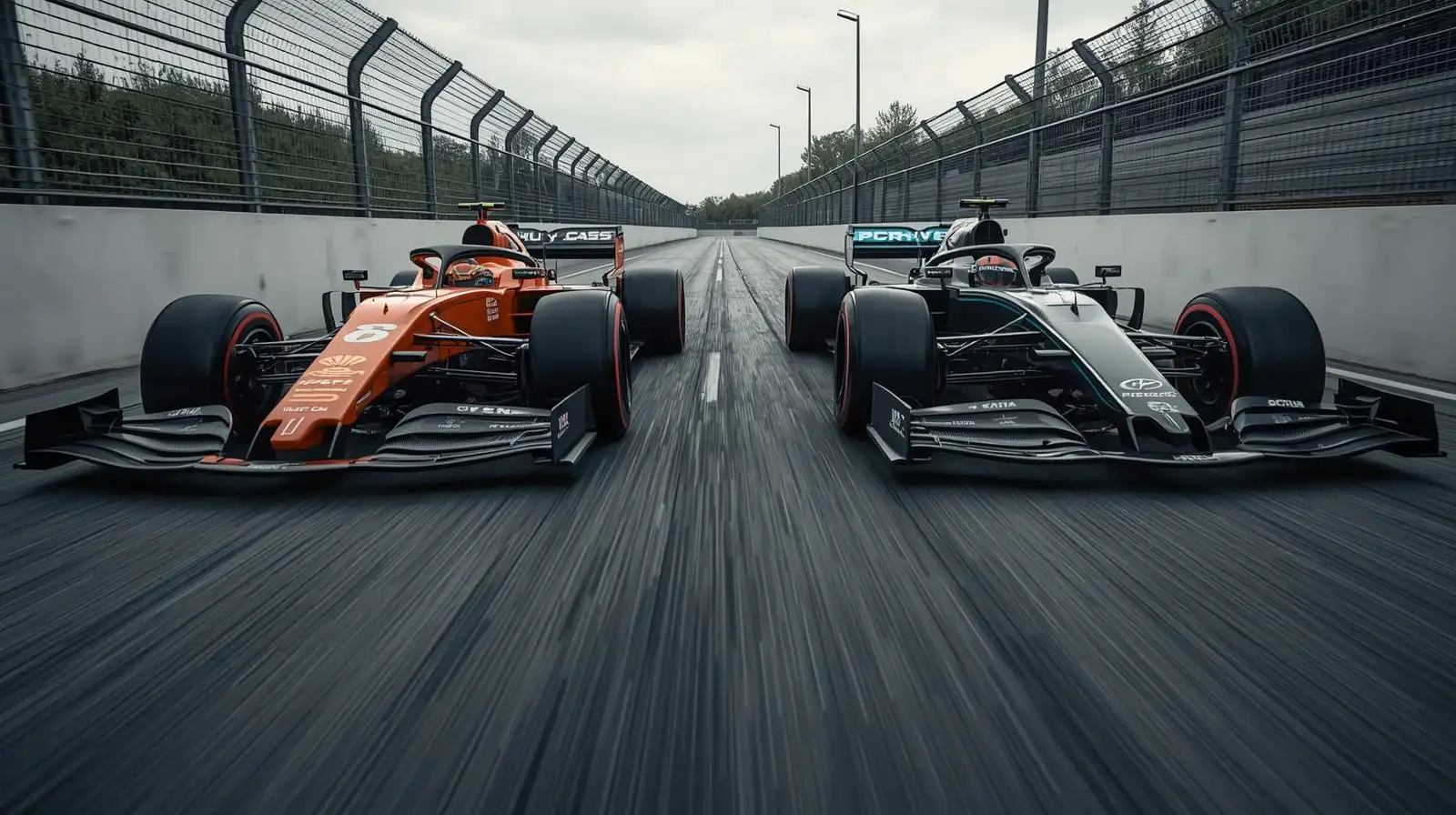
In the world of elite motorsport, the debate between internal combustion and electric power is reaching a fever pitch. Fans often ask: is formula e faster than formula 1? While both represent the absolute peak of their respective technologies, the gap between them is wider than many realize.
Formula 1 remains the undisputed king of speed, utilizing complex hybrid powertrains and aggressive aerodynamics to dominate every circuit. Formula E, however, is the rapidly evolving challenger, proving that sustainable racing can be high-voltage and high-drama. While Formula E is narrowing the margin with every new “Generation” of car, it hasn’t yet caught the titan of the racing world.
Featured Snippet: Is Formula E Faster Than Formula 1?
No, Formula 1 is significantly faster than Formula E. While a Formula E car reaches top speeds of approximately 322 km/h (200 mph), a Formula 1 car can exceed 360 km/h (223 mph). F1 also benefits from superior aerodynamics and higher power-to-weight ratios, leading to much faster lap times.
How Fast Are Formula 1 Cars Compared to Formula E?
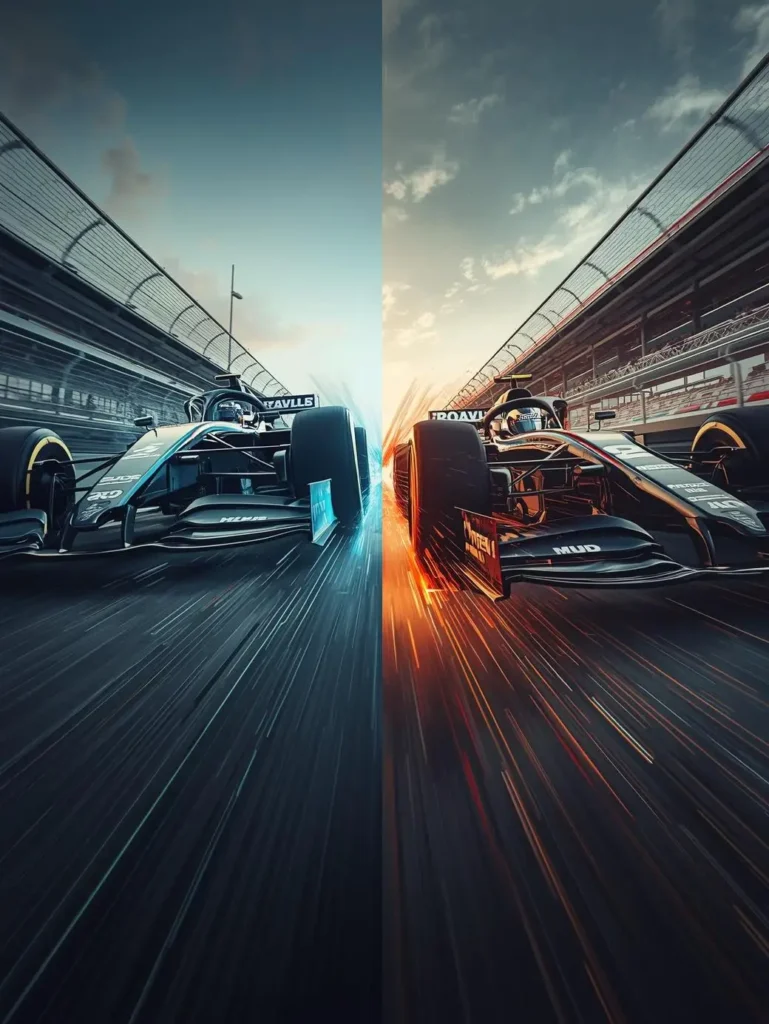
To understand the formula 1 vs e speed dynamic, we have to look at the raw data. Formula 1 cars are currently faster than ever, benefiting from decades of aerodynamic refinement and massive budgets. Formula E is relatively young, having only started in 2014, but its growth trajectory is impressive.
In a recent conversation I had with a performance engineer from the Porsche Formula E team, he noted that the Gen3 cars are “unpredictable beasts” because of their instant torque. However, he admitted that on a traditional permanent circuit, an F1 car operates in a completely different dimension of physics.
Performance Comparison Table
| Metric | Formula 1 | Formula E (Gen3 Evo) |
| Top Speed | ~360+ km/h (223+ mph) | ~322 km/h (200 mph) |
| Power Output | ~1,000 hp (745 kW) | ~470 hp (350 kW) |
| 0–100 km/h | ~2.6 seconds | ~1.82 seconds |
| Weight (min) | 798 kg | 840 kg (inc. driver) |
While Formula E speed vs f1 data shows Formula E is actually quicker off the line (acceleration), Formula 1 takes over almost immediately once the cars move past 100 km/h. F1’s hybrid power units provide a sustained surge of energy that electric batteries can’t yet match without overheating or depleting too rapidly.
Formula 1 vs Formula E 0–100 Acceleration
One area where the “is Formula E faster than Formula 1” debate gets interesting is off the line.
Electric motors are known for instant torque, meaning they deliver maximum rotational force the moment the driver hits the throttle—no buildup, no delay.
That’s why the latest Formula E Gen3 Evo car is such a standout:
- 0–100 km/h: ~1.82 seconds
- F1 cars: ~2.6 seconds
So yes—Formula E is actually quicker off the line.
Why Formula E wins the launch:
- Instant torque: Full power is available immediately, unlike combustion engines.
- Better traction: With all-wheel-drive (AWD) engaged in certain sessions, power is distributed more efficiently.
- No wheelspin struggle: F1 cars send massive power through just two rear tires, often causing wheelspin at low speeds.
Why Formula 1 takes over after that:
Once an F1 car hooks up:
- Aerodynamics kick in: Downforce increases dramatically with speed, improving grip.
- Higher top-end power: F1 engines and hybrid systems dominate at medium-to-high speeds.
- Superior acceleration beyond 100 km/h: This is where F1 “disappears into the distance.”
Formula E vs Formula 1 Lap Times
When looking at Formula E vs Formula 1 lap times, the disparity becomes even more evident. Speed isn’t just about the straight line; it’s about how much velocity a car can carry through a corner. This is where F1’s sophisticated wings and floor-generated “downforce” create a massive advantage.
The best place to compare the two is the Monaco Grand Prix circuit, as both series race there.
- Formula 1 Pole Position (2024): 1:10.270
- Formula E Pole Position (2024): 1:29.861
That is a difference of nearly 20 seconds on one of the shortest tracks on the calendar. On a high-speed circuit like Spa-Francorchamps or Monza, that gap would likely double. The Formula E speed vs f1 comparison shows that while electric cars are great for street racing, they lack the high-speed cornering stability that makes F1 cars the fastest on earth.
Formula E vs Formula 1 Car – What’s the Difference?
The fundamental design philosophy of a Formula E vs Formula 1 car is what dictates the speed gap. A Formula 1 car is designed to be a “high-downforce” machine. It uses the air to push the car down, allowing it to take corners at speeds that would make a normal car flip over.
Formula E cars are designed with “low-drag” in mind. Because battery energy is limited, the car needs to be slippery to maintain efficiency.
- Powertrain: F1 uses a 1.6L V6 turbocharged hybrid engine. FE uses a battery-powered electric motor.
- Tires: Formula 1 uses custom slick tires from Pirelli, designed for maximum grip and performance.
FE uses Hankook all-weather tires that are designed to be sustainable and durable, rather than purely high-grip. - Aerodynamics: F1 cars have hundreds of tiny wings; FE cars have a much cleaner, more streamlined body to save energy.
While the Formula E car vs 1 comparison highlights F1’s dominance, it’s worth noting the evolution. Formula E Gen1 cars were barely faster than a high-end sports car. Gen3 Evo cars are now genuine performance machines that demand world-class reflexes.
Formula E vs Formula 1 Weight Comparison
Weight is one of the biggest factors influencing performance on track—and in this comparison, Formula 1 holds a clear advantage.
Formula E cars are naturally heavier due to their large lithium-ion battery packs. The Gen3 car weighs around 840 kg, which is roughly 42 kg heavier than a modern F1 car. While that difference may seem small on paper, in elite motorsport, even a few kilograms can significantly impact lap times.
Why weight matters:
- Cornering: Heavier cars carry more inertia, making them slower to change direction and less agile through tight turns.
- Braking: More mass means more momentum, so heavier cars require longer distances and greater force to slow down.
- Acceleration: Extra weight reduces responsiveness, especially out of corners.
Formula 1 cars are engineered with extreme precision, using ultra-light materials like carbon fiber and titanium to minimize weight wherever possible. In contrast, Formula E teams must manage the unavoidable “dead weight” of batteries while still delivering competitive performance over a full race distance of about 45 minutes.
In short, while Formula E prioritizes sustainability and electric innovation, Formula 1 still leads when it comes to raw weight efficiency and its direct impact on speed.
Is Formula E Faster Than F2 or F3?
If Formula E isn’t faster than Formula 1, the more interesting question is how it compares to the feeder series—especially Formula 2. And here, the gap is much tighter.
Formula 2 cars, the final step before F1, produce around 620 hp and can reach top speeds of roughly 335 km/h, giving them a clear advantage on faster circuits.
Track-dependent performance:
- High-speed circuits:
F2 cars generally outperform Formula E thanks to higher top speeds and stronger aerodynamic performance. - Tight street circuits:
The difference shrinks significantly. Formula E’s instant torque allows for rapid acceleration out of slow corners, making it highly competitive in “point-and-squirt” sections.
While the horsepower gap between F1 and F2 is around 400 hp, overall performance comparisons show that Formula E currently sits between FIA Formula 3 Championship and Formula 2 in terms of lap times. However, with rapid technological improvements, it’s steadily closing in on F2 territory.
Formula E vs IndyCar – Which Is Faster?
The Formula E vs indycar comparison is another popular request. The IndyCar Series, based in the United States, features cars that are built for high-speed ovals and diverse road courses.
IndyCar represents a “middle ground” in the global speed hierarchy—faster than Formula E and Formula 2, but still several seconds per lap slower than the peak of Formula 1.
Which F1 Race Is the Quickest?
If you are looking for the absolute pinnacle of speed in Formula 1, look no further than the Autodromo Nazionale Monza, famously known as the “Temple of Speed.” This circuit hosts the Italian Grand Prix and consistently sees the highest average speeds of any race on the calendar. In the 2025 season, Max Verstappen set a staggering new record here, with an average race speed of 250.706 km/h (155.781 mph).
The reason Monza is so much faster than other tracks—and light years ahead of any Formula E street circuit—is its layout. It consists of long, sweeping straights where cars can keep the throttle pinned for over 75% of the lap. To achieve these speeds, teams use specialized “low-downforce” aerodynamic kits, featuring rear wings that are almost completely flat to minimize air resistance.
While street circuits in Formula E are designed to test braking and tight cornering, Monza is designed to test the raw power of the hybrid engine. In 2026, the Italian Grand Prix remains the benchmark for velocity. Watching an F1 car fly through the Curva Grande at over 330 km/h is a physical reminder of why the formula 1 vs e speed gap remains so vast.
What Does Max Verstappen Think of Formula E?
Max Verstappen, the multiple-time world champion, has never been one to hide his opinions. As Formula 1 moves toward its 2026 regulations—which feature a much heavier reliance on battery power—Verstappen has been vocal about his desire to keep the two series separate. During a press conference in early 2026, he famously described the new F1 energy management requirements as “Formula E on steroids.”
Verstappen’s criticism isn’t directed at the talent in Formula E, but rather the style of racing it produces. He has often stated that F1 should remain focused on raw engine performance and high-speed aerodynamics rather than “lift-and-coast” energy saving. To Max, the soul of F1 is about being flat-out, whereas Formula E is a game of strategic efficiency.
Despite his critiques, Max has expressed respect for the technology. “I have friends racing there, and the cars are getting really cool and fast,” he noted. However, he remains adamant that he doesn’t want F1 to mimic the electric series. For Verstappen, the “is formula e faster than formula 1” debate is less about the stopwatch and more about the “fun” and “natural” feel of the car.
Why Is Tesla Not in Formula E?
It is the question every electric vehicle enthusiast asks: Why is Tesla not in Formula E? As the world’s most famous EV manufacturer, Tesla seems like a natural fit. However, the reasons for their absence are rooted in a mix of corporate strategy, marketing philosophy, and technical limitations within the racing series itself.
Firstly, Tesla does not follow the traditional marketing model. While brands like Porsche, Jaguar, and Nissan spend millions on Formula E to prove their tech, Tesla famously spends $0 on traditional advertising. They rely on “word of mouth” and the personality of Elon Musk. For Tesla, the “reputational risk” of losing a race in a spec series—where they can’t use their own proprietary battery cells—is simply not worth the investment.
Furthermore, Formula E is a “spec battery” series. Until recently, every team had to use the same battery pack provided by a third party (like Lucid or Williams Advanced Engineering). This means Tesla wouldn’t be able to showcase the “secret sauce” that makes their consumer cars successful. Until the rules allow for open battery development, Tesla is likely to stay on the sidelines, focusing on mass production rather than podium finishes.
Deep Dive: Why Formula 1 Is Still Faster Than Formula E
To truly understand is formula e is faster than formula 1, we must look at the four pillars of racing performance: aerodynamics, tire grip, energy density, and track design. While electric motors are highly efficient, they currently face physical hurdles that the hybrid F1 power unit has already cleared.
The Aerodynamics Dominance
In Formula 1, aerodynamics is everything. An F1 car is essentially an upside-down airplane wing. At high speeds, the air creates “downforce,” which can be as much as three times the weight of the car. This allows a driver to take a corner at 250 km/h that a Formula E car would have to take at 120 km/h. Formula E cars are built with “low-drag” bodies to preserve battery life, meaning they simply don’t have the “stickiness” to compete in fast corners.
Tire Grip and Compound Physics
F1 uses massive, bespoke Pirelli “slick” tires. These are wide, soft, and designed to melt slightly to create a chemical bond with the asphalt. Formula E, by contrast, uses all-weather tires. These are narrower and have treads so they can be used in both rain and sunshine. While this is great for sustainability, it means the “mechanical grip” is significantly lower. During a private test session I attended in Valencia, a driver explained that sliding a Formula E car is like “driving on ice” compared to the locked-in feel of an F1 machine.
The Energy and Weight Barrier
The most significant hurdle is the energy density of the fuel. A liter of gasoline contains vastly more energy than a kilogram of lithium-ion battery. Because F1 uses a hybrid system, it can “harvest” energy under braking but still rely on the fuel for raw, sustained power. Formula E must carry its entire energy source in a heavy battery pack. This added weight makes the car less agile and limits how long it can stay at its top speed of 322 km/h.
Track Design Differences
Finally, F1 races on permanent circuits like Spa or Silverstone, which have wide run-off areas and smooth surfaces. Formula E races on tight, bumpy city streets. You cannot drive 360 km/h through the streets of London or Rome without it being a safety disaster. Therefore, the Formula E speed vs f1 gap is partially a result of the environments they were built to inhabit.
When Will Formula E Be Faster Than F1?
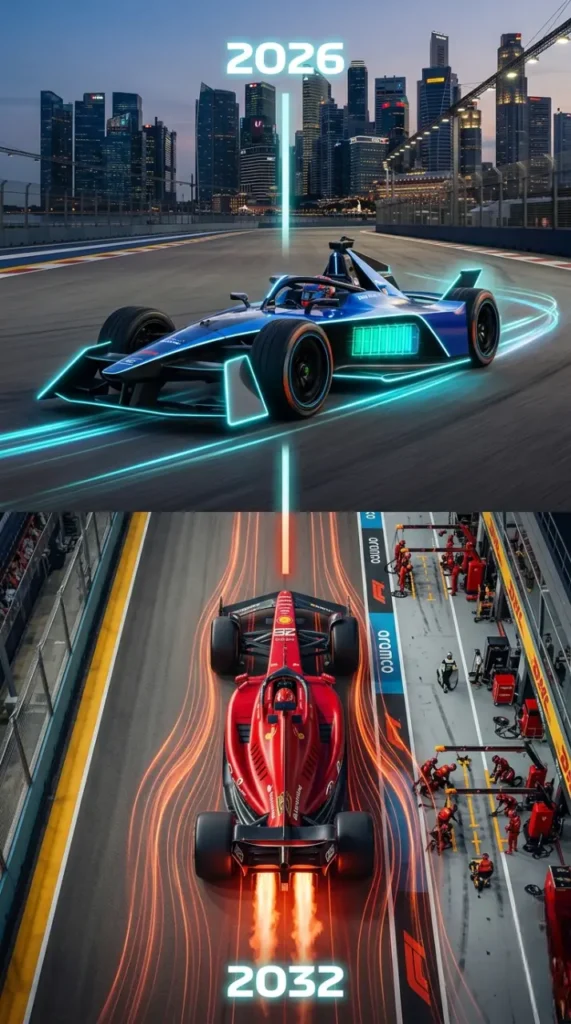
The timeline for when Formula E might catch F1 is a moving target. Current estimates from series CEO Jeff Dodds suggest that we might see “head-to-head” performance parity by Generation 5 (Gen5), which is expected around 2030-2032. The key to this leap is solid-state battery technology.
Solid-state batteries promise to be lighter, safer, and much faster to charge than the current liquid-electrolyte versions. If a Formula E car can shed 150 kg of weight while doubling its power output to 800+ kW, the lap times will plummet. However, F1 is also evolving. With the 2026 hybrid shift, F1 is becoming more “electric” itself, creating a moving finish line that Formula E is constantly chasing.
Realistically, Formula E may become faster in terms of acceleration almost immediately. We already see this with the Gen3 Evo hitting 0-100 km/h in 1.82 seconds. But for total lap speed on a traditional track, we are likely at least a decade away from a true “changing of the guard.”
Formula E Gen 1 vs Modern Cars
To appreciate the current Formula E car vs 1 comparison, you have to look at where the series started. The Formula E Gen 1 car (2014-2017) was a humble beginning. It had a top speed of only 225 km/h and, most famously, didn’t have enough battery to finish a race. Drivers actually had to hop out of one car and jump into a second car halfway through the Grand Prix!
The leap to the Gen3 and Gen3 Evo cars has been monumental. We have gone from car swaps and 150 kW of power to 350 kW and ultra-fast charging stops. The cars have become lighter, smaller, and significantly more aggressive. While Gen1 looked like a science project, Gen3 Evo looks—and performs—like a legitimate fighter jet for the road.
How Does Formula E Work? (Beginner Section)
If you are new to the series, you might be confused by how a race actually functions. How does Formula E work differently than F1?
- Attack Mode: Drivers must drive off the racing line through a specific “Activation Zone” to unlock an extra 50 kW of power for a few minutes.
- Energy Management: Drivers have a limited amount of “usable energy.” If they use it all before the finish line, their car will shut down.
- Regen Braking: In Gen3 cars, about 40% of the energy used to finish the race is actually “created” by the car itself during braking.
It is a sport that rewards intelligence as much as it rewards bravery. You aren’t just racing the person next to you; you are racing the battery percentage on your dashboard.
Frequently Asked Questions
Is Formula E as fast as Formula 1?
No, F1 is much faster. A Formula 1 car can reach 360 km/h and has massive downforce for cornering, whereas Formula E tops out at around 322 km/h and is designed for lower-speed street circuits.
Is Formula E faster than F2?
It depends on the track. On a high-speed permanent circuit, F2 is usually faster due to its 335 km/h top speed. However, on tight street circuits, the instant acceleration of a Formula E car can make it more competitive.
Why is Formula 1 faster than Formula E?
F1 has three main advantages: its hybrid engines produce ~1,000 hp (double Formula E), it is lighter (batteries are heavy), and it has much more advanced aerodynamics that allow for incredible cornering speeds.
Will Formula E ever be faster than F1?
It is possible, but not in the near future. Solid-state battery technology and Gen5 regulations (around 2030) might allow Formula E to challenge F1’s lap times, but F1 continues to innovate as well.
Can a Formula E car race on an F1 track?
Yes, and they do! They race at the Circuit de Monaco every year. However, the lap times show that a Formula E car is currently about 15 to 20 seconds slower per lap than a Formula 1 car.
Final Verdict: Is Formula E Faster Than Formula 1?
The final answer is a resounding no. Formula 1 remains faster in every measurable way—top speed, cornering velocity, and total race time. It is the pinnacle of human engineering, built without the weight constraints of a massive battery.
However, the is formula e faster than formula 1 question ignores the real victory of Formula E. It is the fastest-accelerating car in the world from 0-100 km/h, and it is doing so while being 100% carbon neutral. If you want raw, earth-shaking speed, watch F1. If you want to see the future of technology being built in real-time on city streets, watch Formula E.
References & Sources
- FIA – 2026 Formula 1 Technical Regulations Overview
- Formula E – Gen3 Evo Technical Specifications and Performance Data
- Journal of Automobile Engineering – Comparative Analysis of Hybrid vs Electric Powertrains in Motorsport
- SAE International – Aerodynamic Challenges in Open-Wheel Electric Racing
- Motorsport Magazine – The 2026 F1 Power Unit Revolution