

The roar of a traditional engine is being replaced by the high-pitched hum of electric innovation. Formula E represents the pinnacle of sustainable motorsport, proving that racing can be both thrilling and eco-friendly.
Created by the Fédération Internationale de l’Automobile (FIA), this series serves as a competitive laboratory. It pushes the boundaries of electric vehicle (EV) technology while bringing the race directly to the people in iconic city centers.
While Formula One focuses on sheer aerodynamic speed and hybrid power, Formula E is about efficiency and urban accessibility. It is the only sport that allows fans to see world-class racing without leaving the heart of the city.
In this guide, we will explore everything from the lightning-fast Gen3 cars to the strategic complexity of energy management. Whether you are a casual fan or a tech enthusiast, understanding what is Formula E is the first step into the future of racing.
What Is Formula E Racing?
Formula E racing is the world’s first all-electric FIA World Championship. Formula E launched in 2014 with a clear mission: to demonstrate the potential of sustainable energy and accelerate the adoption of electric vehicles globally.
Unlike traditional motorsports that take place on remote permanent tracks, Formula E is famous for its street circuits. These “Pop-up” tracks are built in the middle of cities like London, Tokyo, and Monaco, offering a unique urban spectacle.
Because every car starts with a limited amount of energy, drivers cannot simply drive at full throttle for the entire duration. They must balance speed with conservation.
I recently had the opportunity to stand trackside at the London E-Prix and speak with a senior technician from the Jaguar TCS Racing team. He explained that the “silence” of the cars is a misconception; the sound of tires scrubbing and the gearbox whining creates an intense, visceral atmosphere.
During our conversation, the technician noted that the strategy evolves every second. He pointed out that “winning in race isn’t just about being the fastest driver; it’s about being the smartest energy manager on the grid.”
What Is the Formula E World Championship?
The Formula E World Championship is a global series consisting of several rounds, known as E-Prix. Much like other elite sports, it crowns two champions at the end of each season: a Drivers’ Champion and a Teams’ Champion.
The championship standings are determined by a points system similar to Formula 1. The winner of a race receives 25 points, with points trickling down to the tenth-place finisher. Additional points are awarded for securing “Julius Baer Pole Position.”
The schedule typically runs from January to July, visiting diverse climates and time zones. This global calendar tests the thermal management of the batteries in both the blistering heat of Diriyah and the humid streets of São Paulo.
Maintaining a high position in the formula e standings requires incredible consistency. Because street tracks are narrow and unforgiving, one small mistake can end a driver’s championship hopes in an instant.
What Is a Formula E Race (E-Prix)?
A Formula E race, officially called an E-Prix, is designed to be a compact and high-intensity event. Most E-Prix take place on Saturdays or Sundays, with practice, qualifying, and the race often happening on the same day.
The race duration is typically around 45 minutes plus one lap. However, in recent seasons, the FIA has experimented with a set number of laps to make the energy targets more predictable for fans while remaining challenging for teams.
Energy management is the defining feature of an E-Prix. Drivers use regenerative braking to “harvest” energy back into the battery while decelerating. This allows them to finish the race with more energy than they technically started with.
Cities like Hyderabad and Seoul have hosted spectacular E-Prix, showing how the sport can adapt to different urban infrastructures. These races turn public roads into high-tech arenas, bringing a festival-like atmosphere to the local community.
What Is a Formula E Racing Car Called?
A Formula E racing car is a marvel of electrical engineering, currently represented by the “Gen3” and the newly introduced “Gen3 Evo.” These cars are the fastest, lightest, and most powerful electric single-seaters ever built.
The Gen3 car is significantly different from a traditional internal combustion engine (ICE) vehicle. It features two powertrains: one at the rear for drive and one at the front primarily for energy recovery.
One of the most shocking facts about the Gen3 car is that it has no rear hydraulic brakes.
The formula e car price is difficult to pin down because it includes millions in research and development. However, the “spare parts” and chassis are capped by the FIA to ensure that smaller teams can remain competitive against manufacturing giants.
The transition to Gen3 has also introduced sustainable materials. The tires are made from recycled rubber and natural fibers, and the bodywork includes linen and recycled carbon fiber from retired Gen2 cars.
How Fast Do Formula E Cars Go?

One of the most frequent questions from new fans is: how fast do formula e cars go? With the arrival of the Gen3 Evo, the performance gap between electric racing and traditional series is closing faster than ever before.
Top Speed and Acceleration
The current generation of Formula E cars can reach a top speed of over 200 mph (322 km/h). While this is slightly lower than the 230 mph seen in Formula 1, the acceleration is where these electric machines truly shine.
A Gen3 Evo car can accelerate from 0 to 60 mph in just 1.82 seconds. This is roughly 30% faster than a current Formula 1 car, making them the quickest accelerating FIA single-seaters on the planet.
Formula E Speed vs. Formula 1
When comparing formula e speed to F1, it is important to look at the environment. F1 cars are designed for massive downforce on wide, sweeping circuits. Formula E cars are designed for the “stop-and-go” nature of tight street tracks.
In a direct comparison, an F1 car would win on a long circuit like Silverstone due to its higher top speed and cornering grip. However, in a short sprint through a city street, the instant torque of the Formula E motor provides a massive advantage.
Performance Statistics
| Feature | Formula E (Gen3 Evo) | Formula 1 |
| Top Speed | 200+ mph | 230+ mph |
| 0-60 mph | 1.82 seconds | ~2.6 seconds |
| Max Power | 350kW | ~750kW (Hybrid) |
| Regen Capacity | 600kW | Low |
The “Formula E speed” is more than just a number; it is a demonstration of how far battery density and motor efficiency have come in just one decade.
Formula E Rules Explained
Understanding how does formula e work requires a look at the unique set of rules that govern the sport. The FIA has designed these regulations to prioritize strategic thinking over raw spending power.
Qualifying uses a unique “Duel” format. .This ensures that the fastest driver truly earns their spot at the front.
During the race, every driver must manage a specific energy allocation. If a driver uses too much energy too early, they will be forced to slow down significantly at the end of the race, or they may even fail to finish.
Pit stops in Formula E are rare but are set to become more frequent with the introduction of “Attack Charge” technology. This will allow cars to receive a high-speed boost of energy in under 30 seconds, adding another layer to the strategy.
What Is Attack Mode in Formula E?
Attack Mode is the strategic heartbeat of a Formula E race. It is a unique sporting regulation that allows drivers to access an extra 50kW of power (taking the total to 350kW) for a limited period. This surge in energy is often the difference between a successful overtake and getting stuck in a defensive train.
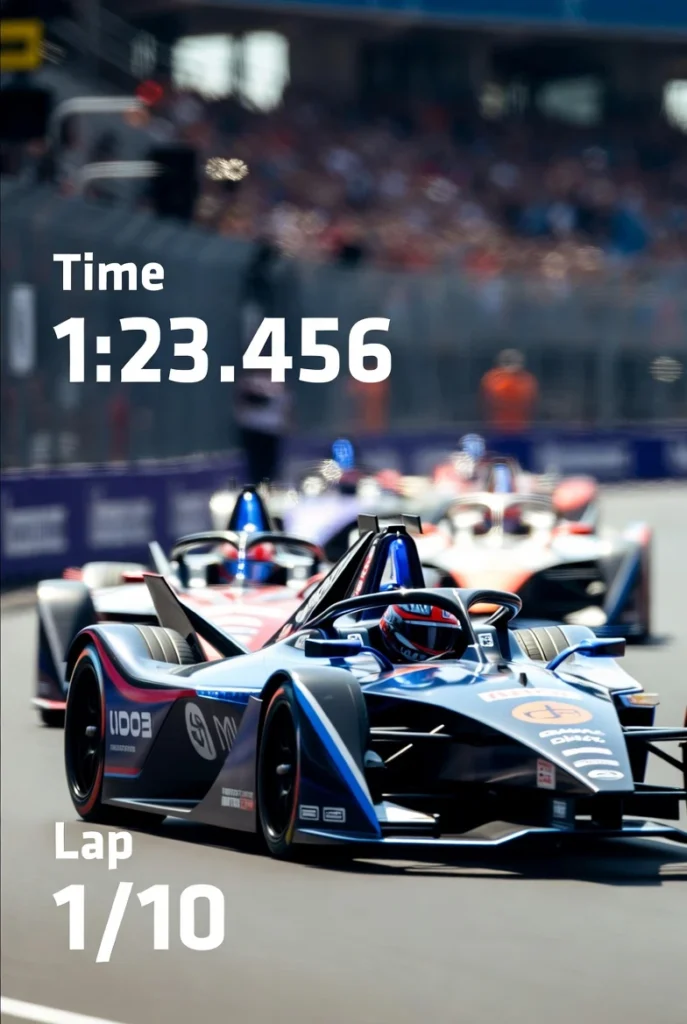
To activate Attack Mode, a driver must take a risk. Race officials strictly require drivers to leave the optimal racing line and pass through a dedicated “Activation Zone” located on a slower part of the track. By taking this slower line, drivers momentarily lose time or positions, but they then gain a power boost that makes them significantly faster for the next several minutes.
In the current Season 12, Attack Mode has been refined for even greater tactical depth. For most races, drivers have a total allocation of time (typically 6 or 8 minutes) which they can split into different “hits,” such as two activations of three minutes each. The timing is crucial; using it too early might waste the power in a traffic jam, while saving it too late could leave the driver vulnerable to the “Attack Charge” stops of their rivals.
Strategic variability is what makes this feature so compelling. Teams use advanced AI simulations to determine the exact lap a driver should “arm” their Attack Mode. During a recent event in Berlin, I spoke with a performance engineer who noted that “the window for activation is often less than three seconds wide; if you miss the sensor, you’ve essentially handed the win to your opponent.”
What Is FanBoost?
For much of Formula E’s history, FanBoost was a revolutionary way for the audience to influence the race. It allowed fans to vote online for their favorite drivers, and the top five most popular drivers received a five-second burst of extra energy to use in the second half of the race.
While FanBoost was a landmark in fan engagement, race officials officially discontinued it after Season 8. The sport overall made this move as it transitioned into the more professional “World Championship” era, where teams and drivers preferred determining results purely by technical skill and strategy rather than social media popularity.
Even though it is no longer part of the rules, FanBoost paved the way for modern fan interaction in sports. It proved that a digital audience wants to be more than just spectators—they want to be part of the competition. Today, that engagement continues through the Formula E Predictor and interactive “Gaming Zones” at every E-Prix.
Formula E Drivers and Teams
The Formula E teams list reads like a “Who’s Who” of the automotive and tech worlds. Major manufacturers like Porsche, Jaguar, Nissan, and Mahindra compete directly, using the track to develop the motors and inverters that will eventually power their consumer road cars.
The drivers in this series are among the elite in motorsport. Many come from successful careers in Formula 1, IndyCar, or WEC. Names like Pascal Wehrlein, Mitch Evans, and Stoffel Vandoorne are household names in the paddock. Teams pay these athletes as highly paid professionals, with top-tier driver salaries ranging from $1 million to $5 million per season, reflecting the high stakes and technical difficulty of the series.
What is Formula E’s appeal to these drivers? It is the level playing field.
Because teams standardize the chassis and batteries, drivers must focus on managing energy, and teams must apply their skill in writing the software that controls the motor. In this “Software-Defined Racing,” a driver’s intelligence is just as valuable as their bravery.
Formula E vs Formula 1 – What’s the Difference?
When people ask “what is Formula E vs Formula 1,” they are often looking for a winner. In reality, the two series are complementary rather than competitive. While F1 is the “pinnacle of speed,” Formula E is the “pinnacle of efficiency.”
The most obvious difference is the sound. An F1 car produces a thunderous 130dB roar from its hybrid V6, while a Formula E car produces a high-pitched 80dB whistle. This lower noise level is what allows Formula E to race in the middle of cities without violating noise ordinances.
Technical Comparison Table
| Feature | Formula E (Gen3 Evo) | Formula 1 |
| Engine / Motor | 100% Electric | Hybrid V6 Turbo |
| Top Speed | ~200 mph | ~230 mph |
| 0-60 mph | 1.82 seconds | ~2.6 seconds |
| Race Tracks | Urban Street Circuits | Permanent Road Courses |
| Energy Source | Sustainable Batteries | Sustainable Fuels (from 2026) |
| Pit Stops | 30s Attack Charge | 2.5s Tire Changes |
Is Formula E faster than F1? In a straight-line sprint to 60 mph, the Gen3 Evo actually beats a modern F1 car. However, F1 remains faster over a full lap due to its massive aerodynamic downforce. As for which is “harder,” many drivers who have raced in both say Formula E is more mentally taxing because you are constantly calculating energy math while driving at the limit.
Is Formula E Popular?
The popularity of Formula E has skyrocketed in recent years. By the end of Season 11, the global cumulative TV audience surpassed 560 million viewers, a record high for the series. Its appeal lies in its “Festival of Speed” atmosphere, combining world-class racing with live music and tech exhibitions.
The series is particularly popular with a younger, “climate-conscious” demographic. Because the races happen in major cities like Tokyo and London, they are easily accessible to urban dwellers who might never travel to a remote F1 track. This “City Racing” model is the secret to its rapid growth.
Formula E Evo Sessions Explained
The Formula E Evo Sessions are specialized testing and development blocks designed to bridge the gap between car generations. These sessions allow the FIA and manufacturers to test new software, tire compounds, and aerodynamic tweaks in a controlled racing environment.
In Season 12, these sessions have been critical for perfecting the Gen3 Evo‘s all-wheel-drive system. By testing different “torque vectoring” algorithms during these sessions, the series ensures that the cars remain stable and safe while delivering the mind-bending 1.8-second acceleration that fans love.
Formula E Official Website and Where to Follow Races
The best place to stay updated is the Formula E official website (fiaformulae.com). Here, you can find live formula e standings, detailed race results, and the full formula e schedule for Season 12.
Major networks like CBS (USA), TNT Sports (UK), and Fuji TV (Japan) broadcast races globally. Formula E also streams most qualifying sessions and practice rounds for free on its YouTube channel, making it one of the most digitally accessible motorsports in the world.
Common Questions About “Formula E”
Is Formula E faster than F1?
In terms of acceleration from 0 to 60 mph, yes (1.82s vs 2.6s). However, F1 has a higher top speed and faster cornering speeds on permanent tracks.
Will Formula E replace Formula 1?
It is unlikely. Both series have different goals and are moving toward a 2030 goal of carbon neutrality. They coexist as the twin peaks of motorsport technology.
Does Formula E drivers get paid?
Yes, they are elite professionals. Top drivers can earn over $2 million per year, plus bonuses and sponsorships.
How does Formula E work?
Cars use 100% electric power from a battery. Drivers must manage this energy over a set number of laps, using regenerative braking to extend their range while utilizing strategic “Attack Mode” boosts.
Clarifying the “Formula E” Confusion in Science and Math
While Formula E is a global racing series, the letter “E” is one of the most common variables in science and mathematics. This often causes confusion in search results.
Math and Finance
In finance, e refers to Euler’s number (approximately 2.718). This is used in the continuous compound interest formula where represents the base of natural logarithms.
In spreadsheet software like Excel, E is used for scientific notation (e.g., $1.05E+06$ means $1,050,000$). It is also the name of the EXP function, used to calculate powers of Euler’s number.
Final Thoughts
Formula E is no longer just a “green alternative”; it is a standalone powerhouse of competition. As we look toward the Gen4 era in 2026/2027, the technology will only get faster. We are expecting charging speeds to reach 800kW and regenerative braking to become even more aggressive.
I recently visited a local school in East London following the London E-Prix. One student told me that seeing the electric cars zip through their streets made them want to become an electrical engineer rather than a driver.

