Modern car engines come in many shapes and sizes, but most passenger vehicles use one of three fundamental engine layouts: Inline (Straight) engines, V engines, and Flat (Boxer) engines. While all three layouts perform the same basic task—converting fuel into motion—the way their cylinders are arranged dramatically affects how an engine sounds, performs, vibrates, handles, and even how easy it is to maintain.
For many drivers, engine layouts can seem like a complicated engineering topic reserved for mechanics and automotive enthusiasts. However, understanding the differences is surprisingly simple when explained in practical terms. Whether you’re buying a car, reading specifications online, or simply curious about why some engines sound smoother than others, learning about engine layouts provides valuable insight into how vehicles are designed.
The Basic Job of an Engine
Before discussing layouts, it’s important to understand that every piston engine works in essentially the same way.
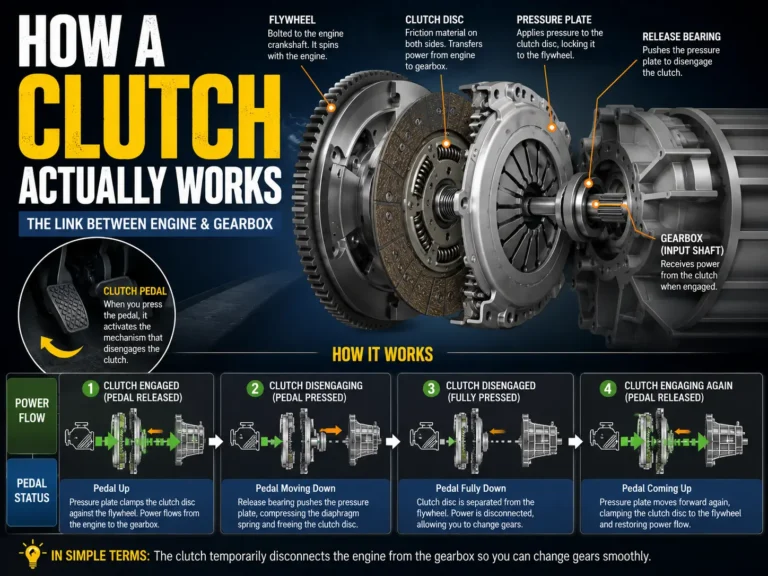
Inside an engine are cylinders containing pistons that move up and down. Fuel and air are burned inside these cylinders, creating pressure that pushes the pistons. The pistons then turn a crankshaft, which ultimately rotates the wheels.
The key difference between engine layouts is not how the cylinders work, but where those cylinders are positioned relative to each other.
Think of it like arranging six people in a room. They can stand in a straight line, form two angled rows, or face each other from opposite sides. The people remain the same, but the arrangement changes how much space they occupy and how they move together.
That same principle applies to engines.
Inline Engines: The Straightforward Design

An inline engine, sometimes called a straight engine, places all cylinders in a single row.
Imagine lining up four or six soda cans side by side. That’s essentially how an inline engine is arranged.
Examples include:
- Inline-3 engines found in many small economy cars
- Inline-4 engines used in most modern vehicles
- Inline-6 engines found in luxury and performance cars
Why Manufacturers Love Inline Engines
The biggest advantage of an inline engine is simplicity.
Because all cylinders sit in one line, there is only one cylinder head, one exhaust side, and fewer components overall. This makes manufacturing easier and often reduces maintenance costs.
An inline-four engine is particularly popular because it balances efficiency, performance, and affordability.
Many vehicles from Toyota, Honda, and Hyundai rely on inline-four engines for this reason.
Advantages of Inline Engines
Simple construction
Fewer parts generally mean lower production costs and easier repairs.
Better fuel economy
The compact design helps manufacturers create lighter vehicles, improving efficiency.
Lower maintenance costs
Having a single cylinder head and simpler layout often makes servicing easier.
Excellent packaging for small cars
Inline-four engines fit well in front-wheel-drive vehicles where space is limited.
Disadvantages of Inline Engines
As cylinder count increases, the engine becomes longer.
An inline-six is much longer than a V6, which can make fitting it into smaller vehicles difficult.
The engine’s height can also be an issue because all cylinders are stacked vertically.
How Inline Engines Feel
Most drivers describe inline-four engines as practical and efficient.
Inline-six engines, however, are famous for their smoothness. Many enthusiasts consider them among the smoothest piston engines ever built because their moving parts naturally balance each other.
V Engines: More Cylinders in Less Space

A V engine divides cylinders into two separate banks that meet at an angle, forming the shape of the letter “V.”
Instead of placing six cylinders in one long row, engineers split them into two groups of three.
This arrangement allows more cylinders to fit into a shorter engine block.
Common examples include:
- V6 engines
- V8 engines
- V10 engines
- V12 engines
Why V Engines Exist
As vehicles became larger and more powerful, manufacturers needed engines with additional cylinders.
A long inline-eight would be impractical for most vehicles because it would occupy too much space.
By arranging cylinders in a V shape, engineers could create powerful engines without making them excessively long.
Advantages of V Engines
More power potential
V engines often contain more cylinders, allowing greater power output.
Compact length
A V6 is significantly shorter than an inline-six.
Ideal for larger vehicles
SUVs, trucks, luxury sedans, and sports cars benefit from this packaging advantage.
Improved weight distribution
The shorter engine helps engineers position weight more effectively within the vehicle.
Disadvantages of V Engines
The design is more complex.
A V engine typically requires:
- Two cylinder heads
- More camshafts
- Additional gaskets
- More complex exhaust routing
This complexity can increase production and repair costs.
Why V8 Engines Sound Different
Many people notice that V8 engines have a deep, powerful rumble.
This distinctive sound comes from firing order, exhaust design, and the spacing between combustion events.
The uneven pressure pulses create the iconic muscle-car soundtrack associated with American performance vehicles.
Examples include vehicles from Ford and Chevrolet.
How V Engines Feel
Drivers often describe V engines as powerful and effortless.
A V6 usually provides smoother acceleration than a four-cylinder engine, while V8 engines deliver strong low-end torque that makes heavy vehicles feel responsive.
Flat Engines: The Boxer Approach

A flat engine, commonly called a boxer engine, places cylinders horizontally on opposite sides of the crankshaft.
Instead of pointing upward, the pistons move sideways.
Imagine two boxers standing face-to-face and punching toward each other simultaneously. That motion inspired the name “boxer engine.”
How Boxer Engines Work
The cylinders are arranged in opposing pairs.
When one piston moves outward, the piston directly opposite moves outward as well.
This creates a naturally balanced motion that reduces vibration.
Advantages of Flat Engines
Extremely low center of gravity
Because the engine sits low in the chassis, vehicle handling improves.
Excellent balance
Opposing pistons cancel many vibrations naturally.
Enhanced cornering stability
A lower center of gravity helps reduce body roll during turns.
Unique sound character
Boxer engines produce a distinctive exhaust note appreciated by enthusiasts.
Disadvantages of Flat Engines
The primary drawback is width.
While a boxer engine is short and low, it is much wider than either an inline or V engine.
This can make engine bay packaging more difficult.
Maintenance may also require additional labor because some components are harder to reach.
Famous Boxer Engine Manufacturers
The two most recognized users of boxer engines are:
- Subaru
- Porsche
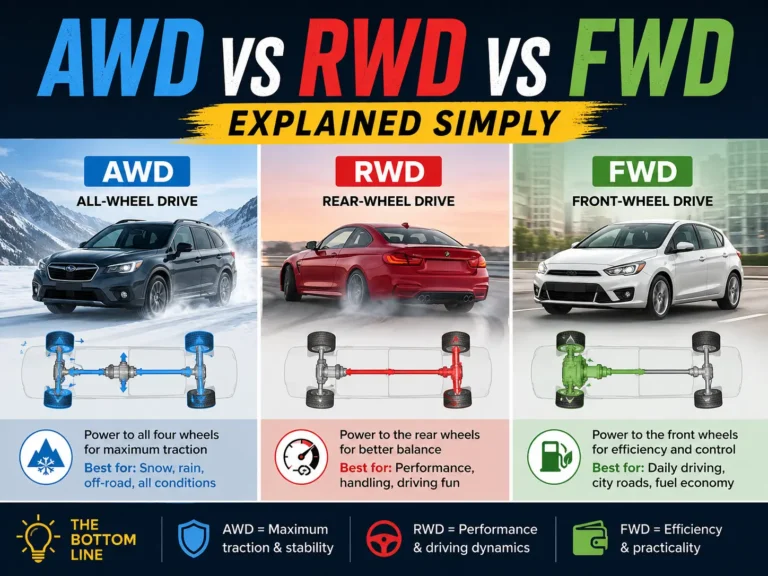
Many of Subaru’s all-wheel-drive vehicles use boxer engines specifically because the low center of gravity enhances handling.
Porsche has relied on flat-six engines for decades in the iconic Porsche 911.
How Flat Engines Feel
Drivers often report that boxer-powered cars feel planted and stable, especially during cornering.
The engine’s low mounting position contributes significantly to this sensation.
Comparing the Three Layouts
The easiest way to visualize the differences is to think about shape.
| Layout | Shape | Main Strength |
|---|---|---|
| Inline | Long and narrow | Simplicity |
| V | Short and compact | Power in limited space |
| Flat | Wide and low | Balance and handling |
Each design prioritizes different engineering goals.
Which Layout Is Smoothest?
Smoothness depends on both cylinder count and layout.
Generally:
- Inline-six
- Flat-six
- V12
- V6
- Inline-four
The legendary reputation of inline-six engines comes from their near-perfect balance.
Many luxury manufacturers continue using them because they deliver exceptional refinement without requiring complex balancing systems.
Which Layout Produces the Most Power?
Engine layout alone does not determine power.
Displacement, turbocharging, fuel delivery, compression ratio, and tuning have much greater influence.
However, V engines are often chosen for high-performance applications because their compact packaging allows engineers to fit larger engines into vehicles.
Many supercars use V8, V10, or V12 configurations for this reason.
Which Layout Is Best for Handling?
When handling is the priority, flat engines have a major advantage.
Because the engine sits lower in the chassis, the vehicle’s center of gravity decreases.
A lower center of gravity reduces weight transfer during cornering and improves stability.
This is one reason why Porsche continues to use boxer engines in sports cars.
Which Layout Is Cheapest to Maintain?
In most cases, inline engines are the most affordable to maintain.
The reasons are straightforward:
- Fewer components
- Simpler design
- Easier access to parts
- Lower labor costs
A typical inline-four engine generally costs less to service than a comparable V6 or boxer engine.
Why Manufacturers Choose Different Layouts
Engineers select layouts based on vehicle goals.
A compact commuter car benefits from a simple inline-four.
A family SUV may require the extra power of a V6.
A sports car designed for exceptional handling may use a boxer engine.
There is no universally perfect design because every vehicle prioritizes different characteristics.
The Future of Engine Layouts
As hybrid and electric vehicles become more common, engine layouts are becoming less important than they once were.
However, millions of vehicles worldwide still rely on internal combustion engines, and these three layouts remain the foundation of modern automotive engineering.
Even today, manufacturers continue refining inline, V, and boxer designs with turbochargers, direct injection systems, and advanced electronics to improve performance and efficiency.
Conclusion
Inline, V, and flat engines all perform the same essential task, but they achieve it in remarkably different ways.
Inline engines emphasize simplicity, affordability, and efficiency. V engines maximize power while keeping engine length manageable. Flat engines prioritize balance, stability, and handling through their low center of gravity.
For most drivers, an inline-four provides the ideal combination of economy and reliability. Those seeking stronger performance often prefer V6 or V8 engines, while driving enthusiasts appreciate the unique characteristics of boxer engines.
Understanding these layouts makes it easier to evaluate vehicles and appreciate the engineering decisions hidden beneath the hood. Once you recognize how cylinder arrangement influences performance, refinement, maintenance, and handling, engine specifications become much more meaningful than simple numbers on a brochure.