
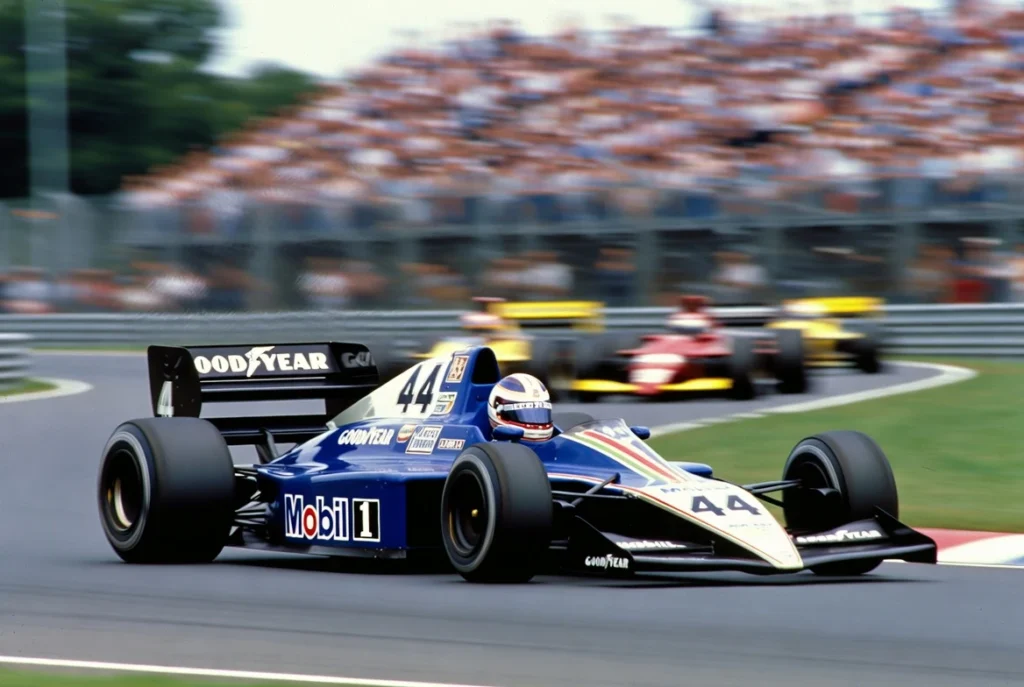
Imagine standing in the pit lane as the sun begins to dip, the air thick with the smell of scorched rubber and high-octane fuel.
This is the heart of a Formula 1 race weekend, where the difference between glory and the back of the pack is measured in thousandths of a second. For fans, formula 1 qualifying is often more intense than the race itself.
It is a high-speed knockout tournament where the world’s most elite drivers push machines to their absolute breaking point.
Whether you are tuning in from home or sitting in the grandstands, understanding the nuances of the “flying lap” is essential. In this Formula 1 qualifying guide 2026, we will break down the rules, the schedule, and the raw science behind the hunt for pole position.
What Is Formula 1 Qualifying?
To the uninitiated, f1 qualifying explained is quite simple: it is the session that determines the starting order for Sunday’s Grand Prix.
However, to the teams, it is a complex mathematical puzzle involving aerodynamics, tire chemistry, and human nerves. The driver who sets the fastest time earns “Pole Position,” starting at the very front of the grid.
This position is vital because leading into the first corner significantly reduces the risk of mid-pack collisions.
Furthermore, starting at the front allows a driver to dictate the pace of the race without dealing with the “dirty air” from cars ahead. How qualifying works in f1 has evolved over decades, but the current knockout format remains the most thrilling version to date.
How Does Formula 1 Qualifying Work?

The session is split into three distinct segments, commonly known as Q1, Q2, and Q3. During these windows, drivers must set their fastest possible lap time to avoid being “knocked out” of the competition.
If a driver is eliminated in the first segment, they will start the race toward the back.
As a former strategist, I’ve sat on the pit wall watching live telemetry traces that would make your head spin. During a recent conversation I had with a senior performance engineer at the Miami Grand Prix, he noted that the 2026 car setup is a “tightrope walk.” One gust of wind or a drop in track temperature can ruin an entire weekend’s work.
Q1: The Initial Elimination
The first segment, Q1, lasts for 18 minutes. All 20 cars take to the track at once, creating a chaotic “traffic jam” as drivers look for a clear gap.
At the end of the session, the five slowest drivers are eliminated and locked into positions 16 through 20 on the grid.
For the top teams, Q1 is about doing the bare minimum to stay safe while saving fresh sets of tires for later.
However, for the bottom-tier teams, this is their most stressful 18 minutes of the week. One small mistake here means their primary televised exposure for the weekend is effectively over.
Q2: The Tactical Middle Ground
The remaining 15 cars move into Q2, which lasts for 15 minutes. Again, the goal is simple: don’t be in the bottom five. The drivers who finish 11th through 15th are eliminated and take those respective spots on the Sunday starting grid.
In past seasons, tire rules in Q2 were used to dictate race strategy, but the current 2026 regulations focus on raw speed.
This segment is where we often see the “Midfield Heroes”—drivers in slower cars who punch above their weight to sneak into the top ten.
Q3: The Battle for Pole Position
This is the “Glory Run.” The ten fastest drivers have 12 minutes to decide who takes pole position.
Usually, drivers perform two runs: one “banker lap” to ensure they have a time on the board, and a final, all-or-nothing attempt as the clock hits zero.
During Q3, the engines are turned to their most aggressive mapping, and the hybrid systems deploy every kilowatt of stored energy.
The tension in the garage is palpable as we watch the “purple sectors” (indicating the fastest overall time) pop up on the screens.
Formula 1 Qualifying Rules (2026 Regulations)
The 2026 season brought massive changes to the formula 1 qualifying rules, specifically regarding the new power units and active aerodynamics. The FIA now monitors “Active Aero” states, ensuring that movable wings are only used according to strict safety protocols.
- Track Limits: If a driver puts all four wheels past the white line, their lap time is deleted instantly.
- Minimum Lap Time: To prevent dangerous slow-driving during “out-laps,” the FIA enforces a maximum time limit between two safety car lines.
- Tire Allocation: Teams are limited on how many sets of “Soft” compound tires they can use, forcing them to be strategic with their runs.
If rain begins to fall, the “Wet Qualifying” rules take over. In this scenario, the Race Director enables the use of Intermediate or Full Wet tires. When the track is wet, the Drag Reduction System (DRS) is disabled, making it a pure test of driver car control rather than aerodynamic efficiency.
How Long Is Formula 1 Qualifying?
Typically, a formula 1 qualifying session takes about one hour from start to finish. However, this does not account for the breaks between Q1, Q2, and Q3, which usually last about seven to eight minutes each.
If a driver crashes and damages a barrier, a “Red Flag” is shown. This stops the clock entirely. In some cases, a session that should take 60 minutes can stretch to two hours if the weather is chaotic or if multiple accidents occur. For the fans at home, this is often the most dramatic part of the broadcast, as teams scramble to repair cars in real-time.
F1 Qualifying Schedule & Calendar
The formula 1 qualifying schedule follows a global circus that spans 24 races across five continents. Because F1 travels through various time zones, the start times can vary significantly for US viewers.
| Region | Typical Start Time (Standard Weekend) |
| USA (EST) | 9:00 AM – 11:00 AM |
| UK (GMT) | 2:00 PM – 4:00 PM |
| Local Track Time | Late Afternoon (to maximize track temp) |
The Formula 1 calendar 2026 includes iconic stops like Silverstone, Spa-Francorchamps, and the glitzy street circuit in Las Vegas. For night races, qualifying happens under massive floodlights, which completely changes the track evolution data we have to process.
Sprint Qualifying vs Standard Qualifying
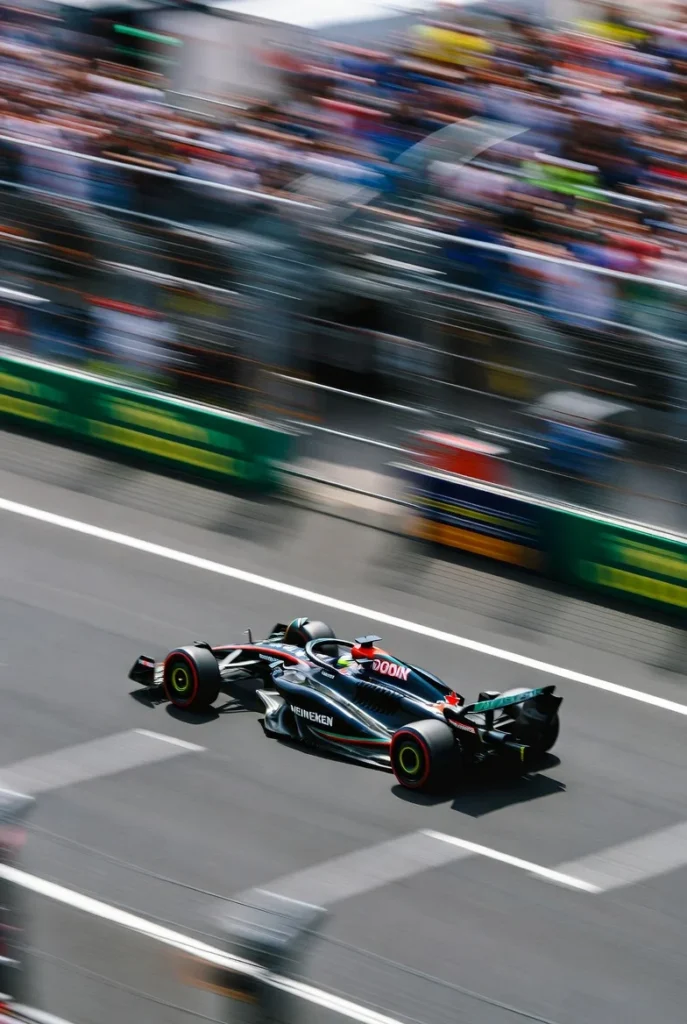
Not every weekend follows the traditional format. On “Sprint” weekends, we use a condensed version called the Formula 1 sprint shootout. The main difference lies in the session length and tire requirements.
In a Sprint Shootout, Q1 is 12 minutes, Q2 is 10 minutes, and Q3 is only 8 minutes. Furthermore, teams are often forced to use specific tire compounds (Mediums for Q1/Q2 and Softs for Q3). This format is designed to be a “sprint” in every sense of the word, leaving zero room for tactical errors or extra warm-up laps.
F1 Qualifying Strategy Explained
Strategy in qualifying is vastly different from race strategy. Here, we are managing “Track Evolution.” As more cars drive on the asphalt, they lay down a layer of rubber, which increases grip. This means the track is usually at its fastest in the final seconds of the session.
However, waiting until the last second is risky. If another driver crashes and causes a yellow flag, you might be forced to slow down, ruining your lap. We also look for a “Tow” or “Slipstream.” By following another car closely on the straights, a driver can gain up to $0.3\text{s}$ in top speed due to reduced wind resistance. It is a dangerous game of “cat and mouse” to see who will lead the pack.
F1 Qualifying Results & Standings
Understanding the F1 qualifying results requires looking past the final order. While the top three get the headlines, the “gaps” tell the real story of car performance. In a typical 2026 session, the entire top ten might be separated by less than . If a driver is $0.2\text{s}$ slower than their teammate, they could drop five places on the grid.
We look at the “delta” to the leader. If the gap is growing throughout the session, it usually means the track is “rubbering in” faster than our car can keep up. The standings also reveal which constructors have the best “one-lap pace” versus race trim. Some cars are “tire-shredders”—they generate heat quickly for one fast lap but fail during the long Sunday stint.
Who Got Pole Position Today?
The phrase “Pole Position” dates back to horse racing, but in F1, it is the ultimate badge of honor. Who got pole position today F1 is the first question every fan asks after the session. The driver earns the Pirelli Pole Position Award, a miniature wind-tunnel tire signed by the pole-sitter.
Being on pole means you start on the “clean side” of the track. This side has more rubber laid down from previous sessions, providing better traction at the start. Statistically, at circuits like Monaco or Barcelona, the pole sitter has an chance of winning the race. However, at tracks with long straights like Baku, being first can make you a target for a slipstream into Turn 1.
Technical Analysis & Performance Data (The Engineer’s View)
This is where the magic happens behind the scenes. In my time working with data teams, we didn’t just look at lap times. We analyzed “Micro-sectors.” A standard track has three sectors, but we divide it into 25 “mini-loops.” This allows us to see exactly where a driver is losing time—perhaps they are slower in a specific high-speed kink.
Telemetry and Speed Traps
We monitor the “Speed Trap” located at the end of the longest straight. This tells us if we are running too much wing. If our top speed is while our rival is doing , we have a drag problem. In qualifying, we also look at “Throttle Application.” A smoother curve on the telemetry graph usually means the rear tires are holding up well.
Teammate Comparisons
The first person you must beat is your teammate. Because you have the same equipment, this is the only fair fight. We look at “Brake Pressure” traces. If one driver brakes later but carries less speed through the apex, they are actually slower. This data-driven coaching happens in real-time between Q1 and Q2.
Setup Tweaks
Between sessions, we can only make minor changes. Due to “Parc Fermé” rules, we cannot change the suspension springs or the engine. We can, however, adjust the front wing angle (to add or remove “bite”) and tire pressures. Even a change in pressure can be the difference between a purple sector and a slide into the gravel.
Penalties, Crashes & Weather Impact
Nothing ruins a perfect formula 1 qualifying lap like a red flag. If a driver crashes, the session stops. If that driver caused the red flag, they often lose their fastest lap time to prevent “tactical crashing” to preserve a position.
Grid penalties also play a huge role. If a team changes an engine component beyond their seasonal limit, the driver might get a 5-place or 10-place “grid drop.” This means even if they qualify 1st, they might start 6th. Weather is the final joker. If rain starts in Q1 but stops in Q3, the “track evolution” is reset, often leading to a “jumbled” and unpredictable grid.
Does Qualifying Affect Championship Points?
On a standard weekend, qualifying does not award championship points. Its only reward is the starting position. However, on “Sprint” weekends, the Friday qualifying session sets the grid for the Sprint race. The top eight finishers in the Sprint race do receive points.
This system creates a “double-risk” scenario. If you crash in qualifying, you start the Sprint at the back. If you stay at the back in the Sprint, you start the Grand Prix at the back. It is a punishing cycle that rewards consistency and punishes every single error.
Where to Watch Formula 1 Qualifying Live
Finding where to watch formula 1 qualifying depends on your region. In the USA, ESPN holds the broadcasting rights. Most sessions air on ESPN2 or ESPNU, while the major races move to ABC.
- USA: ESPN / ESPN+ / ABC
- UK: Sky Sports F1 / Channel 4 (Highlights)
- International: F1TV Pro (Official streaming service)
For the most immersive experience, I recommend the F1TV “Pit Lane Channel.” It provides three different camera angles and live timing data simultaneously. It’s like having an engineer’s terminal in your living room.
Stats, Records & History
The history of qualifying is a list of the greatest names in motorsport. Lewis Hamilton holds the record for the most pole positions in F1 history, surpassing 100 poles. Before him, Michael Schumacher and Ayrton Senna were the kings of the “one-lap flyer.”
The fastest lap ever recorded in F1 history was by Lewis Hamilton at Monza in 2020. He averaged a staggering over the entire lap. These stats remind us that while the race is about endurance, qualifying is about the absolute peak of human and mechanical potential.
Formula 1 Qualifying News & Latest Updates
As we move through the 2026 season, the “development war” between teams never stops. New front wings and floor upgrades arrive at every race. A team that was qualifying 10th in March might be fighting for poles by September. Staying updated with the latest formula 1 qualifying news is the only way to predict who will take the trophy on Sunday.
Formula 1 Qualifying FAQ
How many cars are eliminated in Q1 and Q2?
In each of the first two segments, the five slowest cars are eliminated. This means 10 cars are knocked out before the final Q3 shootout. The drivers in 16th-20th are set after Q1, and 11th-15th are set after Q2.
Can teams change tires during a qualifying segment?
Yes, drivers can come into the pits for a fresh set of tires as often as they like, provided they have enough sets in their weekend allocation. Most drivers use two sets of “Soft” tires per segment to ensure they have the maximum grip.
What happens if two drivers set the exact same time?
If two drivers set identical lap times, the driver who set the time first is given the higher position. This happened famously at the 1997 European Grand Prix, where three drivers set the exact same time down to the thousandth of a second!
Is there a “107% rule” in F1 qualifying?
Yes. To ensure safety, any driver whose fastest Q1 lap exceeds $107\%$ of the fastest time in that session may be barred from racing. However, stewards often grant permission to race if the driver showed competitive times in practice sessions.
Why do cars wait at the end of the pit lane?
Drivers want to be the last person to cross the finish line when the track is “hottest” and has the most rubber. They often queue up early to ensure they don’t get stuck in traffic, but this can lead to tires losing heat.
Conclusion: The Peak of Performance
In summary, a formula 1 race weekend is incomplete without the high-stakes drama of the Saturday shootout. Qualifying is the purest expression of speed in the sporting world. It forces drivers to dance on a knife’s edge where one inch of extra curb can lead to a pole position or a trip into the wall. As the 2026 season continues to push the boundaries of hybrid technology, formula 1 qualifying remains the ultimate test of a driver’s soul. Whether you are watching the live timing or the TV broadcast, remember that you are witnessing the fastest humans on the planet at their absolute limit.
Would you like to explore the specific technical differences between the 2025 and 2026 car regulations?

