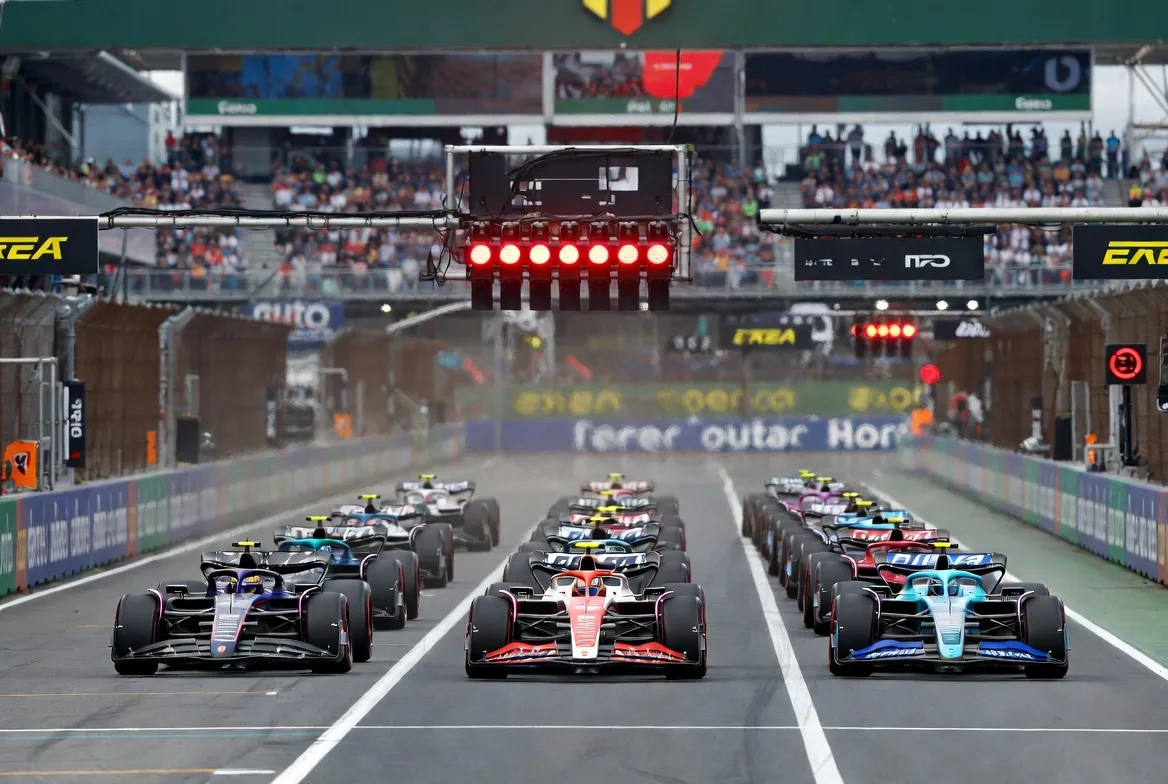
Complete Formula 1 Schedule 2026
Full Calendar, Race Dates, Times & Tickets
24 races across five continents, a radical new technical era, and the arrival of Cadillac F1 as the 11th team. Everything you need to follow the 2026 FIA Formula One World Championship from Melbourne to Abu Dhabi.
Complete Formula 1 Schedule 2026
Race Dates, Times & Tickets
24 races from Melbourne to Abu Dhabi — every date, sprint weekend, and key ticket you need.
The 2026 Formula 1 season runs 24 races across five continents, opening in Melbourne on March 6 and closing at Yas Marina on December 6. This is the most anticipated calendar in years — not because of the race count, but because every single round is now shaped by an entirely new technical framework. The cars are different, the power units are different, and the pecking order is wide open in a way it hasn’t been since the last major regulation reset.
This guide covers the complete Formula 1 schedule 2026 in full: every race date, every circuit, the six sprint weekends, regional time zone guidance, the weekend format, ticket buying tips, and what the new 2026 regulations actually mean for the racing. Whether you’re planning a trip to Silverstone or just trying to set your alarm for Melbourne, it’s all here.
2026 F1 Season Overview: What Makes This Year Different
The 2026 Formula 1 season is the kind of reset that happens only once or twice a decade. New technical regulations have fundamentally changed how the cars produce and deploy power. Furthermore, Cadillac F1 joins as the 11th constructor — the first new team to enter the championship since Haas in 2016. Every team is effectively starting from scratch in terms of understanding where they sit in the competitive order.
The calendar itself has also been reorganized. The FIA’s push toward a more regionalized schedule — grouping races by geography to reduce freight travel — has reshuffled the order significantly. Albert Park in Melbourne returns as the traditional season opener, a move welcomed by fans who remember the circuit’s reputation for producing chaotic first races as teams scramble to understand their new machinery.
The season runs from March 6 in Melbourne to December 6 in Abu Dhabi. However, the story of the 2026 championship will be written in those first five rounds, where nobody yet knows the true order of performance.
Meanwhile, the Spanish Grand Prix now has two homes on the 2026 calendar — Barcelona for the traditional Gran Premio de Catalunya in June, and Madrid hosting its debut race at the new IFEMA circuit in September. That dual-Spanish presence is unusual, though it reflects both the long-term contracts Formula 1 holds with each venue and the sport’s growing commercial footprint in Spain.
If you want a deeper understanding of how the championship actually works — points, standings, the format — our F1 points system explainer and 2026 F1 championship standings page both cover the mechanics in detail.
Full Formula 1 2026 Race Calendar — All 24 Rounds
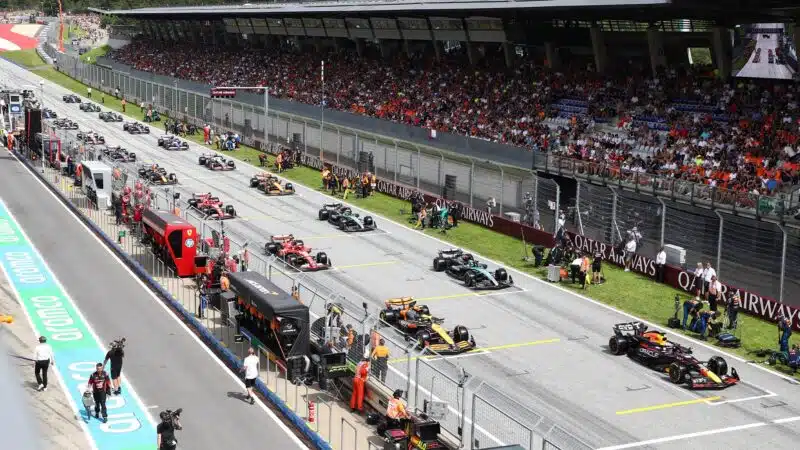
Rounds marked with the Sprint badge follow a different weekend structure — qualifying moves to Friday, the Sprint race runs Saturday morning, and the main Grand Prix remains on Sunday. All other rounds use the standard three-day format. For a full explanation, see our F1 qualifying and format guide.
| Rnd | Flag | Grand Prix | Circuit / City | Dates | Format |
|---|---|---|---|---|---|
| 1 | 🇦🇺 | Australian GP | Albert Park, Melbourne | Mar 6–8 | Standard |
| 2 | 🇨🇳 | Chinese GP | Shanghai International Circuit | Mar 13–15 | Sprint |
| 3 | 🇯🇵 | Japanese GP | Suzuka Circuit | Mar 27–29 | Standard |
| 4 | 🇧🇭 | Bahrain GP | Bahrain International Circuit, Sakhir | Apr 10–12 | Standard |
| 5 | 🇸🇦 | Saudi Arabian GP | Jeddah Corniche Circuit | Apr 17–19 | Standard |
| 6 | 🇺🇸 | Miami GP | Miami International Autodrome | May 1–3 | Sprint |
| 7 | 🇨🇦 | Canadian GP | Circuit Gilles Villeneuve, Montréal | May 22–24 | Sprint |
| 8 | 🇲🇨 | Monaco GP | Circuit de Monaco, Monte Carlo | Jun 5–7 | Standard |
| 9 | 🇪🇸 | Barcelona GP | Circuit de Barcelona-Catalunya | Jun 12–14 | Standard |
| 10 | 🇦🇹 | Austrian GP | Red Bull Ring, Spielberg | Jun 26–28 | Standard |
| 11 | 🇬🇧 | British GP | Silverstone Circuit | Jul 3–5 | Sprint |
| 12 | 🇧🇪 | Belgian GP | Circuit de Spa-Francorchamps | Jul 17–19 | Standard |
| 13 | 🇭🇺 | Hungarian GP | Hungaroring, Budapest | Jul 24–26 | Standard |
| 14 | 🇳🇱 | Dutch GP | Circuit Zandvoort | Aug 21–23 | Sprint |
| 15 | 🇮🇹 | Italian GP | Autodromo Nazionale Monza | Sep 4–6 | Standard |
| 16 | 🇪🇸 | Spanish GP — Madrid | IFEMA Circuit, Madrid | Sep 11–13 | Standard |
| 17 | 🇦🇿 | Azerbaijan GP | Baku City Circuit | Sep 24–26 | Standard |
| 18 | 🇸🇬 | Singapore GP | Marina Bay Street Circuit | Oct 9–11 | Sprint |
| 19 | 🇺🇸 | United States GP | Circuit of the Americas, Austin | Oct 23–25 | Standard |
| 20 | 🇲🇽 | Mexico City GP | Autodromo Hermanos Rodriguez | Oct 30–Nov 1 | Standard |
| 21 | 🇧🇷 | São Paulo GP | Autodromo Jose Carlos Pace, Interlagos | Nov 6–8 | Standard |
| 22 | 🇺🇸 | Las Vegas GP | Las Vegas Strip Circuit | Nov 19–21 | Standard |
| 23 | 🇶🇦 | Qatar GP | Losail International Circuit, Doha | Nov 26–29 | Standard |
| 24 | 🇦🇪 | Abu Dhabi GP | Yas Marina Circuit | Dec 4–6 | Standard |
The calendar covers five distinct geographic blocks across nine months. Consequently, teams and drivers face a relentless travel schedule — particularly in the autumn, when North America sees back-to-back-to-back weekends in Austin, Mexico City, and São Paulo. For detailed analysis of any individual race, visit our dedicated F1 2026 schedule hub.
Regional Breakdown of the 2026 F1 Calendar
The FIA’s decision to regionalize the 2026 calendar isn’t purely about sustainability — though the carbon reduction angle is real. Grouping races by geography also reduces the physical toll on mechanics and engineers who travel to every round. Moreover, it allows teams to optimize freight logistics rather than bouncing between continents mid-season.
The season’s first triple-header tests reliability immediately. Suzuka moves to an earlier spring slot for cherry blossom season.
Night races in extreme heat expose early cooling issues in the new 50/50 hybrid power units.
Both sprint weekends. Canada moves to May to create a logical North American pairing with Miami.
The heart of the championship. Fans can road-trip between historic circuits without leaving the continent.
Monza closes the classic European leg before the calendar heads east and then to the Americas finale.
The title is usually decided somewhere in this brutal autumn run.
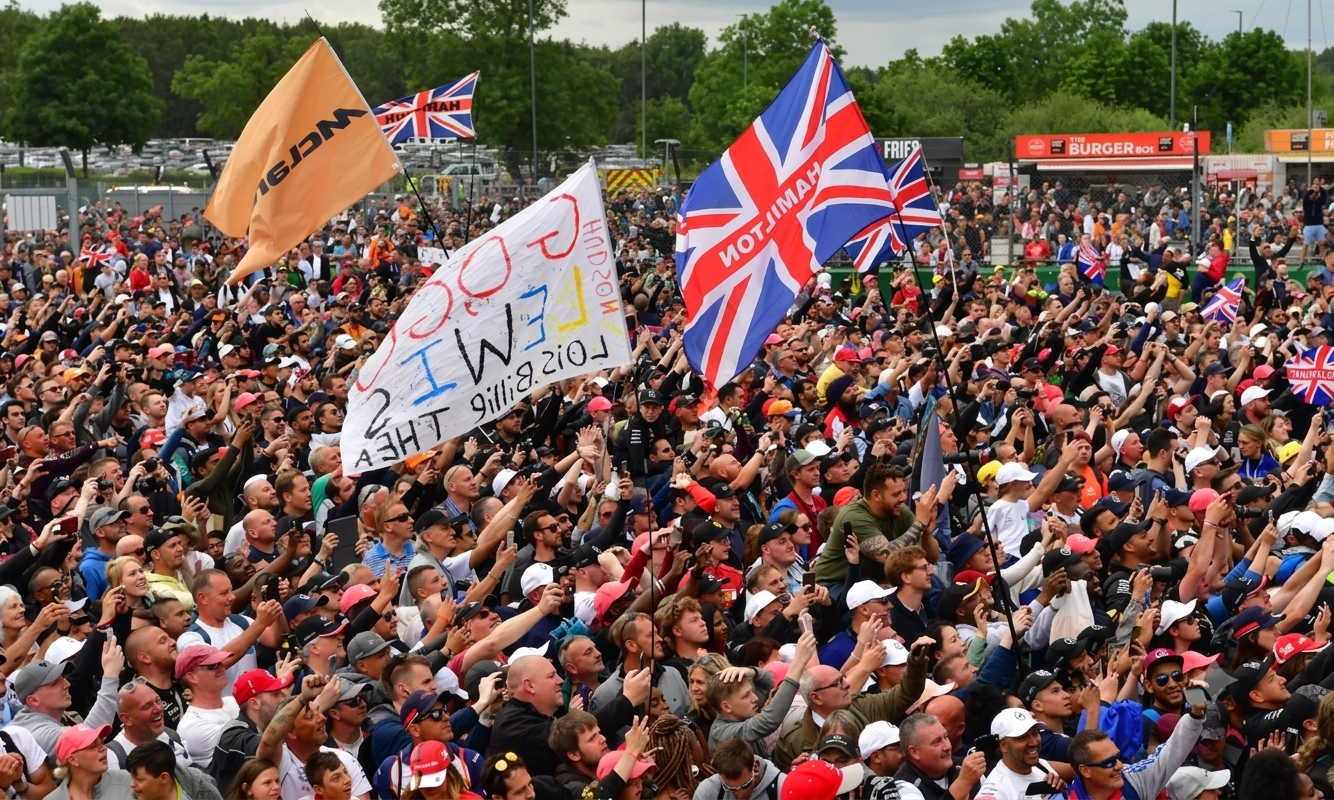
The European leg in particular stands out for its density. Eight consecutive rounds across June, July, and August without a flyaway race in between gives teams the opportunity to run extensive factory-based development work between events. Therefore, the teams that arrive at Monaco already understanding the 2026 car tend to be the ones who extend their advantage through Spa and Zandvoort.
If you want historical context on some of these iconic circuits, the Ferrari through the decades archive covers their history at several European venues, while our profile on Mario Andretti gives a feel for what circuits like Monza and Monaco meant to a previous generation of drivers.
Formula 1 2026 Sprint Race Schedule
Sprint weekends return for the sixth consecutive year in 2026, and the six venues chosen this time around represent a mix of fast permanent circuits and street tracks where the compressed format genuinely changes the strategic picture. Crucially, the Sprint does not just add a short race — it reshuffles the entire weekend structure.
Friday: Sprint Qualifying (SQ1, SQ2, SQ3) — determines Sprint grid.
Saturday morning: The Sprint — 100 km / ~30 laps, points for top 8.
Saturday afternoon: Grand Prix Qualifying — determines Sunday grid.
Sunday: Grand Prix — full race distance, full points.
There are no practice sessions on a Sprint weekend. Teams go straight from parc fermé to racing, which is why setup calls on Thursday become critical. See our F1 qualifying format guide for the full breakdown.
The inclusion of Silverstone and Zandvoort is the boldest choice here. Both circuits have passionate, vocal fan bases and relatively tight layouts — meaning the Sprint race at each venue is likely to deliver genuine wheel-to-wheel action rather than a processional sprint. Meanwhile, Singapore at night on the Marina Bay street circuit with Sprint format is arguably the most chaotic combination on the entire calendar.
For context on how the championship points stack up across a full season including Sprints, see our F1 points system explained page. Furthermore, understanding how racing championships are scored helps clarify why a Sprint win in Singapore can be as valuable as a podium at a standard round.
Key Grand Prix Dates to Lock In for 2026
Not every race on the calendar sells out at equal speed. However, five venues consistently exhaust their ticket allocation within days of going on sale — and all five are on the 2026 schedule. If you’re planning to attend any of the following, the general rule is: buy from the official circuit website or authorized resellers the moment tickets go live. Waiting even a week can mean paying secondary-market premiums of two to three times face value.
For ticket pricing guidance: general admission typically starts around $150, while grandstand seats at premium venues range from $400 to $1,500 depending on the circuit and viewing position. Paddock Club hospitality — which gives access to the team garages and a curated experience at the pit wall — starts around $5,000 per person at most venues and significantly higher at Monaco and Las Vegas. The Miami Grand Prix tickets guide has specific pricing for that venue.
F1 2026 Race Weekend Format Explained
Understanding the weekend format is essential whether you’re attending in person or watching on television. The structure differs significantly between standard rounds and Sprint weekends, and the difference matters — particularly for ticket holders who need to know which sessions are most worth attending.
Standard Weekend (18 of 24 rounds)
The standard three-day format is the one most fans are familiar with. Practice sessions give teams the data they need; qualifying decides the grid; and the race on Sunday settles who actually collects the points. The qualifying format breakdown covers exactly how the three-segment elimination session works, and our pit stop strategy guide is worth reading before the race if you want to understand the key decisions teams make during the grand prix itself.
| Day | Session | Typical Local Time | Duration |
|---|---|---|---|
| Friday | Practice 1 | ~13:30 | 60 minutes |
| Friday | Practice 2 | ~17:00 | 60 minutes |
| Saturday | Practice 3 | ~12:30 | 60 minutes |
| Saturday | Qualifying (Q1/Q2/Q3) | ~16:00 | ~60 minutes total |
| Sunday | Grand Prix | ~15:00 | ~90 minutes |
Night races in Singapore and Las Vegas shift every session into the evening local time — typically to ensure European viewers can watch the action at a reasonable hour. Always check the official F1 app 48 hours before each session for confirmed times, as local conditions occasionally cause adjustments.
Sprint Weekend (6 rounds)
The Sprint format compresses the weekend significantly. There are no practice sessions. Consequently, setup calls made on Thursday evening — based entirely on simulation data and historical tyre information — determine how the car behaves throughout the entire weekend. This format rewards teams with deep data libraries and punishes those with reliability concerns, since there’s no opportunity to diagnose and fix a handling issue before the cars go racing.
For race fans watching from home, the Sprint format also means more live coverage across Friday and Saturday. Moreover, the points available in the Sprint — 8 for the winner down to 1 for P8 — can genuinely shift the championship picture, especially mid-season where the margins between title contenders are tight.
Understanding the nuances of tyre strategy in these compressed weekends is where knowledge of concepts like the undercut and overcut, pit stop timing, and clean air advantage really pays dividends as a viewer.
How the 2026 Regulations Change the Season
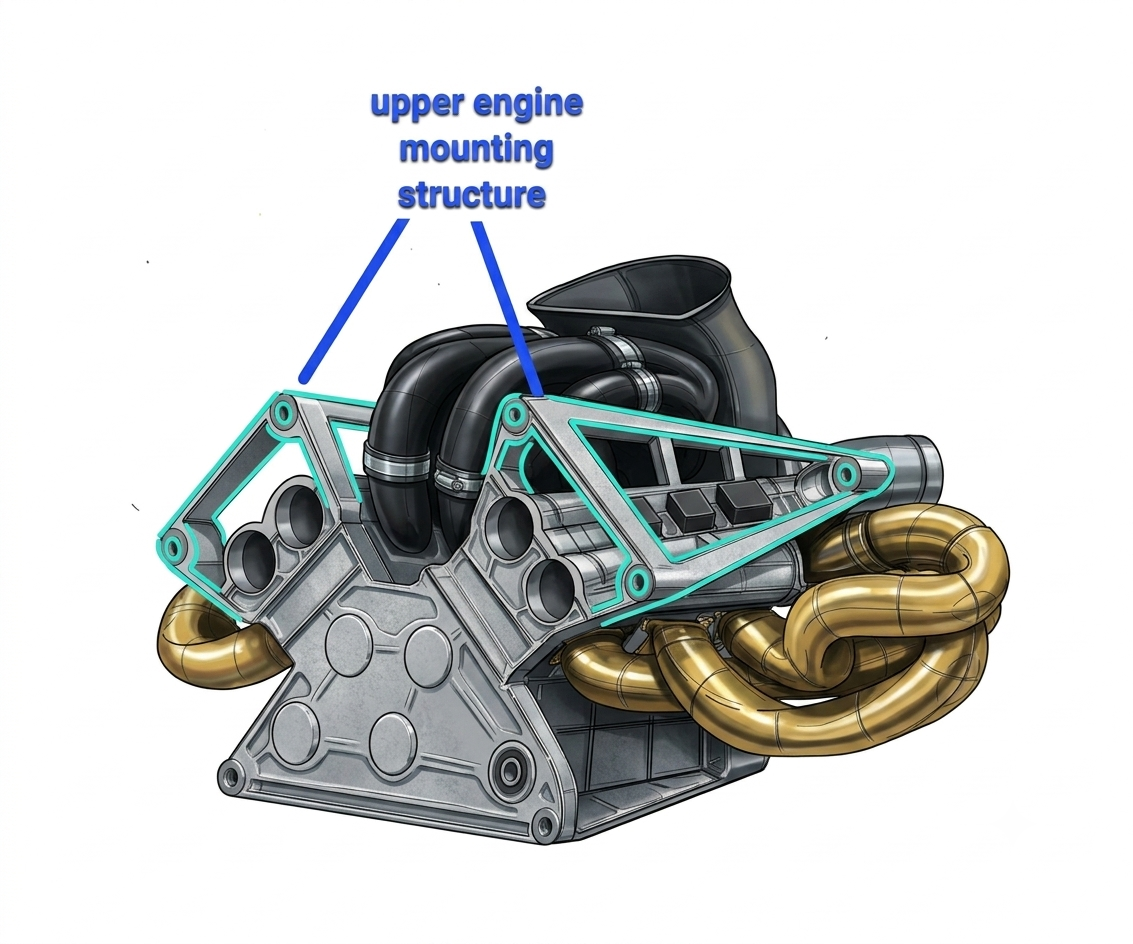
The 2026 technical regulations are the most significant change to the cars since the hybrid era began in 2014. Therefore, their impact on the calendar is more substantial than a simple list of dates might suggest. The circuits chosen, the sequence of rounds, and even the location of the testing schedule all reflect how the FIA expects teams to cope with a completely new set of engineering challenges.
The 50/50 Power Unit
The 2026 power units split energy output roughly equally between the internal combustion engine and the electrical system. Furthermore, the MGU-H — the heat-recovery motor that was a source of enormous complexity under the previous regulations — has been removed entirely. In its place, the MGU-K has been substantially upgraded to deliver far more electrical power on demand.
What this means in practice is that circuits with heavy braking zones — like Baku, Singapore, and the Circuit of the Americas — become even more strategically important, since those zones are where the MGU-K harvests the energy the car then deploys on the straights. See our ERS explainer for the full technical breakdown, and our guide on what horsepower actually means for additional context.
MGU-H removed. Reduces power unit complexity significantly.
MGU-K upgraded. Electrical deployment increases to ~350 kW (previously ~120 kW).
50/50 power split. Approximately half of total power from the battery.
100% sustainable fuel. All teams run on fully sustainable, drop-in fuel blends.
New manufacturers: Audi (via Sauber) and Red Bull Ford join as power unit suppliers.
Active Aerodynamics
The 2026 cars also introduce active aerodynamics — moveable bodywork elements that adjust automatically to optimize drag and downforce throughout a lap. This technology changes how overtaking works. Moreover, it affects the way different circuit types challenge the cars; high-downforce venues like Monaco and Hungary interact with active aero systems differently than low-drag circuits like Monza.
For fans new to these concepts, our explainers on what downforce is, how DRS works, and DRS in F1 specifically provide solid grounding before you start watching the new cars in action.
Cadillac F1 and the 11-Team Grid
For the first time since Haas joined in 2016, Formula 1 has an 11th constructor in 2026. Cadillac F1 enters as a full constructor, bringing American manufacturer backing to a grid that already has three US-based race venues. The arrival of Cadillac has contributed to a surge in North American fan interest, and it’s no coincidence that five rounds now take place in the Americas. For more on the team landscape, the F1 2026 teams list covers every constructor, driver lineup, and power unit pairing. Our new team in F1 overview also covers the context of Cadillac’s entry in detail.
How to Watch the Formula 1 2026 Season Live
Watching the Formula 1 schedule 2026 live is more accessible than it has ever been, though the broadcaster landscape varies significantly by region. In the United States, ESPN and ABC carry full live coverage of every session, with select races — particularly Miami and Las Vegas — aired on free-to-air television. F1 TV Pro remains the most comprehensive streaming option globally, offering onboard cameras, live telemetry, driver radio, and multi-language commentary for every session of every round.
In the UK, Sky Sports F1 provides exclusive coverage of the full season, with Channel 4 showing a selection of races live and free. Canal+ holds the rights in France; DAZN covers multiple markets across Europe and Asia. For the most reliable and up-to-date guide to where to watch in your region, our where to watch Formula 1 page is updated for each race weekend. Additionally, the F1 live stream online guide covers legal streaming options by territory.
Australian GP (Melbourne): Race approximately 11:00 PM ET Saturday night.
European GPs: Race typically 9:00 AM ET Sunday morning.
Singapore / Abu Dhabi: Race typically 8:00 AM ET Sunday morning.
Las Vegas: Race approximately 10:00 PM PT / 1:00 AM ET Saturday night.
Always confirm via the F1 app — night race start times vary by venue.
Pre-season testing in Bahrain — two three-day blocks in late February — is also covered by most broadcasters, though in abbreviated form. Testing offers the first real indication of the 2026 pecking order, even if teams deliberately manage what data they reveal in those sessions. Understanding how race timing works and how to read live timing screens makes testing coverage significantly more interesting.
Frequently Asked Questions — F1 Schedule 2026
The bottom line on the 2026 F1 season
Twenty-four races, a new technical era, an 11th team, a new street circuit in Madrid, and a calendar specifically designed to maximize both the spectacle and the sport’s sustainability credentials. It’s an enormous amount of change arriving at once — which is precisely why this particular Formula 1 schedule 2026 is worth paying attention to from the first session in Melbourne.
The circuits haven’t changed. Monza is still Monza, Spa is still Spa, and Monaco is still the race every driver wants most on their CV. However, the cars racing around them are genuinely new, and the championship order is genuinely unknown. That’s a combination that doesn’t come around very often in Formula 1.
We’ll be covering every round here at World of Speed — race results, qualifying analysis, points standings, and the strategy breakdowns that explain what you actually watched. Bookmark the F1 2026 schedule hub and the 2026 championship standings for the fastest updates after every session.