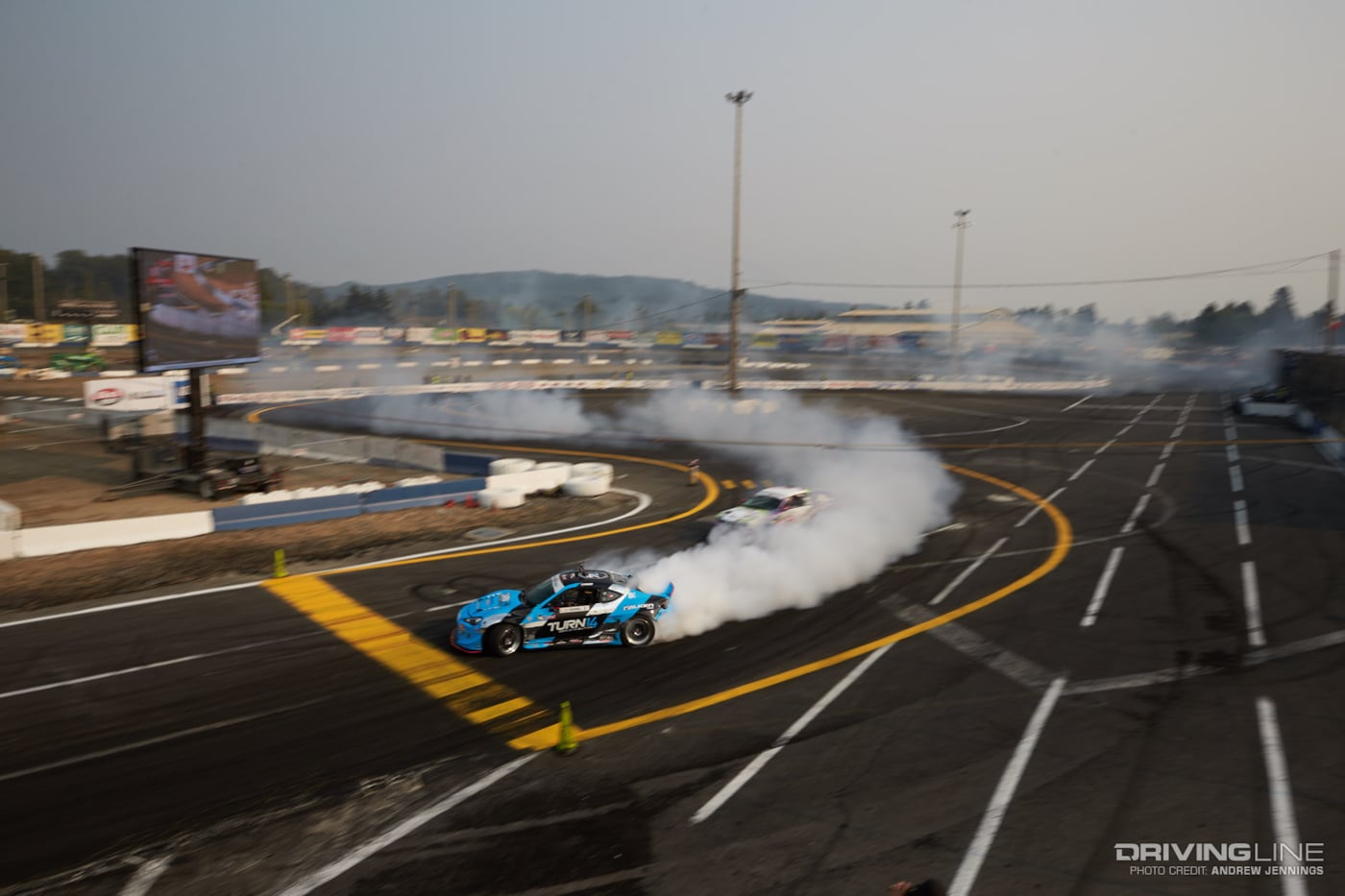
Formula DRIFT Seattle 2026 Driver Ratings:
Best Performers & Biggest Disappointments
An evidence-based driver report built from the verified 2026 PRO season form entering the Seattle Throwdown, with championship position, qualifying pace, podiums, reliability and recent momentum all weighed.
Driver Ratings:
Best Performers & Biggest Disappointments
Verified 2026 form entering the Seattle Throwdown, with the official Seattle result still pending.
Important timing note: Formula DRIFT’s official Seattle results page currently lists qualifying, the main competition and the event result as pending. That means a responsible driver-rating article cannot pretend the Seattle winner, podium or final Seattle finishing order is already known. The ratings below therefore grade the drivers on verified 2026 PRO form entering the Seattle weekend, using official results, championship points, qualifying performance, competition finishes and documented reliability issues.
That distinction matters. It keeps the analysis useful without turning a live race weekend into a fictional recap. James Deane entered Seattle as the championship leader, Aurimas Bakchis was second, Branden Sorensen third, Jack Shanahan fourth and Conor Shanahan fifth. The Seattle weekend was scheduled as Round 6 at Evergreen Speedway on August 21–22, with qualifying Friday night and the Top 32 through Top 16 competition Saturday.
Formula DRIFT Seattle 2026 Driver Ratings
The cleanest way to rate this field is to separate what a driver has actually achieved from what we expect him to do at Evergreen Speedway. The first part can be verified. The second is analysis. A driver who has already won in 2026 deserves credit for the win; a driver who has repeatedly qualified well deserves credit for one-lap execution; and a driver carrying a title challenge despite a bad early round deserves credit for recovery.
The ratings below use a 10-point scale. The biggest weight goes to competition results and championship position, followed by qualifying consistency, recent momentum and reliability. Seattle-specific expectations are treated as a secondary factor, not as proof of an event result.
| Driver | Rating | Championship position | Verified form entering Seattle | Why the grade |
|---|---|---|---|---|
| James Deane | 9.7/10 | 1st | 150 points | Round 4 winner; second in Rounds 2 and 3 |
| Aurimas Bakchis | 9.3/10 | 2nd | 129 points | Round 3 winner; strong new-car adaptation |
| Branden Sorensen | 9.0/10 | 3rd | 108 points | Breakout season, repeated front-running pace |
| Jack Shanahan | 8.8/10 | 4th | 110 points | Round 4 runner-up; Indianapolis qualifying winner |
| Conor Shanahan | 8.4/10 | 5th | 106 points | Round 1 winner; strong upside but qualifying volatility |
| Dylan Hughes | 8.3/10 | 6th | 88 points | Elite qualifying specialist and strong wet-weather evidence |
| Fredric Aasbo | 8.0/10 | 7th | 86 points | Champion-level pace, but reliability has cost points |
| Ryan Tuerck | 7.8/10 | 8th | 65 points | High ceiling and strong battle experience |
| Chris Forsberg | 7.7/10 | 9th | 59 points | Still a threat, though results have not matched reputation |
| Cole Richards | 7.5/10 | 10th | 56 points | Best rookie trend before a difficult Round 4 |
| Vaughn Gittin Jr. | 7.4/10 | 11th | 51 points | Round 2 winner keeps him in the high-upside group |
| Matt Field | 7.2/10 | 12th | 47 points | Very fast one-lap pace; results have lagged |
These are pre-Seattle form ratings, not a disguised Seattle result. Formula DRIFT’s official Seattle results page still lists Qualifying, Main Competition and Event Result as pending. Once official Seattle results are published, the grades should be recalculated using the actual Seattle performance.
Championship Form Entering Seattle
The title picture changed several times during the first half of the season. Conor Shanahan won the opener at Long Beach. Vaughn Gittin Jr. won Atlanta. Aurimas Bakchis won Orlando. James Deane won Stafford. Indianapolis then had its PRO competition cancelled by a storm after qualifying, leaving the championship unusually sensitive to the points already scored in qualifying.
Formula DRIFT’s current standings page lists James Deane first on 150 points, Aurimas Bakchis second on 129, Jack Shanahan third on 110, Branden Sorensen fourth on 108 and Conor Shanahan fifth on 106. The next tier is Dylan Hughes at 88, Fredric Aasbo at 86, Ryan Tuerck at 65, Chris Forsberg at 59 and Cole Richards at 56.
| Rank | Driver | Points | Gap to leader | Seattle importance |
|---|---|---|---|---|
| 1 | James Deane | 150 | — | Protect the lead |
| 2 | Aurimas Bakchis | 129 | -21 | Attack the lead |
| 3 | Jack Shanahan | 110 | -40 | Close the gap |
| 4 | Branden Sorensen | 108 | -42 | Turn consistency into a title run |
| 5 | Conor Shanahan | 106 | -44 | Recover from qualifying volatility |
| 6 | Dylan Hughes | 88 | -62 | Keep pressure on the top five |
| 7 | Fredric Aasbo | 86 | -64 | Reliability is the key |
| 8 | Ryan Tuerck | 65 | -85 | Needs a major points haul |
That table explains why Seattle matters more than a simple winner’s headline. Deane has a 21-point cushion over Bakchis, but the next three drivers are compressed into a four-point band from 106 to 110. A single strong Seattle run could therefore change the order from second through fifth without requiring a championship leader to collapse.
Why Round 5 cannot be treated like a normal weekend
Indianapolis was cancelled because of severe weather. Formula DRIFT stated that the remaining PRO Championship competition heats were cancelled after flooding and lightning made continuation impossible. The series’ rulebook meant qualifying points remained, while no points were awarded for the incomplete Top 32 competition. That makes the Seattle grid especially important because drivers are returning from a round where many expected points simply never became available.
In the official Indianapolis qualifying results, Jack Shanahan led with 84.63 points, Matt Field was second at 83.55 and Aurimas Bakchis third at 82.70. James Deane was fourth with 82.53. Cole Richards was the leading rookie in eighth with 80.66. Those are not Seattle results, but they are useful evidence of recent one-lap form.
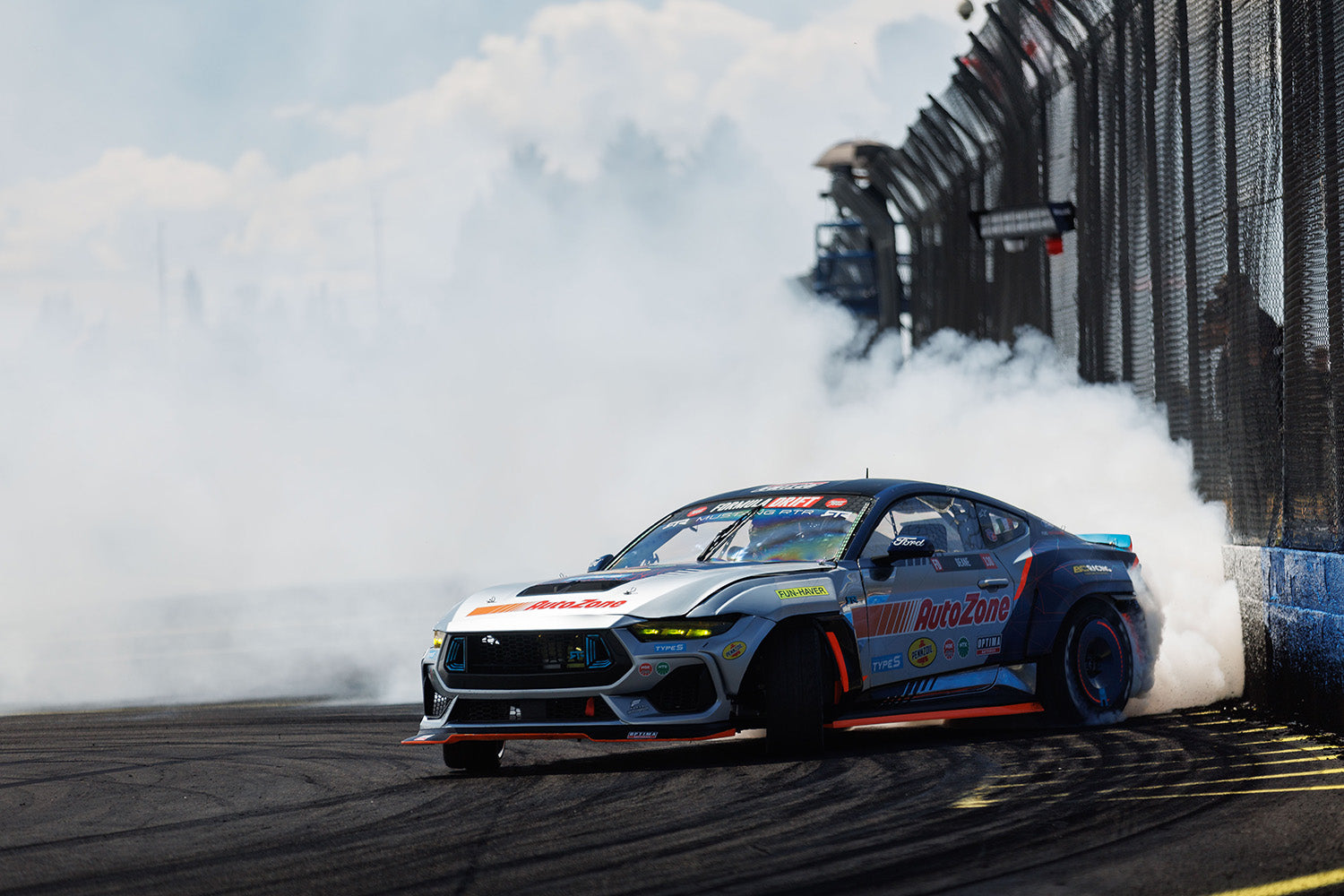
The first five rounds tell a more useful story than one headline
Deane’s 2026 campaign has been a recovery story as much as a championship defense. After an early exit in Round 1, he finished second in both Atlanta and Orlando before winning at Stafford. Formula DRIFT documented his progression clearly: the reigning five-time champion moved back to the top of the standings with the Stafford victory.
Bakchis, meanwhile, showed how quickly a driver can turn a new car into a title tool. His Orlando victory came after a fifth at Long Beach and third at Atlanta. Formula DRIFT described the new car as producing immediate results, with Bakchis moving to the championship lead after Orlando before Deane reclaimed it at Stafford.
Sorensen has been perhaps the most important emerging championship story. The 21-year-old has repeatedly qualified near the front and remained in the title fight. His fourth place in Orlando and sixth at Stafford were not spectacular podium headlines, but they represented the sort of steady scoring that keeps a driver within striking distance.
Best Performers: The Drivers Who Deserve the Highest Grades
1. James Deane — 9.7/10
Deane is the obvious benchmark because the official championship table says what the results already suggest: he is the driver everyone else has to beat. The five-time champion entered Seattle with 150 points, a 21-point advantage over Bakchis and a strong recent sequence.
The key is not simply the Stafford win. Deane had already shown recovery pace by finishing second at both Atlanta and Orlando. At Stafford he turned a poor qualifying outcome into a complete competition victory. Formula DRIFT reported that he spun on his second qualifying run, dropped down the order, then defeated Jhonnattan Castro, Andy Hateley, Ryan Tuerck and Ben Hobson before beating Jack Shanahan in the final.
That is exactly the kind of evidence that supports a 9.7 rather than a perfect 10. His qualifying execution has not been flawless, but his ability to solve a bad starting position in tandem competition remains elite. At Seattle, the biggest question is whether he can combine that battle strength with a clean qualifying run.
Deane’s strongest asset entering Seattle is not one spectacular lap. It is the ability to turn a compromised weekend into a championship-scoring weekend.
2. Aurimas Bakchis — 9.3/10
Bakchis is the clearest challenger to Deane. The 129-point total puts him 21 behind the leader, and his season includes a genuine win at Orlando. More importantly, that win came in a new car that Formula DRIFT said delivered instant results.
His Round 4 result at Stafford was eighth, which prevents a higher rating, but the championship position remains powerful. Bakchis has the combination of pace and experience needed to convert a strong qualifying position into a deep competition run. The Subaru BRZ has already shown it can win, and GT Radial’s presence across the program gives the team a well-developed performance platform.
3. Branden Sorensen — 9.0/10
Sorensen’s rating is built around consistency and trajectory. He entered the Seattle weekend fourth in the official standings at 108 points, only two behind Jack Shanahan. Formula DRIFT has repeatedly highlighted his 2026 progress, and his qualifying pace has been strong enough to make him a regular part of the front-running conversation.
He was second in qualifying at Stafford with 83.60 points and finished sixth in the competition. In Orlando he finished fourth. Those results do not have the headline value of a win, but they demonstrate that his BMW is capable of operating near the front at different venues.
4. Jack Shanahan — 8.8/10
Jack’s 110 points put him third in the current standings. He was runner-up at Stafford and then topped qualifying at Indianapolis with 84.63 points. That combination makes him one of the most compelling drivers to watch in Seattle.
The concern is reliability. At Stafford, he suffered steering issues in the final that prevented a complete fight with Deane. The second-place result was still valuable, but the lost opportunity was real. Indianapolis then showed how sharp his one-lap speed can be.
5. Conor Shanahan — 8.4/10
Conor has one of the strongest peaks in the field because he won Round 1. The problem is that his qualifying record has been volatile. Formula DRIFT documented a 24th-place qualifying result at Atlanta and a 23rd at Orlando. In Orlando he then faced Deane in the Top 32 and was eliminated, scoring no competition points.
That makes Conor one of the hardest drivers to rate. His ceiling is championship-winning level, but his route to that ceiling is less predictable than Deane’s or Bakchis’.
6. Dylan Hughes — 8.3/10
Hughes deserves more attention than his sixth-place championship position suggests. He won qualifying at Stafford with 84.13 points in difficult wet conditions, a performance Formula DRIFT specifically praised for precision. He also finished fifth in the competition.
That wet-weather evidence is especially interesting because Seattle can reward a driver who is comfortable managing changing grip. The grade stays below the top five because the championship points gap is already 62, but the single-session ceiling is undeniable.
7. Fredric Aasbo — 8.0/10
Aasbo has the credentials and pace to be rated higher, but the season has included setbacks. At Stafford, a broken axle ended his progress in the Top 16 and dropped him to seventh in the title standings. Formula DRIFT noted that the three-time champion remained a major threat, but reliability has become part of the evaluation.
Biggest Disappointments: Where Expectations and Results Diverged
“Disappointment” needs context in motorsport. It does not mean a driver is slow. It means the output has not matched the reasonable expectation created by talent, equipment, reputation or early-season speed. That distinction matters for this field because several drivers have shown the pace to score far more than their current totals.
Fredric Aasbo — the clearest missed-points case
Aasbo is the most obvious example. A three-time Formula DRIFT champion starting the season with a championship-caliber Toyota GR Supra is expected to be in the title fight. His 86 points entering Seattle put him seventh. The biggest issue is not lack of speed; it is the failure to convert enough weekends into deep competition runs.
His Atlanta weekend was particularly costly after contact with Rudy Hansen ended his Top 32 run and left him with no points from the competition. The Stafford axle failure created another setback. Two separate mechanical or contact-related interruptions are enough to keep his rating below the level his raw driving reputation might suggest.
Conor Shanahan — qualifying is the obvious pressure point
Conor’s disappointment is not about his Round 1 win. That win proves he can execute. The issue is repeatability. A 24th-place qualifying result at Atlanta followed by 23rd at Orlando created unnecessarily difficult brackets. In Orlando, the poor qualifying position put him directly against Deane in the Top 32, and he lost.
For a championship contender, qualifying is not cosmetic. It controls the early bracket. A driver repeatedly starting deep can be forced to beat another title contender before reaching the stage where points become substantial.
Cole Richards — a difficult interruption to a strong rookie campaign
Richards entered the season as one of the standout rookies. Formula DRIFT reported that he was the leading rookie through the opening rounds, including a podium at Round 1. But the run hit a wall at Stafford, where he failed to qualify after a hard practice incident and then struggled with the car.
His 56 points still placed him 10th entering Seattle, so the overall rookie campaign remained impressive. But relative to his early trajectory, the Stafford weekend was a major disappointment. The key question is whether he can restore that early-season confidence.
Matt Field — speed without enough conversion
Field is another driver whose rating is lower than his one-lap evidence might suggest. He was second in Indianapolis qualifying with 83.55 points and had led much of that session before Jack Shanahan took the top spot. Yet Field entered Seattle only 12th in the championship with 47 points.
That gap between qualifying speed and championship position is exactly why he belongs in the “biggest disappointments” discussion. If he can turn qualifying pace into Top 8 and podium results, his points total can change quickly.
A disappointing championship position does not automatically mean disappointing driving. Field’s Indianapolis qualifying performance is evidence of speed. The missing ingredient has been converting that speed into competition points.
Why Seattle Can Change the Ratings Quickly
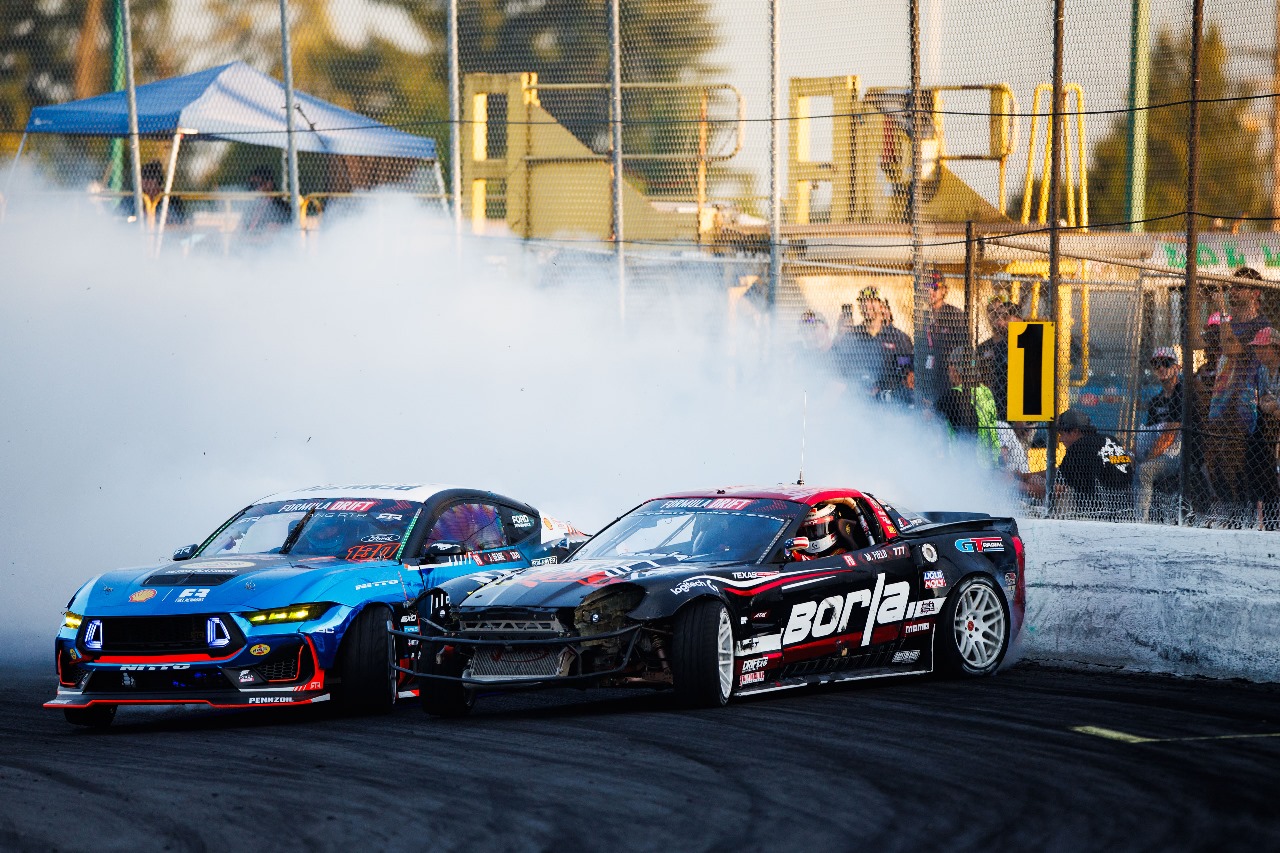
Evergreen Speedway is not simply another date on the calendar. Formula DRIFT’s official schedule lists Seattle as the Round 6 Throwdown on August 21–22. Friday includes practice, warm-up and qualifying, while Saturday moves through the Top 32 and Top 16 main event before the trophy ceremony.
The course puts a premium on commitment and precision. A driver can have enormous horsepower and still lose if the line is inconsistent. Conversely, a car that is predictable on initiation and stable through the transition can give its driver the confidence to run closer in the chase.
What we are looking for in qualifying
Qualifying is the first major rating test. A front-row or near-front qualifying result does not guarantee a podium, but it reduces the number of difficult early bracket matchups. The best example from 2026 is Jack Shanahan at Indianapolis: he qualified first with 84.63 points while Deane was fourth on 82.53.
For Hughes, qualifying is another opportunity to convert a known strength into championship momentum. His Stafford qualifying win in wet conditions showed the value of precision when the track is difficult. For Deane, the objective is simpler: avoid giving away position through an unnecessary mistake.
What we are looking for in tandem battles
The driver ratings should change most dramatically once actual Seattle competition results are official. A driver who qualifies fifth but loses immediately to a lower-ranked opponent has not produced the same weekend as a driver who qualifies 12th and fights through several rounds.
That is why these ratings deliberately avoid pretending that Seattle has already produced winners and losers. The official results page currently says “Results pending,” and that is the authoritative status. Any article claiming a verified Seattle podium before the official result is published would be guessing.
Championship scenarios to watch
- Deane extends the lead: another deep run would strengthen his position before the final two rounds.
- Bakchis closes the gap: a strong Seattle result could turn the 21-point deficit into a much smaller margin.
- Jack or Branden jumps: their 110 and 108 points respectively make the fight behind second place extremely compressed.
- Conor recovers: a strong qualifying position would remove the biggest weakness from his recent championship campaign.
- Aasbo or Hughes breaks through: either driver needs a major points weekend to re-enter the title conversation.
The most interesting battle may therefore be the compressed fight from third through fifth. Jack Shanahan, Branden Sorensen and Conor Shanahan were separated by only four points entering Seattle. That means the “best performer” question can be different from the “biggest championship mover” question.
Seattle also has a historical element. The event is a traditional Formula DRIFT stop, and Evergreen Speedway’s layout has repeatedly produced intense tandem competition. For drivers who have confidence in the venue, familiarity can be worth more than a simple statistical comparison.
How the Ratings Were Calculated
The grades are analytical rather than official Formula DRIFT ratings. They combine four elements: results, championship position, qualifying evidence and reliability/consistency. A win carries more weight than a qualifying win because it requires multiple successful tandem battles. A qualifying result matters because it demonstrates one-lap execution and can determine bracket position. Reliability matters because a broken axle, steering problem or mechanical failure can erase an otherwise strong weekend.
| Factor | Weight | What it measures |
|---|---|---|
| Competition results | 40% | Wins, podiums, Top 8/16 consistency and battle conversion |
| Championship position | 25% | Actual points accumulated over the season |
| Qualifying pace | 20% | Ability to put the car in a strong bracket position |
| Reliability and consistency | 15% | Mechanical issues, avoidable exits and repeatability |
This framework intentionally avoids pretending that subjective style alone determines a driver’s quality. Formula DRIFT is judged competition, but championship analysis should still start with measurable outcomes. The official 2026 results and standings provide the foundation; the ratings add interpretation on top.
What Would Change These Ratings After Seattle?
Once Formula DRIFT publishes the official Seattle results, the ratings can be updated immediately. The biggest swing will come from drivers who combine a strong qualifying position with a deep main-event run. A podium would likely move a contender by several tenths of a grade. A surprise Top 8 could be equally important for a driver currently outside the top five.
The opposite is also true. A championship leader who qualifies poorly and exits early would lose points not only in the standings but also in the consistency portion of this rating. For the midfield, the conversion rate matters even more because a single round can reshape positions that are only a few points apart.
That is the correct way to treat a live motorsport article: publish what is known, explain what is not yet known, and leave the rating flexible enough to change when the official evidence changes.
Formula DRIFT Seattle 2026 Driver Ratings FAQ
Conclusion: The Field Is Ready, But Seattle Still Has to Be Run
Based on the verified 2026 season, James Deane deserves the highest grade entering Seattle. He has the points lead, the most recent win and the strongest evidence of turning difficult starting positions into championship results. Aurimas Bakchis is the closest threat, while Jack Shanahan and Branden Sorensen are positioned to make the fight behind the leader even more intense.
Conor Shanahan remains the wild card. His Round 1 win proves the ceiling, but his recent qualifying record shows the risk. Dylan Hughes is the specialist who can suddenly change a weekend with a brilliant qualifying performance. Fredric Aasbo has the championship pedigree to rebound, while Matt Field has already shown at Indianapolis that his one-lap speed can put him near the front.
The important point is that these are ratings entering Seattle, not invented Seattle results. Formula DRIFT’s official result page remains the final authority for the actual qualifying order, main-event progression and event result. Once those are posted, the best performers and biggest disappointments can be judged on what they actually did at Evergreen Speedway rather than on predictions.
Editorial note
This article intentionally avoids fabricated post-race results. All championship figures and completed-round performance claims are based on Formula DRIFT’s published 2026 standings and race reports available at the time of writing.
Primary sources: Formula DRIFT 2026 PRO Standings · Official Seattle PRO Results · Seattle Throwdown Schedule · Round 4 Official Report · Indianapolis Qualifying Report · Round 4 Competition Results