Mickey Thompson is a name well known in many types of racing. He was a genius/ madman engineer that tested the boundaries of automotive innovation and logic. He spoke the language of ingenuity. In his long pedigree of motorsports projects, one stands apart from the others.

Already a veteran of Bonneville land speed attempts, Mickey Thompson set his eyes on building a car that could break the 400 mph barrier. Thus the Challenger 1 was born. It is a masterpiece of a car with not one, not two, not even three but four supercharged Pontiac V8 engines. Figuring out how the cables, tubes and wires for one engine can be a handful but four finicky engines was a harebrained idea that no one else had the ingenuity or patience to try. It weighs close to 7,000 lbs and sports a long, slender shape. As retold in his biography “The Fast Life and Tragic Death of a Racing Legend” Thompson tells Time magazine: “The most important factor in automotive speed is aerodynamics. If your aerodynamics aren’t good your car will take off and fly.” (89) Most engineers prior to the early 60’s did not even consider how the shape of the body against the wind could affect the speed. Mickey was already fiddling with flat, elongated lines and shaping the top of the car.

There is no specific origin of the name but family members and co-mechanics recall Thompson tenaciously saying that it was going to be a challenge bringing the international land speed record back to America from the British. Clad in the FIA’s designated American colors of blue and white, the Challenger 1 was ready to run in 1959. 

Thompson would not reach his goal the first couple times he tried, pulling into the 200 mph, and 300 mph zones. One of the first times out, the hose feeding him oxygen was not properly working and he passed out from asphyxiation. It was a mistake that he would not make again. Disappointed, the team headed home to tune the beast for the following year.

In 1960, the goal was reached. Mickey Thompson became the first American to go over 400 mph on September 8th at a speed of 406.60 mph. That title was his. In order to be recognized as an international land speed record, Thompson needed to make a return run. This didn’t happen due to a broken drive shaft.  The Challenger 1 was then benched for the multitude of other projects that Thompson was working on.

Today the Challenger 1 sits on display in our World of Speed gallery, on gracious loan from the Thompson family. For the first time in a number of years, the shell has been pulled back and the magnificent four are out for visitors to see. There is no telling how long it will be displayed this way. It is truly a marvel how Mickey Thompson managed to not only fit all the necessary components in this husk, but he did so using 1960’s technology. He folded his body into the ‘sardine can’ compartment and piloted the Challenger 1 to over 400 mph. The feat seems too wild to believe, but that’s who he was. In short, Mickey Thompson was a larger than life character that had larger than life ideas.

Why some sports cars have no differential

⚙️ Explained · Drivetrain Engineering · Race Car Setup Why Some Sports Cars Have No Differential It sounds like a...

What Is a Limited-Slip Differential (LSD)?

🔧 Explained · Drivetrain Engineering · Performance Basics What Is a Limited-Slip Differential (LSD)? An open differential always sends power...

How paddle shifters work

🏎️ Explained · Transmission Tech · Driving Basics How Paddle Shifters Actually Work Two levers behind the steering wheel, a...

Automatic vs manual — which is faster?

⚙️ Explained · Transmission Technology · Performance Automatic vs Manual: Which Is Actually Faster? The answer flipped completely about fifteen...

Related Artical

What is a dual-clutch gearbox (DCT)?

⚙️ Explained · Transmission Engineering · Performance Basics What Is a Dual-Clutch Gearbox (DCT)? Two clutches, two gears already loaded,

Pocono Race Strategy
Pocono Race Strategy Breakdown:How the Tricky Triangle Is Won

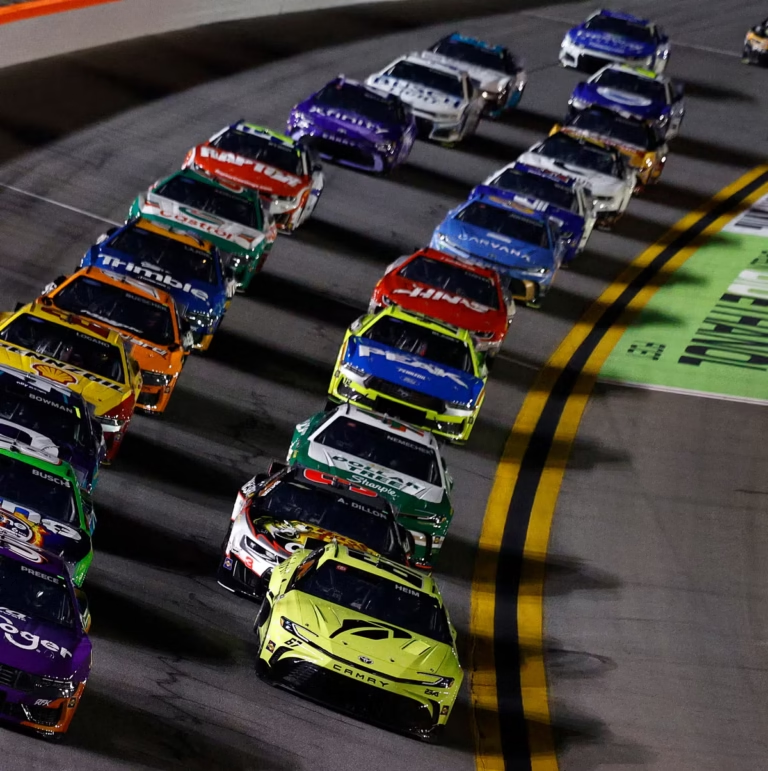
🏁 NASCAR Analysis · Pocono Raceway · Strategy Pocono Race Strategy Breakdown:How the Tricky Triangle Is Won Fuel mileage, tire

CVT Transmission Explained: How It Works, Pros, Cons, and Reliability

⚙️ Explained · Transmission Tech · Drivetrain Basics CVT Transmission Explained — Pros, Cons & Reliability No gears. No shifts.

AWD vs RWD vs FWD — explained simply

⚙️ Explained · Drivetrain Mechanics · Buying Basics AWD vs RWD vs FWD — Explained Simply Three letters on a

How a clutch actually works

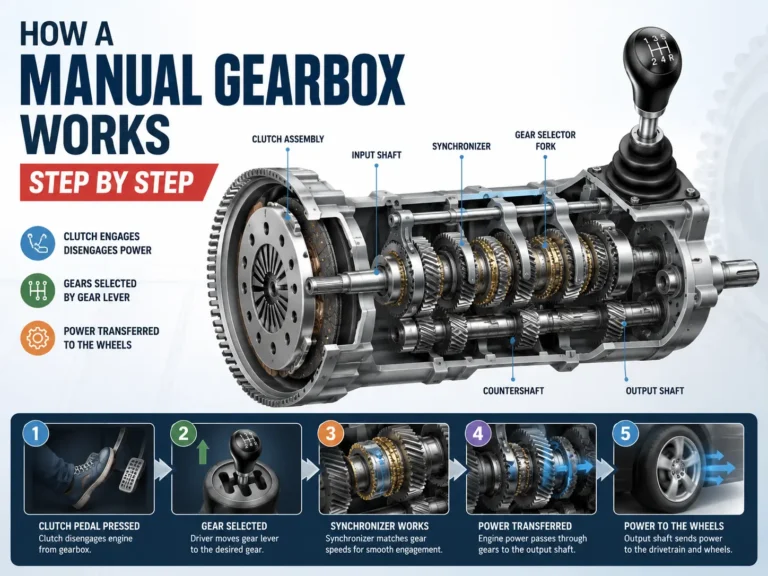
⚙️ Explained · Drivetrain Mechanics · Manual Transmission How a Clutch Actually Works It’s not just a pedal you press

Ferrari Hypercar vs Toyota vs Porsche
Ferrari Hypercar vs Toyota vs Porsche: The Complete 2026 Performance Comparison

🏆 FIA WEC Hypercar · Full Technical & Results Comparison Ferrari Hypercar vs Toyota vs Porsche:The Complete 2026 Performance Comparison

Related News

NHRA Garage Talk
NHRA Garage Talk: Teams Facing the Most Pressure Before the Countdown

🏁 NHRA · Garage Talk · Countdown 2026 NHRA Garage Talk: Teams Facing the Most Pressure Before the Countdown The

NASCAR Silly Season
NASCAR Silly Season 2027: Early Driver Market Rumors, Confirmed Moves & Predictions

🏁 NASCAR Analysis · Silly Season 2027 · Driver Market NASCAR Silly Season 2027: Early Driver Market Rumors, Confirmed Moves

Ferrari's Next F1 Engine
Ferrari’s Next F1 Engine Upgrade Explained:What It Means for the 2026 Title Fight

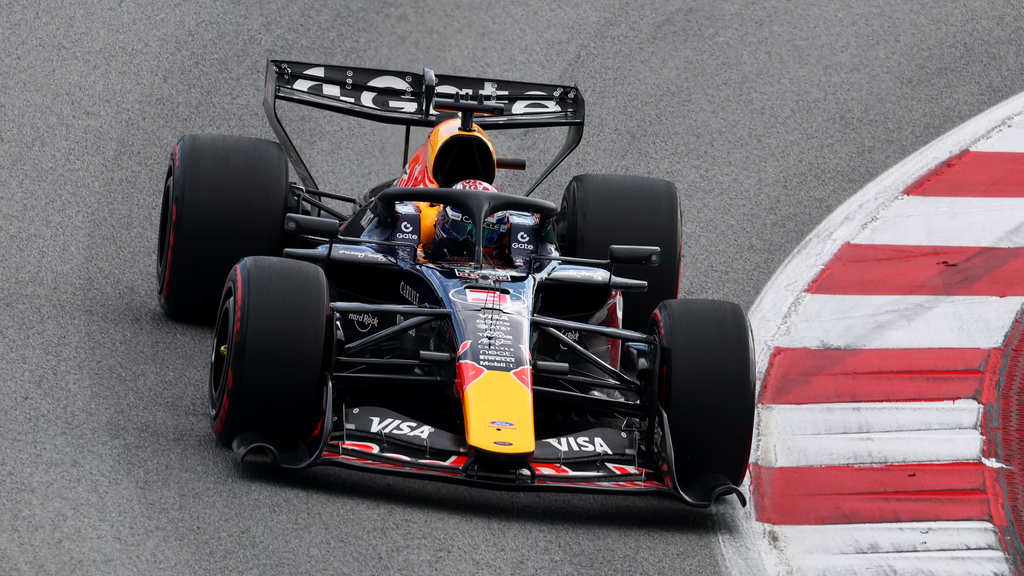
🔴 F1 News · Ferrari · Power Unit Ferrari’s Next F1 Engine Upgrade Explained:What It Means for the 2026 Title

Kyle Kirkwood
Kyle Kirkwood Sends IndyCar Warning After Topping Mid-Ohio Test

🔴 IndyCar · Mid-Ohio Test · 2026 Kyle Kirkwood Sends IndyCar WarningAfter Topping Mid-Ohio Test The Andretti Global driver posted

San Diego NASCAR Street Race
San Diego NASCAR Street Race: Full Chaos Recap

🔴 Race Recap · NASCAR San Diego NASCAR Street Race:Full Chaos Recap Corey Heim became the first Cup Series winner

NASCAR Brings Chicagoland Speedway Back
NASCAR Brings Chicagoland Speedway Back:Here’s Exactly Why

🔴 NASCAR News · Schedule NASCAR Brings Chicagoland Speedway Back:Here’s Exactly Why After a seven-year absence, the 1.5-mile oval in