Automatic vs Manual: Which Is Actually Faster?
The answer flipped completely about fifteen years ago — and the engineering behind why is more interesting than the result itself. Here’s a precise breakdown of how both transmissions work, where each one wins, and why the numbers keep changing.

Automatic vs Manual: Which Is Actually Faster?
The answer flipped fifteen years ago. Here’s exactly why — and what the engineering really shows.
For most of the 20th century, the answer was clear: if you wanted speed, you drove a manual. A skilled driver using a manual gearbox could exploit engine torque curves, time their shifts perfectly, and keep the engine in its powerband through any corner. Automatics were for comfort, not performance — slower, heavier, and wasteful through a torque converter that sapped energy like a slipping clutch that never fully engaged.
Then the dual-clutch transmission arrived, and the entire conversation changed. Today, virtually every world-record production car — from the Porsche 911 GT3 RS to the Bugatti Chiron — is fitted with an automated gearbox of some kind. Formula 1 cars, IndyCar, NASCAR’s road-course package, and GT3 race cars all use sequential or paddle-shift systems. No top-tier motorsport series runs a conventional H-pattern manual. That’s not a coincidence; it’s the result of decades of engineering solving problems that human reaction time and clutch mechanics fundamentally cannot.
But that’s not the end of the story. The full picture is considerably more nuanced — because different types of automatics perform very differently, the gap isn’t the same in every situation, and the manual transmission still holds meaningful advantages in specific contexts. Let’s pull this apart properly.
In almost every measurable performance scenario today, a modern automatic — specifically a dual-clutch transmission (DCT) — is faster than a manual. DCTs shift in as little as 8 milliseconds versus a human’s 200–600 ms minimum. Traditional torque-converter automatics are a closer contest and can still lose to a skilled manual driver in certain conditions. The exception is traditional automatic vs manual at the drag strip — there, launch control in a modern automatic usually wins, but an expert manual driver with a good car can still compete.
Why This Question Changed Its Answer
Until roughly the mid-2000s, the manual transmission held a genuine performance edge over the automatic in sports cars. The torque converter automatic of that era introduced a measurable energy loss — torque converter slip at low speeds could reach 10–15% before the lockup clutch engaged, and gear changes took anywhere from 300 to 700 milliseconds. A well-trained driver with a manual could upshift faster than many early automatics, and could control wheelspin and torque delivery through clutch modulation in a way an automatic simply wasn’t programmed to match.
The proof lived in the 0–60 mph (0–96 km/h) data from that era. A late-1990s BMW M3 — the E36, with its 6-speed manual — could reach 60 mph in around 5.5 seconds. The 4-speed automatic version was consistently slower by a meaningful margin. That pattern repeated across the industry.

Then Porsche introduced the Doppelkupplung (PDK) on the 911 in 2008, and the race was effectively over. The PDK shifted faster than any human could — by a factor of ten or more — and did so while maintaining engine revs precisely in the power band. Porsche’s own data at the time showed the PDK 911 Carrera S reaching 100 km/h (62 mph) half a second faster than its manual counterpart. On a track lap, the advantage compounded with every gear change.
Today the situation is so lopsided at the performance end that you genuinely cannot buy a hypercar with a conventional manual gearbox. The Ferrari SF90, the McLaren 720S, the Lamborghini Huracán, the Bugatti Chiron — all use dual-clutch or single-clutch automated systems. Even Porsche’s GT division now offers the PDK in its hardcore 911 GT3 RS, and track lap data consistently shows it faster than the GT3’s manual option.
How Each Transmission Type Actually Works
Before you can understand why one transmission type is faster than another, you need to understand what each one is actually doing when it changes gears. The differences go much deeper than “one has a clutch pedal and one doesn’t.”
The Manual Transmission (MT)
A manual transmission uses a driver-operated clutch — a friction disc clamped between the flywheel and the pressure plate — to physically connect and disconnect the engine from the gearbox. When you press the clutch pedal, a release bearing separates the clutch disc from the flywheel, breaking the mechanical connection. The driver selects the desired gear ratio using an H-pattern shift mechanism (or sequential gate in a race car), and releases the clutch to re-engage drive.
Inside the gearbox, the gears themselves are always in mesh — what changes is which gear pair is locked to the output shaft, achieved via synchroniser rings that match the rotational speeds of the gear and shaft before engagement. This synchronisation process — which both prevents grinding and introduces a delay — is one of the core reasons manual shifts take time. The driver, the clutch, and the synchronisers must all work in sequence.
For the engine, this process creates a real interruption: during the shift, the clutch is open, no drive is transmitted, and the engine has to be re-matched to the new gear ratio and vehicle speed before full power can flow again. Every manual upshift, no matter how fast it’s executed, involves a brief but real power delivery interruption. Learn more about how car engines work for the wider mechanical context.

The Torque Converter Automatic (AT)
A traditional automatic uses a torque converter instead of a mechanical clutch. The torque converter is a fluid coupling — two turbines facing each other inside a sealed housing filled with hydraulic fluid. The engine drives one turbine (the pump impeller), which flings fluid onto the second turbine (the turbine wheel), which drives the transmission. At low speeds there’s slip between the two — which is what allows the car to idle in gear without stalling, and gives the torque converter its ability to multiply engine torque at launch. At higher speeds, a lock-up clutch engages to directly connect the two halves and eliminate slip.
Gear changes inside the automatic use hydraulically actuated clutch packs — multiple friction discs compressed by hydraulic pressure — to engage and disengage different planetary gear sets. Modern automatics (8, 9, and 10-speed units) are controlled by a transmission control unit (TCU) that monitors throttle position, vehicle speed, engine load, and dozens of other inputs to choose the optimal gear and shift moment. This is far more sophisticated than it sounds — the TCU can react to driving conditions faster than any human can consciously process them.
The Dual-Clutch Transmission (DCT)
The dual-clutch transmission is, mechanically, two manual transmissions packaged inside a single housing, each with its own clutch, sharing a single output. Odd gears (1, 3, 5, 7) sit on one input shaft with one clutch; even gears (2, 4, 6, 8) sit on the other. While you’re driving in 3rd gear, the transmission has already pre-selected 4th on the second shaft. To upshift, it simply releases the odd clutch and engages the even clutch — a process that takes between 8 and 100 milliseconds depending on the system, with no interruption to power delivery in the most advanced units.
The DCT doesn’t just shift faster — it shifts without lifting. In a conventional manual, power flow is interrupted during every shift. In a DCT upshift, the next gear is already spinning at the correct speed before the change happens, so engine torque never stops reaching the wheels. This is why lap times improve with every gear change, not just occasionally.
Shift Speed: Where the Human Hits Its Limit
The single most important number in this debate is shift time. Everything else — launch control, torque management, gear ratio optimisation — is secondary to how long the transmission is off-power during a gear change. So let’s put the actual figures next to each other.
| Transmission Type | Shift Time | Power Interruption | Human Error Factor | Performance Rating |
|---|---|---|---|---|
| Manual (average driver) | 400–700 ms | Full interruption | High | Slowest |
| Manual (expert / racing driver) | 200–300 ms | Full interruption | Moderate | Competitive |
| Traditional Torque Converter AT | 200–500 ms | Partial (TC slip) | None | Moderate |
| Modern 8–10 Speed AT (sport mode) | 80–150 ms | Minimal | None | Fast |
| Dual-Clutch (DCT) — street | 30–100 ms | Near zero | None | Very Fast |
| DCT — performance / motorsport | 8–30 ms | None | None | Fastest |
To put those numbers in visceral context: the best-documented manual shift time by a professional racing driver is in the 200-millisecond range — roughly the speed of a human blink. A high-performance DCT — like those found in the Porsche PDK, Ferrari’s F1-derived DCT, or the Nissan GT-R’s ATTESA-equipped 6-speed unit — operates at 8 to 30 milliseconds. That’s not a small difference. A DCT can complete a gear change 25 times over in the time it takes an expert human driver to complete one manual shift.
Each of those 25 cycles — had they been gear changes — would have delivered full engine power to the wheels with zero interruption. Over the course of a performance drive or a lap of a circuit, this compounds into a substantial time advantage that no human technique can close.
The best human shift time documented by professional race drivers — around 200 milliseconds — sounds fast until you realise a competition DCT completes the same operation in 8 ms. That’s the gap between human biology and dedicated engineering: a factor of 25 in the same task.
There’s a secondary factor that rarely gets discussed: consistency. Even a professional driver doesn’t hit their best shift time every single time. Fatigue, a slightly imperfect heel-and-toe, a bump mid-corner, a moment of attention elsewhere — these things introduce variance. A DCT operates at peak efficiency on every single shift, at the 45th gear change of a lap just as cleanly as the first. Over a race distance, that accumulated consistency advantage is real and measurable.
Understanding engine redline and how torque delivery works through the rev range helps put these shift timing numbers in their proper context.
Launch Control: The 0–60 Advantage
Of all the performance advantages held by modern automatics, the one that shows up most dramatically in real-world tests is the standing start — the 0–60 mph sprint or quarter-mile drag run that most car publications use to benchmark performance.
A manual car’s standing start is a genuine skill: the driver must slip the clutch precisely enough to transfer torque to the driven wheels without lighting them up (too much wheelspin) or bogging the engine (too little slip). On a perfect run, in perfect conditions, with the ideal amount of wheelspin for available traction, a skilled driver can execute a fast launch. But it requires multiple attempts to optimise, varies with tyre temperature and surface grip, and is still fundamentally limited by human reaction time once the green light appears.
What Launch Control Actually Does
A launch control system removes every one of those variables. Here’s what it’s doing in a typical modern performance car:
The cumulative effect of these four advantages — pre-set engine rpm, optimised clutch engagement, continuous torque management, and perfect-timing shifts — means a modern launch control system produces a consistently faster standing start than even the best-trained human driver in a manual car. The Porsche 911 Turbo S, for instance, is rated to 0–100 km/h in 2.7 seconds with PDK and launch control active. The manual option — when it was offered in prior generations — was consistently around 0.5–0.8 seconds slower.

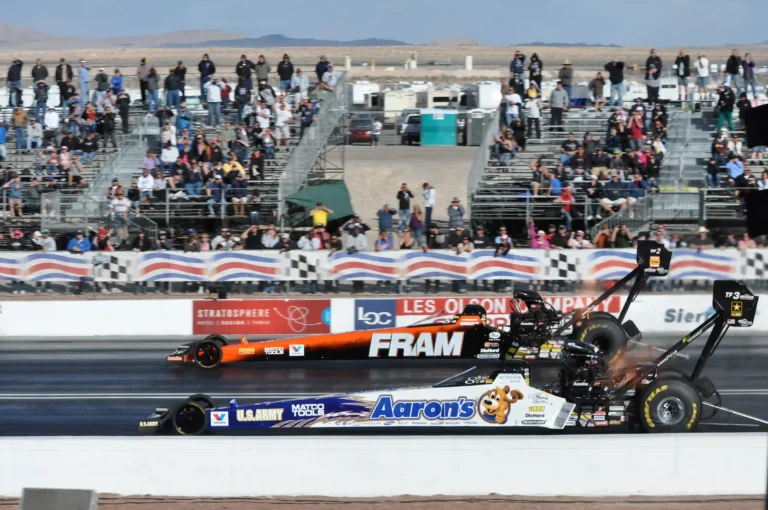
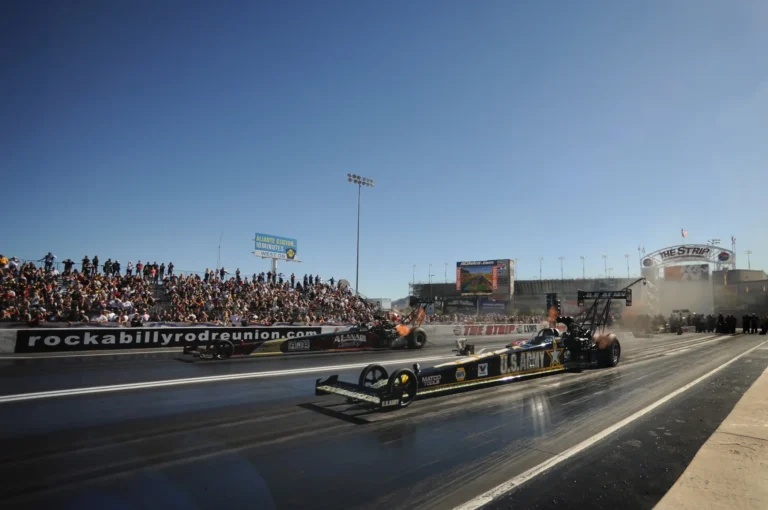
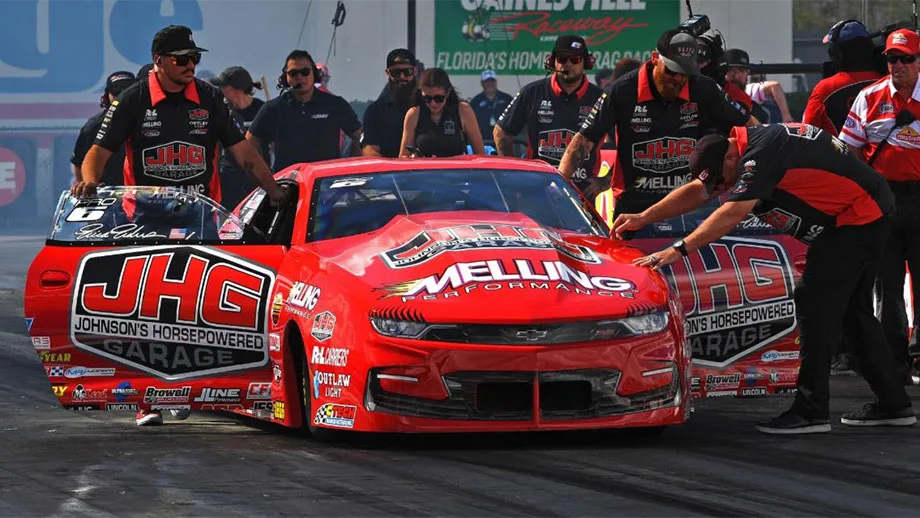
Dedicated drag racing — particularly NHRA Top Fuel and Pro Stock — is a more complicated story. Top Fuel and Funny Car use single-speed planetary automatics with manual-assist clutch systems that bear almost no resemblance to a road car automatic. Pro Stock, meanwhile, ran manual transmissions for decades before a rules change allowed automatics. At the amateur level, a highly skilled manual driver in a prepared car can still outrun a stock automatic of the same model on a quarter-mile strip, particularly in lower-powered classes where traction management is less critical. For NHRA racing specifics, we cover the distinct world of drag racing transmissions separately.
DCT vs Manual: The Real-World Performance Gap
Talk is cheap. What does the performance gap look like in measured tests using real cars? Here are documented comparisons using well-known production vehicles where both transmission types were offered on the same model.
| Car / Test | Manual Time | Automatic Time | Transmission Type | Faster By |
|---|---|---|---|---|
| Porsche 911 Carrera S — 0–100 km/h | 4.5 s | 4.0 s | PDK (DCT) | +0.5 s AT |
| BMW M3 (G80) — 0–100 km/h | 4.2 s | 3.9 s | 8-speed AT | +0.3 s AT |
| Chevrolet Corvette C7 Z06 — 0–60 mph | 3.8 s | 3.4 s | 8-speed AT | +0.4 s AT |
| Ford Mustang Shelby GT350 — 0–60 mph | 4.3 s | N/A — MT only | Manual only | Manual exclusive |
| Nissan GT-R (R35) — 0–60 mph | N/A — DCT only | 2.9 s | 6-speed DCT | DCT exclusive |
| VW Golf R — 0–100 km/h | 5.1 s | 4.6 s | DSG (DCT) | +0.5 s AT |
The pattern is consistent: across a wide range of car classes and power outputs, the automatic or DCT version of the same car reaches 100 km/h faster. The margin varies — from 0.3 seconds in the BMW M3 to 0.5 seconds or more in the Porsche and Golf R — but the direction never changes in this type of comparison. On a circuit, where the number of gear changes multiplies, the gap is even more pronounced.
Nürburgring Nordschleife: The Acid Test
The Nürburgring Nordschleife is one of the most transmission-intensive circuits in the world — over 73 corners, many of which require a gear change, across a 20.8 km lap. It’s arguably the best real-world benchmark for how transmission choice affects overall lap time. When Porsche tested the 991.2 911 GT3 — available in both 6-speed PDK and 6-speed manual — the PDK version set a noticeably faster lap. The gap was in the region of 10–15 seconds around the full circuit, which is enormous by professional benchmarking standards. The manual GT3 is still devastatingly fast; it’s just not as fast as its automated sibling when the stopwatch is running.
Porsche keeps the manual GT3 in production not because it’s faster, but because driving enthusiasts value the engagement. The company openly acknowledges that the PDK is the quicker tool. The manual GT3 sells because connection and feel matter to buyers, not just lap times. That’s a legitimate reason to prefer it — just not a performance one. See how racing drivers approach qualification to understand how much those fractions of a second mean in competition.
The Torque Converter Automatic: A Separate Conversation
It’s important not to lump the traditional torque converter automatic with the DCT when assessing performance, because they’re quite different machines. The gap between a manual and a DCT is large and fairly consistent. The gap between a manual and a modern torque converter automatic is much more situation-dependent — and a skilled manual driver, in the right conditions, can still beat an older-generation AT.
The modern high-speed automatic — exemplified by the ZF 8HP (an 8-speed torque converter unit found in BMW, Porsche, Jaguar Land Rover, Maserati, Alfa Romeo, and many other brands) — is a genuine performance tool. In Sport mode, the ZF 8HP uses pre-programmed shift maps that hold gears longer, blip the throttle on downshifts automatically, and select gear ratios based on cornering load data from the vehicle’s yaw sensors. It shifts in around 100–150 ms and delivers near-seamless power across changes.

Where the Torque Converter Still Helps
At very low speeds and in traffic, the torque converter’s natural slip characteristic is genuinely useful. It allows the car to creep forward without any clutch engagement, and it cushions the driveline from shock loads in a way that a DCT (with its direct clutch engagement) does not. This is why many drivers find DCTs in heavy traffic to be jerky or difficult — the dual-clutch is optimised for performance engagement, not urban crawl.
At the drag strip, torque converter multiplication is a real advantage. When a torque converter is in its “stall” condition — engine speed above the stall speed, turbine wheel stationary — it multiplies engine torque by a factor that can reach 2:1 or higher, depending on the converter design. This means the car launches with more torque than the engine is actually producing, which can improve 0–60 times significantly versus a manual or DCT of the same power output. Modern performance cars exploit this through carefully calibrated stall speed converters and sport-launch modes.
Modern AT Strengths
Torque multiplication at launch, smooth city driving, reliability over very high mileage, compatibility with high-torque diesel engines, and proven durability in towing applications.
DCT Strengths
Fastest possible shift times, near-zero power interruption during upshifts, high efficiency (lower fuel consumption than equivalent AT in most cycles), and excellent performance at high gear-change frequency.
Manual Strengths
Driver control and feel, simplicity and mechanical durability, lower purchase cost, full control over clutch engagement timing, and genuine engagement that no automated system fully replicates.
Understanding how engine displacement affects power delivery and what horsepower actually means helps clarify why transmission efficiency matters so much at the limit — the more power an engine produces, the more critical it becomes to deliver it cleanly to the wheels.
Automatic vs Manual in Motorsport
Professional motorsport is the most demanding possible test bed for any powertrain technology. Series that allow choice gravitate toward what’s fastest. The verdict from that environment is unambiguous.
Formula 1: The Benchmark
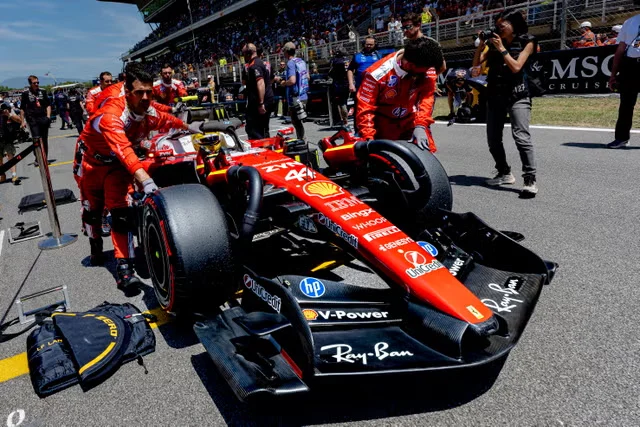
Formula 1 cars use semi-automatic sequential gearboxes — effectively single-clutch automatics operated via paddle shifters. The FIA mandates a minimum shift time of 100 milliseconds in the technical regulations (to prevent the cars from gaining excessive advantage from ultra-fast shifts that would stress components). Without that rule, engineers estimate F1 shift times could be further reduced. Even at the regulated 100 ms, these gearboxes are faster than any human with a conventional clutch pedal. The F1 driver operates the paddles, but the gearbox computer controls clutch engagement, rev matching, and torque delivery during the shift. There has not been a conventional clutch pedal in an F1 car since the late 1980s.
GT3 Racing
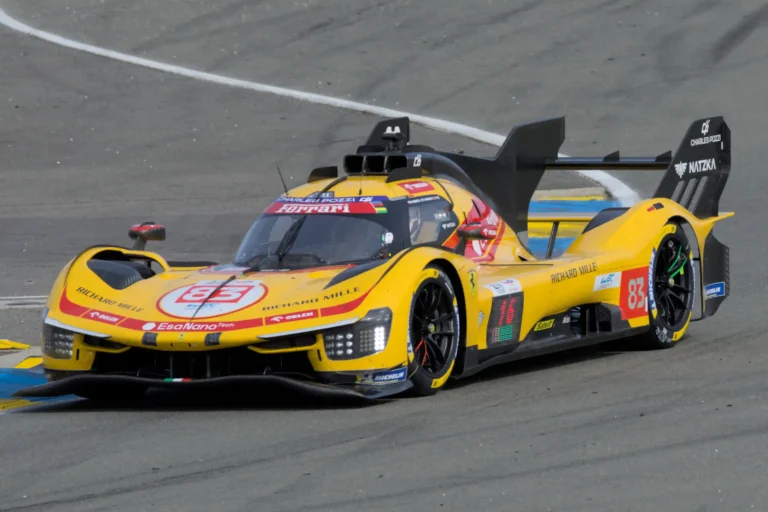
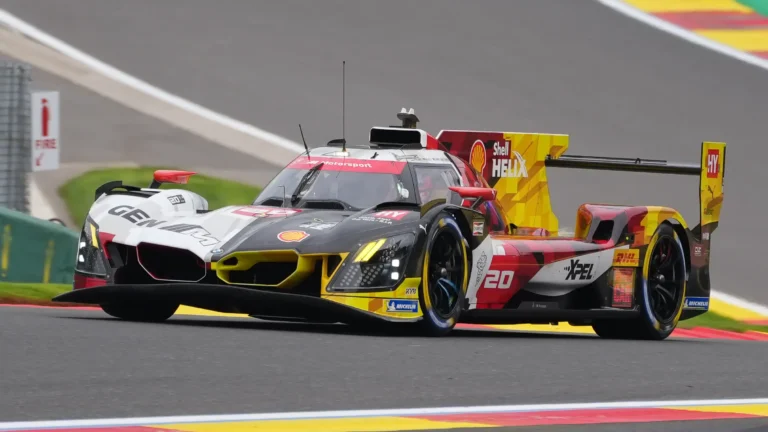
GT3 class cars — the machinery used in the Nürburgring 24 Hours, IMSA WeatherTech SportsCar Championship, and dozens of other professional series globally — universally use sequential paddle-shift gearboxes. These are based on production DCT or automated manual units, optimised for racing durability and shift speed. No GT3 manufacturer offers or considers a conventional manual option for their race car, regardless of whether the road car it’s based on offers one. The performance argument is simply settled.
IndyCar
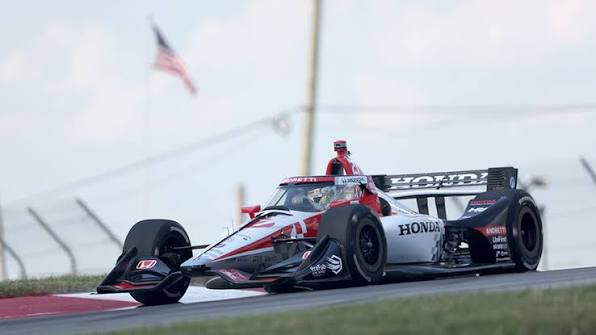
IndyCar uses a 6-speed sequential gearbox with paddle shifters. Like F1, there is no clutch pedal for gear changes in movement — the clutch is used only for starts and pit lane. Sequential operation means only one gear selection at a time is possible, preventing the driver from accidentally skipping a gear under pressure. The gearbox control unit manages rev matching on downshifts automatically.
NASCAR
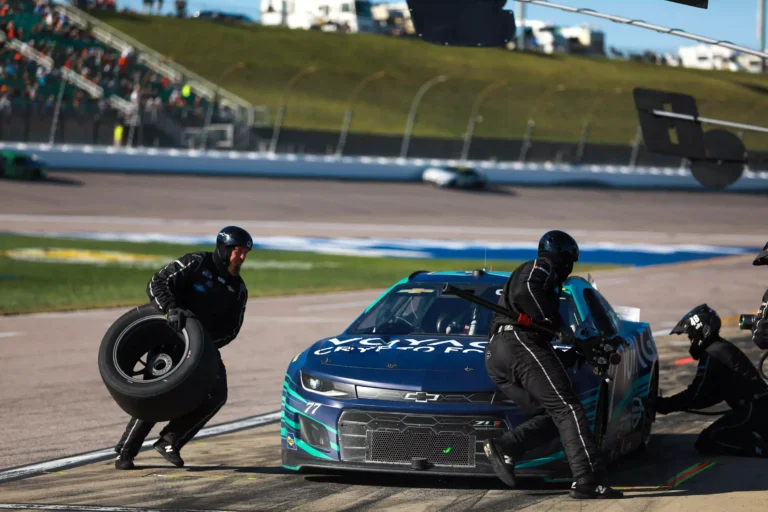
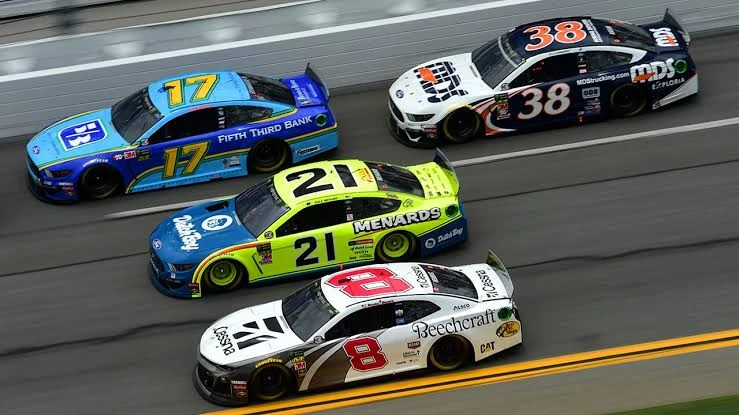
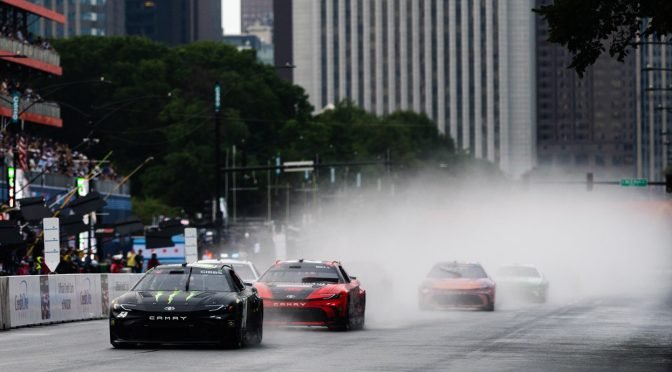
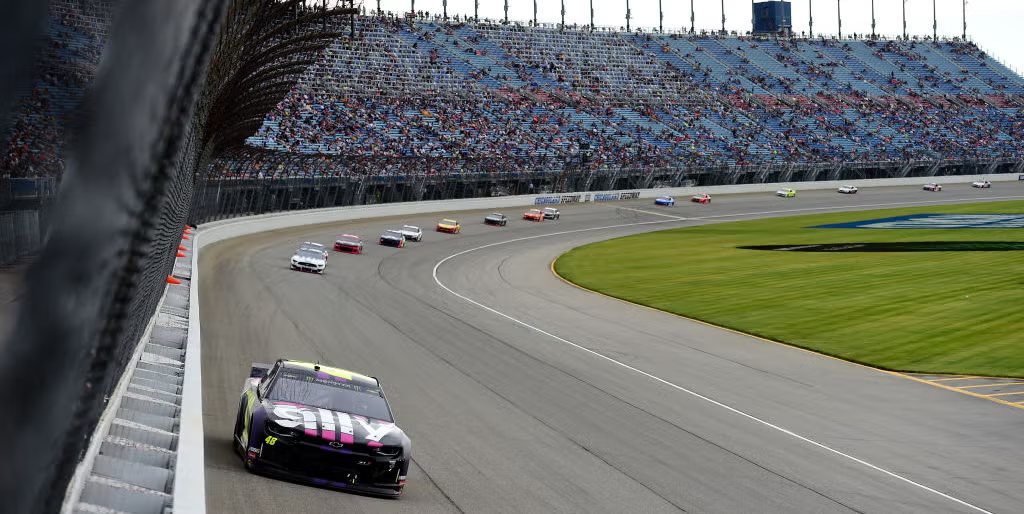
NASCAR’s Next Gen package, introduced in 2022, made a significant change: the Cup Series cars switched from a conventional 4-speed manual H-pattern gearbox to a 5-speed sequential transaxle with a paddle shift mechanism. The change was made partly for safety (removing the need to reach across the cockpit for a gear lever mid-corner) and partly for consistency, but the sequential unit is also inherently faster to operate under race conditions.
The One Area Manual Still Dominates in Motorsport
Historic racing and certain amateur club racing categories mandate manual transmissions to preserve the character of older machinery and to level the playing field between participants. Some rally events — particularly in historic and period-correct classes — similarly require manual gearboxes. In these contexts, the manual remains not only used but required. And it’s worth noting that in lower-budget club racing, a well-maintained manual is often preferred over a DCT purely for cost and reliability reasons — a DCT’s wet clutch packs in a hard-driven race car require expensive rebuilds at intervals that can make them economically unviable for amateur competitors.
| Racing Series | Transmission Type | Shift Operation | Notes |
|---|---|---|---|
| Formula 1 | Semi-auto sequential | Paddle shift | Min. 100 ms shift (FIA regulated) |
| IndyCar | 6-speed sequential | Paddle shift | No clutch pedal for gear changes |
| NASCAR Cup Series | 5-speed sequential transaxle | Paddle / sequential lever | Changed from H-pattern manual in 2022 |
| GT3 Class (global) | Sequential paddle-shift | Paddle shift | No manual option offered by any manufacturer |
| WRC Rally | 6-speed sequential | Sequential lever / paddle | Hybrid power unit assists in Rally1 class |
| MotoGP | Seamless shift gearbox | Foot lever (no clutch for shift) | Sub-10 ms gear change |
| Historic Racing | H-pattern manual | Clutch pedal + lever | Mandated by regulations to preserve era-correct character |
It’s also worth noting what MotoGP demonstrates about the technology. The seamless-shift gearbox used in MotoGP — where the next gear is engaged before the current one is released, allowing continuous power delivery — achieves shift times below 10 ms. It is, arguably, the most sophisticated shift system on any vehicle that regularly competes. And in MotoGP, as in every other top-tier motorsport, the engineer’s answer to “manual or automatic” is always the same.
The Verdict: What the Data Says and What It Doesn’t
The headline answer is clear: a modern automatic transmission — particularly a dual-clutch — is faster than a manual in almost every measurable performance context. Shift times, 0–60 times, quarter-mile times, lap times, and professional motorsport adoption all say the same thing. This isn’t contested by engineers, and it hasn’t been genuinely contested since around 2010.
DCT beats manual. Modern AT usually beats manual. Old-generation AT vs manual is a fair fight.
If the question is raw speed — acceleration, lap time, gear-change efficiency — a modern DCT wins decisively over any manual transmission, regardless of driver skill. A modern 8–10 speed torque converter automatic wins in most conditions, especially at launch. An older-generation 4–5 speed automatic may lose to an expert manual driver in some on-road conditions, particularly where human clutch modulation and timing can be optimised.
In motorsport, there is no competition: every professional series that allows a choice uses an automated sequential or dual-clutch system. The manual transmission has not held a meaningful performance advantage over a quality automated system since approximately 2008–2010.
What the Speed Numbers Don’t Capture
And here’s where it gets more interesting — because the performance data is only one dimension of the transmission question, and it’s not always the most important one.
A manual gearbox gives the driver direct, unmediated control over clutch slip, torque delivery, and engine braking. In certain demanding conditions — a long mountain pass where you want to use engine braking precisely through tight hairpins, a loose-surface drive where you want to control wheelspin manually via partial clutch engagement, or a slow-speed technical section where you want to hold a gear rather than let the transmission hunt — a skilled manual driver has a kind of granular control that no automated system, however sophisticated, fully replicates.
There’s also the engagement question, which is real even if it’s difficult to quantify. Many drivers — including many professional racing drivers driving road cars in their spare time — prefer the manual because the act of shifting gears, heel-and-toeing through corners, and managing the clutch is intrinsically satisfying. It demands more of the driver, and that demand is precisely the point. The sport mode in an automatic is not the same as a manual, and most enthusiast drivers know it.
The right question isn’t always “which is faster?” It’s “what are you optimising for?” If the answer is lap times, standing starts, and objective performance metrics, the automated transmission wins. If the answer is driver involvement, simplicity, or cost, the manual has a strong case. These are different things, and being honest about that distinction is more useful than picking a side and ignoring the other.
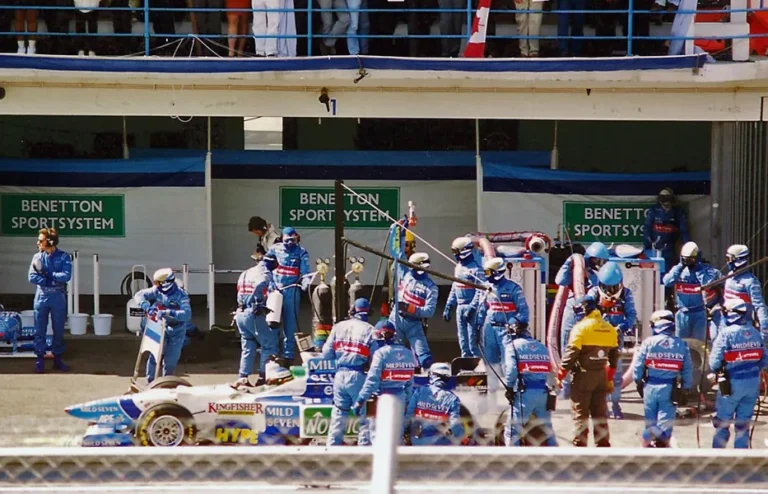
To understand how transmission technology intersects with broader car racing strategy and pit stop operations, those linked explainers give a fuller picture of how gearbox management affects real race outcomes beyond simple lap times.
Frequently Asked Questions
The Bottom Line on Automatic vs Manual Speed
The performance case is settled. A modern dual-clutch transmission shifts 10 to 25 times faster than the best human driver, delivers power without interruption through each change, and manages launch conditions with a consistency no driver can match. The motorsport world voted with its engineering budgets: no top-tier racing series uses a conventional manual anymore, because the sequential automated gearbox is simply faster.
But performance is one dimension of a transmission, not the only one. The manual gearbox remains uniquely engaging to drive, simpler to understand and repair, and genuinely preferable for many drivers who value the act of driving as much as the result. The important thing is knowing exactly which you’re getting — and making that choice honestly, rather than assuming one thing and getting another.
If you want the fastest car, get the automatic. If you want the most involving car, get the manual. They’re different tools optimised for different outcomes — and both are worth understanding properly.
References
- Porsche AG Engineering Communications — PDK gearbox technical overview and shift-time documentation. newsroom.porsche.com
- ZF Friedrichshafen AG — 8HP Automatic Transmission technical data and performance specifications. zf.com
- FIA Technical Regulations (Formula 1) — Gearbox minimum shift time and sequential transmission specifications. fia.com
- SAE International — “Dual Clutch Transmission Development and Shift Strategy Optimisation” (SAE Technical Paper Series). sae.org
- NASCAR Next Gen Technical Rulebook — Drivetrain and transmission specifications for the Cup Series sequential transaxle. nascar.com