Why Some Sports Cars Have No Differential
It sounds like a design flaw. Every car needs to corner, and cornering means your wheels must spin at different speeds. So why do some of the fastest purpose-built race cars on earth deliberately skip the differential — and what happens when they do?

Why Some Sports Cars Have No Differential
Some of the fastest race cars ditch the differential entirely. Here’s the engineering reason — and what it costs them.
A differential is one of the most fundamental components in any driven axle. Without it, your driven wheels are locked together — forced to spin at exactly the same speed no matter what the road demands. When you turn a corner, the outer wheel has to travel a longer arc than the inner one. Force both to cover different distances at the same rotational speed, and something breaks: the tyre scrubs sideways, the drivetrain binds under stress, or the car simply refuses to steer cleanly.
That’s the problem the differential was invented to solve — back in the 1820s. And yet, some of the most purpose-built performance machines on the planet run without one. Not by accident. Not to save money. By deliberate engineering choice. The answer to why reveals a lot about how grip, power delivery, and cornering dynamics work when you push a car to its absolute limits.
Whether you’re trying to understand what a differential even does, or you’re a hardcore fan wondering why your favourite drag car runs a solid spool, this guide covers everything — from the basic physics right through to the specific engineering tradeoffs that make a locked axle the right tool in the right hands.
Some sports and race cars run without a differential — using a locked axle or spool — because in straight-line or low-cornering-demand applications, locking both driven wheels together maximises traction and eliminates power losses. The tradeoff is severe tyre scrub and understeer in corners, which is why this setup is reserved for drag cars, some oval racers, karts, and dedicated drift builds where straight-line acceleration or consistent corner-exit power outweighs cornering finesse.
What a Differential Actually Does — and Why It Exists
Before you can understand why some cars skip the differential, you need to understand what problem it solves. And to do that, you need to think about what happens geometrically when a car turns a corner.
When a vehicle goes around a bend, the two driven wheels on the same axle trace different-radius arcs. The outer wheel travels a longer path than the inner wheel. In a typical passenger car taking a moderately tight corner, the path length difference between inner and outer driven wheels can reach several metres per second at normal road speeds. For both wheels to complete that turn without fighting each other, they must rotate at different speeds simultaneously.
That’s precisely what a differential does. A standard open differential uses a set of bevel gears — a ring gear, a pinion gear, and a pair of spider gears — to allow each driven wheel to rotate at a different speed while still receiving torque from the engine. When the car goes straight, both wheels spin at the same rate. When it corners, the outer wheel speeds up and the inner wheel slows down, automatically and continuously, in proportion to the turning radius.
The Physics Behind the Corner
Think of it this way: imagine you’re holding the two ends of a short rod and walking in a circle. The hand on the outside has to move faster than the hand on the inside to keep the rod aligned. Your driven wheels have exactly this problem. Force both to stay at the same speed — lock that rod rigid — and either the rod bends, or one end scrubs sideways along the floor instead of rolling cleanly.
In a car, that scrubbing means tyre slip, drivetrain windup, understeer, and accelerated mechanical wear. On a road car, a locked axle makes parking nearly impossible, and cornering at speed produces violent, unpredictable push as the inner tyre fights the geometry.
The differential was patented in 1827 by French engineer Onesiphore Pecqueur specifically to solve this geometry problem. For nearly two centuries it has been considered a non-negotiable component in any vehicle that needs to corner. So the question becomes: what kind of vehicle doesn’t need to corner — or doesn’t need to corner cleanly enough to justify the tradeoffs that come with a differential?
Understanding torque is key to grasping why differential design matters so much in high-power applications. Our explainer on what torque is and why it matters is a useful companion to this piece.
Which Sports Cars and Race Cars Run Without a Differential
The choice to remove the differential is never random. Every category that deliberately runs a locked axle or spool shares one defining characteristic: their performance priorities make the tradeoffs worthwhile. Here’s where you actually find no-differential setups in the real world.

1. Drag Racing Cars
This is the clearest case. A drag car goes in a perfectly straight line, accelerates as hard as physics will allow, and then brakes. It does not turn at speed. There is no geometric need for one wheel to spin faster than the other, because there is no corner to negotiate. Running a spool — a solid, one-piece unit that replaces the differential entirely and locks both axle shafts permanently — gives a drag car a definitive launch advantage: all available traction from both rear tyres is used simultaneously, with no possibility of torque being diverted to the wheel with less grip.
2. Oval Track Racing (Short Tracks)
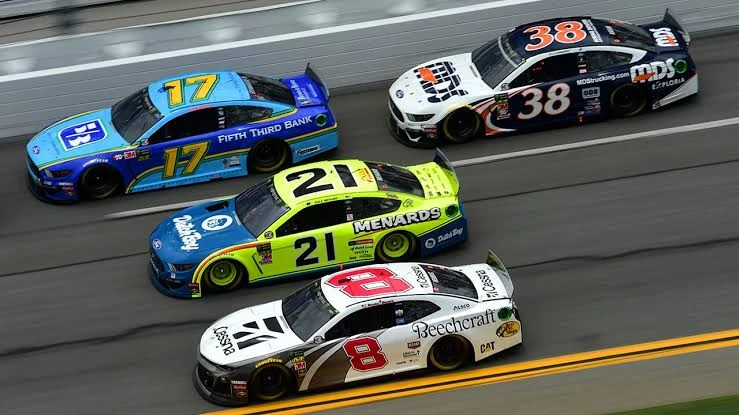
Many oval short-track categories — including some American dirt and asphalt oval classes — run a form of locked rear axle or an aggressive locker. On a tight oval, the car is always turning the same direction. Engineers can tune the car so that the locked axle’s tendency to push (understeer) through a corner works with the setup, rather than against it. The locked axle also provides completely consistent, repeatable drive off the corner — crucial for lap-time predictability in oval competition.
3. Racing Karts
Racing karts — including the Formula-style machines that launched careers from Michael Schumacher to Max Verstappen — run no differential at all. A kart chassis uses chassis flex as a substitute: in a corner, the inside rear wheel lifts slightly from the ground, which allows the outside wheel to drive the kart through the turn without drivetrain binding. The rear axle is a single solid shaft. This only works because of the kart’s extremely low centre of gravity and specific chassis geometry. It’s an elegant engineering workaround that requires no differential gear whatsoever.

4. Dedicated Drift Cars and Time-Attack Builds
Some purpose-built drift competition cars run a welded or locked differential — sometimes called a welded diff — where the spider gears inside a standard differential housing are welded solid, permanently locking both axle shafts. This makes the rear end break away more predictably under power, since both rear wheels spin at the same rate simultaneously. Time-attack cars occasionally use similar setups for maximum corner-exit traction on lines that are repeatable enough that the tyre scrub penalty in slow corners is acceptable.
5. Off-Road Racing (Select Classes)
Some Baja-style and off-road competition vehicles run locked rear axles for maximum traction on loose, unpredictable terrain. When grip is inconsistent and the surface constantly changes, having both wheels pulling equally can outweigh the cornering penalty — loose dirt reduces the scrubbing effect of a locked axle, since the tyres can slip over loose material without the violent mechanical windup you’d get on tarmac.
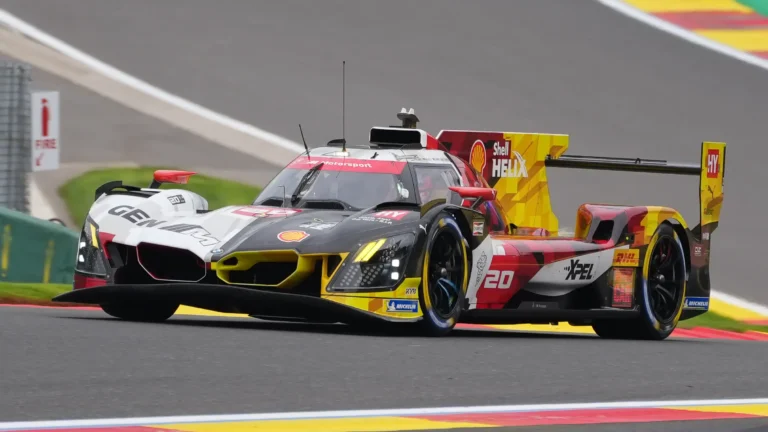
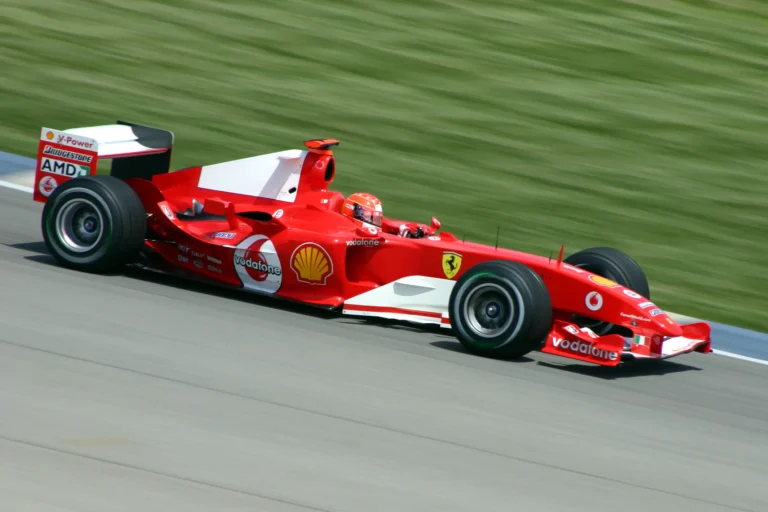
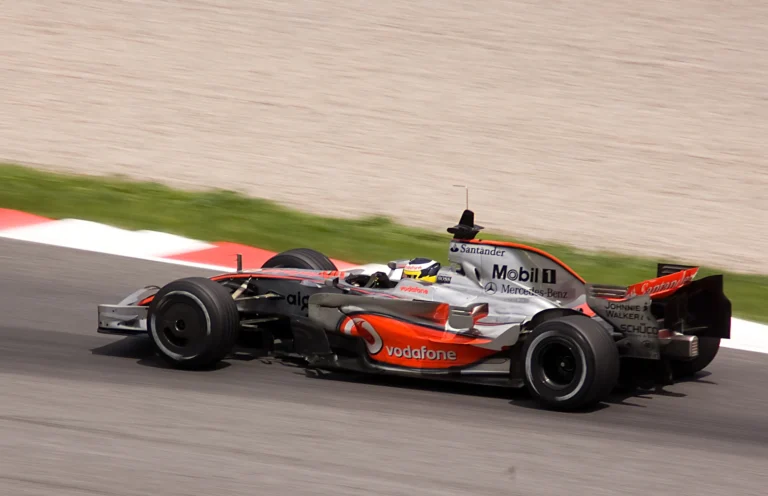
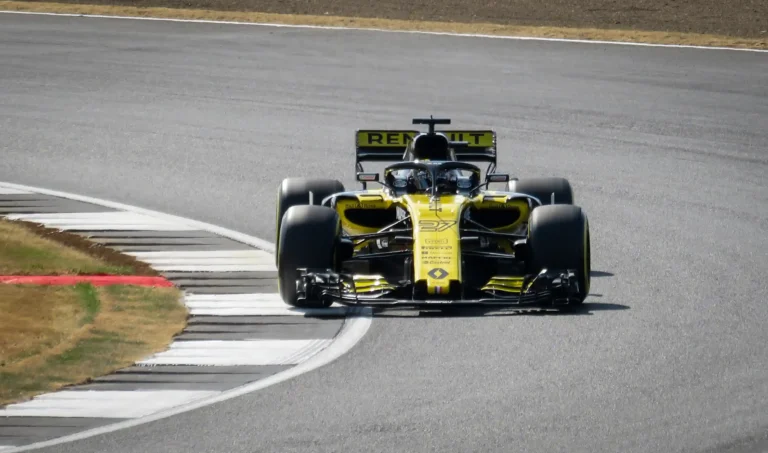
Formula 1, GT3, IndyCar, MotoGP, WRC, and NASCAR Cup cars all use differentials — electronic multi-plate units in F1, or mechanical limited-slip differentials in other categories. The locked axle is a specialist tool for specific competition formats, not a mainstream choice. See our full coverage of how drivetrain and handling dynamics affect crashes in motorsport for the bigger picture.
The Spool: What It Is, How It Works, Why It’s So Effective
When engineers say a car has “no differential,” they usually mean the differential housing contains a spool rather than a set of differential gears. A spool is, in essence, the world’s most straightforward drivetrain component: a single solid cylindrical piece that locks both axle shafts permanently and rigidly together. No spider gears, no differentiation mechanism, no moving parts beyond the axle shafts themselves.
The engine’s torque arrives at the spool through the ring gear, and the spool distributes exactly half of it — rigidly and without variation — to each axle shaft. Both rear wheels are mechanically compelled to rotate at identical speeds at all times, under all conditions.
Why This Produces Better Straight-Line Traction
In a standard open differential, the torque-splitting mechanism has an inherent weakness: it always sends torque to the path of least resistance. If one tyre has more grip than the other — because it’s on a slightly different surface, or because weight transfer has loaded it differently — the differential will preferentially spin the less-loaded wheel, because it takes less torque to make it spin. This is why a rear-wheel-drive car with an open differential can get stuck with one wheel on ice: the differential routes all torque to the icy wheel (least resistance), while the grippy wheel barely turns.
The spool eliminates this entirely. Both wheels receive equal torque regardless of their individual grip level. If one wheel spins, it can only spin as fast as the other — they are locked together with no exception.
The open differential’s weakness is pure physics, not a design flaw: it will always favour the wheel that takes the least torque to spin. The spool removes that choice from the equation entirely — both wheels get the same torque, period.
The Different Types of Locked and Near-Locked Setups
Full Spool
A solid, one-piece unit replacing the entire differential gear set. Both axle shafts are permanently and rigidly locked. No differentiation under any condition. Standard in drag racing and some oval builds.
Welded Differential
A standard differential with spider gears welded solid. Functionally identical to a spool in operation, but built from existing components. Common in budget drift and track-day builds.
Automatic Locker
Locks both axles under drive, but allows limited differentiation when coasting or when one wheel overruns. Better on-throttle traction than an open diff, while preserving some cornering ability.
A spool is also lighter and simpler than any differential. Fewer components means less rotating inertia, less frictional power loss through the drivetrain, and fewer failure points. In motorsport, every gram and every percentage point of mechanical efficiency matters. For context on how race car drivetrains are engineered from the ground up, see our GT3 race car diagram and drivetrain explainer.
Drag Racing: Where a Locked Axle Is the Only Logical Choice
Drag racing is the clearest and most extreme argument for eliminating the differential. A quarter-mile strip is a straight line. The car launches from a standing start and accelerates hard in one direction for roughly 3.7 to 10 seconds depending on the class. It never turns at speed. The only objective is maximum acceleration — and every engineering choice flows from that single constraint.

Why Open Diffs Fail at the Drag Strip
At the launch of a drag race, a high-powered car generates enormous torque at the rear wheels from a standing start. Under this abrupt, maximum-torque load, an open differential will send power to whichever wheel breaks traction first — and because no two tyres are ever perfectly identical in their grip level at the exact moment of launch, this often means one wheel spins dramatically while the other barely moves. The result is a lopsided, chaotic launch that wastes traction and adds tenths to the elapsed time.
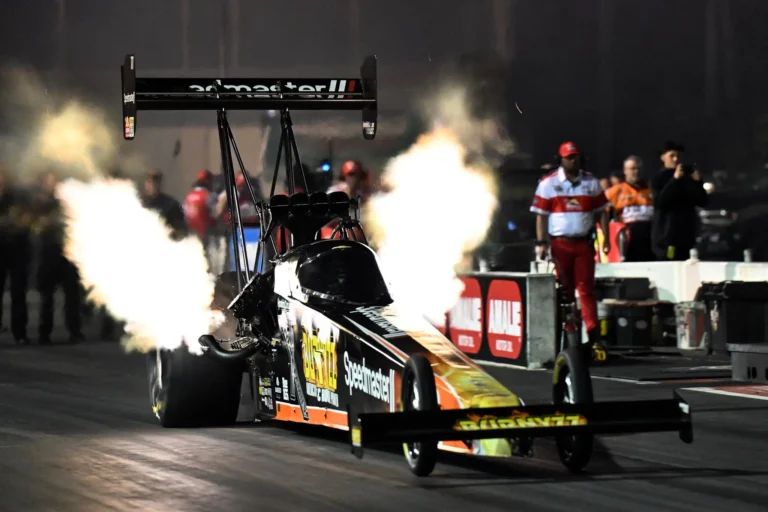
A spool eliminates this entirely. Both tyres receive identical torque. If wheelspin occurs, it occurs on both sides simultaneously — which is dramatically easier to control and tune with tyre choice, launch RPM, and clutch engagement. Top fuel dragsters — which produce over 11,000 hp and cover the quarter-mile in under four seconds — use spools as standard. Their enormous rear slick tyres are designed to wrinkle under launch load and then snap straight, and having both doing the same thing at exactly the same time is essential for a clean, straight run down the strip.
The Head-to-Head: Differential vs Spool at the Strip
| Setup | Launch Consistency | Both-Wheel Traction | Cornering Ability | Best Application |
|---|---|---|---|---|
| Open Differential | Variable — torque bias to slipping wheel | Partial | Full | Road cars, entry-level race classes |
| Limited Slip (LSD) | Good — resists excessive torque bias | Strong | Good | Performance road cars, GT racing, touring |
| Full Spool | Excellent — identical torque both wheels always | Maximum | Severely Limited | Drag, some oval, karts, dedicated track builds |
| Welded Differential | Excellent (functionally same as spool) | Maximum | Severely Limited | Budget drift and track-day builds |
| Automatic Locker | Good under power, variable off-throttle | Strong | Compromised | Off-road, some oval classes |
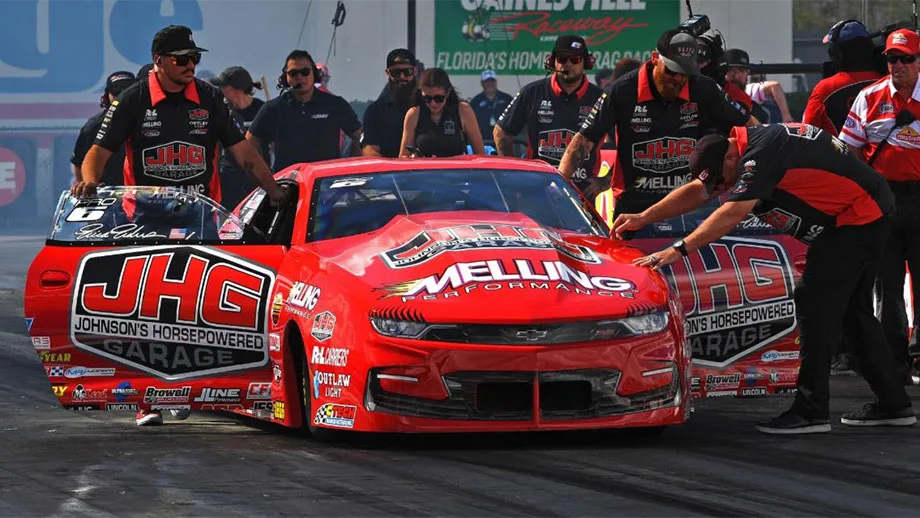
The NHRA’s top fuel and funny car classes are where the spool’s advantages are most dramatic. At over 330 mph across the quarter mile, these cars need every fraction of available traction from the moment the clutch engages. A spool is standard across virtually every professional drag class. For context on the forces involved, see our piece on how fast NHRA cars actually go.
LSD vs Spool: The Full Engineering Comparison
A limited-slip differential and a spool are often discussed as if they’re just different settings on the same dial — one loose, one tight. They’re not. They solve fundamentally different problems with fundamentally different mechanisms, and understanding the difference is key to understanding why certain race categories choose one over the other.

How a Limited-Slip Differential Works
An LSD retains the ability to allow different wheel speeds — which is essential for cornering — but adds a mechanism that resists excessive speed difference between the two driven wheels. In a clutch-pack LSD, a set of friction discs is pre-loaded by a spring, creating a bias that fights against one wheel spinning much faster than the other. When both wheels have similar traction, the diff behaves almost like an open diff. When one wheel starts to spin excessively, the friction clutches engage, transferring torque toward the wheel with more grip.
In a Torsen (torque-sensing) LSD, worm gears are used instead of clutch packs. The worm gear geometry physically transfers torque to the grippier side whenever one wheel overruns the other. This happens instantly and mechanically, with no clutches to wear out, and with no driver input required.
The Head-to-Head
Why F1 Uses Electronic Differentials
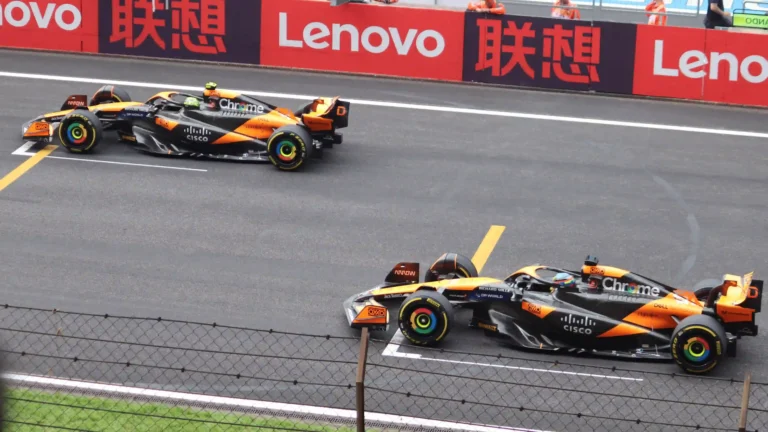
Modern Formula 1 cars use fully electronic, multi-plate clutch differentials controlled by the ECU in real time. The driver can adjust differential preload, ramp angles, and behaviour across different throttle positions — all from the steering wheel during the lap. This allows the car to behave like a gentle LSD through slow hairpins, a more aggressive locker at medium-speed corners, and something approaching a spool under maximum acceleration onto a straight. It’s the most sophisticated approach to the problem, but also the most expensive and complex.
The Real-World Tradeoffs: Why You Don’t See Spools Everywhere
If a spool delivers maximum both-wheel traction while being simpler and lighter than any differential, why doesn’t every performance car use one? Because the moment you introduce a corner — any corner — a locked axle becomes an active liability. The tradeoffs are not subtle, and they are not manageable in most real-world applications.

Tyre Scrub: The Physics You Cannot Escape
When a locked-axle car enters a corner, the inner rear tyre is forced to rotate at the same speed as the outer. But the inner tyre is on a shorter arc. It wants to rotate slower. Since it can’t, it scrubs sideways across the tarmac instead — a lateral slip that generates heat, destroys rubber, and creates resistance that pushes the car toward understeer. On smooth tarmac this is immediately felt as the car refusing to turn in cleanly. Over the course of a circuit lap, the tyre scrub from a locked rear axle would destroy rear tyre life in a fraction of the normal stint length.
Handling Consequences: Predictable but Compromised
A locked axle makes a car predictable in one specific sense: the rear behaves the same way every time. There’s no variation from differential clutch behaviour, no subtle changes as friction packs wear. But “predictable” doesn’t mean “good.” The car will understeer on entry, push through the apex, and require additional steering correction on exit. A skilled driver can adapt — and drift drivers actively exploit this — but it’s not a setup that rewards smoothness or rewards carrying speed through a fast, flowing corner.
Drivetrain Stress in Corners
In low-speed corners on tarmac, a locked axle creates real mechanical stress in the axle shafts and differential housing. The drivetrain is being asked to transmit power to two wheels that are geometrically trying to rotate at different speeds — and since the spool won’t allow that, the stress has to go somewhere: into the half-shafts, into the ring gear, into the tyres themselves. On slow, tight corners under power, this produces shock loads through the axle components. Most dedicated drag and oval cars are engineered around this, with heavy-duty axle shafts. But fitting a spool to a road car used on a flowing circuit would accelerate axle wear substantially.
Fitting a spool or welded differential to a road-registered vehicle used on public roads is extremely dangerous. A locked rear axle causes severe, sudden understeer in emergency situations and makes the car very difficult to control under braking into a corner or during an emergency lane change. This is strictly a track-only modification.
Where Each Setup Belongs
| Application | Recommended Setup | Primary Reason |
|---|---|---|
| Quarter-mile drag strip | Full Spool | No corners. Both-wheel traction is the only variable that matters. |
| NHRA Top Fuel / Funny Car | Full Spool | 11,000+ hp straight-line run. Spool plus massive slicks is the only viable setup. |
| Racing kart | Solid Axle | Chassis flex lifts inner rear wheel in corners — solves the geometry problem without a diff. |
| Oval short track | Locker or Spool | Always turning the same way; locked axle’s understeer tendency is tunable into the setup. |
| Drift competition | Welded or Spool | Both wheels spinning under power gives most consistent, controllable slide initiation. |
| GT3 / Endurance Racing | Mechanical LSD | Multiple corner types, tyre conservation over stints, driver feel essential. |
| Formula 1 | Electronic Clutch Diff | Active, adjustable across all conditions. Maximum performance everywhere on track. |
| WRC / Rally | Active or Mechanical LSD | Unpredictable surfaces, hard cornering required. LSD gives traction without locking. |
| Performance road car | LSD | Must handle all conditions safely. LSD improves traction without sacrificing corners. |
The Kart Solution: Solving the Problem Without a Differential
It’s worth spending a moment on karts specifically, because their engineering is genuinely elegant. A racing kart has no differential, no suspension, and an extremely rigid yet specifically tunable chassis. When a kart corners, the combination of cornering force and chassis geometry causes the inside rear wheel to unload and lift slightly off the surface. With the inside rear wheel unloaded, it can spin freely — removing the scrub problem without a single differential gear. The outside rear wheel does all the driving, and the kart pivots cleanly around it.
This is why kart chassis design is so critical — stiffness, seat mounting position, axle diameter, and tyre choice are all primary tuning tools because they affect how the inside rear lifts and reloads through corners. It’s also why karting is considered the most complete driver development tool in the sport. The lack of a differential means there’s nowhere to hide from the feedback between chassis behaviour and driver input. It’s no coincidence that Schumacher, Verstappen, Hamilton, and virtually every modern F1 champion were karting competitively as children. For more on getting into the sport, our guide on how to become a race car driver covers the full pathway.
A kart solves the differential problem without a differential. When the inside rear wheel lifts in a corner, the geometry problem simply disappears — no gear, no clutch, no electronics. Just carefully engineered flex doing the work.
Frequently Asked Questions
The Bottom Line on Sports Cars Without Differentials
The differential is one of the most important components in any driven axle — and removing it is not a shortcut or a cost-saving measure. It is a deliberate engineering decision that makes complete sense in a narrow set of applications and very little sense in most others.
Where the road is always straight, or where both wheels must always pull with equal force, a spool delivers something a differential cannot: identical torque to both driven wheels with zero power loss and zero risk of one wheel spinning while the other sits idle. The drag strip is its home territory. The racing kart — through a completely different mechanical solution — achieves the same result through chassis geometry.
Outside those contexts, the differential earns its place on every lap of every circuit, every rally stage, and every road driven at speed. The physics of corner geometry don’t change. The outer wheel will always need to travel further than the inner one, and the drivetrain must accommodate that somehow. The engineering question is simply which approach — open diff, LSD, electronic diff, or locked axle — best fits the specific demands of the vehicle and the competition it’s built for.
References
- Nunney, M.J. (2007). Light and Heavy Vehicle Technology, 4th Edition. Butterworth-Heinemann / Elsevier. Foundational technical reference on differential gear theory, spool design, and automotive drivetrain principles. sciencedirect.com
- Milliken, W.F. & Milliken, D.L. (1995). Race Car Vehicle Dynamics. SAE International. The definitive reference on racing vehicle handling dynamics, differential behaviour under cornering loads, and tyre mechanics at the performance limit. sae.org
- National Hot Rod Association (NHRA) — Official technical regulations covering drivetrain specifications for Top Fuel, Funny Car, and Pro Stock categories, including rear axle and spool requirements. nhra.com
- Smith, C. (1984). Engineer to Win. Motorbooks International. Practical race engineering reference covering axle selection, differential design philosophy, and spool application in drag and circuit competition. motortrend.com