Race Car Mid-Engine GT3
Diagram Top Side: Specs, Layouts & Top Models
A complete technical breakdown of the mid-engine GT3 top-side layout — how weight distribution, aerodynamics, and chassis packaging interact, and which cars use this configuration to win.
Mid-Engine GT3 Diagram, Specs & Top Models
Full top-side layout breakdown — weight, aero, chassis packaging, and the cars that use it best.
Look at a race car mid-engine GT3 diagram from the top side and the engineering logic immediately reveals itself. The driver sits forward, the gearbox exits rearward, and the engine block — the heaviest single component on the car — occupies the space directly between them, slung low and central. Nothing about that arrangement is accidental. Centralising mass reduces the polar moment of inertia, which is the engineering term for how willingly a car rotates around its own centre. A lower polar moment means the car reacts faster to steering inputs and recovers more predictably from oversteer — advantages that translate directly into lap time on the complex, medium-speed corners that dominate GT3 circuits.
This guide walks through the top-side diagram zone by zone, explains why the mid-engine layout behaves the way it does, compares it directly to rear-engine and front-engine GT3 alternatives, and gives you a complete technical picture of the models that exploit this architecture most effectively in 2026.
What a Mid-Engine GT3 Layout Actually Means
In a mid-engine GT3 car, the powertrain sits between the driver’s seat and the rear axle — ahead of the driven wheels but behind the cockpit. That distinction matters enormously. Unlike a rear-engine layout where the engine hangs beyond the rear axle, or a front-engine arrangement where the mass sits ahead of the driver, the mid-engine design concentrates the heaviest components as close to the car’s geometric centre as physically possible.
The FIA introduced the GT3 category in 2005 with a philosophy built around accessibility and competition parity. The central requirement — that every race car must be derived from a production road car the manufacturer is actively selling — means the engine layout is not freely chosen. Ferrari builds the 296 GT3 because Ferrari sells the 296 GTB road car. Lamborghini fields the Huracán because the Huracán is on sale at dealers. The race car inherits the road car’s fundamental architecture. For the mid-engine cars, that inheritance is a competitive gift: they start with an inherently superior weight distribution before a single engineering decision is made.
Because mid-engine cars enjoy natural handling advantages, the FIA’s Balance of Performance system may assign them additional minimum weight or reduce engine output via a smaller air restrictor. BoP is applied race by race based on real-world performance data — which means the layout advantage is real but partially offset before the chequered flag drops. For a full explainer on how the FIA operates, see what is the FIA. For BoP’s specific function in GT3, our GT3 race car hub covers the mechanics in detail.
Polar Moment of Inertia: The Physics Behind the Handling
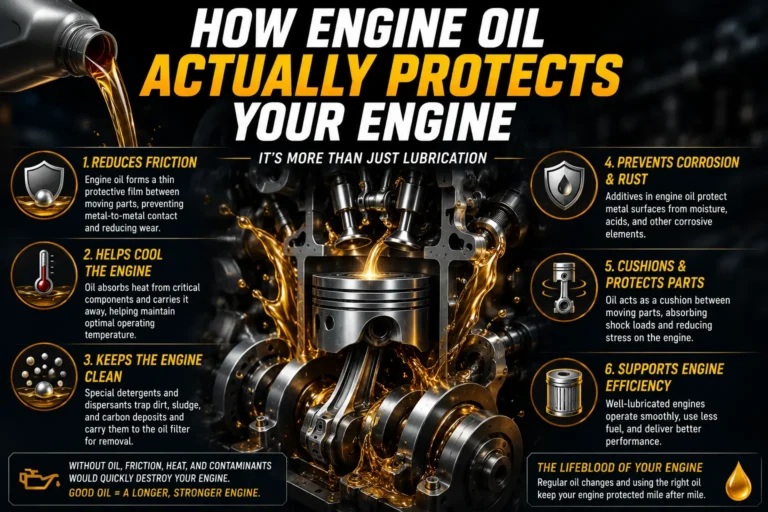
Every driver and engineer in GT3 understands the concept of polar moment of inertia, even if they rarely use the full technical term. In plain English, it describes how much effort is required to start a car rotating around its own vertical axis. A car with heavy components spread far from its centre — a long front overhang full of engine, a heavy gearbox hanging off the rear — has a high polar moment. It is slow to begin rotating into a corner and slow to stop rotating once it starts. The driver has to anticipate and manage that behaviour constantly.
A mid-engine car concentrates mass centrally, reducing the polar moment. The car responds to the steering wheel faster. It rotates into the apex of a corner more willingly. When the driver catches a slide, the car is easier to collect because it was never fully committed to the rotation. Over the course of a race distance, that characteristic reduces fatigue and expands the car’s performance window — meaning a wider range of drivers can extract competitive lap times from it.

The Mid-Engine GT3 Top-Side Diagram: Zone by Zone
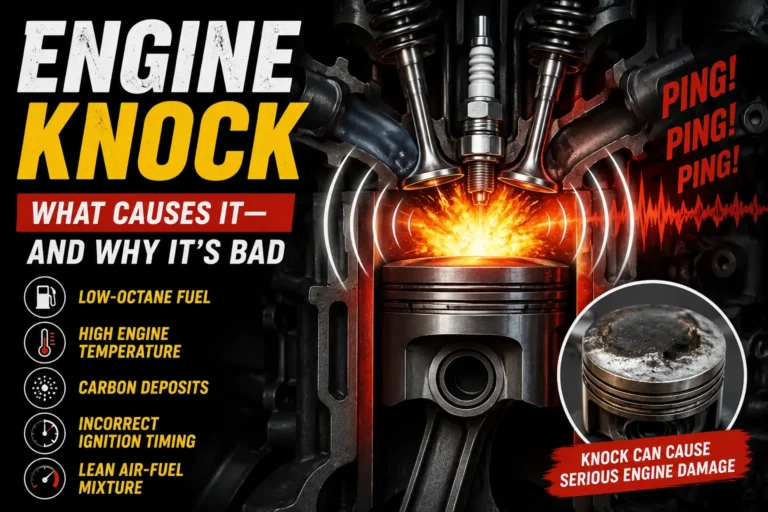
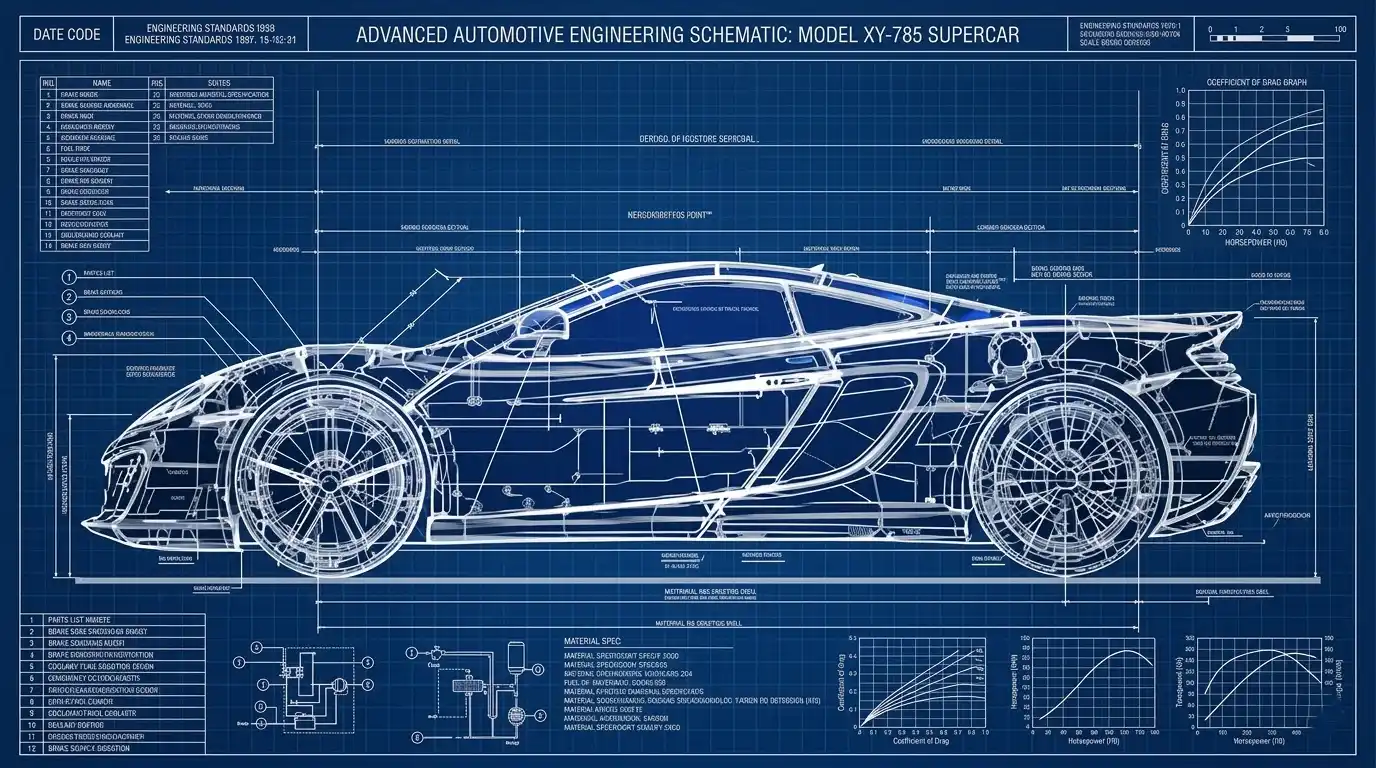
Reading a race car mid-engine GT3 diagram from the top side tells you far more than a side-on or rear view ever could. You see the entire width of the aerodynamic package, the lateral placement of cooling ducts, the fore-aft position of the engine block relative to the wheelbase, and the routing of critical systems like the fuel cell and braking circuits. Here is what each zone of that top-side view is telling you.
Zone 1: The Front Aerodynamic Package
Looking at the car’s nose from directly above, the most striking feature of a mid-engine GT3 is how clean and aggressive the front end looks compared to a front-engine competitor. With no engine under the hood, engineers can direct the entire frontal area toward aerodynamic work. The front splitter extends wide, its flat underside creating a low-pressure zone that pulls the nose toward the tarmac. Carbon-fibre dive planes flank each corner, their angle adjusted to manage airflow around the front wheel arches and reduce turbulent air reaching the sidepod cooling inlets further back.
The brake cooling ducts are visible from above as sculpted openings ahead of the front wheels. On a mid-engine car, these feed directly to the front disc assemblies — a shorter, more direct routing than you typically see on front-engine layouts where the engine bay competes for the same space. Effective front brake cooling keeps disc temperatures in the optimal operating window across long stints, which in GT3 endurance racing can be the difference between lasting 70 minutes on a set of brakes and needing a precautionary pad change at a full-course yellow.
Zone 2: Side Cooling Architecture
The top-side view reveals the mid-engine GT3’s cooling philosophy clearly. Because the engine sits centrally, the radiators cannot sit in the nose — as they do on a front-engine layout like the BMW M4 GT3. Instead, large sidepod-mounted radiators flank the cockpit, their intakes visible as wide-open scoops forward of the rear wheel arches. These channel cooling air rearward through the engine compartment before exhausting through vents cut into the upper bodywork or through the engine’s own exhaust system.
Managing thermal load on a mid-engine layout requires careful duct design because the heat source is surrounded on all sides. Engineers spend significant time optimising airflow paths through computational fluid dynamics (CFD) simulation before a new GT3 car runs a single metre. A poorly cooled mid-engine car will run its oil and water temperatures consistently higher under race conditions, accelerating component wear — critical in a 24-hour endurance context where reliability is at least as important as outright pace.
Zone 3: The Cockpit and Driver Interface
From above, the cockpit of a mid-engine GT3 reads as a compact, centrally positioned survival cell. The FIA-mandated roll cage runs through the interior and connects to the chassis at multiple structural points. The driver sits in a carbon-fibre racing seat moulded to their specific body profile, with the steering column positioned so the wheel is almost directly above the front axle midpoint — giving the driver direct feel for what the front tyres are communicating.
The steering wheel carries controls for traction control intervention level, ABS sensitivity, front-rear brake bias, and the pit-lane speed limiter. In mid-engine cars specifically, the brake bias control is used actively during stints because the car’s weight distribution shifts as fuel burns off — approximately 80–90kg over a race stint — and the optimal bias between front and rear changes with it. Drivers who manage this actively, adjusting bias as the fuel load drops, can protect rear tyre life more effectively in the closing phase of a long stint.
Zone 4: The Engine Bay — The Whole Point
The engine bay is the defining zone of the entire diagram. On a mid-engine GT3 car, the powertrain occupies the space between the rear of the cockpit and the rear axle centreline. The engine’s crankshaft sits as low as the regulations and road-car architecture allow — in the Ferrari 296 GT3, the twin-turbo V6 is mounted longitudinally and canted at an angle to lower the centre of gravity further. The gearbox exits rearward toward the rear axle, keeping the driveline compact and the mass package centralised.
From the top-side view, you can trace the exhaust routing as it exits the engine and exits through the rear bodywork. You can also see where the fuel cell sits — typically ahead of the engine, between the cockpit and the powertrain, a position chosen to keep the weight of the fuel load as central as possible as the tank empties. This contrasts with front-engine layouts where the fuel cell often sits further rearward to balance the nose-heavy mass of the engine.
In a mid-engine GT3 diagram, every component is positioned in relation to the engine. The fuel cell, the cooling circuits, the exhaust, the gearbox — all of them work around that central block. Get the engine placement right and the rest of the car follows logic. Get it wrong and you spend the season chasing a setup that never fully works.
Zone 5: Rear Aero and Diffuser
The rear of the top-side diagram shows the wide rear wing and, beneath it, the diffuser exit. Mid-engine GT3 cars tend to generate more efficient rear downforce than front-engine competitors because the engine bay does not intrude on underbody airflow in the same way. The flat floor leads cleanly into the diffuser’s expansion section, accelerating airflow and creating the suction that pulls the rear of the car toward the track.
The rear wing is mounted via swan-neck supports — attachments that rise from above the wing’s pressure surface rather than beneath it. This leaves the wing’s underside completely clean, maximising the pressure differential that generates downforce. The wing’s angle is adjusted before each session based on circuit characteristics; a downforce-heavy setting for Spa’s Eau Rouge and Pouhon, a lower-drag setting for the long Kemmel Straight. The interaction between wing angle and diffuser extraction angle determines the rear aerodynamic balance, and getting it wrong is one of the fastest routes to an ill-handling GT3 car regardless of how good the mechanical setup is.

Mid vs Rear vs Front Engine: What the Diagrams Tell You
GT3 is genuinely unusual in top-level motorsport: three fundamentally different engine layout philosophies compete on the same grid simultaneously. Understanding what each diagram reveals about handling character explains why the BoP exists and why different cars suit different circuits and different drivers.
Lowest polar moment of inertia. Car rotates willingly into corners. Best mid-corner stability and inherently neutral balance. Demands precise inputs — very responsive to driver errors at the limit. Optimal for high-speed technical circuits with multiple medium-speed corners.
Exceptional corner-exit traction — engine mass directly over rear driven wheels. Pendulum effect under braking requires specific technique. Extraordinary rear-tyre grip exiting slow hairpins. Suits drivers who brake late and prioritise traction. Strong at circuits with slow-speed sections.
Highest polar moment of the three configurations. More stable and predictable under heavy braking. Requires most steering input through fast corners. Generally more forgiving for amateur co-drivers due to measured rotation speed. Strong in endurance formats requiring consistent driver-across-pace.
| Characteristic | Mid-Engine | Rear-Engine (Porsche) | Front-Engine |
|---|---|---|---|
| Polar Moment of Inertia | Lowest | Medium-High | Highest |
| Corner Rotation Speed | Fastest | Moderate | Slowest |
| Corner-Exit Traction | Very Good | Exceptional | Good |
| Brake Stability | Good | Requires technique | Best |
| Aero Packaging Freedom | Highest | Limited (engine behind axle) | Moderate |
| Amateur Driver Friendliness | Good | Lower (higher skill ceiling) | Best |
| Best Circuit Types | High-speed technical | Slow-speed traction circuits | Mixed; endurance formats |
The BoP deliberately narrows the performance gap between layouts. What the table above describes is intrinsic engineering character — the tendencies that remain even after BoP has been applied. A skilled professional driver or a well-managed team can extract a result from any of the three layouts. The layout choice matters most when the BoP weight or power penalties don’t fully offset the car’s natural advantages — which happens at specific circuits that happen to suit one architecture particularly well. For more on how car handling characteristics translate into lap time, see our explainer on oversteer and understeer and what is downforce.
The Best Mid-Engine GT3 Cars on the 2026 Grid
Ferrari 296 GT3 — Aerodynamic Perfection
The Ferrari 296 GT3 is the most recent generation of Maranello’s customer racing programme and represents a dramatic shift from the previous 488 platform. The 488 was a turbocharged V8 mid-engine car; the 296 steps down in displacement to a 3.0-litre twin-turbo V6 — the same fundamental engine family used in the 296 GTB road car — producing approximately 600hp in race trim before BoP adjustments. The smaller displacement unit sits lower in the chassis than its predecessor, further reducing the centre of gravity and improving the car’s aerodynamic efficiency by allowing a flatter underbody profile.
What sets the 296 apart in the top-side diagram is the aerodynamic freedom unlocked by the compact engine architecture. Engineers developed an extremely aggressive underbody ground effect package — one that generates a disproportionate amount of downforce relative to the car’s drag coefficient. On medium-to-high-speed circuits like Spa-Francorchamps, Monza, and the Nürburgring’s GP circuit sections, the 296 carries more mid-corner speed than almost anything else on the grid. The World of Speed Museum’s Ferrari section traces the road-car evolution that led to this powertrain architecture.
| Car | Engine | Power (approx.) | Engine Position | Notable Circuit Strength |
|---|---|---|---|---|
| Ferrari 296 GT3 | 3.0L Twin-Turbo V6 | ~600 HP | Longitudinal mid | High-speed sweepers (Spa, Monza) |
| Lamborghini Huracán GT3 EVO2 | 5.2L Naturally Aspirated V10 | ~620 HP | Longitudinal mid | High-downforce circuits; high-rev corners |
| Audi R8 LMS GT3 EVO II | 5.2L Naturally Aspirated V10 | ~610 HP | Longitudinal mid | Balanced all-circuit performance |
| McLaren 720S GT3 EVO | 4.0L Twin-Turbo V8 | ~570 HP | Longitudinal mid | Aero efficiency; fast circuit pace |
| Chevrolet Corvette Z06 GT3.R | 5.5L Flat-Plane Crank V8 NA | ~500 HP | Longitudinal mid | Aero platform; IMSA circuits |
Lamborghini Huracán GT3 EVO2 — The V10 Weapon
The Lamborghini Huracán GT3 EVO2 takes the mid-engine philosophy to its most sonically spectacular extreme. The 5.2-litre naturally aspirated V10 — the same basic architecture that powered Lamborghini’s road cars for well over a decade — produces around 620hp and revs to a ceiling that turbocharged competitors cannot match. The absence of turbocharging means the power delivery is completely linear: no lag, no spike, just a smooth, predictable surge from the lower rev range to the screaming top end. For drivers managing tyre life over a long stint, that predictability is genuinely valuable — it is much easier to modulate throttle application precisely when you can feel exactly what the engine is doing at every point on the throttle curve.
The EVO2 update brought revised aerodynamics across the front splitter, sidepods, and rear wing, improving downforce generation while reducing overall aerodynamic drag. The suspension geometry was also refined to improve front-end responsiveness — an area where earlier Huracán iterations were considered slightly deficient compared to the Ferrari and McLaren. The result is a car that is now genuinely strong across a wider range of circuit types than its predecessors.
McLaren 720S GT3 EVO — The Engineer’s Choice
McLaren’s GT3 entry is the car that engineers most frequently describe as technically impressive when they are being candid about the grid. The 720S GT3 EVO is built around a carbon-fibre monocoque — a genuine structural carbon tub rather than the production steel shell most GT3 cars are required to use — which is permitted because the road-going 720S uses an identical construction method. The result is a car that is genuinely lighter at its base than most competitors, before BoP ballast is applied.
The top-side diagram of the McLaren reveals the narrowest frontal profile on the mid-engine grid — the car is aggressively pinched at the waist, reducing aerodynamic drag on the straights while the rear wing and diffuser do the downforce work. The twin-turbo V8’s power delivery is more aggressive than the naturally aspirated V10s, but McLaren’s software team has spent considerable development effort smoothing the power curve to give amateur drivers a manageable throttle response in wet conditions. On the right circuit with the right setup, the 720S is still one of the hardest cars to beat on overall lap time.
Ford Mustang GT3: The American Front-Engine Answer
The Ford Mustang GT3 deserves specific attention in any layout discussion because it represents the most ambitious engineering response to the mid-engine competition from a front-engine platform. Ford Performance, working with Multimatic Motorsports, had a fundamental problem: the Mustang is culturally and commercially front-engined. Homologation requires the race car to reflect that. But a conventional front-engine, front-gearbox layout would place too much mass at the front axle to be competitive in the mid-speed and high-speed corners where the Ferraris and Lamborghinis excel.
The solution was a rear-mounted transaxle — a sequential gearbox positioned at the rear axle rather than behind the engine. This moved approximately 70–80kg of gearbox mass from the front-middle of the car to the rear, dramatically improving the weight distribution toward the 50/50 target that defines competitive GT3 handling. The drive from the engine travels the full length of the car via a torque tube to reach the gearbox, then returns to the rear wheels in the conventional manner. The top-side diagram of the Mustang GT3 is the most mechanically complex on the grid — and the engineering behind it is legitimately impressive.
Engine: 5.4-litre naturally aspirated Coyote-based V8 developed with M-Sport · Gearbox: 6-speed Xtrac sequential, rear-mounted transaxle · Aero: Carbon-fibre body panels, swan-neck rear wing, aggressive front splitter with dive planes · Suspension: Bespoke short-long arm setup with Multimatic adjustable DSSV dampers · FIA Status: First Mustang homologated for global FIA GT3 competition. The Mustang exhibit at the World of Speed Museum traces the road-car lineage behind this racing programme.
Professional drivers who have spent time in the Mustang describe the rear-transaxle layout as producing a surprisingly neutral, confidence-inspiring handling balance — closer to the mid-engine competitors than the typical front-engine GT3 experience. The car carries Ford’s Le Mans heritage and the weight of the Mustang brand on track at events like the 24 Hours of Le Mans and IMSA’s Rolex 24 at Daytona. For the broader story of American muscle cars in motorsport, our archive piece provides the historical context for how significant this programme really is.
Porsche 911 GT3 R, GT3 RS, and the LMGT3 Class
Porsche’s rear-engine layout sits outside the mid-engine discussion but is impossible to ignore in any comprehensive GT3 breakdown, because the 911 GT3 R remains the most-raced GT3 car globally. Understanding what it gives up in mid-engine neutrality and what it gains in rear-axle traction explains why Porsche’s customer programme consistently produces race wins across every series and every circuit type.
GT3 vs GT3 RS: What Actually Differs
The question comes up repeatedly among road-car enthusiasts who follow the racing: are the GT3 and GT3 RS the same engine? The base architecture — a 4.0-litre naturally aspirated flat-six — is shared between both road cars. The internals are not. The RS variant uses modified camshaft profiles tuned for higher peak revs, revised intake geometry, and a compression ratio adjusted for maximum power output in pure track use. The result is a power figure that exceeds the standard GT3’s 502hp, reaching approximately 518hp, with the power delivered in a sharper, more aggressive curve that rewards commitment and punishes hesitation.
| Feature | Porsche 911 GT3 (Road) | Porsche 911 GT3 RS (Road) |
|---|---|---|
| Engine Base | 4.0L Naturally Aspirated Flat-Six | 4.0L Naturally Aspirated Flat-Six |
| Power Output | 502 HP @ 9,000 rpm | 518 HP @ 9,500 rpm |
| Aerodynamics | Fixed wing, street-viable downforce | Active Swan-PDK aero, extreme track downforce |
| Cooling Layout | Dual front radiators | Single central radiator (race-style routing) |
| Suspension | Double-wishbone front, LSA rear | Full double-wishbone both axles |
| Race-Car Basis | 992 GT3 R (customer racing) | GT3 RS (road car only — no direct race variant) |
What Is LMGT3?
LMGT3 — Le Mans GT3 — is the class introduced by the FIA and the Automobile Club de l’Ouest (ACO) to replace the GTE class in the FIA World Endurance Championship and the 24 Hours of Le Mans. Where GTE required expensive bespoke manufacturer-specific components, LMGT3 runs standard GT3-homologated cars with minor additional modifications: mandatory torque sensors on the driveline for data collection, specific aerodynamic settings to equalise performance at Le Mans’s high-speed nature, and a driver classification framework designed to ensure professional factory drivers do not permanently dominate the class.
Porsche’s 911 GT3 R is one of the headline entries in LMGT3, campaigned by customer operations including Manthey Racing. The class has revitalised GT racing at Le Mans by bringing the full diversity of the global GT3 grid — Ferraris, Lamborghinis, BMWs, Mustangs, Corvettes — to the world’s most famous endurance race at a fraction of the development cost that GTE required. For coverage of how Max Verstappen approached a GT3 car at the Nürburgring, a useful companion to understanding what the cars demand from professional drivers at the highest level, see our piece on Verstappen’s GT3 race and what ultimately happened.

What Does the New Porsche GT3 Look Like in 2026?
The current 992-generation Porsche 911 GT3 R is visually the most aggressive 911 racing variant ever built. The front end is dominated by gaping air intakes and a wide splitter that extends the full width of the bumper. Carbon-fibre bonnet vents allow heat to escape from the front radiator package — a necessity because the 992 adopted a wider body that tightened the cooling airflow path compared to the narrower 991. The side profile reveals a car sitting dramatically lower than any road 911, on forged centre-lock racing wheels wrapped in wide Michelin racing slicks. The rear is defined by the massive swan-neck rear wing, its underside kept perfectly clean to maximise the pressure differential the wing generates. The overall visual effect is of a car simultaneously familiar and brutally purposeful — exactly what the Porsche customer racing programme has represented for the past two decades.
The Porsche 911 exhibition at the World of Speed Museum documents the road-car evolution from the original 1963 911 to the 992 generation, providing the historical context for why this specific architectural decision — the rear-engine layout — has been the defining characteristic of the most successful customer racing car in GT3 history.
Frequently Asked Questions
What the top-side view ultimately tells you about GT3 racing
The mid-engine GT3 top-side diagram is not just a technical drawing — it is an argument for a specific philosophy of vehicle dynamics. Centralising mass is the most direct way to improve a car’s rotational agility while maintaining aerodynamic freedom at both ends. Ferrari, Lamborghini, McLaren, Audi, and Chevrolet all reached the same conclusion from different road-car starting points, and the diagram of each of those cars reflects how they solved the shared engineering challenge of packaging a high-output powertrain within the constraints of a production-derived GT3 chassis.
What makes GT3 genuinely compelling as a category is that this layout is not automatically the winner. Porsche’s rear-engine 911 GT3 R regularly outscores mid-engine competitors at circuits where slow-corner traction matters more than mid-speed rotation. The Ford Mustang’s front-engine engineering solution is clever enough to produce a balanced car from an inherently unbalanced starting point. The BoP keeps the gaps narrow enough that driving quality and team execution determine results far more often than the diagram does.
If you want to follow where these cars go next in 2026, our Nürburgring 24h results and GT3 hub have full coverage of every major race.