What Is a Limited-Slip Differential (LSD)?
An open differential always sends power to the wheel with the least grip — which is exactly the wheel you don’t want it going to. Here’s how a limited-slip differential fixes that, the four major designs used to do it, and why it transforms how a car puts power down.

What Is a Limited-Slip Differential (LSD)?
Why an open diff sends power to the wrong wheel — and how an LSD fixes it.
Most drivers have heard the term “limited-slip differential” thrown around in car reviews, drift videos, and spec sheets — usually as a bullet point that’s supposed to mean “good handling.” Few people, though, can actually explain what the part does, why a regular differential needs replacing in the first place, or why there are four completely different engineering solutions to the same problem.
It’s actually one of the more elegant pieces of mechanical engineering hiding inside an ordinary car. A limited-slip differential, or LSD, exists to solve a single flaw built into every open differential: it always routes engine torque to whichever wheel has the least resistance — which, in the real world, means the wheel with the least grip. Lift one drive wheel off the ground on an open-diff car and the other wheel won’t move at all. That’s not a hypothetical; it’s basic physics, and it’s the reason rally cars, drag cars, and serious sports cars all rely on some form of limited-slip hardware.
A limited-slip differential (LSD) is a drivetrain component that restricts how much one drive wheel can spin faster than the other, redirecting engine torque toward the wheel with more grip instead of letting it leak away to the wheel that’s spinning freely. It replaces a standard “open” differential, which always sends torque to the path of least resistance — usually the slipping wheel. LSDs come in four main designs: clutch-type (friction plates), helical/Torsen (gear geometry), viscous (thick fluid shear), and electronic (sensor-controlled clutch packs) — and they’re standard or optional equipment on most performance, off-road, and motorsport-derived vehicles.
The Problem: Why an Open Differential Fails You
Every car with driven wheels needs a differential. Its basic job has nothing to do with traction — it’s there to solve a geometry problem. When a car goes around a corner, the outer wheel travels a longer arc than the inner wheel, which means it needs to spin faster. Without a differential splitting power between the two wheels and allowing that speed difference, the drive wheels would be rigidly locked together, scrubbing and hopping through every turn. For a broader primer on how the whole drivetrain fits together, our explainer on how car engines work is a useful companion read.
A standard open differential solves the cornering problem brilliantly, but it has a side effect that engineers spent decades trying to fix. An open differential splits torque equally between the two output shafts only as long as both wheels have roughly equal grip. The moment one wheel loses traction — on ice, gravel, in mud, or simply because a sports car is unloading its inside rear tyre under hard cornering — the open differential will route the vast majority of available torque to that slipping wheel, because it’s the path of least mechanical resistance. The wheel that still has grip receives almost nothing.
This is easiest to picture with the classic example: jack up one rear wheel of a rear-wheel-drive car with an open differential, leave the other wheel on the ground, and put the car in gear. The wheel in the air will spin freely while the wheel still touching the ground — the one that could actually move the car — stays completely still. All of the engine’s torque escapes through the wheel with zero resistance. That single demonstration is the entire reason limited-slip differentials exist.
In the real world this shows up constantly. A front-wheel-drive hot hatch with an open diff lifts its inside front wheel slightly under hard cornering and that wheel starts to spin and chirp while the outside wheel — the one actually capable of driving the car forward — gets starved of torque. A rear-wheel-drive car on a wet road has one rear tyre catch a damp patch under acceleration, and suddenly all the power goes into spinning that tyre uselessly while the car barely moves. An off-roader with one wheel hanging in a rut gets stuck, spinning that single wheel while the other three sit doing nothing.
What Is a Limited-Slip Differential?
A limited-slip differential is a differential that allows some speed difference between the two output shafts — enough to let the car corner properly — but mechanically limits how far that speed difference can go before redirecting torque back toward the wheel that still has grip. Instead of torque always following the path of least resistance, an LSD partially or fully resists that path, forcing more power to the wheel that can actually use it.
It does this without any electronics or driver input in most designs. The differential housing itself contains some mechanism — friction clutches, shaped gears, thick fluid, or a sensor-controlled actuator — that creates internal resistance the moment one output shaft tries to spin meaningfully faster than the other. That resistance effectively “binds” the two shafts together to a controllable degree, transferring torque across to the slower-spinning, higher-grip wheel.

Engineers describe how aggressively an LSD does this using the Torque Bias Ratio (TBR) — the maximum ratio of torque the differential can send to the high-grip wheel compared with the low-grip wheel. A TBR of 4:1, for example, means the differential can direct up to four times as much torque to the gripping wheel as it sends to the slipping one. The higher the TBR, the more dramatically the LSD can compensate when one wheel loses traction, though very high bias ratios can also make a car’s steering feel busier under power, since the front wheels of an LSD-equipped FWD car can tug at the wheel as torque shifts side to side.
Crucially, an LSD is not the same thing as a fully locking differential. A locker forces both wheels to spin at exactly the same speed all the time, which is excellent for low-speed, low-traction off-roading but terrible for road driving, since it fights the car through every corner. An LSD, by contrast, is a compromise: free enough to let the car turn smoothly, resistant enough to stop torque from disappearing into a spinning wheel.
Clutch-Type LSD: The Classic Mechanical Design
The clutch-type LSD is the oldest and most widely recognised design, and it’s the one most associated with the term “Positraction,” a trademarked GM name that became a generic nickname for clutch-type LSDs in much the same way “Torsen” became shorthand for gear-type units. Inside the differential housing, alternating clutch plates are splined alternately to the differential case and to each output shaft. A set of preload springs — sometimes a single coil spring, sometimes a stack of cone-shaped Belleville springs — squeezes these plates together at all times.
Under normal straight-line driving, the clutch packs simply rotate together with everything else. The moment one wheel tries to spin noticeably faster than the other — say, the inside rear wheel lifting and unloading mid-corner — the friction between the clutch plates resists that speed difference and forces torque back across to the wheel that’s still gripping. Many performance clutch-type LSDs also use ramp angles cut into the differential’s spider gears, which convert the torque from acceleration or braking into additional clamping force on the clutch packs, making the diff lock up harder the more power is applied.
Strong, Direct Lockup
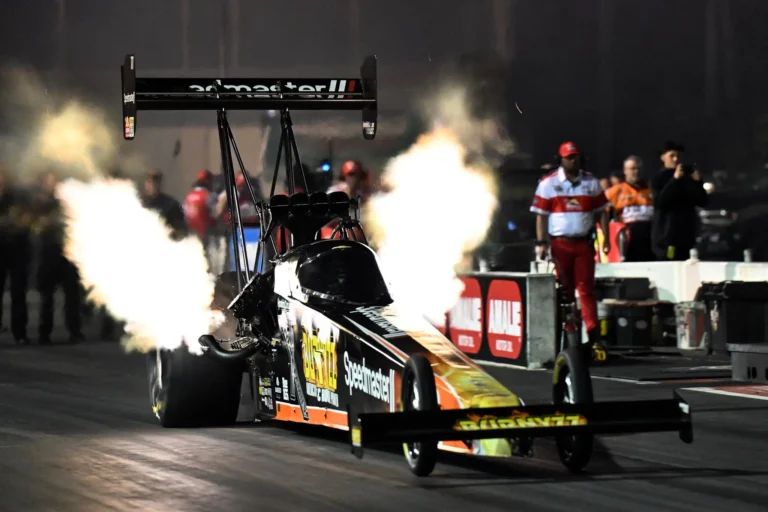
Clutch-type units can produce very firm, predictable lockup under hard acceleration, which is why they’re a favourite in drag racing and circuit cars.
Wear Components
Clutch plates and preload springs are friction surfaces, so they wear over time and need fresh gear oil with friction-modifier additives to stay smooth.
Chatter at Low Speed
As the clutch packs wear, some units develop a “chattering” or shudder noise during slow, tight parking-lot turns — a classic clutch-type LSD symptom.
Maintenance is the main trade-off. Because the clutch plates are a wearable friction component, clutch-type LSDs require gear oil formulated with a friction-modifier additive to prevent the plates from binding too aggressively or chattering, and many manufacturers recommend a fluid change on a regular service interval, with clutch plate replacement eventually needed as the discs wear thin. Used in everything from classic muscle cars to current rally and drift builds, clutch-type LSDs remain popular because their behaviour is tunable — stiffer springs, different plate counts, and steeper ramp angles all change how aggressively the unit locks.
Torsen / Helical Gear LSD: Pure Mechanical Geometry
The Torsen differential — the name comes from “TORque SENsing” and is a registered trademark, though it’s now used loosely to describe any helical gear-type LSD — takes a completely different engineering approach. Instead of friction plates or fluid, it relies entirely on the geometry of worm and helical gears meshed together inside the differential case. As soon as a speed difference begins to develop between the two output shafts, the angled gear teeth generate internal resistance forces purely from how they’re shaped, biasing torque toward the wheel that’s turning slower — and therefore, presumably, gripping better.

Because the response comes purely from gear shape rather than friction wear, helical LSDs are entirely passive, react continuously and progressively rather than suddenly, and have no consumable friction components to wear out — many will genuinely run for the life of the vehicle without ever needing internal parts replaced. Their maximum effectiveness is described by the same Torque Bias Ratio used for other designs; a typical road car Torsen-style unit might run a TBR around 3:1 to 5:1.
A helical LSD doesn’t decide to engage — it simply can’t help it. The moment the gears see a speed difference, the geometry itself creates resistance. There’s no clutch to wear, no fluid to heat-soak, just shaped metal doing exactly what it was machined to do.
The major limitation is that gear-type LSDs are torque-biasing, not torque-creating. If one wheel has essentially zero grip — fully airborne, or on glare ice with literally nothing to push against — the helical gears have nothing to bias torque against, and the car can still get stuck, much like an open differential would. This is why serious off-road vehicles tend to pair helical LSDs with electronic traction control or a separate locking differential rather than relying on the helical unit alone in extreme conditions. On the road and track, however, this is rarely an issue, which is part of why Torsen-style units are factory-fitted to a wide range of performance and all-wheel-drive platforms.
Viscous Coupling LSD: Resistance Through Thick Fluid
A viscous LSD takes yet another approach, replacing clutch packs and shaped gears with a sealed chamber filled with a thick, silicone-based fluid. Inside that chamber sit alternating perforated discs — one set connected to each output shaft. While both shafts spin at the same speed, the discs simply rotate together through the fluid with very little resistance. As soon as a speed difference appears, the discs start moving relative to each other through the viscous fluid, and the shearing action heats and effectively thickens the fluid, creating hydraulic resistance that transfers torque to the slower-spinning shaft.
This design tends to be the smoothest-feeling of the main LSD types at low speeds, because the resistance ramps up progressively with the speed difference rather than engaging abruptly like a clutch pack can. It’s also mechanically simpler than a clutch-type unit, with fewer individual wear parts, which made viscous LSDs popular on factory all-wheel-drive systems through the 1990s and 2000s, often used in a centre differential to manage torque split between the front and rear axles rather than side to side.
Unlike clutch-type LSDs, the fluid inside a viscous coupling generally can’t be drained, changed, or topped up — the unit is a sealed assembly. If the fluid breaks down or the unit fails after years of heat cycling, the entire coupling typically has to be replaced rather than serviced, which is the main long-term trade-off for its smoothness and simplicity.
The other downside is heat sensitivity. Extended hard use can heat-soak the fluid over a single session, gradually reducing how much resistance — and therefore how much torque transfer — the unit can generate, a phenomenon sometimes called “viscous fade.” For this reason, viscous LSDs are common on road cars and mild performance applications but are less often chosen for dedicated track or rally cars, where clutch-type and helical units tend to hold up better under sustained, repeated abuse.
Electronic LSD: Sensors, Software, and Active Clutch Packs
The newest and most sophisticated category is the electronically controlled limited-slip differential, sometimes marketed under names like “active differential” or bundled into a broader “torque-vectoring” system. Mechanically, it’s usually built around a clutch pack similar to a traditional clutch-type LSD, but instead of being squeezed shut by mechanical springs and ramp angles, the clamping force is applied by an electro-hydraulic or electromechanical actuator that the car’s control software commands in real time.
This matters because the car’s electronics already know far more about what’s happening at each wheel than a purely mechanical differential ever could. Wheel-speed sensors, steering angle, throttle position, yaw rate, and lateral acceleration all feed into the calculation, letting an electronic LSD pre-emptively stiffen or loosen the clutch pack before a wheel actually starts to slip — rather than reacting only after a speed difference has already developed, which is how every passive mechanical LSD design fundamentally works.
Electronic LSDs are especially common on modern performance SUVs, high-end sports cars, and rally-bred road cars, where the same hardware doubles as a torque-vectoring tool — actively sending more torque to the outside front wheel mid-corner, for example, to help rotate the car into the turn rather than simply resisting wheelspin. The trade-off is added cost, complexity, and a dependency on electronics functioning correctly, since a failed sensor or actuator can disable the system’s adaptive behaviour even if the underlying clutch pack is mechanically fine.
LSD Types Compared, Side by Side
| Type | Mechanism | Response | Maintenance | Common Use |
|---|---|---|---|---|
| Clutch-Type | Friction clutch packs + preload springs | Firm, direct, ramp-angle assisted | Gear oil with friction modifier; plates wear over time | Drag racing, circuit cars, drift builds |
| Helical / Torsen | Helical/worm gear geometry | Continuous, progressive, passive | Minimal — often lasts vehicle’s lifetime | Sports cars, AWD platforms, off-road front axles |
| Viscous | Shear-thickening silicone fluid | Smooth, gradual; can fade with heat | Sealed unit — usually replaced, not serviced | AWD centre diffs, road-biased performance cars |
| Electronic | Sensor-actuated clutch pack | Pre-emptive, software-adjustable | Sensors/actuators; specialist diagnostics | Performance SUVs, torque-vectoring sports cars |
No single type is objectively “best” — each represents a different balance of cost, durability, smoothness, and outright performance. A drag racer cares mostly about hard, repeatable lockup off the line, which favours clutch-type units. A daily-driven sports car owner usually wants the low-maintenance, predictable behaviour of a helical unit. A factory AWD crossover often prioritises smoothness and low cost, which historically pointed toward viscous couplings, while modern flagship performance models increasingly lean on electronic systems to extract every possible advantage from torque-vectoring software.
Why an LSD Genuinely Improves a Car
The most obvious benefit is traction out of corners and off the line. Whether it’s a front-wheel-drive hatchback fighting wheelspin out of a tight hairpin or a rear-wheel-drive sports car putting power down on the exit of a fast sweeper, an LSD keeps torque flowing to the wheel that can actually use it instead of letting it vanish into a spinning tyre. This is one of the single biggest differences between a stock road car and the same car built for track days or amateur racing — it’s also why so many enthusiasts treat an LSD upgrade as a near-essential modification, alongside changes covered in our guide to how pit stops work in racing for those moving toward competitive driving.
It also improves stability and predictability in low-traction conditions like rain, snow, or gravel, since the differential is constantly working to keep both drive wheels contributing rather than letting one wheel hog all the torque and spin uselessly. Many drivers describe an LSD-equipped car as feeling more “planted” mid-corner and on corner exit, because the car squats and drives forward evenly rather than the inside wheel lighting up and the outside wheel doing all the work alone.
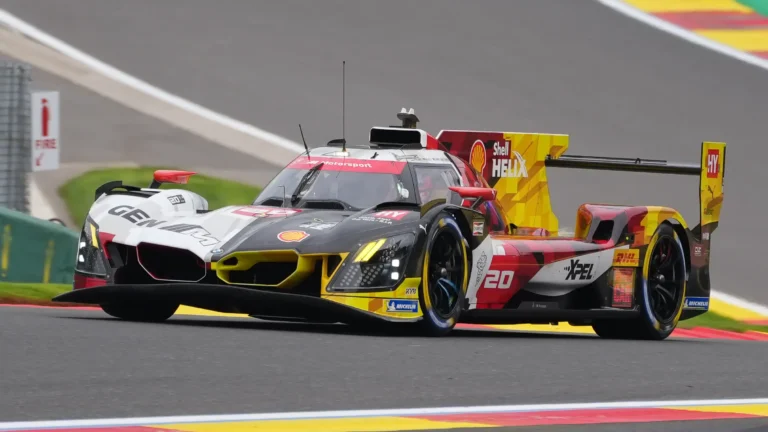
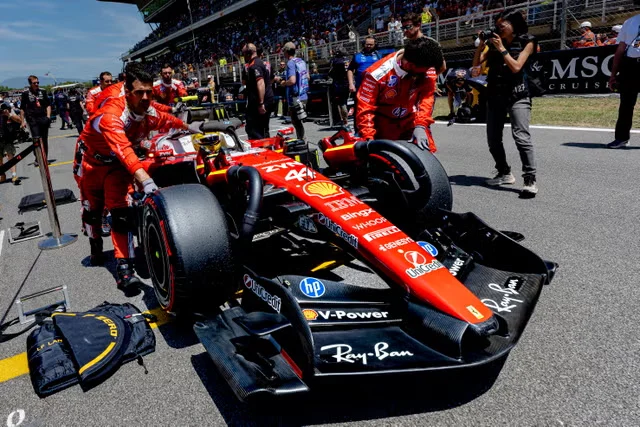
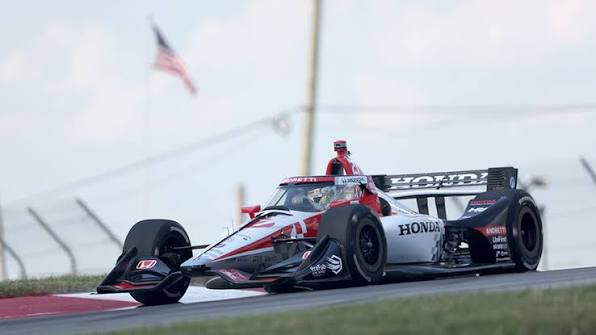
For motorsport specifically, an LSD is often closer to mandatory than optional. Drift cars depend on a locked or near-locked rear differential to keep both rear wheels spinning together during a slide; rally cars use centre and rear LSDs to maintain drive across wildly uneven surfaces; and circuit racing series from GT3 down to grassroots club racing almost universally specify some form of limited-slip unit, because lap time is directly tied to how efficiently a car can put power down out of every corner.
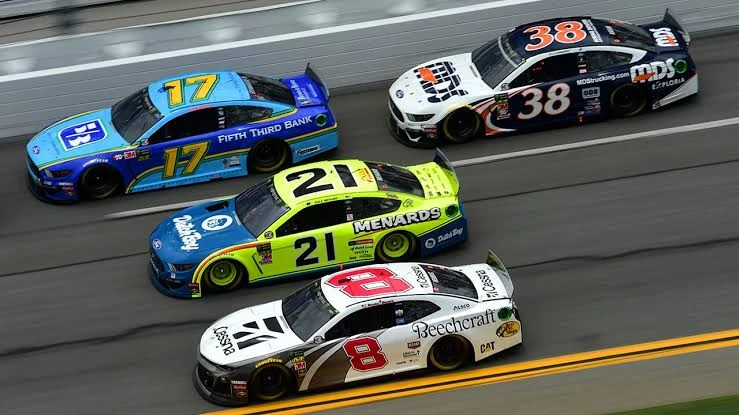
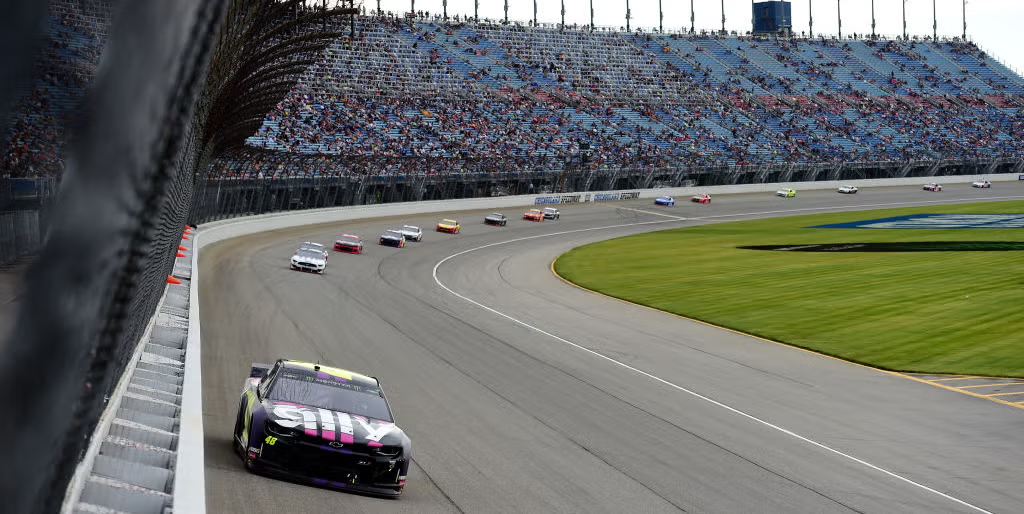
A car that loses even a fraction of a second to wheelspin on every corner exit will lose meaningful time over a full race distance. That’s the practical reason LSDs are factory-fitted or class-mandated across disciplines from GT3 endurance racing to NASCAR ovals — the differential is, quietly, one of the biggest lap-time factors on the entire car.
Drawbacks, Trade-Offs, and Maintenance Reality
An LSD isn’t a pure upgrade with no downsides — it’s a trade-off, like almost everything else in vehicle dynamics. On front-wheel-drive cars especially, a strong LSD can introduce noticeable torque steer, where the steering wheel tugs slightly to one side as torque shifts between the front wheels under hard acceleration. This is the cost of the same mechanism that’s eliminating wasted wheelspin: the differential is actively biasing power, and the driver feels that bias through the wheel.
Clutch-type units, as covered earlier, carry genuine ongoing maintenance needs — friction-modified gear oil, periodic fluid changes, and eventual clutch plate replacement as they wear. Viscous units trade that maintenance burden for an eventual all-or-nothing failure mode, since the sealed fluid chamber can’t be serviced and the whole coupling needs replacing once it fades for good. Electronic units add the most capability but also the most potential failure points, since a faulty wheel-speed sensor or actuator can disable adaptive behaviour the driver may not even notice has stopped working until it matters.
- Helical/Torsen limitation: needs some resistance on both wheels to bias torque — a fully airborne wheel or true zero-grip surface can still leave the car stuck, much like an open diff.
- Clutch-type chatter: as plates wear, low-speed parking manoeuvres can develop a shudder or chattering noise — a tell-tale sign service is due.
- Cost: aftermarket LSD units, particularly clutch-type and electronic systems, are a meaningful upgrade expense compared with leaving the factory open differential in place.
- Driving feel adjustment: drivers moving from an open diff to an aggressive LSD often need to adapt their inputs, since the car’s behaviour under power changes noticeably, particularly mid-corner.
None of this makes an LSD a bad choice — for the vast majority of performance, motorsport, and off-road applications, the traction benefit comfortably outweighs the added complexity. It simply means an LSD, like a turbocharger or an upgraded brake system, is a system that needs to be matched sensibly to how the car is actually going to be driven and maintained.
Frequently Asked Questions
Reference
The Bottom Line on Limited-Slip Differentials
An open differential has a built-in flaw: it always sends torque to the wheel with the least resistance, which is precisely the wheel that’s losing grip. A limited-slip differential exists to correct that flaw, using one of four engineering approaches — clutch packs, helical gear geometry, viscous fluid shear, or sensor-controlled electronic actuation — to keep torque flowing to the wheel that can actually use it.
None of the four designs is universally superior; each balances cost, maintenance, smoothness, and outright performance differently, which is exactly why all four are still in active production today across everything from daily-driven hatchbacks to factory GT3 race cars. Whatever the mechanism, the underlying goal is the same: turn wasted wheelspin into usable, forward-driving traction.