Pocono Race Strategy Breakdown:
How the Tricky Triangle Is Won
Fuel mileage, tire management, pit road execution, and three completely different corners — Pocono Raceway punishes every strategic mistake. Here’s exactly how crew chiefs think through the toughest puzzle on the NASCAR Cup Series schedule.
Pocono Race Strategy Breakdown:
How the Tricky Triangle Is Won
Fuel, tires, pit stops, and three unique corners — here’s how NASCAR teams crack the Pocono puzzle.
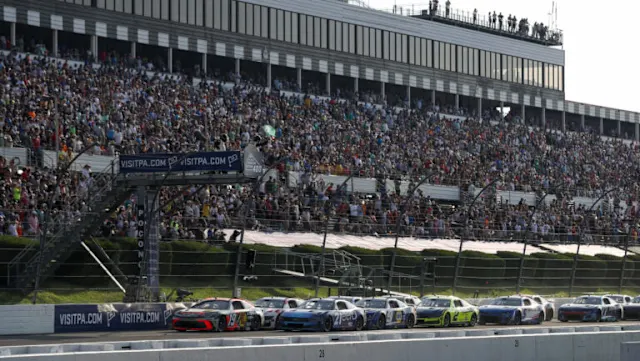
At Pocono Raceway, the fastest car at the end of the day doesn’t always win — the smartest strategy does. The 2.5-mile Tricky Triangle in Long Pond, Pennsylvania, is unlike anything else on the NASCAR Cup Series schedule: three turns, each borrowed from a different famous circuit, each demanding something completely different from the car.
The result is a race where crew chief decisions carry enormous weight. Fuel conservation, tire management across mismatched corners, pit road timing, and restart position — these factors routinely separate the winner from the field far more than raw pace. This breakdown covers every strategic layer at Pocono, from the setup compromises teams make in practice to the final-lap fuel math that has decided championships.
Why Pocono Is Different from Every Other Track
Most NASCAR oval tracks ask a straightforward question: how fast can you go? Pocono asks something more complicated. The 2.5-mile tri-oval opened in 1971 and hosted its first Cup race in 1974. In the five decades since, it has earned a reputation as the most strategically demanding venue on the calendar — not because it’s the fastest, but because it refuses to let any single setup work everywhere.
The frontstretch corner — Turn 1 — is a long, sweeping arc that rewards cars with high entry speed. Turn 2 is tighter and more deliberate, modelled after Indianapolis Motor Speedway, demanding precision braking and a different aerodynamic balance entirely. Turn 3 is sharper still, with the flattest banking on the circuit, pitching cars into the front straight under serious load. As a result, a setup that flies through Turn 1 will often push or bind in Turn 3. The compromise is constant, and finding it requires more than just raw engineering — it requires reading how the car behaves across all three corners under race conditions.
The asphalt surface combined with long straightaways creates significant brake heat cycles. Teams spend as much time managing brake temperatures as they do managing tyres — an unusual priority at a track this size. Furthermore, Pocono has the longest and widest pit road on the NASCAR circuit, which creates its own timing considerations. A driver with a strong pit crew can gain positions; a miscommunication on lug nuts or a slightly late call can surrender the lead.
Understanding all of this is the foundation of any Pocono race strategy. Before anyone talks about fuel windows or caution timing, they have to solve the setup puzzle. As NASCAR.com crew chief Paul Wolfe put it ahead of the 2026 race, the setup has to be good enough for the car to handle well and carry decent speed — because “these races are so much about strategy and how to play that.”
The Tricky Triangle: Three Turns, Three Challenges
Each of Pocono’s three turns was inspired by a different historic circuit, and each creates a distinct set of handling demands. The banking ranges from 14 degrees in Turn 3 to 8 degrees in Turn 1, with only 6 degrees along the front stretch. That spread is extraordinary — at most ovals, the banking variation between corners is barely noticeable. At Pocono, it fundamentally changes how the car needs to be set up.
| Corner | Banking | Inspired By | Key Demand | Strategy Impact |
|---|---|---|---|---|
| Turn 1 | 8° | Trenton Speedway | High entry speed, aerodynamic stability | High drag setups help here |
| Turn 2 | varies | Indianapolis Motor Speedway | Precision braking, neutral balance | Most overtaking zone |
| Turn 3 | 14° | Milwaukee Mile | Heavy load on exit, tire heat | Tire wear most severe here |
Turn 2 is historically where the race is won or lost on track. It’s the longest straightaway entry, which means drivers carry the most speed into braking — and drivers who can brake late here, or who find momentum out of the corner onto the long back straight, gain time everywhere. However, the setup that allows late braking in Turn 2 can make Turn 3 loose, which scrubs time and can accelerate tyre wear. Crew chiefs navigate this tension all weekend long.
Teams frequently split the difference on aerodynamic balance: slightly more front downforce than at a typical intermediate track, to stabilise Turn 1 entry, combined with a rear spring package that helps rotation in Turn 3. Neither end of the car is optimised — both are managed. This is exactly why data gathered at Pocono influences car development for the rest of the season, making it one of the most analytically rich race weekends on the schedule.
If you want to understand how Pocono’s layout plays out in real racing, look at the wildly different tactical approaches teams used at street circuits earlier in 2026 — and then recognise that Pocono demands the opposite of everything a street circuit rewards. There, it’s about tight spaces and minimal run-off. Here, it’s about managing a 2.5-mile canvas where every corner asks a different question.
Fuel Mileage Strategy: The Race Within the Race
Pocono’s long fuel windows are its most famous strategic variable, and for good reason — they have decided more Cup races here than any other factor. The straightaways at Pocono are among the longest in NASCAR, which means cars spend extended periods at near-full throttle. Combined with the track’s 2.5-mile lap length, fuel consumption rates are high, and the calculation of how far a tank can stretch becomes a race-defining decision.
The tension is always the same: commit to pitting on a normal fuel cycle and risk being undercut by someone who can stretch longer; or try to stretch and risk running dry before the finish. In 2026, the Great American Getaway 400 came down to exactly this scenario. Christopher Bell attempted to stretch his fuel in the closing laps but ran dry, handing Denny Hamlin the lead with four laps remaining. Hamlin went on to take his eighth career Cup victory at Pocono — a record — and his third consecutive win of the 2026 season.
“A lot of it just really depends on if you get cautions or not. That’s really when it starts changing.” — Paul Wolfe, crew chief, No. 22 Team Penske
That quote from Paul Wolfe, Hamlin’s 2026 crew chief at Pocono weekend preparations, captures the central truth of Pocono fuel strategy: cautions reset everything. A caution before your planned pit window forces you to either pit early — getting a full tank but potentially cycling out of position — or stay out and hope the field pits around you, gaining track position but remaining on older fuel. Neither option is clean, and the right call depends entirely on how much fuel you have left at the moment the yellow flag flies.
Green-Flag Pit Windows at Pocono
Under green-flag conditions, teams typically plan for two to three pit cycles across Pocono’s 400-mile distance. The long straightaways burn fuel faster than a driver’s lift-and-coast technique can recover unless the crew chief explicitly instructs fuel saving from early in a run. Drivers who conserve fuel well — lifting slightly before corners, managing throttle out of Turn 3 — can extend their windows by several laps, creating the opportunity to time a pit stop around a caution or gain track position over cars that pit on schedule.
- Early conservation: A driver who saves fuel from lap one has options. A driver who runs full-throttle all race has none.
- The caution wildcard: Pocono averaged five cautions in the 2026 race (23 yellow-flag laps total), each one forcing crew chiefs to recalculate their window in real time.
- The stretch gamble: Running three or four laps past the normal window risks catastrophic fuel starvation — as Bell demonstrated — but when it works, it can win races without ever leading a lap.
For a deeper look at how pit stop strategy works across motorsport and why fuel timing is so critical, our explainer covers the mechanical and tactical layers behind a great crew chief’s decision-making.
Pit Stop Strategy: Longest Pit Road in NASCAR
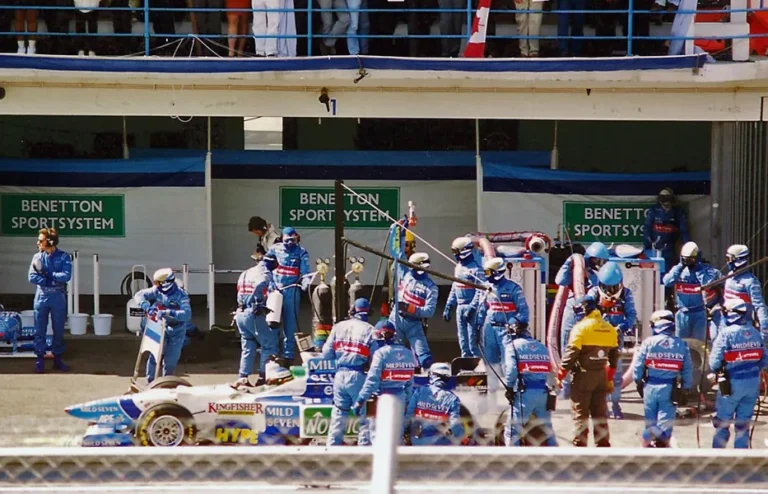
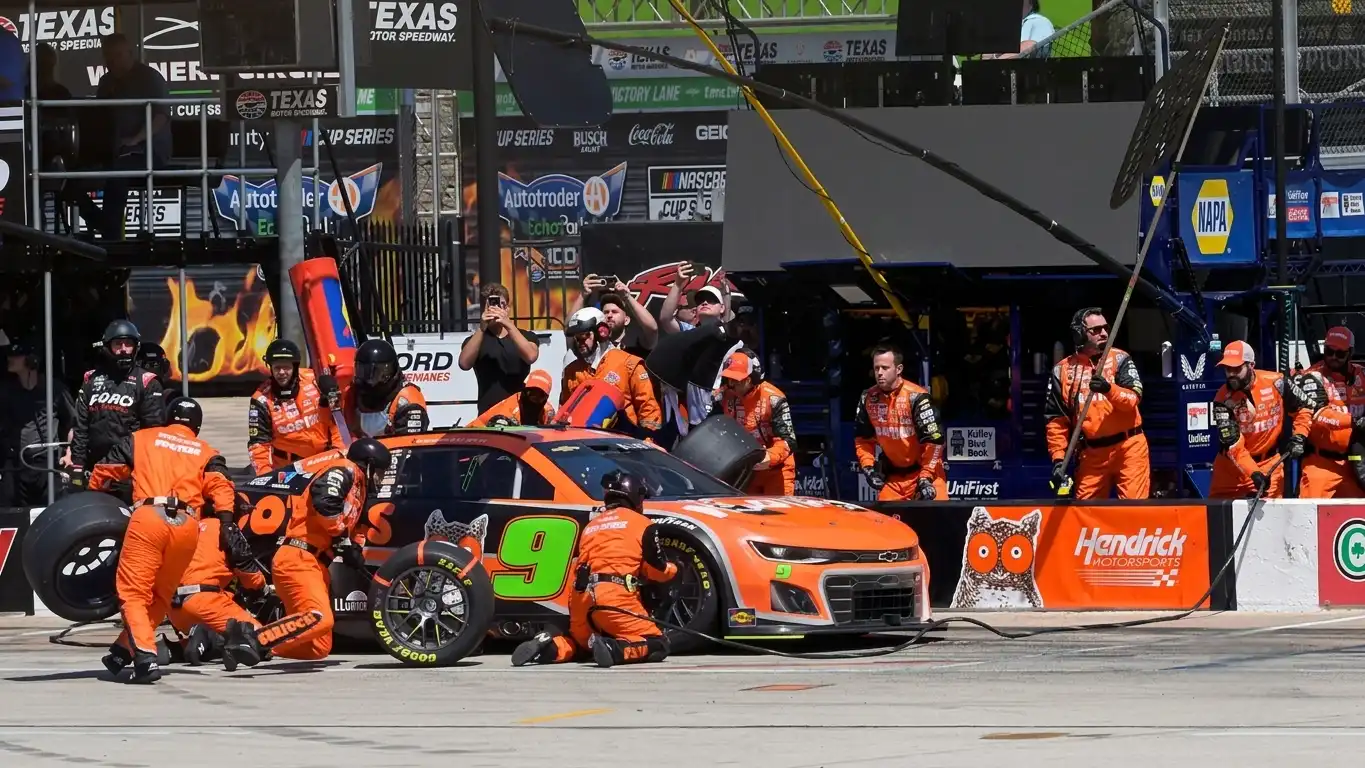
Pocono has the longest and widest pit road on the entire NASCAR Cup Series circuit. That distinction matters more than it sounds. More pit stalls means cars spread out further, which changes how quickly a driver can exit onto the racing surface after service. Teams positioned near the end of pit road face a longer run to rejoin the track, which can cost a position even after a flawless stop. Choosing pit stall position — awarded through qualifying order and, in 2026, affected by inspection penalties — is itself a strategic variable before the race has even started.
In the 2026 Great American Getaway 400, both the No. 5 Kyle Larson entry and the No. 78 Daniel Dye entry lost pit selection after failing pre-race inspection twice. That detail matters: pit selection determines where on the road you stop, which affects your exit and your timing relative to competitors. On a track where fractions of a second during a pit cycle can cost or gain a position, being pushed to the unfavourable end of pit road is a real penalty.
Two Tyres vs Four Tyres: The Pocono Calculation
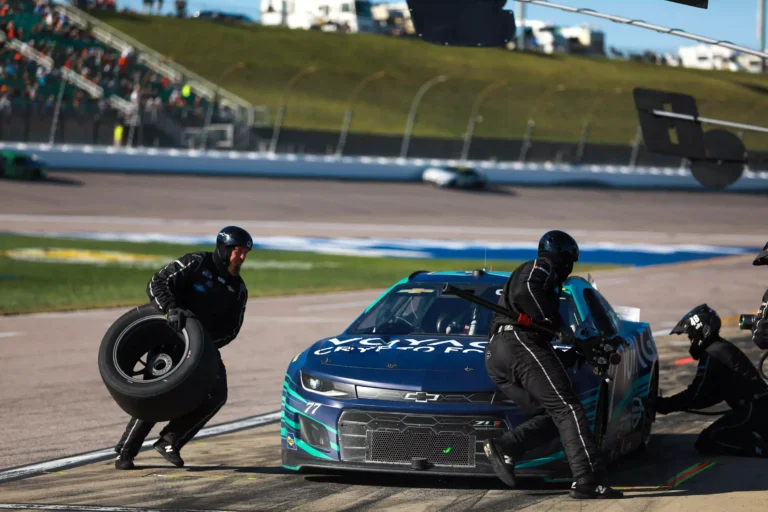
The two-tyre call — changing only the right-side tyres during a pit stop to save time relative to a four-tyre change — is less common at Pocono than at other tracks, but it doesn’t disappear. The logic is straightforward: if tyre wear is moderate and the primary strategic goal is track position, two tyres save around six to eight seconds. However, Pocono’s asymmetric corner loads, particularly the stress Turn 3 places on right-rear tyres, make running older left-side rubber risky on a long run. Most crew chiefs default to four tyres unless they are specifically chasing position late in a stage. To understand more about how this plays out, check out our breakdown of how race qualification strategy feeds into pit road position.
At Pocono, track position is harder to recover than tyre performance. Cars running in clean air — without the turbulent wake of a competitor ahead — are significantly faster. So a team that pits for four fresh tyres from, say, 15th place often struggles to pass cars on older rubber because the dirty air makes the car unstable and prevents close-following. This tilts the pit stop calculation toward track position over tyre freshness more often than at most other intermediate tracks.
Restart strategy is tightly connected to pit stops. Pocono’s long straightaways mean the leader at a restart can pull away quickly if the car is strong — but a driver with fresh tyres starting several positions back can use that advantage to make up ground through the first two turns before the field strings out. Teams weigh these scenarios on every pit call: accept the track position, or take the tyre freshness and use restarts to recover?
This is the kind of multi-variable decision that makes Pocono crew chief strategy so analytically demanding — and why it’s often described as the “Rubik’s Cube” of NASCAR race strategy.
Tyre Management at Pocono: A New Variable in 2026
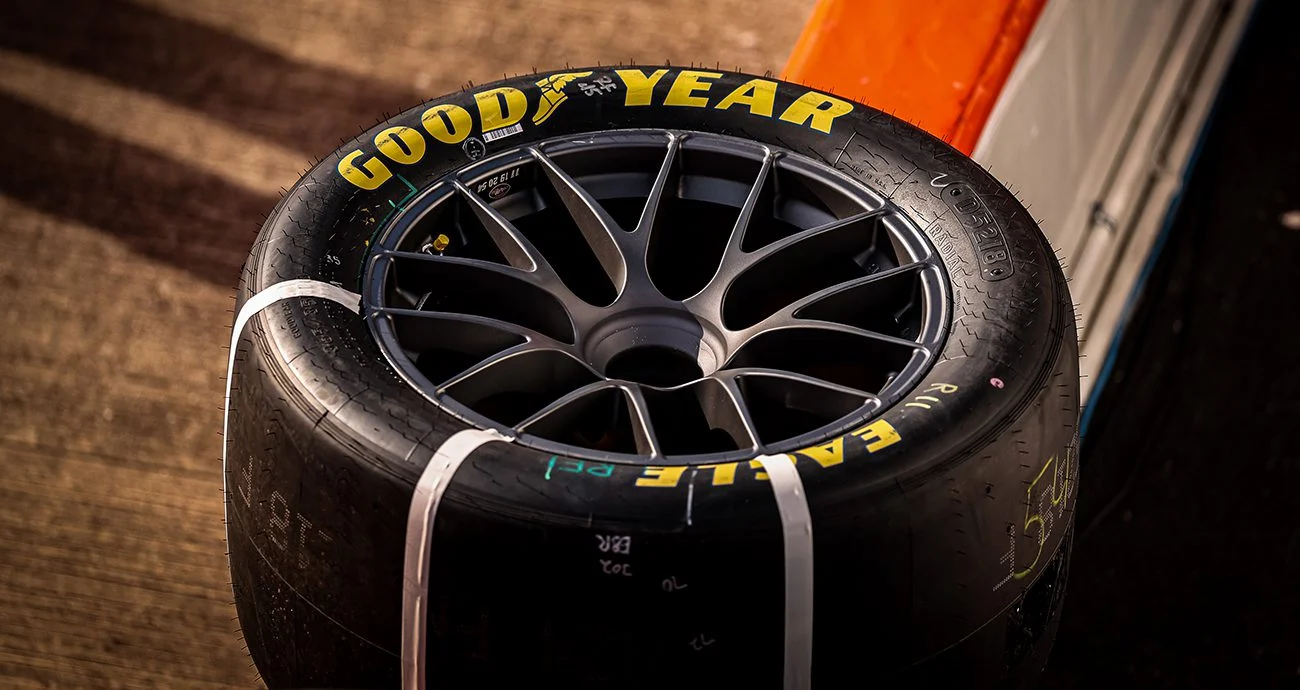
Goodyear introduced a new right-side tyre compound for the 2026 Great American Getaway 400, combining the compound used at Pocono in 2025 with the construction from several intermediate tracks run earlier in the 2026 season. The left-side setup was also new for Pocono specifically. As Goodyear NASCAR product manager Rick Heinrich explained, Pocono is considered “perhaps the most unique oval track we visit” — and the tyre selection reflects that.
The new construction addressed concerns that had emerged at other intermediate tracks earlier in the season, where drivers were seeing cord visible on tyres after long fuel runs. Paul Wolfe noted after practice that the new tyre appeared to resolve those wear issues, shifting the strategic emphasis back toward a traditional Pocono-style fuel and pit call rather than a tyre conservation race. Moreover, this matters because it changes the risk calculation on long green-flag runs: teams that were previously watching tyres every lap could instead focus their attention on fuel levels.
Brake Management: An Underrated Factor
What separates Pocono from even other 2.5-mile tracks is the brake heat cycle the long straights create. As Wolfe described it, the long straights produce significant temperature swings in brake rotors — from very hot after Turn 3 to cooling rapidly on the long front straight before being hammered again under heavy Turn 1 braking. Teams use brake pad selection not just to stop the car, but to adjust car balance: a stiffer front pad can provide a touch of front-end security into Turn 1 that changes how the driver can enter the corner. It’s a subtle tool, but experienced crew chiefs use it intentionally at Pocono in a way they rarely do elsewhere.
This granular level of technical thinking underpins every lap at Pocono. For context on how similar brake and tyre management plays out in other forms of motorsport, our IndyCar vs F1 comparison covers the mechanical philosophy differences in considerable depth.
Playoff Implications and Stage Strategy
Pocono falls at a critical point in the regular season, and in 2026 that was especially true. The Great American Getaway 400 was the 16th points-paying event of the year, arriving with only a limited number of regular-season races remaining before the playoff cutoff. Every finish carried playoff seeding implications, and every stage point won had real value for drivers on the bubble.
Stage racing adds another layer to the Pocono strategy equation. In 2026, Denny Hamlin won Stage 1, while Todd Gilliland claimed his first-ever stage victory in Stage 2. Stage wins matter because they award bonus championship points — which means a team trailing in the overall standings might prioritise chasing a stage victory over saving tyres for the race finish. This forces every crew chief to answer a question that doesn’t exist in most other forms of racing: is a stage win worth the tyre wear I’ll accumulate chasing it?
| Metric | 2026 Great American Getaway 400 |
|---|---|
| Winner | Denny Hamlin (No. 11 JGR Toyota) |
| Stage 1 winner | Denny Hamlin |
| Stage 2 winner | Todd Gilliland (first career stage win) |
| 2nd Place | Tyler Reddick (No. 45, 23XI Racing Toyota) |
| 3rd Place | William Byron (No. 24) |
| Lead changes | 17 among 11 drivers |
| Cautions | 5 (23 yellow-flag laps) |
| Average race speed | 135.9 mph |
| Hamlin career wins at Pocono | 8 (record) |
The 2026 race also illustrated how dominant a team can become when strategy and speed align. Hamlin’s crew identified early that Christopher Bell was pushing his fuel window aggressively, and they managed their own fuel cycle to ensure the No. 11 had enough in the tank to capitalise when Bell inevitably ran dry. That kind of intelligence — reading an opponent’s strategy and counter-programming against it — is the highest level of NASCAR crew chief work. Furthermore, it’s a skill Hamlin’s team has sharpened at Pocono over many years, which helps explain why he now owns the all-time wins record at the track.
For the current NASCAR points picture and how Pocono’s results shifted the standings, the 2026 NASCAR points standings tracker has the full breakdown. You can also follow who won the most recent NASCAR race and where NASCAR heads next on our main coverage hub.
Eight Cup Series victories at a single track is an extraordinary mark. The next closest active drivers lag by several wins. What’s telling is that Hamlin’s Pocono record spans different car generations, different tyre compounds, and different team configurations — suggesting genuine strategic intelligence at this circuit, not just machinery advantages.
Beyond the championship picture, Pocono’s results also influence team development decisions. Because the track demands so many different engineering compromises, the data teams gather here — on aero balance, brake mapping, fuel burn rates, tyre behaviour — feeds directly into car development plans for the remainder of the season. In that sense, Pocono is more than a race; it’s a rolling engineering test that shapes how the summer stretch of the NASCAR schedule plays out.
Frequently Asked Questions
Sources & Further Reading
- NASCAR.com — Sunday Setup: Pocono crew chief preview (Paul Wolfe interview)
- Jayski.com — 2026 Great American Getaway 400 full race facts and results
- MotorBiscuit — Goodyear’s new Pocono tyre setup explained
- Wikipedia — NASCAR Cup Series at Pocono Raceway: full historical race record
- Pocono400.com — Official Pocono Raceway track guide and specifications
A note on this analysis
Race results, official statistics, and crew chief quotations in this article are sourced from NASCAR.com, Jayski.com, and the official Pocono Raceway post-race data for the 2026 Great American Getaway 400. Historical race records are drawn from the NASCAR Cup Series at Pocono Raceway Wikipedia entry, which is maintained with primary source citations from NASCAR’s official records.
Strategy analysis reflects publicly available crew chief commentary and observable race decisions. Where interpretation is offered, it is clearly framed as analysis rather than stated fact.