AWD vs RWD vs FWD — Explained Simply
Three letters on a spec sheet decide how your car grips the road, handles a corner, and copes with rain or snow. Here’s exactly how each drivetrain works, and which one actually suits you.
AWD vs RWD vs FWD — Explained Simply
How each drivetrain works, and which one actually fits the way you drive.
Every car you’ve ever driven sends its engine power to the road in one of three basic ways. The badge on the back might say “quattro,” “4MATIC,” “xDrive,” or just a plain “AWD,” but underneath all the marketing, every vehicle on sale today is built around front-wheel drive, rear-wheel drive, or all-wheel drive — and each one changes how the car accelerates, corners, and behaves the moment the road gets slippery.
Most buyers never think past the badge. That’s a mistake, because drivetrain layout affects your car’s handling, your fuel bill, your repair costs, and — most importantly — how predictably your car behaves in the rain or snow. Let’s break down what’s actually happening between the engine and the tarmac, in plain language, with zero jargon left unexplained.
FWD sends power to the front wheels only — cheap, fuel-efficient, and predictable, the default choice for most family cars. RWD sends power to the rear wheels only — it balances weight better and feels more playful, which is why most performance and luxury cars use it. AWD sends power to all four wheels at once — the best available traction in rain, snow, and loose surfaces, at the cost of extra weight, complexity, and a higher price tag.
What a Drivetrain Actually Does
Your engine doesn’t touch the road. It produces rotational force — torque — at the crankshaft, and that force has to travel through a chain of mechanical parts before a tyre ever grips the tarmac. The path that power takes, and which wheels it ultimately reaches, is what we mean by “drivetrain layout.”
In simple terms, power generally flows like this: engine → transmission → differential → axle shafts → wheels. A differential is the clever bit of hardware that lets the two wheels on the same axle spin at slightly different speeds, which is essential because the outer wheel in a turn always travels a longer arc than the inner one. Every drivetrain layout uses at least one differential; all-wheel-drive systems typically use two, plus a way of splitting power between the front and rear axles.
The three layouts differ only in which wheels actually receive that power — but that one difference cascades into almost every characteristic the car has: how it balances weight, how it behaves when you ask too much of the tyres, how heavy it is, how much it costs to build, and how it copes when the road isn’t dry.

Front-Wheel Drive (FWD) — How It Works
In a front-wheel-drive car, the engine, transmission, and differential are usually bundled into a single compact unit at the front of the car, and only the front two wheels receive driving power. The front wheels do double duty — they steer the car and pull it forward at the same time.
Why manufacturers love FWD
Packaging the entire drivetrain at one end of the car removes the need for a long driveshaft running to the rear axle. That frees up cabin space, cuts the number of parts, reduces weight, and lowers manufacturing cost. It’s the single biggest reason FWD dominates the hatchback, compact sedan, and crossover segments — the layout is simply cheaper to build and easier to package around a roomy interior.
How FWD actually drives
Because the engine sits over the driven wheels, FWD cars get a useful traction advantage from the engine’s own weight pressing down on the front tyres. That’s why FWD cars generally pull away from a stop reliably even on damp surfaces — there’s real weight helping the drive wheels bite.
The trade-off shows up in cornering. Ask the front tyres to steer and accelerate hard out of a bend at the same time, and they can run out of grip for both jobs at once. The result is understeer — the car wants to run wider than the line you’re steering for, because the front tyres are overloaded. It’s a predictable, easy-to-manage trait, which is exactly why FWD is considered the safer, more forgiving layout for everyday and inexperienced drivers.
Lower Cost
Fewer parts and a simpler layout make FWD the most affordable drivetrain to manufacture and maintain.
Better Fuel Economy
Less weight and fewer drivetrain losses generally translate into better real-world fuel efficiency.
More Cabin Space
No central driveshaft tunnel means a flatter floor and more room for passengers and cargo.
“Torque steer” is the slight tugging you can feel through the steering wheel under hard acceleration in a powerful FWD car. It happens because the front wheels are trying to steer and transmit a large amount of torque simultaneously — a limitation that’s almost entirely unique to front-wheel-drive layouts.
Rear-Wheel Drive (RWD) — How It Works
In a rear-wheel-drive car, the engine sends power backward through a driveshaft to a differential at the rear axle, and the rear wheels alone push the car forward. The front wheels are left with a single job — steering — while the rear wheels handle propulsion.
Why this layout still matters
Separating the steering job from the driving job is the whole appeal of RWD. With the front tyres only steering, they can dedicate all their available grip to changing direction, while the rear tyres focus purely on propulsion. This separation of duties is a major reason RWD has remained the layout of choice for sports cars, classic muscle cars, and most premium rear- or longitudinally-engined luxury saloons.
RWD layouts also tend to allow a more even front-to-rear weight distribution, because the engine can sit further back in the chassis and the transmission tunnel runs down the centre of the car rather than being crammed beside the engine. A more balanced car generally turns in, brakes, and changes direction with sharper, more neutral handling.
How RWD behaves at the limit
Ask too much of a RWD car under power — especially while turning — and the rear tyres can lose grip before the fronts do. This produces oversteer, where the back of the car wants to rotate around faster than the front. Skilled drivers exploit this for sharper, more adjustable handling on track or in a drift; everyday drivers need to respect it, particularly in the wet or on snow, where RWD without aids can be the trickiest of the three layouts to control.
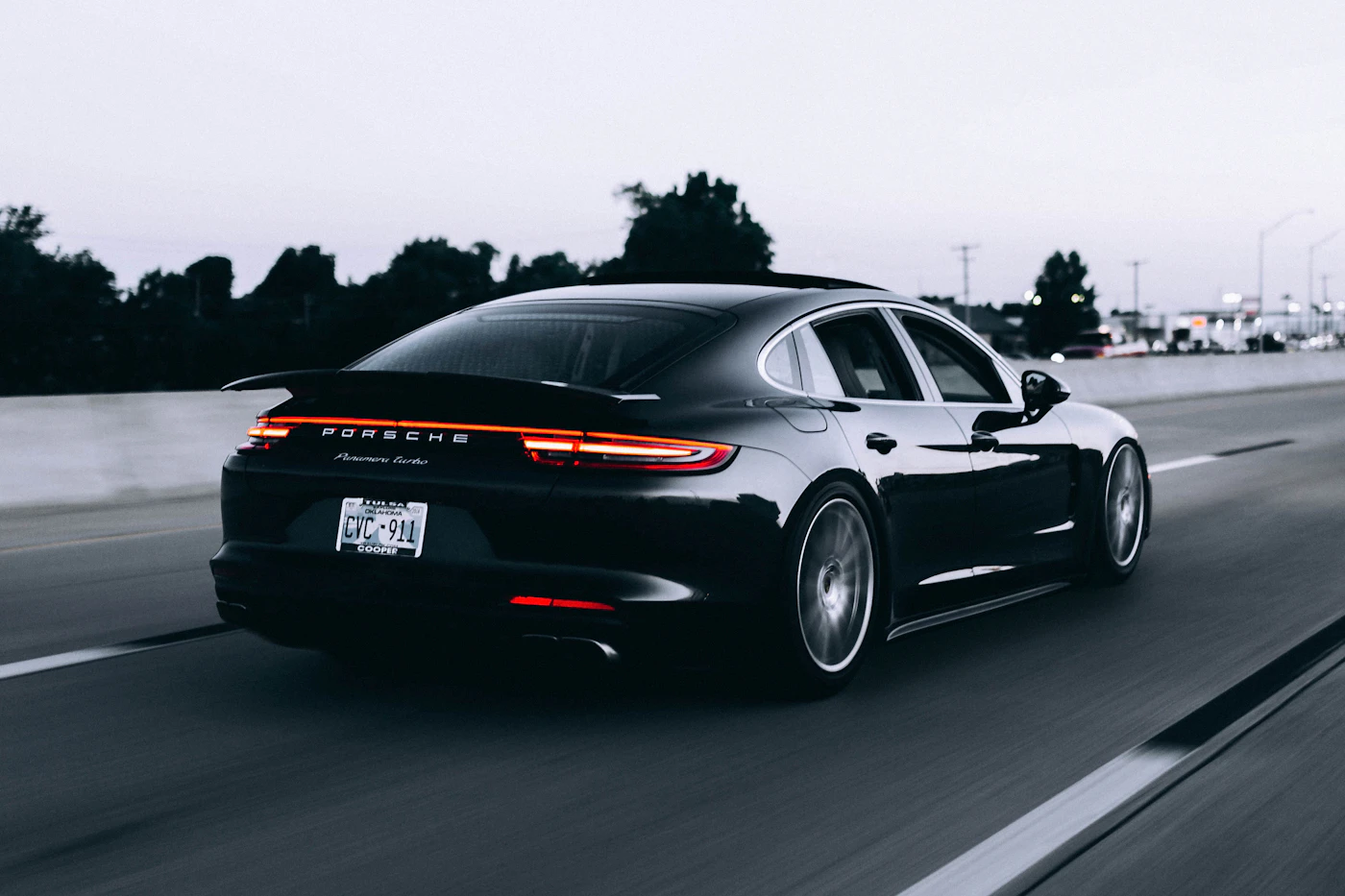
RWD doesn’t make a car faster by itself — it makes a car’s handling more honest, because steering and propulsion are no longer fighting for the same tyres.
All-Wheel Drive (AWD) — How It Works
All-wheel drive sends engine power to both the front and rear axles, usually through a central transfer case or coupling that splits torque between front and rear differentials. Modern AWD systems are rarely a fixed 50/50 split — most use electronic sensors and clutch packs to shift power toward whichever axle has the most grip available, hundreds of times per second.
A brief, verified history
All-wheel drive isn’t new technology dressed up as innovation — it has a long pedigree in motorsport and road cars alike. The Audi Quattro, launched in 1980, is widely credited with proving that a permanent all-wheel-drive system could work brilliantly in a road car and dominate in rally competition, and the model’s success is one of the most frequently cited turning points in AWD’s road-car adoption. Subaru has built its brand identity heavily around all-wheel drive across most of its mainstream lineup for decades, while companies like Audi (quattro), BMW (xDrive), and Mercedes-Benz (4MATIC) each market their own version of the same underlying concept under a proprietary name.
What you actually gain
The headline benefit is traction. With four contact patches sharing the workload instead of two, an AWD car can put power down more confidently on snow, loose gravel, wet roads, or any low-grip surface. That doesn’t make AWD cars stop faster or corner harder on dry tarmac — braking and grip in dry, high-speed cornering are still governed mainly by tyres, suspension, and weight — but it does make the car far less likely to spin a wheel uselessly when accelerating away from a stop on a slick surface.
What it costs you
Two extra differentials, a transfer case, extra driveshafts, and the control electronics to run them all add real weight and real cost. AWD vehicles are consistently more expensive to buy than an equivalent FWD or RWD model, more complex to service, and typically return slightly worse fuel economy because of the extra rotating mass and drivetrain friction the engine has to overcome.
AWD is a traction system, not a braking or cornering-grip system. Many drivers assume AWD lets them brake later or corner faster in poor weather — it doesn’t. Stopping distances on ice or in heavy rain are determined mainly by your tyres, not your drivetrain. AWD helps you accelerate with confidence; it can’t shorten how far you slide once you’re already braking.
AWD vs RWD vs FWD — Full Comparison
| Factor | FWD | RWD | AWD |
|---|---|---|---|
| Wheels Driven | Front two only | Rear two only | All four |
| Typical Cost | Lowest | Moderate | Highest |
| Fuel Economy | Best | Good | Lowest of the three |
| Cabin/Cargo Space | Most space-efficient | Less efficient (driveshaft tunnel) | Least space-efficient |
| Dry-Road Handling | Predictable, prone to understeer when pushed | Balanced, more neutral, can oversteer | Very stable, less playful feel |
| Wet/Snow Traction | Decent — good front weight bias | Weakest without electronic aids | Strongest of the three |
| Maintenance Complexity | Simplest | Moderate | Most complex |
| Common In | Hatchbacks, sedans, crossovers | Sports cars, muscle cars, luxury sedans | SUVs, performance cars, foul-weather vehicles |
| Best Suited For | Daily commuting, budget-conscious buyers | Driving enthusiasts, performance-focused buyers | Snow, rain, mixed-terrain, all-season confidence |
AWD vs FWD vs RWD in Snow and Rain
This is the question that drives most AWD purchases, so it deserves a clear, honest answer: in low-traction conditions, AWD generally provides the most confident standing-start and mid-corner acceleration of the three layouts, because it can send power to whichever wheel — or pair of wheels — still has grip when another is slipping.
FWD isn’t far behind in most everyday snow and rain situations. The engine’s weight sitting over the driven front wheels gives genuinely useful traction, and because the front wheels both steer and pull, the car tends to track in the direction you’re steering rather than sliding sideways. This is one reason FWD is often considered a sensible, affordable choice for drivers who see occasional snow but don’t want to pay for AWD year-round.
RWD is the layout that struggles most in slippery conditions without supporting technology, because the rear of the car carries comparatively little weight over the driven wheels, especially in cars with the engine up front. Modern RWD cars largely offset this with traction control, stability control, and winter tyres, but in their absence, RWD is the layout most likely to spin a wheel pulling away on ice or to have the rear step out under power mid-corner.
Tyres matter more than drivetrain. A FWD car on proper winter tyres will almost always out-perform an AWD car on worn all-season tyres in snow and ice. AWD widens your margin of safety — it doesn’t replace the need for the right rubber.
Fuel Economy: AWD vs FWD
Every additional driveshaft, differential, and coupling in an AWD system adds rotating mass and mechanical friction that the engine has to overcome, even when the extra traction isn’t needed. Combine that with the added overall vehicle weight, and AWD versions of the same model consistently post worse fuel economy figures than their FWD or RWD equivalents from the same manufacturer.
Manufacturers have worked hard to close this gap with technology such as disconnecting clutches that fully decouple the rear axle when extra traction isn’t needed, only re-engaging it the instant sensors detect slip. This has meaningfully narrowed — though not eliminated — the fuel economy penalty that older, permanently engaged AWD systems carried.
Which Drivetrain Is Actually Best For You?
Asking “which drivetrain is best” is a bit like asking which shoe is best — it depends entirely on what you’re using it for. Here’s how to think about it honestly, based on what each layout is genuinely good at.
Choose FWD if…
- You want the lowest purchase price and the best everyday fuel economy.
- Most of your driving is commuting, errands, or highway cruising on maintained roads.
- You’d rather have more interior and cargo space than a sportier feel.
Choose RWD if…
- You care about handling balance, steering feedback, and a more engaging driving experience.
- You’re buying a sports car, a classic-style muscle car, or a performance-oriented luxury sedan.
- You’re comfortable managing extra wheel-spin risk in poor weather, or you’ll fit proper winter tyres.
Choose AWD if…
- You regularly drive in snow, heavy rain, or on loose/gravel surfaces.
- You want the highest available margin of traction and don’t mind paying more upfront and at the pump.
- You’re shopping for an SUV, crossover, or all-weather performance car.
The best drivetrain isn’t the most advanced one on paper — it’s the one that matches the roads you actually drive on, every single day.
Frequently Asked Questions
References
- Audi — The Quattro Story (audi.com) — manufacturer history of the original 1980 Audi Quattro all-wheel-drive system.
- NHTSA — Tire Safety & Traction (nhtsa.gov) — U.S. federal guidance on how tyres affect traction and stopping distance.
- Subaru — Symmetrical All-Wheel Drive (subaru.com) — manufacturer explanation of a production AWD system layout.
- FuelEconomy.gov — Factors That Affect Fuel Economy — official U.S. government resource on vehicle weight and drivetrain efficiency factors.
The Bottom Line on AWD vs RWD vs FWD
None of these three layouts is objectively “the best” drivetrain — each one is a different set of trade-offs between cost, efficiency, handling character, and traction. FWD wins on affordability and everyday efficiency, RWD wins on handling balance and driving engagement, and AWD wins on all-weather confidence, at the cost of extra weight, complexity, and price.
The smartest way to choose isn’t to chase the most “advanced” badge on the back of the car — it’s to be honest about the roads you actually drive every day, the weather you regularly face, and whether you value efficiency, engagement, or all-weather security the most.