Antonelli vs Russell: Inside F1’s Runaway Title Fight
Kimi Antonelli has turned the 2026 Formula 1 season into a Mercedes procession — an 81-point lead, a shot at becoming the youngest champion in history, and only his own team-mate within realistic range. We compare the two title rivals and ask: can anyone still stop him?
Antonelli vs Russell: F1’s Runaway Title Fight
An 81-point lead and a shot at history. We compare the two Mercedes title rivals — and ask if anyone can still stop Antonelli.
Some seasons deliver a title fight for the ages. The 2026 Formula 1 championship is delivering something rarer: the emergence of a generational talent so dominant that the “fight” has quietly become a coronation. After the Spanish Grand Prix in Madrid — round 14 of the season — Andrea Kimi Antonelli leads the drivers’ championship by 81 points, and the only driver still within a hundred points of him is his own Mercedes team-mate, George Russell.
So this is a head-to-head with an unusual premise. On paper it’s Antonelli versus Russell for the 2026 crown; in reality it’s a question of whether anyone — even a driver in equal machinery — can lay a glove on a 20-year-old rewriting the record books. We compare the two Mercedes rivals directly, weigh the chasing pack’s faint hopes, and lay out exactly how and when this could be settled. For the full classified order at any time, our Formula 1 standings hub has the live picture.
The State of Play After Madrid
The headline numbers tell the story on their own. Antonelli sits on 292 points, Russell on 211, and the gap between second and third is a further 20 points back to Lewis Hamilton’s Ferrari. Mercedes hold the top two positions in the championship, and no non-Mercedes driver is within a hundred points of the lead. For a sport that spent recent years fixated on a handful of rival teams trading blows, 2026 has become a story of one team, and one driver in particular, pulling clear.
What makes it remarkable is who’s doing it. Antonelli is just 20 years old and in only his second season of Formula 1. Rather than serving a long apprenticeship, he has turned the year into a personal showcase — converting raw junior-category promise into the kind of consistent, high-scoring campaign that wins championships. If he closes it out, he will become the youngest world champion in the sport’s history, and the first Italian to be crowned since Alberto Ascari in 1953.
It’s a picture almost nobody predicted at the start of the year. A Mercedes resurgence was on the cards, but a second-year driver turning it into a runaway personal lead — over an established team-mate, and with the sport’s biggest names trailing in his wake — is the kind of season that reshapes careers and reputations. The remaining rounds will determine the margin of history he writes, not whether he writes it.
All championship positions and points are the official standings after the Spanish Grand Prix (round 14). Where we assess form, weigh each driver’s chances or rank the chasers, that’s World of Speed’s analysis — clearly separated from the hard results.
The Case for Kimi Antonelli
Antonelli’s 2026 has been a masterclass in turning speed into points. The hallmark of a champion-in-waiting isn’t the occasional stunning lap — it’s the ability to bank strong results week after week, avoid the costly weekends, and convert pole-worthy pace into race-day silverware. That’s exactly the profile he has built this season, and it’s why an 81-point cushion exists at all. You don’t lead a Formula 1 championship by that margin on flashes of brilliance; you do it through relentless, repeatable excellence.
The psychological dimension matters too. A young driver with a big lead can tighten up and start driving to protect a margin rather than extend it — and that’s often when leads evaporate. Antonelli has so far shown the opposite temperament: the composure to manage races intelligently without surrendering the initiative. With a car plainly capable of winning — Mercedes’ season-long pace speaks for itself — his task from here is less about attacking and more about not beating himself.
A season built on availability
One underrated pillar of Antonelli’s campaign is simply being there at the end. Championships are lost as often as they are won — a first-lap tangle here, a reliability failure there — and the drivers who lead them are usually the ones who keep the DNFs off their record. Antonelli’s ability to bring the car home in the points on his rare off-days, rather than throwing results away chasing a place or two, is exactly the mark of maturity that belies his age. In a shortened season, that reliability becomes even more valuable, because there are fewer races in which to recover from a zero.
You don’t build an 81-point lead in Formula 1 on flashes of brilliance. You build it through relentless, repeatable excellence — and that’s the hardest thing in the sport to disrupt.
That’s what makes him such a difficult target. To overhaul him, a rival needs not just to outscore him, but to do so by a huge amount across a shrinking number of races — which requires Antonelli to suffer the kind of retirements or off-weekends he has largely avoided all year. Betting on that is betting against the very consistency that defines his campaign.
The Case for George Russell
If anyone is positioned to challenge, it’s Russell — and for one simple reason: he has the same car. As Antonelli’s Mercedes team-mate, Russell is the one driver on the grid who can’t blame a performance deficit for the gap. That’s both his best argument and his cruellest problem. When your rival is in identical machinery and 81 points up the road, the deficit isn’t about the equipment; it’s about who has extracted more from it, more often.
Russell remains an elite operator — a proven race-winner with the experience Antonelli is still accumulating, and precisely the sort of driver who can reel off a run of results if the momentum turns. His path to the title exists only in theory now, but it isn’t imaginary: he needs to start comprehensively out-scoring his team-mate immediately, and he needs Antonelli to hit trouble. Neither has happened often in 2026, which is why he’s 81 points adrift rather than fighting hand-to-hand.
There’s a longer game at play for Russell, too. Being comprehensively beaten by a rising team-mate is a defining career moment — how he responds over the closing rounds, and into next season, will shape how he’s judged. A strong run-in that keeps him clear in second and denies Antonelli the occasional win would at least signal he intends to fight back, rather than concede the intra-team hierarchy.
What Russell actually needs
The brutal arithmetic: with a limited number of rounds left and a maximum of 25 points (plus a sprint bonus where applicable) per race, Russell must claw back an average of several points per weekend just to stay in mathematical contention — and do it while beating a team-mate who has out-performed him all year. Realistically, his season is now about finishing a strong second and building a platform for 2027, rather than a live title assault. But in a sport where one dramatic weekend can upend everything, he remains the only name with even a theoretical route in.
Head-to-Head: The Title Rivals Compared
Because both title protagonists drive for Mercedes, this is the purest kind of comparison in motorsport — two drivers, one car, no excuses. Here’s how the two stack up after round 14.
| Metric | Kimi Antonelli | George Russell |
|---|---|---|
| Championship position | 1st LEADER | 2nd |
| Points (after R14) | 292 | 211 |
| Gap to leader | — | −81 |
| Team / car | Mercedes | Mercedes |
| Experience | 2nd F1 season | Established front-runner |
| 2026 title odds | Overwhelming favourite FAVOURITE | Outside shot LONG ODDS |
The table lays the situation bare. In equal equipment, over 14 rounds, Antonelli has out-scored a highly-rated team-mate by 81 points. That is not a small margin explained by luck — it’s the signature of a driver operating at a higher level this season. Russell’s counter is experience and pedigree, but pedigree doesn’t erase a points gap; only results do, and the results have gone one way. For a broader sense of how these tallies are built and why consistency beats occasional heroics, our explainer on how racing championships are scored is worth a read.
The Chasers — Mathematically Alive, Realistically Not
Behind the Mercedes pair, a group of superstars are having the strange experience of being title contenders in name only. Lewis Hamilton sits third for Ferrari on 191 points, narrowly ahead of McLaren’s Lando Norris on 186 — the two separated by just five points in a private scrap for the final podium place in the championship. Charles Leclerc follows on 167 in the second Ferrari, keeping the Scuderia’s two drivers in the top five.
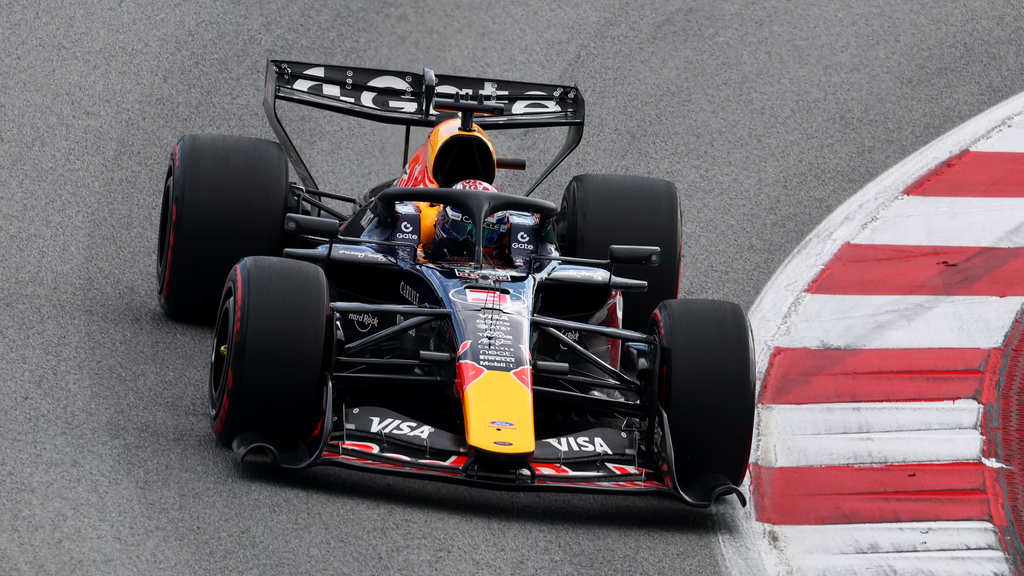
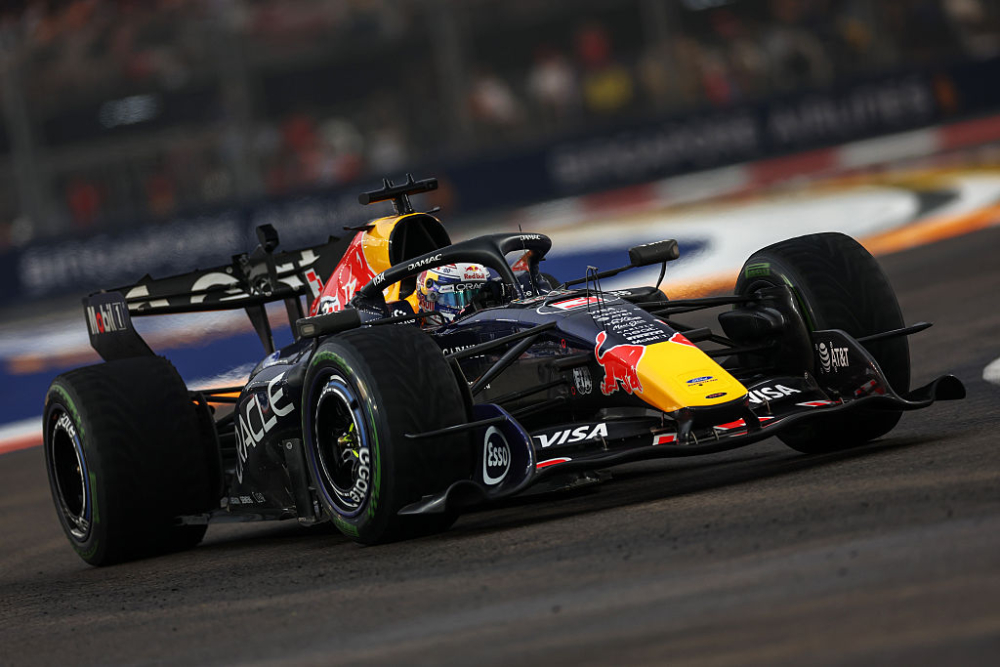
The most striking name, though, is the one further down: Max Verstappen, sixth on 145 points. The driver who defined the sport’s recent era finds himself adrift in a Red Bull that has slipped from its dominant heights — a dramatic reversal of fortune that is one of the season’s biggest storylines in its own right. Rounding out the picture, Oscar Piastri sits seventh for McLaren on 120, with Isack Hadjar leading the midfield charge on 71.
The Hamilton–Norris scrap for third is arguably the most compelling sub-plot below the leaders: a seven-time world champion in his Ferrari against one of the sport’s brightest young stars at McLaren, separated by a mere five points. It’s a reminder that the grid remains stacked with talent — the story of 2026 isn’t a weak field, but one exceptional driver rising above a strong one.
| Pos | Driver | Team | Points |
|---|---|---|---|
| 1 | Kimi Antonelli LEADER | Mercedes | 292 |
| 2 | George Russell | Mercedes | 211 |
| 3 | Lewis Hamilton | Ferrari | 191 |
| 4 | Lando Norris | McLaren | 186 |
| 5 | Charles Leclerc | Ferrari | 167 |
| 6 | Max Verstappen | Red Bull | 145 |
| 7 | Oscar Piastri | McLaren | 120 |
| 8 | Isack Hadjar | Red Bull | 71 |
For all their talent, the maths has effectively eliminated this group from the title conversation: even the best of them would need to out-score Antonelli by more than 100 points across the remaining rounds. Their season is now about winning individual races, settling intra-team scores, and — for Verstappen especially — restoring pride. It’s a reminder of just how comprehensively Antonelli has flipped the established order.
The Run-In — And When It Could Be Sealed
The end of the 2026 season carries a twist that could bring Antonelli’s coronation forward. The campaign’s Middle East rounds — the Qatar and Abu Dhabi Grands Prix — are widely expected to be cancelled amid regional instability, with Imola stepping in as a rescheduled finale on 6 December. That trims the calendar and, with it, the number of points still available for any would-be challenger to chip away at.
It’s the same disruption reshaping motorsport’s entire end-of-season, as we’ve covered in the WRC’s cancelled Saudi finale and the doubt over Formula 2’s closing rounds. Formula 1 is far from immune, and the knock-on effect for the title race is simple: fewer rounds means fewer chances to overturn a leader, and it pushes Antonelli’s clinching moment earlier.
Under the revised calendar, Antonelli needs around 127 more points to be mathematically assured of the title — a target that could see him crowned as early as the Mexico City Grand Prix on 1 November. Were he to do it there, he’d be roughly 20 years and two months old — obliterating the youngest-champion record and writing one of the most remarkable stories in modern Formula 1.
There’s a neat symmetry to a possible Mexico City clinch, too. Sealing a maiden title on foreign soil, in front of one of the sport’s most passionate crowds, with a shortened run-in adding urgency to every point — it would be a fittingly dramatic stage for a record-breaking champion. And should the maths not quite align there, the rescheduled Imola finale would hand Antonelli the chance to be crowned on home Italian soil, a storybook ending few scriptwriters would dare invent.
None of that is guaranteed — a run of retirements could yet drag things out, and Russell will keep pushing to make the leader work for every point. But barring a dramatic collapse, the question of 2026 has shifted from who will win the title to when and where Antonelli seals it. For newcomers wondering how qualifying and race weekends shape these points hauls, our guide to how drivers qualify explains the mechanics.
On paper it’s a two-way title fight between Mercedes team-mates. In reality, Kimi Antonelli has turned 2026 into a statement season, and George Russell — despite equal machinery — is chasing a lead that looks all but unassailable. The head-to-head is one-sided, but the history it could produce is anything but ordinary.
2026 F1 Title Fight — FAQ
A coronation in the making
Formula 1 loves a fairy tale, and 2026 is shaping into one of its most improbable: a 20-year-old in his second season dismantling a grid of world champions and race-winners, with only his own team-mate for company at the top. Antonelli versus Russell is, technically, the title fight — but the numbers make clear it’s really the story of one driver’s breakout year, and a lead that grows harder to imagine being overturned with every round.
Russell will keep fighting, the chasers will keep winning the odd race, and a shortened, disrupted finale adds its own intrigue. For Italian fans especially, the prospect of a first home world champion in seven decades has turned every remaining round into appointment viewing, and the neutrals are watching a talent that only comes along once in a generation. But the defining question of the season is no longer whether Antonelli wins the championship — it’s how young, how soon, and how emphatically. We’ll track every twist through to the finish; the standings hub keeps the numbers current, and our WRC and F2 pieces cover the same calendar chaos rippling across the sport.