Verstappen Wants V8s Back in F1: What He Said, and Could It Actually Happen?
“Change the engine back to a V8. It fixes so many things.” Max Verstappen keeps winning with F1’s 2026 hybrid engines, and keeps saying he can’t stand them. Here’s his case, his push-to-pass idea, the FIA’s own V8 plan, and what stands in the way.
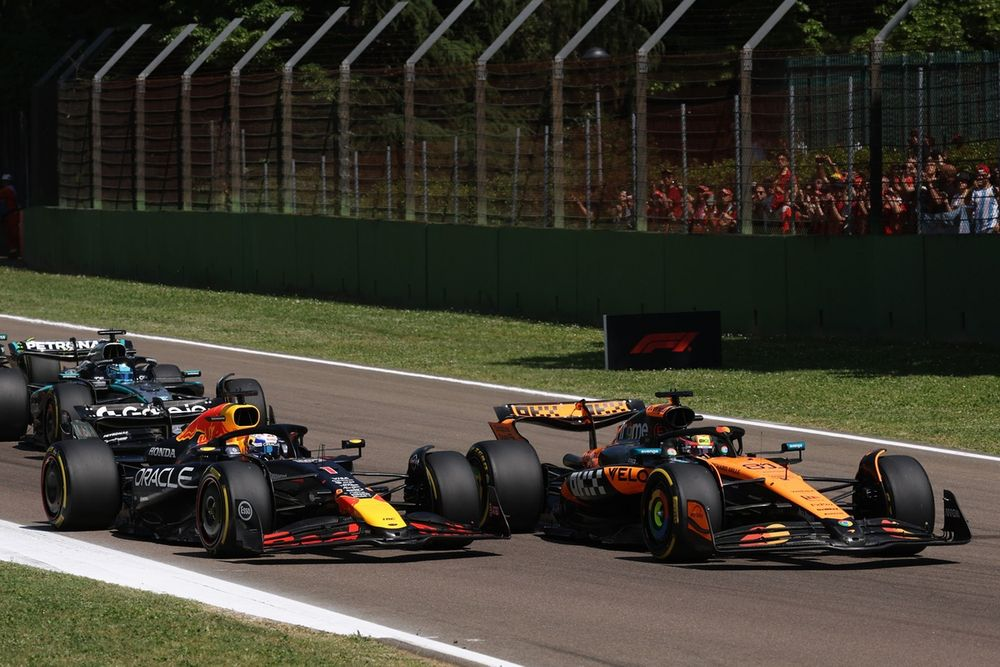
Verstappen Wants V8s Back: Could It Happen?
His case, his push-to-pass idea and the FIA’s 2030 V8 plan.
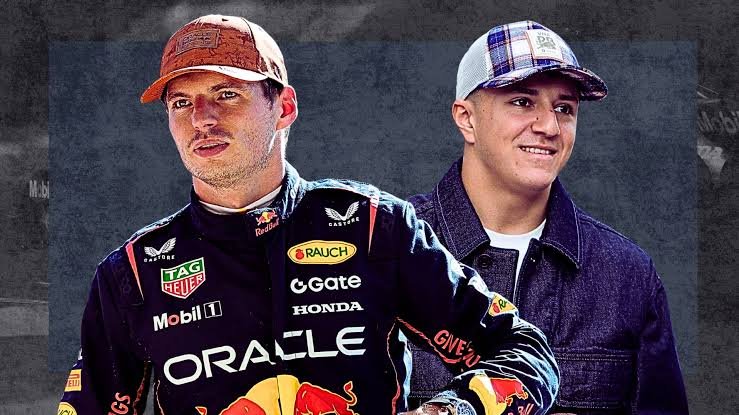
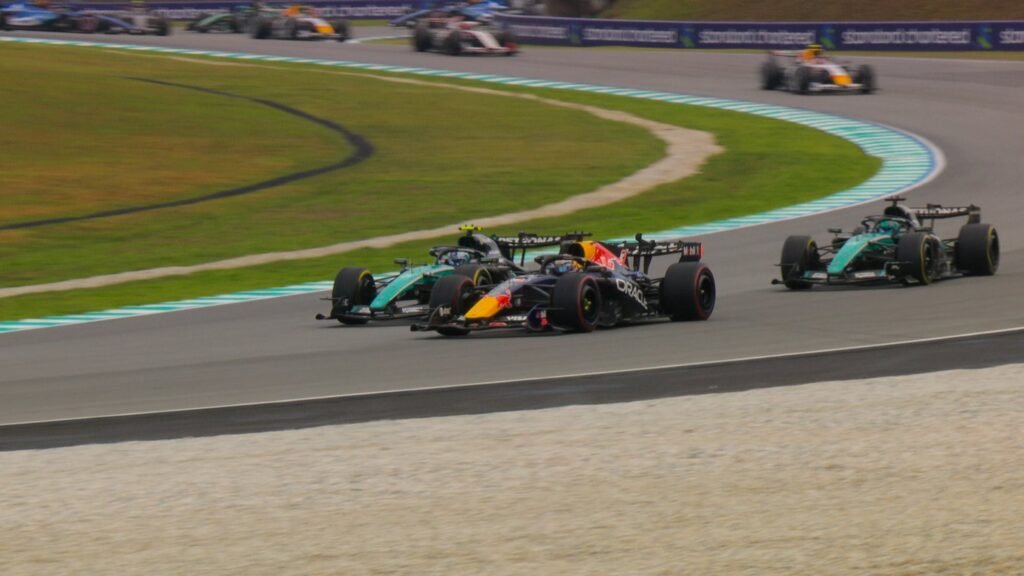
This weekend in Singapore, Max Verstappen won the Sprint and put his Red Bull on pole for the Grand Prix. A week earlier at Sepang, he gave Red Bull’s own engine its first win. By any measure, the 2026 power units are working for him. He still wants them gone.
“Right now, change the engine back to a V8. It fixes so many things,” Verstappen said in comments reported on 30 September. It’s the latest in a string of criticisms of F1’s 2026 rules, which split power roughly 50/50 between a turbocharged V6 and the battery. And he isn’t a lone voice: the FIA’s own president has said V8s are coming back, targeting 2030. This guide covers what Verstappen has said, why drivers dislike the current engines, his idea for a simple overtaking boost, and the obstacles that could still delay a V8 return. For the basics, our guide to V6 vs V8 vs V10 engines explains the differences.
What Max Verstappen Said About V8 Engines
Verstappen has been critical of the 2026 cars since the start of the year, but his comments have become sharper and more specific in the past two months:
What makes his position unusual is timing. Drivers who complain about engines are usually losing. Verstappen won at Sepang and in the Singapore Sprint, and is on pole for Sunday. He’s not asking for a change to make himself faster; he’s saying the cars are less fun to drive and harder to race, even when they’re winning. For his background, see when Verstappen joined F1: he arrived in 2015, so he has never raced an F1 V8 at all.
Why Verstappen Dislikes the 2026 F1 Hybrid Engines
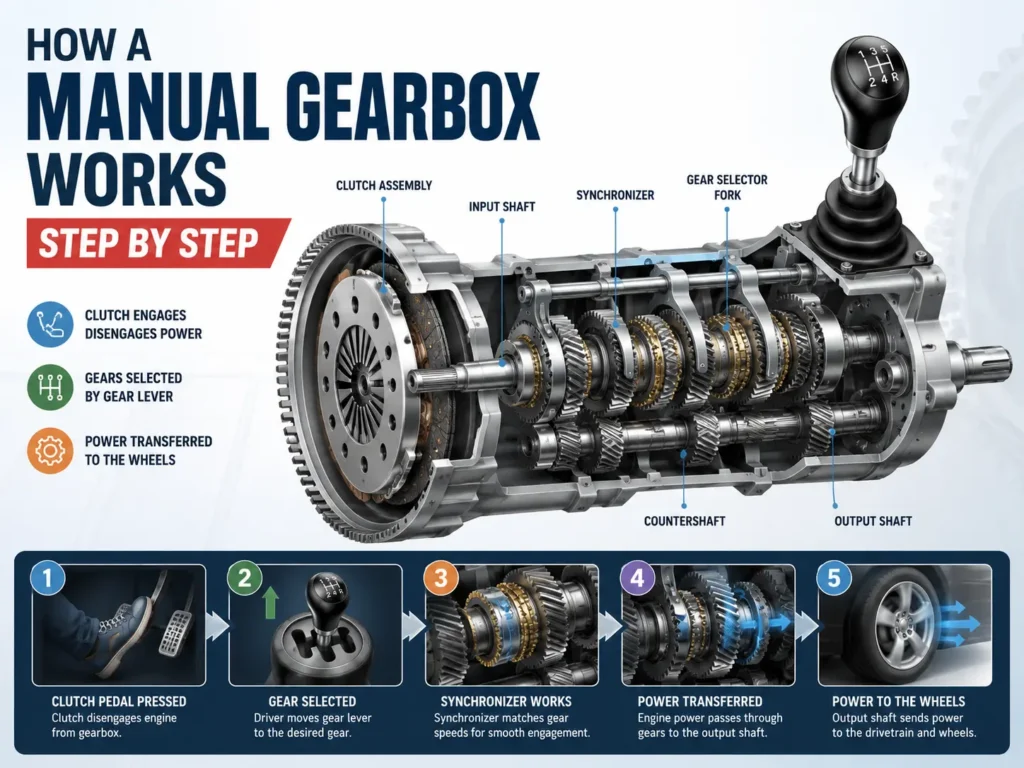
The 2026 regulations changed the balance of an F1 power unit. Last year, roughly 80% of the power came from the combustion engine and 20% from electrical systems. This year it’s close to 50/50. A battery that large can’t stay full for a whole lap, so drivers spend much of every lap deciding when to harvest energy and when to deploy it.
That’s Verstappen’s core complaint. In the BBC interview, he described drivers constantly choosing whether to hold back in corners, brake earlier or lift off in order to gain top speed later, and called it “so unnatural.” In his view, the cars now reward managing energy more than attacking a corner and getting on the throttle early, which is the instinct every racing driver is trained to follow. Our explainer on how active aero and hybrid boost work in 2026 shows how this plays out on track.
According to RacingNews365, the electric share will be reduced from 2027 to increase reliance on the combustion engine, reaching about 60:40 (engine to battery) by 2028. Verstappen says these are small improvements; he wants a much bigger change.
The other complaint is drivability. Verstappen describes the cars as “numb” to driver inputs: with so much of the power coming from a battery and managed by software, the link between the throttle and what the car does feels less direct. He also argues that a V8 would be lighter, and the FIA adds a third benefit: sound. For why a V8 sounds so different, see our guide to why a V8 sounds different from a V12.
“These cars are numb to your driver inputs.” Verstappen is winning with the 2026 engines, and still says they make racing feel unnatural.
Verstappen’s Push-to-Pass Idea: A V8 With a Small Battery
Verstappen isn’t asking for an engine with no electrics at all. His idea, as described to Grande Prêmio and GPblog, is a V8 paired with a small battery whose job is simple: give a driver a boost strong enough to make an overtake at the end of a straight, before the braking zone.
That’s different from today’s system, where the battery shapes the whole lap. It’s closer to the push-to-pass button used in series like IndyCar, where a driver has a limited amount of extra power to use when attacking or defending. In Verstappen’s version, the boost would also make DRS unnecessary. He has said DRS can sometimes be too powerful, and that a battery boost depends on how much charge a driver has saved, which adds tactics without dominating the lap. His ideal pass, he said, is one completed under braking, with drivers fighting, not one where a car simply drives past on a straight.
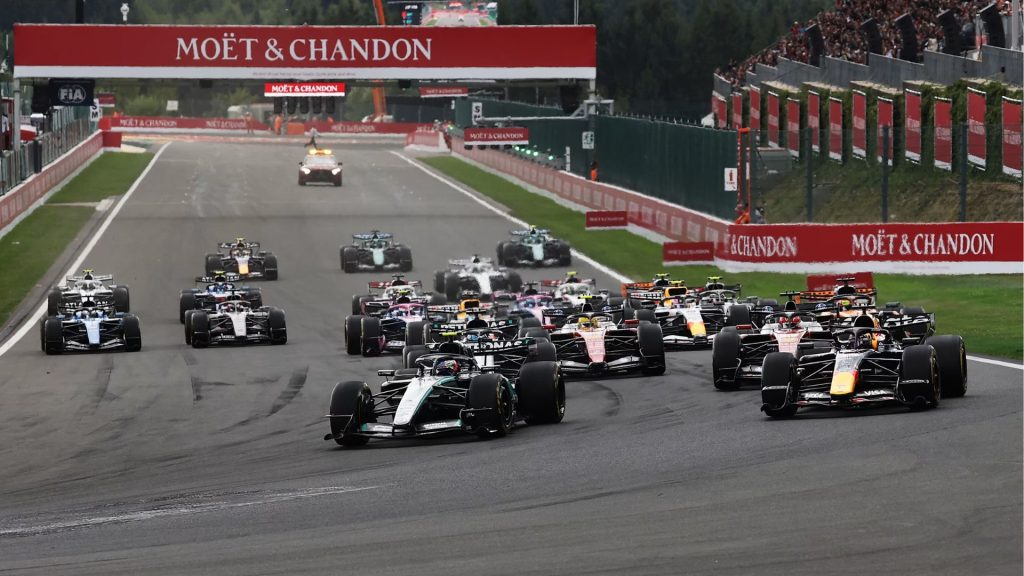
He also wants shorter weekends: practice and qualifying on Saturday and the race on Sunday. And he’s no fan of Sprints, saying they reveal too much about race pace and let teams fix tyre-management mistakes overnight. Our guide to how the slipstream works explains why overtaking on a straight is often easier than under braking.
The FIA’s Plan to Bring Back V8 Engines
Here’s where it gets interesting: the FIA largely agrees with Verstappen. President Mohammed Ben Sulayem has been pushing for a V8 return for more than a year, and in 2026 he has stopped treating it as an idea and started describing it as a decision.
The details Ben Sulayem has shared with The Drive give a picture of what the engine might look like:
| Area | FIA’s stated plan for the V8 |
|---|---|
| Displacement | About 2.6 to 3.0 litres |
| Electric share | About 10% to 20% (“not more than that”) |
| Power | About 880 hp total with a 10% electric share, roughly 650 hp from the engine |
| Rev limit | Around 15,500 to 16,000 rpm, for noise and cost reasons |
| Fuel | Sustainable fuel |
| Goals | Lower cost, less weight, more sound |
“If you make it simple, others can afford it,” Ben Sulayem said, arguing that a simpler engine would cut both development costs and what customer teams pay. For how the FIA’s role in F1 works, see our explainer on what the FIA is.
What Could Stop or Delay a V8 Return
The vote. Under the power unit governance agreement, a fundamental engine change before 2031 needs a super-majority of manufacturers. Ben Sulayem has said a 2030 switch needs four of the six manufacturers to agree. From 2031, he says, the FIA can make the change on its own: “In 2031, the FIA will have the power to do it, without any votes from the PUMs.”
Audi and the turbo. Audi has been the clearest dissenter. “We prefer turbocharging because of its efficiency,” Audi CEO Gernot Döllner said at Monaco. Ben Sulayem’s answer: “Many people say we need a turbo. But then we have excess weight again.” Reports also differ on whether the FIA’s V8 would be naturally aspirated or turbocharged, so this question isn’t settled. Our guide to turbo vs naturally aspirated engines explains the trade-off.
Money. Manufacturers have just spent heavily on the 2026 engines. In 2025, The Race reported that several of them didn’t want to fund two engine programmes at once, with finances squeezed by tariffs and changing EV policy. “Would it really have been worth it for just a single year?” one source asked about bringing the change forward.
2031 looks the most likely date for a V8 era, because the FIA can act without a vote. 2030 is possible if four manufacturers agree, and the more the drivers and fans complain about the 2026 cars, the stronger that case becomes. A switch before 2030 looks very unlikely.
F1 V8 Era vs 2026 Hybrids vs the Proposed V8
F1 last used V8 engines from 2006 to 2013: 2.4-litre, naturally aspirated and revving to 18,000 rpm or more, with the screaming sound many fans still miss. The hybrid V6 turbo era began in 2014.
| V8 era (2006–2013) | 2026 power unit | Proposed V8 (2030/31) | |
|---|---|---|---|
| Engine | 2.4L V8, naturally aspirated | 1.6L V6 turbo | About 2.6–3.0L V8 |
| Electric power | None, or small KERS boost | About 50% | About 10–20% |
| Revs | 18,000+ rpm | 15,000 rpm limit | About 15,500–16,000 rpm |
| Fuel | Conventional | Sustainable | Sustainable |
| Sound | Loud, high-pitched | Quieter | Louder than today |
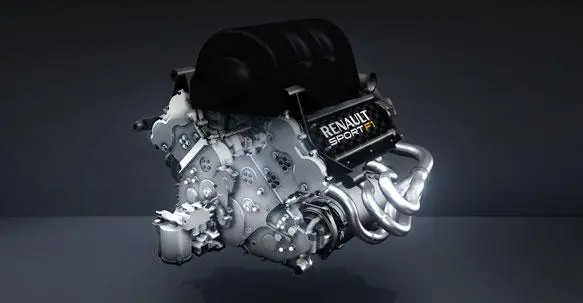
The proposed V8 isn’t a straight return to 2013. It would be bigger, rev lower than the old V8s, run on sustainable fuel and keep some hybrid assistance. In other words, it’s quite close to what Verstappen is asking for: a proper combustion engine with a small electric boost. For more on how engines produce power, read how car engines work, and for the team he drives for, our Red Bull Racing guide.
Our verdict
Verstappen is likely to get his wish, just not soon. The FIA president is on his side, most manufacturers reportedly are too, and the governance rules give the FIA a free hand from 2031. The real questions are whether it comes a year early, whether it has a turbo, and how much electric power survives. Until then, F1 will tweak the 2026 rules, and Verstappen will keep winning with an engine he says he doesn’t like. This weekend’s Singapore GP, where he starts from pole, is the next chance to do exactly that.
Verstappen and F1 V8 Engines — FAQ
The loudest voice in the V8 debate
Verstappen wants a V8 with a small boost button, shorter weekends and cars that respond to the driver. The FIA wants a V8 too. With 2031 already in the FIA’s hands, the question isn’t really whether F1’s next engine is a V8, but when it arrives and how much of the hybrid survives.
Follow World of Speed for updates on F1’s engine rules and Sunday’s Singapore Grand Prix.