F1 Track Limits Explained: Deleted Lap Times, Penalties & FIA Rules
Where the legal circuit ends, why four wheels beyond the white line can erase a qualifying lap, and how repeated race violations become penalties.
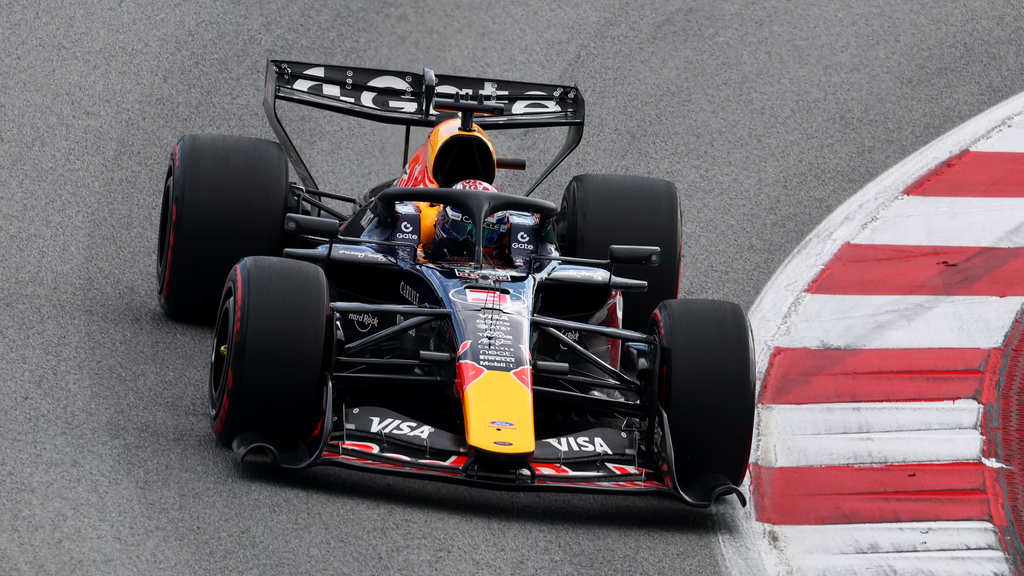
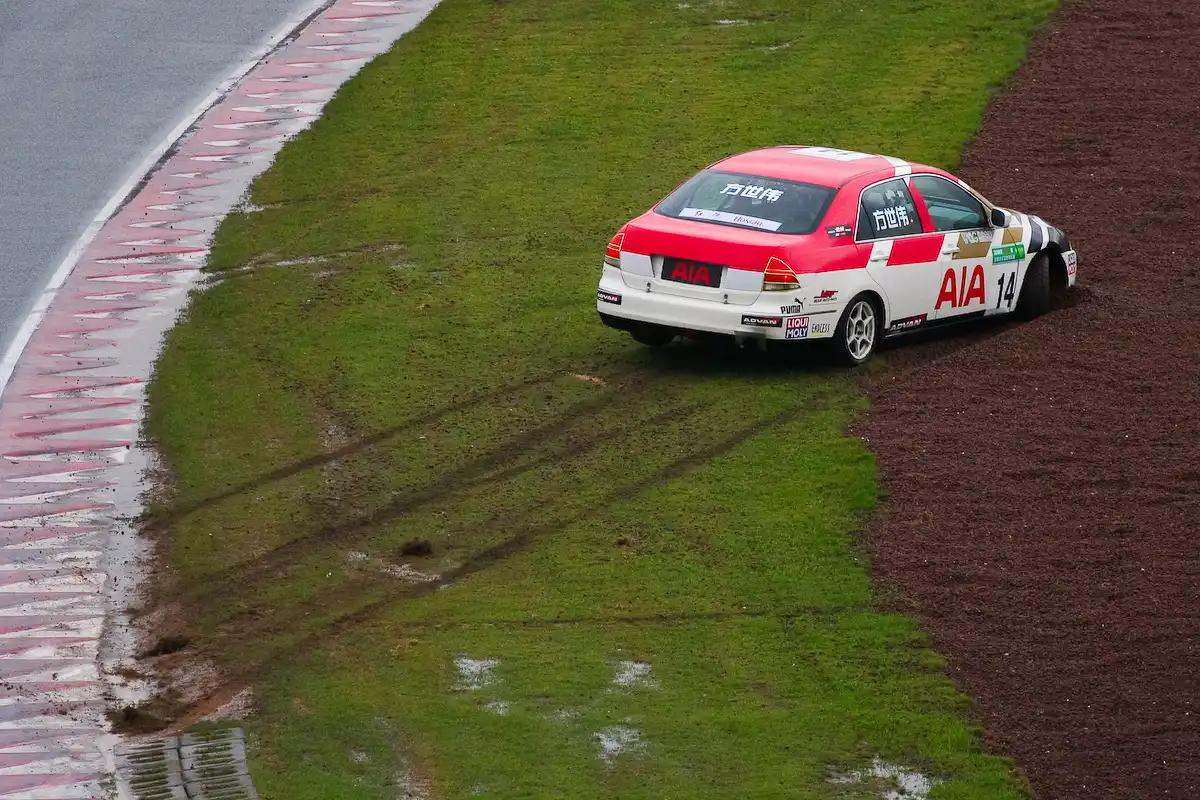
F1 track limits are the legal boundaries of the racing surface. A car has left the track when no part remains in contact with it. The painted white boundary line counts as part of the circuit, but the curb beyond that line does not.
A Formula 1 lap can disappear because one tire crossed a line by a few inches.
The rule sounds simple. Drivers must keep at least part of the car in contact with the legal track.
However, the car is nearly two meters wide. The driver sits low and cannot see the rear tires.
At the fastest corners, the perfect line often runs beside the boundary. A small error can decide pole position.
Qualifying enforcement is immediate in principle. The illegal lap is deleted, regardless of whether the driver gained one tenth or nothing.
Race enforcement works differently. Repeated violations create strikes, a black-and-white warning and time penalties.
Track limits also cover racing incidents. A driver cannot overtake outside the circuit or keep a position by running wide.
Moreover, returning to the track creates another duty. The rejoin must be safe and cannot preserve a lasting advantage.
The latest 2026 rules made the structure clearer. Official guidelines now state the third offense normally brings the warning flag.
The fourth and every additional offense normally adds five seconds. Yet stewards still examine exceptions and intent.
Current cases show why details matter. Alex Albon fell to P19 for the 2026 Miami Sprint after a late SQ1 deletion.
Nico Hülkenberg received five seconds at the 2026 British Sprint for maintaining position after leaving the circuit.
This F1 Track Limits Explained guide covers the white line, curbs, deleted laps, race strikes, penalties and circuit design.
F1 Track Limits Explained: Where Does the Track End?
The FIA defines track limits through the painted white lines at the circuit edge. A car remains legal while any part still touches the track or white line. Once all four tires are completely beyond that boundary, the driver has left the track.
Article B1.8.6 of the 2026 sporting regulations provides the central rule.
Drivers must make every reasonable effort to use the track. They cannot leave without a justifiable reason.
A car is outside when no part remains in contact. Therefore, the rule concerns the entire tire footprint.
Two wheels can cross the line while two remain legal. Even three tires may sit outside if the fourth still touches the boundary.
Once the final tire clears the outside edge, the lap becomes vulnerable. The curb cannot rescue it.
Why the Rule Uses “No Part of the Car”
The wording avoids an unclear wheel-count test. Officials examine whether any tire still contacts the legal surface.
A tire sidewall hanging over the line is not enough. The contact patch must touch the line or track.
Camera angle can make this difficult. Consequently, Race Control uses several views before deleting a close lap.
Can Two Wheels Go Outside Track Limits?
Yes. Formula 1 drivers regularly place the outside tires beyond the white line.
The car remains legal while at least one inside tire touches the boundary. This allows drivers to use the full circuit width.
However, the margin may be less than an inch. Suspension movement and tire deformation make precision difficult.
Does the Rule Apply at Every Corner?
Yes. The white lines define the track around the full circuit.
Some corners receive greater camera coverage because they generate frequent violations. Yet the legal principle remains universal.
Race Director event notes may add instructions for escape roads or chicanes. Those notes supplement rather than replace Article B1.8.6.
Our guide to the FIA’s role in Formula 1 explains who writes and applies these rules.
What Is the F1 White-Line Rule?
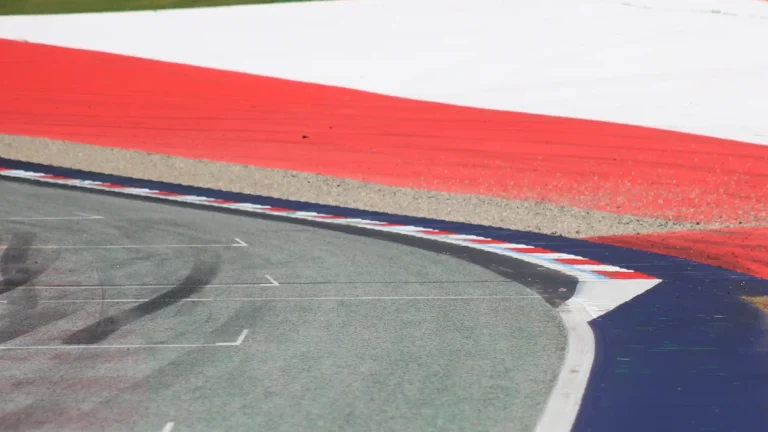
Yes. The painted white line counts as part of the Formula 1 circuit. A tire touching any part of that line remains within track limits. The curb, painted runoff and asphalt beyond the line do not count as legal track.
The white line provides one consistent boundary across very different circuits.
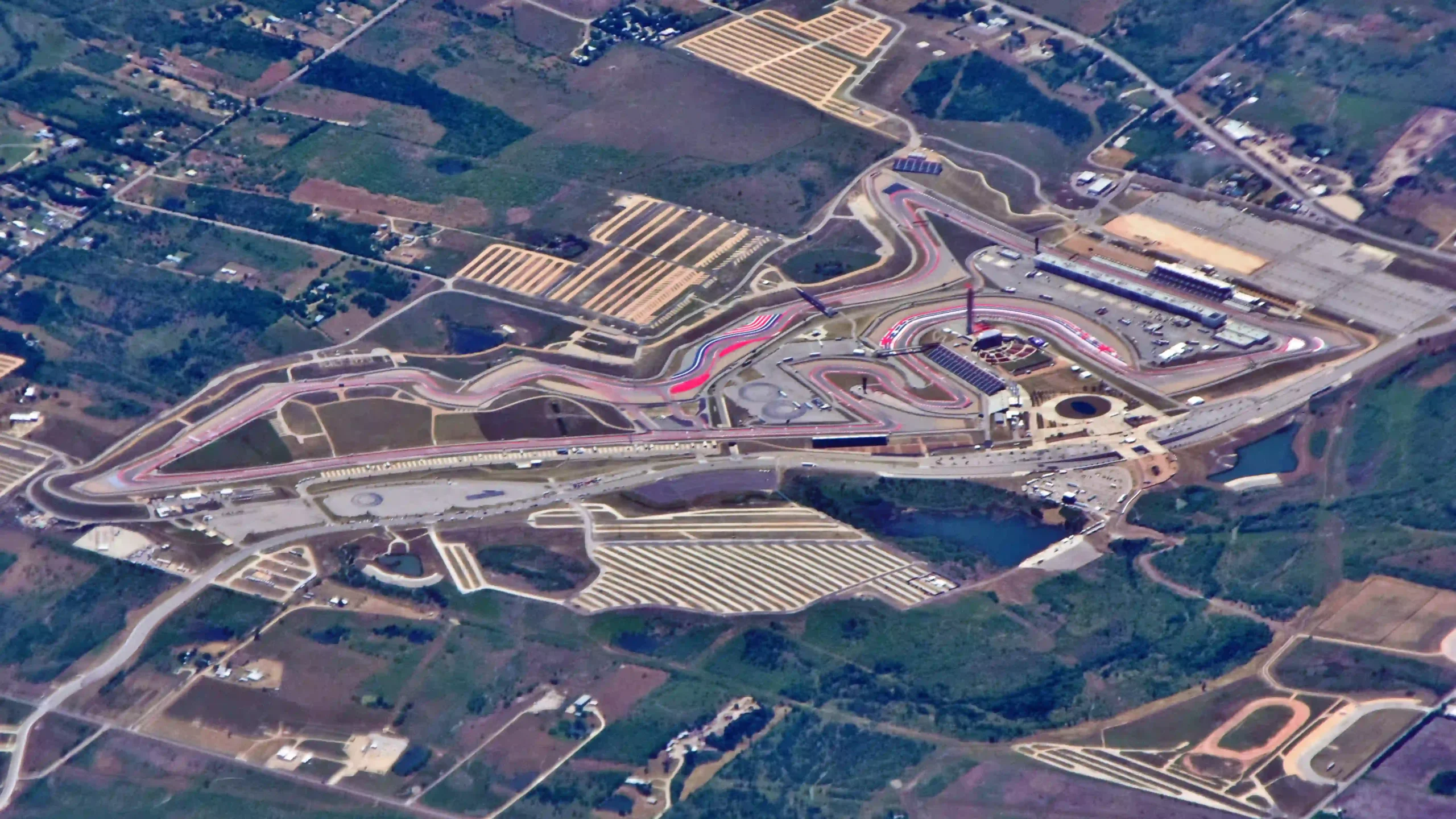
At Monaco, a wall often sits close behind it. At Austin, acres of asphalt may appear beyond it.
The available runoff does not change the legal edge. Therefore, the driver receives no extra width because the outside surface looks safe.
Are Curbs Part of the Track in Formula 1?
No. The FIA wording states that curbs are not part of the track.
A car can use the curb only while another tire remains on the track or white line. Four tires on the curb mean the car has left.
This surprises many viewers because curbs sit inside the racing environment. However, they are reference and safety features beyond the legal boundary.
Why Are Curbs Painted Red and White?
The color makes the edge visible at speed and on television. It also helps drivers judge wheel placement.
However, color does not create legality. A blue, green or unpainted curb remains outside when it lies beyond the white line.
What About Painted Runoff?
Painted runoff remains outside the circuit. Drivers often cross it after exceeding the legal line.
The surface may offer nearly as much grip as the racing track. That creates the incentive to run wide.
Consequently, track limits become more difficult at modern circuits with large asphalt safety areas.
Why Does Formula 1 Enforce Track Limits?
Track limits keep every driver on the same course. Without enforcement, competitors could open a corner, shorten a chicane or carry more speed through runoff. The rule protects sporting fairness while allowing circuits to retain modern safety areas.
A racing circuit must have a defined length and shape. Otherwise, the fastest line could move outside the intended course.
Running wide reduces steering angle. Therefore, the driver can carry more speed and accelerate earlier.
Cutting an inside corner shortens distance. Even a small shortcut can save valuable time.
Track limits prevent both methods. Every driver must solve the same geometric challenge.
Why Do F1 Drivers Run Outside Track Limits?
Drivers seek every inch because lap time depends on corner radius. A wider arc usually allows more speed.
They also manage tire grip at the edge. Understeer can push the front tires beyond the line unexpectedly.
Wind, fuel load and dirty air change the car’s behavior. Therefore, a legal line on one lap may become illegal on the next.
Is Every Violation Intentional?
No. Many come from small mistakes or loss of control.
The FIA guidelines recognize that difference. Certain laps may be deleted without counting as race strikes.
However, qualifying still removes the illegal time. Intent does not make an off-track lap legal.
Why Not Let Drivers Use Every Paved Surface?
That approach would change the circuit’s designed geometry. It could also create unsafe rejoin paths.
Furthermore, support categories and motorcycles may use different safe lines. The white boundary provides one stable standard.
Our guide to racing apexes explains why corner shape affects speed.
F1 Track Limits Explained: How Does the FIA Monitor Violations?
Race Control combines dedicated trackside cameras, onboard footage, timing data and human review. Officials look for the moment every tire loses contact with the white line. Some circuits also use enhanced camera positions and visual reference markings to speed up decisions.
Track-limits enforcement begins with a clear camera angle. The ideal view looks along the white line rather than across it.
That perspective shows whether the final tire still touches the paint. A distant broadcast camera may not provide enough precision.
Race Control receives alerts during every session. Officials then confirm the suspected violation before changing the timing screen.
Therefore, the process is not always instant. A close call may take several minutes to review.
Does Formula 1 Use Sensors for Track Limits?
Formula 1 has tested several technologies. However, the decisive evidence still commonly includes video review.
GPS is useful for locating a car but lacks the tire-level precision needed for every boundary call.
Timing loops show when the lap occurred. They do not reveal whether one tire remained on the line.
Consequently, dedicated cameras remain central. Enhanced computer systems can filter likely cases for human confirmation.
Are Track-Limits Decisions Automatic?
No. Technology can flag a possible infringement, but officials still review the evidence.
This matters because shadows, tire deformation and camera perspective can create false impressions.
Stewards also decide whether a race excursion counts as a strike. That judgment requires context beyond the line crossing.
Why Are Some Lap Deletions Announced Late?
A busy circuit can produce several cases within seconds. Race Control must work through each one.
In addition, one camera may be blocked by another car. Officials then seek another angle.
A late deletion is frustrating, but a wrong immediate decision can be worse. The 2026 Miami case showed how timing can affect later qualifying segments.
Can a Team Challenge a Deleted Lap?
A team can raise evidence with Race Control or the stewards. However, a clear line crossing is usually factual.
Review can restore a lap when the original evidence was inconclusive or incorrect. The timing screen then updates.
Formal protest and review procedures depend on the decision type. Our guide to F1 appeals explains the wider process.
F1 Track Limits Explained: Why Are Qualifying Lap Times Deleted?
A driver cannot set a legal lap outside the white lines. Therefore, an off-track lap in practice, Sprint Qualifying or Qualifying is deleted. The following lap may also be removed when the excursion could create extra speed, tire preparation or energy benefit.
Qualifying needs a simple standard. The fastest legal lap decides the grid.
Officials do not need to calculate the exact time gained. Once the car leaves without justification, the lap becomes invalid.
This prevents arguments over whether the excursion saved 0.001 or 0.100 seconds.
It also encourages drivers to leave a visible margin. A slightly slower legal lap is worth more than a deleted perfect lap.
What Happens When a Lap Is Deleted?
The timing system removes that lap from the driver’s official session record.
The driver falls back to the next-fastest legal time. If no legal lap remains, the classification can place the car at the back.
During Q1 or Q2, deletion can change who advances. During Q3, it can remove pole position.
Can the Following Lap Also Be Deleted?
Yes, when officials judge that the first excursion could benefit the next lap.
The most common example occurs at the final corner. Running wide can improve speed onto the main straight.
That extra speed may reduce the following lap time. Therefore, both laps can be removed.
Energy deployment and tire preparation can also matter. The rule prevents drivers from creating a hidden benefit.
Are Track Limits Enforced in Free Practice?
Yes. Practice laps can be deleted, although the competitive effect is smaller.
Teams still lose useful benchmark data. A deleted lap may also hide the car’s true pace on official screens.
Moreover, practice teaches drivers where the cameras and boundaries sit before qualifying.
Can Track Limits Cost Pole Position?
Absolutely. Oscar Piastri lost a Q3 time at the 2024 Austrian Grand Prix after exceeding track limits.
He had produced a lap good enough for third. The deletion dropped him to seventh on the grid.
That example shows why the line matters even when a driver gains little. The whole lap must be legal.
Read our F1 qualifying guide for the Q1, Q2 and Q3 elimination format.
F1 Track Limits Explained: Why Albon Dropped to P19 in Miami
Alex Albon’s final SQ1 lap at the 2026 Miami Grand Prix exceeded track limits at Turn 6. The issue was reported after SQ2 had started. Stewards deleted the SQ1 lap and every later SQ2 lap, moving him from P14 to P19 for the Sprint.
Albon initially appeared to advance from SQ1. His 1:30.988 lap pushed Liam Lawson out by less than one tenth.
However, the Turn 6 violation was not reported to the stewards until SQ2 had begun.
By then, Albon had already completed laps in the next segment. The normal timing sequence had broken down.
The stewards removed the illegal SQ1 lap. They also deleted every SQ2 time because he should not have participated.
Consequently, Albon started the Sprint from P19 rather than P14.
Why Were the SQ2 Laps Deleted?
The later laps were not necessarily outside track limits. They were removed because the driver had advanced on an invalid SQ1 result.
Allowing those laps to stand would disadvantage Lawson and the drivers who had legally reached SQ2.
The case demonstrated that a delayed review can affect more than one lap. It can alter the structure of the whole session.
Could the FIA Have Stopped Albon Before SQ2?
Only if the violation had been confirmed earlier. The report arrived after the next segment started.
Race Control must balance speed with accuracy. Miami showed the cost when a clear case is not processed in time.
It also explains why teams watch rival onboard footage. A competitor may notice a violation before the official message appears.
What Did the Case Change?
The regulations already allowed lap deletion. The unusual part concerned how to restore a fair qualifying order.
The stewards used their authority under the International Sporting Code to remove the later laps.
Therefore, the case became an important 2026 example for future delayed track-limits reports.
Miami was not just a four-wheels-off decision. It was a timing-system problem that changed who should have been allowed into the next session.
F1 Track Limits Explained: How Do Race Strikes Work?
During a Sprint or Grand Prix, invalid laps are normally counted as track-limits strikes. The 2026 penalty guideline places the black-and-white flag at the third offense. The fourth and every additional offense normally brings a five-second time penalty.
A race lasts too long for immediate punishment after every minor mistake. Formula 1 therefore uses escalation.
The first and second ordinary violations create strikes. The third normally brings the black-and-white warning flag.
The fourth normally produces five seconds. Each later ordinary violation normally adds another five seconds.
However, the system is guidance rather than blind automation. Stewards retain discretion when circumstances differ.
| Race Offense | Normal 2026 Response | What It Means |
|---|---|---|
| First | Lap deleted and strike recorded | Driver receives an initial warning through the team |
| Second | Lap deleted and strike recorded | Driver is one offense from the formal flag |
| Third | Black-and-white flag | Official driving-conduct warning |
| Fourth | Five-second penalty | Added to race time or served at a pit stop |
| Fifth and later | Five seconds for each additional offense | Penalties continue to accumulate |
Is the Black-and-White Flag a Penalty?
No. It is an official warning shown with the car number.
The driver remains in the race without added time at that stage. However, the next violation normally produces a penalty.
The flag also tells viewers that the driver has reached the limit.
Can a Driver Receive More Than One Track-Limits Penalty?
Yes. Each additional offense after the penalty threshold can add another five seconds.
In extreme cases, a driver can collect several penalties. The final classification may change significantly.
Nico Hülkenberg received 15 seconds for repeated track-limit violations at the 2023 Bahrain Grand Prix.
Do Race Strikes Carry Into Qualifying or the Sprint?
No. Each timed track competition session has its own context.
A Sprint warning does not normally carry into Sunday’s Grand Prix. Qualifying uses immediate lap deletion rather than the race strike ladder.
Do Strikes Reset After a Safety Car or Red Flag?
No. A neutralization does not erase previous race violations.
The driver’s strike count continues when racing resumes. Therefore, the team must keep reminding the driver of the remaining margin.
Our guide to Formula 1 flags explains the black-and-white warning.
F1 Track Limits Explained: Which Laps Do Not Count as Strikes?
No. The FIA guidelines list exceptions for an obvious loss of control, avoiding a collision, being forced off, receiving another penalty for the same incident, or leaving the track without gaining an advantage during an overtaking attempt. Stewards decide each case.
The exception list stops the strike system from punishing unavoidable incidents twice.
A driver who spins across the runoff has already lost time. Adding a strike may serve no sporting purpose.
Likewise, a driver forced outside by another car did not choose the wider line.
Obvious Loss of Control
A lock-up, snap of oversteer or spin can take the car beyond the boundary.
The lap remains invalid. However, stewards can decide not to add a race strike.
The driver usually loses enough time that no advantage exists.
Avoiding a Collision
Drivers can leave the track to avoid contact. Lap 1, Turn 1 is the typical example.
Stewards examine whether the escape was necessary. They also check whether the driver kept a position unfairly.
Being Forced Off
A driver pushed beyond the white line may avoid a strike. However, the stewards must recognize that the other car forced the move.
This links track limits with overtaking guidelines. Racing room and corner entitlement become central.
Another Penalty Covers the Incident
A driver may exceed track limits while causing a collision or gaining a lasting advantage.
If the stewards penalize the larger offense, they can avoid adding a routine strike for the same event.
This prevents double-counting one maneuver.
No Advantage During an Overtaking Attempt
A failed move may carry both cars wide. If the off-track driver clearly gains nothing, stewards may withhold the strike.
However, this remains discretionary. Intentional or unsportsmanlike use of runoff can receive an immediate penalty.
F1 Track Limits Explained: What Is a Lasting Advantage?
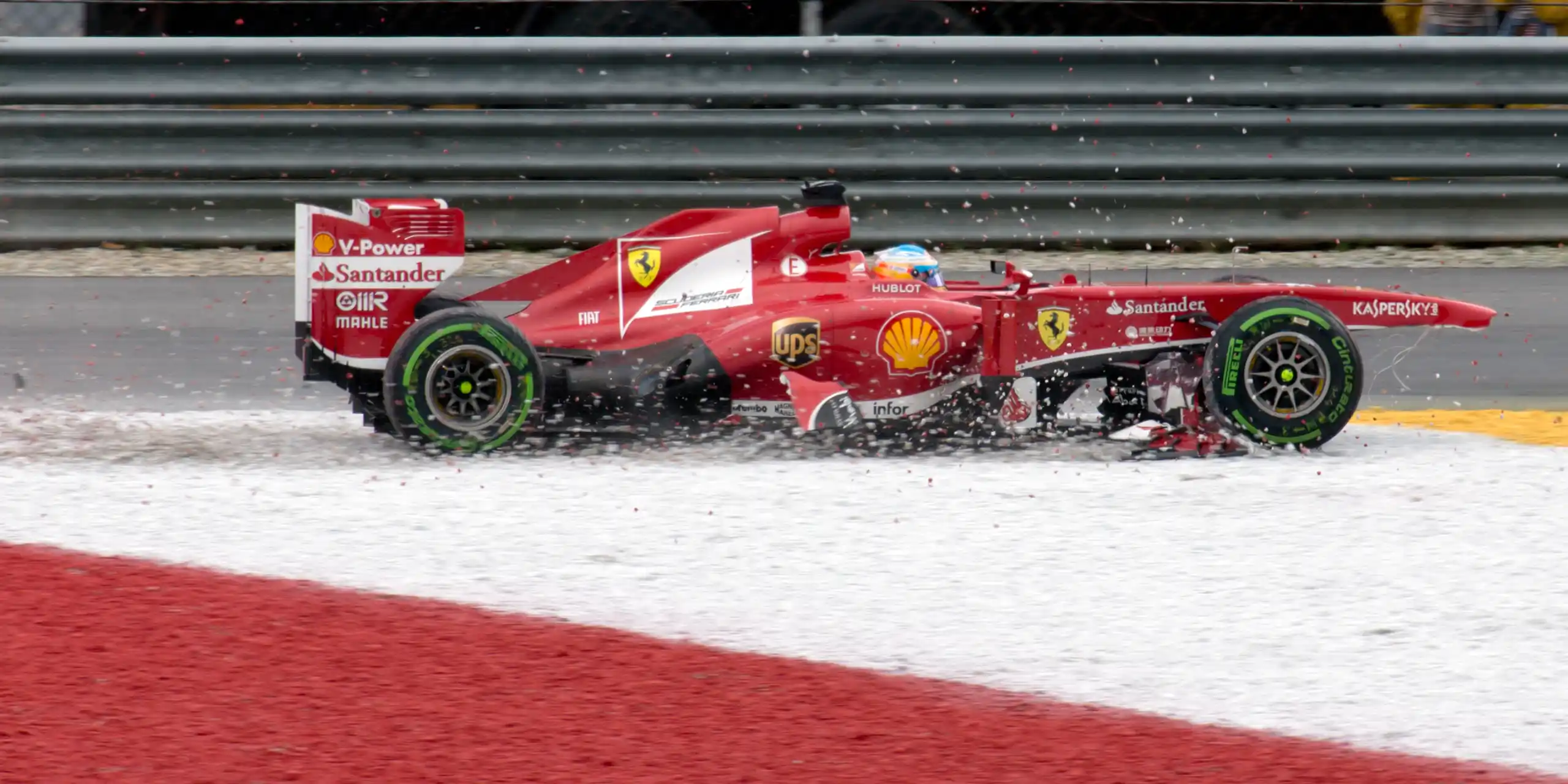
A lasting advantage is a sporting benefit gained by leaving the track. It can be time, a completed overtake or maintaining a position that would otherwise be lost. The Race Director may allow the driver to return the full advantage, while the stewards can impose a penalty.
Routine track limits and lasting advantage are related but separate ideas.
A driver can exceed the boundary alone and receive a strike. Another driver may run wide while battling and keep a position.
The second situation affects another competitor directly. Therefore, it can bring an immediate penalty rather than one routine strike.
Can a Driver Overtake Outside Track Limits?
A pass completed outside the legal circuit cannot normally stand.
The driver should return the position promptly. Race Control may give the team an opportunity to surrender the whole advantage.
Waiting too long can create another strategic benefit. The driver may build a gap or allow a teammate to intervene.
Does Maintaining a Position Count as an Advantage?
Yes. The 2026 driving standards state that a defender who leaves the track and rejoins in the same position has generally gained a lasting advantage.
The usual remedy is to concede the place. This applies even when the driver did not complete an overtake.
Defending off track can deny the attacker a position that the circuit geometry would otherwise provide.
Can a Driver Give Back Only the Time Gained?
Race Control requires the whole advantage to be returned. A token lift may not be enough.
If the benefit was a position, the clean solution is usually to hand that position back.
Stewards can still penalize a dangerous or deliberate action even after the place is returned.
What Is the Standard Penalty?
The 2026 penalty guideline lists a 10-second race penalty as the baseline for gaining a lasting advantage.
Mitigating circumstances can reduce it to five seconds. More serious cases can rise to a drive-through.
That range is stronger than the routine five-second track-limits ladder because another competitor may have been harmed.
2026 British Sprint: Hülkenberg at Turn 9
Nico Hülkenberg defended against Esteban Ocon at Silverstone’s Turn 9 on Lap 1.
He carried slightly more speed than on comparable laps and left the track at corner exit.
Hülkenberg kept the position. Ocon completed a genuine pass one lap later.
The stewards accepted that avoiding contact was relevant. However, they judged excessive entry speed as the primary cause.
As a result, Hülkenberg received five seconds after the Sprint. The mitigation reduced the sanction from the 10-second baseline.
Key distinction: A normal track-limits strike concerns repeated use of the circuit boundary. A lasting-advantage case can bring an immediate penalty because the driver gained time or position against a rival.
F1 Track Limits Explained: What Is an Unsafe Rejoin?
A driver may return after leaving the circuit only when it is safe and without retaining a lasting advantage. They must account for approaching traffic, visibility and speed difference. Rejoining into another car’s path can trigger a five-second penalty or a stronger sanction.
Leaving the track does not remove the driver’s responsibility to other cars.
The rejoining car often travels slowly and approaches from an unusual angle. Meanwhile, rivals remain on the racing line at full speed.
Therefore, the off-track driver must wait or choose a predictable path.
Who Has Priority During a Rejoin?
The cars already on the circuit have priority. The returning driver must not force them to brake or change direction.
Mirrors and radio information help. However, the driver still makes the final decision.
Dust, spray and barriers can reduce visibility. A cautious rejoin may cost several positions but avoid a collision.
What Is the Penalty for an Unsafe Rejoin?
The 2026 penalty guideline starts at five seconds and can rise to a drive-through.
Severity depends on danger and consequences. Contact or evasive action can increase the sanction.
Penalty points may also apply. The stewards judge the complete incident rather than only the line crossing.
Can a Safe Rejoin Still Bring a Track-Limits Penalty?
Yes. Safety and legality are separate questions.
A driver can rejoin safely but still have set an invalid lap or gained a position.
Likewise, an unavoidable excursion may avoid a strike but still require a careful return.
Are Lap 1 Incidents Treated Differently?
Stewards recognize that the first corner creates congestion and limited choices.
A driver leaving to avoid a crash may receive no strike. However, a deliberate shortcut or retained advantage can still be penalized.
The phrase “Lap 1 leniency” does not create permission to ignore the circuit.
Our guide to out-braking in Formula 1 explains why crowded corner entries create these situations.
F1 Track Limits Explained: Why Austria Became the Test Case
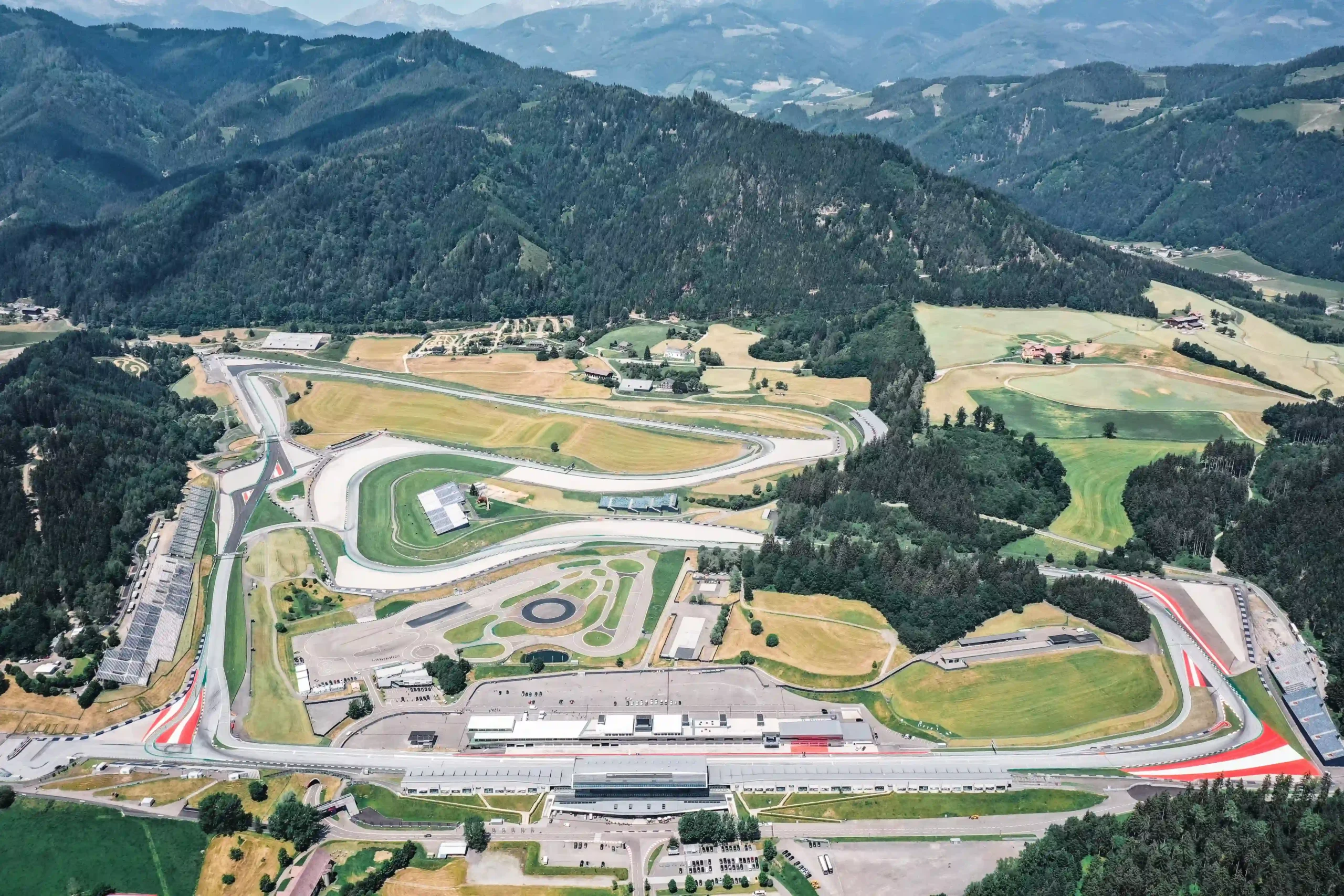
The Red Bull Ring’s final corners combine high speed, wide asphalt runoff and a lap-time reward for using every inch. In 2023, more than 1,200 potential breaches required review. Gravel strips were installed behind the curbs at Turns 9 and 10 for 2024.
Turns 9 and 10 arrive near the end of a short lap. Drivers attack them repeatedly with very little margin.
Running wide improves corner speed and the launch onto the main straight. Therefore, the incentive affects both the current and following lap.
In 2023, Race Control faced more than 1,200 potential incidents. The scale overwhelmed the normal review process.
Aston Martin protested the provisional result. Further review produced retrospective penalties and changed the classification hours later.
Why the 2023 Result Changed
Not every suspected violation had been reviewed before the checkered flag.
After the protest, officials reconciled deleted laps with penalties. Six drivers were demoted in the final order.
The result exposed a practical problem. A clear rule still fails when the monitoring system cannot process the volume.
What Changed for 2024?
The circuit installed a 2.5-meter gravel strip directly behind the curb at Turns 9 and 10.
Several other corners moved the white line closer to existing gravel. A light-blue visual strip separated the white boundary from the curb.
The physical consequence reduced the incentive. A driver who crossed too far risked losing control or lap time immediately.
Did Gravel Solve the Problem?
It reduced the number of marginal cases dramatically. Drivers could feel the consequence rather than waiting for a message.
However, gravel is not suitable everywhere. Motorcycle racing needs large, predictable runoff areas.
Circuits also balance drainage, maintenance and accident behavior. Therefore, physical limits require careful design.
F1 Track Limits Explained: Why Some Circuits Are Harder
Track limits become harder when a fast corner has wide, high-grip asphalt beyond the white line. Drivers gain speed without an immediate physical penalty. Walls, grass or gravel create natural limits, while broad runoff requires more cameras and stewarding.
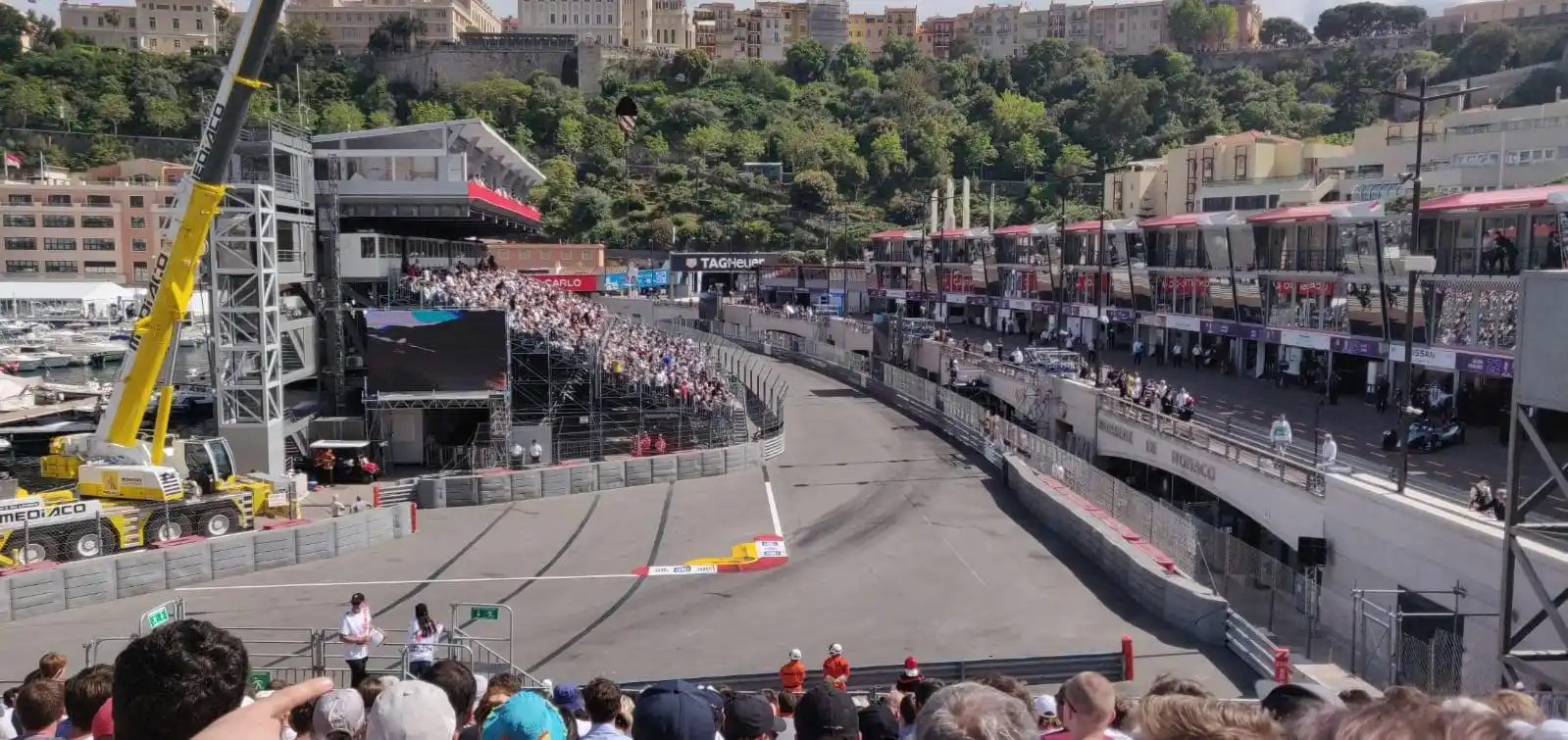
Not every circuit creates the same temptation. Monaco often resolves the question with barriers.
A driver who runs wide there risks contact and damage. Therefore, the wall enforces the limit naturally.
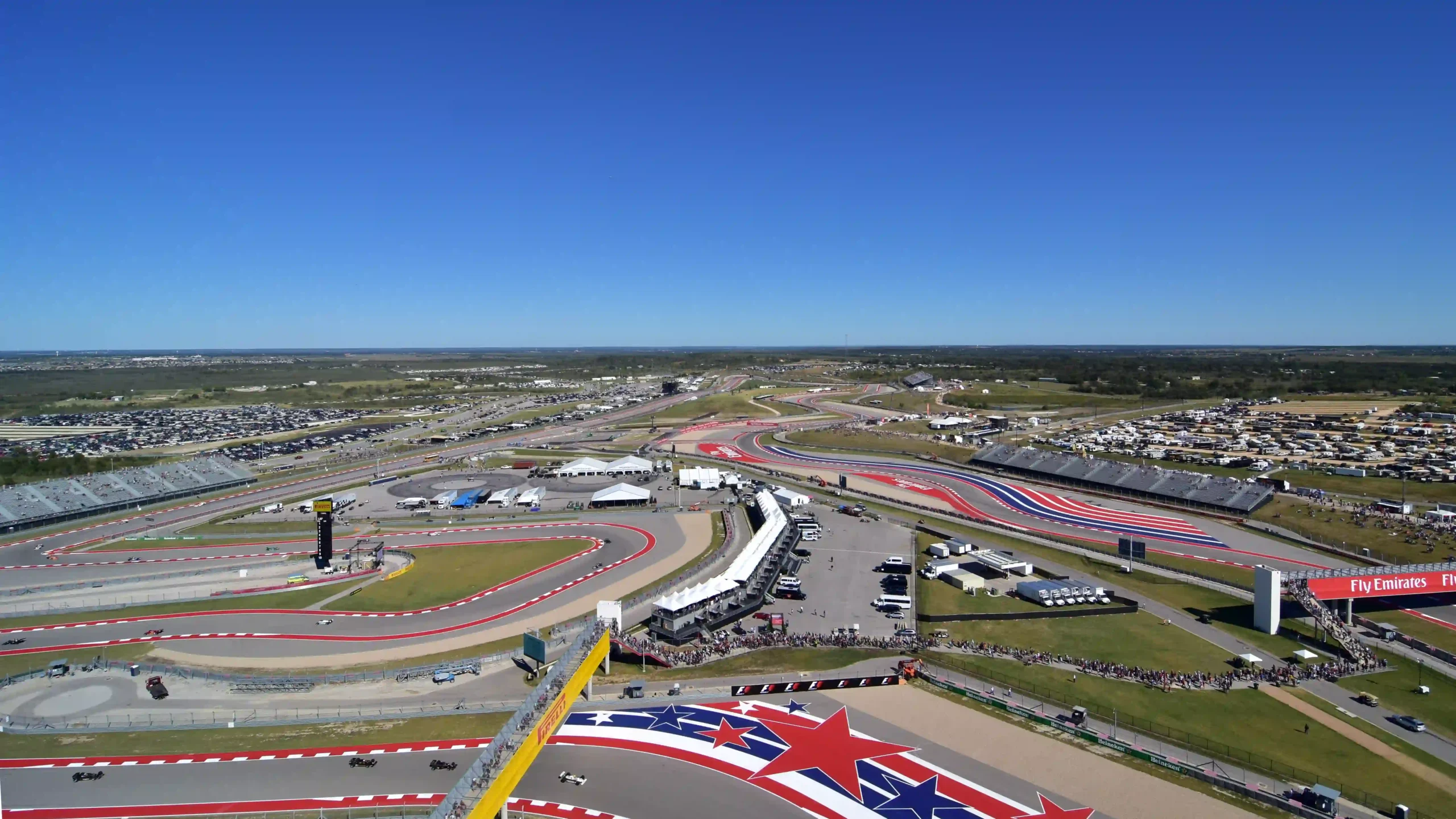
Austin and Lusail use generous paved runoff for safety. Those surfaces protect a spinning car but can reward a small overshoot.
Circuit of the Americas
COTA contains several long corners with large paved exits. Turn 19 has often generated deletions.
The driver carries high lateral load while the corner opens. Running wide allows more speed onto the following section.
Camera placement and event notes become important because the runoff looks like usable pavement.
Lusail International Circuit
Lusail’s fast sequences place heavy load on the tires. Small understeer moments can carry all four tires outside.
In 2023, repeated infringements produced several penalties. Sergio Pérez and Pierre Gasly each collected multiple five-second sanctions.
Gravel changes later provided stronger physical guidance at selected corners.
Monaco
Monaco has fewer traditional disputes because walls sit close to the racing surface.
However, escape roads at chicanes still need clear procedures. A driver who misses the corner must follow the defined rejoin route.
Shortcuts can create a lasting advantage even when four-wheel monitoring is not the central issue.
Why Not Install Walls Everywhere?
Walls punish mistakes but increase crash severity. They can also block sight lines and complicate recovery.
Permanent circuits need safe runoff for brake failures and high-speed accidents.
The challenge is to create a sporting deterrent without reducing safety.
Why Not Use Grass Around Every Corner?
Grass becomes slippery in rain and can launch a car after the floor touches it.
It also provides limited control during an emergency. Asphalt lets a driver brake and steer.
Therefore, modern design often favors asphalt despite the track-limits problem.
Read our guide to gravel traps in Formula 1 for the safety trade-offs.
F1 Track Limits Explained: Qualifying and Race Strategy
Drivers must balance maximum corner speed against the risk of losing the lap or receiving a race strike. Teams track each infringement, adjust target lines and warn drivers. A legal banker lap can be more valuable than a faster lap at the white-line limit.
Track limits create a risk-reward calculation on every flying lap.
A driver with no legal time must leave margin. One safe lap protects against traffic, yellow flags or a later mistake.
Once a banker lap exists, the driver can attack harder. However, the team still needs the legal result.
Why Drivers Set Banker Laps
A banker lap creates a qualifying safety net. It may not be fast enough for the final target, but it prevents a blank timing sheet.
Track evolution then makes later laps faster. The driver can increase risk after securing a legal reference.
Albon’s Miami case showed the danger of relying on one marginal lap.
How Teams Manage Race Strikes
The race engineer counts official infringements and relays the status by radio.
After the second offense, the driver may adjust a troublesome corner by several inches.
That slower line can cost hundredths each lap. Nevertheless, it avoids five seconds later.
Can Track Limits Affect Pit Strategy?
Yes. A five-second penalty can be served during a later pit stop.
The mechanics must wait before touching the car. Therefore, a normal stop becomes significantly longer.
If the driver does not stop again, the time is added after the finish. Teams then calculate the gap needed to protect position.
Our guide to F1 pit stops explains how time penalties are served.
How Track Limits Affect Tire Management
A conservative line can increase steering angle and tire load. Therefore, staying legal may slightly increase wear.
However, hitting aggressive curbs can damage the floor or destabilize the car.
Drivers choose a line that balances legality, speed and mechanical risk.
Can a Penalty Change the Podium?
Yes. Post-race time additions can move a driver behind several closely grouped cars.
The team may ask for more pace near the finish. The driver must build a gap larger than the pending penalty.
This creates a race within the race. The timing screen shows the physical order, while the corrected order may differ.
F1 Track Limits Explained: Why the Rule Is Controversial
Fans criticize delays, inconsistent camera angles and penalties that change results after the finish. Drivers also argue that wide asphalt runoff invites them to use space that feels like track. The FIA responds that one white-line standard is clearer than judging time gain corner by corner.
The strongest criticism concerns consistency. Viewers want identical crossings to receive identical outcomes.
However, race strikes include contextual exceptions. Two visually similar excursions may have different causes.
A qualifying deletion is more factual. A race incident can involve contact avoidance, forcing and lasting advantage.
Why Not Penalize Only When Time Is Gained?
Calculating exact gain would create endless disputes. Wind, tire state and driver inputs change every lap.
A driver may gain on the next straight rather than inside the corner. The benefit can also appear on the following lap.
The white-line rule avoids that calculation. Legal track produces legal times.
Why Do Drivers Say the Rule Is Inconsistent?
Different circuits once used different monitoring instructions. A corner might be watched in qualifying but not the race.
Modern FIA wording aims for one white-line standard. Yet camera coverage and incident context still vary.
Published driving and penalty guidelines have improved transparency. They remain guidance rather than regulations.
Are Physical Limits Better Than Stewarding?
Many drivers prefer gravel or grass because the consequence is immediate.
A physical limit also reduces post-race paperwork. The driver loses time without waiting for a decision.
However, the safest runoff for an F1 car may not be the best sporting deterrent. Circuit design must serve several racing categories.
Can Technology Eliminate Disputes?
Better cameras can reduce uncertainty. Automated filtering can also accelerate reviews.
Yet technology cannot decide every exception. Being forced off and gaining a lasting advantage require sporting judgment.
Therefore, human stewards will remain involved even when line detection becomes nearly automatic.
F1 Track Limits Explained: Common Misunderstandings
“All Four Tires Can Touch the Curb”
They can, but the lap is illegal if no tire still touches the white line or track.
“A Driver Gets a Penalty on the Third Violation”
The 2026 guideline normally uses the black-and-white flag on the third offense. The fourth brings five seconds.
“Every Off-Track Race Lap Counts as a Strike”
No. Loss of control, collision avoidance and being forced off can create exceptions.
“Giving the Position Back Always Prevents a Penalty”
No. Returning the advantage helps, but dangerous or deliberate conduct can still be punished.
“Curbs Are Part of the Track”
No. The white line is part of the track; the curb beyond it is not.
“GPS Alone Decides Every Deletion”
No. Dedicated video remains important because officials need tire-level accuracy.
“Walls Would Solve Every Track-Limits Problem”
Walls create natural limits but can increase crash risk. Safe runoff remains essential.
F1 Track Limits Explained FAQs
What are track limits in Formula 1?
Track limits are the legal circuit boundaries. A car is outside when no part remains in contact with the track or painted white boundary line.
Why are F1 qualifying lap times deleted?
A driver cannot set a legal time outside the white lines. The lap is deleted, and the following lap can also be removed when a benefit may carry over.
How many track-limits warnings do F1 drivers receive?
The third ordinary race offense normally brings the black-and-white flag. The fourth and every additional offense normally adds five seconds.
Can an F1 driver overtake outside track limits?
No driver may keep a lasting advantage gained off track. The position must normally be returned, or the stewards can impose a penalty.
F1 Track Limits Explained: Conclusion
F1 Track Limits Explained begins with one visible boundary. The painted white line is part of the track, but the curb is not.
A car remains legal while any tire still touches that line. Once every tire clears it, the driver has left the circuit.
Qualifying uses a strict result. The illegal lap disappears, even when the measured gain seems tiny.
The following lap can also be deleted when the excursion improves speed, energy or tire preparation.
Race enforcement escalates. The third ordinary offense normally brings a black-and-white warning.
The fourth and every additional offense normally adds five seconds under the 2026 penalty guideline.
However, stewards still recognize unavoidable situations. Loss of control, collision avoidance and being forced off can avoid a strike.
Lasting advantage is a separate issue. A driver cannot overtake or defend outside the circuit and keep the benefit.
Hülkenberg’s 2026 Silverstone penalty showed that maintaining position can count, even when contact avoidance provides mitigation.
Albon’s Miami deletion showed another problem. A late ruling can change who was entitled to enter the next qualifying segment.
Safe rejoins also matter. Cars already on the racing surface have priority over a returning driver.
Physical solutions can help. Austria’s gravel strips reduced the incentive that created more than 1,200 reviews in 2023.
Yet no one solution fits every venue. Asphalt, gravel, grass and walls each carry different safety consequences.
That is why the white line remains Formula 1’s universal answer. It defines one course for every driver, every lap and every session.
Sources
The rules and current examples in this article were checked against FIA and official Formula 1 documents available on July 20, 2026.