What Is Aerodynamics in IndyCar? A Beginner-Friendly Guide
Why does an IndyCar look different at Indianapolis than at Long Beach? What is downforce, and why does following another car get harder? This guide explains IndyCar aerodynamics in plain English: the forces, the parts, the track set-ups and how it shapes the racing.
What Is Aerodynamics in IndyCar?
Downforce, drag, track set-ups and dirty air, in plain English.
An IndyCar at full speed isn’t just driving through the air. It’s using the air. The wings, the floor and the shape of the bodywork all push the car down onto the track, giving it far more grip than its tyres could manage alone. That’s aerodynamics, and it’s one of the main reasons an IndyCar can corner at speeds that would send a road car off the track.
This beginner’s guide explains IndyCar aerodynamics: the two big forces, downforce and drag; the parts of the car that create them; why the cars look different at Indianapolis and on street circuits; how aero affects overtaking; and how the car has evolved. It’s the third of our IndyCar tech explainers, alongside tyre degradation and brake systems.
Aerodynamics: The Simple Version
Aerodynamics is the study of how air flows around an object. For a racing car, it’s about shaping the car so the air helps rather than hinders. There are two goals that pull in opposite directions: create as much grip as possible for the corners, and create as little resistance as possible on the straights.
The key idea is that an IndyCar’s wings work like an aeroplane’s, but upside down. An aeroplane wing is shaped to create lift and push the plane up. An IndyCar wing is shaped to push the car down. That downward push is called downforce, and it presses the tyres into the track, giving them more grip. More grip means faster cornering, later braking and quicker acceleration out of slow turns.
IndyCar aerodynamics is about using the car’s shape, wings and floor to push the car onto the track for grip, while keeping air resistance low enough to be fast on the straights.
Downforce grows with speed: the faster the car goes, the more the air pushes it down. That’s why IndyCars are most planted in fast corners and why aerodynamics matters more to them than to slower categories. It also means the car feels very different at low speed, in a hairpin, where there’s much less aero grip to rely on.
Downforce, Drag and Balance
Downforce
As explained above, downforce pushes the car onto the track. It improves grip in corners and under braking. But it comes at a price.
Drag
Drag is air resistance: the force that tries to slow the car down. Anything that creates downforce also creates some drag. Big wings give lots of grip in corners but make the car slower on the straights. Small wings make the car fast in a straight line but slide more in the corners. Finding the right trade-off for each track is the heart of aerodynamic set-up.
Balance
Balance is how the downforce is split between the front and rear of the car. Too much at the front and the rear can feel loose, causing oversteer, where the back end steps out. Too much at the rear and the front won’t turn in, causing understeer. Teams adjust the front and rear wings to get the balance right, and drivers talk about it constantly on the radio.
| Force | What it does | Good for | Cost |
|---|---|---|---|
| Downforce | Pushes the car onto the track | Cornering, braking, traction | More drag |
| Drag | Resists the car’s forward motion | Nothing (except slipstream for the car behind) | Lower top speed |
| Balance | Front-to-rear split of downforce | Handling and driver confidence | Understeer or oversteer if wrong |
The Aero Parts of an IndyCar

| Part | Job |
|---|---|
| Front wing | Creates front downforce and directs air around the car; key to balance |
| Floor / underbody | Generates a large share of downforce by speeding up air underneath the car (“ground effect”) |
| Sidepods | House the radiators and shape airflow along the car |
| Engine cover | Guides air cleanly to the rear wing |
| Rear wing | Creates rear downforce; its angle is a key set-up choice |
| Aeroscreen | Protects the driver’s head; also affects airflow and weight at the front |
The floor: IndyCar’s secret weapon
The most important aero part is one you can barely see: the floor. By shaping the underside of the car so that air speeds up as it passes beneath, engineers create a low-pressure area that sucks the car down. This is known as ground effect. Since the 2018 universal aero kit, IndyCar has deliberately taken more of its downforce from the floor and less from the wings. That matters for racing, as we’ll see below, because floor downforce is less affected by the turbulent air behind another car.
Ride height and the floor
Because the floor depends on air flowing underneath the car, the gap between the floor and the track, the ride height, is critical. Run the car lower and the floor generates more downforce, but bumps can cause it to hit the ground and lose grip suddenly. Run it higher and the car is more stable over bumps but slower. On bumpy street circuits, teams often have to raise the car to cope with the surface, sacrificing some downforce. It’s one of the reasons street circuits are so hard to set a car up for.
The aeroscreen
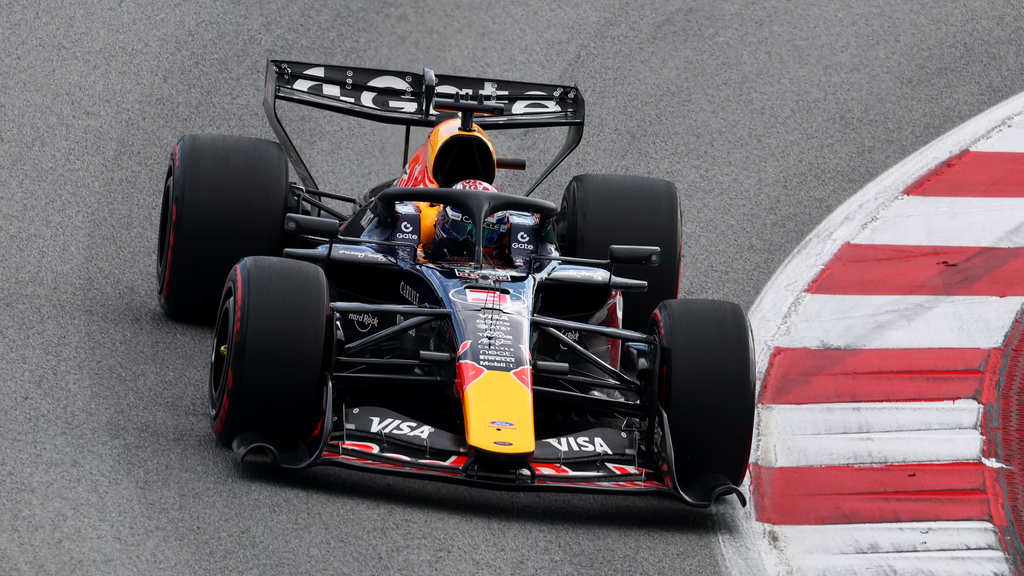
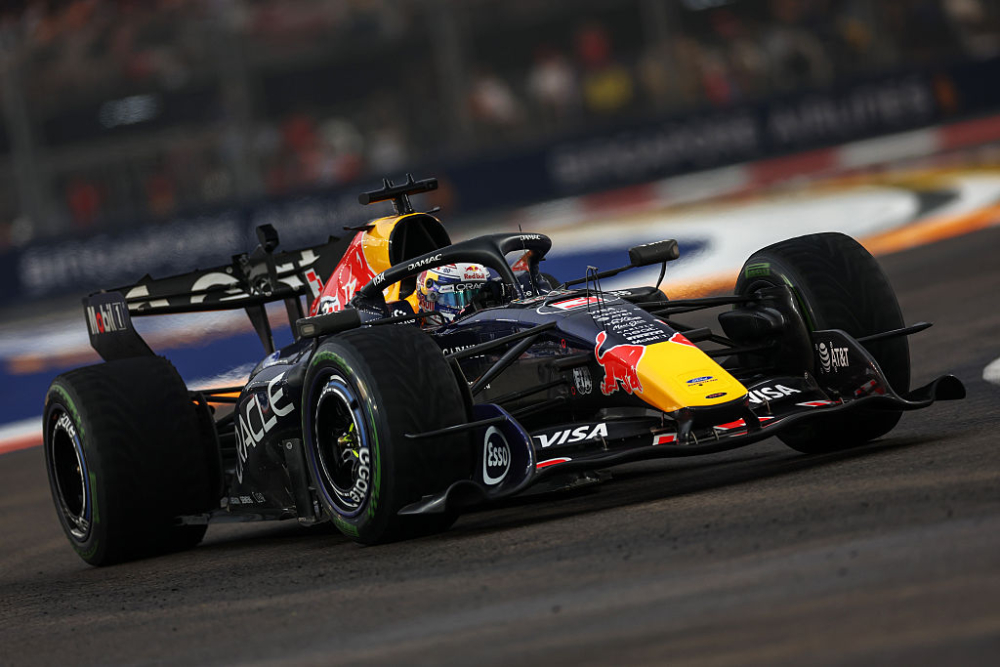
Since 2020, every IndyCar has carried an aeroscreen, a curved, bulletproof-style screen around the cockpit, designed with Red Bull Advanced Technologies to protect drivers from debris. It’s primarily a safety device, but it changed the cars’ aerodynamics and weight distribution, adding weight high up at the front and affecting airflow to the rear. Teams had to rework their set-ups when it arrived, and cockpit cooling became a new challenge for drivers.
One Car, Three Aero Set-ups
IndyCar races on street circuits, road courses and ovals of very different lengths. The same basic Dallara car is used everywhere, but teams run different aerodynamic configurations to suit each type of track.
| Set-up | Used at | Downforce | What it looks like |
|---|---|---|---|
| Road / street course | St. Petersburg, Long Beach, Road America, Laguna Seca | High | Large, multi-element wings |
| Short oval | Iowa, Milwaukee, Phoenix, Gateway | Medium to high | Oval bodywork with more wing |
| Superspeedway LOW DRAG | Indianapolis | Low | Small, flat wings for top speed |
On a street circuit like Long Beach, where corners are slow and tight, teams run as much downforce as possible, because cornering and braking matter more than top speed. On a superspeedway like Indianapolis, where cars run flat out for most of the lap, drag becomes the enemy and teams trim the wings back to reach top speeds. The Indy 500 pole record, set by Scott McLaughlin in 2024, is an average of more than 234 mph over four laps.
Short ovals sit in between. The corners are tighter, and the cars need more grip to stay stable through them, so the wings are larger than at Indianapolis. At every type of oval, teams also set the car up asymmetrically, because it only ever turns left.
Adjusting the aero during a race
Teams can’t change the wings between races on the fly, but they can make small adjustments during pit stops. The most common is changing the angle of the front wing, which shifts the car’s balance. If a driver reports that the car is understeering as the tyres wear, adding a little front wing at the next stop can help. On ovals, teams also use small aerodynamic trim pieces to fine-tune balance for changing conditions during a long race.
Weather changes the air
Air isn’t the same every day. Hot air is less dense than cold air, which means it produces less downforce and less drag. On a hot afternoon, the car may have less grip in the corners than it did in cooler morning practice. Wind matters too, especially on ovals: a headwind on the main straight slows the cars down, while a crosswind can unsettle them in the turns. Engineers track weather closely and adjust set-ups to match.
For Indy 500 qualifying, teams often run the lowest downforce they dare, “trimming out” the car for the fastest possible four-lap average. On race day they add a little downforce back for stability in traffic. It’s a vivid example of the downforce-versus-drag trade-off.
How Aero Shapes the Racing
Dirty air
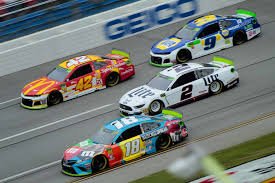
A car moving at speed leaves turbulent air behind it, often called “dirty air” or the wake. A car following closely drives into that turbulence, and its wings work less well. It loses downforce, slides more in the corners and can overheat its tyres. That’s why it’s often hard to follow closely through fast corners, even if the car behind is quicker.
The slipstream, or tow
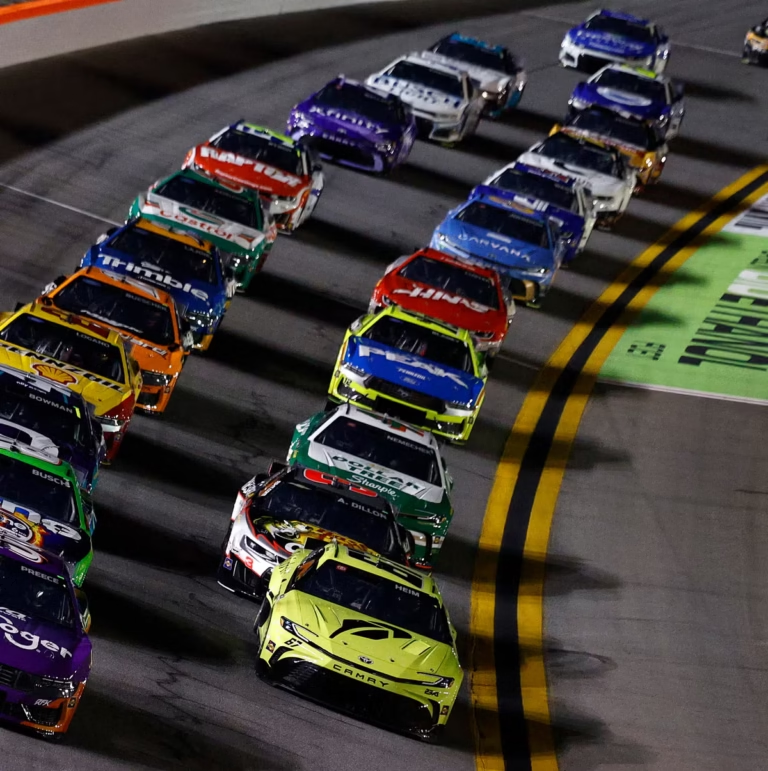
Dirty air has an upside on the straights. The car behind is in the low-pressure pocket created by the car ahead, so it faces less drag and can go faster. This is the slipstream, or “tow”, and it’s how many passes are set up. On ovals, especially at Indianapolis, the tow is so powerful that drivers sometimes back off to avoid leading on the final lap, knowing the car behind can use the slipstream to pass.
Why the 2018 kit helped
The universal aero kit introduced in 2018 was designed with racing in mind. By taking more downforce from the floor and less from the wings, it reduced how much a following car was affected by dirty air. The idea was to let cars follow more closely and create more overtaking, while also giving the cars a cleaner, more classic look inspired by the IndyCars of the 1980s and 1990s.
How aero links to tyres and brakes
Aerodynamics doesn’t work in isolation. More downforce means more grip, which lets the tyres work harder, but it can also increase tyre wear on some tracks. It also allows harder braking, because the tyres can take more load before locking. When a car loses downforce in dirty air, it slides more, overheating its tyres and making braking less stable. That’s why aero, tyres and brakes are always discussed together by engineers and commentators.
Aero is a double-edged sword in racing: the downforce that makes a car fast in the corners also makes it hard to follow another car closely.
Push-to-pass and the hybrid boost help too, giving the car behind extra power to use the tow and complete a move, usually under braking into the next corner. Our IndyCar brakes explainer covers why so many passes finish in the braking zone.
A Short History of IndyCar Aero
Throughout all of this, the basic principle has stayed the same: use the air to push the car onto the track without slowing it down too much. What has changed is how that downforce is made, how easily cars can race each other, and how well the driver is protected.
The manufacturer kit era is an interesting lesson. Letting Honda and Chevrolet design their own bodywork created variety and technical interest, but it also raised costs and led to one manufacturer having an advantage. The return to a single kit in 2018 prioritised close racing and cost control, a philosophy the IR-28 is expected to continue. Our IndyCar offseason briefing covers the new car’s testing plan.
IndyCar Aerodynamics — FAQ
Invisible, but everywhere
You can’t see aerodynamics, but it shapes almost everything an IndyCar does: how fast it corners, how late it brakes, how it looks at each track and how easily drivers can race each other. Downforce for grip, low drag for speed, and the right balance between the two: that’s the constant puzzle for every IndyCar team.
Next time you watch, compare the cars’ wings at a street race with those at Indianapolis, and watch how drivers use the tow on the straights. You’ll be seeing aerodynamics at work.