IndyCar 2027: Silly Season Explodes as Dixon Quits Ganassi
Alex Palou’s title is barely sealed and the 2026–27 driver market has already blown wide open — Scott Dixon walking away from Chip Ganassi Racing after more than two decades, Mick Schumacher arriving in IndyCar, and an Arrow McLaren superteam taking shape. Here’s every confirmed move.
IndyCar 2027: Silly Season Explodes
Dixon quits Ganassi for Arrow McLaren, Mick Schumacher arrives, and the 2027 grid takes shape. Every confirmed move.
The 2026 IndyCar season is done. Álex Palou wrapped up another dominant championship — his fifth title in six years — with the finale at Laguna Seca, and you can find the complete picture in our 2026 IndyCar final standings. But the on-track story has already been overtaken by the off-track one, because IndyCar’s 2027 “silly season” has erupted into one of the most dramatic driver markets the series has seen in years.
Leading it is a genuine shock: Scott Dixon, a six-time champion and the most decorated active driver in the paddock, is leaving Chip Ganassi Racing after more than two decades to join Arrow McLaren. Around that seismic move, a cascade of signings has reshaped the grid — including the arrival of a famous Formula 1 name. This is World of Speed’s running guide to every confirmed change for 2027.
Why This Is the Big Story Right Now
IndyCar’s competitive season may be over, but its most consequential period is arguably just beginning. With no races to report until March, the paddock’s attention has swung entirely to the driver market — and this offseason has delivered a genuinely blockbuster set of moves that will define the look of the grid for 2027 and beyond.
The reason it matters so much is continuity. IndyCar’s leading teams tend to keep their star drivers for years; wholesale change at the very top is rare. So when a driver of Scott Dixon’s stature switches allegiance, and a name as globally recognisable as Schumacher enters the series, it’s not just gossip — it’s a reshaping of the sport’s power structure. For fans trying to keep track of who’s driving what next year, here’s the confirmed picture, clearly separated from the rumours that still swirl around a few unfilled seats.
For newcomers to the term, “silly season” is motorsport’s nickname for the period — usually late in and just after a season — when driver contracts expire and the market for seats opens up. It’s called silly because of the sheer volume of rumour, denial and speculation that swirls before deals are actually signed. Most winters produce a handful of moves; occasionally, as now, the dominoes fall in a way that reshapes the competitive order. 2027 is firmly in the latter category.
This guide focuses on confirmed 2027 signings and moves as published on the official entry list. IndyCar silly season always generates speculation about seats that aren’t yet settled; where a seat remains genuinely open or a move is only rumoured, we say so rather than presenting it as done.
The Confirmed Moves at a Glance
Five significant, confirmed driver changes headline the 2027 silly season. Together they touch four different teams and set off a chain reaction of seat-swaps that few would have predicted at the start of 2026.
| Driver | From | To (2027) |
|---|---|---|
| Scott Dixon 6× CHAMP | Chip Ganassi Racing | Arrow McLaren |
| Felix Rosenqvist | Meyer Shank Racing | Arrow McLaren |
| Mick Schumacher NEW | F1 / WEC background | Meyer Shank Racing |
| Marcus Armstrong | MSR No. 66 | MSR No. 60 |
| Conor Daly | Part-time | Dreyer & Reinbold (full-time) |
The departures that made room are just as notable: Christian Lundgaard and Nolan Siegel both leave Arrow McLaren to accommodate the incoming stars. Meanwhile Palou stays put at Chip Ganassi Racing, anchoring the team that has become the sport’s benchmark — a stability that makes Dixon’s exit all the more striking.
The chain reaction explained
What makes a silly season “explode” rather than simply tick over is the domino effect, and 2027’s is a textbook example. Arrow McLaren’s decision to chase Dixon and Rosenqvist created two vacancies that pushed Lundgaard and Siegel out; Rosenqvist’s exit from Meyer Shank opened the door that Mick Schumacher walked through; and Schumacher’s arrival triggered Armstrong’s internal switch of cars. One ambitious move at the top of the market ripples all the way down it, which is why a single signing can reshape three or four teams at once. It’s the human side of the sport that keeps fans engaged through a long winter with no racing to watch.
Arrow McLaren Builds a Superteam
The centrepiece of the whole silly season is Arrow McLaren’s aggressive rebuild. The team has assembled what looks, on paper, like one of the strongest line-ups on the grid: Pato O’Ward, the fan-favourite Mexican who has long been the team’s spearhead; Felix Rosenqvist, returning to the squad where he raced earlier in his career; and, most dramatically, Scott Dixon.
Dixon’s move cannot be overstated. He has spent the overwhelming majority of his IndyCar career at Chip Ganassi Racing, winning six drivers’ titles and the 2008 Indianapolis 500 in the process, and had become synonymous with the team. Prising him away is a statement of intent from Arrow McLaren — a signal that it intends to challenge Ganassi and Penske not just occasionally, but as the establishment’s equal.
Signing a six-time champion who had spent his entire prime with one team is the kind of move that redraws the sport’s hierarchy overnight.
The flip side of Arrow McLaren’s gain is what it means for Chip Ganassi Racing. Losing a driver of Dixon’s calibre and institutional knowledge — a benchmark against whom team-mates measured themselves for two decades — leaves a hole no signing can fully replace. Ganassi still has the reigning champion in Álex Palou, which cushions the blow enormously, but the team enters 2027 with a markedly different look at the top of its driver roster. How it rebuilds around Palou will be one of the season’s quieter but most important storylines.
The obvious question is how three alpha drivers coexist in one garage. Team dynamics with multiple champions and race-winners are notoriously delicate, and managing egos, data-sharing and preferential treatment will be a defining challenge of Arrow McLaren’s 2027. But as a pure talent haul, it’s spectacular — and it instantly makes the team appointment viewing at every round. To understand how a driver reaches this level in the first place, our explainer on how to become a race car driver traces the ladder that leads here.
New & Returning Faces
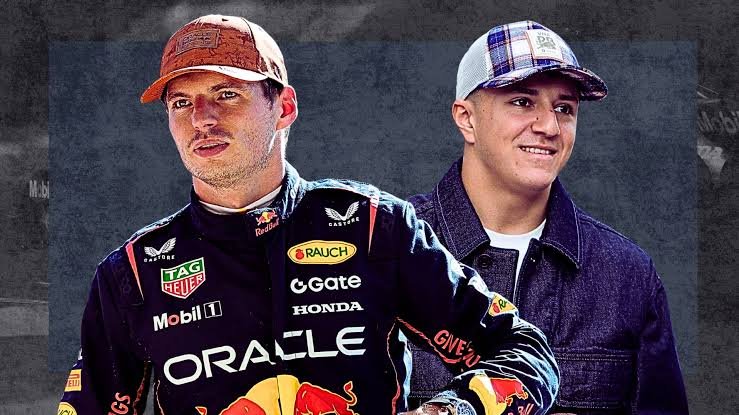
If Dixon’s move is the biggest competitive story, the arrival of Mick Schumacher is the biggest headline for the wider sporting world. The son of seven-time Formula 1 world champion Michael Schumacher, Mick has signed a multi-year deal with Meyer Shank Racing to drive the No. 66 Honda, bringing one of motorsport’s most famous surnames to the American open-wheel scene.
It’s a significant coup for IndyCar’s profile. Schumacher arrives with genuine pedigree — a Formula 2 championship and a stint in Formula 1 behind him, plus sports-car experience — and his presence will draw a wave of European attention to a series always keen to grow its international audience. He steps into a seat vacated by Marcus Armstrong, who himself stays within Meyer Shank Racing, sliding across to the No. 60 car in a straightforward internal reshuffle.
Expectations, though, should be calibrated carefully. IndyCar is a notoriously tough series to enter cold: the mix of ovals, street circuits and road courses, the spec-car nature of the machinery and the depth of experienced rivals mean rookies rarely dominate immediately, however strong their pedigree. Schumacher will be learning ovals in particular largely from scratch, and Meyer Shank Racing, while a race-winning operation, is not resourced like the Ganassi and Penske giants. The smart view is to treat 2027 as a foundation year — a chance for him to acclimatise before the 2028 technical reset levels the playing field somewhat for everyone.
Conor Daly’s full-time return
The other feel-good story is Conor Daly, the popular American returning to full-time competition with Dreyer & Reinbold Racing in the No. 24. For the team, it’s a landmark: Dreyer & Reinbold is stepping back up to a full-season programme for the first time since 2012, a genuine expansion of the grid rather than a simple driver swap. A fuller, more competitive entry list is exactly what any healthy championship wants — and it’s a welcome counterpoint to seasons where car counts have been a concern.
Big international names bring eyeballs. Just as MotoGP and Formula 1 trade on global star power, IndyCar landing a Schumacher gives it a marketing asset that transcends lap times — a storyline casual fans worldwide will follow regardless of where he finishes. For a series pushing to grow abroad, that visibility is arguably worth as much as the on-track performance.
The 2027 Grid So Far
Here’s how the confirmed full-season line-ups look for 2027 based on the published entry list. A handful of seats across the grid remain subject to confirmation, and non-chartered one-off entries for the Indianapolis 500 will be added separately, but the core of the field is set.
| Team | Engine | Confirmed drivers |
|---|---|---|
| Chip Ganassi Racing | Honda | Álex Palou, Kyffin Simpson |
| Team Penske | Chevrolet | Josef Newgarden, Scott McLaughlin, David Malukas |
| Arrow McLaren | Chevrolet | Pato O’Ward, Felix Rosenqvist, Scott Dixon |
| Andretti Global | Honda | Kyle Kirkwood, Marcus Ericsson, Will Power |
| Meyer Shank Racing | Honda | Marcus Armstrong, Mick Schumacher |
| Rahal Letterman Lanigan | Honda | Graham Rahal, Louis Foster |
| Ed Carpenter Racing | Chevrolet | Alexander Rossi, Christian Rasmussen |
| Dreyer & Reinbold | Honda | Conor Daly |
One eye-catching detail: Will Power, a former champion long associated with Team Penske, lines up at Andretti Global for 2027 — another example of how far this silly season’s ripples have spread through the established order. The net effect is a grid with more big-name movement than IndyCar has seen in a single offseason for a long time. For the championship these drivers are all chasing, and how it’s decided, our explainer on how racing championships are scored is a handy reference.
It’s worth stressing that the grid is not yet fully locked. IndyCar entry lists evolve through the winter as smaller teams finalise budgets and sponsorship, and a few seats — particularly at the back of the field and in any expansion programmes — remain to be confirmed. The Indianapolis 500 will, as ever, swell the field with one-off entries in May. But the headline seats at the front-running teams are settled, and it’s those that define the shape of the 2027 title fight.
The Bigger Picture — A Season of Endings
There’s a technical subplot that makes 2027 even more significant than the driver moves suggest: it will be the final season for the current car. IndyCar has confirmed that 2027 marks the last year of the long-serving Dallara DW12 chassis and its 2.2-litre twin-turbo V6 hybrid powertrain. From 2028, a new Dallara-built chassis package and a larger 2.4-litre V6 engine formula take over — the biggest technical reset the series has undertaken in more than a decade.
That backdrop adds an intriguing layer to the 2027 season. Every driver moving teams this offseason is doing so knowing they get one year in the familiar machinery before everyone starts again with new equipment in 2028. For a newcomer like Schumacher, it means learning a car that’s about to be retired; for a veteran like Dixon, it’s a final chance to master a package he knows intimately before the reset. If you’re curious about the hardware itself, our explainers on how car engines work and turbo versus naturally aspirated engines unpack the fundamentals behind these power units.
Strategically, that looming reset shapes decision-making in subtle ways. Teams must decide how much development effort to pour into a car with only one season left versus diverting resources towards the all-new 2028 package. Drivers signing multi-year deals are effectively betting on their team’s ability to nail the transition, not just win in familiar machinery. In that sense, the moves confirmed this offseason are as much about positioning for 2028 and beyond as they are about 2027 itself — which makes the calibre of the signings even more telling.
A tighter, charter-focused grid
There’s also a regulatory shift worth flagging: from 2027, non-chartered entries are restricted to the Indianapolis 500 only. In plain terms, the full championship becomes a chartered-teams affair, with the door to one-off entries reserved for the sport’s crown-jewel event. It’s a move designed to protect the value of a full-season commitment — and it reinforces why a full-time expansion like Dreyer & Reinbold’s return is such a positive signal. To understand the governing framework behind decisions like these, our primer on motorsport’s governing bodies gives useful context on how rulebooks take shape.
IndyCar’s 2026 champion is settled, but its 2027 story is only just beginning. A superteam at Arrow McLaren, a Schumacher on the grid, a beloved veteran on the move and a final farewell to the DW12 combine to make this one of the most compelling offseasons in years — and a genuine reason to be excited for March.
IndyCar 2027 Silly Season — FAQ
The offseason that reshaped the grid
Championships are won on track, but grids are built in the offseason — and IndyCar’s 2026–27 silly season has been a blockbuster. Scott Dixon ending a career-defining association with Chip Ganassi Racing, an Arrow McLaren superteam assembling around Pato O’Ward, and a Schumacher choosing American open-wheel racing: any one of these would headline a normal winter. Together, they make this one of the most eventful offseasons in the series’ modern history.
Beyond the star names, the deeper significance is what this churn says about IndyCar’s health. Teams don’t pay to prise six-time champions from rivals, and famous international drivers don’t cross the Atlantic, for a series in decline. The intensity of this silly season is itself a vote of confidence in where the championship is heading — and a reminder that, for all Palou’s on-track dominance, the competitive picture behind him is anything but static.
And it all sets up a 2027 season with a poignant edge — the last dance for the DW12 before IndyCar’s 2028 technical reset. New team-mates, new rivalries, familiar machinery for one final year: the racing can’t start soon enough. We’ll keep this guide updated as the remaining seats are confirmed, and you can revisit how the champion sealed 2026 in our final standings report.