MotoGP Points System Explained: How the 2026 Title Is Decided
25 for a Grand Prix win, 12 for a Sprint win, 37 a weekend. Here’s how MotoGP scoring works, what happens in a tie, how red flags change the points, and what it all means for Jorge Martín and Marc Márquez, two points apart with six rounds left.
MotoGP Points System: How the Title Is Decided
Grand Prix and Sprint points, tie-breaks, red flags and the 2026 title maths.
MotoGP has a simple idea at its core: finish high, score more. But since the Saturday Sprint arrived in 2023, every weekend has two points-paying races, and that changes how a title is won. A rider can now lose a championship despite winning far more Grands Prix than his rival. It happened in 2024.
This guide covers the MotoGP points system as it stands in 2026: the points for each position, how the Sprint fits in, the tie-break rule, what happens when a race is red-flagged, and the separate championships for teams and manufacturers. Then we apply it to this year’s fight, where Jorge Martín leads Marc Márquez by two points with 222 still to play for. For a wider look at scoring across motorsport, see our guide to how racing championships are scored.
MotoGP Points per Position: Grand Prix and Sprint
Every MotoGP weekend has two races that pay championship points. The Sunday Grand Prix is the main event and pays points to the top 15 finishers. The Saturday Sprint, roughly half the distance, pays points to the top nine. A rider has to be classified as a finisher to score; crash out and you get nothing, however well you were going.
| Position | Grand Prix (Sunday) | Sprint (Saturday) | Weekend Total |
|---|---|---|---|
| 1st | 25 | 12 | 37 MAX |
| 2nd | 20 | 9 | 29 |
| 3rd | 16 | 7 | 23 |
| 4th | 13 | 6 | 19 |
| 5th | 11 | 5 | 16 |
| 6th | 10 | 4 | 14 |
| 7th | 9 | 3 | 12 |
| 8th | 8 | 2 | 10 |
| 9th | 7 | 1 | 8 |
| 10th | 6 | — | 6 |
| 11th | 5 | — | 5 |
| 12th | 4 | — | 4 |
| 13th | 3 | — | 3 |
| 14th | 2 | — | 2 |
| 15th | 1 | — | 1 |
The “Weekend Total” column assumes a rider finishes in the same place in both races, which rarely happens, but it shows the shape of the system. The gap between first and second is big on Sunday (five points) and smaller on Saturday (three). Below third, the steps shrink to one or two points, so a rider fighting for the title loses relatively little by settling for fourth instead of crashing while chasing third.
The Grand Prix scale hasn’t changed in decades; it’s the same 25-20-16 used long before the Sprint existed. With 22 rounds on the 2026 calendar, the most any rider could score in a season is 814 points, according to MotoGP’s official explainer. Nobody comes close, because nobody wins everything.
How the MotoGP Sprint Changed the Points
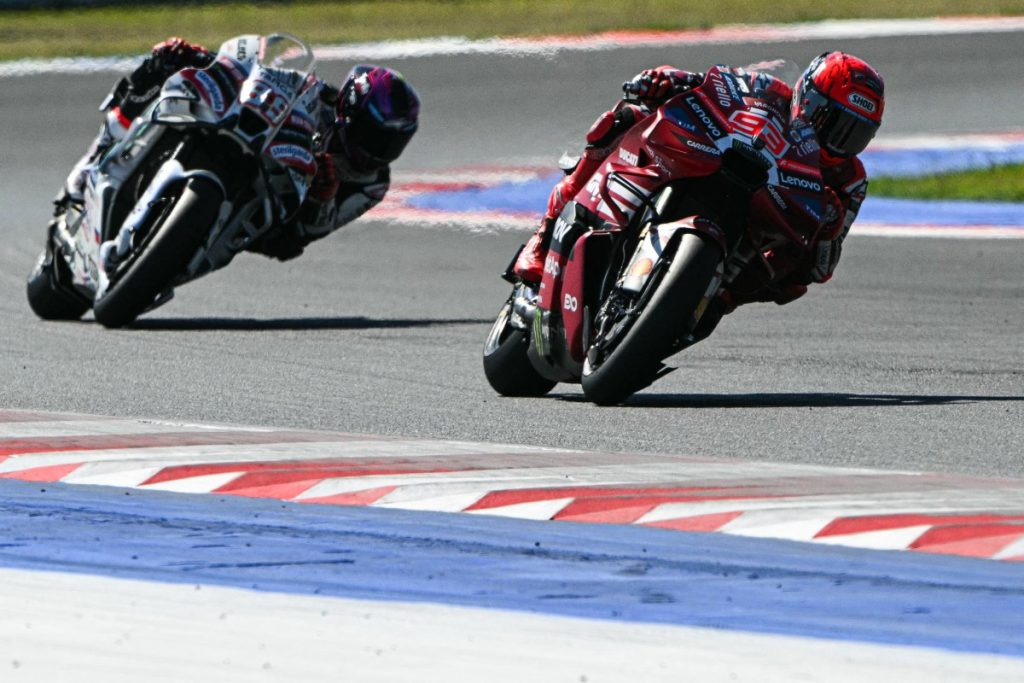
The Sprint runs at 15:00 local time on Saturday over about half the Grand Prix distance, which usually means around 20 minutes of racing. At Mandalika this week, for example, the Sprint is 13 laps and the Grand Prix 27. Bikes carry 12 litres of fuel instead of 22, and riders get three track-limits warnings before a penalty instead of five, according to MotoGP’s own guide to the Sprint.
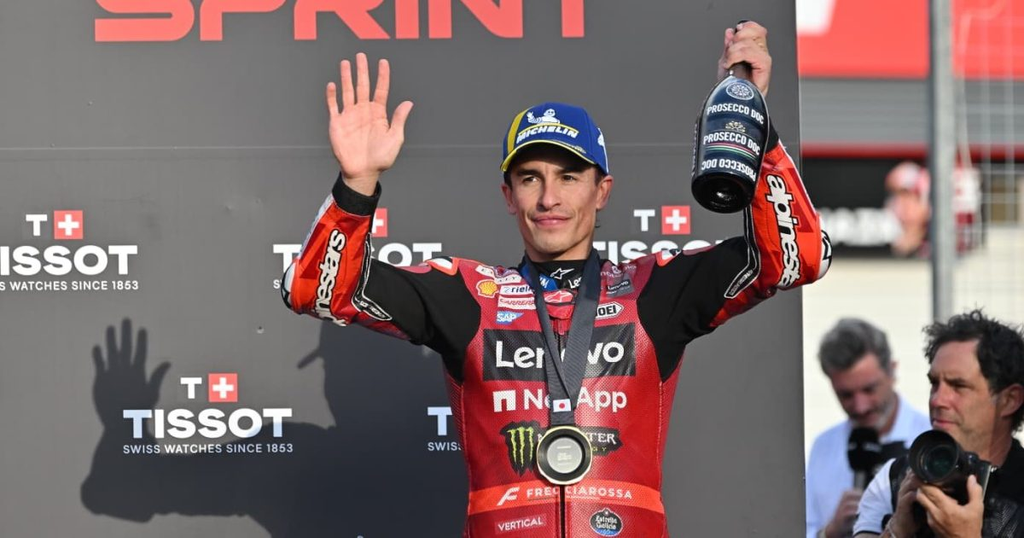
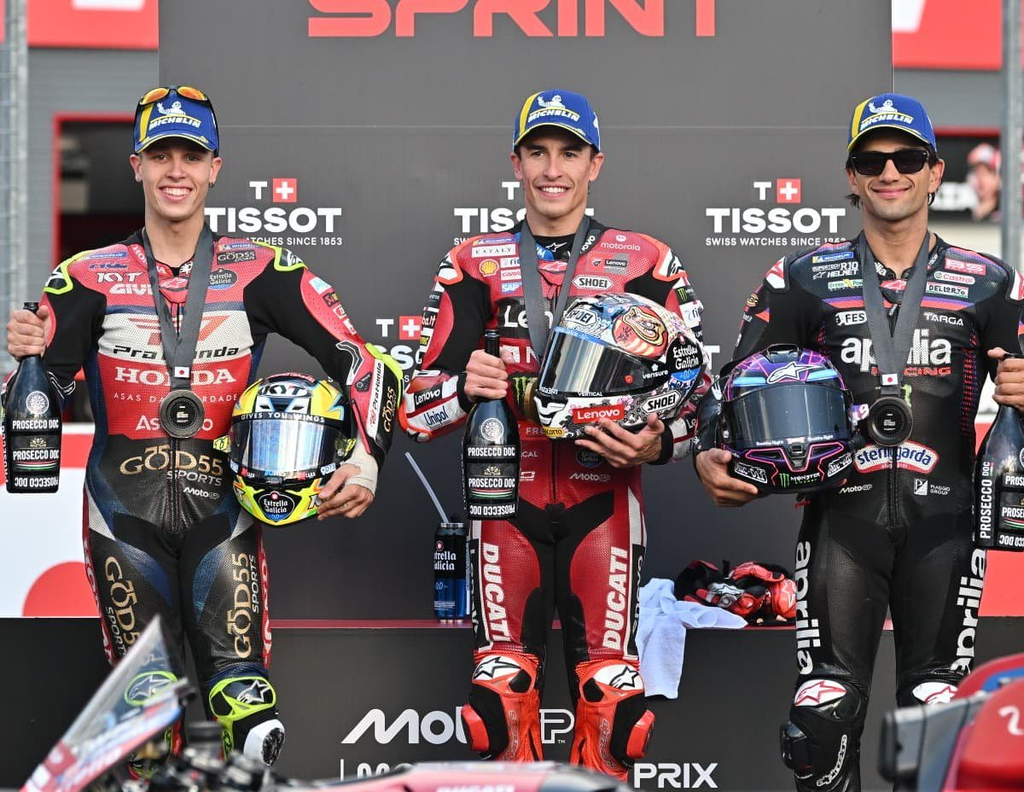
Before 2023, a weekend was worth 25 points at most. Now it’s 37, and about a third of every rider’s possible score comes from Saturday. That’s why the Sprint matters so much in a close fight. Look at how Márquez closed on Martín at Motegi: a Sprint win on Saturday and a Grand Prix win on Sunday turned a 12-point deficit into two, as we covered in our report on Márquez’s Motegi Sprint win.
In the record books, Sprint victories are counted separately from Grand Prix victories. When people quote a rider’s “wins”, they almost always mean Sunday races. That distinction matters again for the tie-break, below.
The Sprint also adds risk. Two races mean two starts, two first laps and two chances to crash, and the shorter format pushes riders to attack early. Tyres are part of it too: at Motegi, Michelin withdrew the soft rear for Sunday after it blistered in the Sprint. Our explainer on what causes crashes in motor racing covers why the opening laps are so dangerous.
What Happens if Two Riders Tie on Points?
If two riders finish the season level on points, the regulations look at the quality of their results. The official wording is that positions are decided “on the basis of the number of best results in the races”: first count the wins, and if those are equal, count second places, then thirds, and so on.
The important detail is that Sprint wins are not a deciding factor. MotoGP’s Sprint guide says so directly, so the countback only uses Grand Prix results. If the riders are still identical after every finishing position, the one who achieved their best result more recently wins the tie.
No MotoGP title has been decided by a tie since the Sprint arrived. But with Martín and Márquez two points apart, the countback isn’t purely theoretical this year. It also matters for the title maths: a leader is only certain of the championship when his lead is greater than the points left. If the lead exactly equals the points remaining, the tie-break decides.
Two races a weekend, but only one of them counts in a tie. A Sprint win is worth 12 points and nothing more.
Red Flags and Half Points in MotoGP
When a Grand Prix is stopped, the number of laps completed decides what happens next. The rules below are from MotoGP’s explainer on red-flagged races, and they’re stricter for the premier class than for Moto2 and Moto3, which use a two-thirds threshold.
| When the red flag comes out (MotoGP) | What happens |
|---|---|
| Fewer than 3 laps completed | Race declared null and void; a completely new race is run |
| 3 laps or more, but under three-quarters distance | Race is incomplete and gets restarted |
| Three-quarters distance or more | Race counts as complete, full points |
| Restart impossible, under 50% completed | HALF POINTS |
| Restart impossible, 50% or more completed | Full points |
Half points are rare, usually the result of heavy rain or a track that can’t be cleared in time. But in a title fight decided by single digits, a shortened race can swing things: half of a 25-point win is 12.5, a number that can’t be made up by finishing one place higher elsewhere. Our guides to how racing flags work and how laps are counted explain the procedures that sit behind these decisions.
Constructors’ and Teams’ Championships
The riders’ title gets the headlines, but MotoGP runs other championships off the same results.
The constructors’ championship rewards manufacturers: Ducati, Aprilia, KTM, Honda and Yamaha. In each race, only the best-placed rider on each make scores for that manufacturer, using the same points scale. So if Ducatis finish first, second and third, Ducati collects only the winner’s 25. That’s why a manufacturer with one fast rider can stay competitive against one with a crowd of bikes on the grid. Constructor results also feed MotoGP’s concessions system, which gives struggling manufacturers more testing and development freedom. That matters for manufacturers rebuilding their bikes, such as Yamaha with its V4 project.
The teams’ championship adds up the points of both riders in each team. Here depth matters: a team with two consistent points scorers can beat one with a single star and a struggling teammate. Satellite outfits such as LCR Honda are scored as separate teams from the factory squads.
Independent teams can win the big one too. In 2024 Jorge Martín, riding for Pramac, became the first independent team rider to win the MotoGP title in the MotoGP era. That season is also the best example of how the modern points system works, which brings us to this year.
The 2026 MotoGP Title Maths
First, the lesson from 2024. Francesco Bagnaia won 11 Grands Prix that year, the best record of his career. Martín won three. Yet Martín took the title, 508 points to 498, because he kept scoring heavily in Sprints and finished far more often; Bagnaia had eight non-finishes across the season. Under the modern system, consistency over two races a weekend can beat raw Sunday speed.
Now 2026. After Motegi, the top of the standings looks like this:
| Pos | Rider | Bike | Points | Gap |
|---|---|---|---|---|
| 1 | Jorge Martín LEADER | Aprilia | 333 | — |
| 2 | Marc Márquez | Ducati | 331 | −2 |
| 3 | Marco Bezzecchi | Aprilia | 284 | −49 |
| 4 | Pedro Acosta | KTM | 243 | −90 |
| 5 | Ai Ogura | Aprilia | 237 | −96 |
| 6 | Fabio Di Giannantonio | Ducati | 230 | −103 |
Six rounds remain: Mandalika (9–11 October), Phillip Island (23–25 October), Sepang (30 October–1 November), Qatar (6–8 November, moved from April), Portimão (20–22 November) and Valencia (27–29 November). Six weekends at 37 points each is 222.
| After round | Points still available | Lead needed to be certain |
|---|---|---|
| Mandalika | 185 | 186+ |
| Phillip Island | 148 | 149+ |
| Sepang | 111 | 112+ |
| Qatar | 74 | 75+ |
| Portimão | 37 | 38+ |
| Valencia | 0 | Any lead |
Working through it: the most anyone can gain on a rival in one weekend is 37 points, if they win both races and the rival scores nothing. Starting two points ahead, the earliest Martín could possibly clinch is Sepang, and only with three perfect weekends while Márquez scores zero. For Márquez, starting two behind, the earliest is Qatar. Realistically, with two riders this evenly matched, the title is heading for Portimão or Valencia.
If Márquez wins both races at Mandalika and Martín finishes second in both, Márquez gains only eight points (37 to 29) and leads by six. If Márquez crashes on Sunday, as he has in every Mandalika Grand Prix he’s started, while Martín wins, the swing can be 25 points or more in a single race.
Bezzecchi, 49 behind, is still mathematically alive and will be for several rounds yet. Acosta, Ogura and Di Giannantonio are also still in it on paper, but each would need both leaders to have serious trouble. Bezzecchi has also had setbacks this year, including his Czech GP ban. For how the fight looked a month ago, see our Austria preview, when Márquez and Martín were level on points, and our report from the round before Motegi, when Acosta finally won and Martín led by 12.
MotoGP Points vs F1 Points
Both series pay 25 points for a main-race win, but the similarities mostly stop there.
| Rule | MotoGP | Formula 1 |
|---|---|---|
| Main race win | 25 | 25 |
| Main race points places | Top 15 (25-20-16-13-11-10-9-8-7-6-5-4-3-2-1) | Top 10 (25-18-15-12-10-8-6-4-2-1) |
| Sprint races | Every round | Selected rounds only |
| Sprint win | 12 | 8 |
| Sprint points places | Top 9 | Top 8 |
| Maximum per weekend | 37 | 33 (Sprint weekends) |
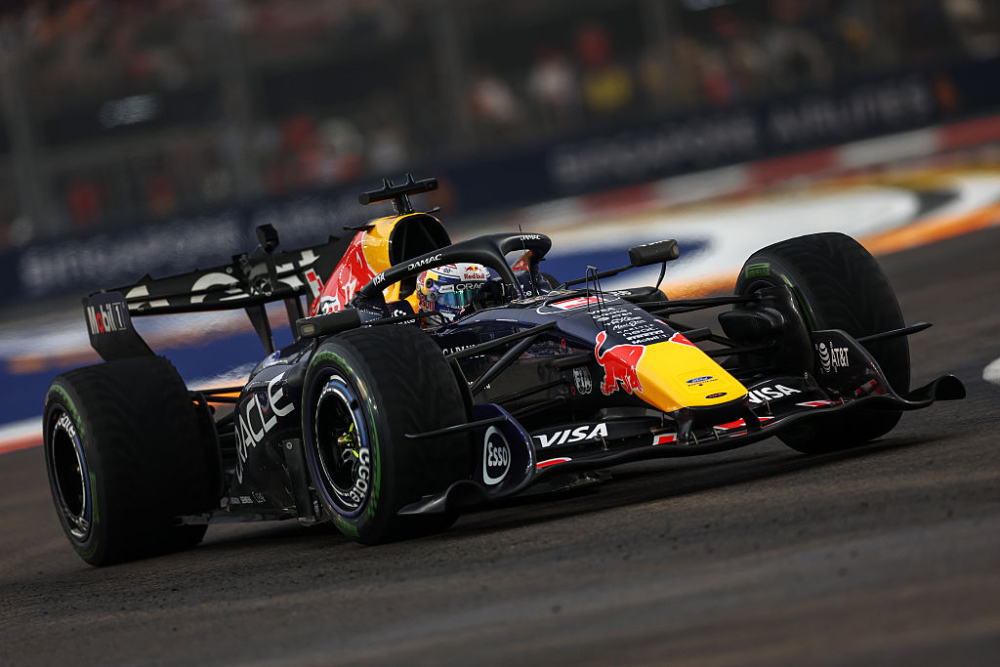
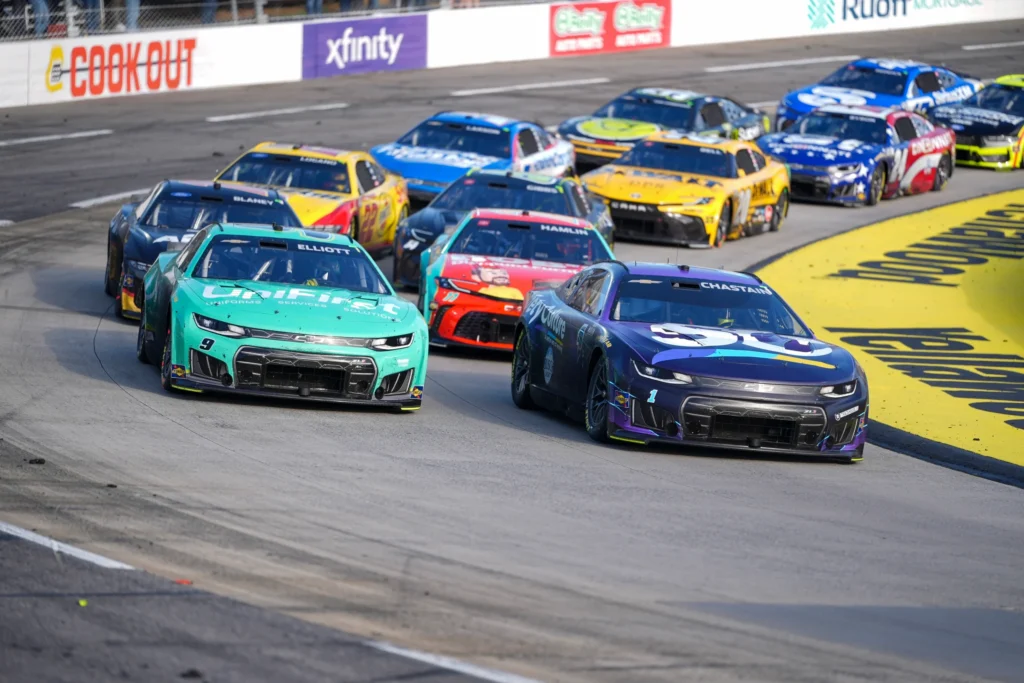
Because MotoGP has a Sprint every weekend and pays deeper into the field, steady points-scoring is worth more relative to wins than in F1. A MotoGP rider who finishes second in both races takes 29 points, nearly 80% of a perfect weekend. F1 is going through its own title run-in right now; our piece on how Kimi Antonelli can clinch the 2026 F1 title applies the same “lead greater than points remaining” logic. And if you follow stock cars too, the NASCAR points standings show a completely different approach, with stage points and a playoff reset.
MotoGP Points System — FAQ
37 points a weekend, and every one counts
The MotoGP points system rewards winning, but since the Sprint arrived it rewards finishing even more. With Martín and Márquez two points apart and 222 left, a single crash could decide the title, and if they somehow end level, only Sunday results will separate them.
Mandalika is next, with the Sprint on Saturday and the Grand Prix on Sunday, both at 08:00 UK time. Follow World of Speed for results and updated standings.