Richmond NASCAR 2026 Strategy Analysis: Tyre Conservation and Pit Windows
Richmond is won as much with the right rear tire and the stopwatch as it is with raw speed. This strategy guide breaks down tire falloff, green-flag pit cycles, fresh-rubber undercuts, caution timing and the lessons recent Richmond races gave 2026 crew chiefs.
Richmond strategy starts with a simple truth: the fastest lap is rarely the most important lap.
The 0.75-mile D-shaped oval punishes drivers who abuse the rear tires early in a run. That makes pace management, green-flag pit timing and traffic every bit as important as qualifying position.
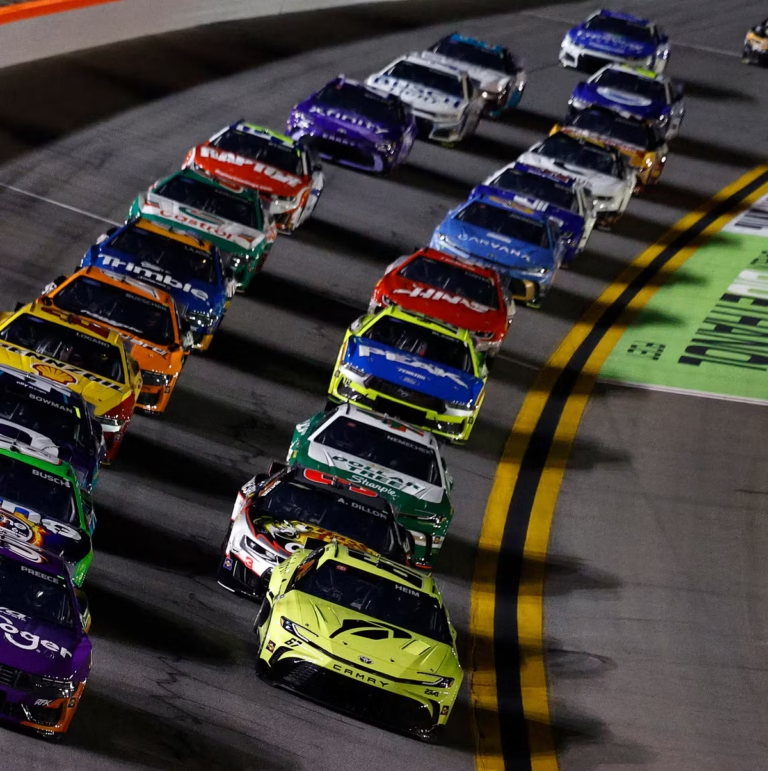
Recent Richmond races give crew chiefs unusually clear evidence. In 2025, Austin Dillon stopped for fresh rubber on Lap 341, while Alex Bowman and Ryan Blaney waited four more laps. Bowman had slightly newer tires, but traffic forced him to work the rear harder and he could not erase Dillon’s advantage before the finish.
What Is the Best Strategy for Richmond NASCAR?
The best Richmond strategy is to protect the rear tires, stay flexible on pit timing and keep at least one fresh set available for a late caution when the tire inventory allows it. Green-flag undercuts can be powerful because fresh tires create a major lap-time advantage, but pitting too early can leave a driver exposed to traffic or an untimely yellow.
Richmond rewards patience because the track creates enough tire falloff to make the shape of a run matter.
A driver who gains two positions in the first five laps by sliding the rear tires may pay for it over the next 30. A driver who protects the rubber can appear slower early and become much stronger later.
That is why Richmond strategy is not simply about counting laps to the fuel window. It is about deciding when the lap-time loss on old tires has become greater than the time lost by pitting.
For the basics, see our pit-stop guide, grip explainer and car-handling guide.
Why Tyre Conservation Is the Core Richmond Skill
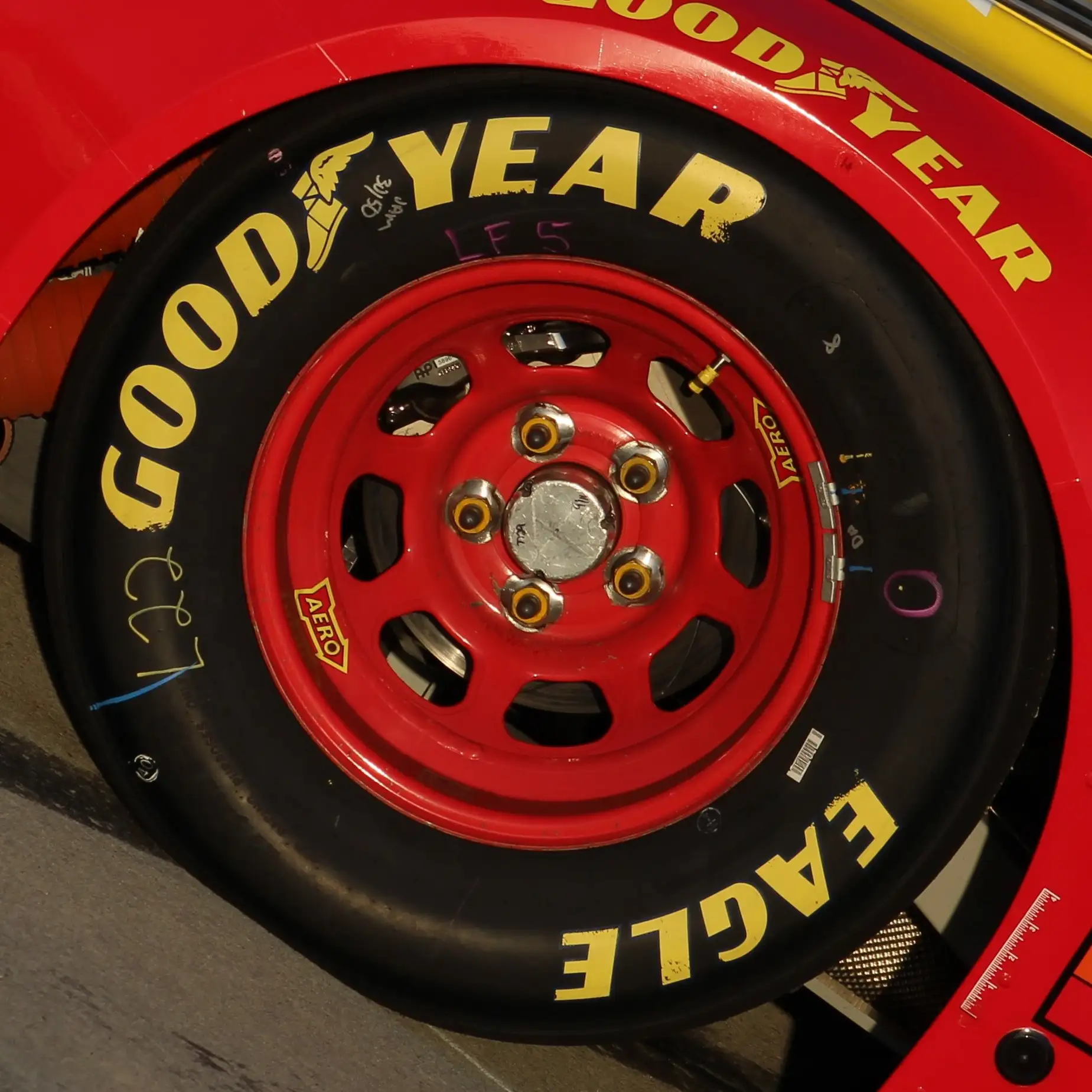
Richmond’s worn, relatively flat surface creates meaningful tire degradation. Drivers must control wheelspin and corner-entry aggression so the rear tires remain useful deep into a run. A car that is spectacular for five laps can become average by Lap 30 if the driver uses too much rear grip.
Rear-wheel spin is expensive
Richmond asks a driver to rotate the car through a long corner and then accelerate without overloading the rear tires.
If the driver adds throttle too quickly, the rear wheels can spin. That generates heat and strips grip from the tire.
The immediate lap may still be quick. The problem appears later when the car becomes loose on exit and the driver has to wait longer before returning to full throttle.
Corner entry matters just as much
Saving tires does not mean driving slowly everywhere.
A driver can protect the rear by braking in a straighter line, rolling speed through the center and avoiding unnecessary steering correction.
If the car enters too hard, the driver may have to catch the rear or scrub the front tires. Both cost rubber.
The “fast early” trap
Richmond practice often produces misleading headlines because a car can post an excellent first lap of a run while using the tires too aggressively.
The more useful comparison is the 10-, 20- or 30-lap average.
That is why crew chiefs study the rate of falloff, not just the fastest time.
Traffic accelerates the problem
In 2025, Bowman said lapped traffic made him work the rear tires harder during his pursuit of Dillon.
That is a perfect Richmond example. Passing a slower car may require a lower entry, more throttle on exit or a move to a less comfortable groove.
Every one of those choices can spend tire life.
Our slipstream explainer covers the aerodynamic side of following traffic, while our downforce guide explains why dirty air can change front grip.
What Is the Pit Window at Richmond Raceway?
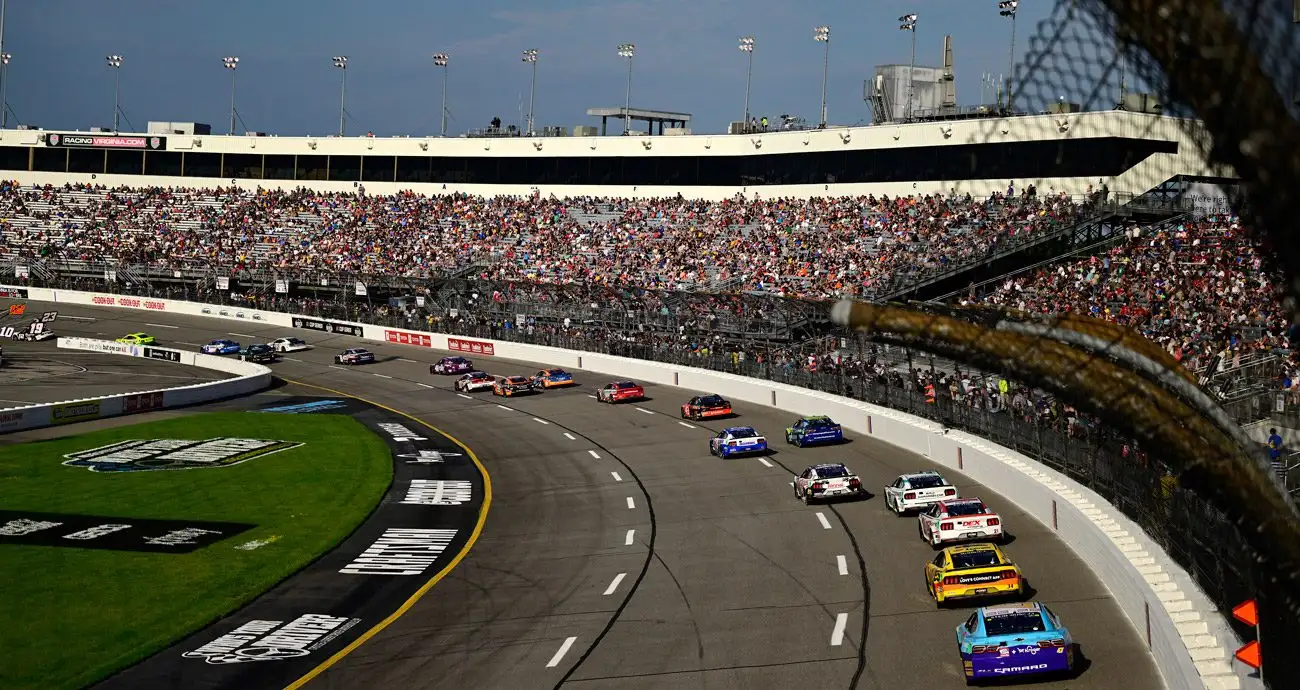
There is no single official Richmond pit window that applies to every green-flag run. The practical window is created by fuel range, tire falloff, traffic and caution risk. Recent races show that teams can pit several laps apart and still be on competitive strategies.
This distinction matters because many schedule-style articles treat a pit window as if it were a fixed number.
At Richmond, the tire can make the window “open” before fuel requires a stop.
The 2025 final cycle as a real example
Dillon stopped on Lap 341 of 400 for fresh tires.
Bowman and Blaney stayed out four more laps before pitting on Lap 345.
On paper, their later stop gave them slightly fresher tires for the finish. In practice, Dillon gained enough track position and Bowman encountered enough traffic that the four-lap tire advantage did not produce the pass.
That is Richmond strategy in one sequence: fresh tires matter, but the time lost or gained in traffic can matter more.
Why an exact fuel number can mislead
Fuel mileage changes with caution laps, throttle usage and the amount taken at previous stops.
A car running in clean air can consume differently from one fighting traffic. Drivers can also save fuel by lifting earlier and spending less time at full throttle.
Therefore, a crew chief thinks in ranges rather than one magic lap.
Illustrative Richmond window models
| Strategy situation | Typical decision | Potential gain | Main risk |
|---|---|---|---|
| Long green run | Pit when tire falloff begins costing more than pit-road loss | Undercut slower cars | Caution immediately after stop |
| Leader in clean air | Extend if lap times remain stable | Protect track position | Rivals gain on fresh rubber |
| Midfield traffic | Short-pit to find clear track | Fresh tires + clean air | Rejoin behind another traffic pack |
| Late caution | Four tires if enough laps remain | Large restart grip advantage | Lose front-row track position |
Richmond has historically rewarded multiple four-tire stops
NASCAR’s 2024 strategy analysis noted that four of the previous five Richmond-winning strategies used seven or more pit stops, with four tires taken on each stop.
That was during a year with an option-tire experiment, so the exact number should not be copied directly into 2026 planning.
The larger lesson remains relevant: Richmond creates enough tire wear that teams frequently value fresh rubber over simply extending fuel.
How Green-Flag Pit Stops Work at Richmond
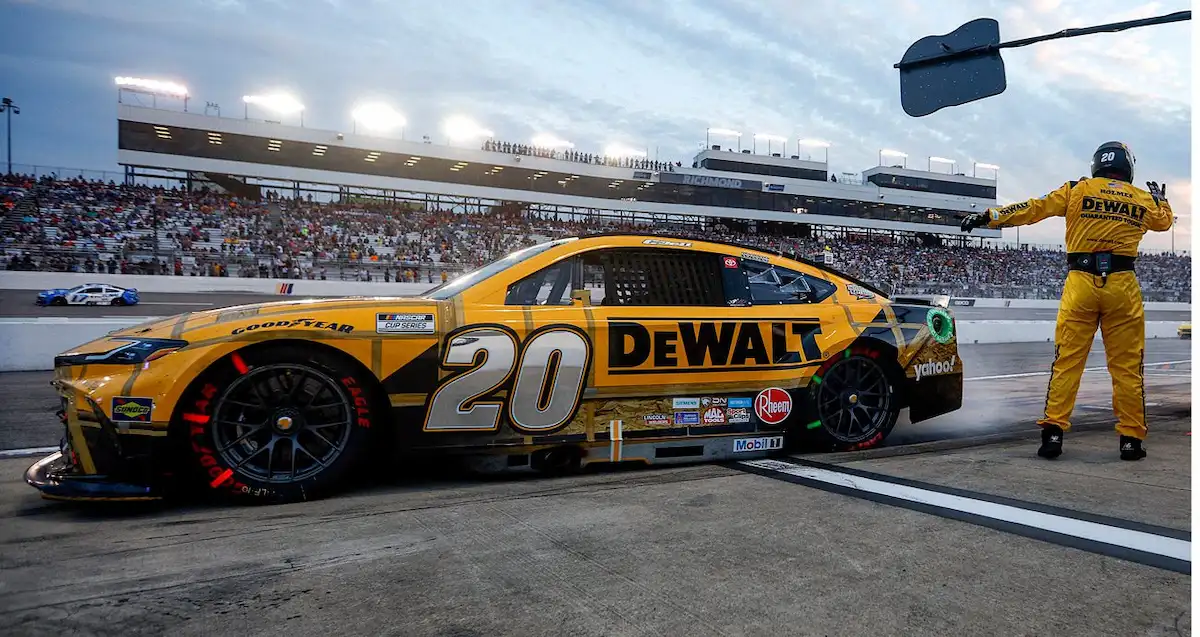
A green-flag stop at Richmond is an undercut opportunity. A driver gives up track position now to gain several laps on fresher tires. The move works best when the car can rejoin in clear air and use the fresh-tire speed before the rival responds.
The undercut
The undercut is simple in theory.
Car A pits first. Car B stays out. Car A then runs faster laps on fresh tires while Car B loses time on worn rubber.
When Car B eventually pits, Car A may cycle ahead.
Richmond makes the undercut powerful because tire performance can fall away noticeably during a run.
But pit road costs a full lap of momentum
The car has to slow dramatically for pit entry, travel at pit-road speed, stop for service and then accelerate back onto the track.
That makes every second important.
A slow stop can erase the entire tire advantage.
Traffic decides whether the undercut works
The fresh-tire car needs somewhere to use the grip.
If it exits behind a line of slower traffic, the strategy may fail even if the tires are much faster.
Bowman’s 2025 experience shows the reverse problem. He had fresher tires than Dillon but lost time fighting traffic during the chase.
The caution risk
The biggest fear is a yellow immediately after pitting.
If the field is still racing under green while the driver is on pit road, the car can lose a lap relative to cars that stayed out.
If a caution then freezes the field at the wrong moment, the early stop can become expensive.
That is why crew chiefs monitor accident risk, lapped traffic and track conditions before committing.
Our racing-flags guide explains how yellow periods change race order.
How Cautions Change Richmond Pit Strategy
Every Richmond strategy has to survive the possibility of an untimely yellow.
A late caution can erase a ten-second lead. It can also turn a carefully managed green-flag run into a restart race on new tires.
Saving one fresh set
One of the recurring Richmond strategy themes is tire inventory.
In 2025, NASCAR reported that teams had eight new race sets plus one set transferred from qualifying.
Crew chiefs discussed the need to balance the natural tire strategy against the possibility of an unexpected caution late in the race.
If every available set is used early, a team can be trapped on worn tires when rivals still have new rubber.
Why an unused set can also be a mistake
Saving tires has a cost.
If the caution never comes, a fresh set can remain in the pit box while the driver loses lap time on worn tires.
This was a major talking point during Richmond’s 2024 option-tire experiment. Teams had to decide whether to hold the faster compound for a late sprint or use it earlier to gain track position.
The same decision exists with standard tire inventory: how much future insurance is worth sacrificing current lap time?
Stage cautions reduce uncertainty
Scheduled stage breaks give teams predictable opportunities to stop.
That makes the unscheduled yellow more important because it creates the strategic split.
Teams can either stop with the majority or stay out to gain track position.
Short-track restarts are valuable
Fresh tires can make a major difference on a restart.
A car with newer rubber can attack the lower lane and put pressure on drivers who stayed out.
However, passing still requires space. A driver restarting 15th on fresh tires may not reach the front before the advantage fades.
The 2025 Richmond Lesson: Four Laps Can Decide the Final Run
The final 2025 pit cycle is one of the best recent examples for understanding Richmond.
Dillon pitted on Lap 341. Bowman and Blaney stayed out until Lap 345.
That created two competing ideas.
Dillon’s early stop
Dillon accepted four extra laps of tire wear in exchange for earlier fresh-tire speed.
The stop allowed him to gain time while Bowman remained on older tires.
Once the cycle completed, Dillon had enough track position to control his own pace.
Bowman’s later stop
Bowman had slightly fresher tires for the run to the finish.
That should have been useful. Instead, he encountered traffic and had to use more rear tire than he wanted while trying to close the gap.
He finished 2.471 seconds behind Dillon.
What crew chiefs learn from that sequence
The lesson is not “always pit on Lap 341.”
The lesson is that Richmond rewards the car that combines tire age with usable track position.
A four-lap tire advantage has value only if the driver can exploit it.
If traffic blocks the lane or forces repeated throttle application, those fresher tires can disappear quickly.
What the 2026 Martinsville Race Added to the Strategy Conversation
Martinsville is not Richmond, but the 2026 spring race reinforced the power of short-pitting on a tire-sensitive short track.
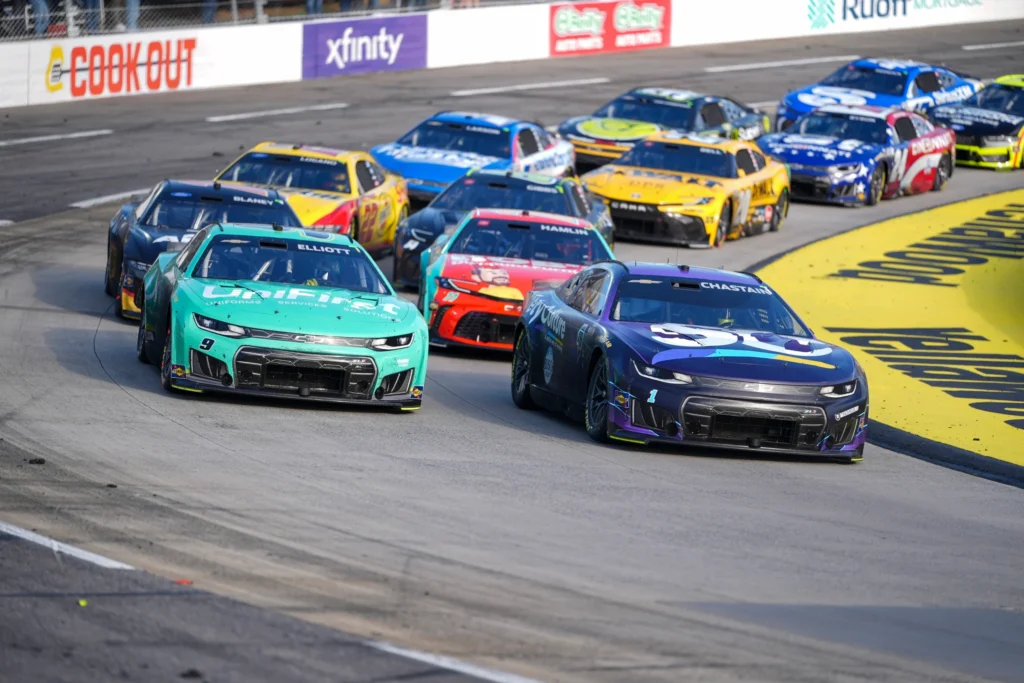
Chase Elliott short-pitted on Lap 261 to gain track position.
Denny Hamlin had led most of the race and was roughly three seconds ahead when Elliott made the move.
After the cycle and a later restart, Elliott took control and won.
Why the example matters
The undercut was not magic. Elliott needed enough fresh-tire speed to recover the pit-road loss.
He also needed track position to matter once he got ahead.
Richmond creates a similar strategic equation.
Clean air has value even on a short track
Drivers still want the freedom to choose their entry and exit lines.
Being in front means no one is forcing the leader to change lanes in the middle of a corner.
That can help tire conservation.
Our grid-position guide explains why track position remains important even after pit cycles begin.
How Drivers Save Tires at Richmond Raceway
Rolling the center
A Richmond car needs to rotate without excessive brake or throttle input.
If the driver can carry stable center speed, there is less need to accelerate aggressively on exit.
Changing lanes
A driver may move up the track as the lower groove becomes harder on the tires.
The higher lane can offer a smoother arc and reduce the amount of steering angle needed.
Choosing which battles matter
Tire conservation is partly tactical.
A driver does not need to defend every position at the start of a long run if doing so destroys the rear tires.
Sometimes letting a faster car go and protecting the tires creates a better result over the full stint.
Managing lapped traffic
Richmond leaders encounter slower cars frequently.
The best drivers avoid getting trapped behind one car for too long, but they also avoid making low-percentage moves that overheat the rear tires.
Late-Race Richmond Strategy: Fresh Tires or Track Position?
If a caution arrives late, the correct call depends on remaining laps and the number of cars likely to pit. Four fresh tires are powerful at Richmond, but restarting too deep can cancel the grip advantage. The leader’s decision is therefore partly about predicting what the rest of the field will do.
With 50 or more laps remaining
Fresh tires become difficult to ignore.
There is usually enough time for the advantage to matter, and old tires may fade badly during the long run.
With 15 to 25 laps remaining
The decision becomes less obvious.
A driver restarting first on older tires may be able to defend if only a few cars take fresh rubber.
If the entire field pits, staying out can be disastrous.
With fewer than 10 laps remaining
Track position gains value.
The fresh-tire car may have only a few corners to make passes.
That can encourage leaders to stay out, especially if several cars immediately behind make the same choice.
Overtime changes everything
A two-lap sprint rewards immediate grip and restart execution.
However, a driver pitting from the lead may restart too far back to use that advantage.
This is why the pit box must estimate not only tire speed but also the likely decisions of every rival around it.
Common Richmond Strategy Mistakes
Using the right-rear tire too early
This is the classic driver error.
Running several tenths faster early in the stint can cost much more later.
Pitting into traffic
A fresh set is wasted if the car exits pit road behind a dense group.
Crew chiefs constantly calculate the predicted rejoin position.
Waiting too long on a collapsing tire
Sometimes teams become too focused on fuel mileage and ignore lap-time loss.
At Richmond, an extra five laps can be expensive if the tires are already gone.
Using every new set too early
A late caution can punish teams that have no fresh tires remaining.
Saving a set that never gets used
The opposite mistake is just as real.
If the race stays green, the team may finish with a new set in the pits while the driver loses time on old rubber.
How Richmond Strategy Differs From Other NASCAR Tracks
Compared with superspeedways
At Daytona or Talladega, drafting and track position dominate strategy.
Tire falloff is far less central.
Compared with road courses
Road-course strategy often revolves around stage breaks, fuel windows and avoiding traffic after a stop.
Richmond includes those ideas but adds much stronger tire degradation.
Compared with Bristol
Bristol carries much more banking and creates a different tire-loading profile.
Richmond’s flatter corners put more emphasis on throttle discipline.
Compared with Martinsville
Martinsville is slower and tighter, but the 2026 Elliott short-pit win shows a strategic principle that transfers directly: fresh tires and track position can overturn raw pace.
Richmond NASCAR 2026 Strategy FAQs
Conclusion: Richmond Strategy Is a Balance Between Tire Age and Track Position
Richmond does not reward the driver who simply runs the fastest possible lap every time around.
The race is built around managing the difference between short-run speed and long-run durability.
The 2025 Cook Out 400 offered the clearest recent example. Dillon pitted on Lap 341. Bowman and Blaney waited four more laps. Bowman had the younger tires, but Dillon had the track position and Bowman burned up his rear tires fighting traffic.
That sequence captures the entire Richmond strategy problem.
Fresh tires are valuable, but they need clean track. Track position is valuable, but it becomes difficult to defend when tire falloff grows.
The 2026 Martinsville race added another useful reference. Elliott short-pitted a dominant Hamlin and turned strategy into a winning position.
For Richmond, the best crew chiefs therefore work with flexible windows rather than one predetermined stop lap.
They watch lap-time falloff, predict the rejoin traffic, protect tire inventory and constantly weigh the risk of a caution.
And the driver has an equally important job: keep the rear tires under the car long enough for the strategy to work.
At Richmond Raceway, the fastest route to the checkered flag is often the one that looks slightly slower twenty laps earlier.