Sainz Hit With Five-Place Penalty in Baku: How Four Penalties Reshaped the Azerbaijan GP Grid
Williams’ best qualifying of 2026 lasted only a few hours. Carlos Sainz drops from 9th to 14th for a yellow-flag breach, Sergio Pérez is penalised for impeding, and both Aston Martins start at the back. Here’s the official grid and what changed.
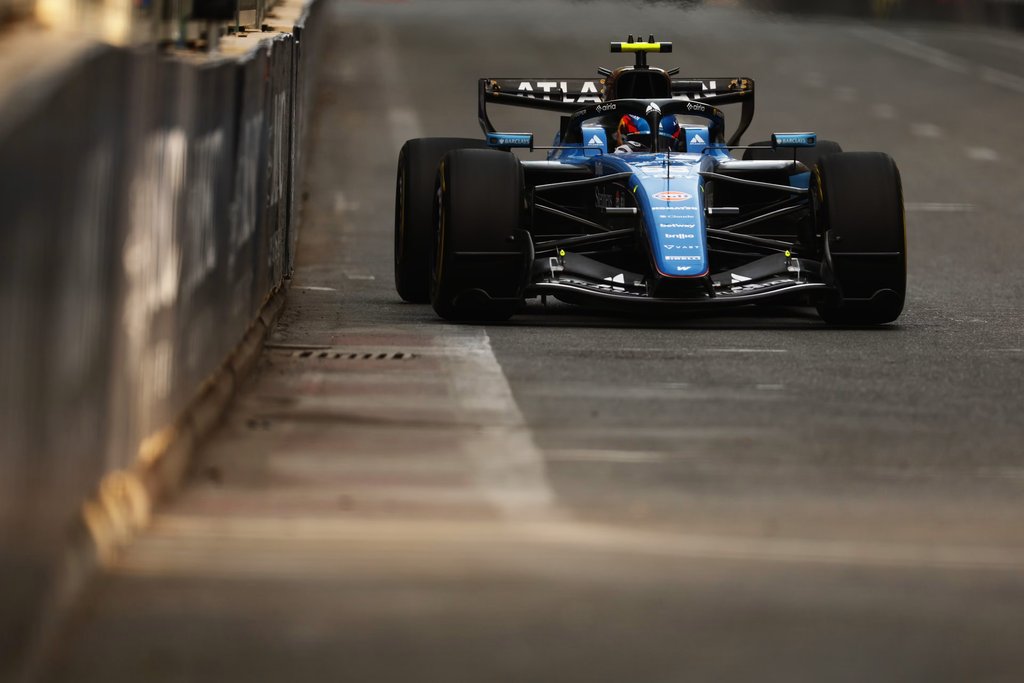
Sainz Penalised: Four Penalties Reshape the Baku Grid
Sainz drops 9th to 14th, Pérez penalised, Aston Martins at the back. The official grid.
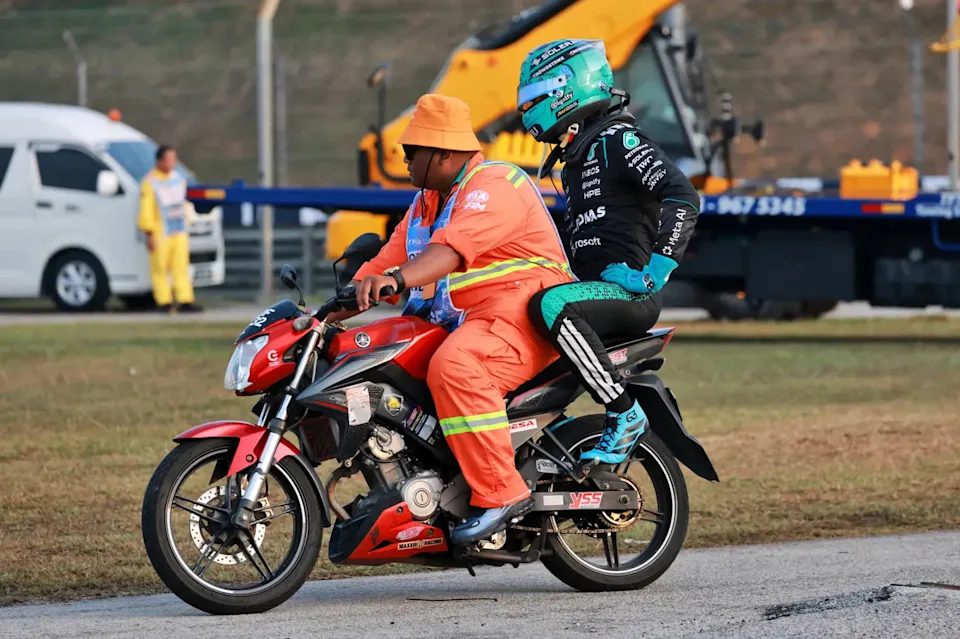
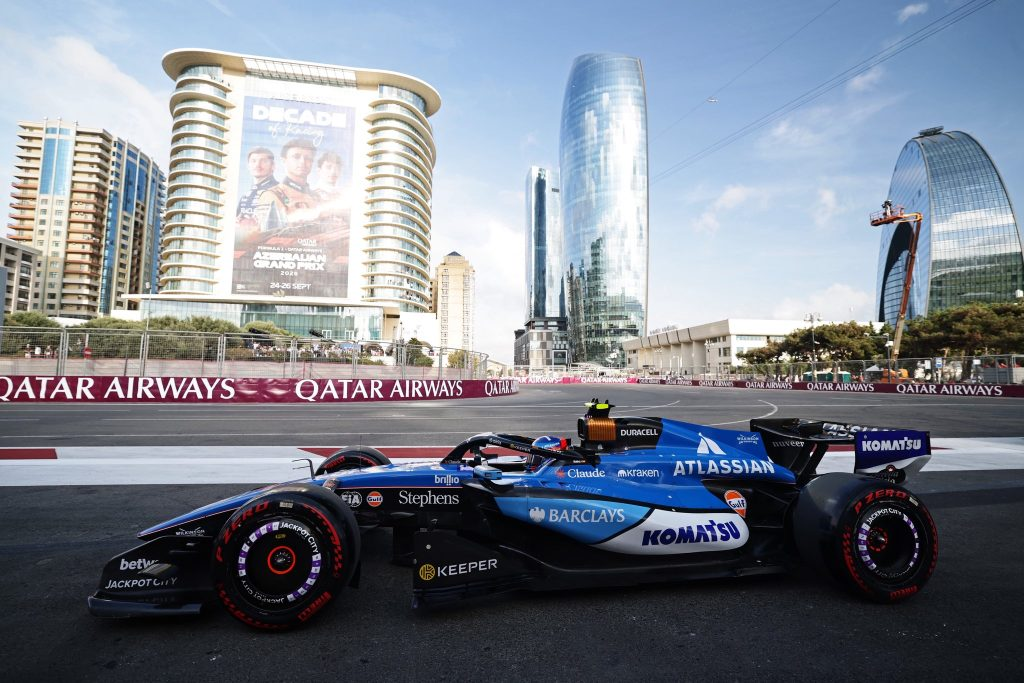
On Friday afternoon, Williams had its best qualifying of the season. Carlos Sainz reached Q3 and qualified ninth for the Azerbaijan Grand Prix, the team’s highest grid slot of 2026. By Friday evening that was gone. The FIA stewards gave Sainz a five-place grid penalty for not slowing enough under yellow flags in Q3, dropping him to 14th. It was the second time in a day he’d been investigated for a yellow-flag offence.
He wasn’t the only one. Sergio Pérez was given a three-place grid drop for impeding Oscar Piastri in Q1, and Fernando Alonso and Lance Stroll were sent to the back after Aston Martin fitted new power unit parts. Four penalties in total have changed the order behind the top eight. Up front nothing has changed: George Russell starts on pole and championship leader Kimi Antonelli starts 16th after his Q1 crash. The race is today at 15:00 Baku time. Our Azerbaijan GP race guide has start times and TV details.
Official Azerbaijan GP 2026 Starting Grid
The top eight is exactly as qualifying finished. From ninth place down, the penalties have moved almost everyone. Franco Colapinto moves up to ninth for Alpine, and Oliver Bearman into the top ten for Haas.
| Grid | Driver | Team | Qualified | Change |
|---|---|---|---|---|
| 1 | George Russell POLE | Mercedes | 1 | — |
| 2 | Charles Leclerc | Ferrari | 2 | — |
| 3 | Oscar Piastri | McLaren | 3 | — |
| 4 | Isack Hadjar | Red Bull | 4 | — |
| 5 | Lando Norris | McLaren | 5 | — |
| 6 | Lewis Hamilton | Ferrari | 6 | — |
| 7 | Pierre Gasly | Alpine | 7 | — |
| 8 | Max Verstappen | Red Bull | 8 | — |
| 9 | Franco Colapinto | Alpine | 10 | +1 |
| 10 | Oliver Bearman | Haas | 11 | +1 |
| 11 | Liam Lawson | Racing Bulls | 12 | +1 |
| 12 | Alexander Albon | Williams | 13 | +1 |
| 13 | Esteban Ocon | Haas | 14 | +1 |
| 14 | Carlos Sainz 5-PLACE PENALTY | Williams | 9 | -5 |
| 15 | Arvid Lindblad | Racing Bulls | 15 | — |
| 16 | Kimi Antonelli | Mercedes | 16 | — |
| 17 | Gabriel Bortoleto | Audi | 17 | — |
| 18 | Nico Hülkenberg | Audi | 18 | — |
| 19 | Valtteri Bottas | Cadillac | 22 | +3 |
| 20 | Sergio Pérez 3-PLACE PENALTY | Cadillac | 20 | — |
| 21 | Fernando Alonso BACK OF GRID | Aston Martin | 19 | -2 |
| 22 | Lance Stroll BACK OF GRID | Aston Martin | 21 | -1 |
The “Qualified” column is the qualifying classification before penalties. Bottas gains the most on paper because three cars ahead of him were penalised, but he still starts 19th. Pérez’s three-place penalty had limited effect: with both Aston Martins sent to the back, there were few places behind him to drop into, and he lines up 20th.
Why Carlos Sainz Was Penalised
The incident happened late in Q3. Lando Norris went off ahead of Sainz, which brought out yellow flags in two consecutive marshalling sectors, sectors 4 and 5, after Turn 2 and on the approach to Turn 3. Williams warned Sainz on the radio: “Yellow ahead, lift.”
Sainz did slow down, but not in the first yellow sector. At the stewards’ hearing he explained that he intended to show what he called a “global lift”: one clear reduction in speed across the whole yellow-flag zone, made later in the section where more yellow flags were being shown. He accepted that he knew the flags were out.
The stewards rejected that argument. Their decision said: “Where consecutive marshalling sectors are subject to yellow flag conditions, a driver must demonstrate a significant reaction to reduce speed in each individual yellow marshalling sector.” They added that “a reduction in a subsequent sector cannot retrospectively satisfy the requirement applicable to the preceding yellow sector”.
The telemetry was decisive. It “clearly showed that SAI’s reaction to the yellow occurred only in Marshalling Sector 5. There was no meaningful reduction in speed in Marshalling Sector 4”. Worse, Sainz set his fastest time of the session in sector 4, the first yellow sector. Setting a personal best under a yellow flag is almost impossible to defend.
For Williams it’s a painful loss. Starting in the top ten at Baku, where points are often decided by who avoids trouble at the start and gains from safety cars, is a big advantage. From 14th, Sainz has to fight through the same busy midfield as Antonelli, only two places ahead of the championship leader’s Mercedes.

The Yellow Flag Rule, Explained
A yellow flag means danger ahead: a car off the track, debris, or marshals working near the circuit. Drivers must slow down and be ready to change direction, and they can’t overtake. A double yellow means the danger is serious and drivers must be prepared to stop. Our guide to how racing flags work covers every flag.
In qualifying, the rule has an obvious catch. Slowing down costs lap time, and a driver on his final Q3 lap has every reason to lift as little as possible. That’s why the stewards look at the telemetry and expect a clear, measurable reduction in speed in each yellow sector. It’s not enough to slow down somewhere in the area, and certainly not enough to set a personal best there. The logic is simple: the marshals or the stranded car are in a specific place, and the driver has to be slow at that place.
F1 drivers are banned for one race if they reach 12 penalty points on their superlicence within 12 months. The 2 points from Baku take Sainz to 4, so he’s well clear of a ban. Points expire 12 months after they were given.
Yellow-flag penalties in qualifying are usually harsh because the offence directly helps the lap. Grid drops of three or five places, sometimes with penalty points, are common. Sainz’s case is a reminder that the stewards read the timing data sector by sector, and a strong sector time under yellow is very hard to explain away. If you’re new to qualifying, our F1 qualifying explainer explains how Q1, Q2 and Q3 work.
Pérez’s Impeding Penalty and the Aston Martin Engine Penalties
Sergio Pérez: impeding Piastri
Cadillac’s Sergio Pérez was penalised for impeding Oscar Piastri through Turns 18, 19 and 20, the fast final section before the long straight, during Q1. The stewards found Pérez had not managed his preparation lap in line with the specific traffic-management instructions for this weekend. At Baku, where cars on slow preparation laps can be doing 200 km/h while others arrive at 350 km/h on a push lap, those instructions are there for safety as much as fairness.
The penalty was three places, but in practice it cost him very little. With Alonso and Stroll already going to the back, Pérez lines up 20th, behind team-mate Valtteri Bottas. Piastri recovered from the incident to qualify third.
Alonso and Stroll: back of the grid
Both Aston Martins start at the back after the team fitted new power unit components beyond the season’s allowance. Each driver has a limited number of engine parts for the year, and using more brings grid penalties. A big enough penalty sends a driver straight to the back. Alonso starts 21st and Stroll 22nd. If a team has to take an engine penalty, Baku is one of the better places to do it: the long straight and frequent safety cars give cars starting at the back a better chance of recovering than at most tracks.
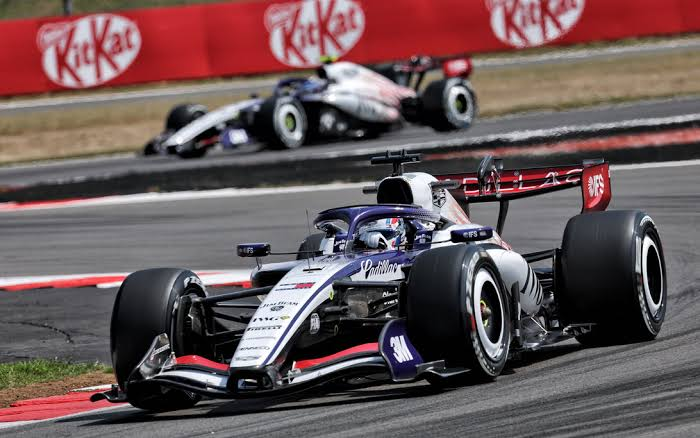

Winners and Losers From the Penalties
| Driver / team | Effect | Why it matters |
|---|---|---|
| Franco Colapinto (Alpine) WINNER | 10th → 9th | Both Alpines now start in the top ten |
| Oliver Bearman (Haas) WINNER | 11th → 10th | Starts in the points and gets a clean top-ten starting slot |
| Liam Lawson, Albon, Ocon | +1 place each | Small gains, but in a tight midfield every place counts |
| Carlos Sainz (Williams) LOSER | 9th → 14th | Loses Williams’ best grid slot of 2026 and gets 2 penalty points |
| Kimi Antonelli (Mercedes) | 16th (unchanged) | Now has Sainz’s Williams two places ahead of him in the midfield |
| Aston Martin LOSER | Back row | A points finish now needs a big recovery |
For the championship fight, the penalties change little directly. Russell’s pole and Antonelli’s 16th place were set before any of this. But the midfield Antonelli has to fight through has got slightly tougher: Sainz is an experienced racer in a car that was quick enough for Q3, and he now starts just two places ahead of the Mercedes. How quickly Antonelli clears the midfield could decide how much of his 81-point lead Russell can take back. We look at every scenario in our Antonelli vs Russell title fight analysis.
Williams’ best grid position of the year lasted a few hours. In F1 qualifying, the stewards’ timing data can take away what a driver’s lap has earned.
Baku also gives the drivers moved back a real chance to recover. The 2.2 km straight makes overtaking easier than at most street circuits, F1’s own data puts the chance of a safety car at 67%, and a well-timed stop behind a safety car can gain several places. Sainz’s race isn’t over. It’s just much harder than it was on Friday afternoon.
Azerbaijan GP 2026 Grid Penalties — FAQ
A new grid behind the front eight
Four penalties, one of them painful for Williams, have changed the order behind the top eight. Colapinto and Bearman move into the top ten, Sainz and Pérez drop back, and Aston Martin starts from the last row. Russell is still on pole, and Antonelli still has fifteen cars to pass.
Stay with World of Speed for the full race result and the updated championship standings after the chequered flag.