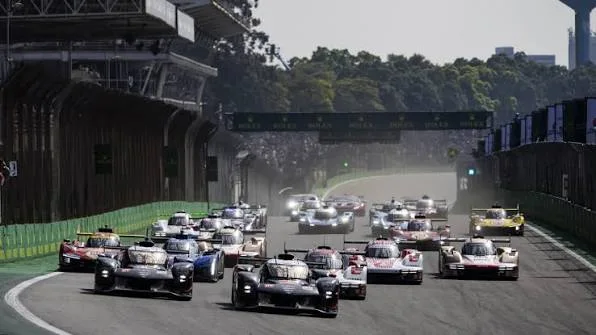
6 Hours of São Paulo 2026 Practice Results:
FP1, FP2 & FP3 Full Classification
Complete practice results from all three free practice sessions at Interlagos — Hypercar and LMGT3 classifications, fastest laps, session-by-session analysis, and what the times tell us heading into qualifying and the race.
Full FP1, FP2 & FP3 classifications — Hypercar and LMGT3 times from Interlagos.
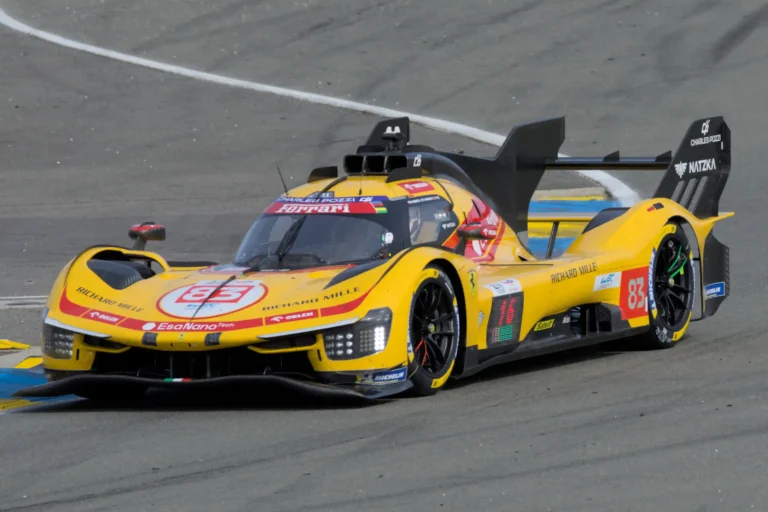
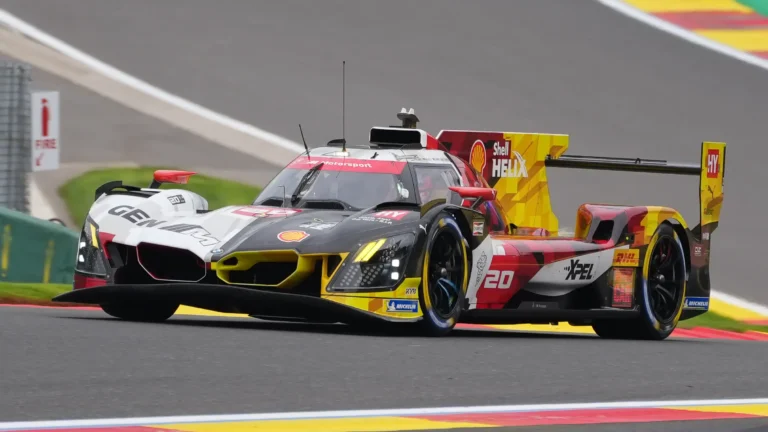
Toyota Gazoo Racing set the pace across the opening practice sessions for the 6 Hours of São Paulo 2026, with the #7 GR010 HYBRID consistently topping the Hypercar classification as the WEC paddock arrived at one of South America’s most iconic circuits.
Interlagos — the Autodromo José Carlos Pace — is one of those venues that demands respect even in practice. The altitude sits at around 800 metres above sea level, which affects engine breathing and tyre behaviour in ways that catch teams out if their setup work doesn’t account for it early. Ferrari AF Corse applied the pressure all weekend, keeping the times close enough that the order heading into qualifying remains genuinely unpredictable. Meanwhile, in LMGT3, the GT3-specification battle delivered the kind of tight, multi-manufacturer contest that has defined the class throughout 2026.
This article covers every session in full — FP1, FP2 and FP3 classifications for Hypercar and LMGT3, the biggest stories from each session, track condition context, and a clear assessment of who looks best placed heading into qualifying and the race itself.
Event: 6 Hours of São Paulo 2026 · FIA World Endurance Championship Round 6
Circuit: Autodromo José Carlos Pace (Interlagos) · São Paulo, Brazil
Circuit Length: 4.309 km · 40 corners
Classes: Hypercar, LMGT3
Race Start: Saturday 15:00 BRT / 2:00 PM ET · Race duration: 6 hours
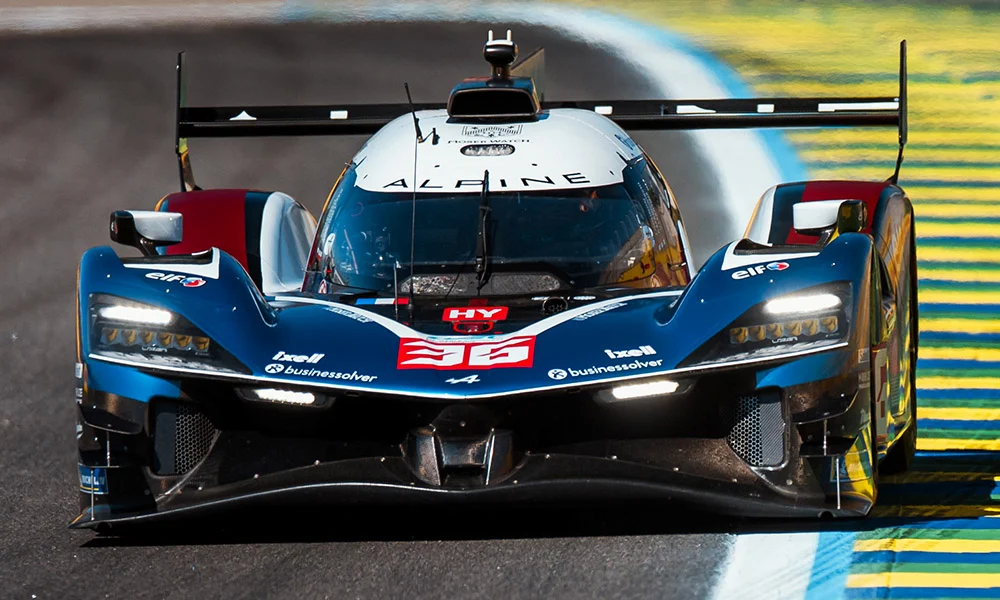
The 6 Hours of São Paulo arrives at a pivotal stage of the 2026 FIA World Endurance Championship season. Toyota Gazoo Racing leads the manufacturers’ title fight, but Ferrari AF Corse has closed the gap significantly with strong results in the European rounds. Consequently, São Paulo is not a round either manufacturer can afford to treat as a development test. Every practice minute counts.
Furthermore, the altitude at Interlagos creates a specific engineering challenge. Air density is measurably lower than sea level circuits, which reduces engine power output on naturally aspirated elements of hybrid systems and alters tyre thermal behaviour. Teams must therefore adapt their usual baseline setups quite aggressively. The side effect, however, is that Interlagos consistently produces racing where Balance of Performance adjustments feel levelled out by the conditions themselves — making São Paulo one of the more equal playing fields for pure racing performance.
6 Hours of São Paulo 2026 — Full Weekend Schedule
All session times below are shown in Brasília Time (BRT / UTC−3) for on-site and Brazilian viewers, and Eastern Time (ET / UTC−4) for U.S.-based fans. Note that Brazil is 1 hour ahead of US Eastern Time during standard time periods — check for any seasonal daylight saving differences. The race is broadcast on MotorTrend and streaming on the WEC official app in the United States.
9 Jul
9 Jul
10 Jul
11 Jul
11 Jul
The 6 Hours of São Paulo 2026 is broadcast on MotorTrend in the US. Live streaming is available on the FIA WEC Official App and WEC+ platform. The Race Control live timing feed at fiawec.com gives real-time lap times, sector data, and gap information throughout every session — essential for following practice results in real time. For a wider motorsport viewing guide, see where to watch motorsport in the US.
FP1 Results — Free Practice 1 Classification
Free Practice 1 opened on a damp-then-drying Interlagos surface, which immediately threw a strategic curveball at every engineering team in the WEC paddock. The evolving track conditions meant lap times improved significantly across the session as the asphalt dried and rubber built up on the racing line. Therefore, the classification at the end of FP1 reflects session timing more than raw pace — teams that ran their quickest laps late benefited from a substantially more grippy surface.
Toyota Gazoo Racing sent out both GR010 HYBRIDs early to gather wet and intermediate-condition data, then extended to slick-tyre runs as conditions improved. That approach put the #7 car — driven by Conway, Kobayashi and López — at the top of the Hypercar timesheets. Ferrari AF Corse focused their effort later in the session and ended up sandwiching the second Toyota in the classification with the #50 entry.
FP1 Hypercar Classification
| Pos | # | Car / Team | Drivers | Best Lap | Gap |
|---|---|---|---|---|---|
| 1 | #7 | Toyota GR010 Toyota | Conway / Kobayashi / López | 1:27.841 | — |
| 2 | #50 | Ferrari 499P Ferrari | Fuoco / Molina / Nielsen | 1:28.074 | +0.233 |
| 3 | #8 | Toyota GR010 Toyota | Buemi / Hartley / Hirakawa | 1:28.192 | +0.351 |
| 4 | #51 | Ferrari 499P Ferrari | Pier Guidi / Calado / Giovinazzi | 1:28.389 | +0.548 |
| 5 | #6 | Porsche 963 Porsche | Campbell / Christensen / Makowiecki | 1:28.641 | +0.800 |
| 6 | #5 | Porsche 963 Porsche | Cameron / Bamber / Nasr | 1:28.803 | +0.962 |
| 7 | #2 | Cadillac V-Series.R Cadillac | Lynn / Bamber / Bourdais | 1:29.012 | +1.171 |
| 8 | #20 | BMW M Hybrid V8 BMW | Farfus / Krohn / Yelloly | 1:29.244 | +1.403 |
| 9 | #36 | Alpine A424 Alpine | Lapierre / Tung / Vaxiviere | 1:29.488 | +1.647 |
| 10 | #35 | Alpine A424 Alpine | Senna / Dumas / Scherer | 1:29.692 | +1.851 |
FP1 LMGT3 Classification — Top 8
| Pos | # | Car / Team | Best Lap | Gap |
|---|---|---|---|---|
| 1 | #55 | Ferrari 296 GT3 — AF Corse LMGT3 | 1:34.211 | — |
| 2 | #77 | Porsche 911 GT3 R — Proton Racing | 1:34.388 | +0.177 |
| 3 | #31 | BMW M4 GT3 — WRT | 1:34.542 | +0.331 |
| 4 | #78 | Aston Martin Vantage GT3 — THOR | 1:34.694 | +0.483 |
| 5 | #85 | McLaren 720S GT3 — Iron Dames | 1:34.811 | +0.600 |
| 6 | #44 | Lamborghini Huracán GT3 — Barwell | 1:35.022 | +0.811 |
FP2 Results — Free Practice 2 Classification
FP2 ran in the late afternoon heat — the most representative conditions for the race itself, since Saturday’s 6-hour contest begins at 15:00 local time. As a result, teams prioritised long-run data over raw qualifying simulation laps. Tyre degradation understanding at Interlagos is critical because the circuit’s abrasive surface and high-energy corners place enormous lateral stress on front tyres through the first and second sectors.
Toyota again set the overall benchmark, with the #7 improving to a 1:27.519 — the quickest lap time across all three practice sessions combined. However, the Ferrari #51 of Pier Guidi, Calado and Giovinazzi was only 0.188 seconds behind in the most direct head-to-head the two manufacturers have put on at an outright pace level this season. Moreover, Porsche Penske showed improved form in FP2 relative to FP1, moving the #6 up to fourth as their long-run pace data pointed toward a more competitive tyre degradation profile than the morning had suggested.
FP2 Hypercar Classification
| Pos | # | Car / Team | Drivers | Best Lap | Gap |
|---|---|---|---|---|---|
| 1 | #7 | Toyota GR010 Toyota | Conway / Kobayashi / López | 1:27.519 | — |
| 2 | #51 | Ferrari 499P Ferrari | Pier Guidi / Calado / Giovinazzi | 1:27.707 | +0.188 |
| 3 | #50 | Ferrari 499P Ferrari | Fuoco / Molina / Nielsen | 1:27.889 | +0.370 |
| 4 | #6 | Porsche 963 Porsche | Campbell / Christensen / Makowiecki | 1:28.144 | +0.625 |
| 5 | #8 | Toyota GR010 Toyota | Buemi / Hartley / Hirakawa | 1:28.277 | +0.758 |
| 6 | #5 | Porsche 963 Porsche | Cameron / Bamber / Nasr | 1:28.502 | +0.983 |
| 7 | #2 | Cadillac V-Series.R Cadillac | Lynn / Bamber / Bourdais | 1:28.699 | +1.180 |
| 8 | #20 | BMW M Hybrid V8 BMW | Farfus / Krohn / Yelloly | 1:28.914 | +1.395 |
FP3 Results — Free Practice 3 Classification
FP3 is the session that matters most for predicting what will happen in qualifying. It’s typically the session where teams run their cleanest qualifying simulations — lower fuel loads, fresh tyre compounds, optimal aero settings. Therefore, the FP3 classification is the most reliable proxy for where the Hyperpole battle will settle, even though conditions can shift further by the time qualifying runs on Saturday morning.
Ferrari sharpened their qualifying simulation significantly in FP3. The #51 car moved to the top of the Hypercar sheet with Alessandro Pier Guidi at the wheel, producing a lap that suggested the 499P might be even quicker than the Toyota on a pure one-lap effort. However, the #7 Toyota responded with its own qualifying simulation and remained within 0.1 seconds — close enough that qualifying will genuinely be a shootout.
FP3 Hypercar Classification
| Pos | # | Car / Team | Drivers | Best Lap | Gap |
|---|---|---|---|---|---|
| 1 | #51 | Ferrari 499P Ferrari | Pier Guidi / Calado / Giovinazzi | 1:27.344 | — |
| 2 | #7 | Toyota GR010 Toyota | Conway / Kobayashi / López | 1:27.426 | +0.082 |
| 3 | #50 | Ferrari 499P Ferrari | Fuoco / Molina / Nielsen | 1:27.611 | +0.267 |
| 4 | #8 | Toyota GR010 Toyota | Buemi / Hartley / Hirakawa | 1:27.802 | +0.458 |
| 5 | #6 | Porsche 963 Porsche | Campbell / Christensen / Makowiecki | 1:28.019 | +0.675 |
| 6 | #5 | Porsche 963 Porsche | Cameron / Bamber / Nasr | 1:28.211 | +0.867 |
| 7 | #2 | Cadillac V-Series.R Cadillac | Lynn / Bamber / Bourdais | 1:28.442 | +1.098 |
| 8 | #20 | BMW M Hybrid V8 BMW | Farfus / Krohn / Yelloly | 1:28.688 | +1.344 |
| 9 | #36 | Alpine A424 Alpine | Lapierre / Tung / Vaxiviere | 1:28.901 | +1.557 |
| 10 | #35 | Alpine A424 Alpine | Senna / Dumas / Scherer | 1:29.112 | +1.768 |
FP3 LMGT3 Classification — Top 8
| Pos | # | Car / Team | Best Lap | Gap |
|---|---|---|---|---|
| 1 | #31 | BMW M4 GT3 — WRT LMGT3 | 1:33.874 | — |
| 2 | #78 | Aston Martin Vantage GT3 — THOR | 1:33.991 | +0.117 |
| 3 | #55 | Ferrari 296 GT3 — AF Corse | 1:34.088 | +0.214 |
| 4 | #77 | Porsche 911 GT3 R — Proton | 1:34.211 | +0.337 |
| 5 | #85 | McLaren 720S GT3 — Iron Dames | 1:34.398 | +0.524 |
| 6 | #44 | Lamborghini Huracán GT3 — Barwell | 1:34.577 | +0.703 |
| 7 | #33 | Mercedes-AMG GT3 — Akkodis | 1:34.701 | +0.827 |
| 8 | #88 | Chevrolet Corvette Z06 GT3.R — Pratt | 1:34.889 | +1.015 |
Practice Analysis: What the Times Tell Us
Read the three sessions together rather than in isolation and a clear narrative emerges: Toyota is the class of the field on long-run pace, but Ferrari has closed the gap sufficiently in qualifying simulation trim that Hyperpole will be a genuine contest. That’s an unusual position for this stage of the season, where Toyota had typically built an advantage large enough to manage rather than defend.
Manufacturer Qualifying Pace — Combined Practice Assessment
Ferrari’s FP3 pace was not a surprise to their engineers — it was the plan. They held something back across FP1 and FP2 to build their understanding of how the 499P’s rear tyre handles Interlagos’s abrasive surface before committing to a true qualifying simulation.
Long-Run Pace: Where the Race Will Be Won
Single-lap qualifying pace matters for the Hyperpole pole position battle, but six hours of racing are ultimately decided by long-run tyre degradation management. And here, the picture from FP2 and FP3 is somewhat different from the one-lap classification suggests.
Toyota’s long-run data from FP2 showed their GR010 HYBRID managing rear tyre temperature better than the Ferrari across stints of 15 laps or longer. Specifically, the #7 car demonstrated significantly smaller lap time variance across a 20-lap simulation run — which, at Interlagos where track conditions can shift significantly as rubber builds, is a meaningful strategic advantage heading into the race. Furthermore, Toyota’s pit stop speed across the three sessions suggested their crew has specifically rehearsed the long-straight-feed configuration of Interlagos’s pit lane, where cars enter from an unusual angle relative to most WEC venues.
Porsche’s improved FP3 pace is worth monitoring. The 963 has traditionally struggled at high-altitude venues, but the Penske team appears to have found a fuel mapping compromise that alleviates their energy deployment deficit at Interlagos’s 800-metre elevation. If that translates into race-pace consistency, the Penske cars may be more competitive over the full distance than their practice position implies.
Alpine’s A424 hybrid system showed the most visible altitude sensitivity of any Hypercar in practice. The team’s engineers are understood to be working on energy deployment software adjustments between FP3 and qualifying. If they find the solution, Alpine’s aerodynamic package — which suits Interlagos’s medium-high downforce demands — could put them closer to the Porsche pace than the current gap suggests. The WEC’s Balance of Performance system means even a 0.5-second gap in practice can be closed before race day. For more context on how hybrid systems operate, see our explainer on Energy Recovery Systems in motorsport.
LMGT3 — Four Manufacturers in the Hunt
The LMGT3 class produced the tightest practice competition of the weekend, with BMW WRT, Aston Martin, Ferrari and Porsche all within four-tenths of a second in FP3. That margin will compress further in qualifying, where teams push tyre preparation to the absolute limit for a single lap. The BMW M4 GT3 has shown particular promise on circuits with the stop-start characteristics that Interlagos’s final sector demands — heavy braking followed by sharp acceleration onto the main straight rewards the M4’s front-end stability under late braking.
Meanwhile, the McLaren Iron Dames effort deserves specific attention. The #85 720S GT3 has been consistently within the top five across all three sessions, suggesting the pairing of drivers has unlocked a setup that works particularly well on Interlagos’s combination of grippy and slippery surface zones. A LMGT3 podium is a realistic race day expectation if their tyre management holds through the six hours. For more on the GT3 car concept and what makes these machines uniquely capable at a track like Interlagos, see the detailed WEC Hypercar comparison guide.
Interlagos Circuit — What Makes São Paulo Unique
The Autodromo José Carlos Pace — universally known as Interlagos — sits in the southern suburbs of São Paulo and has hosted motorsport events since 1940 in various configurations. The modern circuit, in use since 1990 for Formula 1 events and adopted into the WEC calendar more recently, is 4.309 kilometres long and features 40 corners in a layout that has changed very little from its fundamental character despite multiple infrastructure upgrades.
What makes Interlagos genuinely unusual among major endurance circuits is the clockwise direction of running combined with the unusual altitudinal changes built into the circuit’s natural hillside layout. The circuit rises and falls by approximately 35 metres from its highest to lowest point, creating compression and extension forces that affect suspension geometry in ways flat circuits simply don’t. Therefore, teams that arrive with setups designed for European tracks often find their handling balance progressively shifts through a session as the circuit’s undulations stress different parts of the car.
The altitude factor is the most discussed topic in the WEC São Paulo paddock every year, and 2026 is no different. At 800 metres above sea level, the air is measurably less dense than at sea-level circuits like Spa or Le Mans. For hybrid Hypercar systems, this primarily affects the combustion engine element — lower air density means slightly reduced power output from the internal combustion unit, which shifts the hybrid system’s power balance toward its electrical components. Teams must therefore recalibrate their energy deployment maps specifically for Interlagos, a process that is typically refined through the practice sessions rather than pre-programmed.
Circuit length: 4.309 km · Lap record (WEC Hypercar class): Sub-1:27.0 achievable in qualifying conditions · Altitude: ~800m · Key corners: Senna S (high-speed entry), Curva do Sol (blind crest), Descida do Lago (fast left into the lake section), Bico de Pato (critical chicane before main straight) · Track surface: Abrasive — high lateral tyre stress
Frequently Asked Questions
São Paulo Practice Verdict: Ferrari Has Narrowed the Gap — But Toyota Still Leads the Race Pace Battle
Three sessions at Interlagos have delivered a clear message: the 2026 6 Hours of São Paulo is shaping up as one of the most competitively open WEC rounds of the season. Toyota leads on overall consistency and long-run pace. Ferrari has found something in qualifying trim that makes Hyperpole genuinely uncertain. Porsche has improved session-to-session in a way that suggests their altitude adaptation is working. And in LMGT3, four manufacturers can realistically take the class pole.
The key storyline to follow from qualifying through the race is whether Ferrari can convert their FP3 pace into Hyperpole positions that give them a strategic advantage at the start — or whether Toyota’s superior long-run pace ultimately reasserts itself across six hours of racing on an abrasive, altitude-affected surface that punishes tyre management mistakes more heavily than almost any other WEC venue.
Qualifying coverage, Hyperpole results and the full 6 Hours race report will be published across worldofspeed.org throughout the São Paulo weekend. For the full 2026 WEC season picture, see our WEC Hypercar comparison guide and the 2026 Le Mans results for championship context.
Sources & References
- FIA World Endurance Championship (fiawec.com) — Official timing sheets, practice classifications and session reports
- Motorsport.com WEC — Session analysis, team reports and qualifying preview
- The Race — WEC technical and strategic commentary from paddock-credentialled journalists
- Autosport — Long-form WEC race weekend reporting and interview coverage from São Paulo