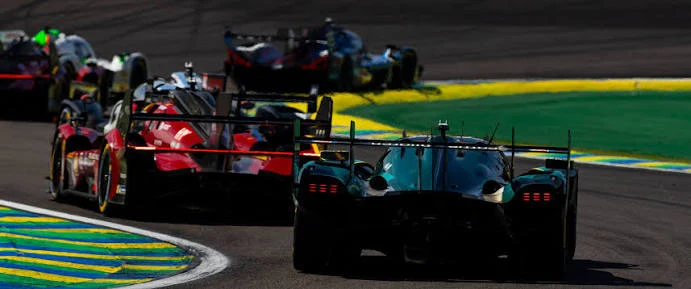
6 Hours of São Paulo 2026 Strategy Analysis: How the Race Will Be Won
Toyota leads the championship after Le Mans. Cadillac owns the lap record here. Genesis just topped FP2. Aston Martin led FP1. At 800 metres above sea level on the shortest WEC lap of the year, strategy decides everything.
The 2026 Rolex 6 Hours of São Paulo races Sunday, July 12 at 11:30 AM local time (9:30 AM ET / 2:30 PM BST). The winning strategy hinges on Hyperpole pace translating into clean early race position, 4–5 disciplined pit stop windows timed around Full Course Yellow phases, and careful traffic management on the 4.309km Interlagos circuit. No WEC race winner at the circuit has ever started from outside the front row — making Saturday’s qualifying nearly as important as the six-hour race itself.
Interlagos breaks things. That’s not a criticism — it’s a compliment. The Autódromo José Carlos Pace has produced a different WEC Hypercar winner each of the last four times the series has visited, a statistic that stands alone in the championship’s history. No other circuit has done that. Round 4 of the 2026 FIA World Endurance Championship lands on Sunday with Toyota on top of the standings, Cadillac holding the circuit’s lap records, Aston Martin fastest in FP1, and Genesis — in their maiden WEC season — topping FP2 for the first time ever. Four different cars led the timing screens across the opening sessions. That tells you everything about what this race is going to look like.
This strategy analysis covers every layer of how the 6 Hours of São Paulo will be decided — from qualifying importance and stint structure through tire management, fuel strategy, FCY exploitation, traffic handling, and the manufacturer-by-manufacturer breakdown of what each team needs to do between the green flag and the chequered flag. Furthermore, the championship implications are significant: the midpoint of the eight-round season could reshape the title fight entirely depending on who converts pace into points.
Event Overview — The 2026 Rolex 6 Hours of São Paulo
The 2026 Rolex 6 Hours of São Paulo is Round 4 of the FIA World Endurance Championship, running July 10–12 at the Autódromo José Carlos Pace — Interlagos — in the south of São Paulo, Brazil. It is the first flyaway event of the 2026 season and marks the exact midpoint of the eight-round calendar. A 35-car field takes on the anti-clockwise 15-turn layout: 17 Hypercars from eight manufacturers, and 18 LMGT3 entries from across the GT3 landscape.
The event returned to the WEC calendar in 2024 after a decade’s absence and immediately demonstrated its championship-defining potential. In 2025, the race delivered Cadillac Hertz Team JOTA’s maiden WEC victory — a commanding one-two finish that nobody expected — with the V-Series.R leading 165 of the 242 laps. Before that, Toyota won here in 2024, Porsche in 2014, and Audi in 2013. Four different manufacturers winning the last four WEC editions of the race. No circuit in championship history has done that. Interlagos is genuinely unpredictable, and 2026 looks like it could produce winner number five from a different brand.
The race streams live on FIAWEC+, the official streaming platform, with every session from FP1 through to the six-hour race available on-demand. US fans can follow via IMSA’s broadcast partnerships and MotorTrend. UK viewers should check Eurosport and Discovery+. The official FIA WEC website carries live timing throughout the weekend. Race start is 11:30 AM local (São Paulo time, GMT-3) — that’s 9:30 AM ET / 2:30 PM BST on Sunday, July 12. For a full breakdown of how WEC scoring and championship points work, see our racing championship scoring explainer.
Full Race Weekend Schedule & Session Times
The 2026 Rolex 6 Hours of São Paulo runs across three days. Free Practice opens Friday, qualifying and Hyperpole are Saturday, and the six-hour race fires up Sunday morning. Eastern Time is 3 hours ahead of São Paulo local (GMT-3), so the race starts at 9:30 AM ET — a manageable morning start for East Coast US fans.
São Paulo (GMT-3) is 3 hours ahead of Eastern Time during July. So 11:30 AM local = 9:30 AM ET = 8:30 AM CT = 6:30 AM PT. The race finishes approximately 5:30 PM local / 3:30 PM ET, well within a normal afternoon if you’re on the East Coast. WEC endurance races typically don’t run under artificial or street lighting unless they begin late in the day, so expect full natural light throughout this race.
The Interlagos Circuit — Why It Produces Strategy Surprises
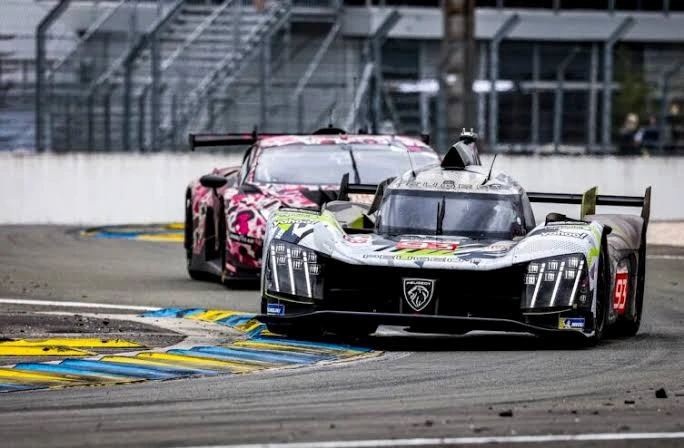
The Autódromo José Carlos Pace — known universally as Interlagos — does not behave like any other circuit in the FIA World Endurance Championship. At 4.309km per lap it’s the shortest track on the calendar, which creates a unique dynamic: the 35-car field is extremely compressed, meaning faster Hypercars are continuously navigating through LMGT3 traffic. That traffic management becomes a strategic decision in itself — whether to follow a GT3 through a corner or risk an overtake that costs time.
The altitude is equally unusual. At approximately 800 metres above sea level, Interlagos sits significantly higher than the vast majority of WEC circuits. Thinner air affects engine cooling, turbo performance, and brake temperatures differently than at sea-level venues. Teams that ran long stints in free practice were specifically gathering data on brake temperatures across long runs — because Hypercars braking into Descida do Sol and the Senna S complex carry enormous loads, and the cooling characteristics at altitude are genuinely different from what a standard sea-level setup would expect.
FP1 & FP2 Results — What the Practice Data Tells Us
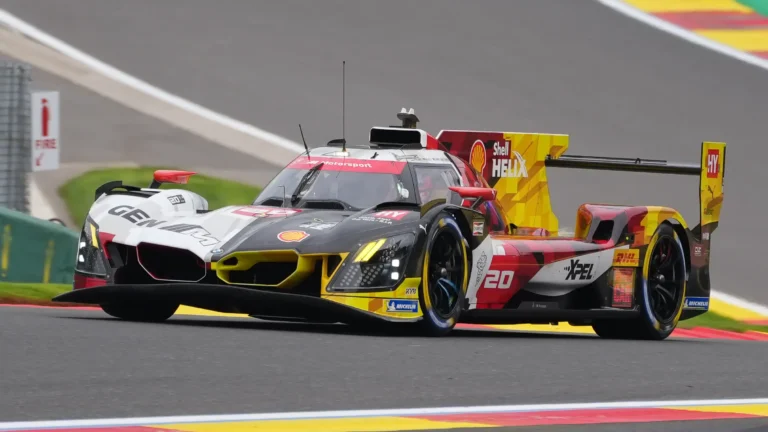
The shift from FP1 to FP2 is telling. Aston Martin led both sessions, confirming genuine Valkyrie pace at Interlagos. However, the key development was Genesis topping the timesheets for the first time in any WEC session — Mathieu Jaminet’s 1:24.271s in the #19 GMR-001 beating Aston Martin by just 0.060s. Moreover, Cadillac’s #12 entry completed 58 laps in FP2 — more than any other Hypercar — clearly prioritising long-run data and race simulation over a headline time. That discipline is significant. Stevens and Nato weren’t chasing FP2 position; they were doing their homework for Sunday.
Toyota’s pace was deliberately understated. The Le Mans-winning #7 TR010 finished 14th in FP2, with the #8 15th. This is a team that rarely shows its hand in free practice — their race pace in 2026 has consistently been stronger than their qualifying baseline might suggest. Furthermore, the fact that less than 1.3 seconds covered all 17 Hypercar entries in FP2 illustrates how genuinely competitive this field is at Interlagos.
Strategy Analysis — How the 6 Hours of São Paulo Will Be Won
How Many Pit Stops Will Hypercars Make?
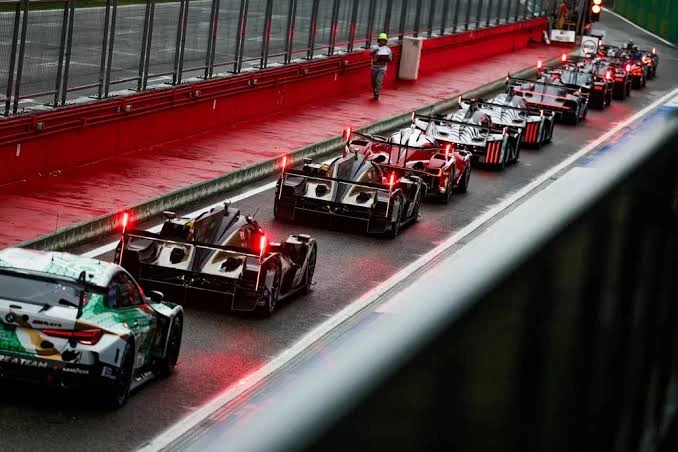
Over six hours at a 4.309km circuit, Hypercar teams typically run 4 to 5 pit stop cycles depending on fuel load and tyre degradation. Stint lengths at Interlagos typically span 50–65 minutes for a standard fuel run. That gives teams flexibility to extend or shorten stints depending on track position relative to rivals and any neutralisation periods. Three drivers must each complete a mandatory stint, adding a rotation constraint that limits the most efficient pure-fuel-based strategy to specific windows.
The key lever is FCY. A Full Course Yellow — triggered by a retirement or debris — effectively compresses the field and turns pit stop timing into a binary decision: pit now and lose nothing, or stay out and risk losing significant time when rivals pit under yellow. At Interlagos, where the lap is so short, the exposure is maximised. A team that pits one lap after a FCY opens when it could have pitted under it will typically lose 25–35 seconds of effective race time. That’s not recoverable on a 4.3km track in clean air alone.
Tyre Management at Altitude
Pirelli’s endurance-spec compounds behave differently at 800 metres. The reduced air density affects the car’s aerodynamic downforce marginally, which in turn reduces the lateral load through the fast corners and slightly eases tyre side-wall stress. However, the flip side is that track temperatures at Interlagos can swing dramatically across the day — practice sessions ran at 35.6°C track temperature on Friday morning, and afternoon sessions can see that rise further. Teams managing tyre degradation must account for thermal gradient, not just mechanical wear.
The Senna S complex — a right-left chicane early in the lap — puts particular load on the right-front tyre, especially through the transition. Cars that are set up with more front-end aggression will degrade their right-front faster and may be forced into an earlier stop than their fuel window requires. Consequently, the setup balance between qualifying pace and race tyre life is one of the key overnight decisions heading into Sunday. To understand how tyre management functions across different racing categories, our explainer on tyre compound strategy covers the fundamentals in detail.
The Qualifying Advantage — Why Hyperpole Really Matters Here
No WEC outright winner at Interlagos has ever started from outside Row 1. No class winner has ever started from lower than fifth on the grid. That’s a dataset small enough that it could be coincidence — but it’s consistent enough that every crew chief at this race will treat Saturday’s Hyperpole session with race-winning weight. The reason is straightforward: Interlagos is too short for a fast car to recover position organically. The overtaking zones are real — Senna S on the opening lap, Descida do Sol, and the chicane before the main straight — but they require both a significantly faster car and a close following distance to exploit. Starting from the back of the Hypercar field is a far more disadvantageous position here than at a circuit like Spa or Le Mans, where outright lap time difference can recover positions across an hour of racing.
“Interlagos has never produced a WEC Hypercar winner from outside the front row. That’s not an accident — it’s what 4.3 kilometres and 35 cars tells you about this race.”
— WEC strategy analysis, 2026 São Paulo preview
Manufacturer-by-Manufacturer Strategy Breakdown
Toyota Gazoo Racing — Momentum and History
Toyota arrives as championship leader after the #7 TR010 Hybrid of Conway, Kobayashi, and Nyck de Vries won at Le Mans — the manufacturer’s sixth outright victory at La Sarthe. The #8 TR010 of Buemi, Hartley, and Hirakawa added a third-place podium. That Le Mans result pushed Toyota to the top of both the Manufacturers’ and Drivers’ title standings. Moreover, Interlagos has historical weight for the Japanese manufacturer — they won here in 2012 and 2024, more victories at the circuit than any other current Hypercar maker.
However, Toyota’s FP times were deliberately modest. The #7 finished 14th in FP2. That pattern is characteristic of Toyota’s approach to weekends where they’re confident in race pace — they hide their ultimate speed in practice sessions, gather long-run data, and arrive at Hyperpole with more to show than their practice times suggest. The TR010 Hybrid’s fuel efficiency is also a genuine strategic weapon. Toyota can run longer stints than their rivals, reducing the number of pit stop cycles and therefore the number of pit stop risk events. Comparing the WEC Hypercar field in 2026 shows Toyota’s hybrid efficiency advantage persists even under the revised BoP regulations that no longer publish detailed performance tables.
Cadillac Hertz Team JOTA — Returning Champions Hunting a Podium
Cadillac won the 2025 São Paulo race comprehensively — leading 165 of 242 laps — and the V-Series.R still holds the Hypercar lap record at Interlagos in both qualifying and race trim. However, the 2026 season has been a different story. Cadillac has produced front-running pace at every event but has failed to reach the podium in 2026, with fourth at Le Mans their best result. The #12 of Will Stevens and Norman Nato — operating as a two-driver crew this weekend because Alex Lynn remains sidelined by a neck injury — completed 58 laps in FP2, the most of any Hypercar, clearly focused on race simulation. Furthermore, the #38 of Bamber, Bourdais, and Aitken showed qualifying pace in FP1 through Jack Aitken.
Cadillac’s strategy in 2026 has leaned toward maximising tyre life and exploiting the V-Series.R’s proven race-trim pace — which has outshone its qualifying trim. At Interlagos, where historical grid position is so critical, converting that race pace into a strong qualifying result first will be the priority Saturday afternoon.
BMW M Team WRT — The Most Consistent Package in 2026
BMW has been the most consistent Hypercar operation so far in 2026. The #20 M Hybrid V8 of Frijns, Rast, and van der Linde won at Spa-Francorchamps — BMW’s first Hypercar win in nearly 27 years — and then backed it up with second place at Le Mans. They currently sit second in the Manufacturers’ Championship. However, Interlagos has not been historically strong territory for BMW — the M Hybrid hasn’t finished on the São Paulo podium during the WEC’s modern Hypercar era. Their FP results were mid-field: sixth in FP1, largely understated in FP2. BMW’s strength lies in consistent 25-lap stint execution and composure under pressure — qualities that matter more in the second half of a six-hour race than in the first.
Ferrari AF Corse — Hunting a Record-Breaking Day
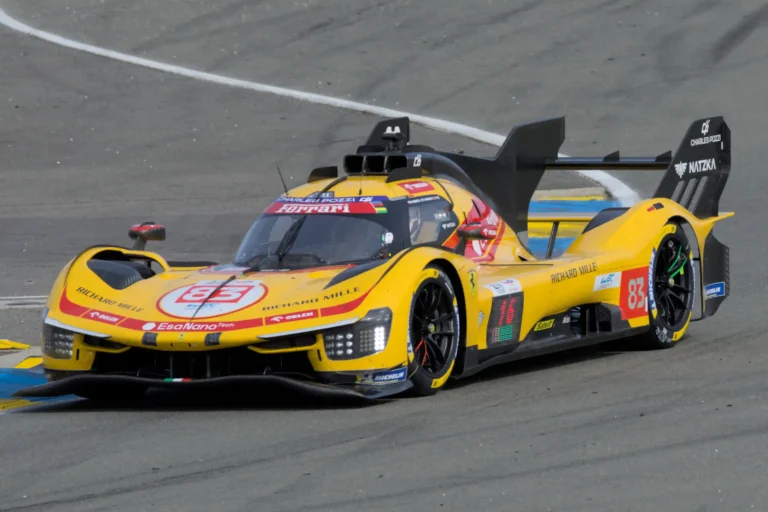
Ferrari arrived at Interlagos in genuinely impressive qualifying trim in FP1 — three 499Ps in the top four, separated by just 0.115 seconds between the highest and lowest of their trio. That kind of triple-car form is unusual and suggests a setup window that worked well in the morning conditions. However, Ferrari’s record at Interlagos in the Hypercar era is the weakest among the frontrunners — the 499P has never finished higher than fifth here. Moreover, the car’s pace dropped in FP2 compared to the Aston Martin and Genesis improvement, suggesting the Ferrari setup may be more sensitive to track temperature change than rivals. Championship pressure is acute: Ferrari enters São Paulo as defending world champion but is being outscored by Toyota and BMW in 2026.
Aston Martin Thor Team — The Valkyrie’s Strongest Circuit Yet
The Aston Martin Valkyrie topped FP1 through Harry Tincknell and remained in the top three in FP2 through both the #007 and #009 entries. This represents the Valkyrie’s most impressive single-session performance of the 2026 season. The car’s unique ground-effect aerodynamic package and unconventional layout have suited the low-downforce, high-speed elements of certain circuits better than others. At Interlagos, where braking distances are heavy and aerodynamic efficiency through flowing corners is rewarded, the Valkyrie appears to be genuinely at home. Furthermore, the team’s approach to tyre management — a consistent area of strong performance relative to qualifying pace — positions Aston Martin as an undercut threat if they’re inside the top five after Hyperpole.
Genesis Magma Racing — A Rookie Team Making Its Mark
The South Korean manufacturer’s first WEC season has been one of the genuine stories of 2026. Genesis topped FP2 for the first time in any WEC session — Jaminet’s #19 recording 1:24.271s — and the team has showed improving pace at every event from Imola through Spa and Le Mans. Home crowd driver Pipo Derani shares the #17 GMR-001 with André Lotterer and Mathys Jaubert, giving the São Paulo grandstands a Brazilian to cheer in the Hypercar class. However, Genesis has not yet translated single-lap pace into an endurance race result. Their strategy approach for this six-hour race will be the most interesting to monitor: do they commit fully to the race lead, or manage the risk of a DNF that could compromise their longer-term learning curve?
WEC Hypercar Drivers’ Championship — How It Stands
| Pos | Driver | Car / Manufacturer | Pts | Status |
|---|---|---|---|---|
| 1 | Conway / Kobayashi / de Vries | #7 Toyota TR010 | 75 | LEADS |
| 2 | Rast / Frijns / van der Linde | #20 BMW M Hybrid V8 | 71 | –4 |
| 3 | Buemi / Hartley / Hirakawa | #8 Toyota TR010 | 56 | –19 |
| 4 | Pier Guidi / Calado / Giovinazzi | #51 Ferrari 499P | 39 | –36 |
| 5 | Sheldon van der Linde | #15 BMW M Hybrid V8 | 61 | TOP 5 |
| 6 | da Costa / Milesi / Habsburg | #35 Alpine A424 | 28 | –47 |
| 7 | Stevens / Nato (+ Delétrax) | #12 Cadillac V-Series.R | 26 | HUNGRY |
| 8 | Magnussen / Marciello | #15 BMW M Hybrid V8 | 25 | –50 |
Toyota leads the Manufacturers’ Championship following Le Mans, with BMW close behind. The São Paulo result at the midpoint of the season carries double the usual weight — it can either extend a season-defining lead or trigger the kind of mid-campaign swing that rewrites a championship. For context on how WEC points accumulate across long campaigns, see our overview of how endurance racing championships are scored.
Frequently Asked Questions
Final Analysis — What Sunday Will Deliver
The 2026 Rolex 6 Hours of São Paulo is as open as any race the WEC has staged at this circuit. Toyota carries championship momentum and circuit history. Cadillac carries the local lap records and a genuine need to end its 2026 podium drought. Aston Martin’s Valkyrie looks at home here in a way it hasn’t at other circuits. And Genesis topped FP2 in their first-ever WEC session lead — rookie teams generally don’t do that without something real underneath.
The strategic framework is clear: win Hyperpole, manage the opening hour cleanly through traffic, and be absolutely decisive at every FCY window. The team that sits in the pits watching rivals stay out during a yellow phase will not win this race. Interlagos has a habit of producing results nobody expected entering race week — and with four different manufacturers winning the last four editions, the circuit is asking you to believe that a fifth is coming. The only question left is which one.
Sources & External References
Weekend schedule and circuit information confirmed via the official FIA WEC event page for the 2026 Rolex 6 Hours of São Paulo. FP1 results and session classification from Pit Debrief’s FP1 race report. FP2 classification and Genesis milestone from Pit Debrief’s FP2 race report. Pre-race championship analysis and entry list detail via FIA WEC’s official preview guide. Historical São Paulo winner records and 2026 WEC season context from the 2026 FIA WEC Wikipedia season entry.
Race result and final standings will be updated following Sunday’s chequered flag. All championship points quoted are as of the post-Le Mans classification entering Round 4.