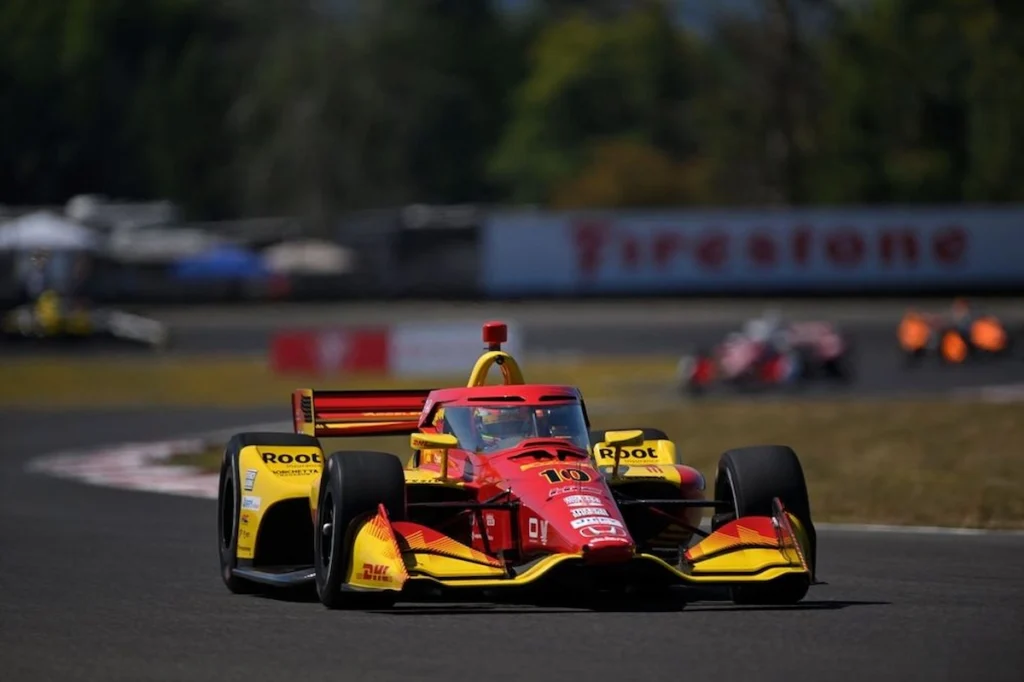
What Does An Airbox Do In F1? Formula 1 Airbox Explained
An F1 airbox feeds clean, high-speed air into the power unit. It also supports cooling, shapes airflow around the engine cover, and affects aerodynamic efficiency around the rear wing and upper bodywork.
The airbox looks like a simple hole above the driver’s helmet. However, it is one of the busiest pieces of bodywork on a Formula 1 car.

What does an airbox do in F1 is a better question than it first sounds. The airbox is not just a scoop. It is an intake, a pressure-management tool, a cooling pathway, and an aerodynamic compromise.
Formula 1’s official glossary describes the air intake as the opening above and behind the driver’s head. It pushes oxygen into the power unit and is often called the airbox.
This topic connects directly with ERS in F1, Energy Store, the ECU, and how car engines work.
In simple terms, the F1 airbox helps the engine breathe. However, it must do that without creating unnecessary drag or dirty airflow.
What Is An F1 Airbox?
An F1 airbox is the intake structure above the driver’s head. It collects incoming air and sends it toward the power unit.
On modern Formula 1 cars, that air is used by the turbo-hybrid engine system. Therefore, the shape of the intake matters for power delivery and efficiency.
The visible opening is only the start. Behind it are ducts, filters, separators, and internal routes that send airflow to the engine and cooling systems.
Race analyst view: A good airbox gives the power unit enough clean air, while staying small enough to protect rear-body aerodynamics.
Where Is The Airbox Located On An F1 Car?
The airbox sits above and just behind the driver’s helmet. It is built around the roll hoop area of the chassis.
That location is not accidental. It places the intake in clean, high-energy airflow away from the front tyres and sidepod turbulence.
It also gives engineers a direct route down toward the internal combustion engine, turbo compressor, plenum, intercooler path, and cooling ducts.
For cockpit and safety context, read about the F1 cockpit, the F1 monocoque, Halo in F1 cars, and HANS in F1.
How Does An F1 Airbox Feed The Engine?
At speed, air enters the airbox with dynamic pressure. The faster the car moves, the more useful the pressure recovery can become.
That air travels through the intake system toward the power unit. In a turbo-hybrid car, the compressor then helps push more air into the engine.
Mercedes-AMG Petronas explains that the turbocharger works with both the internal combustion engine and ERS. Therefore, air delivery is part of a wider power-unit system.
More useful oxygen allows the engine to burn fuel efficiently. However, a larger airbox is not automatically better. It can add drag and disturb flow to the rear wing.
| Airbox Job | Why It Matters | Performance Effect |
|---|---|---|
| Engine intake | Feeds oxygen to the power unit | Supports combustion and power delivery |
| Pressure recovery | Uses high-speed airflow efficiently | Helps reduce intake losses |
| Cooling feeds | Routes air to hot components | Protects reliability |
| Aero shaping | Controls upper-body airflow | Can affect drag and rear-wing flow |
Does The F1 Airbox Help Cool The Car?
Yes. The F1 airbox can also support cooling. Teams often divide the intake into several channels.
The central section may feed the engine. Meanwhile, side or secondary inlets can feed oil coolers, ERS components, intercoolers, or electronics cooling.
Formula 1 has discussed different airbox layouts, including Lotus’s E23 design with multiple cooling inlets placed lower around the roll hoop. That design aimed to reduce drag and smooth airflow to the rear wing.
Cooling is always a trade-off. Larger openings protect temperatures, but they usually cost aerodynamic efficiency.
_-_001.jpg)
How Does The Airbox Affect F1 Aerodynamics?
The airbox sits in a sensitive airflow zone. Air passing over the driver, roll hoop, engine cover, and shark fin eventually reaches the rear wing.
A bulky airbox can feed the engine well. However, it can also create turbulence and drag behind the cockpit.
A smaller airbox may improve rear-body flow. However, it must still deliver enough air for the engine and cooling systems.
This is why the F1 airbox links with F1 bodywork, downforce, clean air, and rear-wing endplates.
Why Do F1 Airbox Designs Change?
F1 airbox designs change because power-unit packaging changes. Cooling demand, turbo layout, radiator position, ERS needs, and aerodynamic targets all matter.
Some cars use a round or oval intake. Others use triangular shapes, split channels, or “ears” beside the main opening.
In the 1970s, tall airboxes became visually dramatic. Formula 1 has noted cars such as the Ligier JS5 and McLaren M23 as famous examples of that era.
Modern designs are more integrated. The airbox must work with the engine cover, sidepods, roll structure, and rear-wing airflow.
What Is Inside An F1 Airbox?
Inside an F1 airbox, the airflow is separated and directed. One path feeds the engine intake system. Other paths may help cooling.
Filters or screens help stop debris from entering the engine. Racecar Engineering notes that air filters must protect the engine without creating too much pressure loss.
The FIA technical rules also control engine intake air. For 2026, the regulations say engine intake air must enter through a maximum of two inlets in the defined bodywork area.
Can An F1 Car Run Without An Airbox?
In practical Formula 1 terms, no. The car needs a legal intake path to feed the power unit.
Without a proper airbox, the engine would lose clean air supply, debris protection, and designed pressure recovery. The cooling package would also suffer.
Moreover, the roll hoop and intake area are part of the car’s structure and bodywork concept. Removing the airbox would break the car’s complete design.
Final Verdict
An airbox in F1 feeds oxygen-rich air into the power unit. It also helps route cooling air and shape airflow over the top of the car.
The best airbox is not simply the biggest. It must feed the engine, protect temperatures, reduce pressure loss, and avoid hurting rear aerodynamics.
For beginners, the answer is simple. The F1 airbox helps the engine breathe. For serious fans, it is a compact engineering battle between power, cooling, drag, and downforce.
FAQs About The F1 Airbox
What does an airbox do in F1?
It feeds clean, high-speed air into the power unit and can also support cooling routes for hot components.
Where is the airbox located on an F1 car?
It sits above and behind the driver’s head, around the roll hoop area.
Why is the F1 airbox above the driver?
That position gives access to cleaner airflow and a direct route toward the engine intake system.
Does the airbox increase horsepower?
It can support engine performance by reducing intake losses and helping deliver enough oxygen to the power unit.
Does the F1 airbox cool the engine?
Yes. Many designs include channels that help cool power-unit, intercooler, ERS, or electronics components.
Is the airbox connected to the turbocharger?
On modern turbo-hybrid cars, the air intake system feeds air toward the turbo compressor and engine intake path.