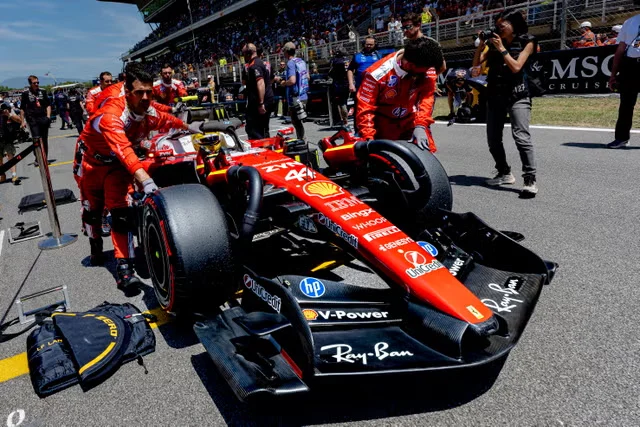
How Do F1 Teams Ship Cars Around the World?
Cars fly, garages cross oceans, trucks run overnight and customs specialists protect a schedule that cannot slip.
Formula 1 teams move cars and critical parts by air, use trucks for European races and local transfers, and send slower duplicate garage equipment by sea months in advance.
Formula 1 is not one race every two weeks. It is a moving industrial city that must rebuild itself in a new country without missing a deadline.
The public sees 22 cars, pit crews and television cameras. Behind them sit hundreds of containers, technical cases, servers and tools.
In 2025, DHL said the championship moved up to 1,200 metric tons of equipment per event. Moreover, more than 50 motorsport logistics specialists worked onsite.
The freight does not travel as one convoy. Instead, Formula 1 logistics use air, sea and road at the same time.
Race cars, power-unit components and broadcast systems need speed. Therefore, they usually fly between overseas events.
Heavy but less urgent equipment moves by sea. Teams maintain several duplicate freight sets that leapfrog around the calendar.
European rounds rely heavily on trucks. Up to 400 vehicles may move during a major regional transfer.
Consequently, the answer to how do F1 teams ship cars around the world is not “by plane.” The system is a carefully timed blend of three transport modes.
Every crate has a priority. Every part has documentation. Meanwhile, an advance crew works at the next track before the previous garage has fully closed.
That precision matters because a delayed hospitality panel is inconvenient. A delayed steering rack or chassis can end a race weekend.
This guide explains the full F1 car shipping process. It covers packing, customs, trucks, cargo aircraft, sea freight and emergency deliveries.
It also explains the sport’s lower-carbon logistics program. Formula 1 reported a 29% logistics-emissions reduction against its 2018 baseline in June 2026.
The Direct Answer: Formula 1 Uses Air, Sea and Road
Cars and race-critical parts usually travel by air between continents. Trucks handle Europe and local delivery, while duplicate non-critical equipment travels by sea.
The car is only one part of the shipment. A team must also move front wings, floors, tools, computers and pit equipment.
Formula 1 itself moves broadcast systems and event infrastructure. In addition, the FIA transports offices, garages and signaling equipment.
Air Carries the Irreplaceable Items
Race chassis, engines and vital electronics cannot wait for a ship. Therefore, teams load them onto priority air freight.
DHL says most air freight can leave by 10 a.m. on Monday after a race. That schedule supports the next Sunday’s event.
Sea Carries Duplicate Infrastructure
Garage structures, hospitality furniture and fan-zone equipment can travel slowly. Teams buy several identical sets instead of flying one set every week.
Consequently, one kit may wait in Singapore while another travels toward Miami. The equipment leapfrogs rather than follows the cars.
Road Freight Connects Every Mode
Even air cargo needs a truck between the airport and circuit. Sea containers also need road delivery from the port.
During the European season, trucks become the main transport method. They can also return parts to nearby factories.
The fastest cargo is not always the most important-looking cargo. A small electronic control unit can receive higher priority than an entire hospitality wall.
1. The Three-Lane Formula 1 Freight System
Formula 1 uses all three modes. Air handles urgent cargo, sea handles volume and road handles Europe plus the first and last mile.
Logistics planners balance four concerns. They must consider time, volume, cost and environmental impact.
No single mode wins every category. Therefore, each crate receives the method that fits its role.
| Transport Mode | Typical Cargo | Strength | Main Limitation |
|---|---|---|---|
| Air freight | Cars, power units, critical spares, broadcast technology | Fast enough for back-to-back races | Highest cost and emissions |
| Sea freight | Garage structures, hospitality items, fan-zone equipment | Efficient for heavy volume | Needs weeks or months of planning |
| Road freight | Cars, tools, motorhomes and regional freight | Flexible and direct in Europe | Driver hours, borders and city access |
Central Freight and Team Freight Are Different
DHL coordinates large parts of the championship’s logistics. However, each constructor also employs its own logistics and parts staff.
The central operation moves shared infrastructure. Teams manage their competitive hardware and internal inventory.
Planning Starts Before the Season
DHL says planning can begin a year in advance. Sea routes need especially long lead times.
Meanwhile, teams forecast the parts they may need months later. That process includes expected upgrades and crash damage.
The Calendar Shapes the Freight Plan
Regional groupings reduce unnecessary travel. However, promoter contracts and climate still determine many dates.
As a result, the freight map is never perfectly simple. Logistics teams build buffers around unavoidable long-distance moves.
2. What Happens After the Checkered Flag?
Mechanics inspect it, complete required checks, remove vulnerable parts and prepare the chassis and components for secure transport.
The transport race begins while fans are still leaving the circuit. Some crews start dismantling unused areas before the podium ceremony ends.
However, the team cannot pack everything immediately. Officials may still need to inspect cars or retain components.
The Car Enters Post-Race Scrutineering
The FIA may weigh cars and inspect legal components. Parc fermé restrictions also control access.
Therefore, mechanics wait for clearance before full disassembly. Learn more about the governing body in what the FIA does.
Data and Parts Are Checked
Engineers download data and record the condition of every major assembly. Damage changes the next freight decision.
A floor with minor wear may travel with the car. A heavily damaged part may return to the factory for repair.
The Garage Is Broken Into Modules
Tool cabinets, monitors and panels fit into labeled flight cases. Every case has a known location and loading order.
Consequently, the next garage can be rebuilt quickly. Missing one case can delay an entire workstation.
Priority Freight Leaves First
The cars and essential systems receive the earliest transport slots. Less urgent items follow later.
During a back-to-back, much of the work continues overnight. DHL reports that most air freight can depart by Monday morning.
3. Are F1 Cars Disassembled for Shipping?
Yes, but not reduced to every individual component. Teams remove vulnerable or oversized parts, protect the chassis and secure the car on a transport frame.
A Formula 1 car does not roll into an aircraft like a road vehicle. Its shape is too fragile and its parts are too valuable.
Teams partly strip the car. The exact process changes with the transport mode and team procedure.
Wings and Wheels Come Off
Front and rear wings are easy to damage. Wheels also add width and can move during transport.
Therefore, these items travel in separate protective cases. Nose assemblies and delicate bodywork receive custom supports.
The Chassis Sits on a Purpose-Built Frame
The monocoque and attached assemblies are strapped to a trolley or pallet. Engineers protect suspension and floor edges.
Shock, vibration and load direction matter. Carbon fiber is strong in designed directions but vulnerable to careless handling.
Fluids and Regulated Systems Need Attention
Teams follow dangerous-goods and aviation requirements. Certain fluids may be drained, limited or documented.
The energy store requires specialist packaging. Moreover, fire-response information must travel with regulated battery cargo.
Every Component Is Traceable
Serial numbers link parts to mileage and maintenance records. Barcode or digital inventory systems track each case.
As a result, engineers know which wing or gearbox arrived. They also know when it last raced.
For the car’s construction, read how an F1 car works, the F1 monocoque guide and how Kevlar is used.
4. How Formula 1 Air Freight Works
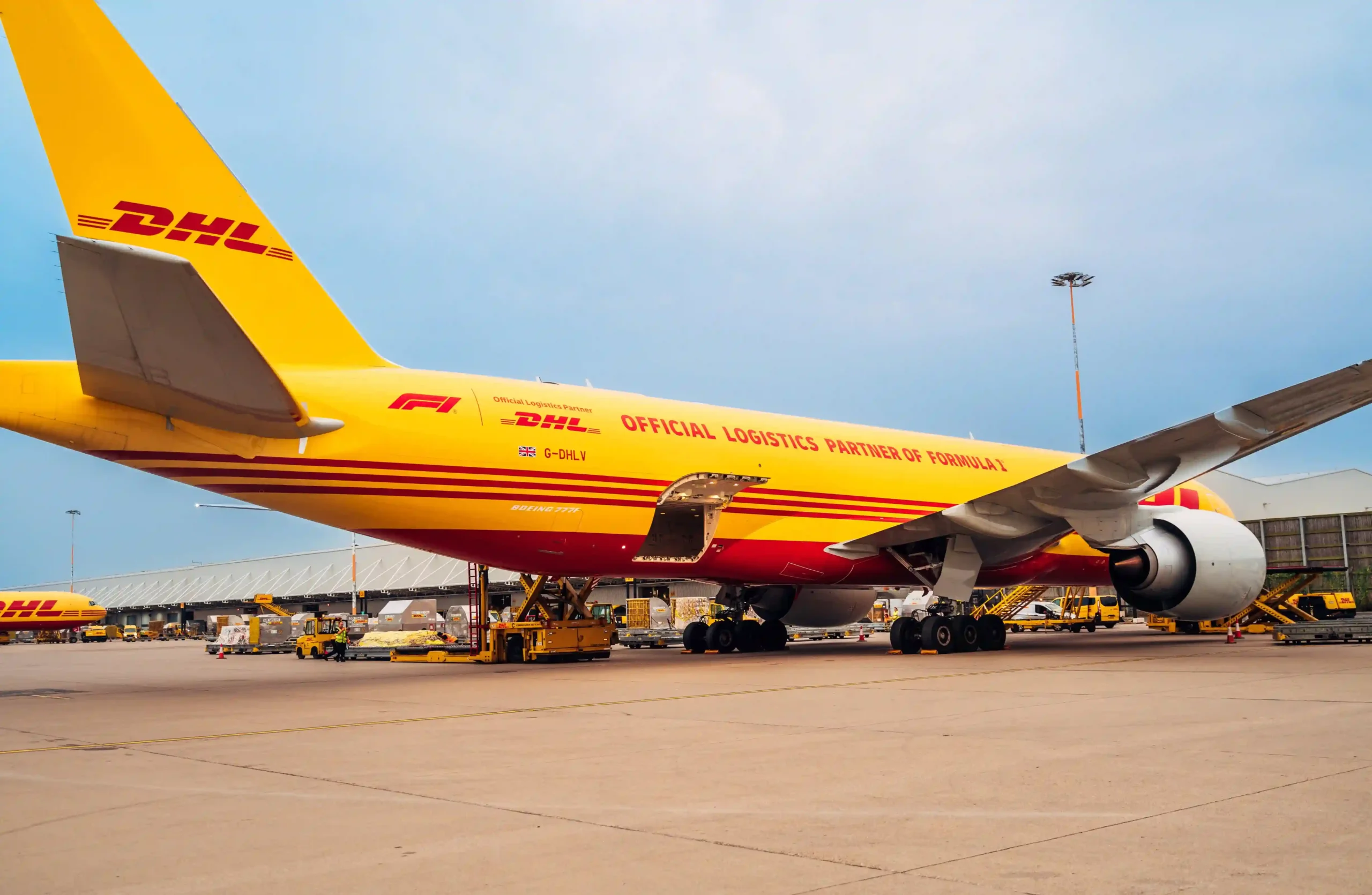
Formula 1 freight commonly uses large cargo aircraft, including fuel-efficient Boeing 777 freighters within DHL’s logistics network.
Air freight is the heartbeat of flyaway races. It moves the equipment that cannot be duplicated or delayed.
However, teams do not simply book ordinary baggage space. The cargo is consolidated into controlled freight operations.
Cars Travel on Pallets or Transport Frames
Specialist handlers build stable aircraft loads. Weight distribution must meet aviation requirements.
Meanwhile, cases are grouped by priority and destination. A loading error can bury an urgent item behind lower-priority cargo.
Security Is Tight
An F1 car contains valuable intellectual property. Components also have enormous financial value.
Therefore, access remains controlled. Seals, manifests and tracking systems document movement from circuit to airport.
Airports Are Part of the Race Schedule
The nearest airport may not handle large freighters. Logistics planners sometimes use a larger hub and add road transport.
Consequently, a short map distance can hide a complicated route. Runway limits and customs capacity matter.
Back-to-Back Flights Receive Absolute Priority
Cars, engines and broadcast systems need to reach the next venue first. Teams can replace chairs more easily than gearboxes.
That hierarchy controls the pallet plan. It also explains why non-critical equipment moves in duplicate sea sets.
5. Why F1 Team Trucks Dominate the European Season
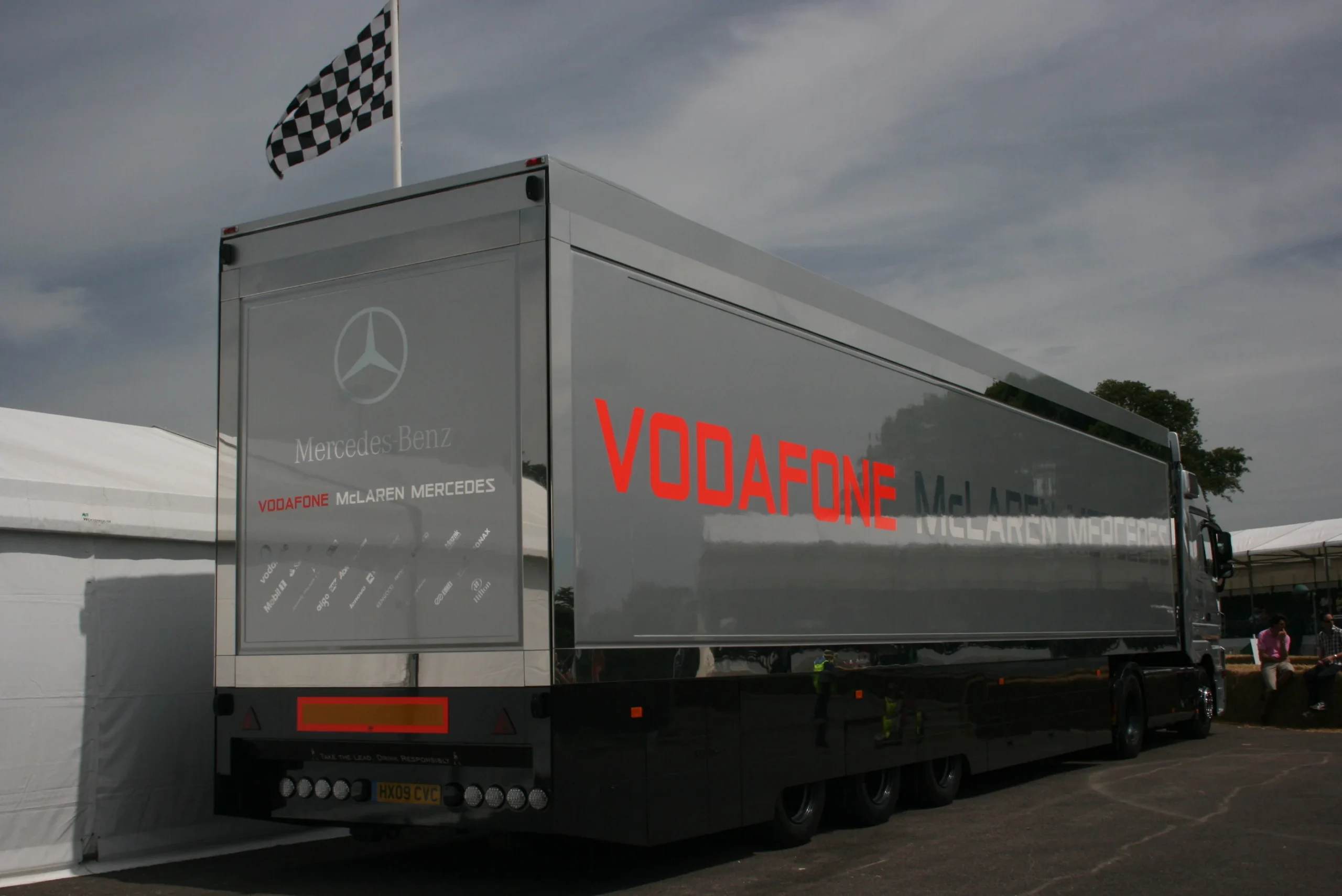
Teams use dedicated transporters and support trucks, often driving overnight between circuits and factories.
Most Formula 1 factories sit in the United Kingdom or continental Europe. That geography makes road transport practical.
Trucks can leave the circuit directly. They do not need airport pallet handling.
A Transporter Is More Than a Trailer
Race transporters can carry cars, tools and spare parts. Some function as mobile workshops.
In addition, separate vehicles carry hospitality structures and office equipment. The paddock arrives as a fleet.
Two Drivers Keep Key Trucks Moving
DHL says many European trucks use two drivers. This supports continuous movement within legal driving-hour rules.
Consequently, a convoy can cover long distances overnight. Driver changes reduce stationary time.
Factories Can Send Late Upgrades
A European race may sit only hours from a team base. Vans or trucks can deliver new components late in the week.
Therefore, European rounds offer more flexibility than distant flyaways. Teams can also return damaged parts quickly.
City Circuits Create Special Problems
Monaco cannot accept hundreds of trucks at once. Vehicles wait outside the city and enter in controlled order.
Las Vegas also uses holding areas. In both cases, access timing matters as much as driving time.
For race-weekend context, see how F1 pit stops work and why teams practice pit stops.
6. Why Teams Use Five or Six Sea-Freight Sets
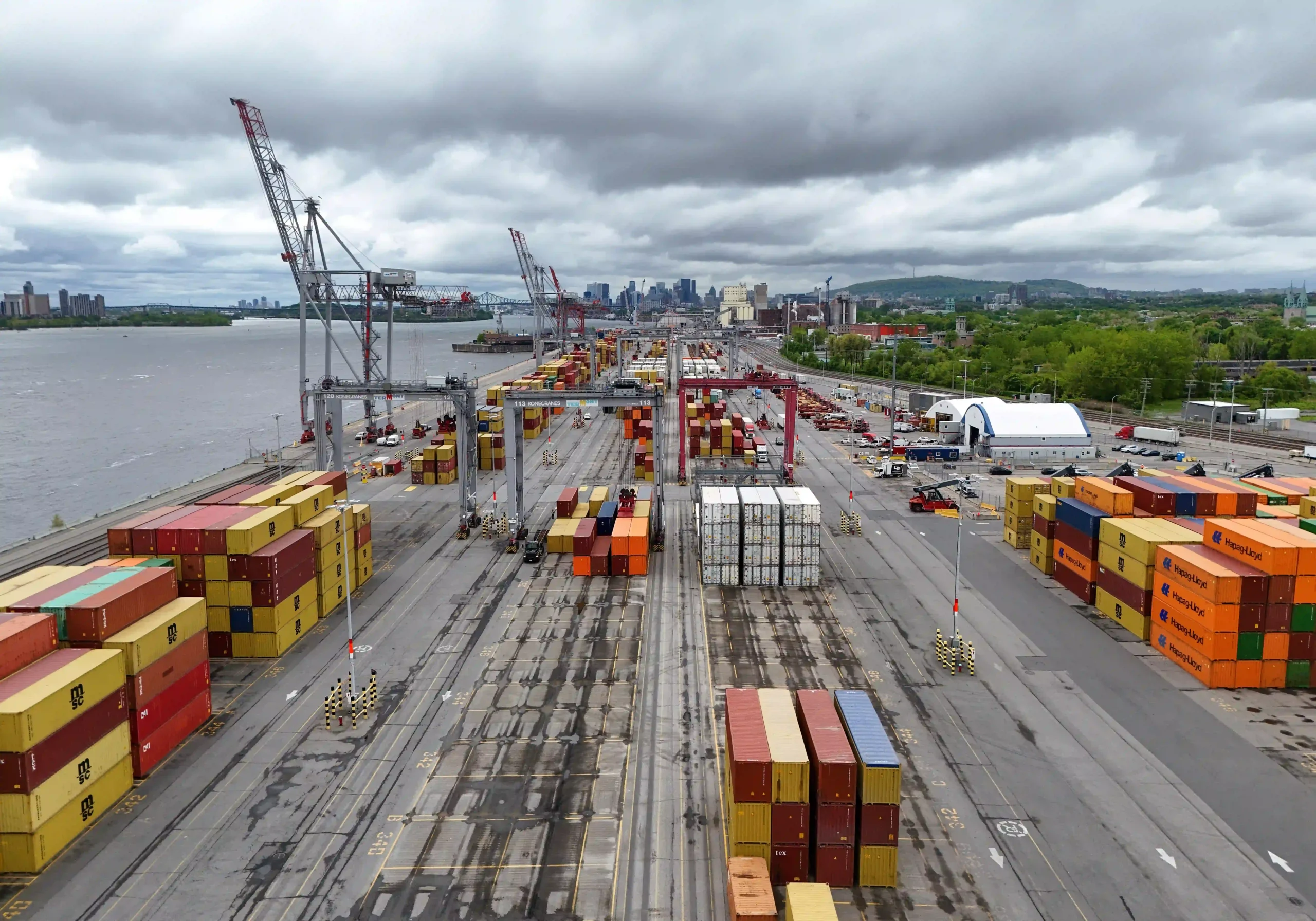
Race cars normally fly between flyaway events. Sea freight carries duplicated, non-critical equipment that can travel weeks ahead.
Ocean freight is slower. However, it handles large volume more efficiently than aircraft.
The solution is duplication. Teams and organizers maintain several nearly identical equipment sets.
The Sets Leapfrog Around the Calendar
DHL says teams may use five or six sets. Each one follows a long rotation across selected races.
For example, one set can move from Asia toward North America. Another waits near a later Middle Eastern event.
What Goes Inside the Containers?
Typical cargo includes garage frames, office furniture, hospitality equipment and fan-zone structures. These items do not affect lap time directly.
However, they still need accurate inventories. A missing electrical distribution box can delay garage construction.
Sea Freight Requires Early Forecasting
Teams cannot add a last-minute front wing to a ship that departed weeks earlier. Therefore, sea cargo is stable and repeatable.
Critical upgrades always use air or urgent road freight. The sea system protects air capacity for those items.
Ports Add Another Customs Layer
Containers need port handling, clearance and inland trucking. Congestion or route disruption can change the plan.
DHL noted that regional conflict has diverted some routes away from the Suez Canal. Flexibility remains essential.
7. How Teams Move and Rebuild an F1 Garage
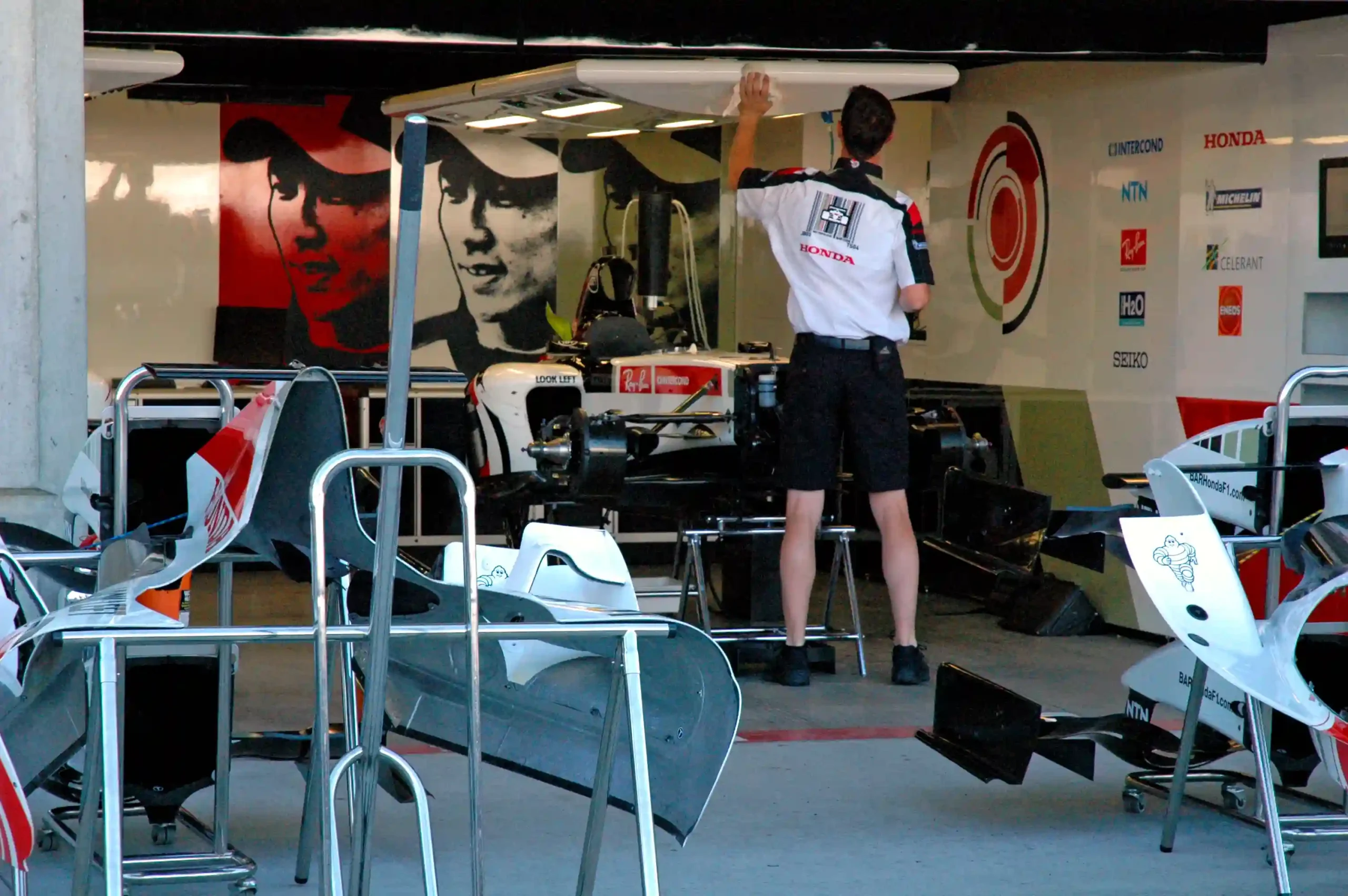
Teams break garages into modular panels, cases and workstations. Labeled freight units then allow the same layout to be rebuilt at the next circuit.
An F1 garage looks permanent on television. In reality, most of its visible surfaces are temporary.
Teams create a consistent working environment at every track. Familiarity reduces mistakes.
Modular Walls Hide Technical Systems
Brand panels cover cables, air lines and storage. Lighting rigs create a uniform workspace.
Moreover, engineers need secure network connections. The garage is an information center as much as a workshop.
Cases Become Furniture
Some flight cases transform into cabinets or benches. This reduces separate freight.
Consequently, packaging becomes part of the operational design. Every inch of cargo volume matters.
The Pit Wall Has Its Own Systems
Timing screens, radios and data equipment require careful setup. Teams test links before cars run.
Formula 1 also moves central timing and broadcast infrastructure. Learn how race timing works.
Advance Crews Arrive First
Setup specialists may reach the next circuit before the race team. They receive sea and road freight, then begin construction.
By Thursday, the garage should feel finished. The rapid transformation hides days of work.
8. Tires, Fuel, Batteries and Other Special Cargo
Tires move through the championship’s supplier logistics system, while energy stores and regulated materials follow dangerous-goods packaging and documentation rules.
Not every item can enter a normal crate. Some cargo needs temperature, fire or chemical controls.
Therefore, logistics teams include dangerous-goods specialists. Their paperwork can be as important as the packaging.
The Energy Store Needs Specialist Handling
Formula 1 hybrid batteries store significant energy. Air-transport rules treat lithium systems carefully.
Teams use approved cases and secure electrical states. Emergency information remains available to handlers.
Fuel and Lubricants Follow Local Rules
A product that clears easily in one country may need added approval elsewhere. DHL identifies fuel as a customs variable.
Consequently, suppliers plan each destination separately. One universal process does not cover the whole calendar.
Tires Operate Through a Dedicated Supply Chain
The tire supplier brings allocated sets to each race. Wheels belong to the teams, while tires remain controlled competition equipment.
Used tires follow post-event procedures. Teams cannot treat them like ordinary spare parts.
Compressed Gases Need Documentation
Garage systems may use nitrogen or other regulated materials. Cylinders require approved transport and secure storage.
As a result, the freight manifest separates dangerous goods from ordinary cases.
Read the F1 energy-store guide and the Formula 1 tire explainer.
9. Customs, ATA Carnets and Temporary Import
An ATA Carnet is an international customs document that can permit duty-free and tax-free temporary import of eligible goods for up to one year.
A Formula 1 car may be worth millions. However, it is not being sold when it enters a race country.
It should leave again after the event. Temporary-import systems prevent teams from paying permanent import duty on eligible freight.
The Carnet Works Like a Passport for Goods
The International Chamber of Commerce specifically uses F1 cars as an example. The document contains unified customs forms and a financial guarantee.
Therefore, customs can record entry and re-export. The same listed goods must complete the cycle correctly.
Every Shipment Needs a Precise Manifest
Teams identify parts, quantities, values and serial numbers. Customs officers may inspect the cargo.
Consequently, a vague description such as “car parts” is not enough. Accuracy prevents delays and disputes.
Digital Carnets Are Expanding
The ICC is moving the ATA system toward digital procedures. During the transition, paper and digital formats may operate together.
Logistics staff must know the requirements of each country. A document accepted at one border may need another format elsewhere.
Split Shipments Create Extra Complexity
A team may send parts on different flights. Customs systems must connect each portion to the correct declaration.
Therefore, urgent factory deliveries require coordination. Speed without paperwork can leave a part trapped at the airport.
10. How Teams Survive Back-to-Back and Triple-Header Races
They use priority air freight, duplicate equipment, advance crews, pre-cleared customs documents and regional routing.
A normal race gap allows recovery. A back-to-back removes most of that buffer.
Triple-headers create even more pressure. People and equipment remain on the road for weeks.
The Next Race Starts on Sunday Night
Critical cases receive prepared labels before the current event ends. Staff know the aircraft pallet plan in advance.
Therefore, the garage pack-down follows a script. Debate wastes time.
Advance Teams Work Ahead
One group dismantles the current circuit. Another receives containers at the next venue.
Consequently, setup and teardown overlap. Formula 1 effectively operates in two countries at once.
Regional Calendar Grouping Helps
Nearby races reduce distance and emissions. However, city access and border rules can erase part of the advantage.
For example, DHL notes that Monaco’s controlled truck entry complicates a short regional move.
Damaged Cars Change the Freight Plan
A major crash can create a factory repair mission. Teams may fly a replacement chassis or new floor.
Moreover, the cost cap increases the importance of efficient repair. Learn what causes racing crashes.
11. How Teams Track Tens of Thousands of Parts
Teams use digital manifests, serial numbers, barcode or RFID systems, GPS and logistics dashboards to follow freight and parts.
A modern car contains many assemblies and subassemblies. Several specifications may exist for the same component.
Therefore, knowing that “a front wing arrived” is not enough. Engineers need the correct version.
Inventory Systems Link Factory and Track
Parts staff record movement, mileage and repair status. The database shows where each item should be.
As a result, the factory can prepare replacements before a request becomes urgent.
Freight Cases Have Fixed Identities
Cases receive numbers and destinations. Scans confirm loading and unloading.
This prevents a computer rack for one garage station from traveling to the wrong circuit.
GPS Supports Road Efficiency
DHL has used GPS on dedicated F1 trucks to monitor routes and fuel use. It also helps operations teams estimate arrival times.
However, tracking cannot remove traffic or border delays. It gives planners earlier warning.
Shock and Temperature Data Protect Sensitive Cargo
High-value electronics and composites can use monitoring sensors. A recorded impact triggers inspection.
Consequently, teams do not discover every problem during garage setup. Damage can be flagged in transit.
12. What Happens When Freight Is Delayed?
It is possible, but extensive contingency planning, duplicate equipment and emergency freight make it rare.
Formula 1 logistics face weather, strikes, customs problems and geopolitical disruption. No schedule is completely protected.
The response depends on the missing cargo. A team can borrow a ladder more easily than a legal chassis.
Emergency Aircraft Can Rescue a Shipment
DHL described a pre-Australian Grand Prix disruption involving 150 tons of delayed ocean cargo. Three dedicated air freighters completed the rescue.
A 100-person team worked around the clock. That example shows the scale of contingency planning.
Teams Carry Redundancy
Duplicate sea sets protect garage infrastructure. Spare tools and common items may also exist at regional hubs.
However, bespoke car parts cannot be duplicated without limit. Teams prioritize likely crash and reliability needs.
Local Sourcing Can Fill Small Gaps
Basic hardware, office supplies or workshop materials may be sourced near the circuit. Competitive components cannot.
Therefore, local purchasing solves operational gaps. It does not replace the technical freight system.
Alternative Routes Are Planned
Ports, airports and road corridors can close. Logistics teams identify backups before a crisis.
Consequently, flexibility becomes a competitive safeguard. A late car cannot score points.
13. How Much Freight Does Formula 1 Move?
Exact team totals vary, while DHL’s 2025 championship overview cited up to 1,200 metric tons of equipment transported per event.
The 1,200-ton figure covers the wider event operation, not one constructor. Team cargo varies with race location and freight allocation.
Moreover, flyaway packages are leaner than European paddock operations. Large motorhomes do not travel to every overseas race.
Weight Is Not the Only Constraint
Aircraft cargo uses volume as well as mass. A light but bulky garage panel can consume valuable space.
Therefore, teams design equipment to pack efficiently. Cases stack and fit standard pallets.
Cars Are a Small Share of Total Volume
Two chassis look dramatic. However, garage structures, tools and broadcast equipment occupy far more space.
Consequently, reducing support freight can create larger savings than reducing car weight in transport.
Freight Allocation Forces Choices
Teams forecast which spare parts deserve space. A new upgrade may displace older bodywork.
Those choices involve reliability and circuit risk. A street race may require more replacement wings.
No Public Universal Team Number Exists
Online claims often present one figure as standard. In reality, teams and race packages differ.
Therefore, reliable articles should separate championship freight from individual-team freight.
14. How Much Does Formula 1 Transportation Cost?
There is no public standard price because the car travels inside a larger team and championship freight operation with changing routes, urgency and customs costs.
Air charter costs, handling and security all vary. A last-minute component flight costs more than planned consolidated freight.
Sea freight is cheaper per unit but requires duplicate equipment. Therefore, teams trade capital cost against transport cost.
Urgency Is Expensive
A planned pallet shares a larger load. An emergency upgrade may need dedicated express handling.
Consequently, factory delays create logistics expense. Production planning affects freight budgets.
Insurance Reflects the Cargo Value
Cars, engines and electronics have high replacement values. Teams need specialist coverage and secure handling.
However, the largest loss may be sporting. Missing a race can cost points and prize money.
Customs Errors Add Hidden Cost
Incorrect documents can create storage charges and missed flights. Staff time also rises during a dispute.
Therefore, experienced customs specialists save more than they cost.
Cost-Cap Treatment Is Technical
The FIA Financial Regulations define inclusions and exclusions. Teams should not assume every travel or logistics expense receives identical treatment.
For a wider cost guide, read how much an F1 car costs and how much F1 drivers make.
15. How Formula 1 Is Cutting Freight Emissions
It is increasing sea freight, using regional hubs, investing in sustainable aviation and maritime fuels, and expanding biofuel-powered European trucks.
Formula 1 cannot reach net zero by changing the race fuel alone. Freight is a major operational challenge.
In June 2026, the sport reported logistics emissions almost 20,000 tCO2e below 2018. That represented a 29% reduction.
Air Freight Is Using More Sustainable Aviation Fuel
Formula 1, teams and the FIA doubled SAF investment during 2025. The sport reported an approximate 40% reduction in related air-charter emissions.
DHL’s GoGreen Plus program uses a book-and-claim approach. Therefore, environmental attributes can support freight even when physical fuel supply differs by airport.
Sea Freight Is Expanding
Formula 1 made its first investment in sustainable maritime fuel in 2025. It also plans to move more broadcast freight away from air.
By 2030, the sport expects more than half of current broadcast and related freight to leave air transport.
Biofuel Trucks Cover European Routes
DHL listed 51 biofuel-powered trucks in its 2025 overview. It estimated an average 83% emissions reduction per trip.
Moreover, route planning and regional grouping reduce wasted distance. Efficiency supports both sustainability and cost.
New Containers Support Efficient Aircraft
Formula 1 invested in freight containers designed for Boeing 777 operations. Better equipment can improve loading efficiency.
Consequently, logistics improvement includes hardware and planning. It is not limited to fuel.
The Calendar Still Matters Most
A regionalized calendar reduces continent-to-continent movement. Formula 1 says calendar rationalization began taking greater effect from 2026.
However, complete regional grouping remains difficult. Weather, contracts and local events influence dates.
16. The People Who Run the Race Behind the Race
The role covers freight planning, inventory, customs, suppliers, transport deadlines and contingency decisions across the season.
Logistics performance rarely receives a trophy. Yet a failure can stop the team from competing.
The work starts at the factory and continues through airports, ports and circuit loading bays.
Team Logistics Staff Manage Competitive Cargo
They coordinate cars, parts and garage equipment. They also communicate with engineers about late upgrades.
Consequently, technical priorities shape freight decisions. A logistics manager must understand racing needs.
DHL Runs the Global Transport Network
DHL has served as Formula 1’s official logistics partner for more than two decades. Its specialists coordinate international modes and local delivery.
In addition, DHL now handles FIA infrastructure for Formula 1, Formula 2 and Formula 3 events.
Customs Specialists Protect the Schedule
They prepare carnets, invoices and dangerous-goods declarations. They also resolve border questions.
A strong customs team prevents technical cargo from becoming warehouse cargo.
Truck Drivers Are Part of the Paddock Rhythm
They move high-value equipment through narrow delivery windows. Many sleep near the transporters during intensive European runs.
Therefore, the race operation depends on professional driving far beyond the circuit.
Common Myths About Formula 1 Logistics
“The Cars Travel Fully Assembled”
False. Teams remove vulnerable and oversized parts.
The protected chassis then travels on a frame or pallet.
“Everything Goes on One Cargo Plane”
False. Freight moves on multiple aircraft, ships and trucks.
Different items also leave at different times.
“Sea Freight Is Too Slow for Formula 1”
False. Duplicate equipment makes slow freight practical.
The sea sets travel ahead rather than following each race car.
“Teams Pay Import Duty in Every Country”
False. Eligible temporary-import systems, including ATA Carnets, can avoid permanent duty.
However, documentation must be precise.
“European Races Are Logistically Easy”
False. Road distance is shorter, but city access, borders and triple-headers remain difficult.
Monaco is a clear example.
“Sustainability Means Eliminating Air Freight Tomorrow”
False. Race-critical cargo still needs speed.
Formula 1 is shifting suitable freight to sea while using lower-carbon fuels for remaining flights.
Formula 1 Logistics FAQs
How do F1 teams ship cars around the world?
Cars and critical parts travel by air between continents. Trucks handle Europe and local delivery, while duplicate non-critical equipment travels by sea.
Are Formula 1 cars disassembled for shipping?
They are partly stripped. Teams remove vulnerable items such as wings and wheels, then secure the chassis on a transport frame.
How do F1 teams clear customs?
Freight specialists use detailed manifests and temporary-import documents. ATA Carnets can serve as passports for eligible goods.
What happens during a back-to-back F1 race?
The garage is dismantled after Sunday’s race. Priority cargo leaves quickly while an advance team prepares the next circuit.
Conclusion: Logistics Wins Before the Cars Start
So, how do F1 teams ship cars around the world?
They use a layered transport system. Air, sea and road each carry a different part of the championship.
The cars normally fly between continents. Race-critical parts travel with the highest priority.
However, the entire paddock cannot fly every week. Sea freight carries duplicate garage and hospitality equipment.
Teams commonly use five or six sea sets. Those containers leapfrog around the global calendar.
Road freight completes every journey. It also becomes the main system during the European season.
Up to 400 trucks can move in a major European operation. Many use two drivers to maintain progress.
The race car itself receives careful preparation. Wings, wheels and vulnerable parts come off.
Moreover, the chassis sits on a purpose-built transport frame. Carbon-fiber edges and suspension components receive protection.
Special cargo needs extra controls. Batteries, fuel, gases and lubricants follow dangerous-goods rules.
Customs paperwork is equally important. A part without the right document may remain at the airport.
ATA Carnets support temporary import. They allow eligible goods to enter and leave without permanent duties.
Back-to-back races compress the entire operation. Packing begins after the checkered flag.
By Monday morning, much of the priority air freight may already be moving. Meanwhile, the next setup crew is working ahead.
Digital tracking protects the plan. Serial numbers, manifests and scans show which components are in each shipment.
However, global logistics always carries risk. Weather, customs and conflict can disrupt routes.
Formula 1 therefore maintains backups. Duplicate sets, regional hubs and emergency aircraft protect the schedule.
The scale is enormous. DHL cited up to 1,200 metric tons of equipment per event in 2025.
Yet the system remains precise. Every case has a loading position and deadline.
Sustainability now changes those decisions. Formula 1 is moving suitable freight from air to sea.
It also uses sustainable aviation fuel and biofuel-powered trucks. Maritime fuel became part of the strategy in 2025.
By June 2026, Formula 1 reported logistics emissions 29% below its 2018 baseline. More change is planned before 2030.
Ultimately, Formula 1 logistics is another engineering competition. Speed matters, but organization matters more.
A car cannot win from a cargo terminal. The first race is getting every part to the circuit.
Sources and Fact-Checking
This article was checked against official Formula 1, DHL and International Chamber of Commerce material available on July 28, 2026. Team-specific packing methods and freight totals vary, so unsupported universal figures are not presented as confirmed facts.
- DHL: Inside the world of F1 logistics, including freight volume, trucks, sea sets and 2025 routes
- Formula 1: 2026 Net Zero progress report and logistics-emissions data
- Formula 1: official logistics explainer with DHL and team specialists
- International Chamber of Commerce: ATA Carnet temporary-import system