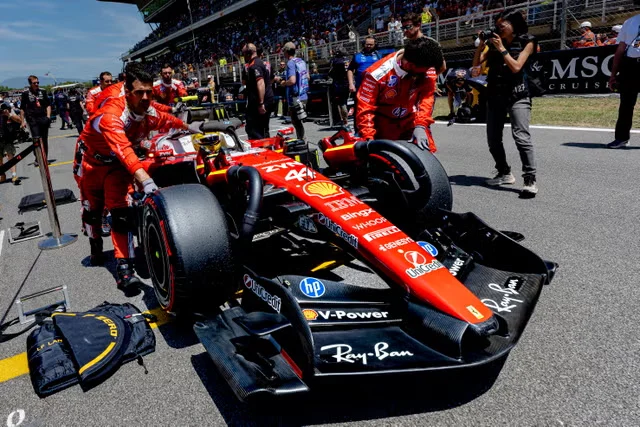
What Does an F1 Race Engineer Do?
The voice on the radio must turn data, driver feedback and specialist advice into clear decisions while a Grand Prix unfolds at racing speed.
An F1 race engineer runs one driver’s trackside operation. The engineer coordinates setup, specialists, telemetry, reliability and strategy, then delivers the most important information through team radio.
The race engineer is the driver’s main link to the entire Formula 1 team.
Fans hear one calm voice on the radio. Behind that voice sit performance engineers, strategists, mechanics and factory specialists.
The race engineer gathers their information and decides what the driver needs to know.
That task sounds simple. However, every message competes with braking, steering, traffic and physical stress.
A driver cannot study ten data screens at 200 mph. Therefore, the engineer filters the noise.
During practice, the engineer manages the run plan and car setup.
During qualifying, the engineer controls timing, traffic and tire preparation.
During the race, the job expands again. Gaps, hazards, tire targets and strategy can change within seconds.
The engineer also listens carefully to driver feedback.
A complaint about understeer may point toward front-wing balance, differential settings or tire temperature.
Meanwhile, sensor data may reveal a brake or power-unit concern before the driver feels it.
The race engineer does not work alone. Each car has a small engineering group.
The performance engineer studies lap time and electronic settings in deeper detail.
Controls and power-unit engineers focus on their specialist systems.
Strategy engineers compare pit windows and rival behavior.
The chief engineer coordinates both sides of the garage.
However, the race engineer remains the single operational voice for the driver.
That relationship depends on trust. A driver must believe the information immediately.
In addition, the engineer must understand the driver’s language, stress level and preferred amount of detail.
A technically perfect message can still fail if it arrives at the wrong moment.
The role has become more complex in 2026.
New power-unit deployment, Active Aero and energy-management demands have added fresh procedures.
Haas race engineer Laura Mueller described 2026 as a season with many new deployment concerns.
Yet the basic purpose has not changed.
So, what does an F1 race engineer do? The engineer turns a huge racing organization into one useful voice inside the cockpit.
F1 Race Engineer Responsibilities at a Glance
The race engineer manages the driver’s program, setup direction, radio communication, specialist coordination, reliability response and execution of the team’s race plan.
The job combines technical engineering with live operations.
Moreover, it requires leadership because many specialists contribute to one car.
| Responsibility | What the Engineer Does | Why It Matters |
|---|---|---|
| Driver communication | Provides traffic, gaps, hazards, targets and instructions | Gives the driver information unavailable from the cockpit |
| Run-plan management | Organizes laps, fuel loads, tires and test items | Maximizes limited track time |
| Car setup | Turns feedback and data into mechanical setup requests | Improves balance, confidence and tire use |
| Engineering coordination | Combines advice from performance, controls and power-unit staff | Prevents specialists from overwhelming the driver |
| Strategy execution | Communicates pit calls and adapts the plan with strategists | Converts simulations into track position |
| Reliability response | Relays switch changes, cooling targets or stop instructions | Protects the car and driver |
| Session review | Leads or supports briefings before and after running | Turns experience into the next improvement |
The Engineer Manages the Whole Car Crew
The role is broader than reading telemetry.
The engineer checks whether setup changes, tires and procedures are ready before release.
The Driver Receives a Filtered Version of the Team
Factory staff may identify dozens of useful details.
However, the driver only needs information that affects the next corner, lap or decision.
The Job Changes With the Session
Practice rewards learning. Qualifying rewards precision.
Meanwhile, the race rewards adaptation and calm execution.
The best race engineer is not the person who speaks most. It is the person who sends the right message at the exact moment the driver can use it.
Where the Race Engineer Fits Inside an F1 Team
Yes. Every race driver works with a dedicated race engineer who leads that car’s trackside program and acts as the main communication link.
A Formula 1 team operates two cars.
Therefore, it normally builds a dedicated engineering group around each driver.
The Race Engineer Leads the Driver-Side Operation
The engineer coordinates the garage crew and technical specialists.
However, the exact reporting structure differs between teams.
The Performance Engineer Studies Fine Detail
This specialist focuses on telemetry, simulations and driver technique.
They may recommend brake balance, differential or control-setting changes.
The Controls Engineer Manages Electronic Systems
Gearshift behavior, start procedures and control maps require specialist attention.
The race engineer then communicates relevant changes to the driver.
Power-Unit Engineers Balance Speed and Reliability
They monitor temperatures, energy use and system health.
Consequently, they may request a switch change or driving target.
Mechanics Turn Engineering Decisions Into Physical Changes
Mechanics adjust wings, suspension and bodywork.
The race engineer must ensure the requested setup reaches the car correctly.
The Chief Race Engineer Connects Both Cars
A discovery on one side can help the other.
Therefore, information flows across the garage rather than remaining with one driver.
Our guide to the FIA’s role in Formula 1 explains the wider regulatory structure.
What a Race Engineer Does Before the Grand Prix Weekend
The engineer reviews previous data, simulator work, setup options, weather, tire allocation, run plans and operational risks before arriving at the circuit.
The job begins long before the garage opens.
Engineers prepare a baseline plan using simulations and past events.
Previous Races Reveal Car Limitations
The team reviews where the car gained and lost time.
Moreover, reliability issues can change the next weekend’s priorities.
Simulator Work Builds a Starting Setup
Drivers and simulation engineers test ride height, wing level and balance.
The result becomes a starting point rather than a final answer.
Read our history of racing simulators.
The Run Plan Uses Every Minute
Practice time is limited.
Therefore, each lap receives a purpose: setup comparison, tire test, qualifying simulation or long run.
Weather Changes the Order of Work
Rain later in the day may force dry testing earlier.
Likewise, extreme heat can place cooling work above pure performance.
The Engineer Prepares Alternative Plans
Red flags and mechanical problems can destroy the original schedule.
As a result, backup priorities must be clear before the session starts.
Driver Briefings Establish Language
The pair reviews corner names, procedures and target terminology.
Clear language saves time when pressure rises.
What the Race Engineer Does During Practice
The engineer controls the run plan, releases the car into safe gaps, gathers driver feedback, checks setup changes and decides how to use the remaining track time.
Practice is an engineering session rather than a simple speed contest.
The fastest lap can matter less than the quality of the learning.
Installation Laps Check the Car
The first run confirms systems, brakes and basic operation.
Engineers compare sensor behavior with expected values.
Learn more about the F1 installation lap.
Traffic Management Protects the Program
A qualifying simulation needs clear track.
Therefore, the race engineer watches gaps and warns about faster cars.
Setup Tests Need Controlled Comparisons
Changing several items together can hide the cause.
Consequently, engineers often isolate one major variable.
Driver Feedback Adds Context to Data
Telemetry can show steering angle and speed.
However, it cannot fully describe confidence, visibility or changing wind.
Long Runs Measure Tire Degradation
Teams compare lap-time loss, temperature and balance change.
That information shapes Sunday strategy.
Red Flags Force Rapid Replanning
A stopped session can remove half the program.
The engineer must then choose the highest-value remaining test.
Practice Debriefs Turn Feelings Into Actions
The driver describes corner phases and balance.
The engineering group then agrees on the next setup direction.
What the Race Engineer Does During Qualifying
The engineer manages release timing, traffic, tire preparation, lap gaps, session clocks and emergency decisions while protecting the driver’s concentration.
Qualifying creates a different type of pressure.
One poor release can waste the fastest car.
Track Evolution Rewards Late Laps
Grip often improves as more rubber reaches the circuit.
However, waiting too long increases red-flag and traffic risk.
Out-Lap Pace Controls Tire Temperature
The driver needs energy in the tires without overheating them.
The engineer provides gaps and preparation targets.
Traffic Can Ruin Both Drivers
A slow car may block a flying lap.
Meanwhile, an unnecessarily slow out-lap can create an impeding investigation.
The Engineer Watches the Elimination Line
Q1 and Q2 require enough speed to advance.
Therefore, the team decides whether another run is necessary.
Radio Silence Can Be Valuable
Too much information interrupts rhythm.
A trusted engineer knows when not to speak.
Aborted Laps Need Instant Decisions
A mistake in the first sector may justify backing off.
However, battery, tire and time remaining all affect that choice.
Our guide to how F1 qualifying works explains Q1, Q2 and Q3.
What the Race Engineer Does During the Grand Prix
The engineer tracks gaps, tire condition, fuel and energy targets, hazards, reliability and strategy while communicating clear instructions to the driver.
The race combines every part of the role.
Plans change as rivals pit, tires degrade and incidents occur.
The Formation Lap Confirms Readiness
The engineer checks procedures, temperatures and grid information.
Any concern must be understood before the start.
The Opening Laps Require Minimal Radio
Traffic and tire temperature demand full concentration.
Therefore, messages focus on urgent hazards or failures.
Gaps Shape Every Strategic Option
The engineer reports cars ahead and behind.
That information helps the driver understand undercut and overcut risk.
Tire Targets Protect Stint Length
A driver may need to reduce sliding or manage pace.
The engineer translates degradation data into a useful target.
Fuel and Energy Need Continuous Attention
Lift-and-coast instructions can protect fuel, brakes and temperatures.
In 2026, energy deployment adds another tactical layer.
The Engineer Coordinates Pit Entry
A stop requires strategy, tire selection and pit-crew readiness.
The final radio call must be unmistakable.
Late-Race Attacks Change Priorities
Management targets may disappear near the finish.
Consequently, the driver can receive permission to use maximum available pace.
What F1 Team Radio Messages Really Mean
The race engineer is normally the main voice. Other specialists feed information to that engineer, who filters and delivers it to the driver.
Formula 1 radio uses short, familiar phrases.
The goal is clarity rather than entertainment.
| Radio Message | Typical Meaning | Why It Is Short |
|---|---|---|
| “Box, box” | Enter the pit lane at the end of this lap | Removes doubt during a time-critical call |
| “Pit confirm” | Use the agreed steering-wheel confirmation for the stop | Ensures driver and team share the same plan |
| “Stay out” | Do not pit this lap | Cancels or prevents a possible stop |
| “Push now” | Use the available pace for a defined period | Signals an attack, undercut or qualifying target |
| “Lift and coast” | Release the throttle before braking | Manages fuel, brakes, temperatures or energy |
| “Manage tires” | Reduce damaging sliding or thermal stress | Extends useful tire life |
| “Opposite the car ahead” | Take the strategic alternative to the referenced rival | Preserves flexibility and hides the exact plan |
| “Target plus two” | Adjust pace relative to a pre-agreed lap target | Communicates management without a long explanation |
| “SOC” or energy target | Manage battery state of charge | Controls deployment across the lap |
| “Plan B” | Switch to a pre-briefed strategy scenario | Allows quick changes without discussing every detail |
Messages Are Prepared Before the Race
Plan names and targets are agreed during briefings.
Therefore, a two-word message can carry a detailed meaning.
Rival Teams Can Monitor Radio
Teams follow competitor communications alongside GPS and timing.
As a result, engineers avoid revealing unnecessary strategy detail.
Television Does Not Broadcast Every Message
The world feed selects radio clips for viewers.
The operational conversation is much larger than the broadcast sample.
Radio Tone Matters
Urgency can be communicated without shouting.
A calm tone helps the driver recognize whether a message is routine or critical.
How Race Engineers Use F1 Telemetry
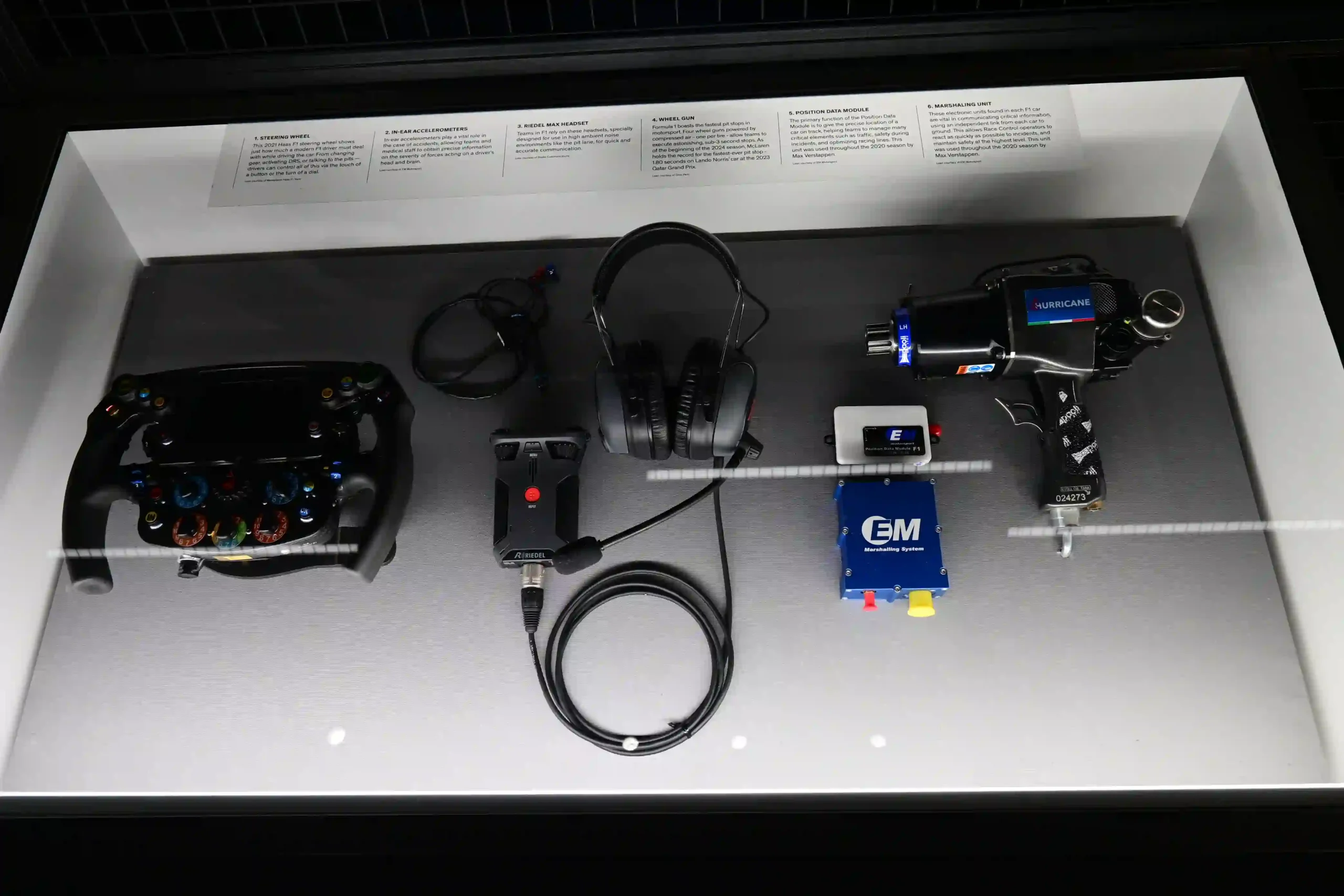
The engineering group monitors speed, throttle, braking, steering, temperatures, pressures, energy, tire behavior and many reliability channels. The race engineer focuses on the information that affects the car’s operation.
Telemetry sends live measurements from the car.
However, the race engineer does not personally study every channel at once.
Specialists Watch Their Own Systems
Power-unit engineers monitor energy and temperatures.
Controls engineers watch electronic behavior and shifting.
The Race Engineer Maintains the Operational Picture
The engineer asks whether the car can continue its planned run.
Moreover, they compare technical status with traffic and session time.
Data Confirms or Challenges Driver Feedback
A driver may report rear instability.
Telemetry can reveal entry speed, brake release and throttle application.
Not Every Problem Appears Clearly
Wind, visibility and confidence can escape simple measurement.
Therefore, data and human feedback must be combined.
Historical Comparisons Save Time
Engineers compare the current lap with earlier runs.
A difference map can identify when the behavior changed.
Telemetry Does Not Drive the Car
The pit wall can analyze and advise.
However, the driver physically operates the controls and changes approved settings.
How a Race Engineer Improves F1 Car Setup
The engineer combines driver comments, telemetry and simulations, then requests changes to wings, suspension, ride height, differential behavior and other permitted settings.
Car setup is a compromise.
More performance in one corner can create weakness elsewhere.
Balance Begins With Driver Confidence
A nervous rear end may reduce commitment.
Therefore, a theoretically fast setup can become slower in practice.
Front-Wing Changes Offer Quick Balance Adjustments
Mechanics can alter front-wing angle during a stop.
The change affects front grip relative to the rear.
Suspension Changes Shape Mechanical Grip
Springs, anti-roll settings and ride height affect platform behavior.
However, parc fermé limits major changes after qualifying begins.
Differential Settings Change Rotation and Traction
The performance engineer often studies these controls deeply.
The race engineer communicates an approved setting to the driver.
Brake Balance Moves Through the Lap
Drivers can adjust front-to-rear braking distribution.
Our guide to F1 brake balance explains why that matters.
Understeer and Oversteer Need Different Solutions
Drivers describe which corner phase creates the problem.
Read our guide to understeer and oversteer.
Aero Setup Must Match the Circuit
Straight-line speed competes with cornering grip.
Our downforce explainer covers that trade-off.
Does the Race Engineer Choose the Strategy?
Usually not alone. Strategy specialists model the options, senior staff approve the approach and the race engineer communicates the instruction while adding driver-specific information.
Teams divide strategy authority differently.
Therefore, no single organization chart applies across Formula 1.
Strategists Model the Race
They calculate tire life, traffic and Safety Car probabilities.
Factory staff may run thousands of scenarios.
The Race Engineer Understands the Driver’s Immediate Condition
The driver may report tire loss before models predict it.
That information can move the pit window.
Senior Staff Resolve Team-Level Conflicts
Two cars can want the same pit lap.
Consequently, a chief engineer or strategist may choose priority.
The Race Engineer Delivers the Final Call
The driver needs one unambiguous instruction.
Thus, strategy reaches the cockpit through the engineer.
Undercuts and Overcuts Require Precise Execution
A one-lap delay can decide track position.
Read our guide to the F1 undercut and overcut.
Pit Stops Depend on the Whole Team
The call must match crew and tire readiness.
Our guide to how racing pit stops work explains the operation.
How a Race Engineer Handles Mechanical Problems
Specialists compare sensor data with limits, while the driver reports feel, noise and vibration. The race engineer combines those warnings and communicates the response.
Reliability calls can protect both safety and points.
However, the engineer must avoid creating panic before the diagnosis is clear.
Temperatures Can Signal Developing Failure
Brakes, power units and gearboxes operate within limits.
A rising value may require cooling or a setting change.
Vibration Can Suggest Tire or Mechanical Damage
The driver may feel it before a sensor confirms the source.
Therefore, the engineer asks precise follow-up questions.
Switch Changes Can Recover Systems
The team may have a reset or alternative control map.
The driver performs the change through the steering wheel.
Driving Style Can Protect Components
Lift-and-coast can reduce brake and power-unit stress.
Earlier shifts may also lower load.
Sometimes the Correct Call Is to Stop
Continuing can turn a small failure into major damage.
Senior reliability staff and the race engineer then instruct the driver to retire.
Crash Response Begins With the Driver
The engineer checks whether the driver is okay.
Afterward, the team secures information and prepares the investigation.
Read our guide to what causes racing crashes for more context.
Safety Cars, Red Flags and Changing Weather
The engineer updates the driver on delta times, pit options, tire choices, restart procedures and hazards while the strategy group recalculates the race.
Interruptions compress decision time.
The original plan may become useless within seconds.
Safety Cars Create Cheap Pit Stops
Cars travel more slowly while the pit lane remains active.
Therefore, strategists rapidly compare stopping with staying out.
Virtual Safety Cars Require Delta Control
The driver must remain above a minimum time.
The engineer warns about the end of the neutralized period.
Red Flags Create More Discussion Time
Cars stop in the pit lane.
However, tire rules and restart type still shape the decision.
Weather Radar Is Only One Source
Radar can predict rain movement.
Meanwhile, the driver reports grip at specific corners.
Local Conditions Can Differ Around the Lap
One sector may be wet while another remains dry.
The engineer combines marshal reports, cameras and driver feedback.
Restarts Demand Clear Procedures
Tire temperature, battery and launch settings become important.
Read our guide to Safety Cars in racing.
Why the Driver–Race Engineer Relationship Matters
The driver must trust instructions immediately, while the engineer must understand the driver’s language, confidence and decision-making under pressure.
Trust develops through shared weekends.
It cannot be created by technical knowledge alone.
Drivers Describe Problems Differently
One driver gives detailed corner-phase feedback.
Another uses short descriptions and expects the engineer to interpret them.
The Engineer Learns the Driver’s Mental Bandwidth
Some drivers want constant gap information.
Others perform better with fewer messages.
Disagreement Is Not Always Dysfunction
Drivers see the race from the cockpit.
Engineers see data and the wider field. Strong partnerships can debate without losing trust.
Honesty Protects Confidence
An engineer should not promise impossible pace.
Accurate information helps the driver make realistic decisions.
Long Partnerships Build a Shared Language
Repeated situations create shorthand.
Therefore, experienced pairs react faster during unusual races.
Changing Engineers Creates a Learning Period
The new pair must understand tone, feedback and expectations.
Lewis Hamilton’s Ferrari engineering change before 2026 showed how important continuity can become.
How the 2026 Regulations Changed the Job
Formula 1 introduced major chassis and power-unit changes for 2026.
Consequently, race engineers had to learn new procedures with their drivers.
Energy Deployment Became More Prominent
The new power units use a larger electrical contribution.
Drivers and engineers must plan recharge and deployment carefully.
The Boost Button Adds Tactical Choice
Drivers can take manual control of available deployment in defined situations.
The engineer helps explain when energy is most valuable.
Our guide to ERS in Formula 1 covers the system’s purpose.
Active Aero Adds Another Operating State
Cars use different aerodynamic configurations for straights and corners.
Engineers monitor whether the system behaves as expected.
New Cars Create New Failure Modes
Fresh regulations bring unfamiliar temperature and reliability patterns.
Therefore, early-season problem solving becomes especially important.
Established Partnerships Gain an Advantage
Laura Mueller said her 2025 season with Esteban Ocon helped them face the 2026 changes.
Shared understanding leaves more mental capacity for new procedures.
Race Engineer vs. Strategy, Performance and Data Engineers
The race engineer leads one driver’s operation and speaks to the driver. The strategy engineer models race options and recommends pit timing, tire use and responses to rivals.
Race Engineer
- Leads one car’s weekend
- Main radio voice
- Coordinates setup and specialists
- Manages session execution
- Interprets driver feedback
Strategy Engineer
- Models pit and tire options
- Tracks rival strategy
- Runs race simulations
- Advises senior decision-makers
- Supports both cars or a defined strategy group
Race Engineer vs. Performance Engineer
The performance engineer studies lap-time detail and control settings.
The race engineer manages the broader operation and communication.
Race Engineer vs. Data Engineer
A data engineer checks channels, sensors and system quality.
The race engineer uses that work to make operational decisions.
Race Engineer vs. Mechanic
The engineer specifies the desired change.
The mechanic physically prepares and adjusts the car.
Race Engineer vs. Chief Engineer
The chief engineer coordinates the wider trackside technical group.
A race engineer remains focused on one driver and car.
Titles Differ Between Teams
One team may combine responsibilities that another separates.
Therefore, job titles should not be compared without context.
The Pit Wall, Garage and Remote Factory
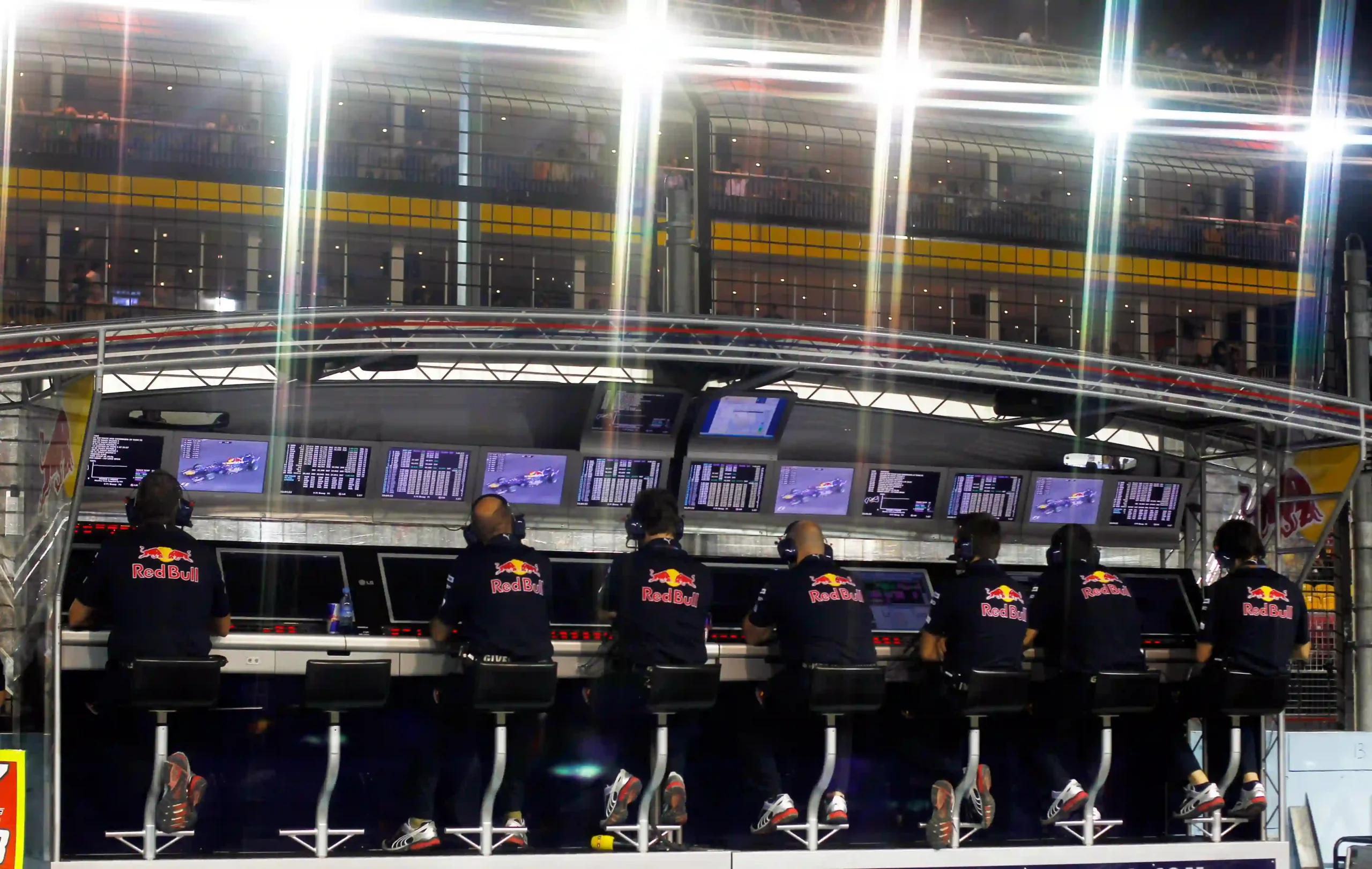
The location varies by team and session. Race engineers often work near the car in practice and qualifying, while some move to the pit wall for races and others remain in the garage.
There is no universal Formula 1 seating plan.
Technology allows specialists to contribute from several locations.
The Garage Keeps the Engineer Close to the Car
Eye contact with the driver and chief mechanic matters.
Moreover, the engineer can see which tires and parts are prepared.
The Pit Wall Provides Track Awareness
Staff can see pit-lane activity and changing weather.
However, screens and intercom remain the main tools.
Remote Operations Multiply Expertise
Factory rooms receive live data and support trackside staff.
Specialists can analyze rivals or specific systems without traveling.
Information Must Follow a Clear Chain
Too many direct voices create confusion.
Therefore, the race engineer acts as a controlled gateway to the driver.
Old Technology Still Has Value
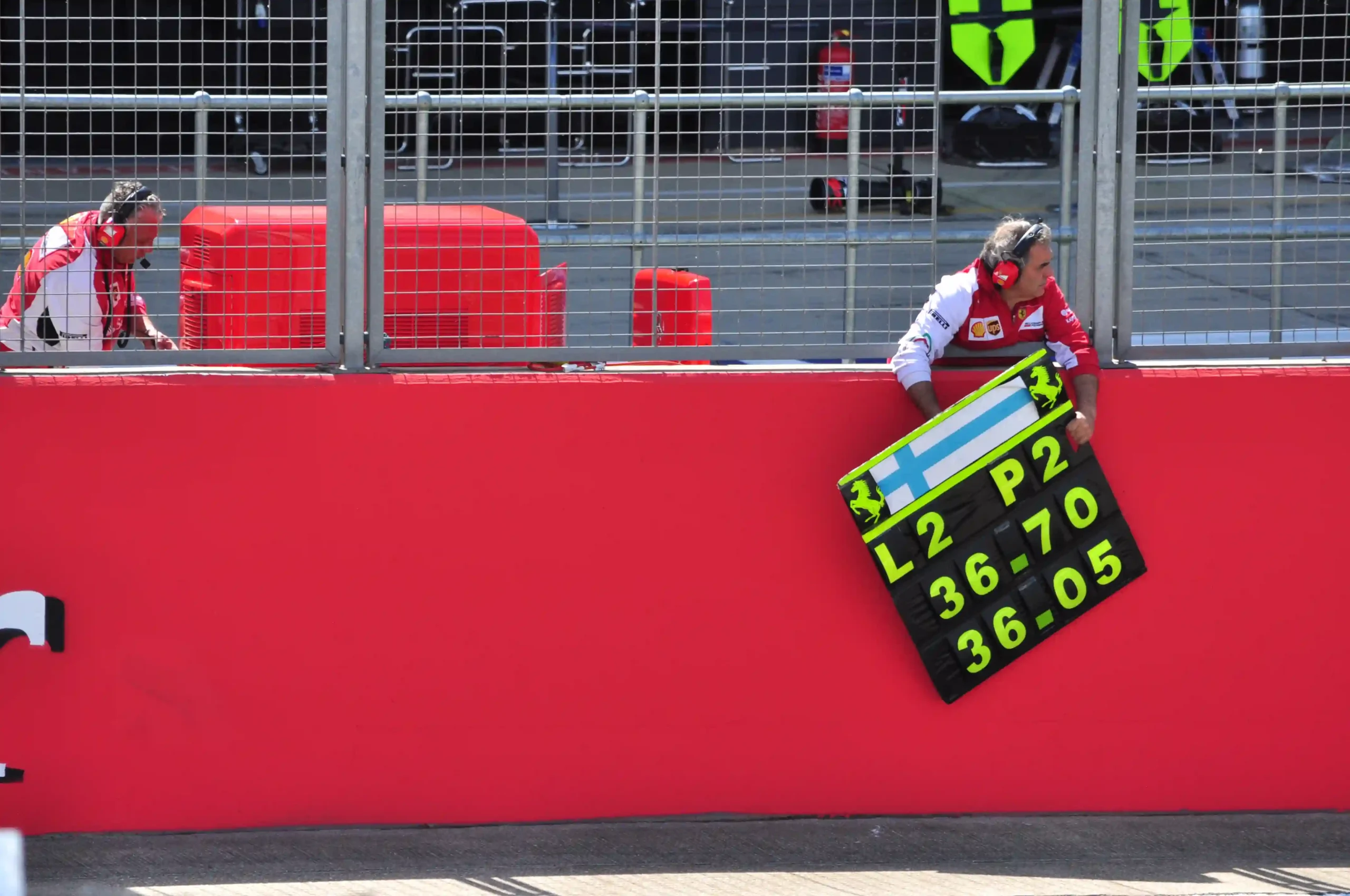
Pit boards remain a backup communication tool.
They can show lap count, position or simple instructions if radio fails.
What Happens If the Team Radio Fails?
Yes, but the job becomes harder. Teams can use pit boards and pre-agreed procedures, while the driver must rely more heavily on dashboard information and judgment.
The Driver Still Controls the Car
A radio failure does not stop basic operation.
However, the driver loses live traffic and strategy information.
Pit Boards Provide Simple Messages
Position, lap count and short instructions can be displayed.
The method is slower than radio.
Pre-Race Plans Become More Important
The driver follows agreed pit windows and tire triggers.
Unexpected Safety Cars create the greatest difficulty.
Dashboard Warnings Can Protect Reliability
The car can display critical alarms.
Nevertheless, detailed diagnosis remains difficult without conversation.
The Team Can Use Visible Garage Signals
Mechanics can prepare tires or signal a stop.
However, safe and legal communication remains the priority.
How to Become an F1 Race Engineer
Most have engineering degrees and years of motorsport experience. Strong data analysis, vehicle dynamics, communication and live decision-making are essential.
No graduate moves directly into leading a Formula 1 car.
The role usually follows years of technical and operational work.
Choose a Relevant Engineering Degree
Mechanical, automotive, aerospace and motorsport engineering are common routes.
Mathematics, controls and data skills also matter.
Learn Vehicle Dynamics
Engineers need to understand weight transfer, tires and aerodynamics.
They must connect theory with driver feedback.
Develop Data Skills
MATLAB, Python and specialist analysis tools can support early careers.
However, software knowledge must serve engineering judgment.
Gain Practical Motorsport Experience
Formula Student, club racing and junior formulas create useful exposure.
Teams value evidence that a candidate can work under race pressure.
Start in Data, Simulation or Performance Engineering
These roles build system knowledge.
Laura Mueller moved from Haas simulation work to performance engineering before becoming race engineer.
Junior Categories Teach Live Operations
F4, Formula Regional, F3 and F2 provide valuable race-engineering experience.
The smaller teams often give young engineers broader responsibility.
Communication Separates Strong Candidates
Technical ability alone is not enough.
A race engineer must explain complex issues in a few calm words.
Leadership Develops Over Time
The engineer eventually manages people and priorities.
Therefore, trust from mechanics and specialists matters as much as analysis speed.
Travel and Long Hours Are Part of the Job
Race weekends involve early starts and late debriefs.
Back-to-back events reduce recovery time.
Our guide to motorsport career development shows how racing experience builds across categories.
How Much Do F1 Race Engineers Earn?
Teams do not publish a standard salary scale. Pay depends on seniority, team, experience, bonuses and contract terms, so precise public figures should be treated cautiously.
Race engineers are senior technical staff.
However, reliable team-by-team salary data is rare.
Public Job Sites Provide Broad Estimates
Those figures may combine junior and senior engineering roles.
Therefore, they cannot prove a specific F1 race engineer’s contract.
Bonuses May Reward Team Performance
Championship and result bonuses can apply across an organization.
Exact terms remain private.
Travel and Benefits Affect the Package
Teams may provide travel, accommodation and support.
Consequently, headline salary does not describe total compensation.
Senior Leadership Duties Increase Value
Some race engineers also hold head-of-racing or senior engineering titles.
That wider responsibility can change compensation significantly.
Famous and Current Race-Engineer Examples
Well-known examples include Peter Bonnington, Gianpiero Lambiase, Rob Smedley, Jock Clear, Tom Stallard and Laura Mueller.
Peter Bonnington and Lewis Hamilton
Bonnington became one of F1’s best-known radio voices during Hamilton’s Mercedes years.
Their “hammer time” phrase represented years of shared context.
Gianpiero Lambiase and Max Verstappen
Lambiase has race-engineered Verstappen since the driver joined Red Bull in 2016.
In 2026, Red Bull confirmed he would continue until leaving for McLaren’s Chief Racing Officer role in 2028.
Read our profile of Red Bull Racing.
Laura Mueller and Esteban Ocon
Mueller became F1’s first full-time female race engineer in 2025.
By June 2026, she and Ocon were in their second season together at Haas.
Tom Stallard and McLaren Drivers
Stallard brought an Olympic rowing background into engineering.
He has worked with several McLaren drivers across different technical eras.
Rob Smedley and Felipe Massa
Their Ferrari partnership became famous through direct radio communication.
It also showed how closely an engineer can understand a driver’s emotional state.
Partnerships Can Outlast One Car Generation
Strong pairs adapt through rule changes and team development cycles.
That continuity can create a competitive advantage.
Explore our profile of famous racing drivers and the current F1 grid.
A Race Engineer’s Typical Grand Prix Timeline
Thursday: Preparation and Briefings
The team checks the car, garage systems and session plans.
The engineer reviews procedures with the driver.
Friday: Maximum Learning
Practice produces setup and tire data.
Long debriefs then determine the next direction.
Saturday: Performance and Precision
Final practice narrows the setup.
Qualifying demands exact release timing and calm radio work.
Sunday: Execution
The engineer checks every race procedure.
Once the lights go out, adaptation becomes the priority.
After the Race: Honest Review
The team studies decisions, car behavior and communication.
Our guide to the F1 debrief explains how that review works.
Common Myths About F1 Race Engineers
“The Race Engineer Creates the Entire Strategy”
False. Strategy departments model the race.
The race engineer contributes and communicates the plan.
“The Pit Wall Can Control the Car Remotely”
False. The driver operates the car.
Engineers provide instructions and technical support.
“The Engineer Only Works During the Race”
False. Preparation and review fill the week.
Practice and qualifying also require major operational work.
“More Radio Always Helps”
False. Excess information can distract the driver.
Timing and relevance matter more than volume.
“Telemetry Explains Everything”
False. Data cannot fully measure confidence, visibility or feel.
Driver feedback remains essential.
“Every Team Uses the Same Pit-Wall Structure”
False. Teams divide jobs differently.
Some race engineers sit on the wall, while others remain in the garage.
“A Degree Is Enough to Reach F1”
False. Motorsport experience and communication skills are crucial.
Most engineers progress through several technical roles.
“A Heated Radio Exchange Means the Partnership Is Broken”
False. Pressure can produce blunt messages.
The important issue is whether trust remains after the moment.
F1 Race Engineer FAQs
What does an F1 race engineer do?
The engineer manages one driver’s operation, setup, specialists, telemetry and radio communication.
Does the race engineer decide when an F1 driver pits?
Not alone. Strategy staff model the options, while the engineer contributes and communicates the call.
Can an F1 race engineer change the car remotely?
No. The driver makes approved control changes after receiving instructions.
How do you become an F1 race engineer?
Study engineering, build data and vehicle-dynamics skills, then gain experience in simulation, performance roles and junior racing.
Conclusion: The Race Engineer Turns a Team Into One Voice
So, what does an F1 race engineer do?
The engineer leads one driver’s trackside operation.
That responsibility begins before the team reaches the circuit.
Simulator work creates a baseline setup.
Previous races reveal weaknesses and reliability concerns.
Weather forecasts shape the run order.
The engineer then creates a practice plan.
Every lap should answer a question.
Practice tests mechanical setup, tires and aerodynamics.
The race engineer releases the car into traffic.
They organize fuel loads and run lengths.
They also make sure the requested changes reach the car.
Driver feedback provides another layer.
The engineer listens for corner phase and balance.
Telemetry then supports or challenges the description.
The performance engineer studies finer detail.
Controls engineers focus on electronics and starts.
Power-unit engineers monitor energy and reliability.
Mechanics perform the physical work.
The race engineer connects them all.
Qualifying changes the task.
Track position becomes critical.
Tire preparation can decide the lap.
The engineer watches traffic and session time.
They also judge whether another run is necessary.
Too much radio can hurt concentration.
Therefore, silence becomes an engineering tool.
The race adds strategy and reliability pressure.
Gaps determine pit windows.
Tire degradation changes the plan.
Fuel and energy targets affect pace.
Incidents can erase every pre-race simulation.
The engineer must react without losing clarity.
Strategy engineers calculate the options.
Senior staff may approve the final direction.
However, the race engineer delivers the call.
That distinction matters.
The engineer does not create every strategy alone.
They also do not remotely control the car.
The driver remains responsible for operating it.
Engineers can recommend steering-wheel changes.
The driver must perform those changes.
Team radio makes the role visible.
“Box, box” tells the driver to pit.
“Push now” releases available pace.
“Lift and coast” manages fuel or temperature.
“Opposite the car ahead” protects strategic choice.
These messages carry pre-agreed meanings.
They also reduce mental load.
The driver cannot absorb a technical lecture at high speed.
Therefore, wording must be brief and familiar.
Radio tone matters as well.
Calm delivery helps the driver understand urgency.
A trusted voice can stabilize a difficult race.
A poorly timed message can create distraction.
Telemetry gives the team extraordinary visibility.
Specialists monitor temperatures, pressures and control systems.
However, data does not replace human judgment.
The driver can feel wind and confidence.
The engineer sees trends and comparisons.
Together, they create a more complete picture.
Setup work follows the same principle.
Aerodynamic and mechanical changes affect several corners.
Front-wing angle can shift balance quickly.
Suspension changes alter the platform.
Differential settings influence rotation and traction.
Brake balance changes entry behavior.
The race engineer chooses priorities with the group.
Reliability creates harder decisions.
A temperature warning may require management.
A vibration may suggest tire damage.
A switch change may recover a system.
Sometimes the team must retire the car.
The engineer then gives a clear stop instruction.
Safety Cars and red flags add uncertainty.
Cheap pit stops can transform strategy.
Weather can differ across the circuit.
The engineer combines radar, cameras and driver reports.
Restart procedures then require precise communication.
The driver-engineer relationship holds everything together.
Drivers describe problems in different ways.
Some want frequent updates.
Others prefer long periods of silence.
The engineer learns those preferences over time.
Disagreement can still happen.
Drivers see the race from inside the cockpit.
Engineers see the wider data picture.
Healthy partnerships can debate without losing trust.
Long relationships create useful shorthand.
Bonnington and Hamilton developed “hammer time.”
Lambiase and Verstappen built a direct style.
Mueller and Ocon used 2025 to prepare for 2026 complexity.
These examples show why continuity matters.
The 2026 rules increased the workload.
Energy deployment has greater importance.
Boost and recharge choices affect racing.
Active Aero introduces new operating states.
Fresh systems also create unfamiliar problems.
Yet the core skill remains filtering information.
A race engineer needs a strong technical education.
Vehicle dynamics and data analysis are essential.
Motorsport experience matters just as much.
Junior formulas teach live operations.
Simulation and performance roles build technical depth.
Communication turns that knowledge into leadership.
The career therefore takes years.
Most engineers progress through several positions.
Mueller’s simulator and performance background offers a modern example.
Lambiase began in data engineering before leading race cars.
The best candidates learn to solve problems under pressure.
They also earn trust from mechanics and drivers.
No public salary table defines the role’s value.
Contracts differ by team and seniority.
Some engineers hold wider leadership duties.
Bonuses and benefits can change the package.
Therefore, precise unsourced salary claims should be avoided.
Ultimately, the race engineer is not a remote driver.
They are not the only strategist.
They are not the only person reading data.
Instead, they connect every specialist to one car and driver.
They manage preparation, execution and review.
They translate feelings into setup work.
They translate data into clear instructions.
They translate a complex team into one calm voice.
That is the complete Formula 1 race engineer role.
Sources and Fact-Checking
This article was checked against official Formula 1, FIA and team material available on July 25, 2026. Team structures vary, so examples describe published arrangements rather than a compulsory organization chart. This is a static source list with no interactive verification feature.