How Do F1 Teams Choose Drivers?
Speed opens the door, but an F1 seat is decided by data, technical value, timing, contracts, money and the needs of the complete team.
F1 teams choose drivers by comparing speed, racecraft, consistency, tire management, technical feedback, adaptability, Super Licence eligibility, contract terms and commercial value. The final choice must also create a balanced two-driver lineup.
An F1 team does not simply sign the fastest available name.
Raw pace matters first. However, pace alone does not win a constructors’ championship.
A driver must qualify well and finish races. They must protect tires, avoid needless damage and explain the car to engineers.
Meanwhile, the team must consider timing. A brilliant junior can arrive when no seat is open.
An experienced winner can also become available at the exact moment a rebuilding team needs leadership.
Contracts add another layer. Options, release clauses and buyouts can decide whether a target is genuinely available.
Money also matters, although the old “pay driver” label is usually too simple. Sponsorship may improve a candidate’s value, yet the driver still needs an FIA Super Licence and credible performance.
The 2026 grid contains 11 teams and 22 race seats. Therefore, the supply of qualified drivers is much larger than the number of jobs.
That imbalance explains why Formula 2 champions sometimes miss out. It also explains why teams protect academy prospects for several years.
Modern recruitment starts with data. Teams compare qualifying gaps, long-run pace, tire degradation, incident rates and teammate performance.
Next comes context. Engineers ask whether a weak result came from the driver, the car, the team or the championship.
Testing then fills the gaps. Simulator work, previous-car running, rookie practice sessions and engineering meetings reveal traits that a timing sheet cannot show.
Finally, senior management chooses the pair that best fits the project. A title contender has different needs from a new entrant.
So, how do F1 teams choose drivers? They build a case across performance, potential, technical value, availability and business risk.
The F1 Driver Selection Process, Step by Step
A team defines what it needs, creates a shortlist, analyzes performance, tests technical suitability, checks commercial and contract terms, then seeks final approval from senior management.
1. The Team Defines the Job Before Naming Drivers
The first question is not “Who is fastest?” It is “What does this seat need to deliver?”
A front-running team may need a proven title challenger. A rebuilding team may need a driver who can direct development.
Meanwhile, a sister team may exist partly to train young drivers. A new entrant may prefer veterans who understand race procedures from day one.
2. A Longlist Becomes a Realistic Shortlist
Driver managers contact teams throughout the year. Academy leaders also submit internal reports on their own prospects.
However, many names disappear quickly. Some lack enough Super Licence points, while others are tied to rival contracts.
Teams also remove drivers who do not fit the salary range or project timeline.
3. Performance Analysts Build the Competitive Case
Results provide the starting point. Yet teams rarely judge a driver by championship position alone.
Analysts review qualifying, starts, tire life, overtakes and errors. They also compare performance against teammates and machinery.
4. Engineers Test the Human Fit
A candidate may visit the factory for a seat fitting, simulator session and technical meeting. Engineers watch how quickly the driver learns.
They also judge feedback. Clear information can shorten setup work and improve car development.
5. Legal and Commercial Teams Test the Deal
The driver may be fast but unavailable. Therefore, lawyers examine options, notice dates, release terms and existing obligations.
Commercial staff measure sponsorship, market reach and partner compatibility. Those factors can separate closely matched candidates.
6. Senior Management Approves the Pair
The team principal normally leads the decision. Ownership, a manufacturer board or senior executives may also approve the contract.
Finally, both drivers must fit one strategy. The team signs a lineup, not two unrelated individuals.
The strongest candidate is the driver who solves the team’s biggest problem. That problem may be speed, development, stability, leadership, funding or long-term succession.
What Do F1 Teams Look for in a Driver?
Teams look for qualifying speed, race pace, consistency, tire management, racecraft, technical feedback, low error rates, fitness, mental strength, professionalism and long-term potential.
| Selection Area | What Teams Measure | Why It Matters |
|---|---|---|
| Qualifying pace | Average gap, peak laps, improvement through sessions | Track position controls strategy and clean-air access |
| Race pace | Fuel-corrected laps, stint averages, traffic performance | Points are scored over a complete Grand Prix |
| Consistency | Lap-time spread, weekend-to-weekend level, mistake rate | Teams need repeatable constructors’ points |
| Tire management | Degradation, temperature control, pace late in stints | Modern strategy depends on extending tire life |
| Racecraft | Starts, overtakes, defense, traffic judgment | Fast laps mean less without strong wheel-to-wheel decisions |
| Technical feedback | Accuracy, clarity, correlation with data | Engineers need useful direction during setup and development |
| Adaptability | New cars, tires, circuits, weather and regulation changes | F1 changes quickly and practice time is limited |
| Risk control | Crashes, penalties, damage cost and poor decisions | Errors lose points, money and development time |
| Professional fit | Communication, work ethic, media and sponsor duties | The driver represents hundreds of employees and partners |
| Future value | Age, learning speed, ceiling and contract control | Teams plan several seasons ahead |
Qualifying Pace Creates Opportunity
F1 teams study more than a driver’s best lap. They track how often peak performance appears under pressure.
Moreover, analysts review the lap’s construction. A driver who finds time in every sector may offer more than one who relies on a single strong corner.
Our guide to how F1 qualifying works explains why one lap can shape the entire race.
Race Pace Must Survive Fuel, Traffic and Tires
A driver can look spectacular in qualifying and still struggle on Sunday. Therefore, teams study long runs closely.
They correct for fuel load, tire age, traffic and strategy. They also compare the driver’s pace before and after pit stops.
Consistency Has Championship Value
Constructors’ points determine prize money and championship position. As a result, steady scoring carries huge value.
A slightly slower driver may beat a volatile rival across 24 weekends. Reliability of execution often wins internal debates.
Tire Management Is Not Just Driving Slowly
Good tire management means controlling slip, heat and energy without surrendering too much lap time. It also means knowing when to attack.
Teams review degradation curves and onboard inputs. Smoothness helps, although some aggressive drivers manage tires through strong rotation and shorter corner phases.
Racecraft Shows Judgment
Overtaking ability matters. However, choosing the correct battle matters just as much.
A driver must know when to defend, when to yield and when to protect the strategy. Poor judgment can cost both cars.
Wet-Weather Pace Reveals Feel
Wet races reduce the value of perfect references. Consequently, teams watch how a driver reads grip and adapts lines.
Strong wet-weather performance can indicate car control, confidence and rapid learning.
How Teams Compare Drivers From Different Cars and Championships
Teams normalize results for car strength, teammate quality, fuel, tires, traffic, reliability and championship level. They then combine lap data with video, radio, engineering reports and testing.
Direct comparison is difficult because racing cars are not equal. Even spec series contain stronger and weaker teams.
Therefore, F1 analysts build context around every number. They ask what the driver achieved with the available package.
Teammate Comparison Is the First Benchmark
The teammate drives similar equipment. That makes the comparison useful, although it is never perfect.
Teams check qualifying gaps, race pace, starts and points. They also study reliability and strategy differences.
Average Gaps Matter More Than One Big Result
A surprise pole can attract attention. However, a full season shows repeatability.
Analysts prefer distributions and trends. They want to see whether a driver improves as the year develops.
Weak Teams Can Hide Strong Drivers
A junior may race for an underfunded operation or struggle with setup support. F1 scouts therefore inspect onboard footage and raw telemetry.
They look for braking confidence, minimum speed, traction and tire use. Those traits can remain visible even when the result is poor.
Strong Teams Can Inflate Results
The opposite problem also exists. A dominant junior car can make a competent driver look exceptional.
Consequently, teams compare the candidate against strong teammates and reference drivers. They also watch performance when conditions become difficult.
Radio and Debrief Quality Add Context
Teams may speak with former engineers and managers. They want to know how the driver behaves when the weekend goes wrong.
A calm, precise debrief can be more valuable than an emotional complaint. Read our guide to the F1 debrief process.
How much lap time does the driver create beyond the expected car level?
Does the driver improve after feedback, testing and repeated track time?
How many points and parts are lost through avoidable mistakes?
Does the driver make engineers, mechanics and the other car more effective?
The Road From Karting to Formula 1
The standard pathway is karting, Formula 4, Formula Regional, FIA Formula 3 and FIA Formula 2. However, drivers can also build eligibility and experience through series such as Super Formula or IndyCar.
Most F1 drivers begin in karting. It teaches racecraft, braking, starts and close competition at a young age.
The FIA pathway then moves into cars. Formula 4 serves as the usual first step from karting.
Formula Regional adds more power and aerodynamic load. FIA Formula 3 then introduces a global Grand Prix support environment.
Formula 2 is the final recognized training ground before F1. Its cars are equal in basic specification, so drivers must extract performance without a technology advantage.
Still, Formula 2 is not legally mandatory. The FIA points table recognizes several championships.
That means a driver can arrive from Super Formula, IndyCar or another high-level series. However, the team must still judge whether the candidate can adapt to F1 tires, systems and procedures.
For a broader starting guide, read how to become a race car driver.
| Career Stage | Main Skills Developed | What F1 Scouts Watch |
|---|---|---|
| Karting | Racecraft, reactions, starts, close combat | Natural speed, courage, learning and consistency |
| Formula 4 | First car setup, downforce, data and longer races | Transition speed and technical discipline |
| Formula Regional | Higher load, tire preparation and stronger competition | Adaptability and development curve |
| FIA Formula 3 | Grand Prix circuits, media pressure and large grids | Qualifying execution and traffic management |
| FIA Formula 2 | Power, tire strategy, pit stops and F1 weekend rhythm | Readiness, consistency and pressure control |
| Alternative route | Professional racing in IndyCar, Super Formula or other series | Transferable pace, licence points and adaptation risk |

Does an F2 Champion Automatically Reach F1?
No. The title strengthens the case and normally delivers the required licence points.
However, there may be no vacancy. Teams may also prefer a driver with existing F1 experience or academy ties.
Some champions wait as reserves. Others move to endurance racing, Formula E, IndyCar or another professional category.
Why Can a Non-Champion Get Promoted?
A team may rate the driver’s age, trajectory or technical fit more highly. It may also have access to private testing data.
Furthermore, an academy can plan a promotion before the final standings are settled. The decision reflects the full body of evidence.
The FIA Super Licence: The Legal Gate to an F1 Seat
The standard target is 40 points. The 2026 FIA rules also require a current International Grade A licence, sufficient single-seater participation, a rules test and other conditions.
A team cannot simply place any driver in a Grand Prix. The FIA Super Licence creates a formal eligibility test.
Under the 2026 Appendix L, a first full licence normally requires at least 40 points. Those points come from approved championships and results.
The driver must also hold a current FIA International Grade A licence. In addition, the first application requires at least 80% of each of two full seasons in listed single-seater championships.
The standard minimum age is 18 at the start of the driver’s first F1 event. However, the FIA may grant a licence at 17 for exceptional and mature single-seater ability.
Several alternative qualification routes also require representative F1 running. The rules specify at least 300 kilometers at racing speeds within a maximum of two days for those routes.
A Free Practice Only Super Licence has separate conditions. It can allow a developing driver to run in an official practice session before gaining a full race licence.
Therefore, Super Licence status enters every shortlist early. A driver who cannot qualify may still become a long-term academy target, but not an immediate race option.
Important: Super Licence points prove eligibility, not superiority. Teams still decide whether the driver is fast, prepared and suitable for their car.
Our guide to what the FIA does explains the governing body’s wider role.
How F1 Driver Academies Scout and Develop Talent
Driver academies identify young racers, support their career programs, provide coaching and testing, then evaluate whether they can fill future Formula 1, reserve or manufacturer roles.
Academies reduce uncertainty. A team can follow a driver for years instead of making one late decision.
Support may include race budgets, coaching, physical training, simulator work and management advice. In return, the team gains influence over the driver’s career.
Scouting Starts Before Formula 2
Ferrari’s scouting process has evaluated karting and Formula 4 candidates from several regions. Its engineers compare speed, learning and performance development.
McLaren has also described a broad network of paddock contacts and early testing. The team considers equipment quality, available funding and personality fit.
Academies Measure More Than Results
A junior must absorb feedback and remain professional. They also need to handle travel, sponsors and media.
Ferrari’s scouting camps have included physical and mental assessment, media suitability and race-weekend simulations. That structure mirrors the demands of an F1 career.
The Academy Is a Pipeline, Not a Promise
Most academy members never race for the senior F1 team. Some leave because results stall or the timing does not work.
Others gain opportunities with customer or partner teams. A reserve role can also lead to a substitute appearance.
Why Teams Release Junior Drivers
Academy budgets and seats are limited. Therefore, teams compare progress against younger prospects every season.
A driver may be released despite respectable results. The decision often reflects ceiling, cost and the lack of a realistic route to a race seat.
Mercedes’ promotion of Kimi Antonelli showed the upside of a long-term program. He joined the junior structure at 12 and later moved from F2 into the works team.
That route also produced George Russell. The 2025 Mercedes announcement described the pairing as a combination of experience, talent, youth and raw speed.
How Simulator Work, FP1 and Private Testing Influence Selection
Simulator performance can strengthen a driver’s case by showing learning speed, technical feedback and correlation with real-car data. However, teams combine it with track results and physical testing.
Race results answer many questions. Testing answers the questions that remain.
A simulator allows the team to control conditions. Engineers can give two candidates the same setup, fuel and tire assumptions.
They then compare adaptation, feedback and repeatability. The team also watches how the driver responds after a setup change.
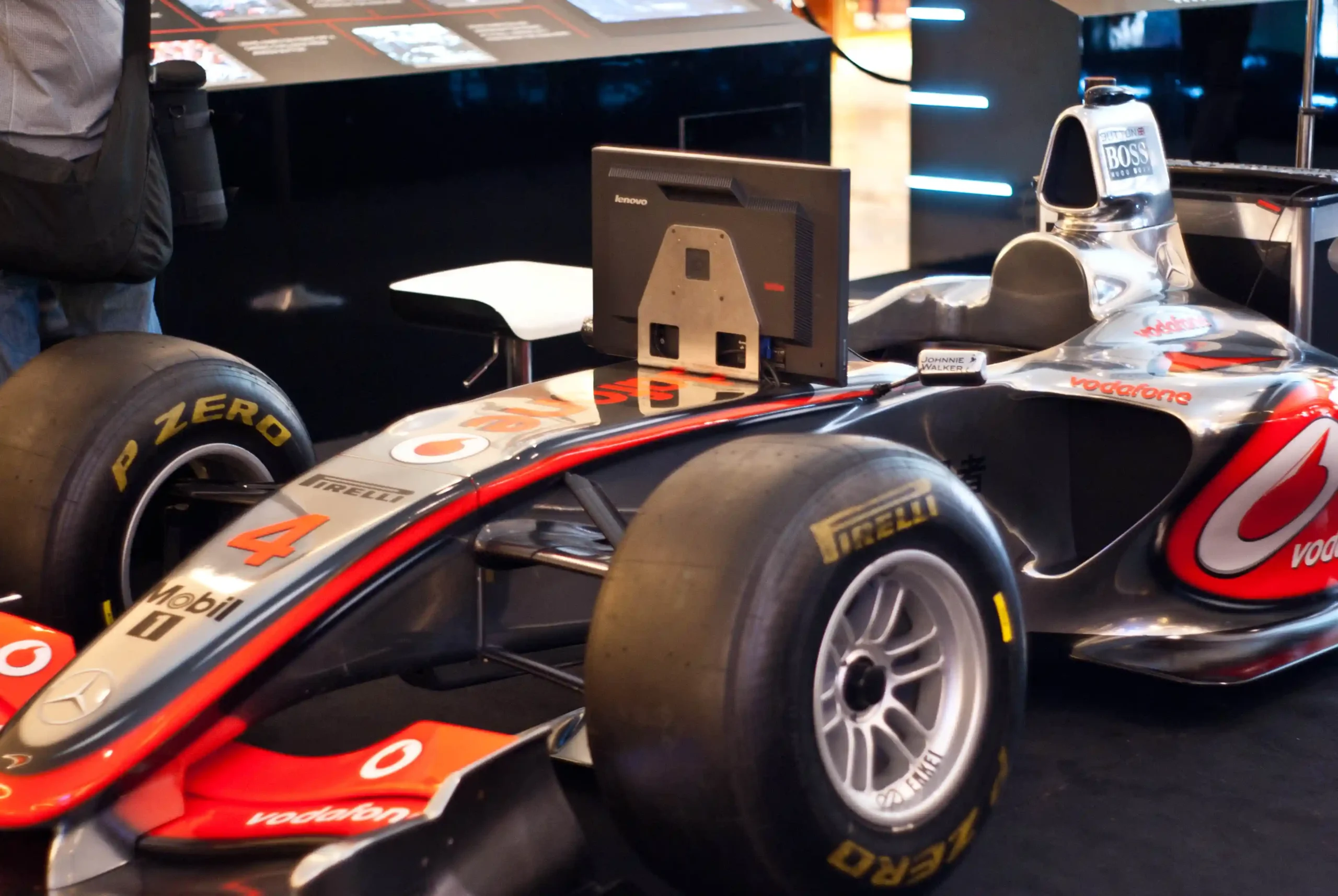
Simulator Speed Needs Technical Quality
A fast simulator lap is useful. Yet teams care more about how the time was found.
The driver should explain entry balance, rotation and traction in language that matches the data. Good correlation builds engineering trust.
Testing Previous Cars Reduces Risk
Teams can run eligible older cars under testing rules. Those programs give young drivers meaningful mileage without using the current race car.
Long runs reveal fitness, concentration and tire control. Race simulations also test procedural discipline.
Rookie Practice Sessions Show Live Readiness
Mandatory rookie practice outings create public opportunities. However, teams still judge the session against its real purpose.
A driver may run development parts, heavy fuel or a restricted program. Therefore, headline position can mislead.
Reserve Drivers Build Trust Before a Vacancy
A reserve attends meetings and learns systems. They may also support overnight simulator work.
When an injury or sudden change occurs, familiarity becomes valuable. The fastest outside driver may lose to the prepared internal option.
Read about the historical growth of racing simulators.
Why Teams Choose Rookies or Experienced Drivers
Teams choose youth when they want speed, long-term potential and lower contract cost. They choose experience when they need leadership, development knowledge, reliable points and lower operational risk.
Why a Team Chooses a Rookie
- Higher long-term development ceiling
- Strong academy investment already made
- Lower salary than a proven star
- Fewer established driving habits
- Marketing value around a new talent
- Succession planning for future seasons
Why a Team Chooses Experience
- Known qualifying and race level
- Better procedural knowledge
- Detailed technical feedback
- Leadership during a rebuild
- Lower adaptation risk
- Evidence under championship pressure
Rookies Offer Upside
A young driver can improve for years. Teams may also secure that value before rivals enter the market.
However, rookie mistakes carry costs. The team must budget for crashes, learning and inconsistent weekends.
Veterans Offer a Known Baseline
An experienced driver helps engineers judge the car. They can separate setup weakness from fundamental design problems.
Moreover, veterans know starts, Safety Car restarts, tire preparation and race management. Those details matter for a new team.
The Best Pair Often Mixes Both
One experienced driver can lead development while a younger teammate grows. The veteran also provides a reference.
Mercedes used that logic when it paired George Russell with Antonelli. The team explicitly highlighted experience and youth.
For career context, see our profiles of famous race car drivers and the best F1 drivers of all time.
How F1 Teams Build a Balanced Driver Lineup
A strong pairing combines speed, complementary experience, useful technical feedback, workable personalities and enough competitive tension to push the team without damaging it.
Choosing one driver is only half the job. Teams must predict how two careers will interact.
The Pair Must Score for the Constructors’ Championship
Both drivers contribute points. Therefore, a large performance gap can damage the team even when the lead driver wins races.
Teams study how each candidate performs against strong teammates. They want evidence that the second car will remain competitive.
Driving Styles Can Help Development
Two similar drivers may simplify setup direction. However, different styles can expose a wider operating window.
An aggressive braker may highlight front-end weakness. A smoother driver may reveal tire-degradation problems.
Personalities Need Professional Boundaries
Teammates do not need to be close friends. They do need to share information and follow team rules.
Management also considers past conflicts and radio behavior. A toxic pairing can divide engineers and create public damage.
Number One Status Is Often Earned
Some contracts may contain privileges, although exact terms remain private. In many cases, the hierarchy develops through results.
Once a title fight becomes clear, a team may prioritize the better-positioned driver. Before that point, equal treatment can protect morale and data quality.
Car Characteristics Matter
A team may prefer a driver who suits the current car. Yet that can be risky when regulations change.
Therefore, adaptability is often safer than one narrow preference. Great drivers can work around balance changes.
Read how oversteer and understeer affect an F1 driver.
How Sponsorship, Funding and Nationality Affect Driver Choice
Sponsorship can improve a candidate’s value, but it cannot replace Super Licence eligibility or acceptable performance. Teams balance income against points, development and reputational risk.
Motorsport is expensive long before Formula 1. Competitive karting can cost hundreds of thousands of dollars per season.
By Formula 2, a campaign can reach seven figures. Across a complete junior career, families and sponsors may spend several million dollars.
That cost shapes the talent pool. Some fast drivers never reach the categories where F1 teams can evaluate them.
Personal Sponsors Can Fund the Pathway
A sponsor may pay for karting, Formula 4 or Formula 2. That backing keeps the driver visible.
Without it, even an academy prospect can lose momentum. Teams sometimes step in when they believe the talent is exceptional.
Commercial Value Can Break a Tie
Two drivers may offer similar speed. In that case, sponsorship or market reach can decide the seat.
A driver may connect the team with a country, manufacturer market or major partner. Social following can also support campaigns.
Nationality Is Useful but Rarely Enough
A U.S. team may value an American driver. A manufacturer may also want representation in a strategic market.
However, nationality cannot fix a large performance gap. Championship points remain the strongest commercial story.
The “Pay Driver” Label Misses the Middle Ground
Many professional drivers bring sponsorship. That does not mean they lack talent.
The real question is how much the funding influences the final decision. In most cases, pace and money exist together rather than separately.
Commercial Duties Are Part of the Contract
Drivers attend sponsor events, media sessions and fan programs. Teams therefore assess communication and reliability away from the track.
A driver who creates repeated controversy may lose commercial value. Public image can influence retention decisions.
For the earnings side, read how much Formula 1 drivers make.
How F1 Driver Contracts Shape the Market
F1 contracts can run for one season, several seasons or a fixed term with option years. Exact clauses are private and often include performance, release, conduct and commercial conditions.
Driver announcements reveal only part of the agreement. A “multi-year” deal may contain team options or performance triggers.
Williams announced Carlos Sainz on a two-year agreement with options to extend. That structure gave the team stability and future control.
Team Options Protect Flexibility
A team option lets the team extend the relationship under agreed conditions. It can protect a rising driver from rival approaches.
However, an option deadline can also shape silly season. Rival teams wait to see whether the current team activates it.
Driver Options Protect Mobility
A driver option may allow the racer to continue or leave under defined terms. Such clauses are less visible publicly.
Performance-based exit clauses can also matter. Reports often focus on them when a leading driver’s team becomes less competitive.
Release Clauses and Buyouts Create a Price
A contracted driver may still move if another team pays compensation. The current team can also negotiate a loan or transfer.
Academy relationships make this common in junior careers. A team may release a driver when no internal seat exists.
Conduct Clauses Protect the Brand
Contracts can require professional behavior, fitness and commercial appearances. Teams need protection against reputational harm.
Performance clauses may also define targets. However, exact wording rarely reaches the public.
Salary Reflects More Than Speed
Champions and proven winners command higher pay. Rookies usually accept lower salaries because the seat itself creates value.
Bonuses may reward points, podiums, wins or championship results. Management companies and lawyers negotiate the complete package.
Who Decides Which Drivers Race for an F1 Team?
The team principal usually leads the decision, with approval from ownership or manufacturer leadership. Sporting, technical, commercial and legal departments contribute evidence and negotiation support.
| Decision Maker | Typical Influence |
|---|---|
| Team principal | Leads the competitive case and recommends the final pairing |
| Team owner or manufacturer board | Approves major salary, brand and long-term project decisions |
| Sporting director | Assesses race conduct, procedures, readiness and paddock reputation |
| Technical leadership | Judges feedback, driving style, development value and simulator work |
| Driver academy manager | Presents internal progress, testing and long-term potential |
| Commercial leadership | Measures sponsorship, partner fit, market reach and public image |
| Legal team | Checks options, releases, conflicts, confidentiality and contract language |
| Driver manager or agent | Represents the driver, creates alternatives and negotiates terms |
The Team Principal Has the Clearest Sporting Voice
The principal must live with the result. Therefore, their preference usually carries the greatest weight.
Still, the principal may not control the budget or ownership strategy. A works team can require manufacturer approval.
Engineers Can Veto a Weak Technical Fit
A candidate may have strong results but poor feedback. Technical leaders will raise that risk.
Similarly, simulator data can elevate a driver who lacks headline results. Private evidence often changes the final ranking.
Sponsors Influence, but Do Not Usually Sign
A major partner may express a preference. However, the team remains responsible for the sporting entry.
The stronger the driver’s competitive case, the easier the commercial approval becomes.
Agents Create Leverage
A skilled manager keeps several teams interested. They also control timing and information.
Rumors can increase pressure before an option deadline. However, public noise does not prove a contract exists.
See the current competitive landscape in our 2026 F1 teams list and 2026 Formula 1 driver guide.
What Is F1 Silly Season?
F1 silly season is the period when teams, drivers and agents negotiate future lineups. Rumors increase as contract options, retirements, performance concerns and vacant seats interact.
The market can begin more than a year before the new season. Top drivers influence several teams at once.
A single decision may unblock the grid. Once a leading driver signs, the rejected candidates move to their next options.
Why Teams Delay Announcements
Negotiations may still be active. The team may also need board approval or a release from another contract.
Marketing timing matters too. A team can save an announcement for a home race or sponsor event.
Why Drivers Deny Talks
Confidentiality protects leverage. A driver may also be under contract with a current team.
Therefore, public denials should be read carefully. They may address a signed deal rather than preliminary contact.
Why Rumors Become Self-Fulfilling
Repeated speculation can damage trust between driver and team. It may also attract rival interest.
However, many rumors start with agents seeking leverage. Serious teams verify the source before reacting.
Why F1 Teams Replace Drivers Mid-Season
Teams make mid-season changes after sustained underperformance, repeated crashes, poor development, contract disputes, injury or a need to evaluate another driver before the next season.
A mid-season change carries risk. The replacement has little practice and must learn new systems quickly.
Therefore, teams normally need a strong reason. They may believe the current lineup is costing points or blocking a better evaluation.
Performance Can Trigger the Change
Qualifying gaps and points deficits create pressure. Repeated incidents increase the financial cost.
However, teams must separate driver weakness from car problems. A poor car can make both choices look bad.
Evaluation Can Be the Main Goal
Alpine’s 2025 switch from Jack Doohan to Franco Colapinto was described as an ongoing assessment and seat rotation. The team planned another evaluation after five rounds.
That example showed how a race seat can become a live comparison tool. Colapinto had already prepared through reserve work and simulator running.
Reserve Preparation Reduces Transition Time
A reserve already knows the steering wheel, procedures and personnel. They can enter the car faster than an outside candidate.
Seat fit and Super Licence paperwork still matter. Yet the team can complete those tasks in advance.
Injury Creates an Emergency Decision
When a race driver cannot compete, availability becomes the first filter. The replacement must hold the correct licence.
Experience with the car then matters more than long-term potential. The immediate goal is safe, credible execution.
Real Driver Selection Examples
Mercedes promoted academy graduate Kimi Antonelli, Williams hired proven winner Carlos Sainz, Cadillac selected veterans Valtteri Bottas and Sergio Pérez, and Alpine used a mid-season rotation to compare drivers.
Mercedes and Kimi Antonelli: Backing Academy Potential
Mercedes promoted Antonelli from Formula 2 for 2025. The team cited talent, youth, raw speed and strong F1 testing.
It also paired him with the more experienced George Russell. Therefore, the lineup balanced future potential with an established benchmark.
The decision showed that an F2 title is not always required. Mercedes trusted years of academy data and private testing.
Williams and Carlos Sainz: Buying Leadership and Certainty
Williams signed Sainz for 2025, 2026 and beyond. The published deal was a two-year agreement with options.
Sainz brought race wins, podiums and a decade of F1 experience. For a rebuilding team, that record reduced uncertainty.
The pairing with Alex Albon also created two proven lead-level drivers. Williams chose immediate strength rather than a rookie project.
Cadillac and Bottas-Pérez: A New Team Chooses Experience
Cadillac selected Valtteri Bottas and Sergio Pérez for its 2026 debut. The team highlighted more than 500 combined starts, over 100 podiums and development knowledge.
That choice matched the needs of a new entrant. Experienced drivers could establish procedures, provide technical direction and handle early setbacks.
The lineup also carried global commercial value. However, the sporting logic remained clear: reduce launch risk.
Alpine and Colapinto: Using the Season as an Assessment
Alpine replaced Doohan with Colapinto after six races in 2025. The team said it wanted a complete and fair assessment before 2026.
Colapinto entered with previous substitute experience and reserve preparation. The switch showed how quickly internal competition can change a lineup.

Historical Lesson: Junior Results Need Timing
Many future stars reached F1 because a seat opened at the correct moment. Others waited despite equal junior success.
Max Verstappen’s rapid promotion showed how one team can act early on exceptional talent. Read when Max Verstappen joined F1.
Red Bull’s wider model also shows how a sister team can create opportunities. See our Red Bull Racing guide.
Why Talented Drivers Never Get an F1 Seat
Talented drivers miss out because seats are scarce, funding ends, contracts block movement, academy priorities change, Super Licence points fall short or teams choose experience at the wrong moment.
Talent is necessary, but the system is not a pure ranking. Formula 1 hires for specific vacancies.
There Are More Qualified Drivers Than Seats
Twenty-two race seats cannot absorb every F2 graduate, IndyCar star and reserve driver. Several strong careers compete for each opening.
Therefore, a driver can do almost everything right and still lose. Timing remains a major part of the outcome.
Funding Can End Before the Final Step
Junior racing costs rise quickly. A driver may stop after Formula 3 or during Formula 2.
When that happens, F1 teams lose a season of evidence. Another prospect continues and takes the opportunity.
Academy Politics Can Narrow the Route
A team may already have two younger prospects. It may also lack a partner seat.
Consequently, an academy member can be released despite strong results. The driver must then find outside backing.
Experienced Drivers Keep Seats Longer
Stability has value. A team may retain an established driver because changing creates operational risk.
That choice can block a rookie for another season. The junior may need to become a reserve or move categories.
One Weak Season Can Arrive at the Worst Time
Driver markets often move early. A difficult first half can damage a candidate before late improvement arrives.
Teams also compare age and trajectory. A younger rival may receive more patience.
Can IndyCar, Super Formula or Endurance Drivers Reach F1?
Yes. The FIA recognizes several championships for Super Licence points, and teams can sign drivers from IndyCar, Super Formula or other high-level series. The main challenge is proving F1-specific readiness.
Formula 2 offers the most direct preparation because it shares Grand Prix weekends. Drivers learn Pirelli tire behavior, pit stops and the F1 paddock.
However, other series can produce excellent candidates. Super Formula offers very fast single-seaters and demanding circuits.
IndyCar tests racecraft, strategy, ovals and varied track types. Yet an IndyCar driver may need extra simulator and previous-car running before F1.
Endurance and Formula E drivers bring professional experience. Still, teams must judge whether their recent single-seater speed remains sharp.
The Super Licence points table becomes critical for every alternative route. A famous name cannot bypass the licence rules.
For a technical comparison, read IndyCar vs. Formula 1.
How a Driver Can Make Themselves Attractive to an F1 Team
A driver becomes attractive by delivering repeatable pace, beating strong teammates, protecting the car, giving precise feedback, earning licence points and building professional relationships.
Build Evidence
Win races, reduce mistakes and show improvement across different cars and conditions.
Build Trust
Give clear feedback, work professionally and become reliable inside engineering groups.
Build Options
Earn Super Licence points, find strong management and avoid contracts that block progress.
Beat the Teammate Over a Full Season
One result can be dismissed. A season-long advantage is harder to ignore.
Drivers should also show progress after difficult weekends. Resilience matters to F1 management.
Protect the Car Without Becoming Passive
Teams do not want a driver who never attacks. They want intelligent risk.
Avoidable crashes reduce testing time and budget. Clean aggression is more valuable than reckless spectacle.
Learn Technical Language
Feedback should describe the phase of the corner and the balance change. Engineers need details they can act upon.
The best drivers connect feeling with data. That skill becomes more important as practice time shrinks.
Use Every F1 Opportunity Properly
An FP1 session is not always a qualifying audition. The driver may need to follow a test program and return clean data.
Therefore, discipline can impress more than a risky headline lap. Teams notice whether the candidate completes the job.
Choose Management Carefully
A driver manager should create opportunities without damaging relationships. They also need to understand contract timing.
Poor advice can trap a driver in the wrong championship or agreement. The career path is both sporting and legal.
How F1 Teams Choose Drivers: FAQs
How do F1 teams choose drivers?
Teams compare speed, racecraft, consistency, tire management, feedback, adaptability, licence eligibility, contracts and commercial value. They then choose the pair that best fits the competitive plan.
Does an F2 champion automatically get an F1 seat?
No. An F2 title proves quality and normally supplies enough Super Licence points, but a vacancy, team fit and contract opportunity must still exist.
Can sponsorship buy an F1 seat?
Sponsorship can strengthen a deal, especially between closely matched candidates. However, the driver still needs an FIA licence and enough performance to protect team results.
Who has the final say on an F1 driver lineup?
The team principal usually leads the choice. Ownership or manufacturer leadership often gives final approval after sporting, technical, commercial and legal reviews.
Conclusion: F1 Teams Choose the Best Complete Case
So, how do F1 teams choose drivers?
They begin by defining the job. A championship contender, rebuilding team and new entrant need different qualities.
Next, they create a realistic shortlist. Super Licence points, contracts and salary remove several names immediately.
Performance data then separates the serious candidates. Qualifying pace matters, but Sunday performance carries equal weight.
Teams study tire degradation, starts, racecraft and errors. They also correct for car strength and reliability.
Teammate comparison provides the most useful benchmark. However, analysts still examine context and equipment quality.
Technical value can change the order. A driver who explains the car clearly may help every department.
Simulator work and previous-car testing reduce uncertainty. Rookie practice sessions also show how a driver handles a live F1 weekend.
Meanwhile, academies provide years of private evidence. Mercedes used that knowledge when it promoted Kimi Antonelli.
Williams chose a different solution with Carlos Sainz. It valued proven race-winning experience and leadership.
Cadillac went further toward experience. Bottas and Pérez gave the new team hundreds of Grand Prix starts and development knowledge.
Alpine showed the opposite side of selection. Its mid-season rotation used the race seat to compare options for the future.
Commercial value remains part of every deal. Sponsors, nationality and market reach can strengthen a candidate.
Yet those factors do not erase poor performance. Constructors’ points are the team’s most valuable commercial product.
Contracts can decide the outcome before a lap is driven. Options, buyouts and release clauses control availability.
Finally, the team principal and senior leadership approve the complete pairing. They must consider both cars, not one headline name.
The best lineup usually mixes speed with stability. It also gives engineers useful feedback and ownership acceptable risk.
That is why the fastest junior does not always get the seat. It is also why an experienced driver can return after time away.
Formula 1 driver recruitment is a competition before the competition. Every candidate must prove pace, readiness, value and timing at once.
In the end, teams do not choose a résumé. They choose the driver who gives the project its strongest chance of moving forward.
Sources and Fact-Checking
This article was checked against FIA regulations and official team material available on July 25, 2026. Contract details that teams have not published are described as private rather than presented as confirmed facts. This is a static source list with no interactive verification feature.
- FIA Appendix L 2026: Super Licence qualifications, age, points and testing conditions
- McLaren Racing: How the Driver Development Programme identifies and develops talent
- Mercedes-AMG F1: Kimi Antonelli and George Russell driver-lineup announcement
- Cadillac Formula 1 Team: Bottas and Pérez selected for the 2026 debut season