What Is Coanda Effect In F1? Formula 1 Aerodynamics Explained
The Coanda Effect in F1 is the tendency of airflow or exhaust gas to follow a curved bodywork surface instead of travelling straight. Formula 1 teams use it to guide air around sidepods, floors, diffusers, and rear bodywork for better aerodynamic efficiency.
The Coanda Effect sounds like a classroom physics term. In Formula 1, it can decide how cleanly air reaches the floor, diffuser, and rear wing.

Coanda Effect in F1 means airflow wants to stay attached to a shaped surface. It sounds simple, but F1 teams turn that behaviour into lap time.
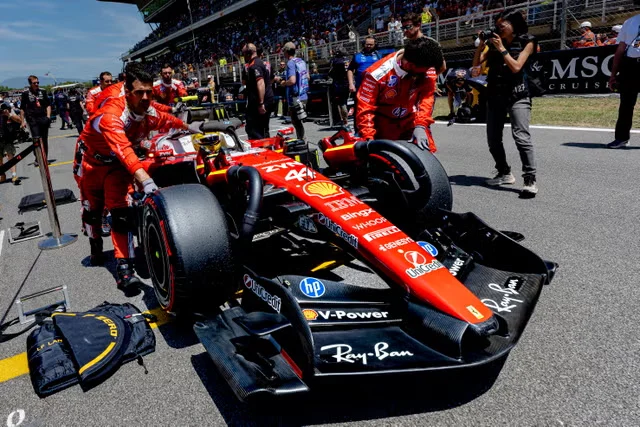
Formula 1 cars are not shaped only to cut through air. They are shaped to move air where engineers need it. Therefore, sidepods, engine covers, floor edges, and diffusers all matter.
This topic connects directly with downforce, F1 diffusers, F1 bodywork, and clean air.
Official Formula 1 wording describes the Coanda Effect as the tendency for airflow or fluid to follow the contours of a solid surface. In F1, aerodynamicists use it to channel airflow around the car.
What Is The Coanda Effect In Formula 1?
The Coanda Effect is a fluid dynamics principle. It describes how a jet of air or fluid can attach to a nearby curved surface.
In Formula 1, that surface may be a sidepod, floor edge, engine cover, rear bodywork, or diffuser wall. If the surface is shaped well, the airflow follows it instead of separating.
This is useful because F1 cars need controlled airflow. Uncontrolled airflow creates drag, instability, and lost downforce.
Race analyst view: Coanda is not magic. It is surface shape, airflow speed, pressure control, and separation management working together.
How Does The Coanda Effect Work?
Air does not always travel in a straight line. When fast-moving air passes close to a curved surface, pressure differences can pull the flow toward that surface.
If the curve is gentle enough, the flow stays attached. However, if the curve is too sharp, airflow separates and the aerodynamic benefit collapses.
That is why F1 bodywork has carefully blended surfaces. A small edge, ramp, or sidepod contour can change how air reaches the rear of the car.
NASA’s educational material also links Coanda-based flow control with deflecting exhaust over an aircraft wing. Formula 1 has used similar thinking with exhaust and bodywork airflow.
How Do F1 Teams Use The Coanda Effect?
F1 teams use the Coanda Effect to guide air toward areas that create performance. The most famous example came from exhaust-blown aerodynamic ideas.
During the early 2010s, teams shaped exhaust exits and sidepod bodywork to encourage hot exhaust flow to follow surfaces. That helped energise airflow near the floor and diffuser.
Autosport’s technical history explains how teams used Coanda-style exhaust solutions after rule changes tried to limit exhaust-blown diffusers. McLaren, Red Bull, Ferrari, and others explored different paths.
Today, the principle still matters. However, it is usually about airflow management over bodywork rather than old-style exhaust blowing.
| Area | How Coanda Helps | Performance Goal |
|---|---|---|
| Sidepods | Helps flow follow curved bodywork | Feeds clean air toward the rear |
| Engine cover | Guides air down and rearward | Improves rear airflow quality |
| Floor edge | Supports airflow control near the floor | Protects underfloor performance |
| Diffuser area | Helps manage exit flow paths | Supports downforce and balance |
That makes the Coanda Effect closely related to F1 endplates, bargeboards, airboxes, and car handling.

Coanda Effect Vs Ground Effect In F1
The Coanda Effect and ground effect are related to airflow, but they are not the same.
The Coanda Effect is about air following a surface. Ground effect is about the car producing low pressure under the floor near the track.
In simple terms, Coanda helps guide airflow. Ground effect helps create downforce from the underfloor.
Therefore, an F1 car may use both ideas together. Surface flow can help feed the floor, while the floor and diffuser create aerodynamic grip.
For more context, read about diffusers, bottoming out, grip, and slipstreaming.
Is The Coanda Effect Still Used In Modern F1?
Yes, the Coanda Effect still matters in modern F1. However, fans should not think only about 2012-style Coanda exhausts.
Modern F1 cars use surface shaping everywhere. Sidepods, floor edges, cooling exits, engine covers, and beam-wing areas all depend on clean airflow attachment.
Formula 1’s 2026 aerodynamics guide notes major changes to floor and diffuser design. Even when rules change, teams still fight to keep airflow attached and useful.
FIA technical regulations tightly control bodywork, exhaust tailpipes, floors, wings, and aerodynamic surfaces. As a result, teams must find legal shape details that guide airflow without breaking the rules.
How Is The Coanda Effect Tested In Formula 1?
Teams test Coanda-related airflow with CFD, wind tunnels, pressure sensors, flow-vis paint, and track correlation. Each tool shows a different part of the flow picture.
CFD helps engineers predict whether air will stay attached. Wind tunnel models then check the idea under controlled conditions.
At the track, teams use fluorescent flow-vis paint. If the paint streaks follow the expected route, the surface may be working. If the pattern breaks, separation may be hurting performance.
This is why aerodynamics links with diffuser design, Delta Time, F1 debriefs, and qualifying pace.
Final Verdict
The Coanda Effect in F1 is the tendency of airflow to follow curved bodywork. It helps teams move air toward useful areas of the car.
It can support downforce, reduce drag, improve diffuser flow, and stabilise the car’s aerodynamic balance. However, it only works when the surface shape and pressure conditions are right.
For beginners, the answer is simple. The Coanda Effect explains why air can stick to curved F1 bodywork. For serious fans, it is one of the hidden tools behind modern Formula 1 aerodynamics.
FAQs About Coanda Effect In F1
What is the Coanda Effect in F1?
It is the tendency of airflow or exhaust gas to follow a curved surface on the car instead of moving straight.
How does the Coanda Effect work in F1?
Fast airflow attaches to shaped bodywork and follows its contour, helping teams guide air to useful aerodynamic areas.
Why is the Coanda Effect important in Formula 1?
It helps control airflow, improve aerodynamic efficiency, support downforce, and reduce flow separation.
Is Coanda Effect the same as ground effect?
No. Coanda Effect is airflow following a surface. Ground effect is downforce created by low-pressure air under the car.
Where is the Coanda Effect used on an F1 car?
It can be used around sidepods, engine covers, floor edges, diffuser areas, and curved bodywork surfaces.
Who discovered the Coanda Effect?
The effect is named after Romanian inventor and engineer Henri Coandă.