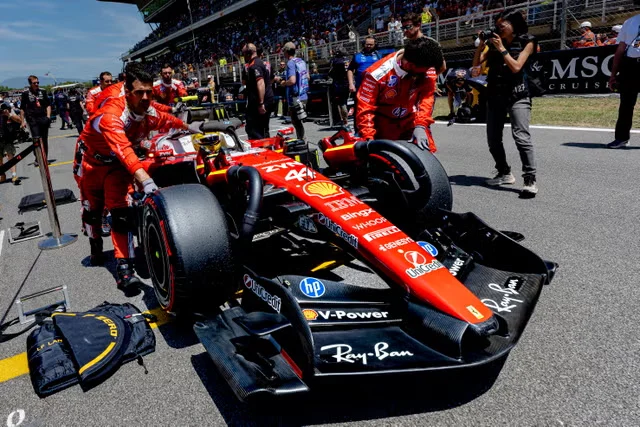
How Do F1 Drivers Get Into Formula 1? Career Path Explained
The road usually starts in karting, passes through junior single-seaters and ends with a Super Licence, an F1 test program and one of the rarest job offers in sport.
Most drivers start in competitive karting, graduate to Formula 4, Formula Regional, FIA Formula 3 and FIA Formula 2, earn at least 40 FIA Super Licence points, then secure a seat through results, funding, academy support and Formula 1 team evaluation.
Reaching Formula 1 is not a simple promotion for winning one championship.
A young driver must build speed, racecraft and technical understanding over many seasons.
However, performance alone is not enough. Funding, timing and team relationships can decide whether a career continues.
The standard modern route begins in karting. Drivers then move into entry-level single-seaters, usually Formula 4.
Formula Regional often follows. After that come FIA Formula 3 and FIA Formula 2.
Formula 2 is officially described as the final stepping stone toward Formula 1. Nevertheless, the series does not guarantee promotion.
A driver also needs an FIA Super Licence. A first-time applicant normally needs 40 points from approved championships.
The applicant must also hold the correct international competition licence, complete sufficient eligible racing and pass a rules knowledge test.
Most applicants must be at least 18. However, the FIA may approve an exceptional 17-year-old who has shown outstanding ability and maturity.
The road became even narrower in 2026. Formula 1 has 11 teams and 22 full-time race seats.
Therefore, even a strong Formula 2 driver may find no vacancy. Teams also compare juniors with experienced race winners and established reserves.
Driver academies can help. They provide coaching, funding, simulator access, medical support and direct contact with F1 engineers.
Yet no academy can promise a cockpit. A driver must keep producing results while fitting the team’s long-term plans.
Modern Formula 1 also uses rookie practice sessions. In 2026, every full-time driver must give up two practice sessions to a rookie.
A rookie is defined as someone who has started no more than two Grands Prix. These sessions allow teams to compare young drivers in current machinery.
So, how do F1 drivers get into Formula 1 in practice? They climb the racing ladder, meet the licence rules and become the best available option when a seat opens.
The F1 Driver Career Path at a Glance
The common route is karting, Formula 4, Formula Regional, FIA Formula 3 and FIA Formula 2. Drivers then need a Super Licence and an offer from a Formula 1 team.
The FIA single-seater structure creates a recognizable ladder.
However, the ladder is not a compulsory checklist. Drivers can skip a level or arrive through another approved championship.
| Career Stage | Main Purpose | What Teams Evaluate | Typical Next Step |
|---|---|---|---|
| Karting | Build racecraft, reactions and close-combat skill | Natural pace, overtaking, consistency, adaptability | Formula 4 or another entry-level car series |
| Formula 4 | Learn wings, suspension, data and standing starts | Car control, feedback, qualifying pace, professionalism | Formula Regional, GB3 or similar |
| Formula Regional | Handle faster cars and stronger international fields | Tire management, technical development, consistency | FIA Formula 3 or occasionally Formula 2 |
| FIA Formula 3 | Compete on F1 weekends against elite juniors | Results under pressure, racecraft, adaptability | FIA Formula 2 |
| FIA Formula 2 | Prepare for F1 procedures, tires and global travel | Complete-driver performance and readiness | F1 race, reserve, simulator or testing role |
| Formula 1 | Deliver at the highest level | Speed, feedback, tire use, media work and team fit | Contract renewal and long-term career |
The Path Is a Funnel, Not a Conveyor Belt
Hundreds of serious karters may chase professional careers.
Far fewer reach Formula 4. The field narrows again at Formula Regional, F3 and F2.
Finally, only a small number receive current-car practice mileage. Fewer still sign a race contract.
Winning Helps, but Context Matters
Teams do not judge only championship position.
They study the quality of the field, team performance, mechanical failures and improvement during the season.
A rookie who finishes fourth can appear more promising than an experienced champion. Therefore, development rate matters.
Timing Can Be as Important as Talent
A team may have two drivers under long contracts.
Consequently, an academy prospect can be ready without having a seat available. Some juniors move to another team or another category.
The road to F1 is not won by collecting category names. It is won by proving that every move upward reveals more potential rather than exposing a ceiling.
Stage 1: Karting Builds the Foundation
Almost every modern Formula 1 driver has substantial karting experience. Karting is not a legal requirement, but it remains the strongest foundation for racecraft, reactions and close competition.
When people ask how do F1 drivers get into Formula 1, the practical answer usually begins with a kart.
Karting teaches skills that are difficult to reproduce elsewhere. The driver feels grip directly and races wheel to wheel.
Young Drivers Learn Close Racing
Karts have no large bodywork around the wheels.
Drivers therefore learn spatial awareness, defensive positioning and overtaking timing. Contact can end a race immediately.
Small Gaps Reveal Natural Pace
Competitive kart fields often use similar equipment.
Consequently, braking, line choice and momentum become clear. Scouts can see which drivers create speed without relying on superior machinery.
Changing Conditions Develop Adaptability
International karting can include changing grip, rain and rubbered racing lines.
A driver must adjust quickly. That ability becomes essential when a Formula 1 track evolves through a weekend.
Karting Also Teaches Preparation
Professional karting includes data, chassis setup, tire pressure and engine management.
Parents and mechanics often form the first small race team. The driver learns that results depend on communication.
What Age Do Future F1 Drivers Start?
Many begin between five and ten years old.
However, there is no official age that guarantees success. Early starts provide more racing experience before the single-seater years.
Does a Driver Need International Karting?
Local racing can establish basic ability.
Yet international events expose the driver to stronger competition and professional teams. This is where major academies often scout.
Can Someone Reach F1 Without Karting?
It is theoretically possible because the FIA does not require a karting résumé.
In modern practice, it is extremely rare. A late starter must replace years of racecraft very quickly.
Our broader guide to becoming a race car driver explains how club racing and licensing begin.
Stage 2: Formula 4 Is the First Major Car-Racing Step
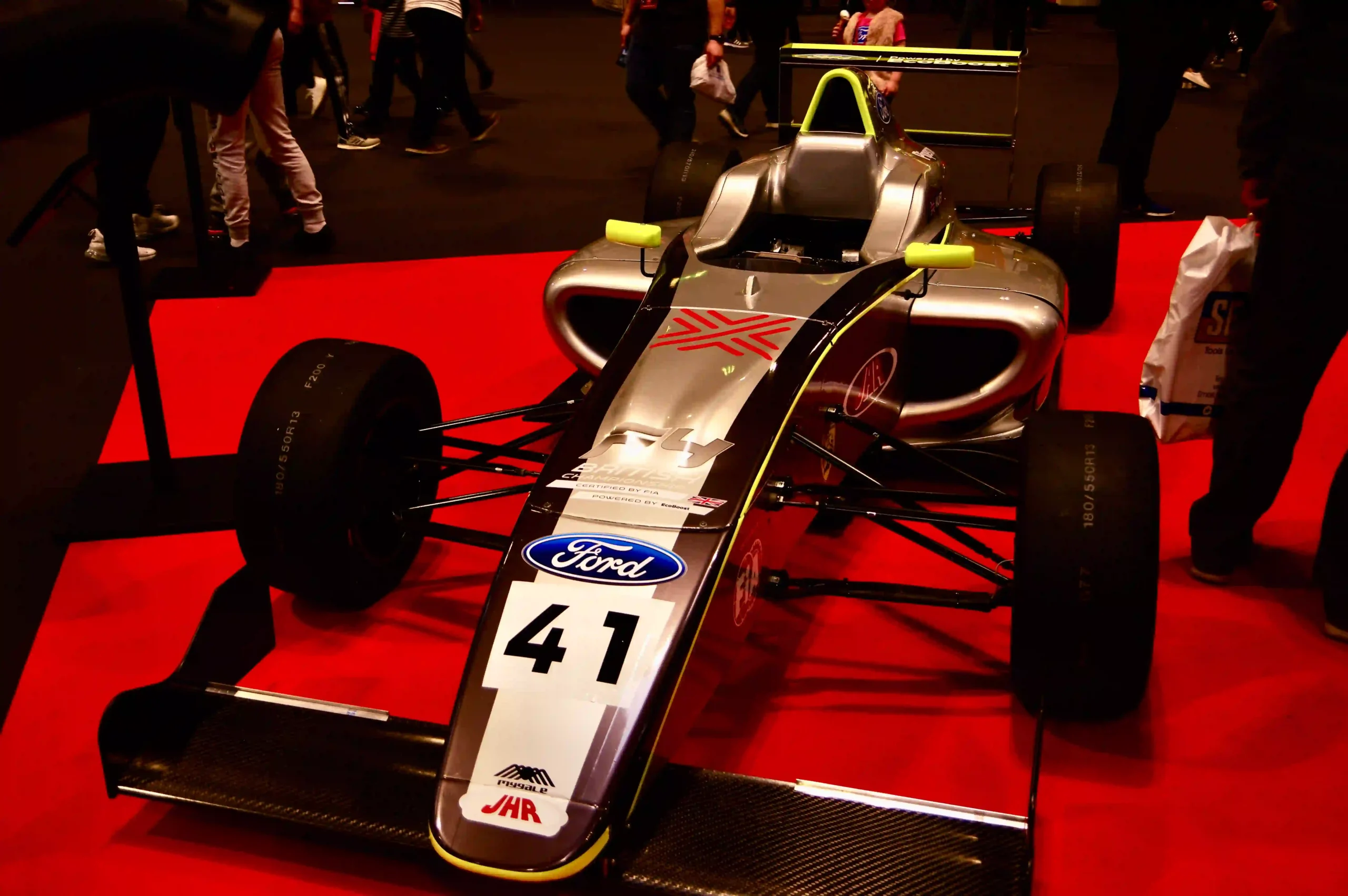
Formula 4 is the FIA’s normal entry point from karting into single-seater car racing. Drivers learn aerodynamics, suspension, data analysis, standing starts and heavier braking loads.
Formula 4 changes almost every physical and technical demand.
The driver now sits inside a larger car with wings, suspension and a sequential gearbox.
A Formula Car Carries More Mass
A kart reacts instantly and has no suspension.
An F4 car rolls, pitches and transfers weight. Therefore, drivers must anticipate movement rather than react after it begins.
Aerodynamic Grip Appears
Front and rear wings create downforce.
The driver learns that speed can produce grip. However, following another car can reduce that grip.
Braking Technique Changes
F4 cars allow much heavier initial brake pressure than karts.
The driver must then release pressure smoothly while turning. This technique becomes more important at every higher level.
Data Becomes Central
Engineers compare throttle, brake, steering and speed traces.
A driver can no longer rely only on feel. Technical feedback must match what the data shows.
Standing Starts Add Pressure
Kart races usually use rolling starts.
Single-seaters use a clutch-controlled standing launch. Drivers must manage wheelspin while reacting to the lights.
F4 Championships Exist Worldwide
FIA-certified series operate across Europe, Asia, the Americas and other regions.
That gives drivers a local entry point. Nevertheless, the strongest European fields often attract the most F1 scouting attention.
Formula 4 Awards Super Licence Points
Winning an eligible national FIA Formula 4 championship can earn 12 points under the current allocation.
Second earns 10 and third earns seven. Those points can contribute toward the required 40.
Stage 3: Formula Regional Bridges F4 and FIA F3
Many drivers move from Formula 4 into a Formula Regional championship. Formula Regional adds more power, downforce and technical complexity before FIA Formula 3.
The FIA positions Formula Regional between F4 and international F3.
This stage is useful because the performance jump from F4 to FIA F3 can be large.
The Cars Demand More Aerodynamic Confidence
Formula Regional cars create more downforce.
Drivers must carry greater speed into corners while trusting the car’s aerodynamic platform.
Tire Management Becomes More Important
Faster cars place more energy into the tires.
A driver who slides early may lose performance later. Therefore, race pace becomes different from one-lap pace.
International Fields Increase Pressure
Regional championships attract national F4 champions and academy drivers.
The competition becomes deeper. A driver can no longer learn slowly without losing championship position.
Some Drivers Skip Formula Regional
A dominant F4 driver may move directly to FIA F3.
Others spend two seasons at Regional level. The correct choice depends on age, budget and readiness.
Some Drivers Skip FIA F3 Instead
Andrea Kimi Antonelli moved from Formula Regional directly to Formula 2 for 2024.
That move showed the ladder is flexible. However, teams attempt such jumps only with drivers they rate exceptionally highly.
Formula Regional Can Deliver Major Licence Points
The current allocation gives the Formula Regional European champion 25 Super Licence points.
Second earns 20 and third earns 15. A strong season can therefore place a driver close to eligibility.
Stage 4: FIA Formula 3 Puts Drivers on the F1 Stage
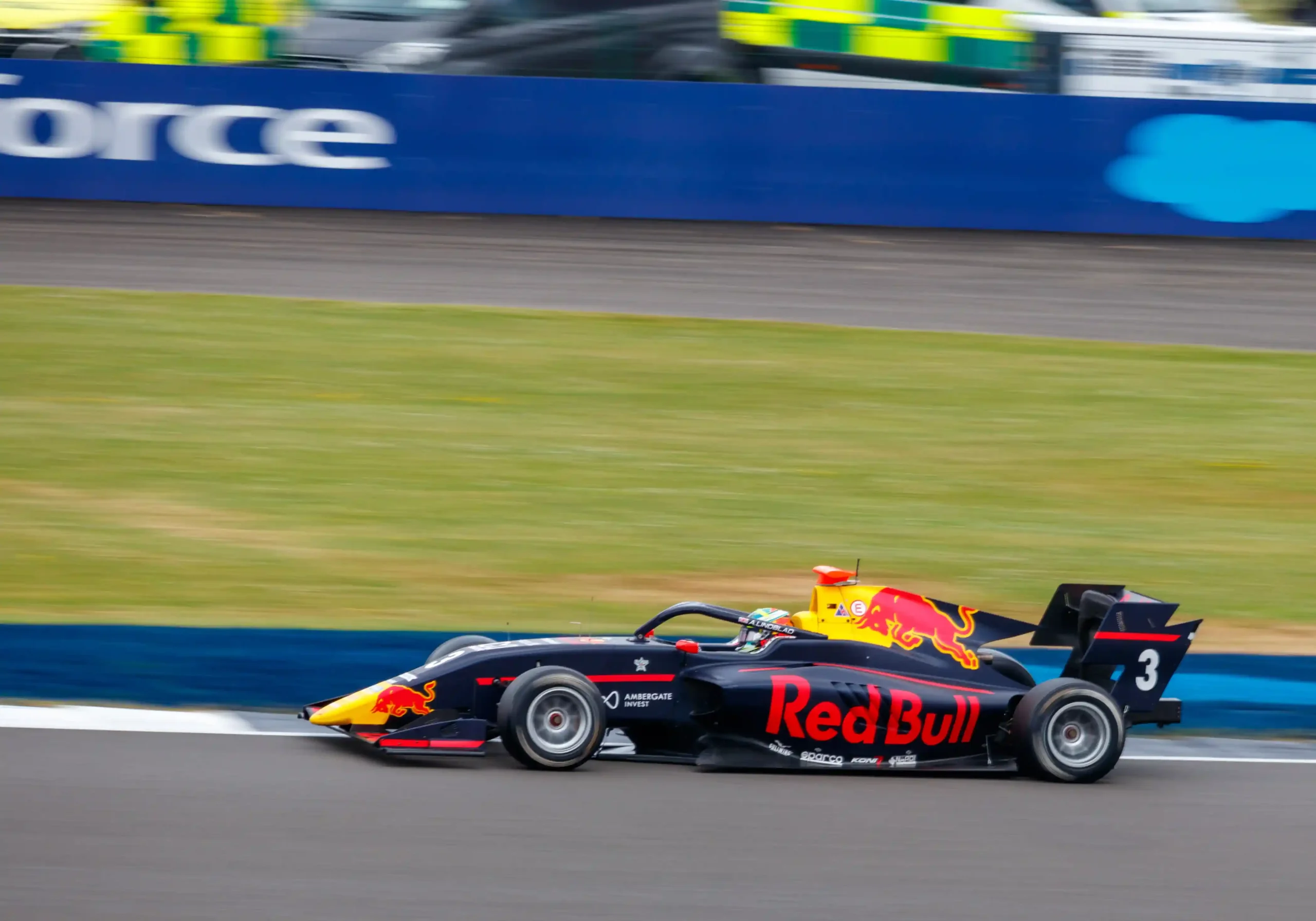
FIA Formula 3 is the third rung of the official Road to F1 ladder. It races on selected Formula 1 weekends and places leading junior drivers in equal-specification cars.
FIA F3 moves a driver into the Formula 1 paddock environment.
Teams, media and academy directors can watch every session. Pressure increases immediately.
Equal Cars Expose Driver Performance
F3 uses a controlled chassis, engine and tire package.
Teams still matter, but equipment differences are narrower than in open technical categories. Drivers must stand out through execution.
The Grid Is Large and Competitive
Traffic complicates qualifying.
A driver may have one clean opportunity. Consequently, preparation and track position become as important as raw pace.
Racecraft Is Tested in Crowded Fields
F3 races include many cars with similar performance.
Drivers must overtake without damaging tires or front wings. Poor judgment can erase an entire weekend.
F1 Circuits Accelerate Learning
F3 uses venues such as Silverstone, Spa and Monza.
Drivers learn track surfaces, pit lanes and race procedures before reaching F2 or F1.
Teams Look for More Than Championship Position
Qualifying speed, tire control and wet-weather performance all matter.
Academies also study how a driver responds after mistakes. Recovery can reveal maturity.
F3 Awards Strong Super Licence Points
The current FIA allocation gives 30 points to the champion.
Second earns 25 and third earns 20. A driver usually combines those points with earlier seasons.
Stage 5: Formula 2 Is the Usual Final Step
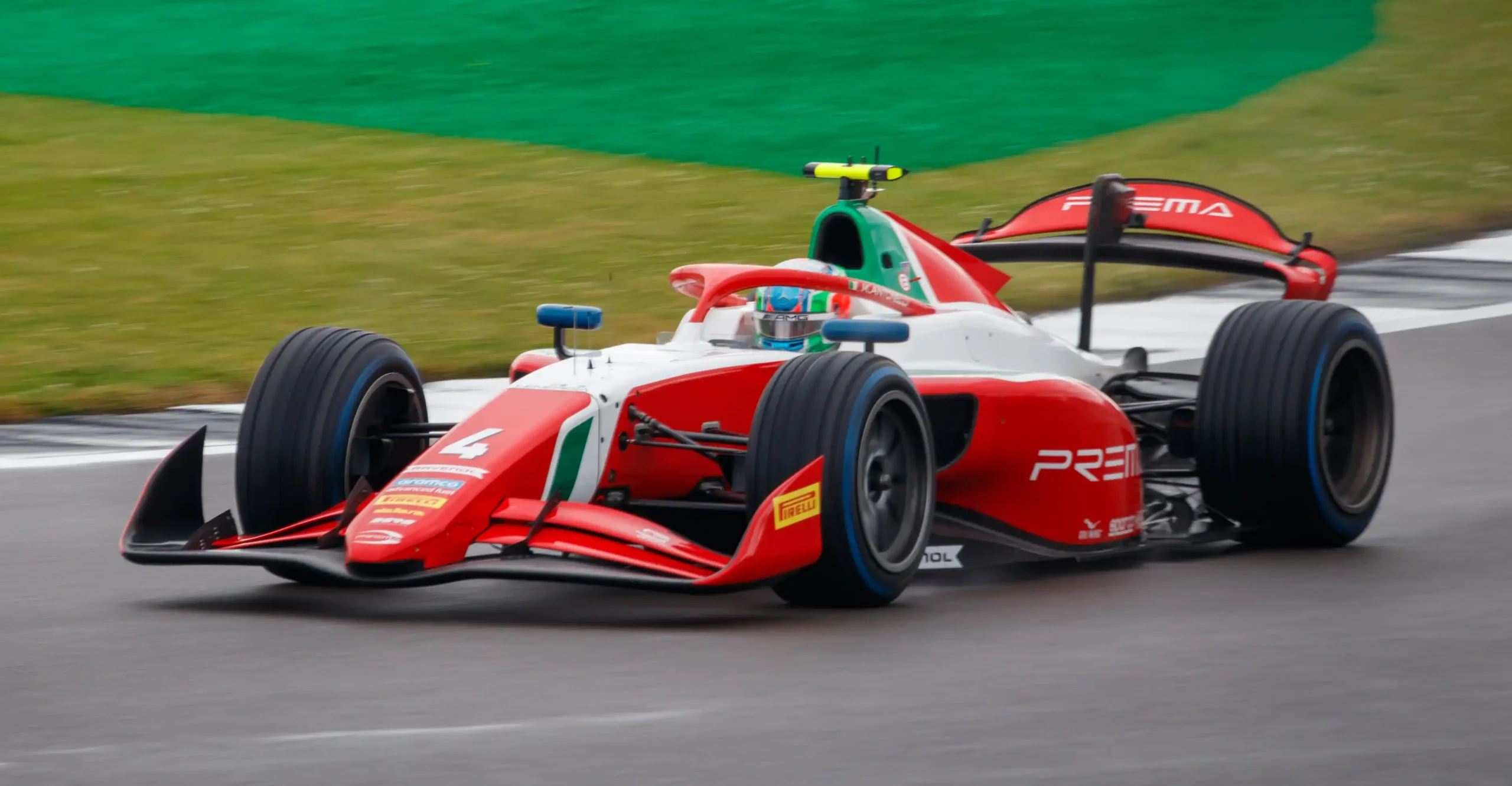
No. Formula 2 is not compulsory, but it is the standard final step because it races with F1, uses powerful equal cars and tests tire management, pit stops, racecraft and technical feedback.
FIA Formula 2 describes itself as the penultimate stage of the FIA single-seater pyramid.
In practical terms, it is the final examination before Formula 1.
Drivers Race in Front of F1 Decision-Makers
F2 follows the Formula 1 calendar at many events.
Team principals, sporting directors and driver managers can watch directly. A strong weekend gains immediate attention.
The Car Is Fast Enough to Expose Weaknesses
An F2 car has substantial power and downforce.
Drivers must manage wheelspin, braking stability and tire temperature. Errors become more expensive than in F3.
Pirelli Tire Management Matters
F2 uses Pirelli tires and strategic pit stops.
That gives drivers experience with degradation and warm-up behavior. These skills transfer directly to Formula 1.
Two Race Formats Test Different Abilities
Sprint and Feature races create varied starting positions and strategy.
A driver must attack in one race and manage in another. Teams look for complete performance.
Technical Feedback Becomes More Detailed
Engineers expect drivers to explain balance changes corner by corner.
A fast driver who cannot describe the car may struggle in F1 development work.
The Top Three Earn 40 Super Licence Points
Under the current allocation, first, second and third in FIA Formula 2 receive 40 points.
Therefore, any of the top three normally clears the points threshold from that result alone.
Winning F2 Still Does Not Guarantee a Seat
Formula 1 vacancies may not align with the champion’s timing.
Some champions become reserves, move to Formula E or race in endurance competition. Results create eligibility, not employment.
A Strong Rookie Season Can Be Enough
Teams may promote a driver before they win the title.
Oliver Bearman, Kimi Antonelli and Franco Colapinto showed that F1 teams can act before a complete F2 campaign ends.
The FIA Super Licence: The Legal Gate to Formula 1
The FIA Super Licence is the qualification required to race in Formula 1. A first-time applicant normally needs 40 points, the correct international licence, sufficient eligible experience, a rules test and FIA approval.
Understanding how do F1 drivers get into Formula 1 requires understanding the Super Licence.
A team cannot simply hire any fast driver for a Grand Prix. The FIA must approve that driver.
Drivers Normally Need 40 Points
Points come from final championship positions in approved series.
The FIA considers a defined recent period. Strong results across several seasons can combine toward 40.
The Driver Needs an FIA International Grade A Licence
The Super Licence sits above normal national competition licences.
A driver must progress through the licence system while gaining recognized experience.
The Driver Must Complete Sufficient Eligible Seasons
A first applicant must normally complete at least 80 percent of two separate seasons in eligible single-seater championships.
This rule prevents a driver from relying on one short burst of results.
The Driver Must Pass a Rules Test
The FIA checks knowledge of the International Sporting Code and Formula 1 Sporting Regulations.
Speed cannot replace rules awareness. Drivers must understand flags, procedures and conduct.
The Normal Minimum Age Is 18
The standard rule requires a driver to be 18 at the start of the first Formula 1 competition.
However, the FIA may grant a licence at 17 in exceptional circumstances. The driver must show outstanding ability and maturity.
A Road Driving Licence Is No Longer Required
The FIA removed that requirement in 2024.
Therefore, road-driving eligibility no longer blocks a qualified young racer.
Free Practice Can Add Licence Points
A driver with a Free Practice Only Super Licence can earn one additional point for completing at least 100 kilometers in an eligible F1 practice appearance without penalty points.
A maximum of 10 such points can count toward a full application.
| Championship | 1st | 2nd | 3rd | Pathway Meaning |
|---|---|---|---|---|
| FIA Formula 2 | 40 | 40 | 40 | Any top-three finisher reaches the normal points threshold |
| IndyCar | 40 | 30 | 20 | A major alternative route for established professionals |
| FIA Formula 3 | 30 | 25 | 20 | Usually combined with points from earlier seasons |
| Formula E | 30 | 25 | 20 | Provides a route for high-level professional drivers |
| Japanese Super Formula | 30 | 25 | 20 | Fast alternative series with strong licence value |
| Formula Regional European | 25 | 20 | 15 | Important bridge between F4 and international F3 |
| National FIA Formula 4 | 12 | 10 | 7 | Early points toward a multi-season total |
Important: Forty points create eligibility. They do not create a contractual right to a Formula 1 seat.
How F1 Driver Academies Change a Career
An F1 driver academy is a team-backed development program that can provide funding, coaching, fitness support, simulator work, engineering access and career management to selected young drivers.
Driver academies have become central to the modern Formula 1 pathway.
Teams identify talent early and support drivers through expensive junior categories.
Academies Reduce Financial Pressure
Support can cover part or all of a racing program.
However, agreements vary. Some drivers still need personal sponsors or family funding.
Academies Provide Professional Coaching
Drivers receive training in racecraft, fitness, nutrition and mental performance.
They also learn media duties and sponsor communication. Formula 1 evaluates the entire professional.
Simulator Access Creates a Major Advantage
Junior drivers can learn team systems before driving the real car.
They may support setup work during race weekends. Engineers then judge feedback quality and consistency.
F1 Engineers Can Track Development
An academy creates regular contact with technical staff.
Therefore, the team sees how the driver learns rather than relying only on race results.
Academies Can Arrange Testing
Teams use older-car programs, private tests and post-season running.
This mileage helps drivers adjust to Formula 1 power, braking and procedures.
Academies Do Not Guarantee Promotion
A program may support several drivers for one possible seat.
Some members are released after weak results. Others leave because another team offers a better route.
Major Programs in the Current Era
Red Bull, Ferrari, Mercedes, McLaren, Alpine and Williams operate established development systems.
Audi also launched a Driver Development Programme ahead of its first works season in 2026.
Read our profiles of Red Bull Racing, Ferrari and the 2026 F1 teams.
Why Funding Is Often the Hardest Part
Yes. Junior motorsport is expensive, and drivers usually need family funding, sponsors, scholarships, academy support or investors. Talent can attract backing, but talent alone does not pay for every season.
The question how do F1 drivers get into Formula 1 cannot be answered honestly without money.
Cars, engines, tires, mechanics, travel and testing create major costs. Budgets rise sharply at each step.
There Is No Universal Official Price
Teams negotiate packages privately.
Costs change by championship, testing level, crash damage and travel. Therefore, one fixed number can be misleading.
Family Funding Often Starts the Journey
Parents commonly pay for early karting.
As competition becomes international, the required budget can exceed what most families can manage.
Sponsors Need a Business Reason
A sponsor may value local exposure, hospitality or a driver’s personal story.
Drivers must present a professional proposal. Asking for money without clear value rarely works.
Scholarships Can Change a Career
Some karting, F4 and academy programs offer funded tests or race seats.
Winning one can replace a missing budget. However, these opportunities attract strong fields.
Academy Support Is Competitive
An F1 team may fund the driver in exchange for long-term contractual rights.
The support can save a career. It can also limit freedom if another team offers a seat.
Results Must Arrive Before the Money Ends
A driver may have only one funded season at a level.
Consequently, early mistakes carry financial consequences. Motorsport rarely provides unlimited development time.
Pay Drivers and Funded Drivers Are Not the Same Thing
Nearly every junior needs funding.
A driver can bring sponsors and still possess elite ability. The useful question is whether the driver meets Formula 1 performance standards.
What Formula 1 Teams Look for in Young Drivers
F1 teams scout karting and junior formulas, then study qualifying pace, racecraft, consistency, technical feedback, tire management, fitness, behavior and development rate.
Championship results are the first filter.
However, teams use much deeper analysis before committing millions to a junior.
Raw Speed
Can the driver produce front-row pace quickly and repeat it under pressure?
Learning Rate
Does feedback lead to measurable improvement during a weekend and season?
Professional Fit
Can the driver work with engineers, sponsors, media and teammates?
Qualifying Pace Shows the Ceiling
A driver can learn race management.
Finding several tenths of raw pace is harder. Therefore, teams pay close attention to qualifying performance.
Racecraft Shows Judgment
Young drivers must pass, defend and manage risk.
Constant collisions suggest poor decision-making. Excessive caution can be equally damaging.
Tire Management Shows F1 Readiness
Formula 1 performance changes throughout a stint.
Teams want drivers who understand temperature, degradation and pace control. F2 provides an important test.
Technical Feedback Must Be Accurate
Engineers need more than “understeer” or “oversteer.”
The driver should identify corner phase, speed range and trigger. Useful feedback improves both setup and development.
Wet-Weather Pace Reveals Adaptability
Rain removes many normal references.
Drivers must feel grip and discover new lines. Strong wet performance often attracts scouting attention.
Consistency Protects Championships
One spectacular victory cannot compensate for repeated non-finishes.
Teams want drivers who score when the car is not perfect. Mature weekends matter.
Behavior Matters
Junior drivers represent teams and sponsors.
Public misconduct, poor teamwork or dishonesty can end support. Professional conduct is part of the evaluation.
Physical Preparation Must Already Be Serious
Future F1 drivers train neck, core, cardio and heat tolerance.
They also manage sleep and nutrition. Read our guide to G-force in Formula 1.
From Junior Driver to Simulator, Test and Reserve Roles
A reserve driver prepares to replace a race driver, works in the simulator, attends meetings, supports setup development and may drive in rookie practice sessions or tests.
Not every driver moves directly from F2 into a race seat.
A reserve or development role can keep a driver close to Formula 1 while building experience.
Simulator Work Builds Trust
Drivers test setup ideas in the team’s simulator.
They may work late after Friday practice to help race drivers. Accurate correlation earns engineer confidence.
Reserve Drivers Must Be Ready Immediately
Illness, injury or suspension can create a sudden vacancy.
The reserve must know steering-wheel controls, procedures and current regulations. There may be little practice time.
Testing Previous Cars Develops Technique
Teams can run older Formula 1 cars under testing rules.
Drivers learn braking loads, power delivery and complex systems. This mileage can reveal whether junior performance transfers.
Rookie FP1 Sessions Provide Current-Car Evidence
In 2026, each full-time driver must give up two practice sessions.
The rookie must have started no more than two Grands Prix. Teams therefore receive repeated opportunities to evaluate young talent.
Practice Mileage Can Help a Licence Application
Eligible 100-kilometer practice runs can add Super Licence points.
However, the driver must avoid penalty points. A messy session can waste a rare opportunity.
Post-Season Tests Matter
Young-driver tests allow longer runs than a one-hour FP1.
Teams can study tire management, feedback and physical consistency. These tests often influence reserve appointments.
A Reserve Role Can Also Become a Dead End
A driver may spend years waiting while younger prospects arrive.
Therefore, many reserves also race in Super Formula, endurance racing or another championship.
Our history of racing simulators explains how virtual development became central to modern teams.
How a Driver Finally Wins a Formula 1 Race Seat
Teams compare junior results, Super Licence eligibility, testing, simulator work, commercial value, contract status and available seats. The chosen driver must fit both performance needs and long-term strategy.
This is the final answer to how do F1 drivers get into Formula 1.
A driver becomes eligible, proves readiness and waits for a vacancy. Then the team decides whether the risk is worthwhile.
A Seat Must Actually Be Available
Formula 1 has 22 full-time seats in 2026.
Many are occupied by champions and proven race winners. Turnover is limited.
Teams Compare Rookies With Experienced Drivers
A junior may offer long-term potential.
An experienced driver offers known feedback and fewer mistakes. The team weighs immediate points against future value.
Contracts Can Block Promotions
A driver may belong to another academy or management group.
Release clauses and options influence negotiations. Talent alone does not erase contracts.
Engine and Team Relationships Matter
Major teams sometimes place juniors with partner teams.
This arrangement gives race experience without opening the senior team’s seat. Red Bull’s structure is the clearest example.
Commercial Value Can Help at the Margin
Sponsors, nationality and market interest matter.
However, a modern F1 driver still needs credible pace and licence eligibility. Marketing cannot replace the sporting threshold.
Timing Can Create a Sudden Debut
An injury, illness or mid-season performance issue can open a seat quickly.
Reserve drivers must be ready. A strong substitute appearance can transform a career.
The First Contract Is Only the Beginning
A rookie must adapt to faster development, media pressure and elite teammates.
Points and feedback determine whether the seat lasts. Reaching F1 does not guarantee staying there.
See the current Formula 1 driver lineup and our guide to F1 driver salaries.
Can Drivers Reach F1 Without the Standard F4–F3–F2 Route?
Yes. Formula 2 is not legally required. Drivers can earn Super Licence points in IndyCar, Super Formula, Formula E, WEC and other approved championships, then secure an F1 offer.
The standard route offers the closest preparation and visibility.
Nevertheless, FIA rules recognize several alternative championships.
IndyCar
The IndyCar champion receives 40 Super Licence points.
Second earns 30 and third earns 20. However, adapting to F1 tires, circuits and team systems still requires testing.
Japanese Super Formula
Super Formula uses extremely fast single-seaters.
The champion receives 30 points, while second and third earn 25 and 20. F1 teams also use the series to develop reserves.
Formula E
Formula E rewards energy management and street-circuit racecraft.
Its champion receives 30 points. However, moving from electric racing into F1 remains unusual.
World Endurance Championship
Hypercar drivers can earn significant points.
Endurance racing develops traffic management and technical feedback. Yet single-seater experience remains valuable.
A Driver Can Skip a Junior Level
Max Verstappen moved from European Formula 3 to Formula 1.
Antonelli moved from Formula Regional to F2. These examples are exceptions, not recommended shortcuts for most drivers.
Why F2 Remains the Best-Integrated Route
F2 races on Formula 1 weekends and uses similar operational demands.
Teams can observe drivers directly. Therefore, even drivers from other routes may enter F2 to improve visibility.
How an American Driver Can Reach Formula 1
An American driver can follow FIA karting and Formula 4 into Europe, or progress through U.S. junior categories and IndyCar. The driver still needs 40 Super Licence points and an F1 team offer.
American drivers face a strategic choice.
They can remain in the U.S. open-wheel system or move into the European Road to F1.
The European Route Gives Better F1 Visibility
Italian F4, Formula Regional, F3 and F2 place drivers near Formula 1 teams.
However, relocating creates major travel and living costs.
The U.S. Route Builds Strong Professional Drivers
USF Juniors, USF2000, USF Pro 2000, Indy NXT and IndyCar form a respected ladder.
Oval racing also develops skills that European juniors rarely learn.
IndyCar Points Can Create Eligibility
A championship delivers 40 points.
High championship positions also contribute. However, an F1 team still needs evidence that the driver can adapt.
Testing Access Is a Major Challenge
An American-based driver may have less simulator and current-team contact.
Therefore, academy relationships and private testing become important.
Nationality Can Create Commercial Interest
Formula 1 has three U.S. races and an American team.
Yet teams will not sacrifice performance. A credible American prospect must meet the same standards.
The Best Choice Depends on the Driver
A young karting star focused only on F1 may move to Europe early.
An older professional may use IndyCar results. There is no single correct path.
How F1 Academy Fits the Path for Female Drivers
Yes. Formula 1 and FIA licensing rules do not exclude women. F1 Academy provides female drivers with F4-level racing, support and exposure as part of the wider Road to F1.
F1 Academy is a championship, not the same thing as an F1 team academy.
Its purpose is to increase female participation and create a clearer progression route.
The Cars Sit at an Entry-Level Single-Seater Stage
Drivers build experience comparable with the early formula pathway.
Therefore, the normal next target is a faster regional or Formula 3-level category, not a direct F1 seat.
F1 Weekends Increase Visibility
The series races in support of selected Grands Prix.
Teams, sponsors and media can follow the drivers. That exposure helps create future funding.
F1 Team Support Connects Drivers to the Paddock
Team-branded entries and development links provide mentoring and recognition.
However, sponsorship does not guarantee entry into the team’s main junior program.
Super Licence Rules Remain the Same
A female driver still needs the required points, experience and FIA approval.
Therefore, progression into stronger mixed-gender categories remains essential.
The Main Barrier Is Opportunity, Not Regulation
Historically, fewer girls entered karting and fewer received funding.
Increasing the talent pool creates a better chance of finding drivers capable of reaching F1.
Real Career Paths That Show the Ladder Is Flexible
No. Most share karting and junior single-seater experience, but the exact route varies. Some win every feeder title, while others skip levels or reach F1 before completing Formula 2.
Lewis Hamilton: Academy Support and a Classic Ladder
Hamilton built his reputation in karting and joined McLaren’s development system.
He progressed through Formula Renault, Formula 3 and GP2 before entering F1 in 2007. His route became a model for academy development.
Max Verstappen: The Exceptional Fast Track
Verstappen moved from karting into European Formula 3.
Red Bull then promoted him directly to Formula 1 at 17. Modern licence rules were tightened after his arrival, although a 17-year-old exception now exists.
Read our detailed history of when Max Verstappen joined F1.
Charles Leclerc: F3, GP3 and Formula 2 Titles
Leclerc joined the Ferrari Driver Academy and won major junior championships.
His results made the sporting case clear. A Sauber seat then provided the final opening.
George Russell: Results Plus Mercedes Development
Russell won GP3 and Formula 2 in consecutive seasons.
Mercedes support gave him testing and reserve work. Williams provided his first race seat.
Oscar Piastri: Three Straight Junior Championships
Piastri won Formula Renault Eurocup, FIA F3 and F2 in consecutive years.
However, he still spent a season without a race seat. His case shows that perfect results cannot control vacancies.
Kimi Antonelli: Skipping FIA F3
Antonelli won at F4 and Formula Regional level.
Mercedes moved him directly into F2, then Formula 1. The team accepted a steeper learning curve because it believed in his ceiling.
Franco Colapinto: Mid-Season Opportunity
Colapinto was racing in F2 when Williams needed a replacement.
His academy and simulator background made a rapid promotion possible. Timing and preparation met at the right moment.
The Lesson From Every Route
None of these careers proves a shortcut.
Instead, they show that results, support and opportunity interact differently. The common feature is repeated evidence of elite potential.
Explore our features on famous racing drivers and the best F1 drivers of all time.
How Long Does It Take to Become an F1 Driver?
For most modern drivers, the journey takes roughly a decade or more from first competitive karting to an F1 debut. The exact timeline depends on age, funding, results and available seats.
A driver who begins karting at seven may enter cars at 15.
They could then spend four to six seasons moving through F4, Regional, F3 and F2.
A Typical Fast Progression
Many Careers Take Longer
A driver may repeat a category to improve results.
Funding delays can also interrupt progress. There is no penalty for taking longer if performance continues to rise.
Starting Late Makes the Funnel Narrower
An 18-year-old beginner competes against drivers with a decade of race experience.
Reaching professional racing is still possible. Reaching Formula 1 becomes extremely unlikely.
Age Is Not the Only Limitation
Budget, geography and seat availability can matter more.
A late starter with exceptional resources can gain mileage quickly, but cannot easily reproduce years of racecraft.
Why Some F2 Champions Never Reach Formula 1
No. An F2 title provides strong Super Licence eligibility and proves high-level ability, but Formula 1 teams are not required to promote the champion.
F2 is a feeder championship, not a draft system.
Teams can choose any eligible driver. They often prioritize contracts and long-term strategy.
No Seat May Be Open
Both drivers at a team may perform well.
Therefore, the champion waits or moves elsewhere. A year outside single-seaters can reduce momentum.
The Champion May Not Belong to an F1 Academy
Without a direct team relationship, testing opportunities can be limited.
Another driver with slightly weaker results may have stronger internal support.
Teams May Prefer a Younger Prospect
Age influences perceived development potential.
An older champion may be viewed as closer to their ceiling, even when they are more complete.
Commercial and Contract Factors Intervene
A driver may have sponsors but no available team connection.
Another may face a difficult buyout. Sporting results do not remove business constraints.
F1 Performance Requires Different Strengths
Teams study simulator work and technical feedback.
A driver can win F2 without appearing exceptional in those areas. The final evaluation is broader than points.
Common Myths About Becoming a Formula 1 Driver
“Winning Formula 2 Guarantees Formula 1”
False. It creates a strong sporting case and licence eligibility.
However, no regulation forces an F1 team to provide a seat.
“Every Driver Must Race in F4, F3 and F2”
False. The pathway is flexible.
Drivers can skip levels or earn points in other approved championships.
“An Academy Membership Means the Driver Is Chosen”
False. Academies support several prospects.
Results and team needs still decide promotion.
“A Driver Only Needs to Be Fast”
False. Teams require feedback, tire management, fitness and professional behavior.
Repeated crashes can outweigh occasional speed.
“A Degree Is Required”
False. Drivers do not need a university degree to race in Formula 1.
They do need racing licences, experience and FIA approval.
“A Normal Road Licence Is Required”
False under current rules.
The FIA removed that requirement in 2024.
“Drivers Can Buy a Seat Without Ability”
Misleading. Funding can influence opportunities.
However, a driver still needs a Super Licence and enough performance to operate an F1 car safely.
“It Is Easy to Get Noticed on Social Media”
False. A strong public profile can help sponsors.
F1 teams still base sporting decisions on racing evidence and technical evaluation.
A Practical Roadmap for an Aspiring Driver
Start with competitive karting, obtain coaching, track performance data, build a realistic budget, race stronger opponents and develop relationships with teams and sponsors.
1. Race, Do Not Only Practice
Open sessions build familiarity.
Competition teaches starts, overtaking and pressure. Race results create evidence for teams.
2. Find Strong Coaching
A good coach identifies habits before they become expensive.
Data and video should support the coaching. Improvement must be measurable.
3. Build a Budget Early
Estimate travel, equipment, testing and crash damage.
Then create sponsor proposals with clear value. Do not rely on one promised backer.
4. Choose Championships for Competition, Not Easy Trophies
Winning a weak field can look impressive publicly.
Scouts understand field quality. Strong opponents provide better development.
5. Protect Schooling and Career Options
Only a tiny percentage reach Formula 1.
Education supports engineering understanding, communication and life after racing. A balanced plan reduces pressure.
6. Learn Technical Language
Understand braking phases, rotation, traction and tire temperature.
Engineers respond to precise feedback. Read our guides to car handling and oversteer and understeer.
7. Build Fitness Before It Becomes a Problem
Neck and cardiovascular training should progress with car speed.
Drivers also need heat tolerance and recovery habits.
8. Review Every Season Honestly
Compare pace with teammates, not only final standings.
Identify whether the next category is justified. Moving too quickly can damage a career.
9. Understand Qualifying
Junior ladders reward one-lap performance heavily.
Our guides to how F1 qualifying works, how racing drivers qualify and pole position explain the fundamentals.
10. Treat Every Test as an Audition
Teams monitor preparation, feedback and behavior.
A driver who blames equipment without evidence loses trust. Professionalism begins before Formula 1.
How Do F1 Drivers Get Into Formula 1? FAQs
How do F1 drivers get into Formula 1?
Most begin in karting, move through F4, Formula Regional, F3 and F2, earn a Super Licence and secure a team contract.
Do drivers have to race in Formula 2 before Formula 1?
No. F2 is the usual final step, but drivers can qualify through other approved championships.
How many Super Licence points are needed for Formula 1?
A first-time applicant normally needs at least 40 points, plus the required licence, experience, rules test and FIA approval.
Does joining an F1 driver academy guarantee a race seat?
No. Academies provide support and access, but results, readiness and an available seat still decide promotion.
Conclusion: Reaching Formula 1 Requires More Than Winning Races
The answer to how do F1 drivers get into Formula 1 starts with racing experience.
For most modern drivers, that experience begins in karting.
Karting develops reactions, overtaking and close-combat judgment.
It also introduces setup work and team communication.
The next step is usually Formula 4.
F4 teaches drivers to handle a heavier car with wings and suspension.
Braking technique becomes more complex.
Data analysis becomes part of every session.
Standing starts add another skill.
Formula Regional often follows.
The cars create more downforce and tire load.
Drivers face stronger international competition.
They must manage a faster car rather than simply attack every lap.
FIA Formula 3 then places the driver on Formula 1 weekends.
Large grids create difficult qualifying sessions.
Equal equipment makes driver performance easier to compare.
Academy directors can watch every mistake and recovery.
Formula 2 is the usual final step.
Its cars, tires and pit-stop strategy prepare drivers for F1 demands.
The top three receive 40 Super Licence points.
However, eligibility does not guarantee employment.
The FIA Super Licence forms the legal barrier.
A first applicant normally needs 40 points.
The driver also needs the correct international licence.
They must complete enough eligible racing.
A rules knowledge test is required.
Most drivers must be at least 18.
The FIA can approve an exceptional 17-year-old.
A normal road licence is no longer required.
These rules make sure a driver has both experience and maturity.
Driver academies can accelerate the journey.
They provide coaching, funding and simulator access.
They also connect juniors with Formula 1 engineers.
Yet academies remain competitive.
Several prospects may chase one future seat.
Weak results can end support.
Strong results may still arrive when no vacancy exists.
Funding remains a major challenge.
Junior motorsport requires cars, mechanics, tires and travel.
Budgets rise at every stage.
Families often fund the first years.
Sponsors, scholarships and academies become essential later.
Therefore, young drivers must learn business skills as well as racing.
Formula 1 teams evaluate much more than trophies.
Raw qualifying pace reveals potential.
Racecraft reveals judgment.
Tire management shows maturity.
Technical feedback helps engineers improve the car.
Fitness and behavior also matter.
A driver represents the team at all times.
Reserve and simulator roles create another stage.
These drivers support race-weekend setup and development.
They must be ready to substitute with little warning.
Rookie FP1 sessions provide current-car evidence.
In 2026, every full-time driver gives up two sessions.
That rule creates valuable mileage for young drivers.
However, one practice hour cannot erase weak junior results.
The final obstacle is the seat itself.
Formula 1 has 22 full-time seats in 2026.
Many belong to champions and proven winners.
A rookie must become more attractive than every alternative.
That includes experienced drivers, other juniors and current reserves.
Contracts and team relationships also influence the decision.
A junior may be ready but tied to another academy.
A partner team can provide a first opportunity.
A sudden substitute role can also open the door.
The standard ladder is not compulsory.
IndyCar, Super Formula, Formula E and endurance racing award licence points.
A driver can also skip a junior category.
However, shortcuts demand exceptional evidence.
Verstappen moved from Formula 3 to F1.
Antonelli skipped FIA F3.
Those routes are unusual because the teams accepted greater risk.
F1 Academy adds an important route for female drivers.
It provides F4-level experience and F1-weekend exposure.
Women face the same Super Licence rules.
The goal is progression into stronger categories and eventually Formula 1.
Starting young helps because racecraft takes years to build.
Nevertheless, age alone does not create success.
The driver must improve at each level.
They must also find enough funding to continue.
Every promotion should reveal more potential.
Ultimately, how do F1 drivers get into Formula 1 has three answers.
First, they become fast and complete racing drivers.
Second, they satisfy the FIA’s experience and licence rules.
Third, they convince a team that choosing them is worth one of the rarest seats in world sport.
All three must happen at the same time.
Sources and Fact-Checking
This article was checked against FIA and official Formula 1 feeder-series information available on July 24, 2026. Career examples are used to explain the pathway, while individual contracts and racing budgets vary. This is a static source list with no interactive verification feature.