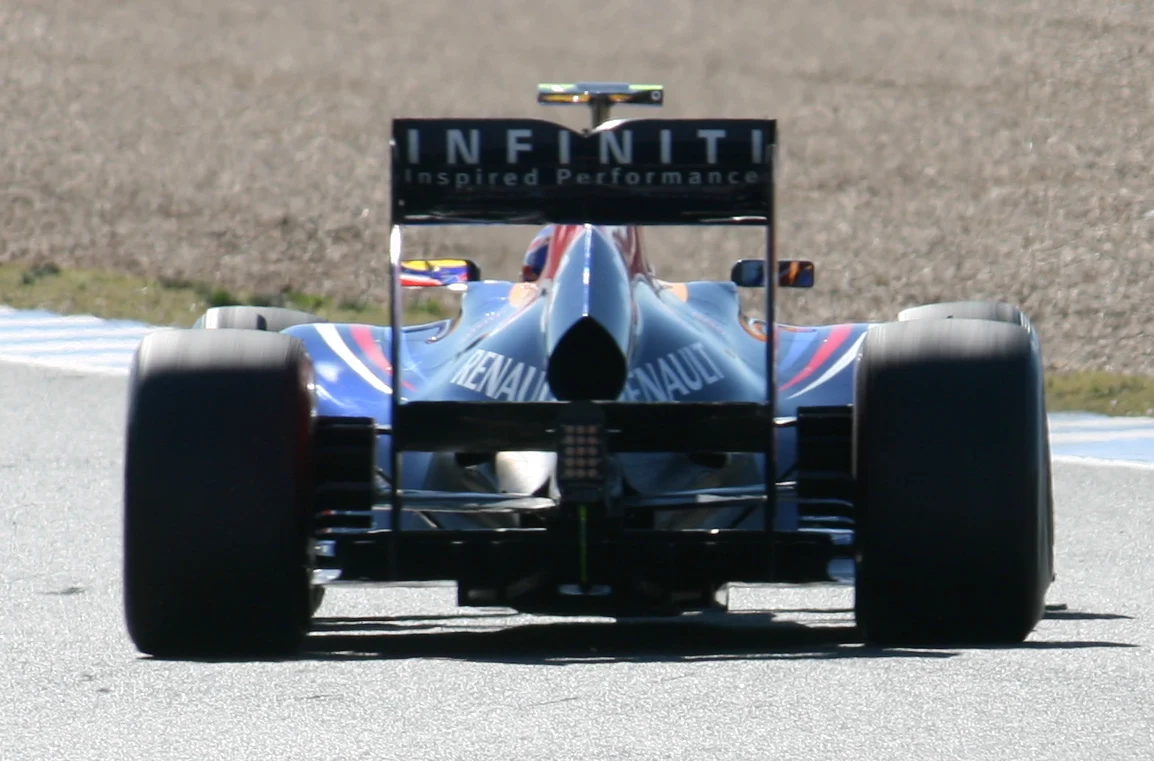
Why Do F1 Tracks Have DRS Zones?
DRS zones were controlled overtaking areas. They let a closely following driver reduce rear-wing drag and create a realistic attack before a braking zone.
F1 tracks had DRS zones because a following car lost front downforce in turbulent air. An eligible driver could open the rear-wing flap on a designated straight, reduce drag and gain enough closing speed to attempt an overtake.
For fifteen seasons, the small DRS board marked one of Formula 1’s most important tactical boundaries.
Formula 1 introduced the Drag Reduction System in 2011. The system remained part of the World Championship through 2025.
The upper rear-wing flap moved to a flatter position. Consequently, the wing produced less downforce and less aerodynamic drag.
During a race, the chasing driver normally needed to be less than one second behind at a detection point. The activation point came later.
However, the flap could not open everywhere. Reduced rear downforce would make many corners unsafe.
Therefore, the FIA placed DRS zones mainly on straights. Most zones ended before a heavy braking area.
The number varied by circuit. Monaco generally had one zone, while Albert Park used four in 2025.
Moreover, the FIA could shorten, remove or add a zone. Officials aimed to create an attack without making the pass automatic.
Traditional DRS ended after 2025. The 2026 cars now use Active Aero, Straight Mode and Overtake Mode.
This guide explains why do F1 tracks have DRS zones, how the full system worked and how the current replacement differs.
Important 2026 Update: Traditional DRS Zones Are Gone
No. Traditional DRS ended after 2025. The 2026 cars use Active Aero in designated Straight Mode sections, while Overtake Mode gives an eligible chasing driver extra electrical deployment.
The question “why do F1 tracks have DRS zones?” now describes the 2011–2025 racing system.
The rear wing still moves in 2026. However, the operating rules and the purpose are different.
Active Aero Moves the Front and Rear Wings
Corner Mode keeps the wing elements in a higher-downforce position. Straight Mode opens them to reduce drag.
Every Car Can Use Straight Mode
Traditional race DRS favored an eligible chasing car. In contrast, all drivers use Straight Mode in approved dry sections.
Overtake Mode Creates the Chasing Advantage
A driver within one second at the detection point qualifies for extra electrical deployment on the following lap.
Two Systems Now Split the Old Job
Active Aero improves straight-line efficiency. Meanwhile, Overtake Mode supplies the passing advantage.
DRS Era: 2011–2025
- Only the upper rear-wing flap moved
- Race eligibility used a one-second gap
- The advantage applied inside defined DRS zones
- The aerodynamic change aided overtaking
Current Era: From 2026
- Front and rear wing elements move together
- Straight Mode is available to every car
- Overtake Mode uses electrical energy
- Eligibility applies to the following lap
The Short Answer: DRS Zones Created a Controlled Speed Difference
A DRS zone created a safe area where an eligible following car could temporarily reduce rear-wing drag. The extra acceleration helped that driver draw alongside before a braking zone.
Why do F1 tracks have DRS zones instead of allowing the wing to open anywhere?
The answer combined racing balance with safety. Formula 1 needed a passing aid that worked only where reduced downforce was manageable.
The Following Car Needed Help After the Corner
Dirty air often caused the chasing driver to lose time before the straight. Therefore, DRS returned part of that lost opportunity.
The Defender Still Controlled the Racing Line
The attacker gained speed but still needed to choose a side. The braking phase remained decisive.
The FIA Could Tune the Difficulty
A longer zone increased closing speed. A shorter zone preserved a harder wheel-to-wheel contest.
DRS never created power. It removed resistance. A well-judged zone gave the attacker enough momentum to try a move without guaranteeing the position.
What Was DRS in Formula 1?
DRS stands for Drag Reduction System. It was a driver-operated adjustable rear-wing device used in Formula 1 from 2011 through 2025.
A Formula 1 rear wing produced downforce by redirecting airflow. That grip helped in corners, but it also created drag.
The Upper Flap Changed Position
When DRS opened, the upper element moved away from the main plane. The flatter shape weakened the wing load.
Less Downforce Meant Less Drag
The car did not need maximum rear grip on a straight. Therefore, it traded cornering load for acceleration.
DRS Added No Engine Power
The power unit delivered the same output. The car simply used that output against less air resistance.
The System Worked With the Tow
A following car already gained a slipstream. Opening DRS reduced resistance further and increased closing speed.
Our guides to downforce, wing angle and slipstreaming explain the physics.
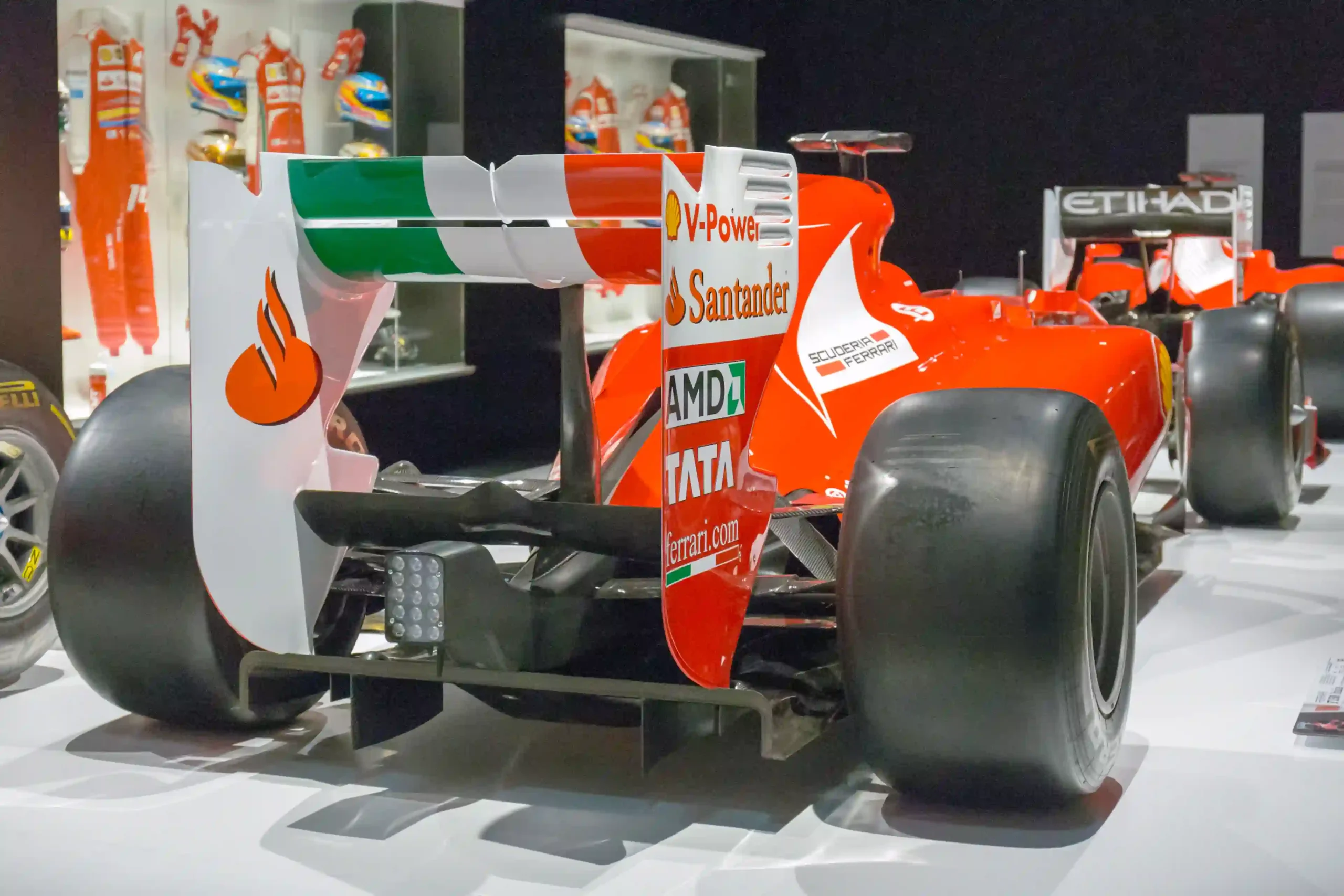
Why Dirty Air Made DRS Useful
Formula 1 introduced DRS because a following car lost aerodynamic grip in the turbulent wake of another car. That loss made it difficult to stay close through corners and attack on the next straight.
Why do F1 tracks have DRS zones starts with the air behind the leading car.
The Lead Car Created a Disturbed Wake
Wings, wheels and the floor moved the surrounding air. The following car then received weaker and less stable airflow.
Front Grip Usually Disappeared First
The chasing car understeered and ran wide. Consequently, the driver slowed before the straight began.
The Tires Also Suffered
Extra steering angle made the front tires slide. Their surface temperature increased and the stint became harder to manage.
The Leader Enjoyed Clean Air
The first car carried more corner speed and protected its tires. This advantage existed even with similar machinery.
DRS Compensated on the Straight
The system did not restore cornering downforce. Instead, it helped the chasing car recover after the corner.
Our guide to clean air and dirty air covers the wake in detail.
How the DRS Detection Point Worked
The detection point was a timing line that measured the gap between two cars. If the following driver crossed it less than one second behind, DRS became available in the linked zone.
The detection line did not open the rear wing. It only decided whether the driver qualified.
The Gap Was Measured at One Exact Location
A driver could be 0.9 seconds behind at detection and then lose ground. The driver still kept eligibility.
Closing After Detection Was Too Late
A car could fall below one second before activation. However, the timing decision had already been made.
The Car Ahead Could Be a Backmarker
The system measured proximity, not whether the cars fought for position. A leader could gain DRS while approaching lapped traffic.
One Detection Point Could Feed Two Zones
Some tracks linked back-to-back zones to one timing line. Other layouts used separate detection points.
The One-Second Rule Was a Compromise
A larger window included cars with little passing chance. A smaller window excluded drivers already hurt by dirty air.
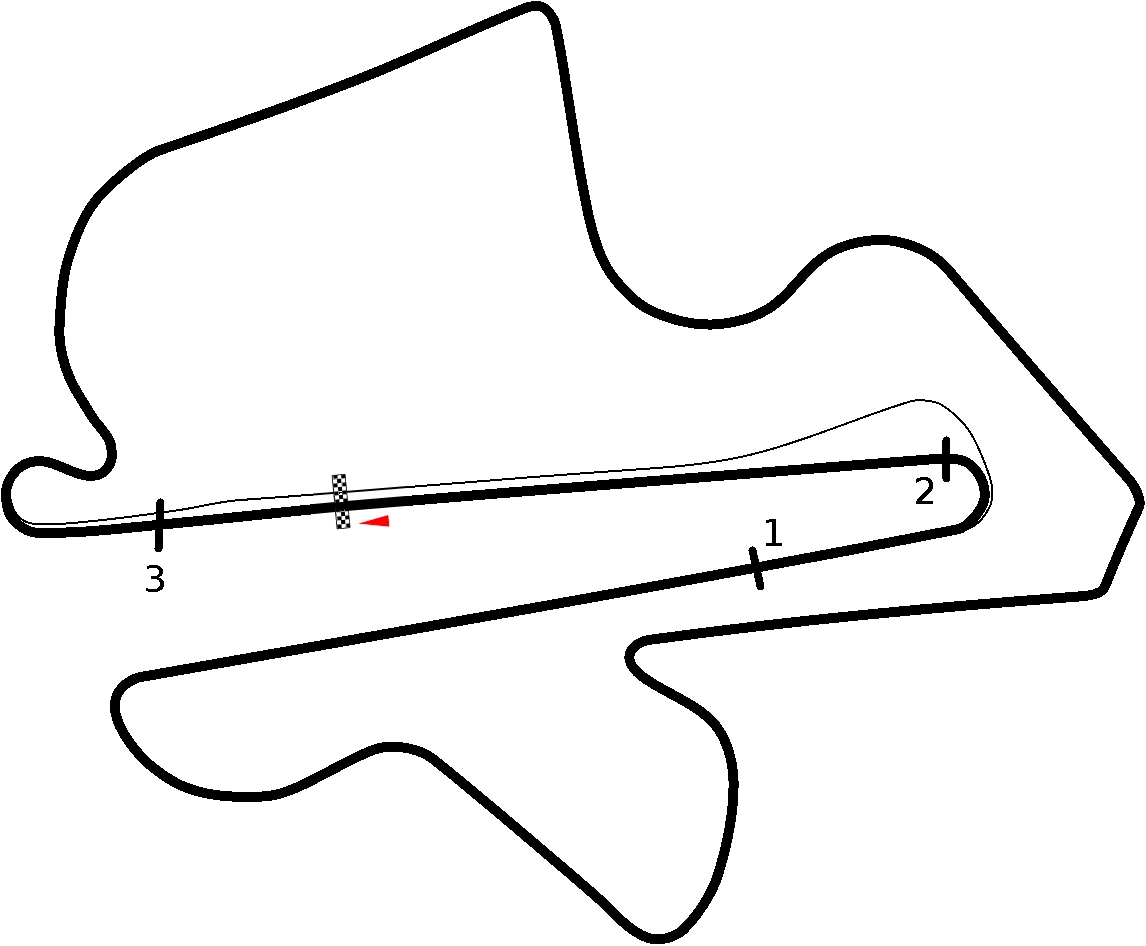
What Happened at the DRS Activation Point?
The activation point marked the start of the section where an eligible driver could open the rear wing. It appeared after detection and usually sat near the start of a straight.
The driver crossed the activation line, received electronic confirmation and pressed the steering-wheel control.
A Good Exit Still Mattered
Wheelspin or understeer delayed acceleration. DRS could not fully rescue a poor corner exit.
The Flap Opened Quickly
A hydraulic actuator moved the element. The benefit then grew with speed and the remaining zone length.
Braking Closed the Wing
The system returned to the downforce position when the driver braked. Manual closure was also possible.
The Driver Still Needed to Complete the Pass
Arriving alongside was only the first step. Tire grip and braking control decided the corner.
Read our guides to brake balance and out-braking.
How the FIA Chose DRS Zone Locations
The FIA and race officials defined the detection and activation points. They considered straight length, corner speed, braking distance, safety and overtaking difficulty.
Why do F1 tracks have DRS zones of different lengths? The same distance did not create the same result everywhere.
Straight Length Changed the Gain
A longer section gave the car more time to accelerate. However, an excessive zone could create a simple drive-by.
The Next Corner Needed a Real Braking Contest
The best zones ended before a slow or medium-speed corner. The attacker gained a chance, but skill still mattered.
Fast Bends Reduced the Safe Window
An open wing lowered rear grip. Therefore, officials avoided sections that demanded substantial cornering load.
Previous Races Provided Data
The FIA could shorten, remove or add zones. Hockenheim moved from three zones in 2018 to two in 2019.
Wind, Altitude and Wing Setup Changed the Effect
A headwind often increased the aerodynamic difference. Meanwhile, thin air reduced the total wing effect.
Safety
The car needed enough grip throughout activation and into the next braking area.
Racing Balance
The attacker needed a chance without making the defender helpless before braking.
Circuit Geometry
Straight length, exit speed, elevation and the next corner shaped the final design.
Why Some Tracks Had One Zone and Others Had Four
Circuits offered different numbers of safe straights and braking opportunities. Monaco had one practical zone, while the revised Albert Park layout used four in 2025.
There was no standard zone count. Moreover, the number could change from season to season.
| 2025 Circuit Example | DRS Zones | Racing Logic |
|---|---|---|
| Monaco | 1 | Only the pit straight offered a practical low-risk activation section. |
| Interlagos | 2 | Both major straights ended in strong braking opportunities. |
| Miami | 3 | Three separate straights linked the main passing corners. |
| Jeddah | 3 | Long high-speed street sections supported repeated attacks. |
| Albert Park | 4 | The faster revised layout provided several safe acceleration sections. |
One Zone Could Still Be Powerful
A long single zone could create more gain than three short ones. Count alone never measured effectiveness.
Multiple Zones Encouraged Counterattacks
A driver passed in the first zone could remain close. A new detection point could grant DRS in return.
Too Many Zones Could Create Trains
If every car qualified, the relative speed advantage disappeared. The queue then remained together.
How the Rear Wing Worked Mechanically
The adjustable upper element of the rear wing moved. In the final regulations, the opening between the elements could reach 85 millimeters.
A Hydraulic Actuator Moved the Flap
The actuator changed the angle immediately after the driver command. Speed mattered because the zone lasted only seconds.
The Closed Position Produced Grip
The rear wing pushed the rear tires toward the track. The cost was aerodynamic drag.
The Open Position Reduced Wing Load
The larger gap weakened the pressure difference. Consequently, downforce and drag fell together.
The 85-Millimeter Limit Was Strict
Scrutineers used an 85-millimeter gauge. Lewis Hamilton lost his 2021 São Paulo qualifying result after part of the wing exceeded the limit.
Uneven Openings Also Failed Inspection
Both Haas cars were disqualified from 2024 Monaco qualifying because their adjustable elements opened too far.
When Drivers Could Use DRS in a Race
A driver needed to be less than one second behind another car at detection. If eligible, the driver could activate DRS in the linked zone.
DRS Was Not Available on the Opening Lap
The field already started close together. An immediate aerodynamic advantage was unnecessary and risky.
From 2024, It Returned After One Lap
Formula 1 shortened the delay from two laps to one after the start or a Safety Car restart.
Race Control Could Disable It
Wet conditions were the most common reason. Debris, yellow flags or recovery work could also remove availability.
Both Cars Could Have DRS
A defender could be following another car inside one second. Therefore, attacker and defender sometimes opened the wing together.
Practice and Qualifying Used Different Eligibility
Drivers could open DRS in the designated dry zones without following another car within one second.
Our guides to F1 qualifying and pole position explain the session format.
What Was a DRS Train?
A DRS train formed when several cars ran within one second of the car ahead. Most cars in the group could open DRS, so the advantage largely canceled itself.
Why do F1 tracks have DRS zones if they sometimes created queues? Because no fixed rule solved every traffic pattern.
The First Car Controlled the Group
The lead car usually had no DRS. However, it could use battery deployment and efficient straight-line speed.
Following Cars Received Similar Help
Cars two through six might all qualify. Consequently, every car gained speed at the same point.
Dirty Air Kept the Attacker Too Far Back
The chasing driver understeered through the previous corner. The straight then began with an insufficient gap.
Pit Strategy Could Break the Train
An undercut placed the driver into clean air. Fresh tires then created enough pace to escape the queue.
How DRS Changed Race Strategy
Drivers managed tires and electrical energy around the one-second threshold. Teams also timed pit stops to escape DRS trains or rejoin behind a useful tow.
Drivers Pushed Before Detection
A chasing driver used battery energy to enter the one-second window. Therefore, the attack began before the straight.
Leaders Tried to Break the Window
The defender pushed to build more than one second. However, that effort could overheat the tires.
Drivers Sometimes Delayed a Pass
Passing in the first of two zones could expose the new leader to an immediate counterattack.
ERS and DRS Worked Together
DRS reduced drag, while electrical deployment added power. Combining both produced the strongest attack.
Safety Cars Reset the Calculation
A restart compressed every gap. Under the final rules, DRS could return one lap later.
Read our guides to ERS, pit stops and undercut and overcut strategy.
DRS, Slipstream and ERS Were Different Tools
| Tool or Effect | What Changed | Main Benefit | Main Limit |
|---|---|---|---|
| DRS | Rear-wing position | Reduced aerodynamic drag | Zones, conditions and eligibility |
| Slipstream | Air resistance around the following car | Natural closing speed | Required close proximity |
| ERS | Electrical power deployment | Added power for attack or defense | Stored energy availability |
The strongest attack often combined all three. The driver gained a tow, opened DRS and deployed maximum electrical energy.
Why DRS Worked Differently at Famous Circuits
Effectiveness depended on straight length, rear-wing angle, exit speed, wind and the next braking zone. A long straight did not always create the largest relative gain.
Monaco Offered One Limited Chance
The start-finish straight was the only practical zone. Its short length and narrow Turn 1 still limited passing.
Monza Used Very Small Wings
Teams already ran low drag. Therefore, opening the flap removed less resistance than on a high-downforce setup.
Baku Magnified the Benefit
The waterfront straight gave the system several seconds to work. A heavy Turn 1 braking zone completed the opportunity.
Albert Park Linked Four Zones
The revised 2025 layout provided repeated chances to remain close and attack.
Miami and Jeddah Used Three Zones
Both had three in 2025. However, Miami linked major braking zones, while Jeddah used high-speed street sections.
How Drivers Defended Against DRS
Break the One-Second Gap
The simplest defense was the hardest. Missing eligibility removed the attacker’s main advantage.
Use Electrical Deployment
The defender spent battery energy on the straight. Consequently, the attacker needed an even larger closing speed.
Protect the Inside Line
One legal move could cover the shorter route. The attacker then faced the outside or a switchback.
Prioritize Corner Exit
A strong exit reduced the gap before activation. Traction often mattered more than peak top speed.
Was DRS Artificial Overtaking?
Critics believed DRS sometimes made passing too easy and limited the defender. Supporters argued that it compensated for the aerodynamic disadvantage suffered by the following car.
The Drive-By Criticism
An excessive zone could complete the pass before braking. Viewers then saw little direct contest.
The Defender Lacked a Matching Wing Tool
The lead car could not open DRS without another car ahead. Critics viewed that as an uneven fight.
Dirty Air Was Already Uneven
The leader enjoyed clean air through the corners. Supporters viewed DRS as compensation rather than a gift.
Some Zones Created Excellent Counterattacks
Back-to-back zones produced position changes in both directions. Timing and braking remained important.
Overtake Totals Did Not Measure Quality
A simple drive-by counted the same as a long battle. The debate therefore never had one clear statistical answer.
DRS Failures, Infringements and Safety
A Failure to Open Cost Speed
The car remained in the high-drag position. Qualifying time and overtaking ability suffered.
A Failure to Close Threatened Stability
The rear wing produced less downforce. Braking or turning with it open could create sudden oversteer.
Illegal Openings Brought Disqualification
The 85-millimeter limit was absolute. Hamilton in 2021 and both Haas drivers in 2024 lost qualifying results.
Race Control Protected Wet Conditions
Reduced downforce increased aquaplaning risk. Therefore, DRS stayed disabled until the track became safe.
Our guides to Safety Car and VSC rules and red flags explain the controls.
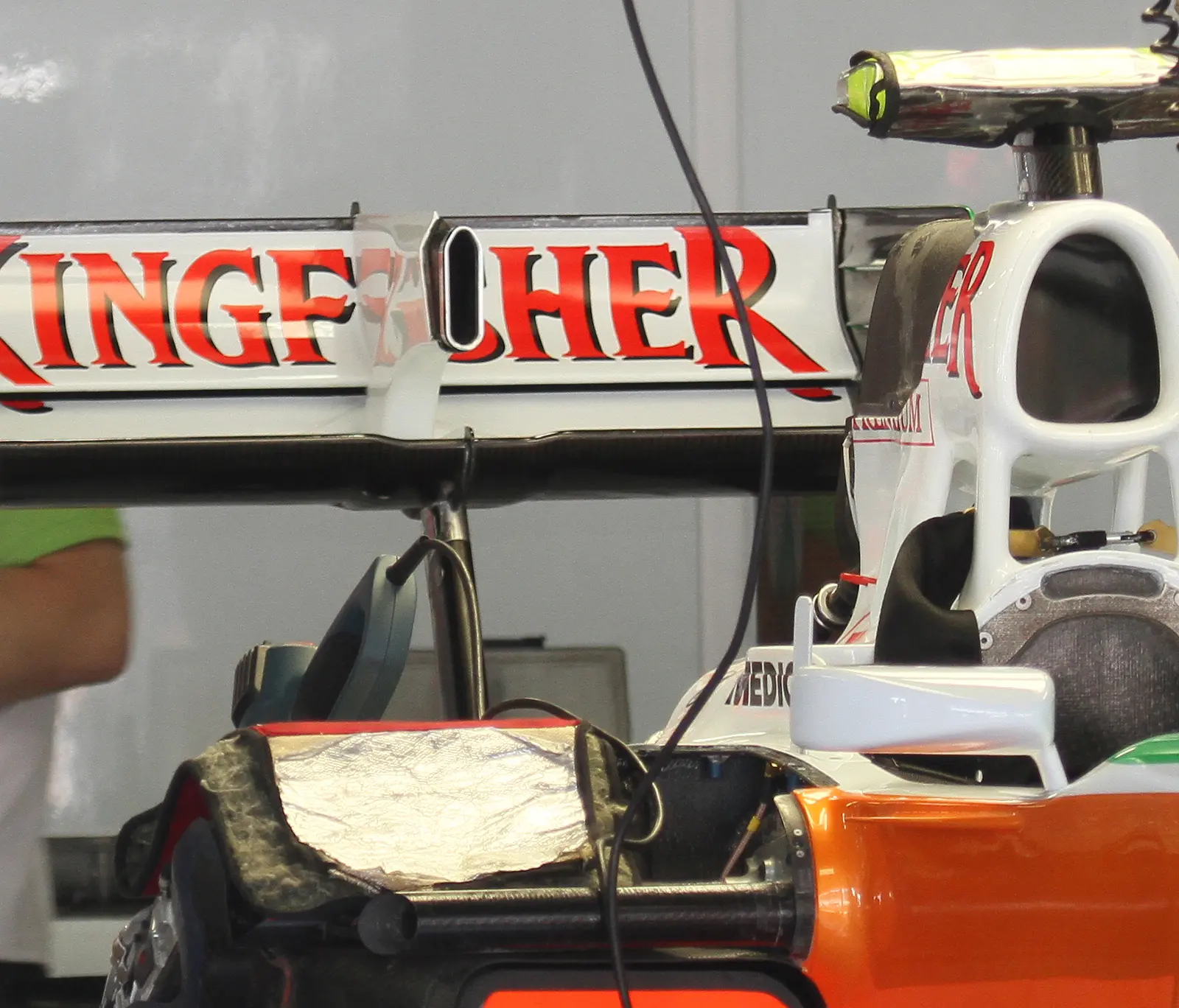
How the F-Duct Led Toward DRS
Formula 1 teams searched for straight-line efficiency before 2011. The F-duct became the most famous immediate predecessor.
The F-Duct Stalled the Rear Wing
Air traveled through internal ducts. The driver controlled the flow and reduced wing drag.
The Controls Were Awkward
Some systems required a hand, arm or leg movement. Safety concerns grew as teams copied the concept.
The FIA Replaced It With a Controlled System
The F-duct was banned for 2011. DRS delivered a similar goal with clear hardware and sporting limits.
How Active Aero and Overtake Mode Replaced DRS
Active Aero and Overtake Mode replaced traditional DRS in 2026. Straight Mode reduces drag by moving front and rear wing elements, while Overtake Mode gives an eligible chasing driver extra electrical deployment.
The 2026 rules changed the answer to why do F1 tracks have DRS zones. Tracks now have designated aerodynamic sections, but not traditional race DRS zones.
Straight Mode Is the Low-Drag Configuration
Both front and rear elements move. This creates better aerodynamic balance than opening only the rear wing.
Corner Mode Restores Grip
The wing elements return to their downforce position before braking and cornering.
Overtake Mode Uses Electrical Energy
A driver within one second at detection qualifies for the following lap. The driver can distribute the extra deployment strategically.
There Is One Overtake Detection Point
Traditional DRS could use several detection points. The 2026 system makes one eligibility decision for the next lap.
Straight Mode Sections Can Be More Numerous
Albert Park used five Straight Mode sections in 2026. Austria used four.
| Feature | Traditional DRS | 2026 System |
|---|---|---|
| Aerodynamic movement | Rear-wing upper flap | Front and rear active elements |
| Who used low drag | Eligible chasers in races | Every car in approved dry sections |
| Passing advantage | Reduced rear-wing drag | Extra electrical deployment |
| Eligibility | Under one second at linked detection | Under one second for the following lap |
| Use location | Specific DRS zone | Overtake energy can be spread across the lap |
Current terminology: Broadcasts may compare Straight Mode with DRS because the rear wing still opens. Technically, traditional DRS ended after 2025.
Common Myths About DRS Zones
“DRS Added Horsepower”
False. DRS reduced aerodynamic drag. The power unit did not gain horsepower.
“Drivers Could Use It Anywhere”
False in the final era. Drivers used it only in designated zones.
“The Gap Was Measured at Activation”
False. The timing line appeared earlier at the detection point.
“The Leader Could Never Use DRS”
False. A leader could qualify while approaching a lapped car.
“More Zones Always Meant Better Racing”
False. Multiple zones could create counterattacks or DRS trains.
“Formula 1 Still Uses DRS in 2026”
False under the official terminology. Active Aero and Overtake Mode replaced it.
Why Do F1 Tracks Have DRS Zones? FAQs
Why do F1 tracks have DRS zones?
Formula 1 used them to give a closely following driver a controlled straight-line advantage. Opening the rear-wing flap reduced drag and offset some performance lost in dirty air.
What was the difference between a DRS detection point and activation point?
The detection point measured the one-second gap. The activation point marked where an eligible driver could open the rear wing.
Could the race leader use DRS?
Usually not, because no car was ahead. However, the leader could qualify when approaching a lapped car inside one second.
Does Formula 1 still use DRS zones in 2026?
No. Active Aero, Straight Mode and Overtake Mode replaced traditional DRS.
Conclusion: DRS Zones Turned Aerodynamic Loss Into an Overtaking Chance
Understanding why do F1 tracks have DRS zones begins with dirty air.
A leading car disturbed the airflow behind it. The following car then lost front downforce and cornering speed.
Consequently, the chasing driver often started the straight farther back than the car’s true pace suggested.
Formula 1 introduced DRS in 2011 to address that problem. The adjustable rear-wing flap reduced drag.
It did not add engine power. Instead, it allowed the existing power to accelerate the car more efficiently.
The system needed clear track boundaries. An open wing also reduced rear downforce.
Therefore, the FIA placed DRS zones mainly on straights. Most ended before a useful braking area.
The detection point decided eligibility. A following car needed a gap below one second.
The activation point came later. That marker allowed the driver to open the flap.
The difference shaped tactics. Closing after detection was too late, while losing ground after detection did not remove eligibility.
Zone placement changed by circuit. Monaco generally had one practical area.
Miami and Jeddah used three in 2025. Albert Park used four.
However, more zones did not always improve racing. A long zone could create a drive-by.
Several zones could create a DRS train. Officials therefore adjusted length and location.
Driver skill still mattered before activation. A poor exit increased the gap.
Wheelspin reduced acceleration. Worn tires reduced braking grip.
Therefore, pressing the control never guaranteed a completed pass.
The defender also had tools. Breaking the one-second gap removed eligibility.
Electrical deployment reduced the speed difference. A strong corner exit protected the straight.
Race strategy developed around the threshold. Drivers pushed to enter or escape DRS range.
Teams used pit stops to leave a train. Battery energy supported the final attack.
Safety Cars reset every gap. From 2024, DRS could return one lap after a start or restart.
Wet conditions remained different. Race control disabled the system until grip became safe.
The hardware also required exact compliance. The final rules allowed an 85-millimeter opening.
Scrutineers measured that gap precisely. An excessive opening brought disqualification.
For fifteen seasons, DRS shaped Formula 1 racing. It increased opportunities and created controversy.
Supporters viewed it as compensation for dirty air. Critics believed some passes became too simple.
Traditional DRS ended after 2025. The 2026 cars now use Active Aero.
Front and rear wing elements move together in Straight Mode. Every car uses the low-drag configuration in approved sections.
Overtake Mode now creates the chasing advantage through electrical energy.
A one-second detection rule still exists. However, eligibility applies to the following lap.
Formula 1 therefore separated efficiency from overtaking assistance.
Old race reports and broadcasts will still mention DRS zones. The concept explains many battles from 2011 through 2025.
Ultimately, why do F1 tracks have DRS zones had a practical answer.
They created a controlled place to trade downforce for speed.
That trade gave the following driver a realistic chance. The braking zone and the driver still decided the pass.
Sources and Fact-Checking
This article was checked against official FIA and Formula 1 material available on July 24, 2026. It contains a static source list and no interactive verification feature.