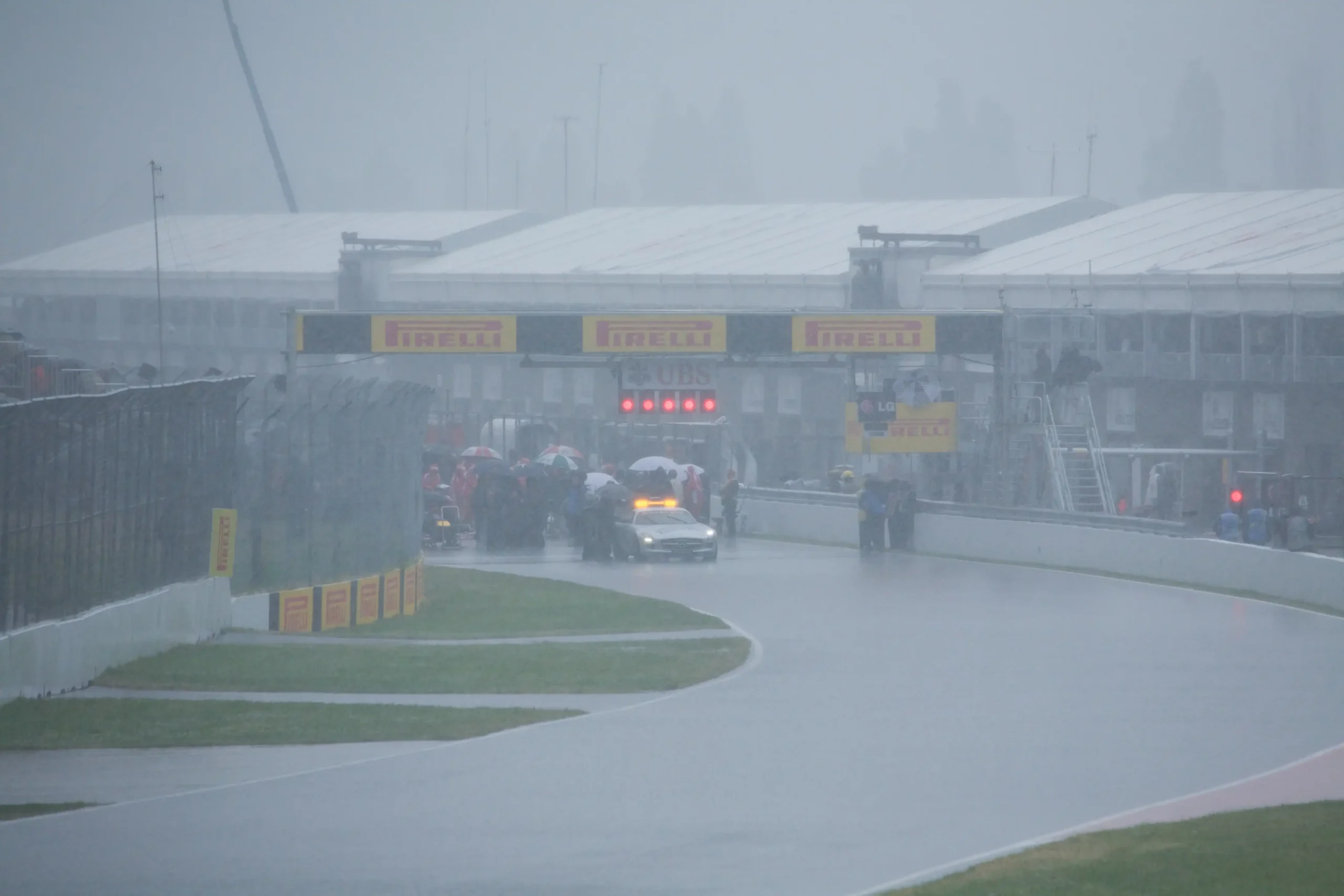
What Happens When an F1 Race Is Red-Flagged?
Where the cars stop, which repairs are legal, why tires can change, how restart order is set, and what happens when racing cannot resume.
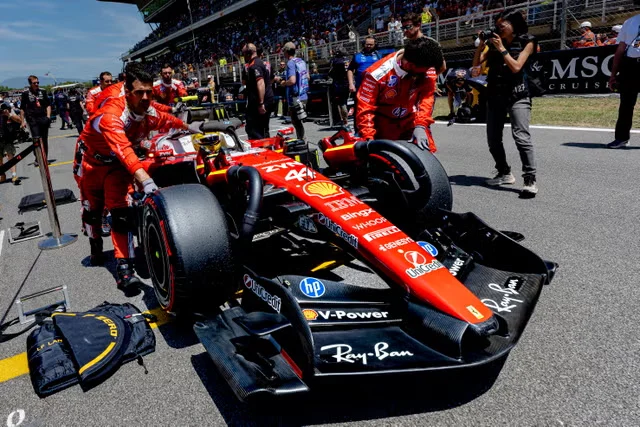
When an F1 race is red-flagged, overtaking stops and drivers return slowly to the pit lane. The cars form a queue in race order while officials clear the track or repair barriers. Teams may change tires and complete limited work before a standing or rolling restart.
F1 Red Flag Explained starts with Formula 1’s strongest safety intervention. It suspends the race because normal neutralization is no longer enough.
Drivers see red flags at marshal posts and red panels around the circuit. Race Control also sends an official suspension message.
From that moment, racing stops. Overtaking is forbidden, and every car must slow down.
The pit exit closes. Cars then enter the pit lane and line up in the fast lane.
Meanwhile, marshals can recover damaged cars. Barrier crews may replace TecPro blocks or repair fencing.
Track workers can also remove debris, inspect asphalt or clear standing water.
The suspension does not automatically end the Grand Prix. In most cases, Race Control prepares a restart.
Teams receive a formal countdown. The field then leaves the pits behind the Safety Car.
Afterward, the Race Director chooses a standing start or rolling start. Weather and visibility usually shape that decision.
The stoppage also creates a major strategic reset. Tires can be changed without losing normal racing time.
However, teams cannot rebuild the car without limits. The FIA publishes a specific list of permitted work.
The clock creates another complication. The timing system continues during the suspension.
Suspension time extends the usual two-hour race window. Nevertheless, the complete event cannot run beyond three hours.
If racing cannot resume, countback rules decide the classification. Officials return to an earlier reliable lap.
This F1 Red Flag Explained guide covers the full process, from the first signal to the final restart or result.
F1 Red Flag Explained: What Does the Signal Mean?
A red flag means the Sprint or Grand Prix is suspended because the circuit is not safe for continued racing. Drivers must stop competing, reduce speed and follow Race Control instructions. The stoppage may address a crash, damaged barrier, dangerous weather, blocked track or another serious hazard.
A red flag is different from a yellow flag. Yellow flags warn drivers about danger in a defined area.
A red flag suspends the whole competitive session. Therefore, the entire circuit changes status.
The Race Director sends the official message through the timing system. Red flags also appear at marshal posts.
Digital panels display the same warning. At the start gantry, orange lights support the suspension signal.
Does a Red Flag Mean the Race Is Over?
No. It means the race has stopped temporarily.
Officials first solve the safety problem. Then they assess weather, time remaining and track conditions.
Most suspensions lead to a restart. However, some events finish without another racing lap.
Who Can Order a Red Flag?
The Race Director controls the suspension procedure.
Marshals, medical teams and circuit officials provide information. Yet the central decision comes from Race Control.
Can a Sprint Be Red-Flagged?
Yes. The same broad suspension principles apply to a Sprint.
The official message identifies whether the Sprint or Grand Prix has been suspended.
What Happens to Live Timing?
Timing screens show the red-flag status. They also preserve the latest position information.
That data becomes important when officials build the resumption order.
Read our guides to F1 flags and the FIA’s role in Formula 1.
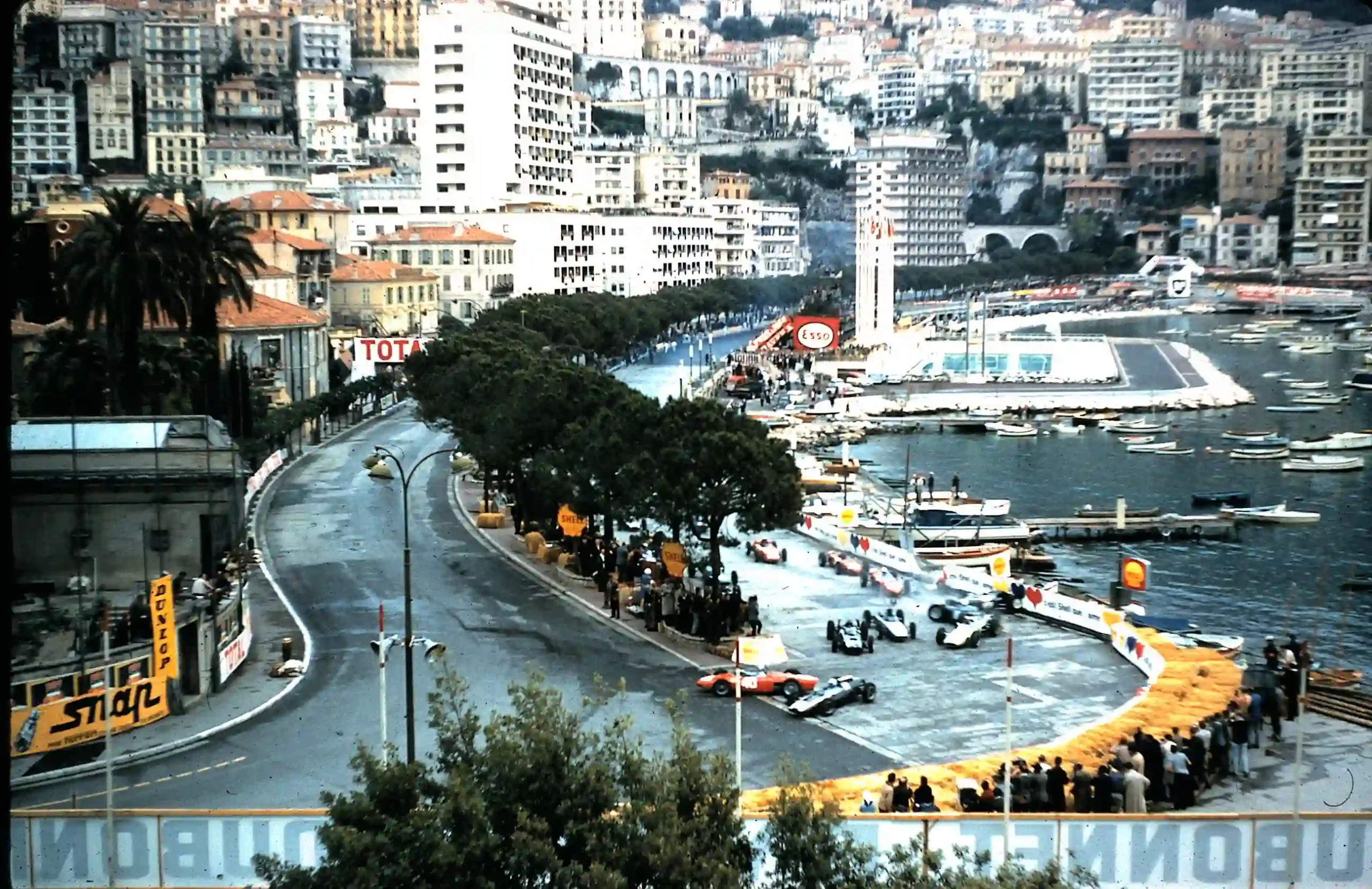
Why Does Formula 1 Red-Flag a Race?
Formula 1 uses a red flag when racing cannot continue safely, even behind the Safety Car. Common causes include a severe crash, blocked track, damaged barrier, large debris field, fire, unsafe standing water, poor visibility or circuit infrastructure damage.
Not every crash produces a red flag. Many incidents can be managed with local yellows or the Safety Car.
The key question is whether cars can continue circulating safely while recovery work happens.
Major Accidents and Medical Response
A heavy crash may scatter debris across the racing line. It can also damage barriers or fencing.
Moreover, medical teams need safe access. A suspension removes racing traffic from the scene.
Blocked or Damaged Circuit
A stopped car can block a narrow section. Multiple cars can make the track completely impassable.
Damaged asphalt, a loose drain cover or broken curbing can also require inspection.
Barrier and Fence Repairs
TecPro and tire barriers absorb enormous energy. After a hard impact, they may no longer provide full protection.
Therefore, crews repair or replace them before racing resumes.
Rain and Visibility
Heavy rain creates standing water and aquaplaning. Spray can also remove a driver’s view of the car ahead.
A Safety Car may control speed. However, a red flag becomes necessary when visibility remains unacceptable.
Fire, Oil or Fluid
A car fire can require extinguishing equipment and medical crews.
Oil or coolant on the racing line also creates a broad grip hazard. Marshals need time to treat the surface.
Our guide to what causes motorsport crashes explains the accident chain in more detail.
What Must Drivers Do When the Red Flag Appears?
No. Overtaking is forbidden after the suspension signal. Drivers must reduce speed, avoid unnecessary risk and proceed slowly to the pit lane. They follow marshal panels and Race Control messages while maintaining the order established during the return.
How Slowly Must Drivers Travel?
The rules require them to proceed slowly and safely. Race Control may also impose specific timing or delta instructions.
Drivers cannot race back to the pits. That would place marshals and stopped cars at risk.
Can a Driver Pass a Damaged Car?
Safety may force one car around another that is stopped or moving unusually slowly.
However, routine position-gaining is forbidden. Officials can review any pass made after the signal.
Can Drivers Stop on the Grid Instead?
Normally, cars enter the pit lane. Yet the Race Director can close pit entry in exceptional safety circumstances.
In that case, drivers proceed slowly to the starting grid and await instructions.
Can Drivers Leave the Cockpit?
Race Control and team instructions govern that choice. During a long delay, drivers may leave for cooling and hydration.
Nevertheless, they must be ready for the announced resumption timetable.
Read our guide to Formula 1 marshals for the trackside safety response.
Why Do F1 Cars Line Up in the Pit-Lane Fast Lane?
The first car to reach the pit lane normally stops near the pit exit. The remaining cars form a line behind it in the fast lane, ordered by their arrival. This keeps the field together, preserves an auditable sequence and gives FIA officials access to every car.
The fast lane is the outer lane used by cars traveling through the pits. It is not the working lane beside each garage.
During a suspension, that lane becomes the holding area.
Why Not Park at Each Team Garage?
A shared queue makes the field easier to control. It also reduces opportunities for unauthorized work.
Furthermore, the FIA can inspect cars and monitor the restart order in one place.
What Happens if a Car Is Moved to the Garage?
A car moved out of the fast lane without an FIA instruction loses its place in the main queue.
If it can continue, it joins the back of the resumption line.
Can a Damaged Car Still Restart?
Yes, when permitted repairs restore it before the deadline.
However, garage work or movement away from the fast lane can affect its restart position.
What About Cars Already in the Pits?
Race Control includes them when constructing the resumption order.
The FIA uses the last point where the positions of all cars could be determined reliably.
What Work Is Allowed During an F1 Red Flag?
Yes, but only specified work is permitted. Teams may change wheels and tires, prepare or start the engine, use approved cooling equipment, alter brake or radiator ducts, adjust the front-wing profile and repair genuine accident damage. Unrestricted setup changes remain prohibited.
Why Is the List So Specific?
F1 Red Flag Explained makes this distinction clear: the stoppage exists for safety, not performance development.
Therefore, teams receive enough freedom to restart safely without turning the pause into an open setup session.
Can Teams Adjust the Front Wing?
They may adjust the position of the front-wing profile when it is not controlled electronically.
However, they cannot add, remove or replace parts solely for that adjustment.
Can Teams Change Brake Cooling?
Yes. The allowed list includes brake air ducts and radiator ducts.
Those changes can help teams adapt to weather or cooling needs at the restart.
Can Mechanics Start the Engine?
Yes. They can start the engine and carry out associated preparation.
This matters because engines and systems can cool during a long suspension.
Can Teams Refuel?
No normal refueling opportunity exists. Refueling is not part of the permitted suspension work.
Modern F1 cars start with the fuel needed for the planned race distance.
Our guides to F1 pit stops and pit-stop procedure explain normal race servicing.
Can F1 Teams Change Tires During a Red Flag?
Teams may change wheels and tires during the suspension. Fans call it a free tire change because the field is already stationary and no normal pit-lane time is lost. However, the tire regulations and restart deadlines still apply, so the change is not unrestricted.
Tire changes create the most controversial strategic effect of a red flag.
A driver who has not stopped may receive fresh tires without surrendering track position in a normal pit stop.
Can Teams Change Compounds?
Yes, provided the selected tire is legal for the conditions and event requirements.
A dry suspension can lead to soft, medium or hard choices. Rain can trigger intermediates or full wets.
Can Race Control Mandate Wet Tires?
Yes. At the 10-minute restart signal, the Race Director can require a specific wet-weather tire.
That instruction places safety above individual strategy.
When Must the Wheels Be Fitted?
At the five-minute signal, every wheel must be fully fitted.
Tire blankets must also be disconnected and cannot be reconnected unless the restart is delayed.
What Happens if a Team Changes a Wheel Too Late?
The car can still leave the pits at the resumption. However, the driver receives a stop-and-go penalty.
Therefore, crews treat the five-minute signal as a hard operational deadline.
Why Do Cold Tires Matter?
A long stop removes heat from tires, brakes and wheel assemblies.
The Safety Car laps help rebuild temperature. Even so, a standing restart can be unpredictable.
Does the Change Count Toward Tire Requirements?
The fitted tires become part of the driver’s race usage record.
Teams must still satisfy the applicable tire-use regulations for the event.
Read our guide to F1 tire compounds and how grip works.
Can Teams Repair Crash Damage During a Red Flag?
Teams may repair genuine accident damage, including replacing assemblies damaged in the incident. That can include bodywork or a front wing. The work must restore the car rather than create an unrelated performance upgrade, and the car must meet the restart timetable.
The repair rule gives damaged cars a second chance. It also prevents an unsafe car from returning unchanged.
However, the damage must be genuine and linked to an accident.
Can a Front Wing Be Replaced?
Yes, when the wing suffered genuine accident damage.
A team cannot simply select a different specification because the new one might be faster.
Can Suspension Damage Be Repaired?
Potentially, when the work repairs actual crash damage and remains possible within the suspension.
Complex suspension repairs may require garage access, which sends the car to the back.
Can a Car Rejoin After a Huge Crash?
Only when the chassis and safety systems remain compliant.
Scrutineers and the team must be satisfied that the car can run safely.
What if the Repair Is Not Finished?
The car may miss the main resumption queue. It can potentially join later from the pit lane.
Otherwise, the driver retires from the event.
Why Is This Strategically Important?
A damaged wing would normally require a slow pit stop. A red flag removes much of that racing-time loss.
Consequently, the suspension can rescue a driver whose race appeared finished.
Does the F1 Race Clock Stop During a Red Flag?
The official timekeeping system does not stop during a race suspension. Formula 1 normally allows two hours of active racing. Suspension time extends that window, but the entire period from the start signal to the race finish cannot exceed three hours.
Two Racing Hours, Three Total Hours
The active-race limit remains two hours. Red-flag suspension time is added, but the complete event window ends at three hours.
This rule prevents an endless event. It also gives Race Control time to repair the circuit safely.
For viewers in the United States, a long suspension can push the finish far beyond the scheduled TV window.
Does Every Minute of the Red Flag Count?
It counts toward the maximum three-hour event period.
However, suspension time is added to the normal two-hour race duration.
Can the Race Restart With Very Little Time Left?
Yes, when officials can complete the required procedure safely.
The remaining race may use time rather than the original lap target.
Does the Red Flag Reduce the Lap Count?
The scheduled distance remains the target. Yet the time limit may force an earlier finish.
Safety Car laps during the resumption also count toward the race distance.
Can the Race End While Cars Are Stopped?
Yes. If resumption becomes impossible, the FIA declares a classification under the countback rule.
The final result then comes from an earlier completed point.
Read our guides to race timing and how racing laps are counted.
How Is the Restart Order Decided?
Race Control uses the last point at which every car’s position could be determined. Timing loops, sector records, pit-lane status and the location of blocked cars all matter. Officials then arrange the field in that reliable order before the resumption.
The order at the instant of the red panel is not always usable.
Cars may be scattered between timing loops, entering the pits or passing a crash scene.
Why Can Positions Be Rolled Back?
The FIA needs one consistent reference for the whole field.
If several cars have not crossed the same timing point, an earlier order may be the only reliable choice.
What Happens to a Car in the Pit Lane?
Its position depends on the last reliable point and the timing of its pit entry.
Race Control integrates that car into the resumption order.
What Happens to a Car Moved to Its Garage?
It goes to the back of the resumption line if it can restart.
The same applies when a car leaves the fast lane without an FIA instruction.
Can a Crashed Driver Recover a Position?
Countback can restore an order from before the crash sequence.
However, a car that cannot continue remains retired even if the classification later lists it.
Are Vacant Grid Slots Filled?
At a standing restart, vacant positions remain vacant.
Cars do not move forward simply because another driver cannot take the restart.
Our guide to grid position explains the physical advantage of each slot.
What Happens During the Red-Flag Restart Countdown?
Teams normally receive at least 10 minutes’ warning before the race resumes. Race Control then issues signals at 10, five, three and one minute, followed by a 15-second warning. Each stage controls tires, equipment, personnel and Safety Car preparation.
What Happens at the 10-Minute Signal?
The formal restart window begins. Race Control can also specify mandatory wet-weather tires.
Teams finalize their tire and cooling plans.
What Happens at Five Minutes?
All wheels must be fully fitted. Tire blankets disconnect from their power supply.
A late wheel change can bring a stop-and-go penalty.
What Happens at Three Minutes?
The field moves deeper into final preparation. Teams remove more equipment and confirm systems.
Drivers receive the final restart briefing by radio.
What Happens at One Minute?
Engines are running and the Safety Car moves to the front.
Personnel prepare to clear the fast lane completely.
What Happens at 15 Seconds?
Every person and piece of equipment must leave the fast lane.
A car that cannot depart cleanly may have to restart from the pit lane.
Can the Restart Be Delayed Again?
Yes. Weather, another technical problem or incomplete repairs can stop the countdown.
Race Control then issues a new timetable.
Why Does the Field Leave Behind the Safety Car?
No. The field leaves the pit lane and joins the Safety Car. Drivers rebuild tire and brake temperature while officials complete a final track check. Overtaking remains restricted, and cars normally stay within 10 car lengths of the car ahead.
In F1 Red Flag Explained, the Safety Car phase connects the stationary pit-lane queue to the final restart.
It lets drivers inspect the circuit while officials observe grip, debris and visibility.
How Large Can the Gaps Be?
Drivers normally stay within 10 car lengths of the car ahead.
When visibility is poor, Race Control can increase that limit to 20 car lengths.
Do These Laps Count?
Yes. Each lap completed behind the Safety Car counts as a race lap.
Therefore, a prolonged resumption phase can reduce the remaining green-flag distance.
Can Drivers Overtake?
Only narrow exceptions apply. A delayed car may be passed, and drivers may restore the official order.
Unnecessary overtaking can produce a drive-through or stop-and-go penalty.
How Do Tires and Brakes Warm Up?
Drivers weave, accelerate and brake within the Safety Car rules.
Nevertheless, the slow pace makes full temperature difficult, especially in cold or wet conditions.
Can Lapped Cars Be Repositioned?
The restart procedure can release certain cars to complete a lap and rejoin the queue.
That process helps place the field in the correct order before racing resumes.
Read our guide to the Formula 1 Safety Car.
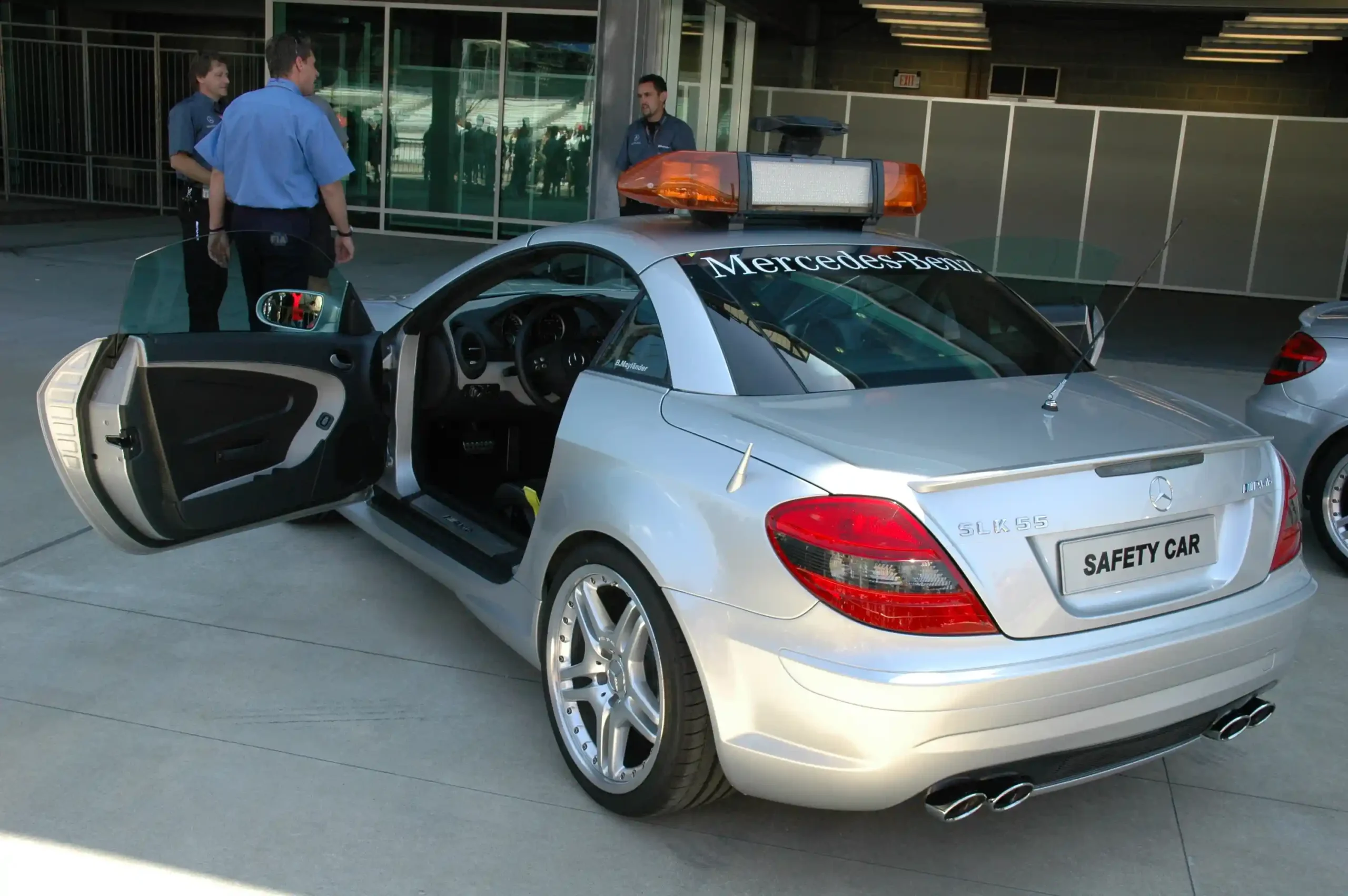
Standing Restart vs. Rolling Restart After a Red Flag
The Race Director chooses a standing or rolling restart after assessing grip, visibility and safety. A standing restart returns cars to grid boxes for the start lights. A rolling restart keeps the field moving behind the Safety Car until the leader resumes racing.
Standing Restart
Race Control displays “STANDING START,” while light panels show “SS.”
The Safety Car enters the pits. Cars continue to the grid and stop in their assigned resumption positions.
The standard starting-light procedure then begins. Vacant grid slots remain empty.
Rolling Restart
Race Control displays “ROLLING START,” while light panels show “RS.”
The Safety Car enters the pits. The leader controls the pace and prepares the field.
Racing resumes under the rolling-start rules without another stationary grid launch.
Why Choose a Standing Restart?
It restores the traditional lights-out contest. It also creates a clear competitive reset.
However, cold tires and brakes can increase first-corner risk.
Why Choose a Rolling Restart?
It reduces the danger of a stationary launch in poor visibility or low grip.
The moving field also produces less wheelspin on a wet surface.
Can a Driver False Start at the Restart?
Yes. A standing resumption uses the false-start rules again.
The driver must stop in the correct grid box and wait for lights out.
When Can Drivers Overtake After a Rolling Restart?
They must follow the restart-line and Safety Car rules.
The leader cannot simply launch at any point without regard to the official procedure.
Can One Race Have Several Restarts?
Yes. Another incident can cause another Safety Car or red flag.
Australia in 2023 and Mugello in 2020 demonstrated how repeated restarts can reshape a race.
Read our guides to the formation lap and F1 jump starts.
What Happens if the F1 Race Cannot Restart?
If the race cannot resume, the 2026 rules classify it at the end of the penultimate lap before the lap in which the suspension signal was given. This countback removes the uncertain incident lap and uses an earlier completed order.
F1 Red Flag Explained also covers countback, which can confuse viewers because the final result may differ from the order seen at the crash.
The rule intentionally uses an earlier stable reference.
Why the Penultimate Lap?
The incident lap may contain incomplete timing information, pit entries and crashed cars.
Using an earlier lap gives every competitor a common completed reference.
Can a Crashed Driver Still Be Classified?
Yes, when the driver completed enough distance and the classification rules include the car.
However, the car remains a retirement if it cannot take another restart.
Can the Winner Be Declared Under Red Flags?
Yes. Race Control can end the event without another green-flag lap.
The official classification then decides the podium and championship points.
Are Full Points Guaranteed?
No. Championship points depend on the distance and conditions completed under the applicable points rules.
A red flag alone does not guarantee either full or reduced points.
Can the Result Change After the Ceremony?
Penalties and technical checks can still alter classification.
Therefore, the provisional podium is not always the final legal result.
Monaco 2026: A Current F1 Red-Flag Example
Charles Leclerc crashed at Monaco’s final corner soon after a Safety Car restart. Race Control halted the event to inspect track break-up at the impact site. The stoppage opened a fresh tire opportunity and led to another restart before the finish.
The 2026 Monaco Grand Prix showed how a late red flag can transform strategy.
Lance Stroll first crashed at the final corner, causing a Safety Car.
Leclerc then suffered a similar accident after the restart. Officials stopped the race to inspect damage to the circuit.
Why Was a Red Flag Needed?
The concern extended beyond the stranded Ferrari. The impact area showed track break-up.
Therefore, officials needed a close inspection before sending the field past at racing speed.
Who Benefited Strategically?
Drivers could change tires during the suspension. Arvid Lindblad gained from a tire change before making a normal stop.
Other teams also chose fresh soft tires for the final phase.
How Did the Restart Create Another Penalty?
Sergio Pérez was later penalized for a false start after the red flag.
That 10-second addition dropped him down the final classification.
What Does the Case Teach?
A red flag can protect safety and rewrite competitive value at the same time.
Fresh tires, restart position and driver discipline all become decisive.
Monaco’s late suspension did not merely pause the race. It created a second strategic finish, with new tires, cold brakes and another start procedure.
Famous F1 Red Flags That Changed Races
Bahrain 2020 demonstrated the life-saving purpose of a suspension. Australia 2023 showed restart and countback complexity. Monaco 2024 showed a first-lap strategy reset, while Canada 2011 and Tuscany 2020 highlighted weather delays and repeated standing restarts.
Romain Grosjean’s fiery barrier crash stopped the race while medical and repair crews secured the scene.
Repeated red flags produced a chaotic late standing restart and a countback to the earlier order.
A first-lap crash suspended the race before one lap was complete, reshaping tire strategy for the restart.
Heavy rain created a long suspension before the event resumed and developed into a classic finish.
Mugello featured repeated stoppages and standing restarts, repeatedly compressing the field.
Persistent rain and poor visibility prevented normal racing and produced a highly unusual classification.
Bahrain 2020: Safety Before Competition
Grosjean’s Haas pierced the barrier and caught fire on the opening lap.
The red flag gave medical crews immediate control of the scene. Barrier repairs then took more than an hour.
The accident remains the clearest modern example of why Formula 1 must stop completely.
Australia 2023: Restart Chaos and Countback
A late standing restart produced several collisions within seconds.
Race Control suspended the event again. The order reverted because too few cars had reached a reliable timing point.
The episode showed why the resumption order can differ from the road order after a crash.
Monaco 2024: A First-Lap Reset
A heavy opening-lap collision involving Sergio Pérez, Kevin Magnussen and Nico Hülkenberg stopped the race.
Because the suspension arrived so early, teams could change tires and rethink the entire stint plan.
The narrow circuit also required extensive debris and barrier work.
Canada 2011: Rain and Patience
Heavy rain stopped the field in the pit lane.
The long delay cooled cars and drivers while officials waited for visibility and water levels to improve.
Once racing resumed, changing conditions produced a dramatic strategic contest.
Tuscany 2020: Multiple Standing Restarts
Mugello’s first Formula 1 race featured several major incidents.
Repeated standing starts turned the Grand Prix into a series of short, intense races.
Each reset erased gaps and placed cold-tire control under pressure.
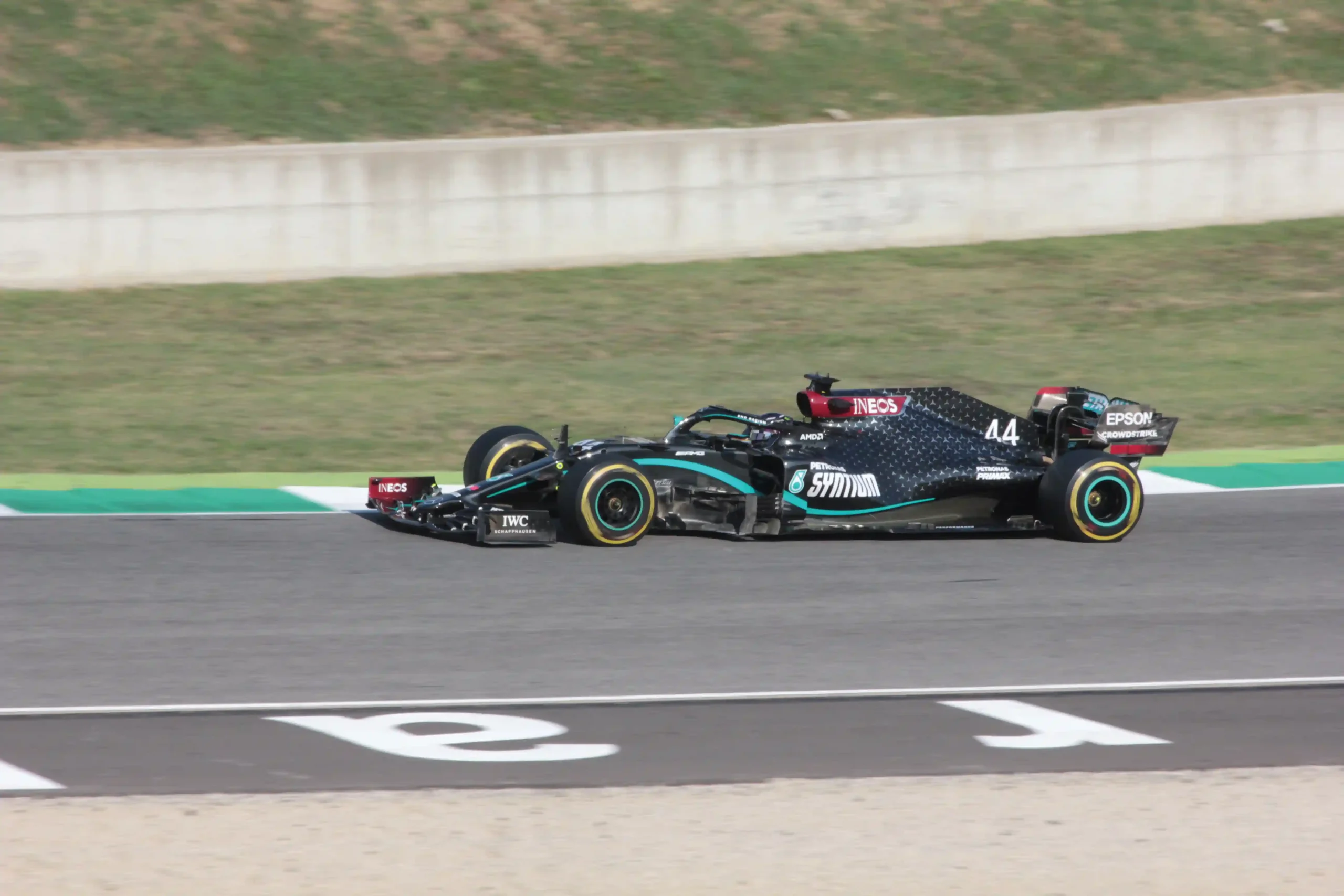
How Does a Red Flag Change Formula 1 Strategy?
A red flag preserves track position while allowing tire changes and limited repairs. It can erase the value of an early pit stop, rescue a damaged car, compress strategic options and create a new restart. The biggest winners are often drivers who had not yet stopped.
F1 Red Flag Explained shows why strategy changes so sharply. A red flag does not erase timing data, yet the restart physically brings the field together.
Therefore, a leader’s large advantage disappears as a protective cushion.
Why Can an Undercut Be Ruined?
A driver may pit early and spend time warming fresh tires.
If the red flag appears, rivals can change tires while stationary and keep track position.
Who Gains From a Free Tire Change?
Drivers with old tires or an uncompleted mandatory stop often gain most.
They receive fresh rubber without paying the normal pit-lane time loss.
Who Loses?
A driver who recently made a costly stop may lose the expected advantage.
Leaders also lose the security of a large gap before the restart.
How Do Repairs Change the Race?
A damaged front wing can be replaced without a normal green-flag stop.
Consequently, a driver may remain competitive after an incident that should have cost many positions.
Why Are Soft Tires Popular for a Late Restart?
Soft tires warm quickly and provide strong launch grip.
However, a delayed restart or extra Safety Car laps can reduce their advantage.
How Does Fuel Affect the Restart?
The suspension does not permit refueling. Yet no racing fuel is consumed while cars are stopped.
Safety Car laps use less fuel than full-speed racing, giving teams additional margin.
Why Is Brake Temperature Important?
Carbon brakes cool rapidly during a long wait.
Drivers use the Safety Car phase to restore heat before a standing or rolling restart.
Read our guide to ERS in Formula 1 for another system managed during the restart.
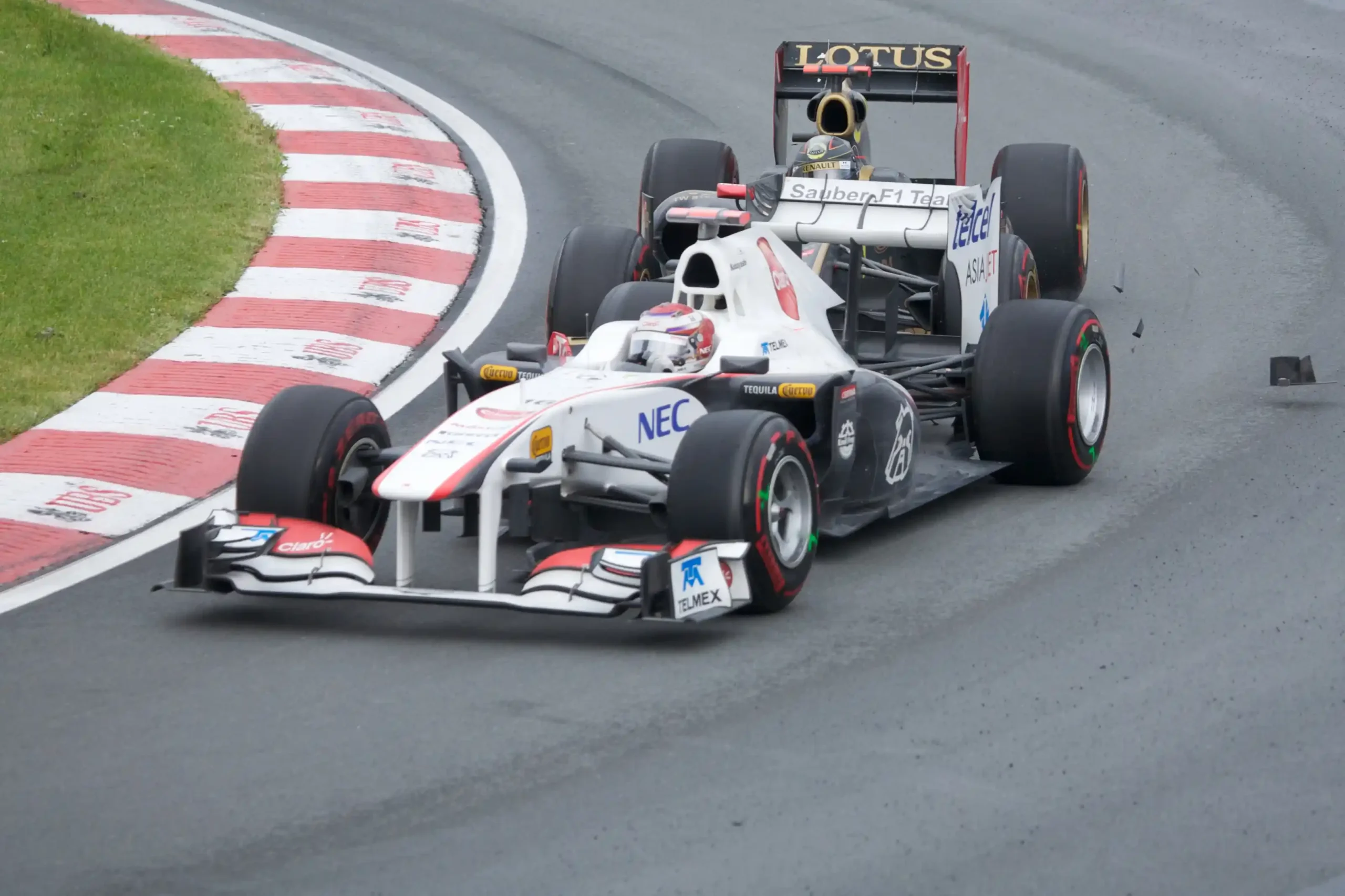
Red Flag vs. Safety Car and Virtual Safety Car
A red flag stops the race and sends cars to a stationary holding area. A Safety Car keeps the field circulating in a queue, while a Virtual Safety Car controls speed through electronic delta times. Only the red flag creates a full suspension and restart procedure.
| Procedure | Do Cars Stop? | How Positions Are Controlled | Typical Use | Strategic Effect |
|---|---|---|---|---|
| Red flag | Yes, normally in pit-lane fast lane. | Official resumption order and restart. | Blocked track, major repairs, severe weather. | Tire changes and limited repairs are possible. |
| Safety Car | No, cars circulate behind Safety Car. | Single-file queue with restricted overtaking. | Recovery work while track remains passable. | Pit stops remain possible but cost less relative time. |
| Virtual Safety Car | No, cars follow a target delta. | Gaps broadly remain through electronic speed control. | Short or localized hazard. | Reduced-speed pit stop can still create an advantage. |
| Local yellow | No. | No passing in the affected sector. | Minor incident or stopped car off-line. | Usually limited strategic change. |
When Is the Safety Car Not Enough?
The Safety Car requires a passable track. Cars must continue circulating safely.
A blocked circuit, destroyed barrier or zero visibility removes that option.
Does a Red Flag Erase Time Gaps?
The recorded gaps do not convert directly into restart spacing.
All cars leave in a controlled queue, so the leader loses the physical buffer.
Can Teams Pit Under a Safety Car Instead?
Yes, when the pit lane is open. However, the car still travels through the lane and may lose positions.
During a red flag, cars are already stopped, creating the informal “free change” effect.
Can a VSC Become a Red Flag?
Yes. Race Control can escalate the response when the hazard is worse than first understood.
Likewise, a Safety Car period can become a suspension if barrier damage or weather deteriorates.
F1 Red Flag Explained: Common Misunderstandings
“A Red Flag Ends the Race”
False. It suspends the race. Officials usually attempt a resumption when conditions become safe.
“Every Repair Is Allowed”
False. The FIA lists specific permitted work, including genuine accident repair.
“The Race Clock Completely Stops”
False. The timing system continues, and the full event cannot exceed three hours.
“The Restart Order Is Whatever Television Shows”
False. Race Control uses the last point where every car’s position could be determined.
“Cars Always Restart From the Grid”
False. The Race Director can choose a standing or rolling resumption.
“A Tire Change Has No Rules”
False. Tire legality and restart deadlines still apply.
“A Car Moved to the Garage Keeps Its Position”
False. It normally moves to the back of the resumption line.
“Safety Car Laps After the Red Flag Do Not Count”
False. Those laps count toward the race distance.
F1 Red Flag Explained FAQs
What happens when an F1 race is red-flagged?
Overtaking stops, drivers slow down and enter the pit lane, and the cars form a fast-lane queue. Officials then clear the danger and prepare a possible restart.
Can F1 teams change tires during a red flag?
Yes. Wheel and tire changes are permitted, although teams must follow tire rules and meet the restart deadlines.
Does the F1 race clock stop during a red flag?
The timekeeping system continues. Suspension time extends the normal two-hour race window, but the event cannot exceed three hours.
How does an F1 race restart after a red flag?
The field leaves behind the Safety Car. Race Control then chooses either a standing restart from grid boxes or a rolling restart.
F1 Red Flag Explained: Conclusion
F1 Red Flag Explained begins with safety. Race Control stops the competition when normal neutralization cannot protect the circuit.
Drivers must stop overtaking immediately. They slow down and normally return to the pit lane.
The first car stops near the pit exit. Everyone else forms a line in the fast lane.
Meanwhile, marshals recover cars, clear debris and repair barriers.
Teams can perform limited work. Tires, brake ducts and radiator ducts can change.
Genuine accident damage can also be repaired. However, the suspension is not an unrestricted setup session.
Tire changes create the largest strategic effect. A driver can receive fresh rubber without a normal racing-time pit loss.
That benefit can erase an undercut or rescue a driver who had not yet stopped.
The official timing system continues during the delay. Suspension time extends the normal two-hour limit.
Nevertheless, the entire event cannot last beyond three hours.
Race Control builds the restart order from the last reliable point for every car.
Cars moved to the garage normally join the back of the line.
Teams then receive a formal countdown. Wheels must be fitted by the five-minute signal.
At the resumption, the field leaves behind the Safety Car.
Drivers rebuild heat while officials perform a final safety check.
The Race Director then chooses a standing or rolling restart.
A standing restart returns the field to grid boxes and the start lights.
A rolling restart keeps the cars moving and gives the leader control under the restart rules.
If the race cannot resume, countback decides the classification from an earlier completed lap.
Monaco in 2026 showed the modern procedure clearly. A track inspection stopped the race and created a fresh strategic finish.
Historic races show the other side. Bahrain 2020 proved that a red flag can create the safe space needed to save a life.
F1 Red Flag Explained is therefore more than a flag guide. It is the complete safety, timing and strategy reset of a Grand Prix.
Sources
The procedure and examples in this article were checked against official FIA and Formula 1 material available on July 20, 2026.