Jumpstart In The F1 Race! Formula 1 False Start Explained
A jumpstart in an F1 race happens when a driver breaches the Formula 1 starting rules before the race has legally begun. It can involve moving too early, sitting outside the correct grid position, or failing the required start-position conditions. The FIA stewards can punish it with a 5-second penalty, 10-second penalty, drive-through penalty, or stop-and-go penalty.
An F1 start lasts only seconds, but it can change the whole Grand Prix. The clutch, tyres, grid box, lights, reaction time, and FIA sensors all matter before Turn 1.

F1 jumpstart is the racing term fans use for a false start. It sounds simple: a driver moves before the lights go out. However, modern Formula 1 rules are more precise than that.
The FIA looks at the car’s movement, grid position, front tyre contact patch, and transponder detection. Therefore, a tiny roll does not always mean an automatic penalty. The exact timing and position matter.
If you are new to the sport, start with what Formula 1 is, what a Grand Prix means, and how F1 qualifying works. Those explain why grid position makes the start so valuable.
Formula 1’s official weekend guide says the start sequence uses five red lights that turn on one by one before going out together to start the Grand Prix. You can read the official overview in Formula 1’s beginner guide to the race weekend.
What Is A Jumpstart In F1?
A jumpstart in F1 means a driver has breached the starting rules during a standing start. Fans often call it “jumping the start.” The official wording is usually false start.
Under the 2026 FIA Sporting Regulations, cars must be stationary in their allocated grid position after the third red light is illuminated and before all red lights go out. In addition, the car must be positioned so the transponder can detect the first legal movement after the start signal.
There is also a grid-box requirement. At the start signal, no part of the front tyre contact patch can be outside the front or side lines of the allocated grid position. That is why the painted box matters.
Race analyst view: A false start is not only about reaction time. It is about movement, sensor detection, and where the front tyres sit when the lights go out.
How The F1 Race Start Procedure Works
The Formula 1 race start begins before the cars reach the final grid. Drivers first complete the formation lap. During that lap, they warm tyres, check brakes, test clutch feel, and prepare the car for launch.
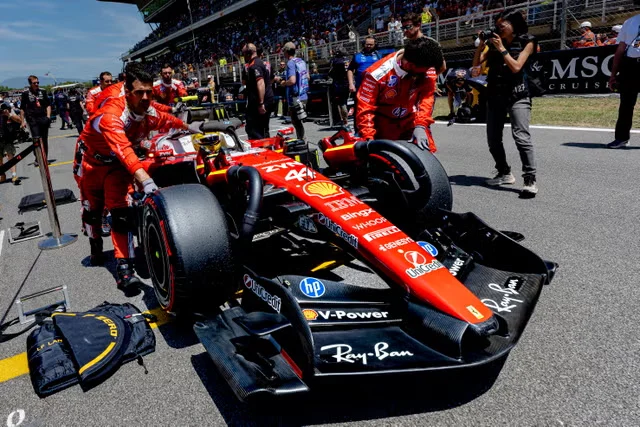
When the cars return to the grid, each driver stops in the correct grid slot. The engine stays running. Meanwhile, the starter waits for all cars to be settled.
Then the five red lights appear one after another. The FIA regulations state that each light comes on at one-second intervals. After the fifth light, the wait before lights out is controlled by the permanent starter.
That delay is not predictable for the drivers. Consequently, the driver must react to the lights, not guess them. This is why grid position in racing and pole position can be so powerful.
| Start Phase | What Happens | Why It Matters |
|---|---|---|
| Formation lap | Cars complete a controlled lap before lining up | Drivers warm tyres, brakes, and clutch systems |
| Grid stop | Each car stops inside its allocated grid box | Wrong placement can trigger a start infringement |
| Red lights | Five red lights illuminate one by one | Drivers must wait and hold the car still |
| Lights out | All lights go out together | The race start signal is given |
How Does FIA Detect A Jumpstart?
FIA jumpstart rule enforcement relies on more than eyesight. The car must sit in the grid box so the transponder can detect the moment it first moves after lights out. Race control can also use video and electronic evidence.
This matters because an F1 car may rock slightly from clutch load, brake release, or anti-stall behavior. However, if the car is stationary at the required time and the grid position remains legal, stewards may decide there is no false start.
The current FIA wording can be checked in the 2026 FIA Formula 1 Sporting Regulations. The key article is B5.11, titled False Start.
In simple terms, FIA does not just ask, “Did the car twitch?” It asks, “Was the car illegally moving or illegally positioned under the rules?” That distinction is crucial.

What Penalty Is Given For A Jumpstart In F1?
The FIA stewards choose the penalty. For a false start, the 2026 regulations allow a 5-second penalty, 10-second penalty, drive-through penalty, or stop-and-go penalty.
A 5-second or 10-second penalty can be served at a pit stop. If the driver does not pit again, it gets added to the race time. Meanwhile, a drive-through penalty forces the driver to enter the pit lane and continue without stopping.
A stop-and-go penalty is harsher. The driver must stop in the pit box for the penalty time before rejoining. Formula 1 explains these penalty types in its official beginner’s guide to F1 penalties.
That is why an F1 false start can destroy a race. Even a five-second penalty can cost several positions if the midfield is tight.
Why Do Formula 1 Drivers Jump The Start?
Drivers do not usually jump the start because they are reckless. Most false-start moments come from pressure, clutch feel, brake release, or an attempt to catch the perfect launch.
The clutch bite point is critical. If the driver releases too much clutch before the lights go out, the car can creep. If the driver waits too long, the start is slow and rivals attack immediately.
Modern F1 also limits automatic help. The FIA Technical Regulations state that any system designed to detect when the race start signal is given is not permitted. You can see that in the FIA 2026 Technical Regulations, Article 8.4 on start systems.
Therefore, the driver still has to judge the launch. Engineers prepare maps and procedures, but the final moment belongs to the driver’s hands and feet.
Can A Jumpstart Cost A Driver The Race?
Yes. A jumpstart in F1 can cost a driver the race, especially at circuits where overtaking is difficult. Monaco, Singapore, Hungary, and Zandvoort punish track-position loss heavily.
At some circuits, losing five seconds may only drop a driver one place. However, at a tight street circuit, that same penalty can trap the car behind slower traffic. As a result, the strategy team may have to change the whole race plan.
This connects directly with overcut and undercut strategy, pit stops in F1, and how pit stops work in racing. A start penalty is not only a time loss. It changes tyre windows, traffic, and clean-air opportunities.
Moreover, the first few hundred metres can decide whether a driver controls clean air or gets stuck behind dirty air. Read more about that in our guide to clean air in F1.
Jumpstart Vs False Start: Is There A Difference?
In casual F1 talk, jumpstart and false start usually mean the same thing. Both describe a start infringement before the legal race signal.
However, “false start” is the cleaner rules term. “Jumpstart” is more common in fan discussions, headlines, and race commentary. So, if stewards investigate it, expect the official documents to use “false start.”
There is also a difference between creeping and being penalised. A car can appear to move slightly on camera. Yet the stewards still judge it under the written rule, sensor data, and grid position evidence.
Why F1 Starts Are So Difficult
An F1 race start is a controlled explosion of torque. The driver must hold the brake, manage clutch paddles, avoid wheelspin, and react instantly to lights out.
Tyre temperature changes everything. A cold tyre spins. An overheated tyre may slide. Meanwhile, the driver must defend the inside line and avoid contact into Turn 1.
That is why the formation lap matters. It connects with the F1 formation lap, grip, flat spots, and brake balance.
In addition, visibility can be an issue from the back of the grid. Formula 1 has previously explained the use of additional start-light sets after drivers reported visibility concerns, which you can read in Formula 1’s Bahrain start-lights article.
Final Verdict
A jumpstart in an F1 race is one of the smallest mistakes with one of the biggest consequences. It may happen before the cars even reach racing speed. However, it can ruin strategy within seconds.
The driver must stop correctly, wait for the red lights, hold the clutch, and launch only after lights out. Meanwhile, the FIA checks the rules through start-position requirements, transponder detection, and steward review.
For fans, the simple answer is clear. A jumpstart is a false start. For race analysts, the deeper answer is better: it is a technical breach of a very precise starting procedure, where millimetres and milliseconds matter.
FAQs About Jumpstart In The F1 Race
What is a jumpstart in F1?
A jumpstart in F1 is a false start. It happens when a driver breaches the start rules before the legal start signal.
Can F1 drivers move before the lights go out?
After the required point in the light sequence, the car must remain stationary in its allocated grid position until the lights go out.
How is a jumpstart detected in Formula 1?
FIA uses transponder detection, timing data, video, and steward review. The car must be positioned so legal first movement can be detected.
What is the penalty for a jumpstart in F1?
Stewards may give a 5-second penalty, 10-second penalty, drive-through penalty, or stop-and-go penalty.
Why are jumpstarts rare in Formula 1?
They are rare because drivers practice starts constantly, and modern FIA detection systems make early movement risky.