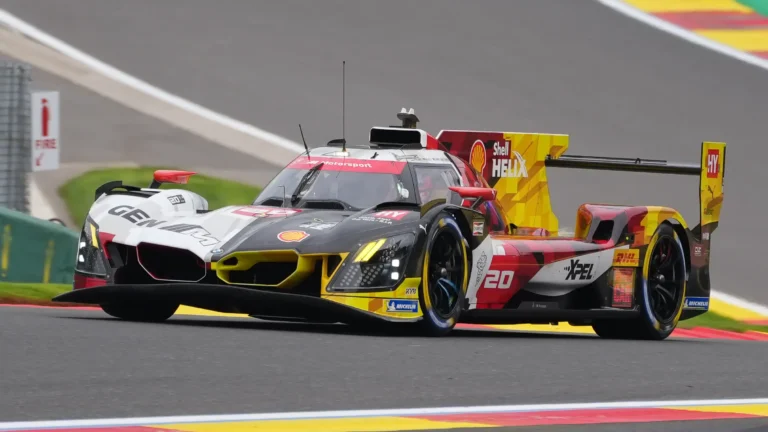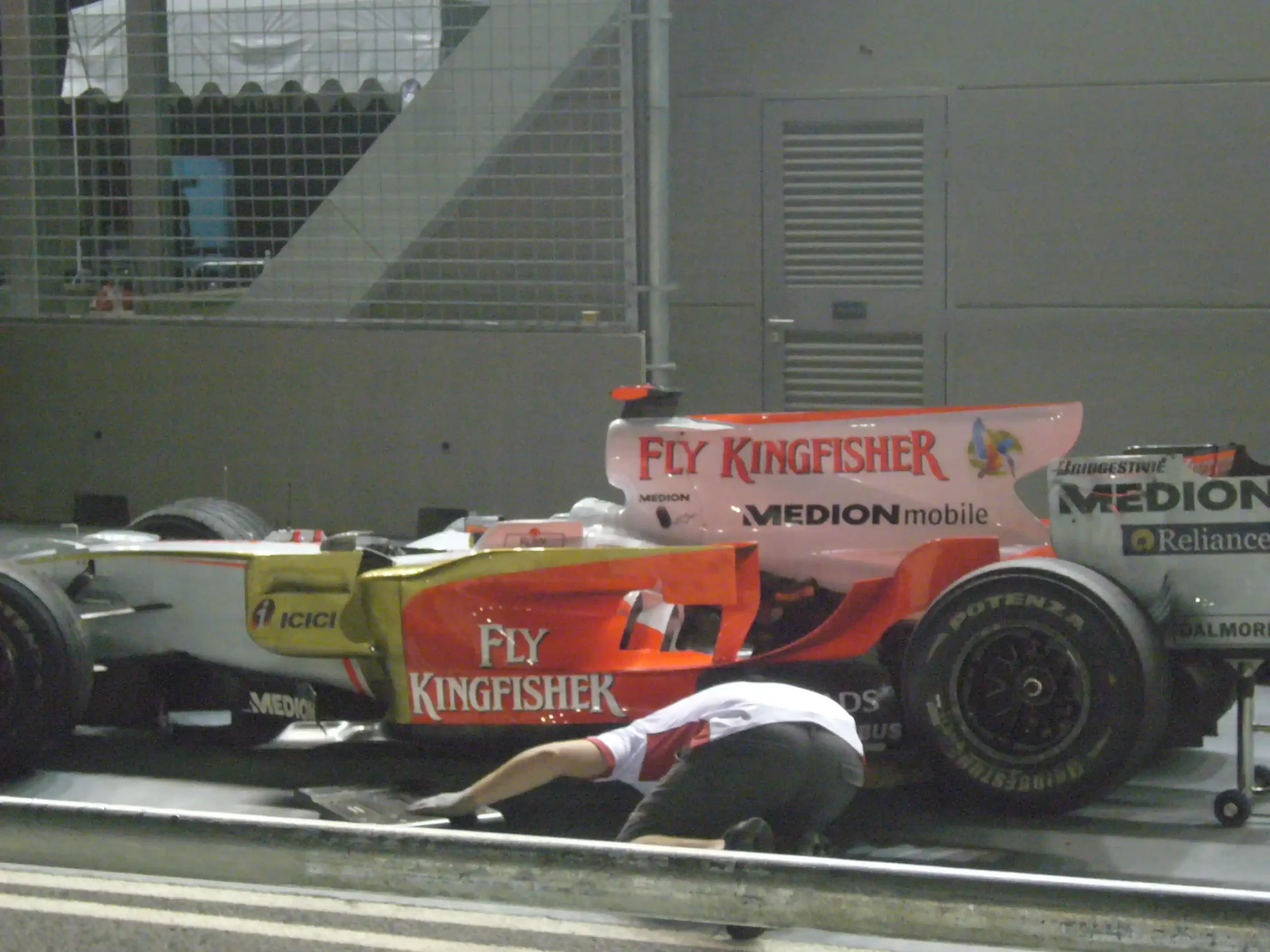
What Is Parc Fermé in F1? Rules, Restrictions and Strategy Explained
How the FIA freezes car setup after qualifying, which repairs remain legal, why Sprint weekends create two lock periods, and when a team may accept a pit-lane start.
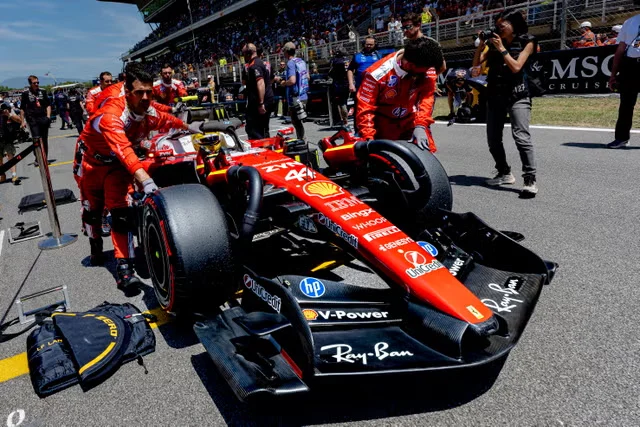
Parc fermé is the FIA-controlled period when an F1 car’s setup and configuration are restricted. On a standard weekend, it begins when the car first leaves the pit lane in Qualifying and ends when the Grand Prix starts. Only listed maintenance, approved repairs and limited adjustments are allowed.
Formula 1 teams spend practice changing almost everything. Then one pit-lane exit closes most of those options.
That moment is the start of parc fermé. The French phrase translates directly as “closed park.”
Yet modern F1 parc fermé is not simply a locked compound. It is also a controlled condition inside each team’s garage.
The car can return to its mechanics. However, the crew cannot freely redesign the setup for Sunday.
Suspension geometry stays declared. Aerodynamic configuration stays controlled. Major cooling and bodywork changes also need permission.
Meanwhile, necessary work continues. Teams can service brakes, change tires, replenish matching fluids and inspect electronics.
They can also repair genuine crash damage. Nevertheless, those repairs cannot become a disguised performance upgrade.
The 2026 regulations add another layer. A standard weekend has one main qualifying-to-race lock.
A Sprint weekend has two. The first covers Sprint Qualifying to the Sprint, while the second covers Qualifying to the Grand Prix.
Breaking the rules has a clear consequence. The driver normally starts the relevant Sprint or race from the pit lane.
That happened repeatedly in 2026. Four drivers started the Canadian Sprint from the pits after setup changes.
Alex Albon also received pit-lane starts in China and Britain after Williams modified his car under restricted conditions.
This F1 Parc Fermé Explained guide covers the full system, including timing, permitted work, repairs, FIA monitoring and strategy.
F1 Parc Fermé Explained: What Does Parc Fermé Mean?
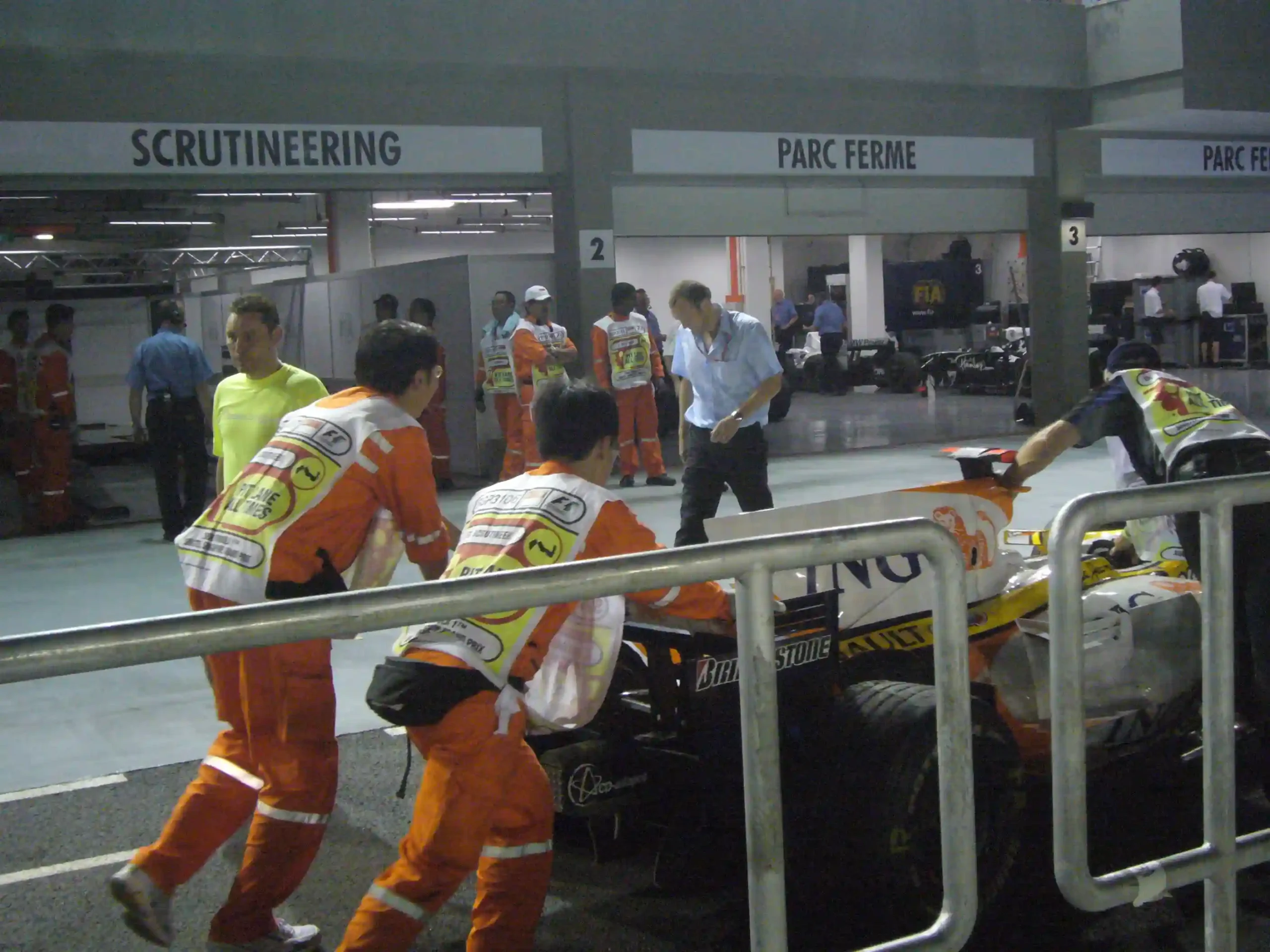
Parc fermé means “closed park” in French. In Formula 1, it describes both a secured physical inspection area and a wider regulatory condition. Cars may return to team garages, but the FIA restricts setup changes and supervises all permitted work.
The phrase comes from traditional motorsport practice. Competitors parked cars in a closed area after a stage or session.
Officials controlled access. Therefore, nobody could change the vehicle before technical inspection.
Formula 1 still uses that physical idea after qualifying, the Sprint and the Grand Prix.
However, the modern system extends into each garage. The car remains legally “in parc fermé” even when mechanics surround it.
Is Parc Fermé a Place or a Rule?
It is both. The physical area receives selected cars for weighing and detailed checks.
The regulatory condition follows the car back to its garage. Consequently, supervision does not end when the car leaves the inspection bay.
This distinction matters for television viewers. A mechanic touching the car does not prove that parc fermé has ended.
Why Is the Accent Used in Parc Fermé?
The original French spelling includes the acute accent. English motorsport reporting often writes “parc ferme” without it.
Both forms refer to the same procedure. Official FIA documents usually retain the accented spelling.
Who Controls Parc Fermé?
The FIA Technical Delegate leads technical oversight. Scrutineers monitor individual cars and record the work performed.
The stewards handle sporting consequences after a reported breach. Meanwhile, the team remains responsible for requesting permission.
Our guide to what the FIA does in Formula 1 explains the governing structure.
F1 Parc Fermé Explained: Why Does Formula 1 Use It?
Parc fermé ensures that the car which qualifies is broadly the car that races. It prevents teams from building a low-fuel qualifying specification and then converting it into a different race car overnight. The system also supports fair inspection and limits unnecessary cost.
Before strong restrictions, teams could optimize one specification for Saturday and another for Sunday.
A qualifying car might run an aggressive ride height, narrow cooling openings and a fragile one-lap balance.
The race version could then use different suspension, bodywork and cooling. That approach rewarded resources as much as engineering quality.
Parc fermé forces one compromise. The car must handle both low-fuel qualifying and a long, heavy-fuel race.
Fairness Between Teams
Every team faces the same setup deadline. Therefore, nobody receives an extra night of unrestricted tuning.
The rule also protects competitors after qualifying. A rival can protest the condition in which the car competed.
Without controlled custody, proving that condition would be much harder.
Cost Control
Special qualifying assemblies would create another development race. Large teams could build more parts and employ more overnight staff.
Restrictions reduce that incentive. Moreover, they support the broader financial regulations.
A Better Engineering Test
Parc fermé rewards accurate simulation and practice work. Teams must predict Sunday behavior before qualifying begins.
That includes tire wear, wind, fuel load and changing temperatures. As a result, setup becomes a strategic decision rather than a last-minute correction.
Read our guide to the F1 debrief for how teams turn practice data into setup choices.
F1 Parc Fermé Explained: Standard Weekend Timing
On a standard Grand Prix weekend, parc fermé begins when an F1 car first leaves the pit lane during Qualifying. It continues through Saturday night, reconnaissance laps and the pre-race grid procedure. The main restriction ends when the Grand Prix starts.
The exact trigger is the car’s first Qualifying pit-lane exit. It is not the start of Q2 or the end of Q3.
Before that exit, teams can complete normal setup work. Therefore, the final garage decision before Q1 carries major weight.
A car that never leaves during Qualifying still enters parc fermé at the end of Q1.
Teams can change suspension, ride height, wing levels and other setup items within the normal technical rules.
The team submits its suspension setup sheet and completes the final unrestricted adjustments.
Parc fermé begins for that car. Setup and configuration changes become restricted.
Selected cars go directly to the physical FIA area. All cars remain under supervised conditions.
Permitted work is completed, cars are covered and seals protect controlled components.
The pre-race parc fermé period ends when the Grand Prix begins.
Can Teams Change Setup Between FP3 and Qualifying?
Yes, provided the car has not made its first Qualifying pit-lane exit.
That window can be hectic. Engineers compare FP3 data, weather and driver feedback before committing.
Once the car crosses the pit-exit line, major changes normally require a pit-lane start.
Are F1 Cars Locked Overnight?
They are not placed in an inaccessible vault. However, FIA seals, covers, scrutineers and cameras control the overnight period.
Teams can complete listed work within the permitted schedule. Afterward, the cars remain covered and monitored.
Do Restrictions Continue on the Grid?
Yes. The car remains in parc fermé through reconnaissance laps and pre-race preparation.
Mechanics can perform permitted grid tasks. Nevertheless, they cannot use the grid to change the core setup.
Our F1 qualifying guide explains the Q1, Q2 and Q3 session that starts the lock.
F1 Parc Fermé Explained: Sprint Weekend Rules
Yes. The first begins when the car first leaves the pit lane in Sprint Qualifying and lasts until the Sprint starts. After the Sprint, teams receive an open setup window before Qualifying. A second restriction begins with the first Qualifying exit and lasts until the Grand Prix starts.
Sprint weekends compress practice and increase risk. Teams usually receive only one practice session before Sprint Qualifying.
Consequently, the first setup decision may rely heavily on simulation. A small error can make the Sprint difficult.
The current format then returns an adjustment window after the Sprint. Teams can use race data before Grand Prix qualifying.
| Sprint Weekend Stage | Parc Fermé Status | Setup Freedom |
|---|---|---|
| FP1 | Open | Normal setup work is available. |
| First Sprint Qualifying pit exit | First period begins | Car is restricted until the Sprint starts. |
| After the Sprint | Open window | Teams can revise setup before Qualifying. |
| First Qualifying pit exit | Second period begins | Car is restricted until the Grand Prix starts. |
| Grand Prix start | Second period ends | Race begins with the declared configuration. |
Can Teams Change Suspension After the Sprint?
Yes, during the open window before Qualifying. That is one of the most important features of the current Sprint format.
Teams can respond to tire wear, balance and bottoming seen in the Sprint. However, the new setup must also work for the Grand Prix.
Why Do Sprint Weekends Produce More Pit-Lane Starts?
The first lock arrives after limited practice. Teams sometimes discover a serious setup problem only during Sprint Qualifying or the Sprint.
If the car becomes undriveable or unsafe, changing it may be worth the penalty. In addition, rear-of-grid qualifiers have less position to lose.
Our guide to F1 Sprint weekends covers the full session order.
F1 Parc Fermé Explained: Which Setup Changes Are Banned?
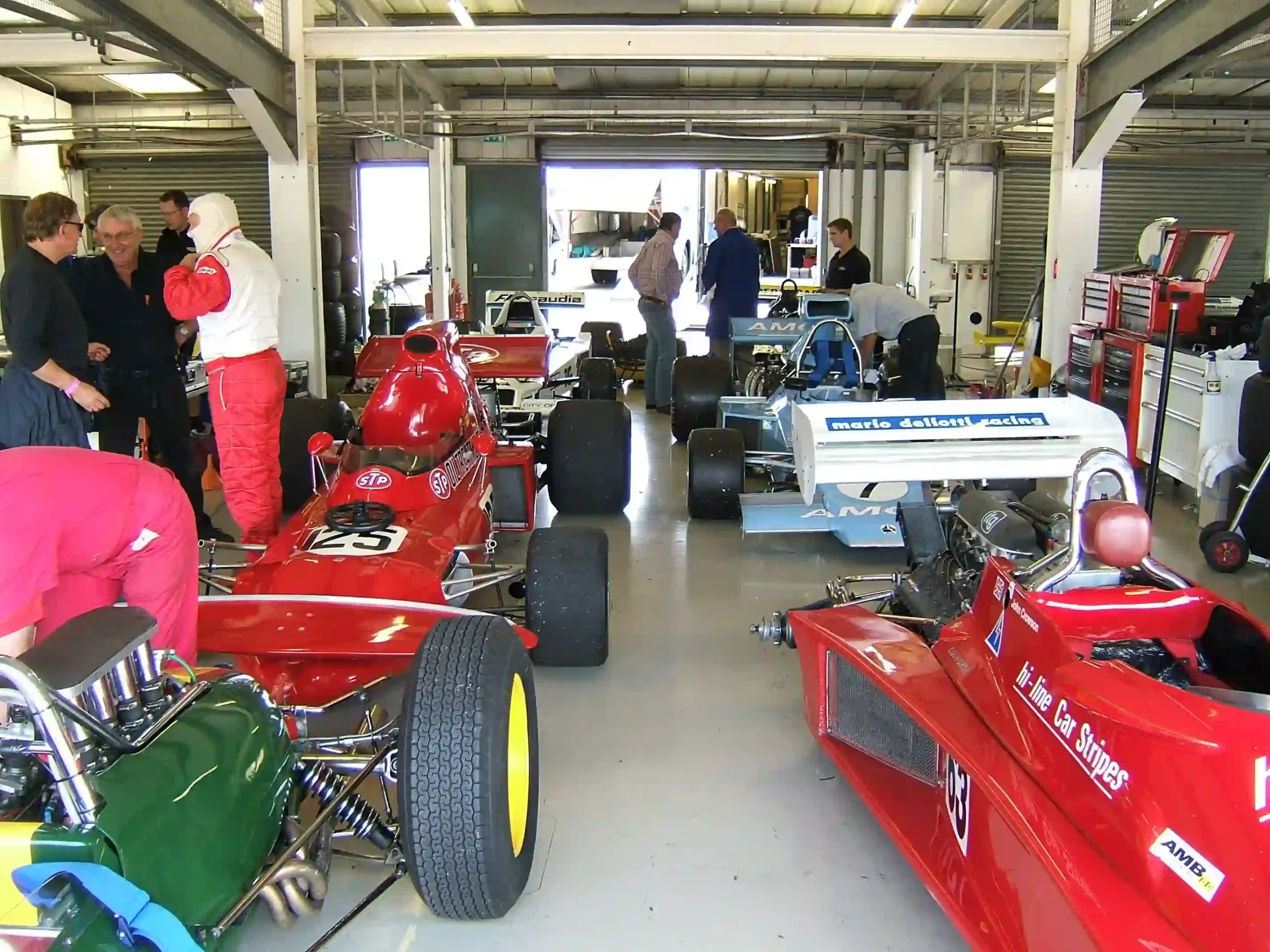
Without FIA approval, teams cannot replace or modify car parts or change the setup and configuration once parc fermé begins. Core restrictions cover suspension geometry, ride height, spring and anti-roll-bar settings, aerodynamic specification, rear-wing configuration, floor specification and weight distribution.
The FIA’s central rule is broad. No part may be replaced or modified outside the listed exceptions.
Likewise, no setup or configuration change may be made. Appendix B2 then provides the permitted categories.
Suspension and Ride Height
Teams submit a suspension setup sheet before the first relevant pit-lane exit.
That declaration can include camber, toe, corner weights and related settings. FIA personnel can compare the car against the sheet later.
Changing ride height can transform floor performance. Therefore, an unauthorized adjustment is a major breach.
Rear Wing and Floor Configuration
Teams cannot freely switch to a different rear-wing level after qualifying. They also cannot install another floor specification for race pace.
These components define straight-line speed and downforce. A post-qualifying change would create a different competitive car.
Weight Distribution and Ballast
Moving ballast changes handling and tire balance. Consequently, weight distribution remains tightly controlled.
Any replacement related to a critical performance point receives close FIA attention.
Cooling Configuration
Teams cannot normally open extra cooling simply because Sunday becomes warmer.
However, the Technical Delegate can issue an official climatic-conditions message. That creates a controlled exception for every competitor.
Can Drivers Change Settings From the Cockpit?
Drivers continue to use legal steering-wheel controls. Brake balance, differential functions and energy settings remain part of normal operation.
Parc fermé targets physical setup and configuration changes. It does not freeze every driver-adjustable control.
Read our guides to F1 brake balance and limited-slip differentials for those systems.
F1 Parc Fermé Explained: What Work Is Allowed?
Yes. Parc fermé does not mean “hands off.” Appendix B2 permits specific maintenance, inspections and repairs. Teams can service brakes, adjust permitted front-wing profiles, clean the car, work on tires and matching fluids, inspect electronics and repair genuine accident damage under supervision.
The permitted list is detailed because F1 cars need maintenance between sessions.
Safety systems must remain functional. In addition, damaged or worn parts may need inspection before the race.
| Area | Examples of Permitted Work | Main Limitation |
|---|---|---|
| Brakes | Remove, measure and de-glaze friction material; bleed the system. | No hidden setup change. |
| Bodywork | Remove panels, inspect with non-destructive methods, clean, tape and patch damage. | Repairs cannot materially change geometry. |
| Front wing | Adjust the permitted profile position. | No parts may be added, removed or replaced for the adjustment. |
| Driver comfort | Adjust mirrors, seat belts and pedals. | Other comfort changes need specific approval. |
| Electronics | Check cameras, telemetry, radio, transponders, batteries and wiring repairs. | Performance hardware cannot be substituted casually. |
| Fluids | Add or drain fuel and gases; replenish matching fluids; inspect for leaks. | Replacement fluid must match the original specification. |
| Powertrain | Start the engine, inspect spark plugs, intake filter, exhaust and gearbox internally. | The gearbox cannot be dismantled for the borescope check. |
| Wheels and tires | Remove, change, rebalance and adjust pressures. | All normal tire allocation rules still apply. |
Can Teams Adjust the Front Wing?
Yes. The permitted front-wing profile position can be adjusted.
This helps teams rebalance the car for fuel load, tire condition and wind. Nevertheless, they cannot bolt on a different aerodynamic package.
Can Teams Change Tires and Tire Pressures?
Yes. Wheels, fasteners and tires may be removed, changed or rebalanced.
Tire pressures may also be adjusted. Pirelli allocation and minimum-pressure instructions still apply.
Can Teams Add Fuel?
Yes. Appendix B2 allows fuel to be drained or added.
This does not recreate race refueling. Teams prepare the legal starting fuel load in the garage before the race.
Can Teams Clean the Car?
Yes. Any part may be cleaned, and cosmetic bodywork changes are allowed.
Cleaning also helps inspections. Cracks, leaks and loose fasteners are easier to spot on a clean surface.
Can Teams Start the Engine?
Yes. Engines may be started, and exhaust extraction equipment can be fitted in the garage.
Teams can also remove spark plugs for internal checks and compression testing.
Can F1 Teams Change Setup When the Weather Changes?
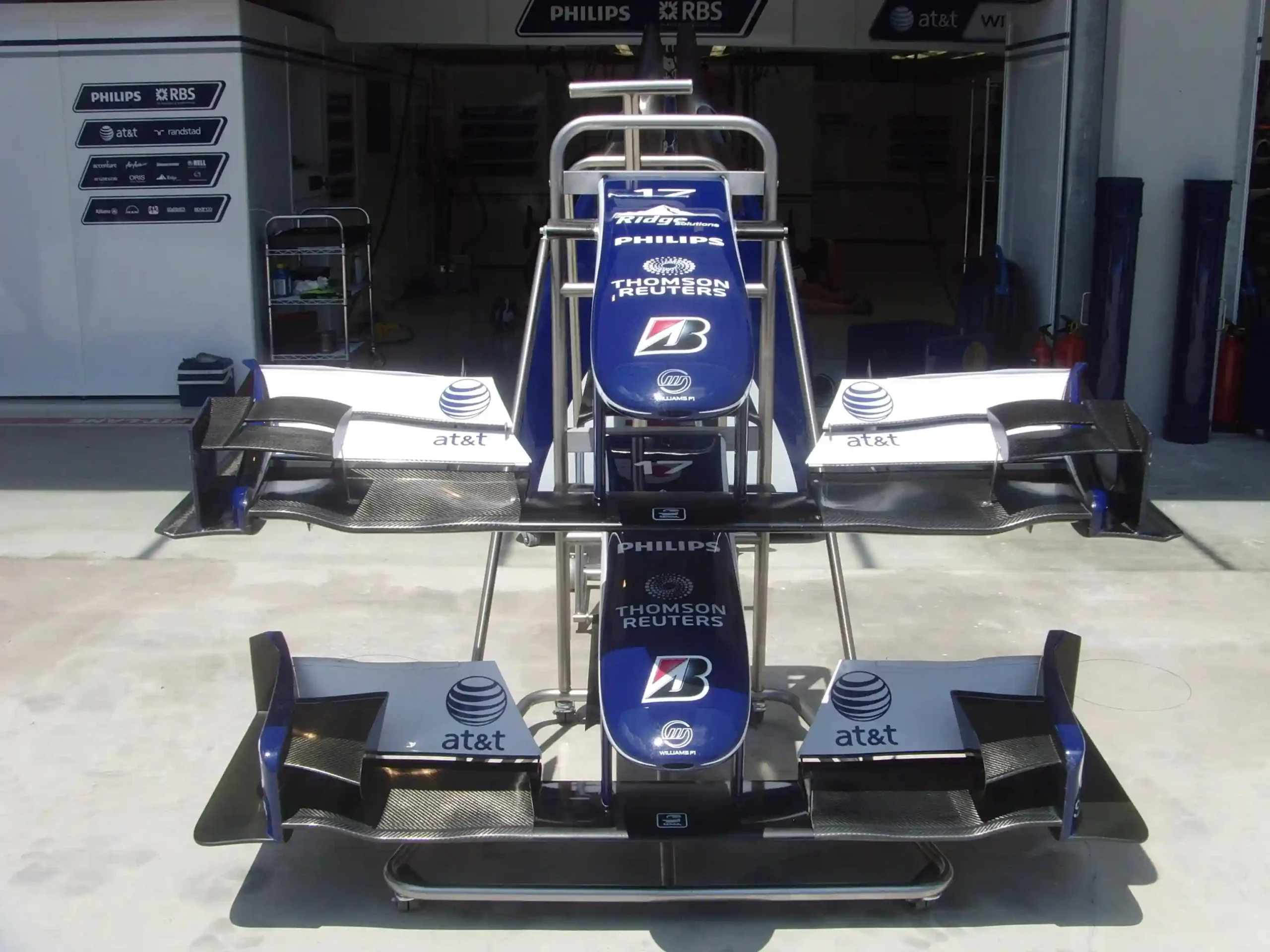
Teams cannot freely rebuild the car for rain after qualifying. However, the 2026 rules allow the FIA to declare a Rain Hazard or approve a “change in climatic conditions.” That can permit defined cooling, bodywork or weather-related changes for all competitors.
Weather creates the hardest fairness question. A dry qualifying setup may become unsuitable for a wet or extremely hot race.
Formula 1 does not simply reopen every adjustment. Instead, the FIA defines controlled exceptions.
The 2026 Rain Hazard
A Rain Hazard can be declared when the official forecast shows more than a 40% precipitation probability.
For the race, the declaration must normally arrive no later than two hours before Qualifying.
Specific permitted work then follows the FIA document linked to that declaration. Therefore, teams receive the same framework.
Change in Climatic Conditions
The Technical Delegate can announce that changing conditions require car alterations.
Teams may then modify specified cooling components, cooling bypass settings and the driver cooling scoop.
This is not permission to change springs, floor specification or rear-wing level.
Heat Hazard and Driver Cooling
The 2026 rules also include Heat Hazard procedures. Cooling medium may be added, replenished or replaced under parc fermé.
If the driver does not wear part of the cooling system, supervised cockpit ballast may be required.
Why Not Allow a Full Wet Setup?
A full reopening would create new disputes. Teams could label performance changes as weather preparation.
The controlled list targets safety and reliability while preserving the qualifying configuration.
Parc fermé does not ignore weather. It separates genuine safety adjustments from the wholesale setup changes that would turn Sunday’s car into a different machine.
Can an F1 Car Be Repaired After Qualifying?
Yes. Genuine accident damage can be repaired under FIA supervision. The rule covers barrier contact, contact with another car and significant off-track damage. Replacement parts normally need the same design and similar mass, inertia and function as the original.
A qualifying crash does not automatically force a pit-lane start. The key question is what the team repairs and how.
The FIA allows necessary restoration. However, the team cannot use damage as an excuse to install a preferred setup.
What Counts as Genuine Accident Damage?
Appendix B2 identifies barrier contact and contact with another car.
It also covers off-track damage when the excursion causes significant time loss or a deleted lap.
This wording helps distinguish a real incident from a convenient claim.
What Does Like-for-Like Mean?
The replacement should match the original design. It should also be similar in mass, inertia and function.
That standard prevents a team from replacing a damaged part with a lighter or more effective version.
Can a Different-Specification Part Be Used?
Only through the specific approval framework. The 2026 rules permit a limited number of requests for different-design bodywork replacements.
The alternative specification must have been used previously in approved testing or competition running.
Can Teams Replace a Survival Cell?
Yes, after genuine accident damage or a significant failure requiring the change.
All replacement-car components must remain equivalent, and the suspension setup must stay the same.
Why Does the FIA Keep Removed Parts?
Retaining parts preserves evidence. Officials can inspect the failure and compare the replacement later.
It also discourages invented damage claims. The original component remains available for technical review.
Our guide to the F1 monocoque and survival cell explains the central chassis structure.
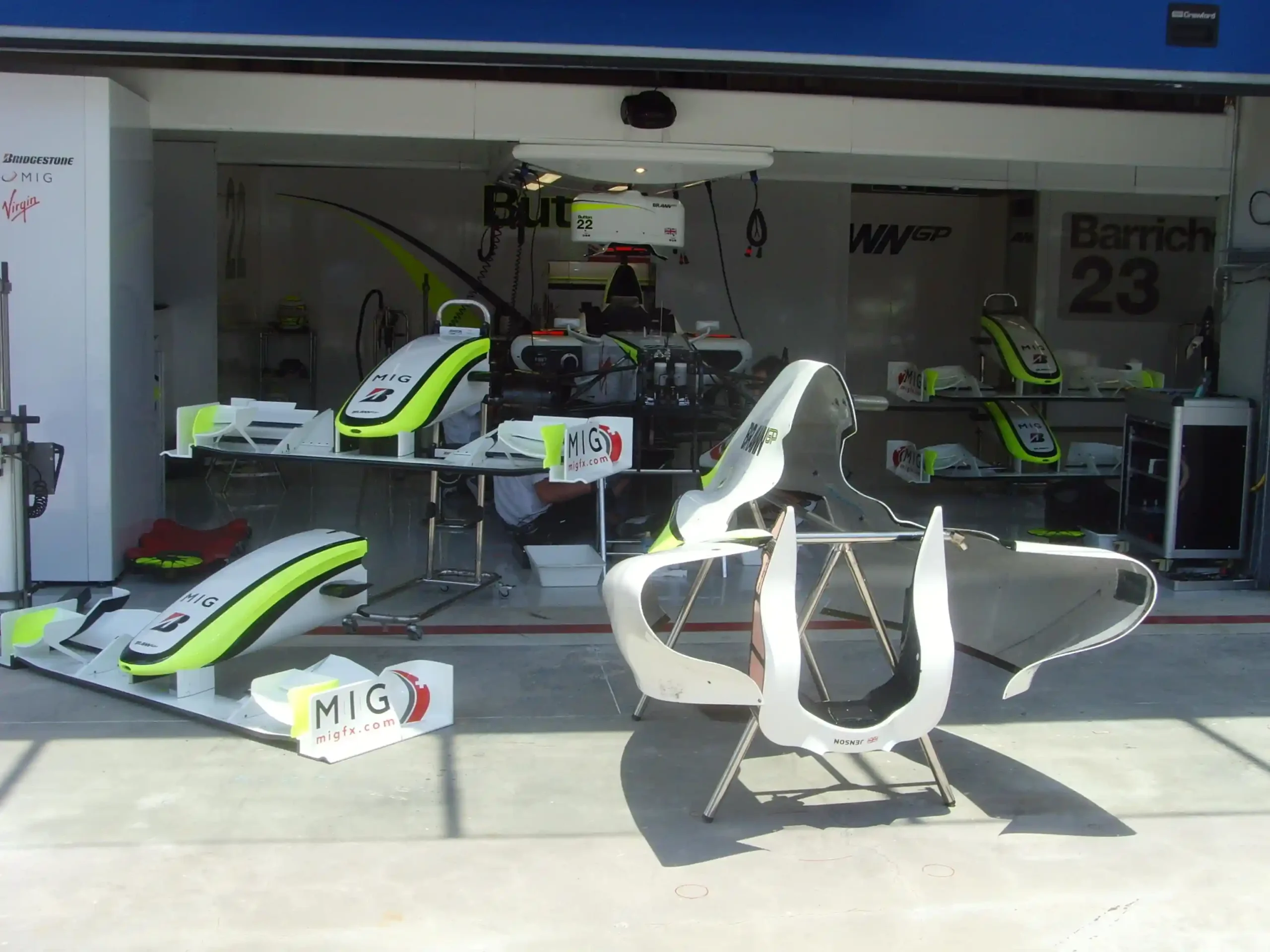
F1 Parc Fermé Explained: How the FIA Monitors Cars
Teams submit suspension setup sheets before the first relevant qualifying exit. One scrutineer is allocated to each car, and an overhead parc fermé camera records the garage. FIA personnel compare declared settings, parts, seals and repair evidence throughout the restricted period.
Monitoring combines documents, people, video and physical inspection.
No single method catches everything. Together, the systems make an unauthorized change difficult to hide.
Suspension Setup Sheets
Each competitor submits a sheet before the car first leaves in Sprint Qualifying and Qualifying.
The data provides a baseline. After repairs, officials can recheck camber, toe and other declared values.
One Scrutineer Per Car
The 2026 regulations allocate one scrutineer to every F1 car.
That official watches permitted work and keeps removed components visible. Therefore, the record follows the specific car.
Overhead Cameras
Every car also has a dedicated overhead parc fermé camera. It must remain uncovered and operational during the competition.
The camera sees the complete car inside the designated garage area. FIA staff can review work later if questions arise.
Seals and Covers
Cars are covered after the permitted work period. The FIA can place seals on power units, gearboxes, bodywork and other controlled items.
A broken or missing seal prompts immediate attention. It does not automatically prove cheating, but the team must explain it.
Random and Targeted Checks
At the end of Sprint Qualifying and Qualifying, the FIA selects specific cars for further checks.
Those cars go directly to the physical area. Officials can also inspect any car at any time before the competition ends.
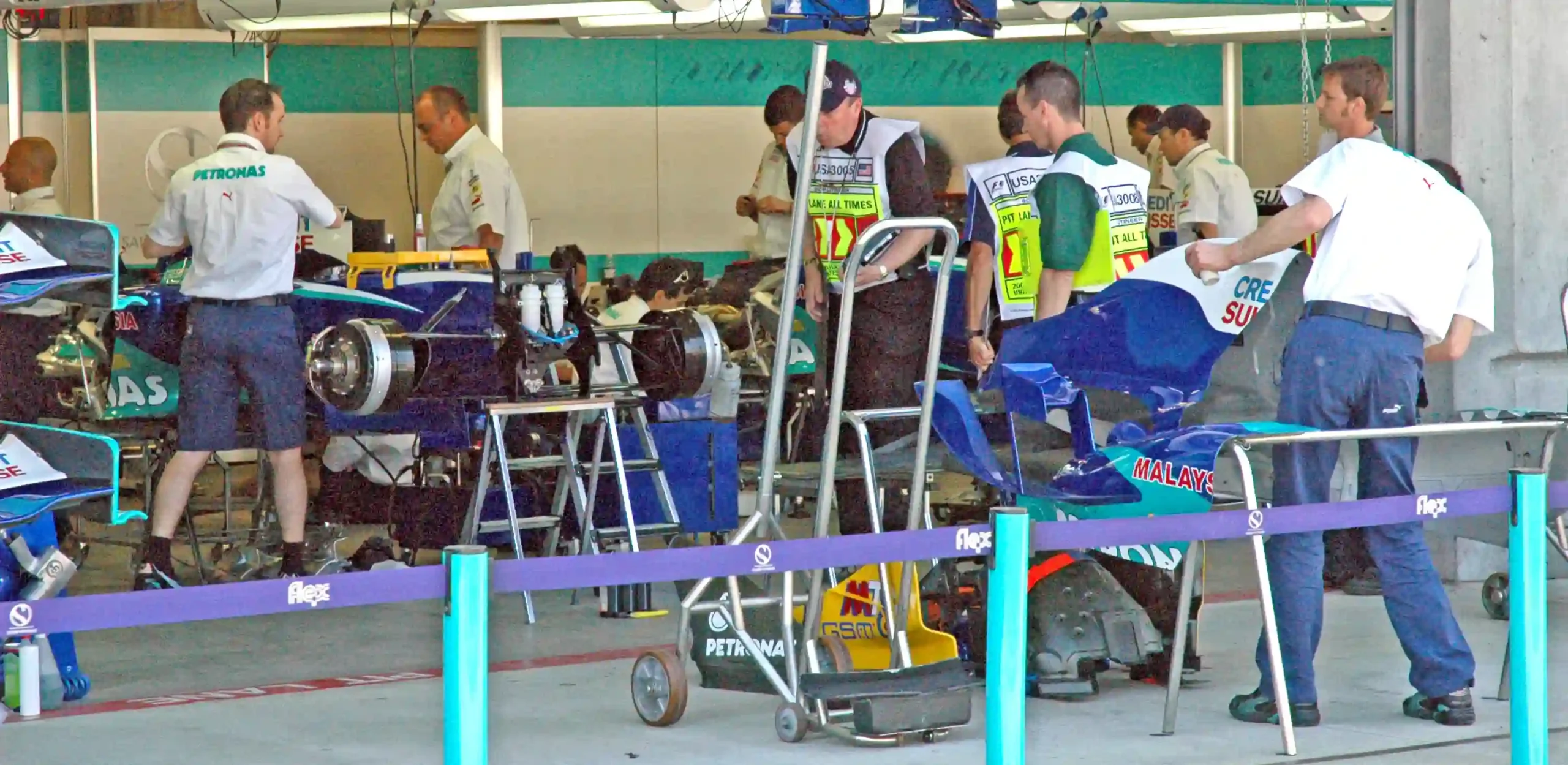
F1 Parc Fermé Explained: Penalties and Pit-Lane Starts
An unauthorized setup or configuration change normally requires a pit-lane start. On a standard weekend, the driver starts the Grand Prix from the pits. On a Sprint weekend, a breach before the Sprint affects the Sprint, while a breach after Qualifying affects the Grand Prix.
The pit-lane start removes the advantage of changing the car after qualifying.
A normal grid penalty might still leave a fast qualifier ahead of slower rivals. Starting behind the full field creates a stronger cost.
Does the Driver Lose the Qualifying Result?
The published classification can still show the original qualifying position. However, the starting-grid note moves the car to the pit lane.
Therefore, statistics and the actual start can look different.
How Does a Pit-Lane Start Work?
The car completes reconnaissance and formation procedures as directed. It then returns to the end of the pit lane.
After the race begins, the pit exit remains closed until every grid starter passes.
Only then does the green light release the pit-lane starters.
How Are Multiple Pit-Lane Starters Ordered?
The sporting regulations establish an order from the relevant session classification.
However, a car arriving late at the pit exit can be placed behind cars already waiting.
Can a Breach Cause Disqualification?
A routine declared setup breach normally produces the pit-lane start described above.
However, deception, illegal parts or a separate technical infringement can create stronger consequences.
Can a Team Choose the Penalty Deliberately?
Yes. Teams sometimes accept a pit-lane start to fix a poor setup or add replacement power-unit components.
The decision becomes strategic when the driver already qualified near the back.
Formula 1’s official grid-position guide explains why losing a rear-grid slot can be a small sacrifice.
Recent 2026 Parc Fermé Cases
Notable 2026 cases included four pit-lane starters for the Canadian Sprint, Alex Albon’s China Sprint and Grand Prix penalties after Williams changed his setup, and another Albon Sprint pit-lane start at Silverstone after an unapproved suspension change.
Canadian Grand Prix Sprint: Four Cars From the Pit Lane
Oliver Bearman, Pierre Gasly, Valtteri Bottas and Alex Albon all lost their grid places for the 2026 Canadian Sprint.
Their teams modified the cars under parc fermé conditions. All four had originally qualified in the lower half of the order.
That context mattered. The teams could improve balance while sacrificing relatively few starting positions.
The episode also illustrated the Sprint format’s pressure. Limited practice can expose setup problems only after the first lock begins.
China: Albon’s Sprint and Grand Prix Weekend
Williams changed Albon’s car before the Chinese Sprint, which moved him to a pit-lane start.
After Grand Prix qualifying, the team changed the suspension setup again. He was due to start Sunday from the pits.
A hydraulics problem then prevented him from starting the race. Nevertheless, the official starting-grid note recorded the parc fermé consequence.
British Grand Prix Sprint: Unapproved Suspension Change
Williams also changed the suspension setup on Albon’s car before the Silverstone Sprint.
The team did not have the Technical Delegate’s approval. Therefore, Albon started the 100-kilometer race from the pit lane.
This case showed the importance of procedure. Even a repair-minded change must follow the approval route.
Canadian Grand Prix: Stroll’s Sunday Pit-Lane Start
Lance Stroll started the Grand Prix from the pit lane after car modifications and additional power-unit elements.
That combined technical and sporting choice allowed Aston Martin to prepare the car outside the original grid specification.
The 2026 examples show that a pit-lane start is not always an embarrassing mistake. For a car already near the back, it can be the rational price of fixing a bad setup.
F1 Parc Fermé Explained: Setup and Race Strategy
Teams must choose one setup that performs in qualifying and the race. They balance one-lap grip against tire life, straight-line speed against downforce, and low-fuel ride height against heavy-fuel bottoming. Weather forecasts and overtaking difficulty shape every compromise.
Parc fermé turns setup into a prediction problem. Engineers cannot simply optimize the car for the next session.
Instead, they choose a configuration for several different operating conditions.
Qualifying Pace vs. Race Pace
A sharp front end can help over one lap. However, the same balance may overheat the tires during a long stint.
More wing can improve qualifying corner speed. Yet it may make overtaking harder because straight-line speed falls.
Low Fuel vs. High Fuel
Qualifying fuel load is light. The race begins with far more mass.
A low ride height may generate excellent Saturday downforce. Under race fuel, the floor can strike the track and lose efficiency.
Teams therefore leave enough margin for Sunday compression and tire movement.
Cooling vs. Aerodynamic Drag
Small cooling openings reduce drag. However, they leave less protection if Sunday is hot or the car runs in traffic.
Opening the bodywork too far costs performance throughout the weekend. Engineers must trust the weather forecast.
Tire Warm-Up vs. Degradation
A setup that heats tires quickly can shine in qualifying. It may also degrade the compound faster in the race.
Conversely, gentle tire use can make Saturday difficult but create stronger long runs.
Overtaking Difficulty
Track layout changes the value of grid position. Monaco strongly rewards qualifying.
Spa and other overtaking circuits can justify more race-focused wing levels. Therefore, parc fermé strategy varies by venue.
When Is a Deliberate Pit-Lane Start Worthwhile?
The calculation improves when a driver qualifies near the rear. Losing P18 for a pit-lane start costs less than losing pole.
A team may also combine the setup change with power-unit component replacements.
However, the car must still pass slower traffic. A Safety Car or weather change may become essential to recovery.
Our guides to F1 downforce, oversteer and understeer, and bottoming out explain the setup trade-offs.
Historic Parc Fermé Strategy and Famous Pit-Lane Starts
Yes. Sebastian Vettel started the 2012 Abu Dhabi Grand Prix from the pit lane after Red Bull changed his car following qualifying disqualification. He recovered to third, using a race-focused setup, Safety Car periods and strong overtaking to protect his championship campaign.
Parc fermé strategy has produced some of Formula 1’s most memorable recovery drives.
The penalty places the car behind the field. Yet a changed setup can make the car better suited to passing.
Sebastian Vettel, Abu Dhabi 2012
Vettel originally qualified third. Officials then disqualified him from qualifying because the required fuel sample could not be extracted.
Red Bull chose further gearbox, suspension and aerodynamic changes. That decision committed Vettel to the pit lane.
He recovered to third in a chaotic race. Those points became crucial in his title fight.
Sergio Pérez, Australia 2023
Pérez failed to set a qualifying time after becoming stuck in gravel during Q1.
Red Bull then altered the car under parc fermé. Since he already faced a rear-grid start, the additional loss was small.
The team could tune the car for overtaking and race conditions.
Why Historic Examples Still Matter
The decision framework has not changed. Teams compare the value of grid position against a better race car.
Modern traffic, tire behavior and Safety Car probability still shape the answer.
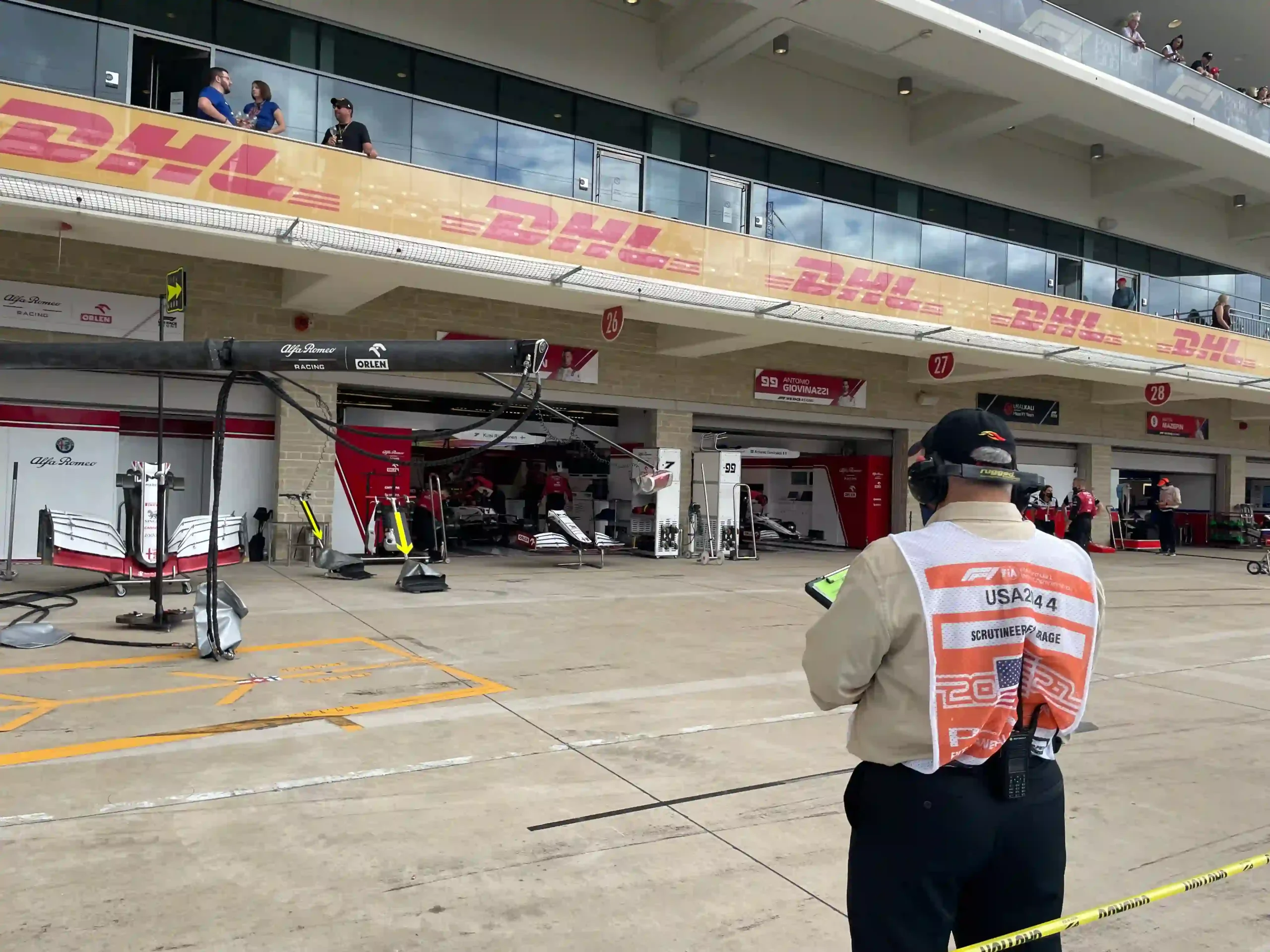
What Happens in Parc Fermé After the Race?
After the Sprint or Grand Prix, cars enter post-session parc fermé. Access is restricted, drivers are weighed, and FIA officials can inspect weight, fuel, bodywork, the floor, power-unit seals and other components. Results remain provisional until the required checks are complete.
Post-race parc fermé serves a different purpose from the qualifying setup lock.
The competition has ended, but technical legality still needs confirmation.
Who Can Enter?
Only supervising officials may enter freely. The area must prevent unauthorized access.
Up to three team personnel per car may receive access for cooling fans or work requested by officials.
Why Are Drivers Weighed?
Driver and car mass form part of the technical compliance calculation.
The driver must remain fully dressed until weighing. Removing equipment early could affect the recorded mass.
What Do Officials Inspect?
Checks may include total weight, fuel samples, floor wear, bodywork legality and component seals.
The FIA can select cars randomly or target a specific technical concern.
Can the Winner Be Disqualified?
Yes. A car can finish first on track and later fail a technical check.
The podium ceremony may happen before every inspection is complete. Therefore, the published result remains provisional for a period.
Parc Fermé vs. Scrutineering
Parc fermé controls access and preserves the car’s condition. Scrutineering is the technical examination itself.
The two procedures overlap, but they are not identical.
Our guide to race timing and classification explains why results can change after the finish.
F1 Parc Fermé Explained: Common Misunderstandings
“Nobody Can Touch the Car”
False. Mechanics can perform the detailed work listed in Appendix B2 under supervision.
“The Car Is Locked in One Physical Compound All Night”
False. The restriction also operates virtually inside the team garage through cameras, seals and scrutineers.
“Teams Cannot Change Tires”
False. Wheels and tires may be removed, changed and rebalanced within the tire rules.
“Any Crash Repair Causes a Pit-Lane Start”
False. Genuine accident damage can be repaired with equivalent parts and proper approval.
“A Different Rear Wing Is Allowed for Rain”
False. Weather exceptions are controlled and do not create a free aerodynamic rebuild.
“Sprint Weekends Stay Locked From Friday to Sunday”
False. The current format includes an open setup period after the Sprint and before Qualifying.
“A Pit-Lane Start Is Always Accidental”
False. A team may deliberately accept it to fix setup or combine several component changes.
F1 Parc Fermé Explained FAQs
What is parc fermé in Formula 1?
Parc fermé is the FIA-controlled period when an F1 car’s setup and configuration are restricted. On a standard weekend, it starts with the car’s first Qualifying pit-lane exit and ends when the race starts.
What changes are allowed under F1 parc fermé rules?
Teams may perform work listed in FIA Appendix B2, including brake servicing, front-wing adjustment, cleaning, tire changes, matching-fluid work, electronics checks and genuine accident-damage repairs.
What is the penalty for breaking parc fermé rules?
An unauthorized setup or configuration change normally requires the driver to start the relevant Sprint or Grand Prix from the pit lane.
How does parc fermé work on an F1 Sprint weekend?
The first restriction runs from Sprint Qualifying to the Sprint. Teams then receive an open setup window before a second lock begins in Qualifying and lasts until the Grand Prix.
F1 Parc Fermé Explained: Conclusion
F1 Parc Fermé Explained begins with one principle. The car that qualifies should remain broadly the car that races.
On a standard weekend, the lock begins with the first Qualifying pit-lane exit. It lasts until the Grand Prix starts.
Sprint weekends create two periods. Teams receive one important setup window after the Sprint and before Qualifying.
The setup is not frozen in every detail. Appendix B2 allows essential maintenance, inspection and repair work.
Teams can service brakes, adjust permitted front-wing profiles, change tires and replenish matching fluids.
They can also repair genuine accident damage. However, the replacement must preserve the original specification and setup.
The FIA watches through setup sheets, assigned scrutineers, overhead cameras, seals and physical checks.
Weather exceptions exist, but they remain controlled. A rain forecast does not create permission for a complete wet setup.
An unauthorized change normally sends the driver to the pit lane. The session affected depends on when the breach occurs.
Canada, China and Silverstone produced clear 2026 examples. Several teams accepted the penalty to improve cars near the rear.
That choice reveals the strategic purpose of the rule. Parc fermé protects qualifying while still allowing teams to sacrifice grid position.
Post-race parc fermé then preserves the cars for weighing and technical inspection.
The winner can still lose the result if the car fails those checks. Consequently, the checkered flag is not the end of technical scrutiny.
Parc fermé may look like a quiet garage procedure. In reality, it shapes setup, weather planning, race pace and starting strategy across every F1 weekend.
Sources
The rules and current examples in this article were checked against FIA and official Formula 1 material available on July 20, 2026.