F1 Sprint Weekend Explained: Format, Points, Qualifying Rules & Race Schedule
A complete guide to the modern Sprint format, from Friday practice to Sunday’s Grand Prix, with verified 2026 rules and U.S. Eastern Time dates.
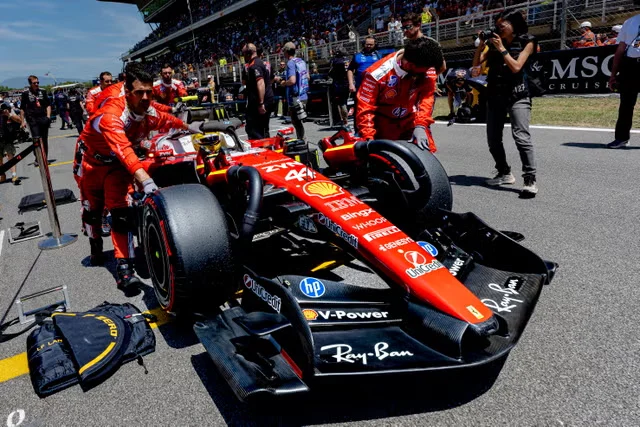
An F1 Sprint weekend replaces two normal practice sessions with Sprint Qualifying and a short Saturday race. Friday includes one practice and Sprint Qualifying. Saturday features the Sprint and regular Grand Prix qualifying. Sunday remains the full Grand Prix. The Sprint awards points but does not set the Sunday grid.
An F1 Sprint weekend compresses a normal Formula 1 event into a sharper, less forgiving format. Teams get one practice hour. Drivers then compete in two qualifying sessions and two races across three days.
That changes the rhythm of the weekend. On a traditional Grand Prix weekend, engineers can use three practice sessions to understand tire wear, fuel loads, ride height, wind direction, and setup balance. During a Sprint weekend, the same decisions must be made after only one practice session.
Therefore, the Sprint is not simply an extra race added to the program. It changes preparation, risk, parc fermé timing, tire use, and championship scoring. It also gives fans meaningful action on Friday, Saturday, and Sunday.
This guide explains the verified 2026 F1 Sprint format, points system, Sprint Qualifying rules, race distance, grid rules, strategy, and complete Sprint calendar. Times are shown for U.S. readers in Eastern Time where an official Sprint start time has been published.
How Does an F1 Sprint Weekend Work?
A Sprint weekend has five main sessions. Friday holds Free Practice 1 and Sprint Qualifying. Saturday begins with the Sprint, followed later by normal Grand Prix qualifying. Sunday hosts the full Grand Prix. The Sprint has its own grid and points, while Saturday qualifying sets the Sunday race grid.
The easiest way to understand the current format is to treat the Sprint and Grand Prix as separate competitions. Sprint Qualifying decides the order for Saturday’s Sprint. Regular qualifying decides the order for Sunday’s Grand Prix.
However, the two competitions still affect each other. Damage in the Sprint can compromise qualifying later that day. A penalty may also carry forward if it cannot be served during the Sprint. Meanwhile, every lap gives teams valuable data before the main race.
| Day | Session | Main Purpose | What It Sets |
|---|---|---|---|
| Friday | Free Practice 1 | Setup work, tire checks, systems tests, and early race preparation | Nothing directly |
| Friday | Sprint Qualifying | Short three-part qualifying session for the Sprint | Saturday Sprint grid |
| Saturday | F1 Sprint | Short race of just over 100 kilometers | Championship points for the top eight |
| Saturday | Grand Prix Qualifying | Full Q1, Q2, and Q3 qualifying session | Sunday Grand Prix grid |
| Sunday | Grand Prix | Full-distance Formula 1 race | Grand Prix result and championship points |
The Friday schedule creates immediate pressure. Teams cannot spend the opening day gradually exploring setup options. Instead, they must arrive with accurate simulator work and a strong baseline.
After practice, the first parc fermé window begins when a car leaves the pit lane for Sprint Qualifying. That limits major changes before the Sprint. Consequently, a poor Friday setup can become a real competitive problem.
Saturday has a different character. The Sprint is short enough to encourage aggressive driving, yet damage can be costly. Once it ends, teams prepare for Grand Prix qualifying, where the Sunday grid is decided through the standard three-stage format.
For a deeper look at the regular session, see our guide to how F1 qualifying works. It explains Q1, Q2, Q3, elimination rules, timing, and grid formation.
F1 Sprint Weekend vs. a Normal Grand Prix Weekend
A standard Formula 1 weekend gives drivers three practice sessions. A Sprint weekend gives them only one. The missing practice time is replaced by Sprint Qualifying and the Sprint itself.
Normal F1 Weekend
- Friday: Free Practice 1 and Free Practice 2
- Saturday: Free Practice 3 and Grand Prix qualifying
- Sunday: Grand Prix
- About three hours of practice before qualifying
- One points-paying race
F1 Sprint Weekend
- Friday: Free Practice 1 and Sprint Qualifying
- Saturday: Sprint and Grand Prix qualifying
- Sunday: Grand Prix
- About one hour of practice before competition
- Two points-paying races
The most important difference is not the extra points. It is the loss of preparation time. With fewer laps to test changes, teams must trust pre-event simulation and react quickly to real track conditions.
Moreover, drivers have less time to build confidence. That matters at street circuits, where grip changes quickly and barriers punish mistakes. It also matters when rain, wind, or unusual temperatures make simulator predictions less reliable.
A normal weekend rewards patient development. A Sprint weekend rewards readiness. The car that rolls out of the garage with a balanced platform can gain an immediate advantage.
How Does F1 Sprint Qualifying Work in 2026?
Sprint Qualifying uses three knockout stages: SQ1, SQ2, and SQ3. In 2026, with 22 cars, six drivers are eliminated after SQ1 and another six after SQ2. The final 10 compete for Sprint pole in SQ3. Medium tires are required in SQ1 and SQ2, while soft tires are required in SQ3.
Sprint Qualifying looks familiar because it follows the same basic knockout idea as regular qualifying. However, every stage is shorter. Drivers have less time to prepare tires, find clean air, and recover from a deleted lap.
The official 2026 regulations account for a 22-car field. Therefore, six drivers drop out in SQ1 and another six drop out in SQ2. The remaining 10 fight for the front five rows in SQ3.
| Stage | Duration | Required Dry Tire | 2026 Elimination | Grid Positions Decided |
|---|---|---|---|---|
| SQ1 | 12 minutes | Medium | Slowest six drivers | 17th through 22nd |
| SQ2 | 10 minutes | Medium | Slowest six drivers | 11th through 16th |
| SQ3 | 8 minutes | Soft | No elimination during session | 1st through 10th |
These short stages create traffic problems. On a long circuit, a driver may get only one serious attempt. On a short circuit, the track can become crowded with cars slowing before their flying laps.
Track evolution also matters. The surface often becomes faster as more rubber goes down. Therefore, teams want to run late. Yet waiting too long risks yellow flags, traffic, or missing the checkered flag.
The mandatory tire compounds add another layer. Drivers cannot freely choose any dry compound for each stage. Medium tires must be used in SQ1 and SQ2. Soft tires are required in SQ3 when conditions are dry.
That rule makes tire preparation critical. Medium tires may need a different warm-up approach from soft tires. As a result, an out-lap error can cost more than a small driving mistake.
Sprint Qualifying often exposes operational weakness faster than pure car weakness. A quick car can still start deep in the field if its release timing, tire warm-up, or traffic management is poor. With only 12, 10, and eight minutes available, there is little room to recover.
Why “Sprint Shootout” Is No Longer the Main Name
Formula 1 used the term “Sprint Shootout” during an earlier version of the format. The current official name is Sprint Qualifying. Fans may still use both phrases, but they refer to the session that sets the Sprint grid.
It should not be confused with Grand Prix qualifying. Sprint Qualifying happens on Friday and controls only the Sprint starting order. Regular qualifying happens on Saturday and controls the Grand Prix starting order.
How Regular Qualifying Works on a Sprint Weekend
Grand Prix qualifying still uses Q1, Q2, and Q3. Under the 2026 rules, Q1 lasts 18 minutes, Q2 lasts 15 minutes, and Q3 lasts 13 minutes.
Because the 2026 grid has 22 cars, six are eliminated after Q1 and six more after Q2. The fastest 10 then compete in Q3 for pole position and the front five rows.
The Sprint result does not replace this session. That separation is essential. A driver can win the Sprint, struggle in qualifying, and start Sunday’s Grand Prix from the midfield.
For more background, our F1 qualifying explained article covers lap timing, track limits, red flags, and why the final run is often decisive.
How Are F1 Sprint Points Awarded?
The top eight finishers score Sprint points. The winner earns eight points, second receives seven, and the total drops by one point per position to eighth place. Drivers and teams receive the same points toward the Drivers’ and Constructors’ Championships. Ninth place and lower score zero.
| Sprint Finish | Driver Points | Constructor Points |
|---|---|---|
| 1st | 8 | 8 |
| 2nd | 7 | 7 |
| 3rd | 6 | 6 |
| 4th | 5 | 5 |
| 5th | 4 | 4 |
| 6th | 3 | 3 |
| 7th | 2 | 2 |
| 8th | 1 | 1 |
| 9th or lower | 0 | 0 |
Eight points may look small beside a Grand Prix victory. However, six Sprint weekends create a maximum of 48 extra points for one driver. That is more than the value of a full Grand Prix win.
The Constructors’ Championship effect can be even larger. If both cars finish first and second, a team earns 15 points from the Sprint alone. Strong two-car performance can therefore create a major swing before Sunday begins.
No separate fastest-lap bonus is added to the Sprint points table. Finishing position decides the score. Therefore, there is little reason to sacrifice track position only to chase an extra lap-time point.
Sprint points also affect lower championship battles. A midfield driver who finishes eighth earns one point, which may matter greatly at the end of the season. For teams fighting over prize-money positions, a single Sprint result can have lasting financial value.
Our guide to how racing championships are scored explains why small points gains can decide positions after a long season.
Does the F1 Sprint Determine the Grand Prix Grid?
No. The current F1 Sprint result does not set the Grand Prix grid. Sprint Qualifying sets the Saturday Sprint grid. A separate Grand Prix qualifying session later on Saturday sets the starting order for Sunday. Penalties or parc fermé breaches can still change either final grid.
This is one of the most common misunderstandings about the format. It comes from the early Sprint system used in 2021. At that time, the Sprint result decided the Grand Prix starting grid.
The modern structure separates the two. A driver can start the Sprint from pole, finish outside the points, then qualify on pole for Sunday. Another driver can win the Sprint and still start the Grand Prix several rows back.
That gives Saturday two different competitive stories. The Sprint rewards immediate race performance. Grand Prix qualifying then resets the focus toward one-lap speed and Sunday preparation.
Grid penalties can still complicate the picture. A driver’s official qualifying position is not always the same as the final starting place. Power-unit penalties, gearbox penalties, driving sanctions, or parc fermé breaches can move a car backward or into the pit lane.
For a simple explanation of how positions are assigned, read what grid position means in racing and our guide to pole position.
How Do Parc Fermé Rules Work on an F1 Sprint Weekend?
Parc fermé rules restrict major setup changes after competitive running begins. They prevent teams from using one car configuration for qualifying and a completely different configuration for the race.
On a 2026 Sprint weekend, parc fermé is split into two important periods. The first begins when the car first exits the pit lane during Sprint Qualifying. It continues until the start of the Sprint.
After the Sprint, teams receive an opportunity to work on the car within the regulations before Grand Prix qualifying. Then the second parc fermé period begins when the car first exits the pit lane in Grand Prix qualifying. It continues until the start of Sunday’s race.
| Window | Begins | Ends | Practical Meaning |
|---|---|---|---|
| First parc fermé | First pit exit in Sprint Qualifying | Start of the Sprint | Major setup changes before the Sprint are restricted |
| Adjustment period | After the Sprint | Before first pit exit in Grand Prix qualifying | Teams can make permitted changes for qualifying and Sunday |
| Second parc fermé | First pit exit in Grand Prix qualifying | Start of the Grand Prix | Major setup changes for Sunday are restricted |
This split system was an important improvement. Earlier versions of the Sprint format could lock teams into a poor setup for too long. That was especially harsh when Friday practice happened in different weather from the race.
Now, the Sprint acts as useful information. Engineers can study tire temperatures, ride behavior, straight-line speed, and degradation. They can then make permitted changes before Grand Prix qualifying begins.
However, the freedom is not unlimited. Once the relevant parc fermé window starts, an unauthorized change can force a pit-lane start. A breach before the Sprint can affect the Sprint start. A breach after Grand Prix qualifying begins can affect Sunday’s race start.
Key point: Teams are not locked into exactly the same setup from Friday afternoon through Sunday. The modern format has two parc fermé windows, with a regulated setup opportunity after the Sprint and before Grand Prix qualifying.
How Long Is an F1 Sprint Race?
An F1 Sprint does not have one fixed lap count. The race covers the smallest whole number of laps that exceeds 100 kilometers. Therefore, shorter tracks require more laps and longer tracks require fewer. A normal Sprint usually lasts around 30 minutes and has no mandatory pit stop.
The regulations define the Sprint by distance, not by a universal number of laps. Officials calculate the first whole number of laps that takes the race beyond 100 kilometers.
That means the lap count changes at every circuit. A track with a short lap needs more tours. A track with a long lap needs fewer. This is the same basic principle used to set different Grand Prix lap totals around a standard race distance.
The maximum normal Sprint duration is one hour. If the Sprint is suspended, the overall time limit can extend to one and a half hours. Most Sprints finish well inside those limits.
Unlike a Grand Prix, there is no mandatory pit stop. Drivers can usually complete the race on one set of tires. However, a pit stop remains legal and may become necessary after damage, a puncture, or a sudden weather change.
Do Drivers Have to Use Two Tire Compounds?
No. The usual dry Grand Prix requirement to use at least two different slick compounds does not create a mandatory Sprint stop. A driver can start and finish the Sprint on one compound when conditions allow.
Most teams choose a tire that balances launch grip, durability, and overtaking performance. The soft may offer better early pace but higher degradation. The medium may provide a more stable race.
Track position often controls the decision. A front-running car may favor stability. A driver starting deeper may accept more degradation for a stronger opening phase.
What Happens Under a Safety Car or Red Flag?
Normal race-control procedures still apply. A safety car compresses the field and reduces racing laps. A virtual safety car controls speed through delta times. A red flag stops the race and brings cars back to the pit lane.
Because the Sprint is short, interruptions have a larger effect. Five laps behind the safety car can remove a significant portion of the available racing distance. Therefore, restarts often become the main overtaking opportunity.
Drivers must also judge risk carefully. An aggressive move may gain a point, but contact can damage the car before Grand Prix qualifying. The same incident can also create a penalty that affects the next session.
Read our guides to the safety car in racing and how racing flags work for more detail.
2026 F1 Sprint Weekend Schedule and U.S. Eastern Times
Formula 1 scheduled six Sprint weekends for 2026. China and Miami returned for a third consecutive Sprint season. Silverstone returned to the format for the first time since the inaugural 2021 event.
Canada, the Netherlands, and Singapore were added as first-time Sprint venues. That mix gives the format six very different tests, from high-speed Silverstone to the tight walls of Singapore.
The table below uses official local Sprint start times and converts them to Eastern Time. U.S. daylight-saving time is reflected where applicable. Formula 1 can amend session times, so fans should check the official event page during race week.
| 2026 Event | Race Weekend | Sprint Start, Local Time | Sprint Start, U.S. ET | Status on July 18, 2026 |
|---|---|---|---|---|
| Chinese Grand Prix, Shanghai | March 13–15 | Saturday, March 14 — 11:00 a.m. | Friday, March 13 — 11:00 p.m. ET | Completed |
| Miami Grand Prix | May 1–3 | Saturday, May 2 — 12:00 p.m. | Saturday, May 2 — 12:00 p.m. ET | Completed |
| Canadian Grand Prix, Montreal | May 22–24 | Saturday, May 23 — 12:00 p.m. | Saturday, May 23 — 12:00 p.m. ET | Completed |
| British Grand Prix, Silverstone | July 3–5 | Saturday, July 4 — 12:00 p.m. | Saturday, July 4 — 7:00 a.m. ET | Completed |
| Dutch Grand Prix, Zandvoort | August 21–23 | Saturday, August 22 — 12:00 p.m. | Saturday, August 22 — 6:00 a.m. ET | Upcoming |
| Singapore Grand Prix | October 9–11 | Saturday, October 10 — 5:00 p.m. | Saturday, October 10 — 5:00 a.m. ET | Upcoming |
What Happens on Friday During an F1 Sprint Weekend?
Friday begins with Free Practice 1. Teams use that hour for aerodynamic checks, tire preparation, race simulations, qualifying runs, and setup confirmation.
Later, Sprint Qualifying sets the grid for Saturday’s Sprint. Under the regulations, it begins roughly two and a half to three and a half hours after practice ends.
For drivers, Friday is already competitive. A mistake in Sprint Qualifying can leave them in traffic for the Sprint. Meanwhile, a crash can create a major repair job overnight.
What Happens on Saturday During an F1 Sprint Weekend?
Saturday starts with the Sprint. The top eight score points, while every team collects race data that may shape the Grand Prix setup.
Grand Prix qualifying follows later. Under the 2026 rules, it is scheduled roughly three to four hours after the Sprint. That creates a demanding turnaround for mechanics and engineers.
If a car suffers heavy damage in the Sprint, the team may struggle to repair it before qualifying. Even when repairs are completed, setup checks and component inspections reduce preparation time.
What Happens on Sunday During an F1 Sprint Weekend?
Sunday remains the full Grand Prix. It has the normal race distance, pit-stop strategy, larger points allocation, and championship importance.
The starting grid comes from Saturday’s Grand Prix qualifying, adjusted for penalties. The Sprint finishing order has no direct role in that grid.
Nevertheless, the Sprint often changes Sunday expectations. Teams learn which cars degrade tires, which drivers have strong race pace, and where overtaking is possible.
For current event dates, visit our 2026 Formula 1 schedule. U.S. viewers can also use our guide on where to watch Formula 1, because network and streaming details should always be checked close to the event.
2026 Sprint Results Snapshot Through Silverstone
The first four Sprints of 2026 produced three different winners. George Russell won in China and Canada. Lando Norris won in Miami. Kimi Antonelli won the British Sprint at Silverstone.
| 2026 Sprint | Winner | Why the Result Mattered |
|---|---|---|
| China | George Russell | Opened the season’s Sprint schedule with a full eight-point score |
| Miami | Lando Norris | Converted a high-pressure U.S. Sprint into valuable championship points |
| Canada | George Russell | Became the first repeat Sprint winner of the 2026 season |
| Great Britain | Kimi Antonelli | Won at the circuit where Formula 1 first introduced Sprint racing in 2021 |
These results also show why Sprint points cannot be dismissed. A driver who wins two Sprints adds 16 points before counting any Grand Prix result. That can offset a difficult Sunday elsewhere.
However, Sprint form does not always predict the Grand Prix winner. Fuel load, tire requirements, pit strategy, weather, and race length create a different challenge on Sunday.
Why Sprint Weekends Change F1 Strategy
Sprint weekends create strategic pressure before the Sprint even begins. Teams must decide how much practice time to spend on qualifying pace and how much to spend on race preparation.
A car may look fast over one lap but overheat its tires during a long run. Another may feel slow on Friday yet protect its tires well enough to move forward in both races.
One Practice Session Raises the Value of Simulation
Modern Formula 1 teams arrive with detailed simulator models. They predict ride height, wing level, suspension settings, brake cooling, tire behavior, and energy deployment.
On a normal weekend, three practice sessions can expose a bad prediction. On a Sprint weekend, there is only one hour to confirm everything.
Therefore, correlation becomes crucial. If the wind tunnel, simulator, and track data agree, the team can commit early. If they do not, engineers must choose which evidence to trust.
This can produce surprising gaps between teammates. One driver may accept a nervous rear end. Another may need more stability before attacking. With little practice, there may not be enough time to create two ideal setups.
Qualifying Position Matters, but It Is Not Everything
The Sprint is short, so track position has high value. There is less time to recover from a poor start or a slow first lap.
However, tire degradation can still change the order. A driver who attacks too hard early may lose grip near the finish. Another who protects the tires can become faster when rivals begin sliding.
Overtaking difficulty also varies by circuit. DRS, slipstream strength, corner sequence, and tire performance all matter. Our guides to DRS in F1 and slipstreaming explain how drivers build passing opportunities.
Tire Choices Reveal Team Priorities
Because there is no mandatory stop, the starting tire often defines the entire Sprint. The soft tire may help a driver attack immediately. Yet it may also lose performance before the finish.
The medium offers more durability. Still, it may be harder to warm on a cool track. That can hurt the launch and opening laps.
Teams also think about the rest of the weekend. Tire allocations are finite. Using a valuable set during one session can reduce options later.
Consequently, Sprint strategy is not isolated. Engineers consider Sunday when choosing how aggressively to use tires on Friday and Saturday.
The Sprint Is a Live Grand Prix Test
The Sprint gives teams real racing data with full fuel effects, dirty air, tire wear, and overtaking. That information is more realistic than a clean-air practice run.
Engineers can compare front-wing levels, brake temperatures, floor behavior, and energy deployment. Drivers can identify corners where following another car becomes difficult.
After the Sprint, teams may alter permitted setup items before Grand Prix qualifying. Therefore, the short race becomes a high-speed experiment with points attached.
The best Sprint teams do two jobs at once. They race hard enough to score, yet they also collect information for Sunday. A car that wins Saturday but damages its tires, floor, or power-unit components may pay for that success later.
Risk and Reward Are Different for Every Driver
A championship leader may protect a strong points finish. A rival who needs to close the gap may accept more risk for the win.
Midfield drivers face another calculation. Eighth place is worth one point, which can be significant. However, a collision may ruin Grand Prix qualifying and remove a larger Sunday opportunity.
Team context matters too. A constructor fighting for a close championship position may order both drivers to avoid contact. Meanwhile, a team with little to lose may encourage aggressive moves.
What Happens After Damage or a Penalty in the Sprint?
Damage is one of the format’s biggest concerns. The Sprint takes place only a few hours before Grand Prix qualifying, so repair time is limited.
Like-for-like repairs are generally possible under the regulations. Teams can replace damaged parts with components of the same specification when the rules allow.
However, a severe crash can require a chassis change or major specification change. That may create a pit-lane start or another sporting consequence.
Floor damage is especially costly because it may not be obvious from television. A driver can finish the Sprint while losing downforce, then need extensive inspection before qualifying.
Penalties can also cross session boundaries. If a driver receives a time penalty, it normally affects the Sprint result. If a penalty cannot be served during the Sprint, it may carry to the next race, which is usually Sunday’s Grand Prix.
Grid penalties are applied to the session named in the decision. Therefore, fans should read the stewards’ wording carefully. A Sprint grid penalty is not automatically a Grand Prix grid penalty, and vice versa.
Pit-lane starts may result from parc fermé breaches. They can also follow major changes that are not allowed under the original car specification.
This is why teams sometimes accept a poor Sprint rather than risk a damaged car. Eight points are valuable, but Sunday offers more points and more strategic opportunities.
Why Did Formula 1 Introduce Sprint Racing?
Formula 1 introduced Sprint racing to create competitive action on all three days of selected Grand Prix weekends. The idea was simple: replace practice with meaningful sessions.
The first Sprint took place at Silverstone in 2021. Max Verstappen won the short race ahead of Lewis Hamilton, and the result set the grid for Sunday’s British Grand Prix.
That original format was different from today’s version. The top three scored points, and the Sprint winner was officially credited with pole position because the Sprint set the Grand Prix grid.
Formula 1 tested the format at three events in 2021 and three again in 2022. It expanded to six weekends in 2023.
The structure continued to evolve. Formula 1 separated the Sprint from the Grand Prix grid, expanded points to the top eight, and refined the timetable.
In 2024, Sprint Qualifying moved to Friday. The Sprint moved to Saturday morning, followed by Grand Prix qualifying later that day. That basic sequence remains central to the current format.
Silverstone hosted the inaugural F1 Sprint. Monza and Interlagos followed. The Sprint result set the Grand Prix grid, and only the top three scored.
Imola, Austria, and Interlagos hosted Sprints. Formula 1 continued studying fan response, sporting value, and operational challenges.
The calendar doubled to six Sprints. The Sprint became a more independent competition, with its own qualifying session and a broader points system.
Sprint Qualifying moved to Friday. The Sprint ran on Saturday before Grand Prix qualifying, giving each day a clear competitive purpose.
The format uses six eliminations in SQ1 and SQ2. Montreal, Zandvoort, and Singapore join the Sprint calendar for the first time.
Has the Sprint Format Improved Formula 1?
The answer depends on what a fan values. Supporters enjoy competitive action from Friday onward. Promoters also gain a more marketable three-day schedule.
Critics argue that the Sprint can reduce anticipation for Sunday. If Saturday clearly reveals race pace, the Grand Prix may feel less uncertain.
There is also concern about historic significance. A Grand Prix victory has decades of meaning. A Sprint win is useful, but it is not the same achievement.
From a technical viewpoint, reduced practice can create unpredictability. However, it can also force teams to use safer setups because mistakes are expensive.
The modern split parc fermé structure addresses one major criticism. Teams can learn from the Sprint and make permitted changes before Grand Prix qualifying. That reduces the chance of a poor Friday decision ruining the entire event.
Ultimately, the format works best when the circuit supports overtaking and tire variation. A Sprint at a track with no passing can become a procession. At a circuit with strong racing, it can produce a tense half-hour contest.
Common F1 Sprint Weekend Misunderstandings
“The Sprint Winner Starts the Grand Prix on Pole”
That was true under the original 2021 concept. It is not true under the current format. Saturday Grand Prix qualifying sets the Sunday grid.
“The Sprint Is Just a Short Grand Prix”
The race rules are familiar, but the strategic environment is different. There is usually no pit stop, less time to recover, and immediate pressure from Grand Prix qualifying later that day.
“Teams Cannot Change Anything All Weekend”
Parc fermé restricts changes, but the current format has two separate windows. Teams have a regulated opportunity after the Sprint and before Grand Prix qualifying.
“Sprint Points Do Not Matter”
One point can decide a championship position. Six Sprint wins can produce 48 points. Constructors can gain even more through two-car scoring.
“The Sprint Always Has the Same Number of Laps”
The distance is based on 100 kilometers, not a fixed lap total. Every circuit therefore produces a different number of laps.
“Sprint Pole Is the Same as Grand Prix Pole”
Sprint pole means first place on the Sprint grid. Grand Prix pole means first place on the Sunday grid. They come from different qualifying sessions.
How U.S. Fans Can Follow a Sprint Weekend
U.S. viewers should expect earlier start times for European and Asian events. Silverstone and Zandvoort run in the morning Eastern Time. Singapore begins before sunrise on the U.S. East Coast.
Miami and Montreal are easier for North American fans because their local time is Eastern Time. The Sprint begins at noon ET at both 2026 events.
Because Formula 1 can adjust session times, always check the official weekend timetable. Broadcast networks may also move coverage between channels or streaming platforms.
Follow the entire weekend, not only the Sprint. Friday Sprint Qualifying often provides the first reliable picture of pace. Saturday Grand Prix qualifying may then show which teams improved after the Sprint.
Fans should also watch tire choice, wind, and track temperature. Those details often explain why a car changes from strong to weak between sessions.
For the next event, use our guide to when the next F1 race takes place. Current championship context is available in the Formula 1 standings.
F1 Sprint Weekend FAQs
Does the F1 Sprint determine the Grand Prix starting grid?
No. Sprint Qualifying sets the Sprint grid. A separate Grand Prix qualifying session on Saturday sets the starting grid for Sunday’s race.
How many points are awarded in an F1 Sprint?
The top eight score. The winner gets eight points, followed by seven, six, five, four, three, two, and one point for eighth place.
How long is an F1 Sprint race?
The Sprint covers the smallest whole number of laps exceeding 100 kilometers. It usually lasts around 30 minutes, although interruptions can extend the duration.
Can F1 teams change the car setup during a Sprint weekend?
Yes, during permitted windows. The first parc fermé period covers Sprint Qualifying through the Sprint. Teams can then make allowed changes before Grand Prix qualifying, when the second parc fermé period begins.
Conclusion: What Fans Should Remember About the F1 Sprint Weekend
The F1 Sprint Weekend is a compressed race format built around one practice session, Sprint Qualifying, a Saturday Sprint, regular Grand Prix qualifying, and the Sunday Grand Prix.
The Sprint covers just over 100 kilometers and usually lasts about 30 minutes. It has no mandatory pit stop. The top eight score from eight points down to one.
Most importantly, the Sprint does not set the Grand Prix grid. Sprint Qualifying controls Saturday’s grid. Regular qualifying controls Sunday’s grid.
The format matters because it reduces preparation time. Teams must arrive with a strong setup, make quick decisions, and balance Saturday points against Sunday opportunity.
For drivers, every session carries pressure. A Friday mistake hurts the Sprint. A Saturday crash can hurt qualifying. A poor setup choice can affect both races.
For fans, the reward is clear. All three days contain meaningful competition. Yet the deeper appeal comes from watching teams solve a complicated racing problem with less information and less time.
That is the best way to understand the modern F1 Sprint format. It is not merely a shorter race. It is a full-weekend test of preparation, adaptability, tire control, operations, and risk management.
Sources and Verification
This article was checked against official Formula 1 and FIA material available on July 18, 2026. Session times can change, so readers should confirm the event timetable during race week.