F1 DRS Explained: How Drag Reduction System Works and Why It Matters
How one moving rear-wing flap changed overtaking from 2011 to 2025, why the one-second rule mattered, and what Formula 1 uses instead in 2026.
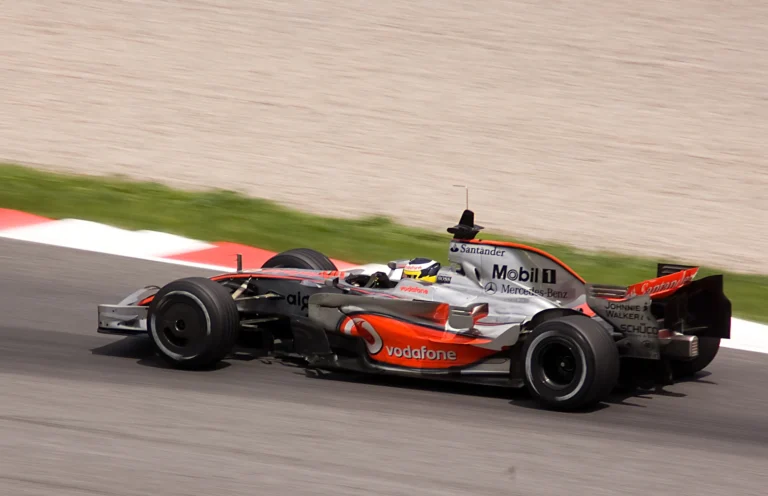
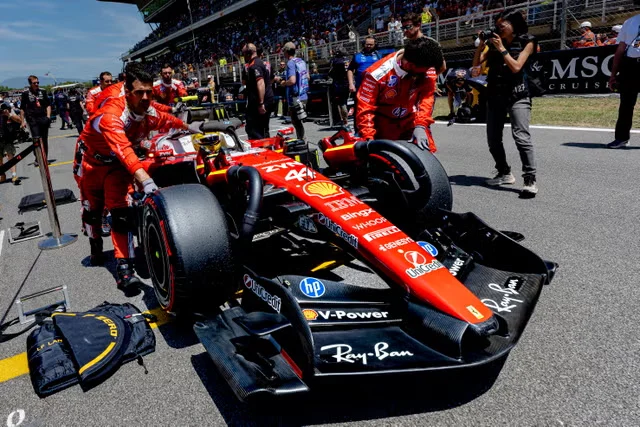
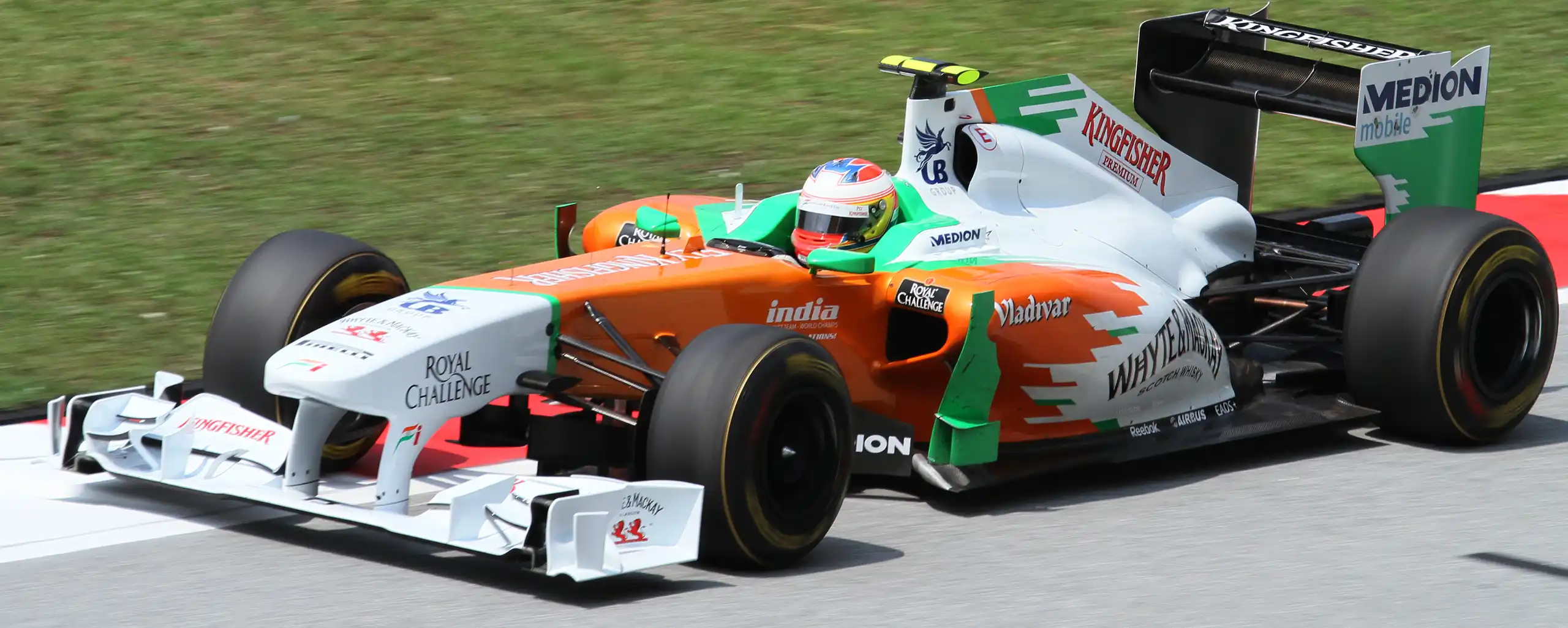
DRS stood for Drag Reduction System. From 2011 through 2025, it opened the upper flap of an F1 car’s rear wing. That reduced aerodynamic drag and raised straight-line speed. During races, drivers usually needed to be within one second of another car at a detection point.
For 15 seasons, one small gap in the rear wing shaped how Formula 1 drivers attacked, defended and timed an overtake.
The driver pressed a steering-wheel control. An actuator then rotated the rear-wing flap into a low-drag position.
However, DRS did not add horsepower. It allowed the car to use its existing power against less air resistance.
The result was a higher closing speed on the straight. Therefore, a following driver had a better chance to draw alongside before braking.
Race use remained controlled. The FIA defined detection points, activation lines and zones for every circuit.
In the system’s final 2025 form, a driver normally qualified after running within one second at detection. DRS became available after one complete lap following the start or a Safety Car period.
Traditional DRS disappeared from Formula 1 in 2026. Movable front and rear wings now change between Corner Mode and Straight Mode.
Meanwhile, a separate Overtake Mode provides the one-second-based passing aid through extra electrical energy. That distinction is central to this F1 DRS Explained guide.
What Does DRS Stand for in F1?
DRS stands for Drag Reduction System. It was a driver-operated rear-wing system designed to reduce drag on selected straights. The FIA introduced it for the 2011 season to improve overtaking opportunities after following cars had lost grip and momentum in turbulent air.
The name describes the purpose precisely. The system reduced drag rather than producing extra engine power.
A closed rear wing generated downforce. That force pushed the tires into the track and helped the car corner.
However, the same wing also resisted forward motion. Engineers call that resistance aerodynamic drag.
DRS changed the wing’s geometry on a straight. Consequently, the car needed less power to push through the air at a given speed.
The driver could then accelerate for longer. The advantage was most useful before a heavy braking zone.
This F1 DRS Explained distinction matters because DRS was often confused with ERS or an engine “overtake button.”
Did DRS Add Horsepower?
No. The power unit produced the same available output.
DRS changed the aerodynamic load placed on that power. Therefore, the car could convert more of its output into acceleration.
Hybrid deployment could be used at the same time. However, battery energy and DRS remained separate systems.
A driver with DRS but poor energy deployment could still struggle to pass. Likewise, a powerful energy release could help a defending car resist.
Was DRS the Same as a Slipstream?
No. A slipstream occurs when a following car enters the reduced-pressure wake behind another car.
That tow can reduce drag without moving any bodywork. DRS created an additional reduction by opening the rear wing.
The strongest attacks combined both effects. The driver followed closely, gained a tow and then activated DRS.
Our guide to slipstreaming in racing explains the airflow interaction in more detail.
How Did DRS Reduce Aerodynamic Drag?
DRS rotated the upper rear-wing flap away from its normal high-downforce angle. This enlarged the slot between the wing elements and weakened the pressure difference that produced downforce. Drag fell with it, allowing the car to accelerate more efficiently along the straight.
An F1 rear wing behaves like an inverted aircraft wing. Air pressure across its surfaces creates downward force rather than lift.
That downforce improves tire grip. However, the pressure difference also creates induced drag.
Opening the flap reduced the wing’s effective angle and loading. The airflow then produced less downforce and less resistance.
The car became faster in a straight line. Yet it also lost rear aerodynamic grip while the flap remained open.
Therefore, the FIA placed DRS zones on straights or very gentle bends. Opening it through a demanding corner could destabilize the car.
For a broader foundation, read our guide to downforce in motorsport.
Why Drag Rises So Quickly With Speed
Aerodynamic drag rises approximately with the square of speed. Therefore, small speed increases create much larger resistance.
At 300 km/h, or about 186 mph, the rear wing’s drag penalty is substantial. Reducing that penalty becomes valuable near the end of a straight.
However, the car does not gain speed instantly. The driver needs enough distance for the reduced drag to create a useful velocity difference.
That is why DRS worked better on a long straight than a short acceleration zone.
Did DRS Reduce Downforce?
Yes. Drag reduction and downforce reduction happened together.
The rear of the car became less planted while DRS was open. Drivers therefore needed the flap closed before serious cornering load arrived.
The final-era technical rules required a fail-safe return to the normal high-incidence position. That protected the driver if the actuator lost control.
Consequently, DRS was designed to fail closed rather than leave the car without rear stability.
What Happened to the Rear Wing When DRS Opened?
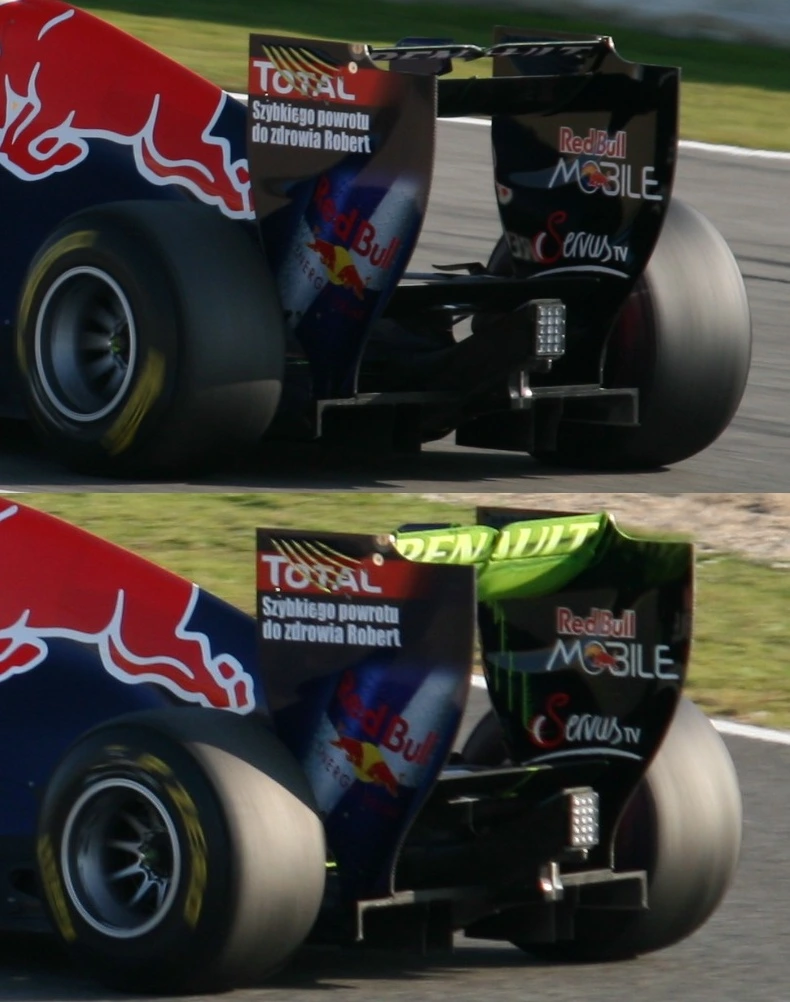
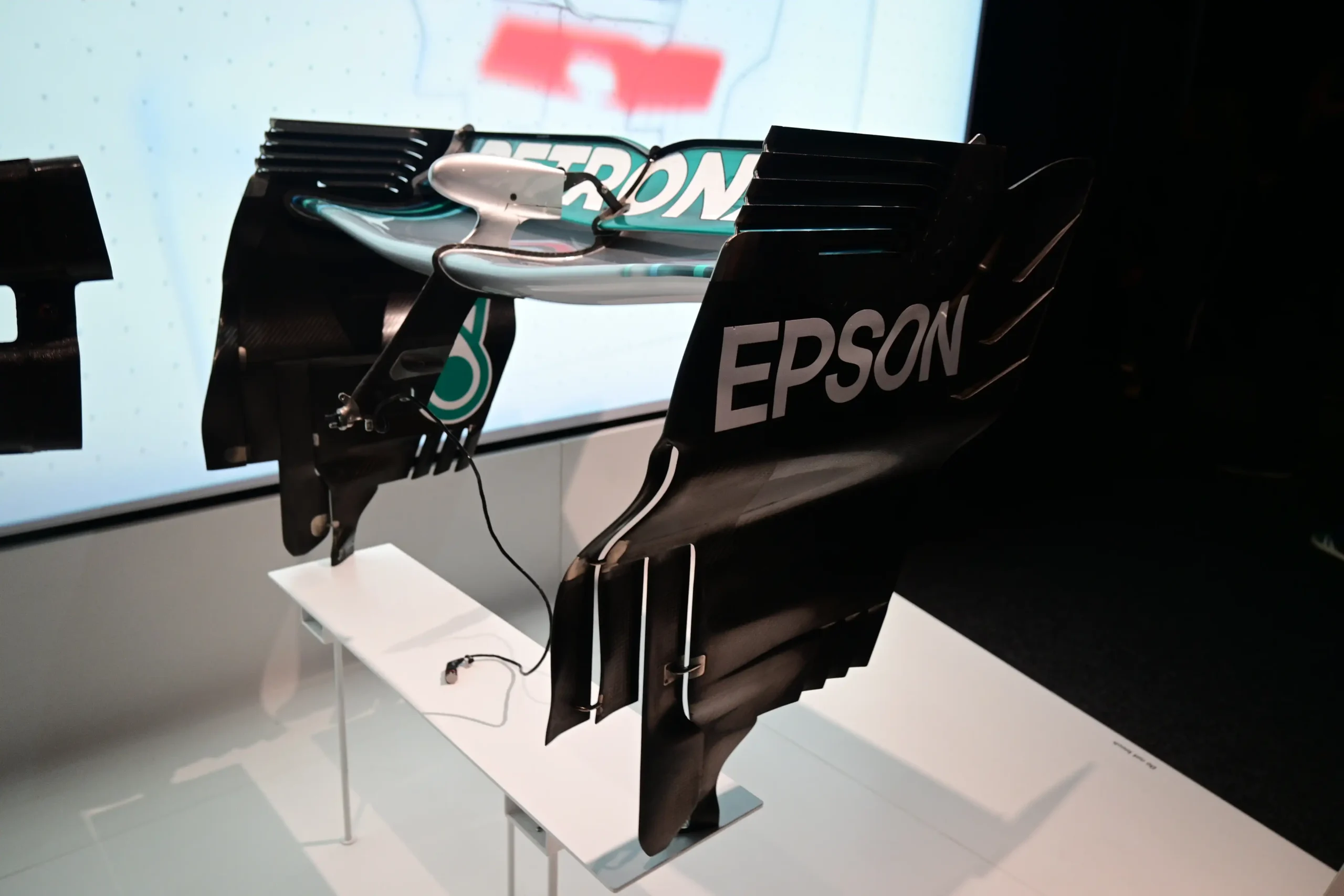
An actuator rotated the upper rear-wing flap around a fixed axis. In 2025, the system could have only two normal positions: fully closed and fully open. The deployed profile gap could reach 85 mm, and the transition between positions had to take less than 400 milliseconds.
The moving section was officially called DRS bodywork. It included the rear-wing flap and permitted connected pieces.
A driver command started the deployment. The FIA standard electronics then controlled the motion.
The 2025 rules closed the door on intermediate “mini-DRS” positions. Apart from a failure or transition, the wing had to be open or closed.
Furthermore, the legal transition had to finish in under 400 milliseconds. The change therefore occurred in less than half a second.
The deployed slot gap could reach 85 mm. By contrast, the closed geometry kept a much smaller regulated gap.
These dimensions are another key part of F1 DRS Explained. The device did not fold the whole wing flat.
Was DRS Hydraulic or Electric?
The precise actuator design varied. Teams used controlled mechanisms integrated with the car’s electronics and hydraulic systems.
The FIA focused on the resulting movement and legality. Driver input had to command the deployment through standard control electronics.
The mechanism also had to preserve a fixed rotation axis. Teams could not use DRS to reshape unrelated ducts or bodywork.
Why the FIA Tightened the Rules in 2025
The FIA restricted the wing to two positions for 2025. It also strengthened slot-gap and deflection checks.
The aim was to stop “mini-DRS” behavior. That term described rear-wing elements flexing at speed to create an extra low-drag effect without normal deployment.
Williams provided a late example of strict enforcement. Both cars were disqualified from 2025 Singapore qualifying after failing post-session DRS slot-gap checks.
The team said it had not sought an advantage. Nevertheless, the official measurement controlled the result.
F1 DRS Explained: What Was an F1 DRS Zone?
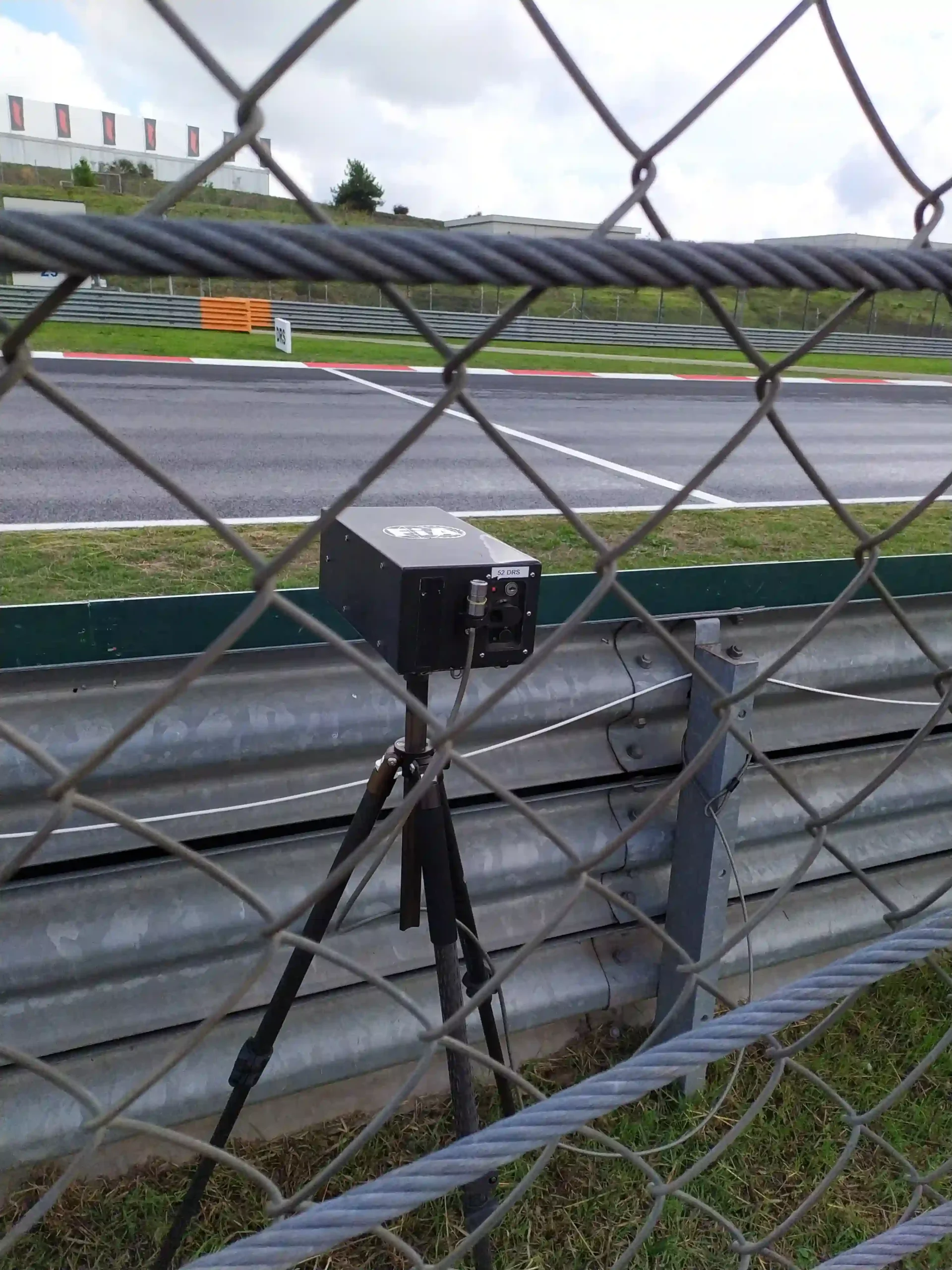
A DRS zone was a designated section where drivers could open the rear-wing flap. Each zone had an activation line, while a preceding detection point measured race eligibility. The FIA chose the locations, usually placing them on straights that ended in a realistic braking opportunity.
Drivers could not open DRS anywhere they wanted. The Race Director defined its permitted zones for each circuit.
Most zones began after a corner exit. They then continued toward a braking area where an overtake could be completed.
The activation line marked where the driver could open the wing. A separate detection point usually appeared earlier on the lap.
That separation mattered. Race eligibility was decided at detection, not at the moment of activation.
A driver could therefore fall slightly beyond one second after detection and still use DRS. Conversely, closing the gap after detection did not create eligibility for that zone.
This timing detail is one of the most important lessons in any F1 DRS Explained article.
Who Decided the Number of DRS Zones?
The FIA and Race Director set the zones through event instructions. Circuit layout, safety and expected overtaking difficulty shaped the decision.
Some venues used one zone. Others used two, three or even four during parts of the DRS era.
A long straight did not automatically guarantee a zone. The driver needed a safe approach and enough control before the next corner.
Moreover, the FIA could shorten, lengthen or remove a zone after reviewing speeds and racing quality.
Why Did Some Zones Share One Detection Point?
Back-to-back zones sometimes used one detection point. The same eligible driver could then use DRS on both straights.
Canada often used this arrangement. One detection point could authorize the run toward the final chicane and the following pit straight.
The format increased pressure on the defending driver. However, it could also allow the newly overtaken car to regain DRS on the next sequence.
That possibility encouraged drivers to think about the detection line rather than only the first braking zone.
Why Were DRS Zones Changed?
The system was tunable. A pass that looked impossible could prompt a longer zone for the next event.
On the other hand, easy drive-by passes could lead to a shorter zone. Safety concerns could remove one completely.
The 2018 British Grand Prix used an extra zone through the opening section. Crashes and concern around the fast first corners helped end that experiment.
Therefore, DRS zones were not permanent pieces of circuit infrastructure. They were sporting tools adjusted around the track.
F1 DRS Explained: How Did the One-Second DRS Rule Work?
Electronic timing measured the gap when cars crossed a designated detection point. If the following driver was less than one second behind another car, DRS became available in the next activation zone. The system judged the gap at detection, even if it changed before the straight.
Every F1 car carried an official timing transponder. Track loops recorded its passage with high precision.
The control system compared the following car with the car ahead. A gap below one second triggered eligibility.
The dashboard then indicated that DRS was available. The driver still needed to press the control inside the zone.
Therefore, the system did not automatically open the wing. It authorized the driver to do so.
The one-second figure was not a distance. At high speed, one second could represent dozens of yards.
Its real purpose was to identify a car close enough to have suffered from the leader’s turbulent wake.
Why Was the Threshold One Second?
The FIA needed a practical balance. A larger window could give DRS to cars that were not genuinely fighting.
A smaller window might fail to compensate for the time lost while following through corners.
One second became the standard race threshold. However, the sporting regulations allowed the FIA to adjust the proximity after consulting teams.
In practice, one second remained the familiar benchmark throughout the system’s final era.
Could the Leading Driver Use DRS?
The race leader could not activate DRS simply because it led the field. However, it could qualify when approaching a lapped car.
The rule referred to another car ahead, not only a rival on the same lap. Therefore, backmarker traffic could give the leader DRS.
A defending driver could also use DRS when following a third car. That created the conditions for a DRS train.
As a result, “only the attacking car gets DRS” was not always accurate.
Could Lapped Cars Use DRS?
Yes, provided they met the one-second requirement at detection. Sporting position did not remove eligibility.
This sometimes affected a lead battle. A lapped car could gain DRS behind a contender and remain close for longer.
Blue-flag obligations still applied where relevant. However, the DRS control system followed its own eligibility logic.
Key timing rule: The gap was measured at the detection point. The driver opened the wing later, after crossing the activation line.
When Could F1 Drivers Use DRS?
During practice and qualifying, drivers could use DRS in the designated zones without the race’s one-second requirement. During a Sprint or Grand Prix, the final rules required the driver to be within one second at detection. DRS was normally unavailable until one complete lap after the start or Safety Car period.
DRS rules changed between competitive sessions. Qualifying use focused on lap time, while race use focused on overtaking.
During practice, every driver could test the system in the official zones. Teams measured rear-wing efficiency and braking behavior.
Qualifying followed the same zone restriction. The one-second race requirement did not apply.
Before 2013, qualifying use was less restricted. Drivers could open the wing in more parts of the lap.
The FIA then limited practice and qualifying deployment to the race-style zones. Safety and setup balance influenced that change.
For readers comparing eras, this F1 DRS Explained rule is vital. A 2011 qualifying lap did not always use DRS like a 2025 lap.
| Session | One-Second Requirement? | Where Available? | Main Purpose |
|---|---|---|---|
| Free Practice | No | Designated DRS zones | Setup work, system checks and lap performance |
| Sprint Qualifying | No | Designated DRS zones | Reduce lap time on eligible straights |
| Qualifying | No | Designated DRS zones | Maximum single-lap performance |
| Sprint | Yes | Enabled zones after the opening restriction | Improve overtaking opportunities |
| Grand Prix | Yes | Enabled zones after the opening restriction | Improve overtaking opportunities |
Could Drivers Use DRS on the First Lap?
No. In 2025, drivers needed to complete one lap after the start before DRS could be enabled.
The same restriction applied after a Safety Car period. This had changed from the older two-lap delay for the 2024 season.
Race Control still decided when conditions were suitable. Therefore, completing one lap did not guarantee immediate activation.
Could DRS Be Used in Wet Weather?
The Race Director could disable DRS in poor visibility or unsafe conditions. Wet running often triggered that decision.
An open rear wing reduced rear downforce. Meanwhile, rain already reduced tire grip and increased instability.
Spray also limited visibility. Consequently, Race Control often waited until conditions improved.
DRS could return later during the same race. Teams watched the official message rather than assuming availability from tire choice alone.
What Happened Under Yellow Flags?
Race Control could disable DRS when yellow flags covered an activation zone. A driver should not receive a speed advantage near an incident.
The system remained disabled until the danger cleared. This protected marshals and slowed traffic through the affected area.
Therefore, a DRS message could change during a lap. Drivers relied on dashboard and radio confirmation.
How Did an F1 Driver Activate DRS?
The driver pressed a dedicated steering-wheel control after crossing the activation line. The car’s electronics then commanded the rear-wing actuator. Braking automatically disabled the system and returned the flap to its high-downforce position before the corner.
The driver first needed an availability signal. A dashboard light, tone or display message confirmed authorization.
After crossing the line, the driver pressed a button or paddle chosen by the team and driver. The control location varied between steering wheels.
The wing then opened within the permitted transition time. The driver kept full attention on the braking zone ahead.
The first brake application disabled DRS through the control electronics. That automatic closure was a core safety feature.
Drivers could also close the system early when they wanted a stable rear wing before braking. Teams practiced the timing in simulators and free practice.
Did DRS Open Automatically?
No. Eligibility did not equal deployment.
The FIA system armed the car, but the driver commanded the flap. Missing the activation cost straight-line speed.
However, the wing closed automatically when the driver braked. The driver did not need to hold the control throughout the zone.
Why Did Drivers Sometimes Close DRS Early?
Airflow needs time to reattach after the flap closes. A driver could prefer a settled rear axle before a difficult braking zone.
Crosswinds and bumps also influenced confidence. The fastest theoretical activation was not always the fastest complete corner approach.
Furthermore, a driver might lift before braking. Teams mapped the control logic around throttle and brake behavior.
This human factor belongs in F1 DRS Explained. The system was simple in concept but still required judgment.
Could a Driver Forget to Activate DRS?
Yes. Drivers managed gears, energy, brake balance and traffic at the same time.
A missed press could cost tenths on a long straight. During qualifying, that loss could decide advancement by one position.
Engineers could remind the driver by radio. However, the call often came too late once the car passed the most useful part of the zone.
How Much Faster Did DRS Make an F1 Car?
There was no universal DRS speed gain. The increase depended on rear-wing angle, straight length, altitude, wind, slipstream, engine power and battery deployment. A high-downforce wing often produced a larger drag reduction, while thin air or a short zone reduced the effect.
Fans often look for one number. Engineers could not provide a single answer for every car and circuit.
A Monaco rear wing carried much more angle than a Monza wing. Opening the Monaco-style flap removed more drag.
However, Monaco’s straight was short. The car had little time to convert reduced drag into speed.
Monza offered long full-throttle running but used a low-drag wing. Therefore, the proportional DRS effect could be smaller.
Altitude created another variable. Thin air in Mexico reduced both downforce and drag, which could weaken the DRS delta.
Wind changed the effective airspeed over the wing. A headwind usually increased aerodynamic loading and could amplify the difference.
Why Some Cars Had “Powerful DRS”
Teams designed rear wings as complete systems. The open and closed conditions had to work with the beam wing, floor and bodywork.
A strong DRS design shed a large amount of drag without compromising closed-wing performance. That balance was difficult.
The rear suspension and ride height also influenced airflow. Consequently, two cars with similar closed-wing speed could gain differently when DRS opened.
Commentators sometimes called this “DRS efficiency.” It was an aerodynamic characteristic, not extra horsepower.
Why Straight Length Mattered
Reduced drag improves acceleration progressively. The car needs time to build the speed difference.
A long straight therefore created a larger closing opportunity. Yet gear ratios and energy deployment could cap the final benefit.
The driver also needed a strong corner exit. A poor exit could waste the entire DRS advantage before the flap opened.
Did DRS Work in Corners?
The system could remain open through very gentle bends approved inside a zone. However, it was not designed for normal cornering.
Reduced rear downforce changed balance and grip. High lateral load with DRS open could cause instability.
The 2018 Silverstone experiment showed the danger of using a zone through a very fast opening section. Later events returned to safer deployment choices.
Factors That Increased DRS Effect
- High rear-wing angle
- Long activation zone
- Strong corner exit
- Helpful tow from the car ahead
- Available electrical deployment
Factors That Reduced DRS Effect
- Low-drag rear-wing setup
- Short straight
- High-altitude thin air
- Poor traction before activation
- Defender using full energy deployment
How Did DRS Change F1 Race Strategy?
DRS made detection lines, battery deployment and corner exits central to overtaking. Drivers sometimes delayed a pass to gain DRS on the next straight. Defenders used electrical energy to resist, while attackers planned the tow, flap opening and braking move as one sequence.
DRS did more than increase speed. It changed where drivers wanted to be at specific timing lines.
On circuits with consecutive zones, leading at the first detection point could be a disadvantage. The following driver might receive DRS twice.
Drivers therefore used tactical braking and positioning. A pass could be delayed until after the detection line.
The 2022 Bahrain battle between Charles Leclerc and Max Verstappen became a clear example. Track position and detection timing influenced repeated exchanges.
Defenders also managed battery energy. A driver could deploy heavily on the straight to reduce the closing speed.
However, that energy would not be available later. The contest became a balance between immediate defense and lap-wide efficiency.
Why Corner Exit Was Often More Important Than the Button
DRS could not repair a poor launch from the previous corner. The attacker needed traction and momentum before activation.
A defender who exited cleanly could stay far enough ahead despite the open wing behind. Therefore, racecraft still mattered.
The following driver also faced dirty air through the corner. That lost grip was the very problem DRS tried to compensate for.
Our guide to clean air and dirty air in F1 explains that trade-off.
How DRS Interacted With ERS
DRS reduced aerodynamic resistance. ERS supplied electrical power.
Attackers often used both together. The combined effect produced the largest closing speed.
Defenders could counter with battery deployment even without DRS. However, repeated defense could drain their available energy.
Read our F1 ERS guide for the energy system behind that tactical battle.
Could DRS Guarantee an Overtake?
No. It only created an opportunity.
The attacking car still needed enough speed to draw alongside. The driver then had to brake late and control the corner.
Car performance, tire grip and defensive positioning remained decisive. A weak DRS zone could produce no pass at all.
Consequently, the best F1 DRS Explained summary is “assistance,” not “automatic passing.”
What Was a DRS Train in Formula 1?
A DRS train formed when several cars ran within one second of the car ahead. Most drivers in the group received DRS, so the speed advantage was neutralized. The first car without DRS often controlled the train while the others struggled to create a large enough closing-speed difference.
DRS worked best when only the attacking car could open its wing. A train changed that advantage.
Imagine five cars separated by less than one second. Cars two through five could all qualify for DRS.
Each following driver reduced drag at roughly the same point. Therefore, the gaps often remained stable.
The front car in the train might be following another vehicle too. In that case, even the apparent defender had DRS.
That pattern became common at circuits where passing remained difficult. Drivers could stay close but lacked the final speed difference.
A proper F1 DRS Explained analysis must therefore include the system’s limits. More DRS availability did not always mean more overtaking.
How Could a Driver Escape a DRS Train?
The leading driver needed to build more than a one-second gap before the detection point. Fresh tires or clean air could help.
An attacker could also save battery energy for one concentrated move. The goal was to create a larger speed difference than the other DRS users.
Strategy offered another route. An undercut could move the driver into clear air after a pit stop.
However, rejoining another train could waste the new tires. Teams therefore studied the entire pit-exit group.
Our undercut and overcut guide explains how track position can break the pattern.
Why the First Car Often Controlled the Group
The first car did not need to be the fastest. It only needed enough acceleration to reach the braking zone ahead.
Cars behind lost front grip through corners. They then used DRS merely to recover the time already lost.
Consequently, the train could remain attached for many laps. Tire temperatures and battery charge then became critical.
F1 DRS Explained: What Happened if DRS Failed?
A closed DRS failure normally cost straight-line performance but allowed the car to continue. A flap stuck open was more serious because rear downforce remained reduced. The 2025 technical rules required the system to return to the normal high-incidence position when it failed.
DRS failures fell into two broad categories. The wing could refuse to open, or it could fail to close correctly.
A closed failure reduced lap time and overtaking ability. However, the car retained its normal rear downforce.
An open failure threatened stability. The driver needed the wing fully loaded before braking and cornering.
Therefore, the rules required a fail-safe design. Loss of actuation should return the flap to the closed position.
Mechanical damage could still defeat that intention. Race Control could require the driver to pit if the wing remained unsafe.
What Could Cause a DRS Failure?
- A damaged or overheated actuator.
- A hydraulic or electrical control problem.
- Rear-wing damage after contact.
- A sensor or FIA-authorization fault.
- Debris interfering with the flap mechanism.
- A structural problem around the hinge or endplate.
The team monitored the command and wing position through telemetry. Engineers could see whether the driver requested deployment.
However, the driver sometimes noticed the problem first. The expected acceleration or dashboard confirmation would be missing.
Could a Driver Use DRS After the Detection System Failed?
The 2025 sporting rules included a controlled override procedure. The team could ask the Race Director for permission.
If permission was granted, the team became responsible for ensuring its driver met the one-second requirement.
The override ended after the official system was repaired. Therefore, teams could not treat a timing fault as unrestricted DRS access.
This procedure shows how carefully the final regulations controlled eligibility.
Could Illegal DRS Use Cause Disqualification?
Yes. Technical non-compliance could remove a qualifying result or race classification.
Williams’ double disqualification from 2025 Singapore qualifying showed that slot-gap legality was enforced after the session.
Unauthorized race deployment could also create a sporting case. The FIA had electronic records of commands and activation zones.
Therefore, the driver could not quietly use DRS outside the system without detection.
Why Was DRS Introduced in Formula 1?
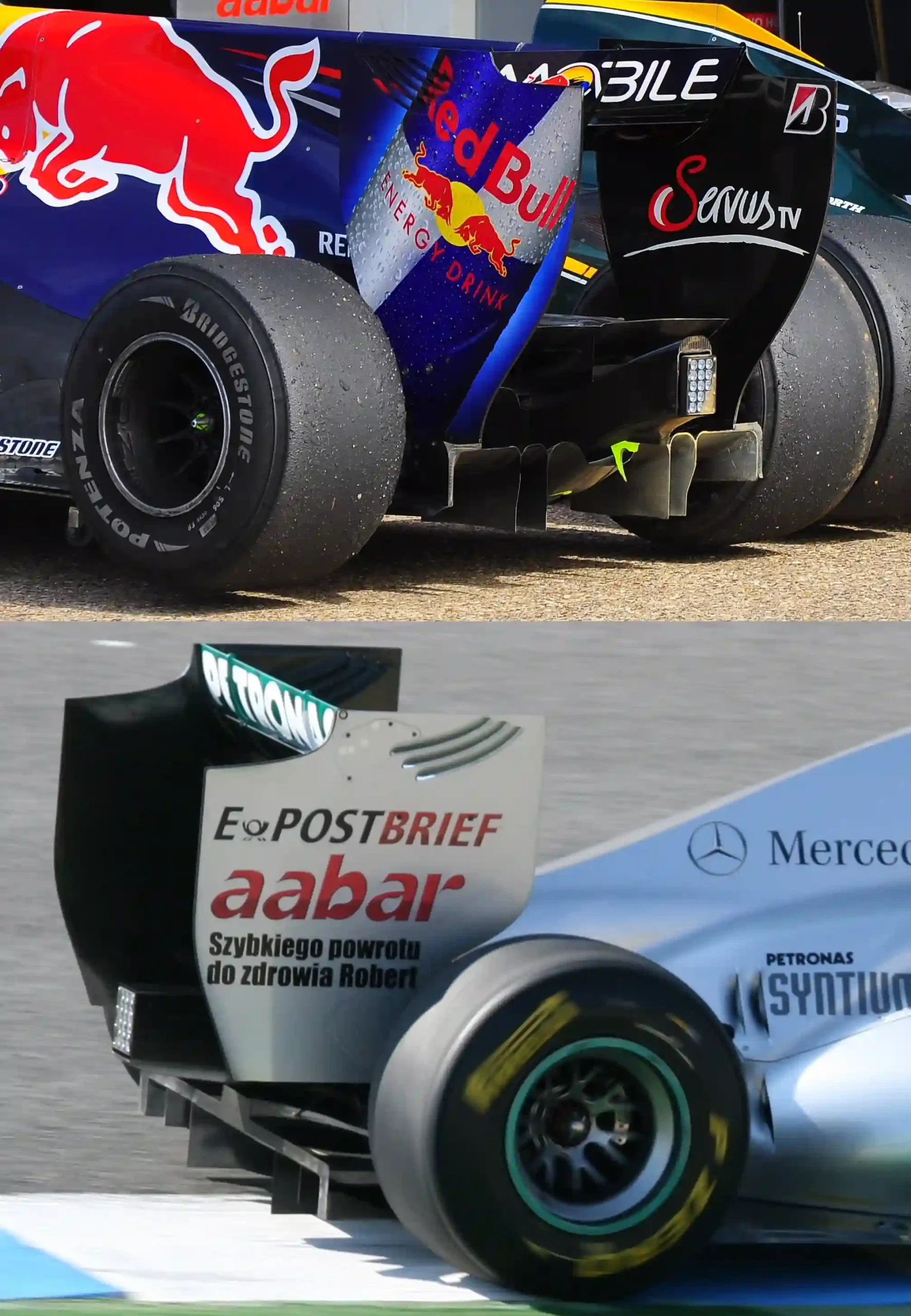
Formula 1 introduced DRS in 2011 to improve overtaking. Aerodynamic wake made it difficult for a following car to stay close through corners. The movable rear wing tried to repay some of that lost momentum by giving the chasing driver less drag on the following straight.
Modern F1 cars created strong turbulent wakes. The following driver lost front-wing performance and cornering grip.
That driver often reached the straight too far behind to attempt a pass. A slipstream alone was not always enough.
The problem became a major sporting concern by 2010. Formula 1 wanted more passing without removing advanced aerodynamics.
DRS arrived with the 2011 rules. It gave the following car a temporary straight-line advantage under controlled conditions.
The first season showed that the concept could create overtakes. However, zone length required adjustment from circuit to circuit.
That adaptability helped DRS survive for 15 seasons. This longevity is an essential point in F1 DRS Explained.
Did the 2010 Abu Dhabi Grand Prix Cause DRS?
The race became a powerful symbol of F1’s overtaking problem. Fernando Alonso spent much of the title decider behind Vitaly Petrov.
However, DRS was not invented overnight because of one result. Adjustable rear-wing discussions were already part of the sport’s technical planning.
Abu Dhabi made the issue visible to a huge audience. It also showed how track position could defeat a faster championship contender.
Therefore, the race is best viewed as a defining example rather than the sole cause.
How the Rules Changed After 2011
Early qualifying rules allowed broader DRS use. Drivers opened the wing wherever they considered it safe during practice and qualifying.
From 2013, use became restricted to the designated zones in every session. That reduced risk and limited extreme qualifying setups.
For 2024, race availability moved forward from two completed laps to one after the start or restart.
In 2025, technical rules strengthened the two-position definition and rear-wing deflection tests.
Traditional DRS then completed its final season. Formula 1 moved to active front-and-rear aerodynamics in 2026.
| Period | Major DRS Development | Why It Mattered |
|---|---|---|
| 2011 | DRS introduced to Formula 1 | Created a controlled straight-line advantage for following cars |
| 2011–2012 | Broader practice and qualifying deployment | Drivers used DRS beyond race zones where considered safe |
| 2013 | Practice and qualifying restricted to designated zones | Improved consistency and reduced risky open-wing cornering |
| 2022 | New ground-effect car era retained DRS | Following improved, but the overtaking aid remained necessary |
| 2024 | Race activation possible after one completed lap | Reduced the previous two-lap delay after starts and restarts |
| 2025 | Tighter two-position and deflection requirements | Targeted mini-DRS behavior and slot-gap movement |
| 2026 | Traditional DRS replaced | Active aero manages drag while Overtake Mode aids passing |
Why DRS Survived the 2022 Aerodynamic Reset
The 2022 cars aimed to reduce dirty air through ground-effect floors and simpler wake control.
Following initially improved. Nevertheless, Formula 1 retained DRS because the new cars still lost performance behind rivals.
As teams developed the regulations, wake control became less effective. Passing without an aid remained difficult at several circuits.
Therefore, DRS stayed until the larger 2026 technical overhaul created another solution.
Was DRS Artificial Overtaking?
Critics called DRS artificial because the following car received a regulated speed advantage. Supporters argued that it compensated for an artificial aerodynamic disadvantage created by dirty air. The quality of the result depended heavily on zone length: too long created drive-by passes, while too short achieved little.
Few F1 technologies divided fans as consistently. The moving flap was easy to understand and easy to blame.
Critics wanted drivers to create passes through braking skill, setup choices and tire management. A button-assisted speed difference appeared too simple.
Supporters replied that the following car had already paid a penalty in the corners. DRS returned some of the lost opportunity.
Both arguments contain truth. The system treated the symptom rather than removing turbulent air.
However, its effect depended on calibration. A well-sized zone created a braking contest rather than a guaranteed pass.
An oversized zone allowed the attacker to complete the move before braking. That was the “drive-by” outcome fans disliked.
Advantages of DRS
- Created overtaking chances at circuits with strong aerodynamic wake.
- Produced strategic battles around detection points.
- Allowed zone length to be adjusted for each venue.
- Encouraged drivers to remain within one second.
- Added a visible technical element that viewers could follow.
Disadvantages of DRS
- Could make some passes too easy.
- Sometimes produced long DRS trains instead of overtakes.
- Rewarded the following car with an asymmetric advantage.
- Created circuit-to-circuit inconsistency.
- Could hide deeper problems with dirty air and car size.
Why Zone Length Was So Important
The ideal zone placed the attacker beside the defender near the braking point. Both drivers then had to finish the pass.
A longer zone increased speed difference and reduced the defender’s chance. A shorter zone preserved defense but might prevent any move.
The correct balance also changed with car generation and rear-wing setup. Therefore, last year’s zone was not always right for the next season.
This balance explains why F1 DRS Explained cannot be reduced to “DRS made passing easy.” Sometimes it did, and sometimes it barely worked.
How Did DRS Affect Car Setup?
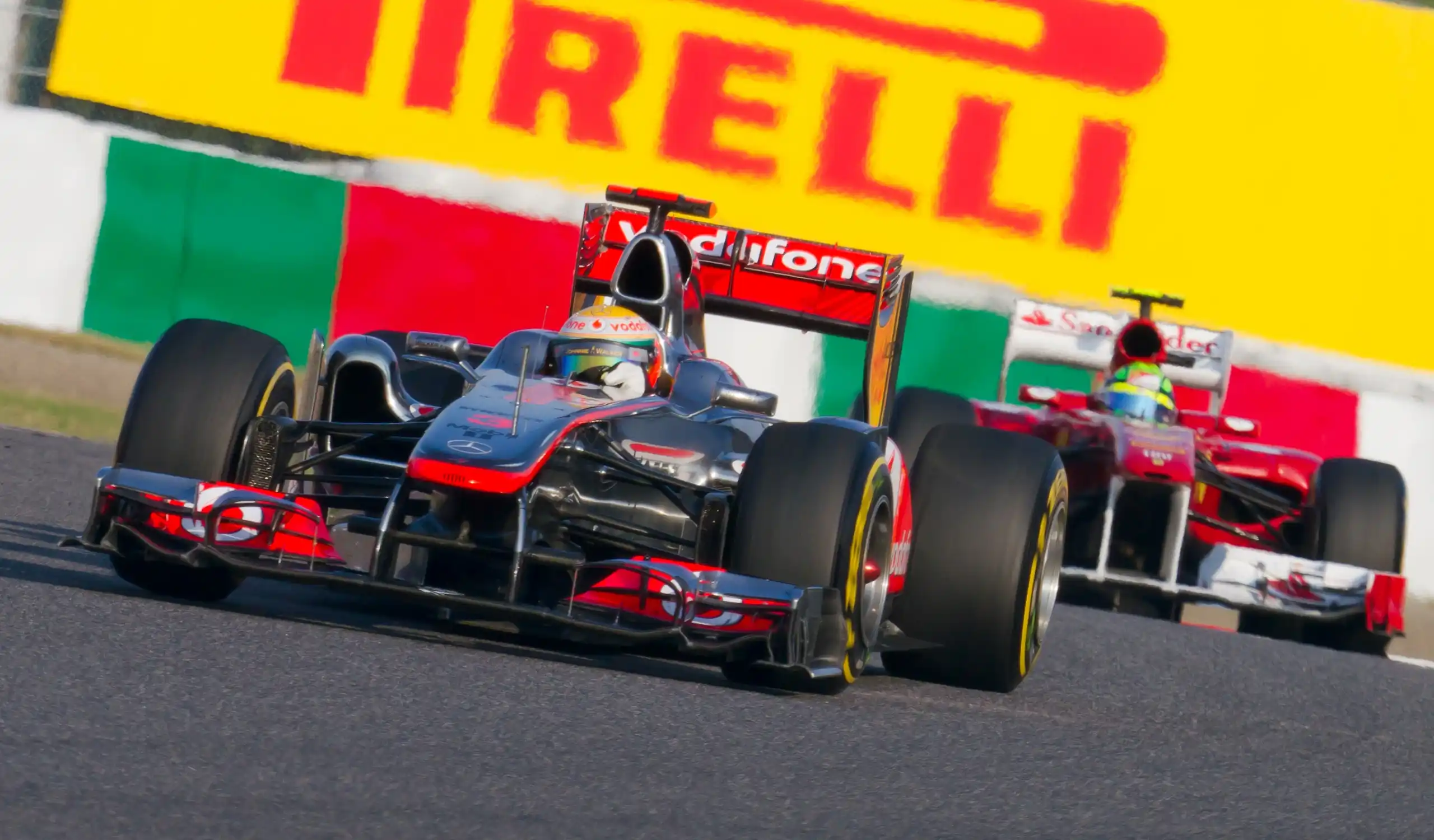
Teams balanced closed-wing cornering grip against open-wing straight speed. A larger rear wing improved downforce but created more drag when closed. Efficient DRS could remove part of that penalty on qualifying laps and during eligible race attacks, changing the best wing choice for each circuit.
Before DRS, rear-wing selection involved a familiar trade-off. More angle produced cornering grip but reduced straight-line speed.
DRS added another dimension. A high-downforce wing could shed some of its drag when open.
Therefore, teams compared at least three conditions: closed-wing qualifying balance, open-wing qualifying speed and closed-wing race performance in traffic.
A car spent most race laps without DRS unless it followed another car closely. Setup could not depend entirely on the open position.
Teams also considered defensive speed. A car leading a battle might have no DRS and still need to survive the straight.
High-Downforce vs. Low-Downforce Wings
High-downforce wings usually offered a larger absolute drag reduction when opened. However, they remained draggy when DRS was unavailable.
Low-downforce wings produced less corner grip but stronger base straight speed. Their DRS delta could be smaller.
The fastest choice depended on lap layout and traffic expectations. Monza and Monaco sat at opposite ends of the setup spectrum.
Why Qualifying and Race Needs Conflicted
Every qualifying lap used DRS in the zones. Therefore, open-wing efficiency contributed directly to grid position.
Race use was conditional. A driver in clean air could not rely on the same advantage.
Parc fermé rules limited major setup changes after qualifying. Teams needed one configuration that worked in both conditions.
Our guide to F1 qualifying explains why that compromise affected the starting grid.
DRS, Braking and the Final Overtaking Move
DRS created the approach. The driver still needed to complete the pass under braking.
The attacker often moved out of the tow near the end of the straight. That exposed the car to full air resistance again.
Meanwhile, the wing closed when the driver braked. Rear downforce returned as load transferred toward the front axle.
The driver then chose the inside or outside line. Tire grip, brake temperature and track width decided whether the move succeeded.
A late pass could force both cars away from the racing line. Therefore, an easy straight-line gain did not guarantee a clean exit.
Read our guide to out-braking in Formula 1 for the final phase.
F1 DRS Explained: What Replaced DRS in Formula 1 in 2026?
Formula 1 replaced traditional DRS with two connected ideas. Active aerodynamics move both front and rear wings between Corner Mode and Straight Mode for every driver. A separate Overtake Mode gives an eligible following driver extra electrical energy after a one-second detection check.
The 2026 rules ended the old system’s basic link between rear-wing movement and overtaking eligibility.
Every driver can now use the low-drag aerodynamic configuration in designated high-speed sections. The car changes both front and rear wing angles.
That system is active aero. It manages drag, downforce and energy efficiency across the lap.
Overtake Mode performs the old sporting role. It rewards a following car that is close enough at the official detection point.
However, it does so through electrical deployment rather than exclusive access to an opening rear wing.
This difference is the most important modern update in F1 DRS Explained. Straight Mode is not simply DRS with a new name.
What Is Straight Mode?
Straight Mode places the movable front and rear wing flaps into a lower-drag position. Every driver can use it in approved sections.
The car reduces resistance and maintains higher straight-line speed. Moreover, the lower drag helps the new power unit manage energy.
Unlike old DRS, Straight Mode does not require the driver to be within one second. The aerodynamic benefit is available across the field.
What Is Corner Mode?
Corner Mode is the normal high-downforce configuration. The wing elements return to angles that support grip and stability.
Both axles change together. That coordination helps preserve aerodynamic balance when the car moves between straights and corners.
Traditional DRS moved only the rear-wing flap. Therefore, its open position created a larger rear-balance change.
What Is Overtake Mode?
Overtake Mode is the one-second-based passing aid for 2026. A detection point identifies an eligible following car.
The driver then receives access on the following lap. Official Formula 1 guidance says the system allows an extra 0.5 megajoules of recharge and an enhanced electrical power profile.
That energy can sustain higher speed for longer. The driver also gains more freedom over where to deploy it than with one fixed DRS straight.
Therefore, Overtake Mode creates a strategic energy battle. It does not open a special rear-wing flap that the leader cannot use.
| System | Who Can Use It? | What Changes? | Main Purpose |
|---|---|---|---|
| Traditional DRS, 2011–2025 | Everyone in practice and qualifying zones; eligible following drivers in races | Upper rear-wing flap opens | Reduce drag and help overtaking |
| Straight Mode, 2026 onward | Every driver in designated sections | Front and rear wings move to low-drag settings | Reduce drag and manage energy use |
| Corner Mode, 2026 onward | Every driver | Front and rear wings return to high-downforce settings | Provide cornering grip and balance |
| Overtake Mode, 2026 onward | Driver within one second at detection | Electrical energy allowance and deployment profile change | Create a passing-speed advantage |
Why Did Formula 1 Separate Aero and Overtaking?
The 2026 power units rely much more heavily on electrical energy. Lower drag helps every car use that energy efficiently.
Making active aero available to everyone solves the efficiency problem. Meanwhile, Overtake Mode targets the sporting problem.
The split also creates more tactical freedom. Drivers can harvest, save and deploy energy across a wider part of the lap.
As a result, passing may occur away from the old fixed DRS braking zones.
Why Active Aero Was Not Used at Monaco in 2026
Formula 1 did not use active aero at the 2026 Monaco Grand Prix because the circuit lacked suitable straights and presented unique safety concerns. The cars remained in Corner Mode. Overtake Mode stayed available through its separate detection and activation procedure.
Monaco provided an early real-world example of the new systems being treated separately.
The street circuit offers few straight sections. Its walls, crests and high-speed bends also leave little margin for an aerodynamic transition problem.
Therefore, officials kept the wing elements in their high-downforce configuration for the event.
Overtake Mode remained active. Formula 1 placed its detection and activation lines late in the lap before the main straight.
This decision confirmed that active aero is not the overtaking entitlement. It can be withdrawn while the electrical passing aid remains.
For a current reader, this is why F1 DRS Explained must cover the 2026 rules rather than ending in 2025.
Could Traditional DRS Have Worked at Monaco?
Monaco used one traditional DRS zone for many years. The flap opened on the short main straight.
However, the zone rarely created easy passes. The braking area into Sainte Devote remained narrow and difficult.
The 2026 concern involved full active aero on both wings, not merely the history of rear-wing DRS at the venue.
DRS vs. Active Aero: The Key Technical Difference
Traditional DRS changed one rear-wing element. Active aero changes selected elements at both ends of the car.
That front-and-rear movement matters for balance. Reducing downforce at both axles is more controlled than unloading only the rear.
The 2026 system also serves energy efficiency on every lap. Old DRS mainly served lap time and overtaking in fixed zones.
Therefore, active aero is a chassis-management tool. Overtake Mode is the closer sporting replacement for DRS.
Traditional DRS
- Moved the upper rear-wing flap
- Race access depended on a one-second check
- Worked only inside DRS zones
- Reduced rear downforce and drag
- Closed automatically under braking
2026 System
- Moves front and rear wing elements
- Straight Mode is available to every driver
- Overtake eligibility remains one-second based
- Passing help comes through electrical energy
- Drivers can use energy more strategically
Common F1 DRS Misunderstandings
“DRS Added More Engine Power”
No. It reduced aerodynamic resistance. ERS or later Overtake Mode changed electrical deployment.
“The Wing Opened Automatically”
No. The control system authorized race use, but the driver commanded deployment.
“Only the Car Fighting for Position Could Use DRS”
No. Lapped cars and leaders approaching traffic could qualify under the same one-second rule.
“DRS Was Available Everywhere in Qualifying”
Only in the early seasons. From 2013, qualifying use was limited to designated zones.
“DRS Always Created an Overtake”
No. A short zone, poor exit or DRS train could neutralize the advantage.
“Active Aero Is Just the New Name for DRS”
No. Active aero is available to every driver. Overtake Mode carries the one-second passing condition.
“Formula 1 Still Uses Traditional DRS in 2026”
No. The 2011–2025 rear-wing system has been replaced under the new regulations.
Why DRS Still Matters to Understanding Modern F1
Traditional DRS is now history, but its influence remains visible. Formula 1 kept the one-second detection concept for Overtake Mode.
The sport also retained movable aerodynamics. However, it expanded the idea to both wings and every driver.
DRS taught officials how zone length changes racing. It also showed that passing aids can create strategy and controversy together.
Engineers learned to design rear wings for two aerodynamic states. That experience helped prepare teams for full active aero.
Meanwhile, fans learned to watch detection lines, battery deployment and closing speed. Those skills remain useful in 2026.
Therefore, F1 DRS Explained is not merely a guide to an obsolete button. It explains the bridge between fixed aerodynamics and the active systems used today.
F1 DRS Explained FAQs
What is DRS in Formula 1?
DRS was a movable rear-wing system used from 2011 through 2025. It opened the upper flap to reduce drag and increase straight-line speed.
How did the one-second DRS rule work?
Timing loops measured the gap at a detection point. A driver less than one second behind another car could use DRS in the following activation zone.
Did DRS add horsepower to an F1 car?
No. DRS reduced aerodynamic drag. The car’s engine and hybrid system supplied the power that accelerated it.
What replaced DRS in Formula 1 in 2026?
Active front-and-rear aerodynamics provide Straight and Corner modes. A separate one-second-based Overtake Mode supplies extra electrical energy for passing.
Conclusion: How DRS Changed Formula 1
F1 DRS Explained begins with one simple idea. Opening a rear-wing flap reduced drag and increased straight-line speed.
However, the system became much more than a moving part. Detection points, activation lines and the one-second rule shaped racecraft.
Drivers planned passes around corner exits and battery deployment. Defenders searched for their own DRS or spent energy to resist.
The technical details mattered too. The final system used two positions, an 85 mm maximum gap and a transition below 400 milliseconds.
Race Control could disable DRS for rain, yellow flags or poor visibility. Braking automatically returned the wing to its high-downforce state.
DRS was never a guaranteed pass. Short zones, poor exits and DRS trains often neutralized the benefit.
Nevertheless, it changed Formula 1 from 2011 through 2025. It created overtakes, tactical detection-line battles and years of debate.
The 2026 rules separated its two functions. Active aero now manages drag for every car, while Overtake Mode provides the close-following advantage.
Monaco’s 2026 exception showed that the systems are independent. Active aero was withheld, but Overtake Mode remained.
Traditional DRS has gone. Its central question remains: how should Formula 1 help a faster following car turn pace into a genuine passing chance?
Sources
The technical and sporting details in this article were checked against FIA regulations and official Formula 1 reporting available on July 20, 2026.