What Is Endplate In F1? Formula 1 Wing Endplate Explained
What is endplate in F1? An F1 endplate is a vertical aerodynamic panel on or near the outside edge of a front or rear wing. It helps control airflow around the wing, reduce unwanted drag, manage vortices, and improve the car’s downforce and stability.
Endplates look like simple side panels. However, in Formula 1 aerodynamics, they help decide how cleanly air moves around the wing, tyres, floor, and rear of the car.

What is endplate in F1 is a useful question because endplates are small parts with a big aerodynamic job. They sit at the wing edges, where airflow gets messy fast.
An endplate is not just a cover or sponsor board. It guides air, supports wing efficiency, and helps teams control pressure differences around the car.
The topic links directly with downforce, F1 diffusers, DRS in F1, and overall car handling.
Formula 1’s own glossary defines endplates as vertical bodywork pieces on or near the outside edges of front and rear wings. That simple definition hides a lot of engineering work.
What Is An Endplate In Formula 1?
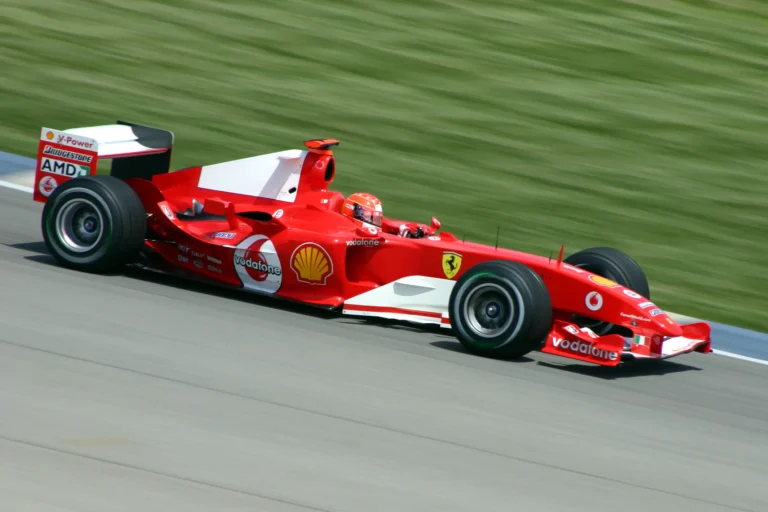
An endplate in Formula 1 is a vertical aerodynamic surface attached to the outer part of a wing. You see it most clearly on front wings and rear wings.
Its basic job is to control how air behaves at the wing tips. Without that control, high-pressure and low-pressure airflow can spill around the edge and create strong wingtip vortices.
Those vortices are not always bad. Teams may use them deliberately. However, uncontrolled airflow can increase drag, hurt balance, and disturb the wake behind the car.
Race analyst view: An endplate is not a passive plate. It is a traffic controller for air at one of the most sensitive areas of an F1 wing.
What Does An F1 Endplate Do?
An F1 endplate helps the wing work more efficiently. It reduces unwanted airflow spilling from one side of the wing to the other.
That matters because wings produce downforce through pressure difference. If air leaks around the wing edge too aggressively, the wing becomes less efficient.
Endplates can also shape vortices. A controlled vortex can help seal airflow, guide air around the tyre, or feed cleaner flow toward the floor and diffuser.
That is why endplate design connects with grip, clean air, Coanda effect, and F1 bodywork.
How Does A Front Wing Endplate Work?
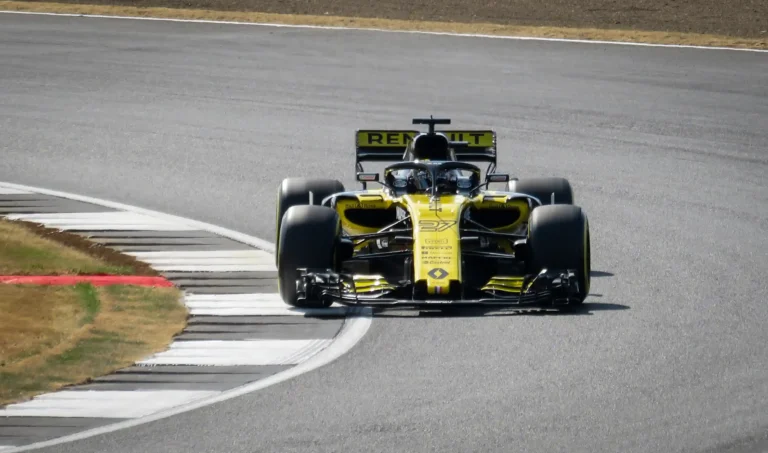
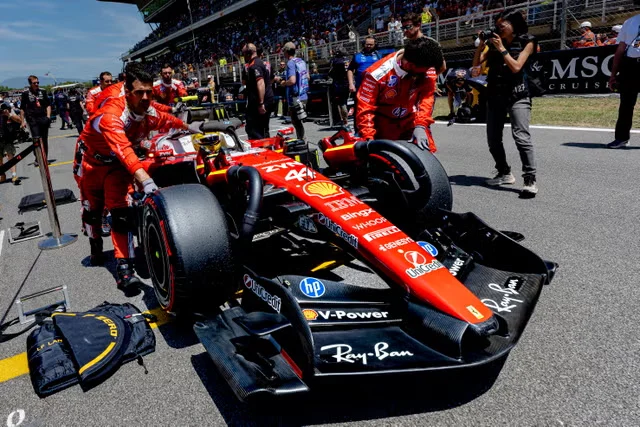
A front wing endplate works in dirty territory. It sits close to the front tyre, which creates powerful turbulence.
Therefore, front wing endplates help manage airflow around the tyre and toward the rest of the car. That first airflow decision affects the floor, sidepods, diffuser, and rear wing.
Older F1 cars often used complex front endplates, slots, and turning vanes. Modern regulations made the shapes cleaner. However, teams still search for tiny legal gains.
In 2022, the front wing philosophy changed. The outer endplate area became smoother and more blended, partly to reduce harmful wake and help cars follow more closely.
| Endplate Area | Main Job | Performance Effect |
|---|---|---|
| Front wing endplate | Controls air near front tyre | Improves front-end stability and flow direction |
| Rear wing endplate | Controls wing-tip flow | Improves rear wing efficiency and drag balance |
| Slots or shaping | Manages pressure leakage | Can reduce induced drag or shape vortices |
| Damaged endplate | Disturbs planned airflow | Can reduce grip and increase tyre wear |
How Does A Rear Wing Endplate Work?
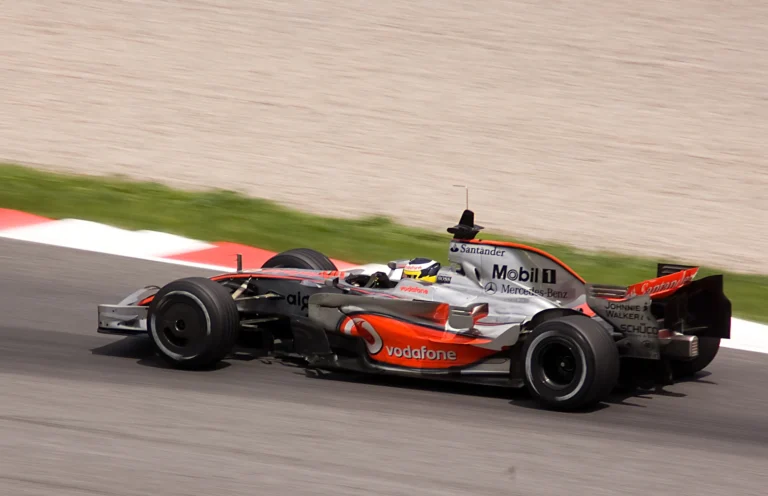
A rear wing endplate works around the car’s final major downforce device. It helps the rear wing maintain pressure difference across its span.
Rear endplates can reduce induced drag by controlling the wingtip vortex. They also help manage how the rear wing, beam wing, diffuser, and DRS area interact.
Before recent rule changes, rear wing endplates often carried slots, louvres, and cut-outs. These features bled pressure and shaped airflow. However, the newer rule sets reduced some of that complexity.
This is why rear endplates are linked with slipstreaming, bottoming out, bargeboards, and clever F1 systems.

How Have F1 Endplates Changed Under Modern Regulations?
Modern Formula 1 regulations limit what teams can do with endplates. The FIA defines front wing and rear wing endplate bodywork in specific regulated volumes.
The 2026 technical regulations define the front wing endplate as a combination of the endplate body, footplates, and endplate fence. They also define rear wing endplate bodywork as part of the rear wing assembly.
Meanwhile, Formula 1 says 2026 wings became simpler and introduced active aero. The front and rear wings can adjust their angles in specific modes, while endplate geometry remains tightly controlled.
So, teams cannot simply add any fin they like. They must work inside FIA boxes, radius rules, visibility rules, and bodywork definitions.
What Materials Are F1 Endplates Made From?
F1 endplates are normally made from carbon fibre composite. That gives teams a light, stiff, and shape-accurate part.
Weight matters. Stiffness matters too. An endplate must hold its shape under heavy aerodynamic load, vibration, kerb strikes, and occasional contact.
However, teams also design endplates to fail safely. Sharp or loose carbon fibre can become dangerous, so Race Control may require a damaged car to pit.
What Happens If An F1 Endplate Is Damaged?
A damaged endplate can ruin balance. The driver may feel less front grip, less rear stability, or more drag on the straights.
Small damage is sometimes manageable. However, a broken endplate can create loose carbon fibre, puncture risk, and unstable airflow. Consequently, the team may call the driver in for a new wing.
Front wing endplate damage is common after first-lap contact. Rear wing endplate damage is less common, but it can be serious because it affects high-speed stability and DRS behaviour.
This connects with penalties, F1 flags, pit stops, and flat spots.
Final Verdict
An endplate in F1 is a vertical aerodynamic part on or near the outer edge of a front or rear wing. It controls wing-edge airflow and helps the wing work efficiently.
Front endplates manage flow near the front tyres and floor. Rear endplates help the rear wing, DRS area, and diffuser wake behave as intended.
For beginners, the answer is simple. An F1 endplate is a wing side panel. For serious fans, it is a regulated aerodynamic tool that shapes downforce, drag, wake, and car balance.
FAQs About Endplate In F1
What is an endplate in F1?
An endplate is a vertical aerodynamic part on or near the outside edge of a front or rear wing.
What does an F1 endplate do?
It controls airflow around the wing edge, manages vortices, improves efficiency, and supports downforce balance.
Do front and rear wing endplates work differently?
Yes. Front endplates manage airflow near the front tyre. Rear endplates manage rear wing efficiency and wake behaviour.
Are F1 endplates designed to reduce drag?
Yes, partly. They can reduce unwanted induced drag by controlling wingtip airflow and pressure leakage.
What happens if an F1 endplate is damaged?
The car may lose downforce, gain drag, suffer balance problems, or need a pit stop for a replacement wing.
Can teams modify F1 endplates during the season?
Yes, teams can introduce new legal designs during the season, but every change must comply with FIA technical regulations.