F1 Safety Car and Virtual Safety Car Explained: Rules, Strategy & Race Impact
How Race Control neutralizes a Grand Prix, why a VSC preserves gaps, how a full Safety Car resets them, and where strategy can win or lose the race.
A full Safety Car enters the circuit, leads the field and bunches the cars into one queue. A Virtual Safety Car stays virtual. Every driver follows FIA minimum sector times, so speeds fall immediately while the existing gaps remain broadly similar. Overtaking is tightly restricted under both systems.
A yellow message appears on every steering wheel. Within seconds, the entire race changes.
Drivers reduce speed. Strategists recalculate pit windows. Mechanics prepare tires while Race Control studies the incident.
However, not every neutralization works the same way. A full Safety Car physically collects the field.
A Virtual Safety Car, or VSC, controls every driver through electronic minimum times. Therefore, it slows the race without creating one packed queue.
The strategic difference is enormous. A 20-second lead can disappear behind the Safety Car.
Under a VSC, that lead usually remains close to 20 seconds. Yet the timing of a pit stop can still transform the order.
The latest FIA rules also contain precise details. Cars must stay above minimum times in every marshalling sector.
Behind the physical Safety Car, the normal maximum gap is 10 car lengths. Race Control can raise it to 20 in poor visibility.
This F1 Safety Car Explained guide covers those rules, the VSC delta, pit strategy, lapped cars, restarts and recent 2026 examples.
F1 Safety Car Explained: What Is a Safety Car in Formula 1?
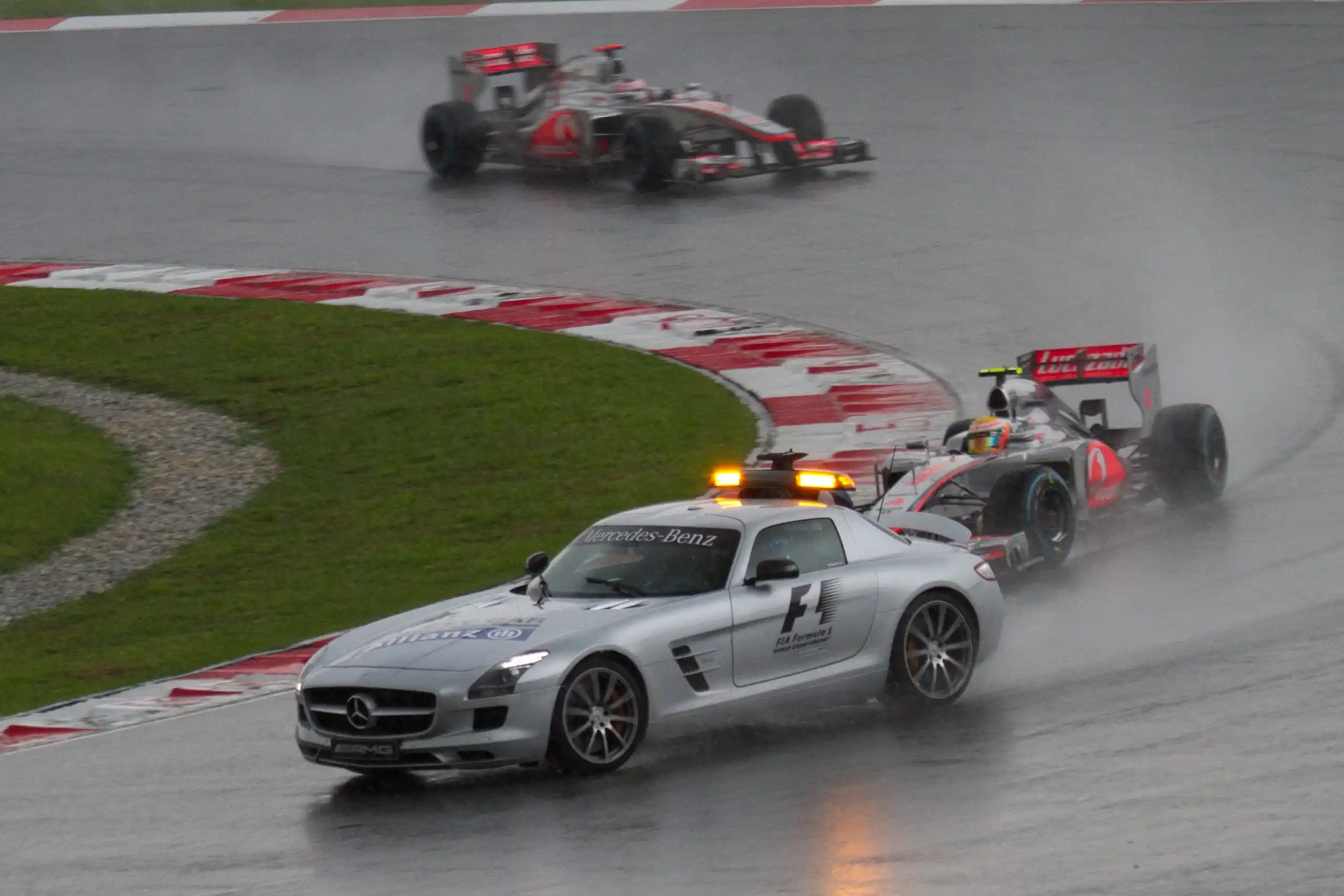
The Formula 1 Safety Car is a high-performance road car that enters the circuit when people face immediate physical danger, but conditions do not require a red flag. It slows and gathers the F1 field while marshals recover cars, clear debris or repair barriers.
The Safety Car creates a moving protected zone. Every racing car reduces speed and forms a queue behind it.
That queue gives marshals longer, more predictable gaps in traffic. Consequently, recovery work becomes safer.
The Race Director controls deployment. When the order is given, teams receive a “SAFETY CAR DEPLOYED” message.
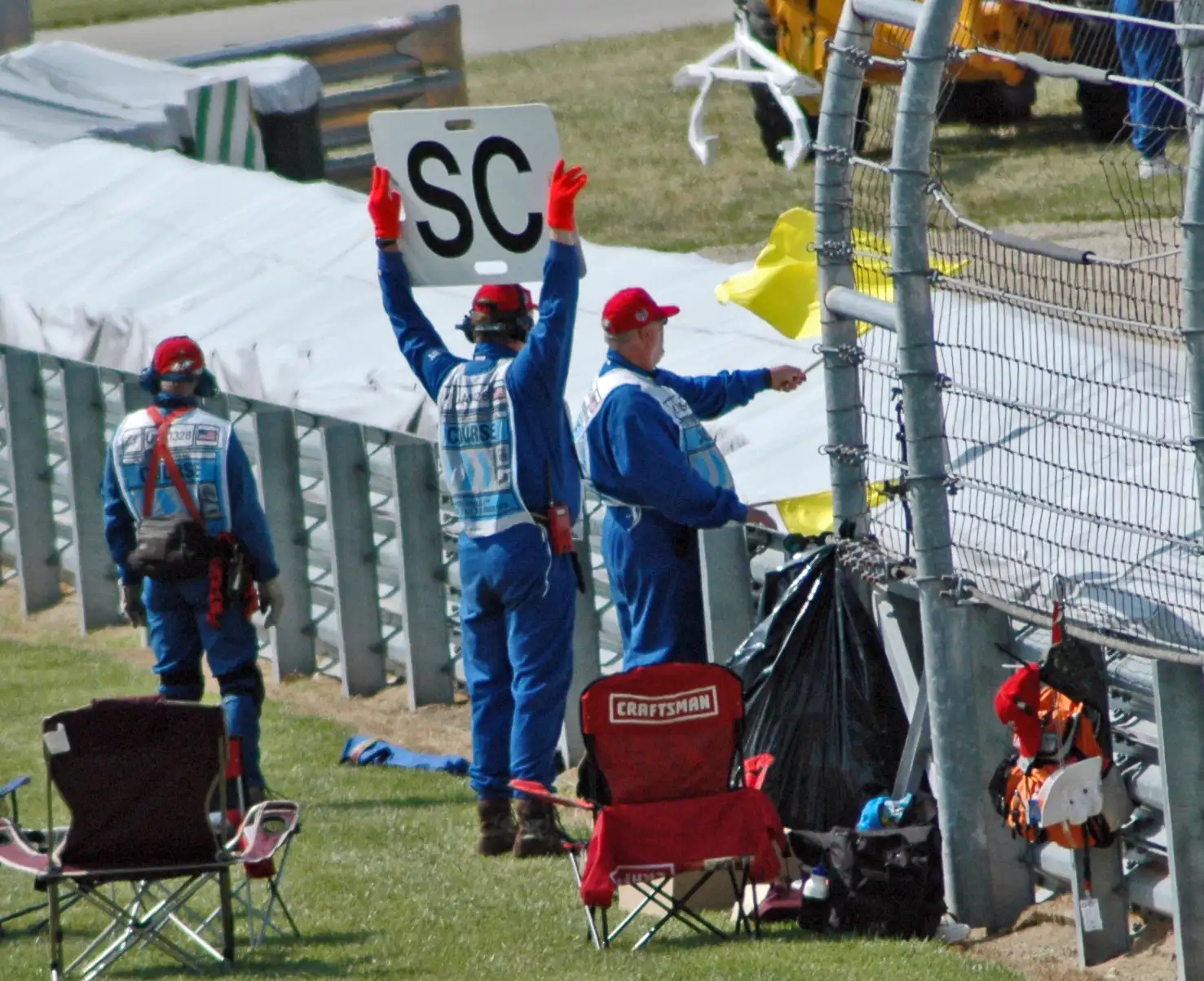
FIA light panels show “SC.” Marshal posts display waved yellow flags and Safety Car boards.
The official car then joins the circuit with orange lights illuminated. It can enter regardless of the leader’s location.
Early in the procedure, each F1 driver must also obey electronic minimum times. This prevents racing back to the queue.
Once the field catches the Safety Car, cars normally remain no more than 10 car lengths apart.
In poor visibility, the Race Director may increase the permitted gap to 20 car lengths.
Why Does Formula 1 Use a Physical Safety Car?
A serious incident may require more than reduced speed. Marshals might need a crane, recovery truck or barrier team on the circuit.
A full Safety Car gathers the field into one known location. Therefore, workers receive a long traffic-free window after the queue passes.
Race Control can also direct the entire field through the pit lane. This may avoid debris or damaged track sections.
The system keeps the race moving. A red flag would stop it completely.
Does the Safety Car Erase the Leader’s Advantage?
Usually, yes. The leader and every remaining car join one queue.
A 20-second lead can shrink to a few car lengths. Therefore, a late Safety Car can reopen a race that appeared settled.
Track position remains unchanged unless drivers pit or receive instructions. However, the time gaps largely disappear.
This compression creates the dramatic restart battles associated with a full Safety Car.
Who Controls the F1 Safety Car?
The Race Director decides when to deploy and withdraw it. An FIA-appointed professional driver operates the car.
Race Control communicates directly with the Safety Car crew. The driver follows instructions on pace, field order and track conditions.
The car must run fast enough to protect F1 tire and brake temperatures. Yet it must leave enough safety margin near the incident.
Our guide to what the FIA does explains the governing structure behind Race Control.
F1 Safety Car Explained: What Is a Virtual Safety Car in F1?
A Virtual Safety Car is an electronic race-neutralization system. No physical car enters the track. Instead, every F1 driver must remain slower than FIA minimum times in each marshalling sector. The VSC reduces speed quickly while preserving the field’s approximate gaps.
VSC stands for Virtual Safety Car. The system became part of Formula 1 in 2015.
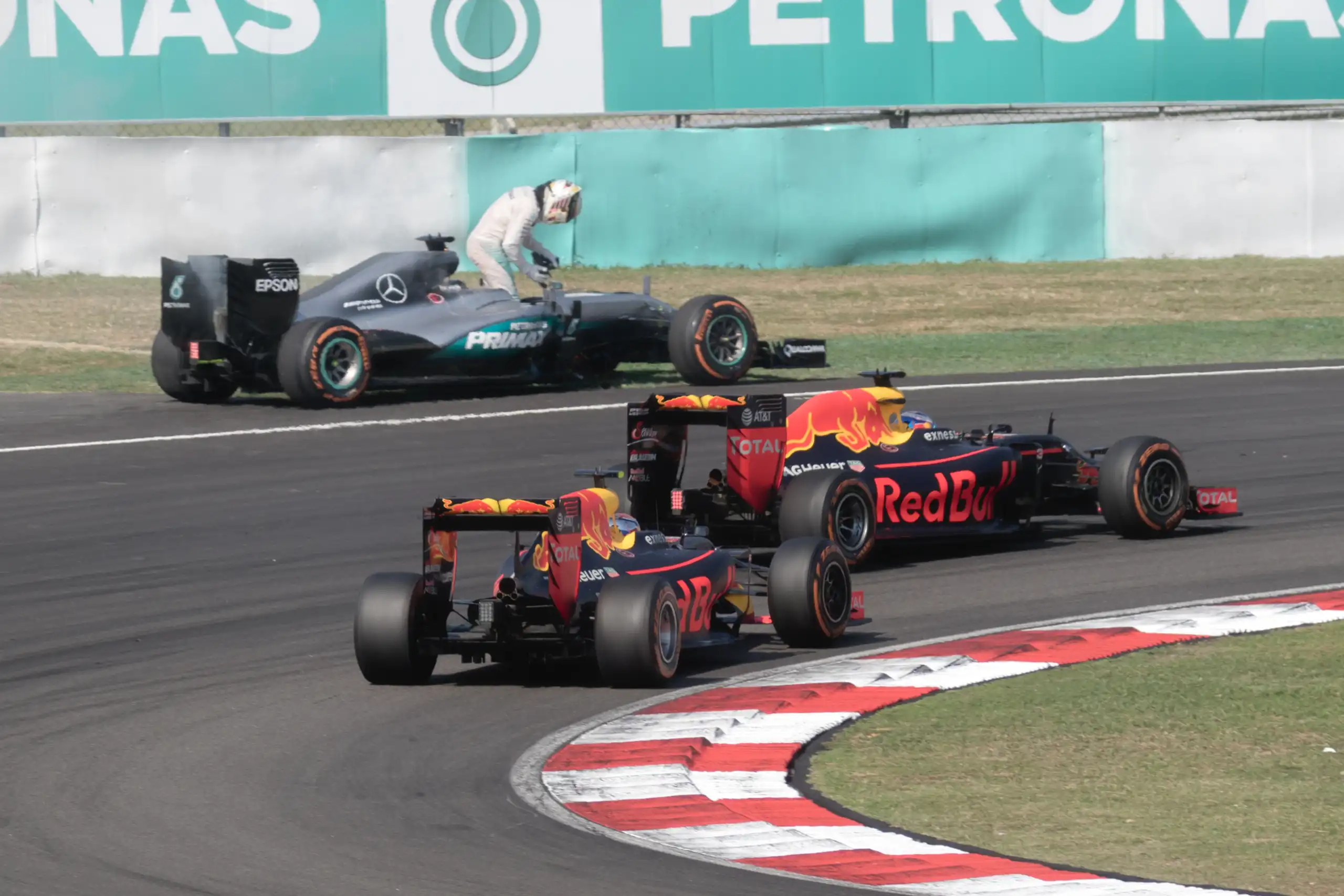
The FIA uses it when double yellow flags are needed and people may be in danger. However, the incident does not justify a full Safety Car.
Examples include a stopped car beside the track, small debris or a recovery that needs a short protected window.
Every FIA light panel displays “VSC.” Teams also receive the official deployment message.
Drivers reduce speed immediately. They do not wait to catch a physical vehicle.
Consequently, the VSC can neutralize every part of the circuit more quickly than a full Safety Car.
Does a VSC Bunch Up the Field?
No. Every car follows the same proportional timing control around the lap.
A driver who led by 12 seconds should retain roughly that margin. Small variations can occur during deployment and withdrawal.
Therefore, a VSC protects existing race order more closely. It does not create a packed restart queue.
Why Use a VSC Instead of Double Yellow Flags?
Double yellows apply to a local hazard. Drivers must slow substantially and be prepared to stop.
However, speed outside that local zone may remain high. A VSC controls the entire circuit through electronic minimum times.
That wider control can protect marshals without deploying the physical Safety Car. It also avoids bunching the field unnecessarily.
Read our guide to how racing flags work for the local warning system.
Can a VSC Become a Full Safety Car?
Yes. Race Control may discover that the incident requires more protection than first expected.
A recovery vehicle may need to enter the track. Debris may also be spread farther than initial camera angles showed.
In that case, the Race Director can replace the VSC with a full Safety Car or suspend the race.
F1 Safety Car Explained: Safety Car vs Virtual Safety Car: What Is the Difference?
The Safety Car physically leads and bunches the field, largely erasing time gaps. A VSC controls drivers through minimum sector times and preserves those gaps. Both restrict overtaking and reduce speed, but they produce very different restart and strategy outcomes.
| Feature | Full Safety Car | Virtual Safety Car |
|---|---|---|
| Physical car on track | Yes | No |
| Field bunches together | Yes, into one queue | No, gaps remain broadly similar |
| Speed control | Electronic delta initially, then Safety Car pace | FIA minimum time in every marshalling sector |
| Normal gap rule | Maximum 10 car lengths once queued | No physical queue |
| Overtaking | Prohibited, with specific exceptions | Prohibited, with specific exceptions |
| Restart | Leader controls pace before the control line | Green appears 10–15 seconds after “VSC ENDING” |
| Typical use | Immediate physical danger requiring a protected field gap | Double-yellow-level danger not requiring a full Safety Car |
| Strategy effect | Large gap compression and cheap pit stops | Cheaper pit stops but no full field reset |
The full Safety Car is more disruptive. It changes the geometry of the race by placing every car together.
The VSC is more surgical. It lowers speed while trying to preserve competitive gaps.
Neither option is automatically fairer. The timing can reward drivers who are near pit entry or have not yet stopped.
Therefore, strategy teams react before the field has fully understood why the neutralization appeared.
A Safety Car resets time gaps. A VSC discounts time loss. Those two effects sound similar on television, but they create completely different strategic races.
F1 Safety Car Explained: When Does Formula 1 Use a Safety Car or VSC?
The Formula 1 Race Director chooses the response after reviewing the danger, track position, recovery needs and visibility. A VSC suits an incident that needs circuit-wide speed control. A full Safety Car is used when marshals require a larger protected gap in traffic.
Race Control receives information from cameras, marshals, medical teams and car telemetry. The decision can change as the incident develops.
A stopped car near a barrier may initially trigger double yellow flags. However, a VSC can follow if marshals need to enter an exposed area.
If a crane or recovery truck must cross the circuit, the Race Director may deploy the full Safety Car. A damaged barrier can require an even stronger response.
Therefore, the first message is not always the final one. A VSC can become a Safety Car, while a Safety Car period can lead to a red flag.
When Is a Full Safety Car Deployed?
The 2026 sporting rules describe immediate physical danger on or near the track. The situation must be serious, but not severe enough to suspend the race.
Common examples include a stranded car on the racing line, widespread debris, barrier repairs or a recovery vehicle operating near traffic.
Heavy rain can also trigger the Safety Car. Poor visibility may make normal racing unsafe even when no car has crashed.
In addition, a wet Grand Prix can begin behind the Safety Car. Race Control then evaluates spray and grip before allowing a rolling start.
When Is a Virtual Safety Car Deployed?
The VSC is designed for a lower level of intervention. Double waved yellow flags must be appropriate, and people may be in danger.
However, Race Control must judge that a full Safety Car is unnecessary. The incident should be manageable while every driver follows the electronic timing control.
This makes the VSC useful for short recoveries. It also avoids wiping out the leader’s advantage when the field does not need to bunch.
Why Not Use a VSC for Every Incident?
A VSC creates smaller traffic gaps than a physical Safety Car. Cars remain spread around the circuit.
That pattern may not give marshals enough uninterrupted time to work. A full queue creates one long empty section after the final F1 car passes.
Moreover, Race Control may need to guide the field through the pit lane or around a damaged part of the track. The Safety Car can lead that route directly.
Why Not Use a Red Flag Immediately?
A red flag stops the session and sends cars to the pit lane. It is appropriate when the circuit cannot remain safely active.
Examples include major barrier damage, a blocked track, severe weather or a medical response that needs complete access.
However, stopping a race changes tire procedures, restart preparations and the competition itself. Race Control therefore uses the least disruptive safe option.
Our guide to what causes motorsport crashes explains why apparently similar incidents can require different responses.
F1 Safety Car Explained: What Is VSC Delta Time in Formula 1?
The FIA electronic control unit sets a minimum time for every marshalling sector and both Safety Car lines. Drivers must not complete those sections faster than the reference. Their steering-wheel display shows whether they have time in hand or must slow further.
The VSC is not one universal speed limit. A car does not simply cruise at 80 mph around the whole circuit.
Instead, the lap is divided into small marshalling sectors. The FIA assigns a minimum time to each section.
Drivers must stay slower than that reference at least once in every sector. They must also meet the required time at both Safety Car lines.
This system accounts for corners, straights and braking zones. Therefore, the car can travel faster on a straight than through a hairpin while remaining compliant.
What Does a Positive VSC Delta Mean?
Teams usually describe a positive delta as time in hand. The driver is slower than the permitted reference.
For example, a display of plus 0.8 seconds means the car can reach the next timing point 0.8 seconds sooner and still comply.
However, drivers keep a margin. Running exactly on zero risks a penalty if the car crosses a loop slightly early.
What Does a Negative VSC Delta Mean?
A negative figure normally means the driver is too fast against the reference. Immediate slowing is required.
The display updates throughout the lap. Consequently, drivers adjust throttle, braking and energy harvesting to remain legal.
They cannot simply correct a large violation near the end of the lap. Compliance is checked within each marshalling sector.
Do All Cars Drive at the Same Speed Under VSC?
No. The system controls time rather than a fixed road speed. Cars accelerate and decelerate according to the circuit layout.
Two drivers may also choose slightly different techniques. One can lift early, while another brakes later and travels more slowly afterward.
Nevertheless, both must meet the same minimum sector times. The approach should preserve the gaps more closely than a full Safety Car.
How Does the FIA Monitor VSC Speed?
Official transponders and timing loops record each car. The standard ECU also calculates the driver’s live delta.
Race Control can review sector compliance after the session. Therefore, a brief dashboard correction does not hide an earlier violation.
Our guide to how race timing works explains the loops and transponders behind the system.
What Is the Penalty for Exceeding the VSC Delta?
The stewards can apply a five-second or 10-second time penalty. More serious cases can produce a drive-through or stop-and-go penalty.
The sanction depends on the size, duration and circumstances of the infringement. A driver approaching the pits may also face extra scrutiny around the Safety Car lines.
Consequently, teams build a safety margin into the dashboard target. The small loss is preferable to a race-changing penalty.
Important: The VSC is controlled sector by sector. A driver cannot run too fast through one part of the circuit and simply wait later to cancel the advantage.
F1 Safety Car Explained: Can F1 Drivers Overtake Under a Safety Car or VSC?
Normal overtaking is prohibited under both systems. Limited exceptions cover pit entry, pit exit, the pit lane, cars with an obvious problem and specific Race Control instructions. A driver who passes without a valid exception can receive a time penalty or stronger sanction.
The no-overtaking rule prevents drivers from racing while marshals work. It also protects the competitive order during the neutralization.
However, the rule cannot force a healthy car to remain behind a damaged vehicle. The regulations therefore include narrow exceptions.
A car with an obvious problem can be passed. A driver may also pass while entering or leaving the pits under the defined lines.
Cars can change order inside the pit lane through faster service or a delayed release. That is a pit-stop consequence rather than track overtaking.
Can a Driver Pass the Safety Car?
Normally, no. The orange lights identify the active Safety Car and the queue remains behind it.
Race Control can display green lights to wave cars past. This usually happens when the Safety Car has collected the wrong vehicle or needs to reach the leader.
Drivers then pass carefully and continue at controlled speed. They do not return to full racing simply because the Safety Car displayed green.
Can Drivers Overtake at Pit Entry?
Yes, within the permitted procedure. A driver heading into the pits may pass a car that remains on track after the relevant Safety Car line.
Likewise, pit exit can create a position change when one car returns ahead of another. The exact legal point depends on the official lines.
These details matter because a fraction of a second can decide whether the position change is legal.
What Happens if a Driver Passes by Mistake?
The driver may be able to return the position before the restart. However, doing so does not automatically remove the infringement.
The stewards examine timing data, radio messages and the reason for the pass. A clear unauthorized overtake can produce a penalty.
The 2026 British Grand Prix provided a current example involving the unlapping procedure, which this article covers below.
F1 Safety Car Explained: Can F1 Drivers Pit Under the Safety Car or VSC?
Yes, but the current rules restrict why a car may enter. During a Safety Car or VSC period, pit entry is generally allowed for changing tires. Race Control can also order the entire field through the pit lane when the track route requires it.
Pit stops remain one of the largest competitive effects of a neutralization. Most teams prepare immediately when an SC or VSC message appears.
However, the 2026 regulations prevent teams from treating the period as an unrestricted repair opportunity. Entry is normally limited to changing tires.
The car can still receive work associated with a legal stop where the rules allow it. Yet the reason for entering must satisfy the procedure.
Can the Pit Lane Be Closed?
Race Control can control pit entry and exit when safety requires it. A blocked entry road or recovery operation may force a closure.
The Safety Car can also lead the entire field through the pit lane. This keeps cars away from an incident on the main circuit.
When that instruction applies, cars must follow the prescribed route. Teams cannot use another path to gain time.
Why Does the Pit Lane Become Crowded?
A neutralization creates an immediate discount. Therefore, many teams call both cars on the same lap.
The fast lane fills with arriving and departing cars. Crews must avoid unsafe releases while neighboring teams service their drivers.
As a result, a theoretically cheap stop can still cost time. A driver may queue behind a teammate or wait for traffic.
Why Do Teams Double Stack Under a Safety Car?
Both team cars often need fresh tires before the restart. Leaving one driver out may sacrifice the neutralization advantage.
The crew therefore services the leading car first and the teammate immediately afterward. Good spacing can minimize the wait.
However, a slow first stop traps the second driver. Our guide to how racing pit stops work covers the operational sequence.
F1 Safety Car Explained: Why Is a Pit Stop Cheaper Under a Safety Car or VSC?
Cars staying on track must travel much slower than normal, while the pitting car already follows the pit lane speed limit. Rivals therefore cover less distance during the stop. The relative loss shrinks, although the exact saving depends on the circuit and whether the race uses a VSC or full Safety Car.
A normal green-flag stop compares pit-lane speed with full racing speed. That difference may cost 18 to 24 seconds at many circuits.
Under a VSC, every car on the track slows to the FIA timing reference. The pitting driver therefore gives away less relative progress.
Behind a full Safety Car, the field travels even more slowly and later bunches together. A pit stop can become cheaper again.
However, “free pit stop” is usually an exaggeration. The driver still travels through the lane and can lose positions inside the queue.
Is a Safety Car Stop Cheaper Than a VSC Stop?
Often, yes. The physical Safety Car can reduce track speed more and compress the field.
Yet the answer depends on the driver’s position relative to the queue. A car that pits before catching the Safety Car can gain a larger advantage.
By contrast, a driver trapped behind the queue may lose time entering or exiting. Live timing matters more than a simple label.
Why Can One Lap of Delay Be So Costly?
The neutralization may end before the driver reaches pit entry again. Rivals who stopped immediately received the discount.
The late driver may then complete a green-flag stop. That difference can exceed 10 seconds.
Therefore, strategists make decisions within seconds. They compare tire life, pit-entry location and the likely duration of the incident.
Why Do Some Drivers Stay Out?
Track position can be more valuable than fresh tires. A driver near the front may inherit the lead when rivals stop.
Staying out also avoids a crowded pit lane. However, the driver must restart on older tires against cars with more grip.
The decision depends on remaining laps, overtaking difficulty and tire warm-up. Monaco rewards track position more than a wide circuit with several passing zones.
How Does a Late Safety Car Change a Race?
A late intervention erases established gaps. It can turn a controlled victory into a short sprint.
Drivers with a spare tire set may stop for soft rubber. Those without a gap may remain on worn tires to protect position.
Consequently, the final laps become a contest between track position and grip. Championship points can change in one restart.
Do Teams Calculate Safety Car Probability?
Yes. Strategy software uses circuit history, weather and current track conditions.
A street circuit with close barriers usually carries a higher intervention risk. Teams may extend a stint because a future neutralization could reduce the stop cost.
However, probability never guarantees timing. Waiting for a Safety Car can leave a driver on worn tires for too long.
Our guide to undercuts and overcuts in Formula 1 explains how neutralizations interact with normal pit strategy.
F1 Safety Car Explained: How Does an F1 Safety Car Restart Work?
Race Control announces “SAFETY CAR IN THIS LAP.” The Safety Car switches off its orange lights and enters the pit lane. The leader then controls the pace, but normal overtaking cannot resume until cars cross the control line.
A restart begins before the Safety Car leaves the circuit. Race Control first confirms that the danger has cleared.
The orange lights then go out. That signal tells the leader that the Safety Car will enter the pits at the end of the lap.
Afterward, the leader becomes the effective pace car. The field remains in order behind.
The leader may choose when to accelerate. However, the driver must not use erratic acceleration, braking or another dangerous maneuver.
Why Does the Leader Drive Slowly Before the Restart?
The leader wants to control the run to the control line. Accelerating too early gives rivals a long slipstream.
Therefore, the driver often slows the pack and waits for a chosen point. The aim is to surprise the car behind without creating danger.
The leader must also avoid catching the Safety Car before it reaches pit entry. Timing and track position are closely connected.
When Can Drivers Overtake After the Safety Car?
Under the current rules, normal overtaking resumes after the cars cross the control line. The Safety Car must already have entered the pit entry road.
A driver can pull alongside before the line only within a valid exception. Otherwise, the pass can be investigated.
That rule creates a clear timing boundary. Nevertheless, drivers can position their cars and apply pressure before reaching it.
Can the Leader Accelerate and Slow Again?
The leader has control, but not unlimited freedom. A sudden acceleration followed by heavy braking can cause a concertina crash.
Stewards examine whether the driving was erratic or potentially dangerous. The exact judgment depends on speed, location and the cars behind.
Therefore, top drivers build speed progressively once they commit. They do not create a false start and then stop the queue.
Why Are Safety Car Restarts So Difficult?
Tires and brakes have cooled. Meanwhile, cars run close together with limited visibility.
The leader receives no slipstream, while every rival behind can gain a tow. A small traction error can cost the position.
Drivers also manage energy deployment. The first full-speed lap may require aggressive electrical use to attack or defend.
F1 Safety Car Explained: How Does a Virtual Safety Car Restart Work?
Race Control sends “VSC ENDING” to the teams. Between 10 and 15 seconds later, the FIA light panels switch from VSC to green. Drivers must remain above the minimum time until green appears, after which racing resumes immediately around the circuit.
A VSC restart does not wait for the field to reach one location. Every driver can return to racing speed when the panels turn green.
The 10-to-15-second window is deliberately variable. Therefore, a driver cannot predict the exact instant from the first message.
Teams alert their drivers over the radio. The steering-wheel display also remains central to the process.
Drivers aim to reach green with a small legal margin. Too much margin loses time, while too little risks a delta violation.
Can a Driver Gain Time When the VSC Ends?
Small gains and losses can occur. Cars are in different parts of the circuit and manage the final seconds differently.
A driver approaching a straight may accelerate more effectively than one in a slow corner. However, both must comply until green.
This is why VSC endings can create controversy. The system preserves gaps broadly, not with mathematical perfection.
Why Does the VSC Green Period Last 30 Seconds?
The green panels remain illuminated long enough for the full field to see the restart state. They then return to their normal display function.
Racing has already resumed from the moment green appears. The 30-second display period is not a delay.
F1 Safety Car Explained: What Happens to Lapped Cars Behind the Safety Car?
Race Control may send the message “LAPPED CARS MAY NOW OVERTAKE.” Only the eligible cars named by the procedure may pass the lead-lap cars and Safety Car. They then circulate at controlled speed to rejoin the back of the queue.
Backmarkers can sit between the leaders when the field forms. That order would obstruct the front runners at the restart.
The regulations therefore allow an unlapping procedure when conditions permit. Eligible cars pass the queue and complete another lap.
However, the release is not automatic. Race Control considers incident clearance, remaining time and track conditions.
Only the instructed cars may go. A driver cannot assume permission because another lapped car has started passing.
Why Does Unlapping Delay the Restart?
The released cars need time to travel around the circuit and reach the queue. Race Control must also ensure that they pass the incident safely.
Consequently, the Safety Car may remain for another lap. On a long circuit, that delay can be significant.
The alternative is a restart with lapped traffic between contenders. Formula 1 has used both approaches under different procedures and circumstances.
2026 British Grand Prix: Sainz’s Unlapping Penalty
The 2026 British Grand Prix finished behind the Safety Car. Carlos Sainz was later penalized for incorrectly unlapping himself.
The stewards applied a lap penalty. As a result, he fell from 12th to 17th in the final classification.
The case showed why the official instruction matters. A driver must be eligible under the specific Race Control message.
Our guide to backmarkers in Formula 1 explains how lapped traffic affects leaders during normal racing.
F1 Safety Car Explained: Why Do F1 Drivers Weave Behind the Safety Car?
Reduced speed lowers tire, brake and power-unit temperatures. Drivers weave to load the tires and accelerate before braking to create heat. They must perform those movements safely because sudden changes can trigger contact in the closely packed queue.
An F1 tire produces its best grip inside a temperature window. Safety Car pace removes much of the normal cornering load.
Therefore, tire temperatures fall. The surface can cool quickly, while internal pressure also changes.
Drivers weave to create lateral load. They also accelerate and brake to heat the brakes and transfer energy into the tires.
However, weaving alone does not create unlimited heat. The car still lacks the sustained speed of a racing lap.
Why Are Cold Tires Dangerous at the Restart?
Cold tires offer less grip and respond less predictably. Wheelspin can appear when the leader accelerates.
Front tires may also lock under braking into the first corner. Consequently, the restart often produces mistakes and position changes.
Hard compounds usually need more work than soft tires. A driver on fresh softs may attack a leader on old hards immediately.
Why Do Brakes Cool Behind the Safety Car?
Carbon brakes depend on high operating temperatures. At low speed, drivers use less braking energy.
Airflow can continue cooling the discs and calipers. Therefore, the pedal response may feel different at the restart.
Drivers perform controlled braking to retain heat. Yet they must avoid surprising the cars behind.
Can F1 Cars Overheat Behind the Safety Car?
Yes. Reduced speed also means less cooling airflow through radiators and brake ducts.
The power unit, gearbox and brakes can become too hot despite the slower pace. Teams monitor temperatures through telemetry.
Drivers may move out of the wake for cleaner air. However, they still must respect the queue and no-overtaking rules.
Do Drivers Save Fuel and Recharge the Battery?
Fuel consumption falls during a neutralization. That can rescue a car that was marginal on its fuel target.
Drivers also harvest electrical energy through braking and power-unit settings. The battery may be fuller at the restart.
Consequently, the first racing lap can feature heavy deployment. Our guide to ERS in Formula 1 explains that energy cycle.
F1 Safety Car Explained: When Did Formula 1 Introduce the Safety Car and VSC?
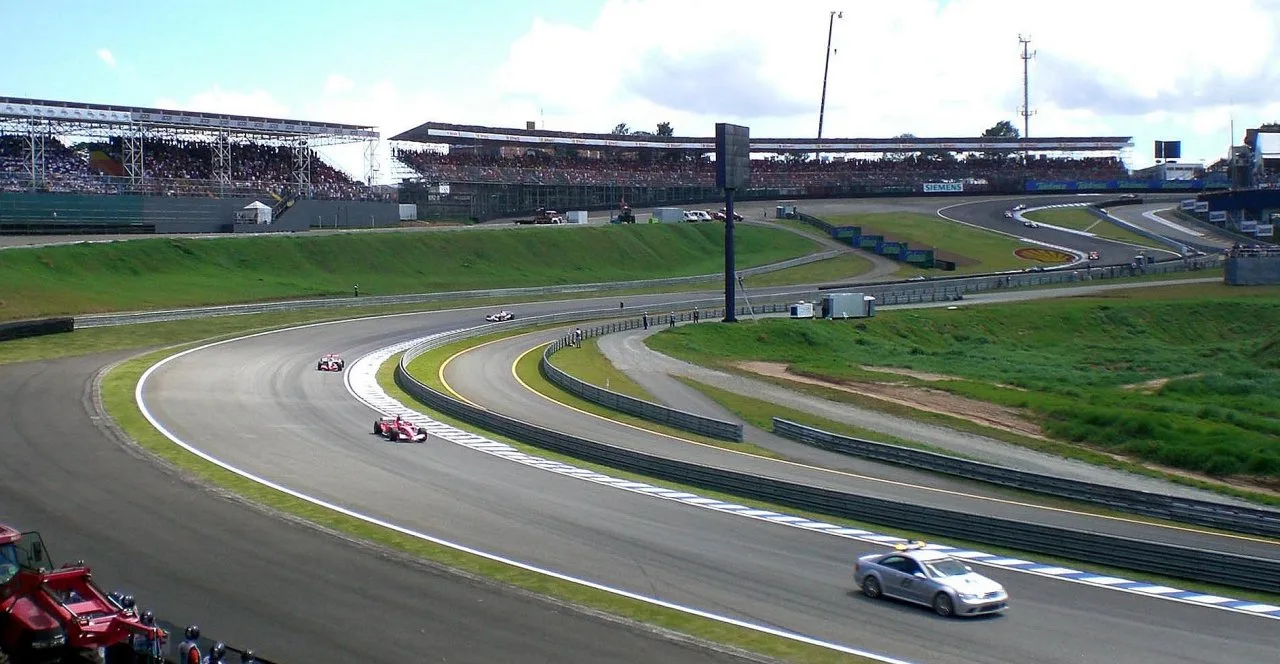
Formula 1 first used a Safety Car at the 1973 Canadian Grand Prix, although it did not become a regular championship fixture until 1993. The Virtual Safety Car was introduced for 2015 after trials late in 2014.
The first F1 Safety Car appearance was chaotic. A Porsche 914 entered the 1973 Canadian Grand Prix with Eppie Wietzes driving.
It collected the wrong car instead of the race leader. The resulting confusion complicated the classification.
Formula 1 used Safety Cars only occasionally afterward. The system became a permanent part of the championship in 1993.
Mercedes became the official supplier in 1996. Bernd Mayländer took over regular driving duties in 2000.
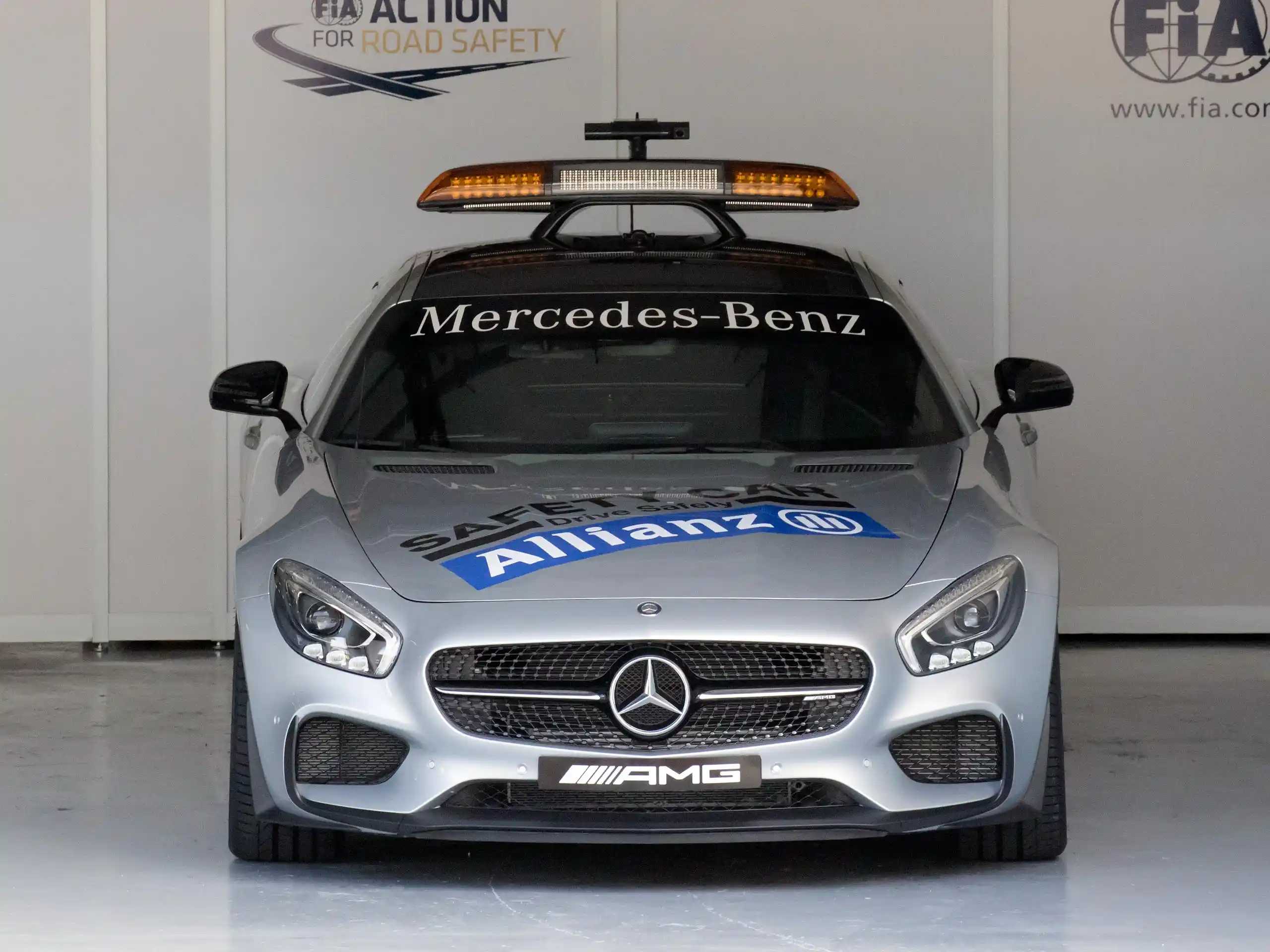
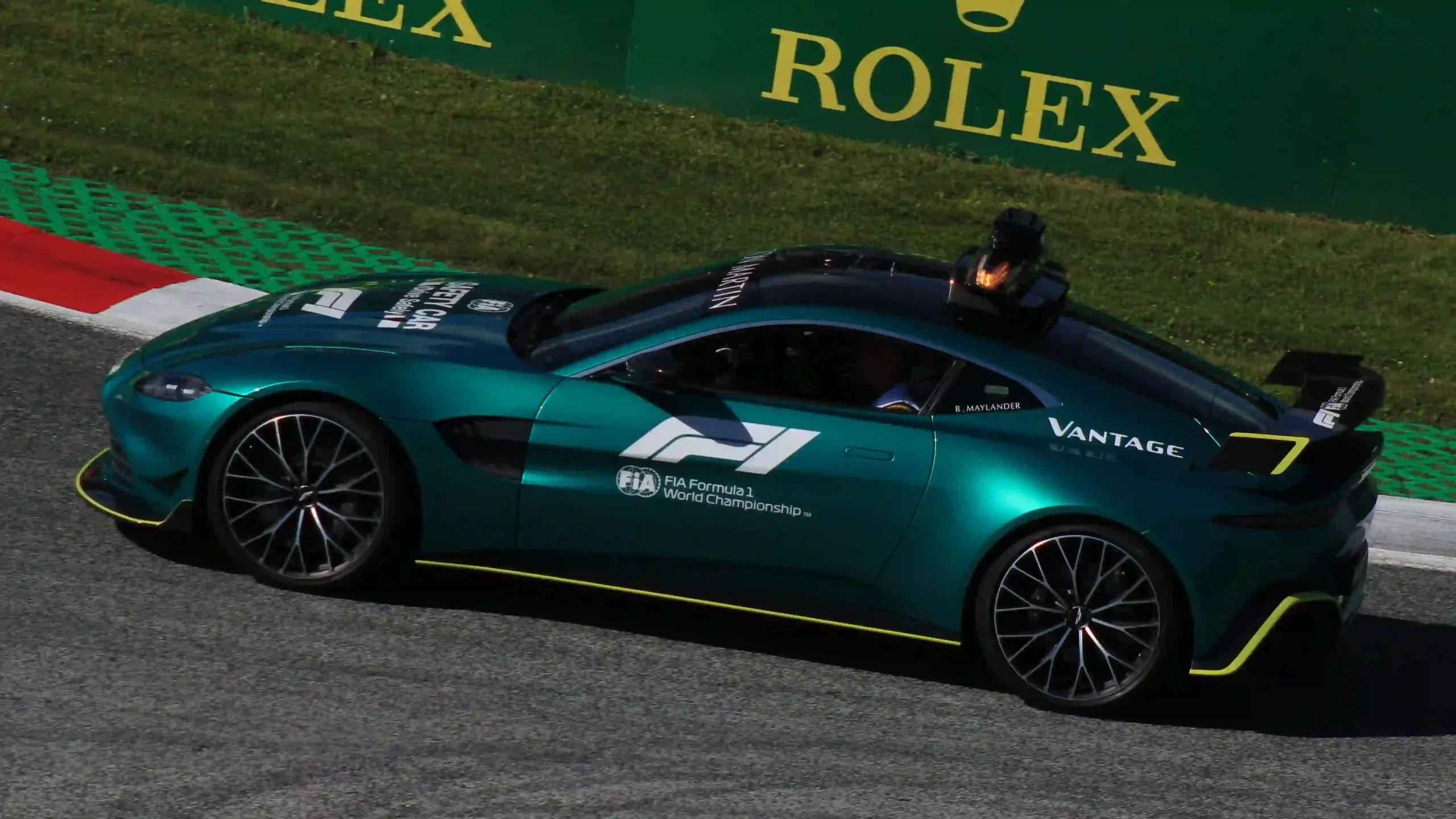
Aston Martin began sharing official Safety Car duties in 2021. The modern cars carry FIA equipment, warning lights and communications systems.
Why Was the Virtual Safety Car Created?
The VSC followed a renewed safety review after Jules Bianchi’s crash at the 2014 Japanese Grand Prix.
Formula 1 needed a way to impose consistent circuit-wide slowing without waiting for the field to gather.
The system was trialled late in 2014. It became part of the official procedures for the 2015 season.
Since then, the VSC has become one of Race Control’s most frequently used tools.
Who Drives the Current F1 Safety Car?
Bernd Mayländer remains Formula 1’s long-serving Safety Car driver in 2026. He is a former professional racer with extensive touring-car and endurance experience.
His task is not to compete with F1 cars. Instead, he must provide a fast, predictable and safe reference under difficult conditions.
The official fleet includes high-performance Mercedes-AMG and Aston Martin models. Their road-car speed still feels slow to an F1 driver.
Why Does the Safety Car Look Slow?
An F1 car produces exceptional downforce and braking at high speed. Even a powerful road-based Safety Car cannot match those cornering loads.
Moreover, the driver must preserve a safety margin around debris, marshals and poor weather. The objective is controlled speed, not a lap record.
This difference explains frequent driver complaints about tire temperature. It does not mean the Safety Car driver is cruising casually.
F1 Safety Car Explained: Recent F1 Safety Car and VSC Strategy Examples
A neutralization can discount a pit stop, erase a lead or create a final sprint. Recent 2026 races showed every outcome: Ferrari protected track position under a VSC in Australia, several leaders pitted under the British VSC, and Monaco’s Safety Car triggered a rush of stops.
| 2026 Event | Neutralization | Key Decision | Race Impact |
|---|---|---|---|
| Australian Grand Prix | Virtual Safety Car | Ferrari kept Charles Leclerc and Lewis Hamilton on track while rivals stopped | Leclerc finished on the podium and Hamilton took fourth |
| British Grand Prix | Virtual Safety Car on Lap 39 | Verstappen, Norris and Hadjar pitted; Leclerc stayed out | The neutralization reshaped tire choices for the closing phase |
| British Grand Prix finish | Full Safety Car | The race ended neutralized after a late incident | Sainz received a lap penalty for incorrectly unlapping himself |
| Monaco Grand Prix | Full Safety Car after Stroll’s Lap 60 crash | Many drivers used the intervention for a pit stop | The field compressed for the late restart phase |
2026 Australian Grand Prix: Ferrari Stayed Out
Ferrari faced a VSC decision while rivals used the discounted pit window. The team kept both cars on track.
That choice protected track position. Charles Leclerc finished on the podium, while Lewis Hamilton placed fourth.
The example shows that pitting under VSC is not automatically correct. Tire condition and rejoining traffic remain decisive.
2026 British Grand Prix: A VSC Split the Strategies
Nico Hülkenberg’s issue triggered a VSC on Lap 39. Max Verstappen, Lando Norris and Isack Hadjar pitted.
Charles Leclerc stayed out. Therefore, the neutralization created different tire and track-position choices for the closing laps.
Later, the race finished behind a full Safety Car. The same Grand Prix demonstrated both neutralization systems.
2026 Monaco Grand Prix: Safety Car Pit-Stop Rush
Lance Stroll’s crash on Lap 60 brought out the Safety Car. Many drivers immediately headed for the pits.
Monaco makes track position exceptionally valuable. However, a Safety Car can make a required or desired stop much cheaper.
The crowded lane also raises double-stack and unsafe-release risks. Strategy and pit execution become inseparable.
The fastest strategic response is not always “pit now.” The correct call depends on tire life, track position, pit-entry location and what every rival is likely to do.
F1 Safety Car Explained: Safety Car vs VSC vs Red Flag vs Yellow Flags
Yellow flags slow cars near a local hazard. A VSC imposes circuit-wide minimum times. A full Safety Car gathers the field into a controlled queue. A red flag stops the session completely when the circuit cannot remain safely active.
| Response | Area Controlled | Field Bunched? | Session Status | Typical Use |
|---|---|---|---|---|
| Single yellow | Local marshal sector | No | Racing continues with caution | Hazard beside or near the track |
| Double yellow | Local marshal sector | No | Drivers slow significantly and prepare to stop | People or obstruction on or near the track |
| Virtual Safety Car | Entire circuit | No | Neutralized by electronic minimum times | Danger requiring full-lap speed control |
| Full Safety Car | Entire circuit | Yes | Neutralized behind a physical car | Immediate danger needing large traffic gaps |
| Red flag | Entire circuit | Cars return to pits | Session suspended | Blocked track, major damage, severe weather or medical need |
Does a Safety Car Lap Count?
Yes. Safety Car and VSC laps count toward the race distance.
That rule can reduce the number of racing laps after a long intervention. Fuel use falls, but the scheduled distance continues.
Our guide to how racing laps are counted explains the timing principle.
Can an F1 Race Finish Behind the Safety Car?
Yes. If the incident continues into the final lap, the Safety Car can lead the field to the checkered flag.
The 2026 British Grand Prix ended under those conditions. Drivers could not create a final racing restart.
Under the rules, the Safety Car may enter the pit lane at the end while the cars cross the line without overtaking.
Can a Race Finish Under VSC?
Yes, if Race Control cannot safely withdraw the VSC before the finish. The field remains controlled until the checkered flag.
However, a serious unresolved incident may instead produce a full Safety Car or red flag.
F1 Safety Car Explained: Common F1 Safety Car and VSC Misunderstandings
“A VSC Has One Fixed Speed Limit”
No. Drivers follow minimum times for each marshalling sector and both Safety Car lines.
“The Safety Car Freezes Every Position”
No. Cars can gain or lose positions through pit stops, permitted pit-entry movements and valid exceptions.
“A Safety Car Pit Stop Is Completely Free”
No. It is discounted. The driver still travels through the pit lane and may rejoin behind other cars.
“The Leader Can Restart Whenever It Wants”
The leader controls the pace after the Safety Car lights go out. However, overtaking resumes only at the control line.
“Every Lapped Car Can Automatically Unlap”
No. Race Control must issue the instruction, and only eligible cars may pass.
“A VSC Cannot Change the Race Order”
It can. Pit stops, timing around deployment and the restart can all create position changes.
“A Full Safety Car Is Always Better for Safety”
Not always. A VSC can slow the entire circuit immediately, while a physical Safety Car needs time to gather the field.
F1 Safety Car Explained FAQs
What is the difference between a Safety Car and a Virtual Safety Car?
A Safety Car physically leads and bunches the field. A VSC controls every driver through minimum sector times and broadly preserves the existing gaps.
How does the F1 VSC delta work?
The FIA sets minimum times for each marshalling sector. Drivers use a steering-wheel delta display to remain slower than those references.
Why is a pit stop cheaper under a Safety Car or VSC?
Cars on track are moving more slowly, so they gain less distance while the pitting driver travels through the lane and changes tires.
When can drivers overtake after a Safety Car?
Normal overtaking resumes after cars cross the control line once the Safety Car has entered the pit entry road.
F1 Safety Car Explained: Conclusion: Why Safety Cars Transform Formula 1
F1 Safety Car Explained starts with a safety decision. Race Control chooses the least disruptive system that can protect drivers, marshals and recovery workers.
A full Safety Car creates a physical queue. Therefore, it largely erases race gaps and prepares the field for a controlled restart.
The Virtual Safety Car works differently. It imposes minimum times throughout the circuit while preserving the gaps more closely.
Both systems restrict overtaking. However, narrow exceptions cover pit entry, pit exit and cars with an obvious problem.
The VSC delta is not a single speed limit. Drivers must remain above the FIA reference in every marshalling sector.
Strategy changes immediately during either neutralization. A pit stop becomes cheaper because rivals are no longer traveling at racing speed.
Yet stopping is not always the correct call. Track position, remaining laps and tire warm-up can make staying out more valuable.
Restarts create another challenge. The leader controls the pace after the Safety Car lights go out, but overtaking waits until the control line.
A VSC ending is less predictable. Green appears between 10 and 15 seconds after the warning message.
Lapped-car instructions must also be followed exactly. The 2026 British Grand Prix showed how an incorrect unlap can change the classification.
From the first confused Safety Car appearance in 1973 to the VSC’s 2015 introduction, the procedures have become far more precise.
However, no regulation can remove the strategic luck created by timing. A neutralization can protect a lead, destroy it or offer a discounted stop.
That uncertainty is why the yellow SC or VSC message changes the entire race before the drivers reach the next corner.
Sources
The rules, historical details and current race examples in this article were checked against FIA and official Formula 1 material available on July 20, 2026.