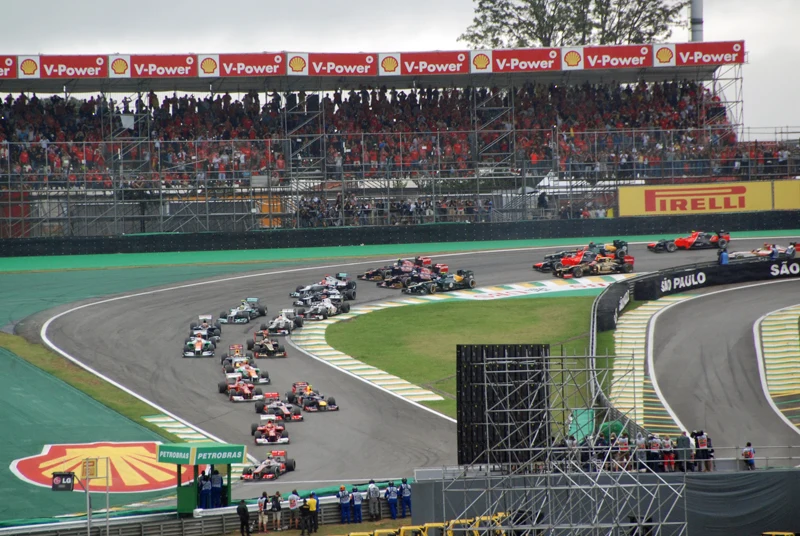
What Is a False Start in F1? Sensors, Lights and Penalties Explained
The exact moment an F1 car must stop moving, how the FIA detects a premature launch, why grid-box placement matters, and how stewards choose the penalty.
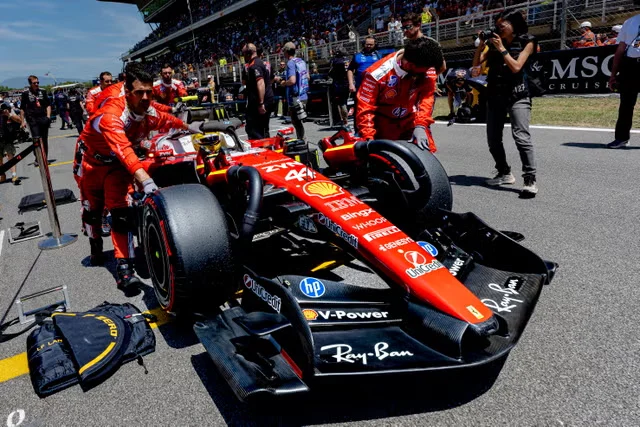
A false start in F1 occurs when a car moves before the official signal or fails another starting-position requirement. Since 2026, cars must remain stationary after the third red light appears. Their transponders must detect the first movement, and both front-tire contact patches must remain inside the grid-box lines.
A Formula 1 race can change before the field reaches Turn 1. Sometimes, it changes before the lights even go out.
A false start sounds simple. A driver moves early and receives a penalty.
However, the modern rule is broader. It covers movement, electronic detection and exact grid placement.
The driver must stop in a narrow painted box. Meanwhile, the timing transponder must sit where the system can read it.
Then the light sequence begins. Under the current rule, the protected stationary period starts with the third red light.
The car must remain still until every red light extinguishes. Only that darkness gives the official start signal.
Even a limited wheel rotation can matter. Lewis Hamilton learned that at Silverstone in 2026.
Stewards studied onboard video and the yellow Pirelli lettering. The tire rotated before lights out.
Hamilton received the standard five-second penalty for a minor movement.
Yet five seconds is only the bottom of the penalty ladder. A larger breach can trigger a drive-through or stop-and-go.
Incorrect grid placement can be equally costly. A driver may remain stationary and still commit a false start.
This F1 False Start Explained guide covers the complete procedure. It follows the car from the formation lap to the stewards’ decision.
F1 False Start Explained: What Counts as a False Start?
“Jump start” usually describes moving before lights out. “False start” is the wider FIA category. It also covers incorrect grid-box placement and positioning that prevents the timing transponder from detecting the car’s first movement after the signal.
The everyday phrase “jump start” focuses on an early launch. Broadcasters use it because viewers instantly understand the image.
F1 False Start Explained uses the broader FIA meaning throughout this guide.
The regulations use “false start.” That wording includes more than forward motion.
A car can breach the rule in three ways. It can move early, sit where detection fails, or occupy the grid box incorrectly.
Does the Driver Need to Gain a Position?
No. The sporting rule protects an equal start signal for every competitor.
Therefore, a driver can lose places and still receive a penalty. A poor launch after the creep does not cancel the first movement.
Does the Whole Race Start Again?
Usually, no. Race Control lets the field continue while officials examine the evidence.
The penalty can appear several laps later. A restart is reserved for a safety or procedural problem affecting the whole grid.
Can a Car Move Backward?
The rule says the car must remain stationary. Consequently, clear backward movement can also attract attention.
However, officials distinguish real displacement from vibration, suspension settling and drivetrain loading.
Does Intention Matter?
Intent can help explain the incident. It does not decide whether the car moved.
A clutch mistake remains a false start when it produces prohibited motion.
Our guide to jump starts in Formula 1 covers the narrower term.
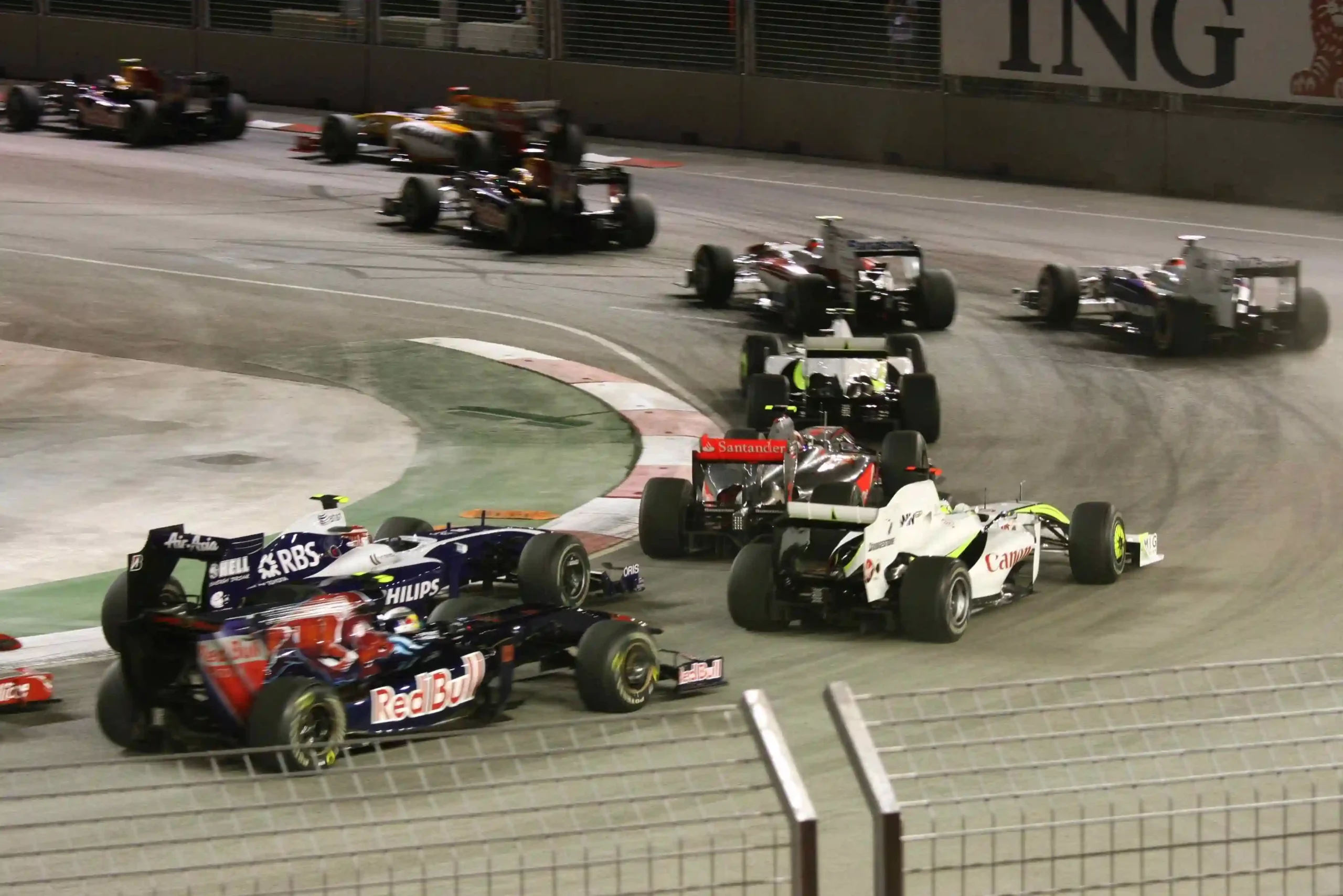
How Does the Formula 1 Start-Light Sequence Work?
After the formation lap, cars stop in their grid boxes. In 2026, blue panels flash for five seconds before the standard sequence. Five red lights then illuminate at one-second intervals. The permanent starter extinguishes all five after a variable delay, creating the official start signal.
The start procedure begins when the field returns from the formation lap.
Each driver locates the assigned grid box. Marshals then confirm that every car is ready.
For 2026, Formula 1 added a pre-start warning. All grid panels flash blue for five seconds.
Drivers use that warning to raise engine revs. The change supports the characteristics of the new power units.
Afterward, the five red lights illuminate one at a time. Each step arrives roughly one second after the previous light.
Why Is the Final Delay Variable?
A fixed delay would reward counting. Drivers could predict lights out without watching the gantry.
Instead, the final hold changes. Therefore, a legal launch must be a reaction rather than a guess.
Who Controls Lights Out?
The permanent starter operates the signal under the Race Director’s authority.
The pole-sitter controls neither the timing nor the official start. Every driver must watch the gantry.
Can a Driver React to Another Car?
That approach is dangerous. A neighboring car may twitch, stall or enter anti-stall.
Consequently, drivers train their vision on the official lights. Peripheral movement cannot replace the signal.
What if a Light Fails?
Race Control can abort or suspend the procedure when the official signal system cannot operate safely.
Drivers then follow the displayed boards, light panels and radio instructions.
Read our guides to the formation lap and pole position.
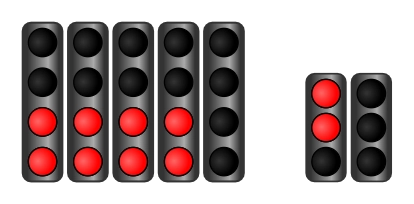
Why Does the False-Start Window Begin at the Third Red Light?
Article B5.11.1 requires the car to remain stationary after the third red light illuminates. The restriction continues until the starter extinguishes all red lights. Therefore, movement before the fourth or fifth light can already constitute a false start.
Many viewers assume the driver can adjust the car until all five lights are on.
That assumption is wrong. The protected period begins earlier.
The third light creates a clear monitoring window. From that moment, the car should not travel forward or backward.
Can the Driver Still Operate the Clutch?
The driver can hold and prepare the controls. However, those inputs cannot move the car.
Clutch torque, brake pressure and engine revs must remain balanced throughout the window.
Can the Car Move While Only Two Lights Are On?
The specific stationary wording begins after the third light.
Nevertheless, the car should already occupy its legal box and await the sequence. Deliberate movement can trigger another procedural concern.
What Is a Negative Reaction Time?
It describes movement that begins before the timing reference.
In practical terms, the driver anticipated the signal instead of reacting to it.
Can a Legal Reaction Be Extremely Fast?
Yes. A fast reaction is legal when the car’s first movement follows lights out.
Officials judge timing, not how impressive the launch looks.
Core principle: The start rewards reaction speed. It does not reward predicting the signal.
F1 False Start Explained: The Three Tests in Article B5.11.1
The FIA checks whether the car remained stationary, whether its transponder could detect the first movement, and whether both front-tire contact patches stayed inside the grid-box boundaries. A breach of any one condition can produce a false-start penalty.
Stationary Car
No movement is permitted from the third red light until the start signal.
Readable Transponder
The car must sit where timing equipment can detect its first post-signal movement.
Legal Tire Position
Neither front-tire contact patch may extend outside the front or side lines.
The first test deals with timing. The second protects electronic measurement.
Meanwhile, the third test protects the physical starting order.
Why Put These Rules Together?
All three conditions define a fair starting position. The car must be still, measurable and correctly placed.
Separating them would create loopholes. A driver could otherwise gain distance without an obvious early launch.
Do the Rules Apply to Sprints?
Yes. They apply to standing starts in timed competitive sessions, including a Sprint.
They also apply to a standing-start resumption after a red flag.
Does a Rolling Start Use the Same Test?
No. A rolling start begins with moving cars behind the Safety Car procedure.
Article B5.11.1 specifically addresses standing starts and standing resumptions.
Our guide to the FIA’s role in Formula 1 explains who writes and enforces these rules.
Can a Stationary Car Still Commit a False Start?
Yes. At the start signal, no part of either front-tire contact patch may sit outside the front or side grid-box lines. A car can remain completely still yet receive a false-start penalty because its starting location creates an unfair advantage.
The grid box is a painted rectangle, but the car’s nose is not the legal reference.
Instead, the rule uses the front tires. Officials assess where each contact patch meets the track.
Can the Front Wing Cross the Front Line?
It can, depending on the dimensions of the box and car.
The front-wing edge does not define the offense. The front-tire contact patches do.
Why Do the Side Lines Matter?
A car angled across a side line can intrude toward another starting slot.
Furthermore, that angle may affect transponder alignment. The side lines maintain a consistent detection area.
How Does the Driver Find the Box?
The cockpit sits low behind the front wheels. Direct visibility of the front line is poor.
Drivers use painted references, track marks and practice. Even experienced racers occasionally stop too far forward or sideways.
Can the Driver Reverse and Try Again?
Reversing on a live starting grid creates a major safety risk.
A driver who misses the box should follow marshal and Race Control instructions rather than improvising.
Why Can Wrong Position Bring a Harsher Penalty?
The sporting advantage can exceed a small wheel creep. Starting one or two places ahead changes the run to Turn 1.
At a narrow circuit, that gain can be especially valuable. Stewards can therefore escalate the sanction.
Our guide to grid position in racing explains why a few feet matter.
How Do Formula 1 False-Start Sensors Work?
The regulations focus on the car’s timing transponder and FIA positioning systems rather than describing a simple pressure sensor under every box. The transponder must sit where the system can identify the exact moment the car first moves after the start signal.
Formula 1 timing depends on a transponder carried by each car.
The device identifies the car as it crosses timing references around the circuit. At the start, its position helps establish first movement.
The FIA also receives positioning and marshalling-system data. Those records help reconstruct the grid and launch.
Why Must the Transponder Be Correctly Positioned?
Detection needs a reliable geometric relationship between the car and timing system.
If the driver stops in the wrong place, the transponder may not capture first movement accurately.
Does the FIA Use Wheel-Speed Data?
Stewards can consider available technical information. However, official decisions often cite timing, positioning and video evidence.
The car’s wheel speed can support the picture, but it is not the only source.
Can a Sensor Decide the Penalty Automatically?
No. The system flags or records information.
Stewards assess the evidence, determine whether the rule was breached and choose the penalty.
Why Is Video Still Important?
Electronic data establishes timing. Video can show direction, distance and the physical cause.
Together, both forms of evidence provide a stronger decision than either alone.
Read our guide to how F1 timing works for the wider transponder system.
What Evidence Do the Stewards Review?
Yes. Stewards can use in-car footage, trackside video, timing information, positioning data and visible tire rotation. Onboard video is especially useful because the start lights and tire markings can appear in the same sequence.
Timing Data
Establishes the official signal and the car’s detected first movement.
Positioning Data
Shows the car’s location and movement relative to its allocated grid slot.
In-Car Footage
Connects driver inputs, tire rotation and the gantry-light sequence.
External Video
Provides scale and confirms whether the car moved forward, backward or sideways.
Can Tire Lettering Act as a Reference?
Yes. A colored logo on the sidewall makes small rotation easier to see.
When the lettering moves upward and forward, the wheel has clearly rotated.
Do Stewards Listen to the Driver?
They can summon the driver and team representative. Both may explain clutch behavior or grid positioning.
However, an explanation does not override objective movement data.
Can the Decision Arrive After the Race?
Yes. A complex case may require a post-race hearing.
The regulations allow time additions after the finish when an in-race penalty cannot be served.
Can the Team Challenge the Decision?
FIA decisions state the applicable appeal or review rights.
The available route depends on the type of decision and the International Sporting Code.
Our guide to appeals in Formula 1 explains the process.
Is There a Sensor Tolerance for an F1 False Start?
Detection systems must distinguish real travel from vibration and measurement noise. Historical decisions sometimes referred to an approved tolerance. However, the current rule still requires complete stationary behavior, and modern stewards can combine electronic records with detailed video.
An F1 car shakes while the engine runs. The drivetrain also loads as the clutch approaches its bite point.
Suspension components can settle under brake pressure. Therefore, a detection system cannot treat every vibration as a launch.
Is Tolerance a Free Head Start?
No. It exists to protect measurement quality.
A driver cannot legally plan to creep within an assumed threshold. The sporting requirement remains stationary.
Why Can Television Be Misleading?
A long-lens camera can magnify small movement. Conversely, a wide shot can hide it.
Video also lacks the timing precision of the electronic system unless it is synchronized carefully.
Can Vibration Rotate the Tire?
Normal vibration may move the body without producing meaningful wheel travel.
Clear sidewall rotation provides stronger evidence because it shows the wheel itself moved.
Does “No Advantage” End the Case?
No. A car can move early and still make a poor launch.
The absence of advantage can influence severity. It does not remove the underlying breach.
A sensor tolerance protects the accuracy of the system. It does not create a legal zone for anticipation.
How Can the Clutch Cause a False Start?
A driver can release the clutch paddle too far, misjudge the bite point or react to another car. Engine torque then reaches the rear wheels before lights out. Brake pressure may stop a full launch, but even limited wheel rotation can establish a false start.
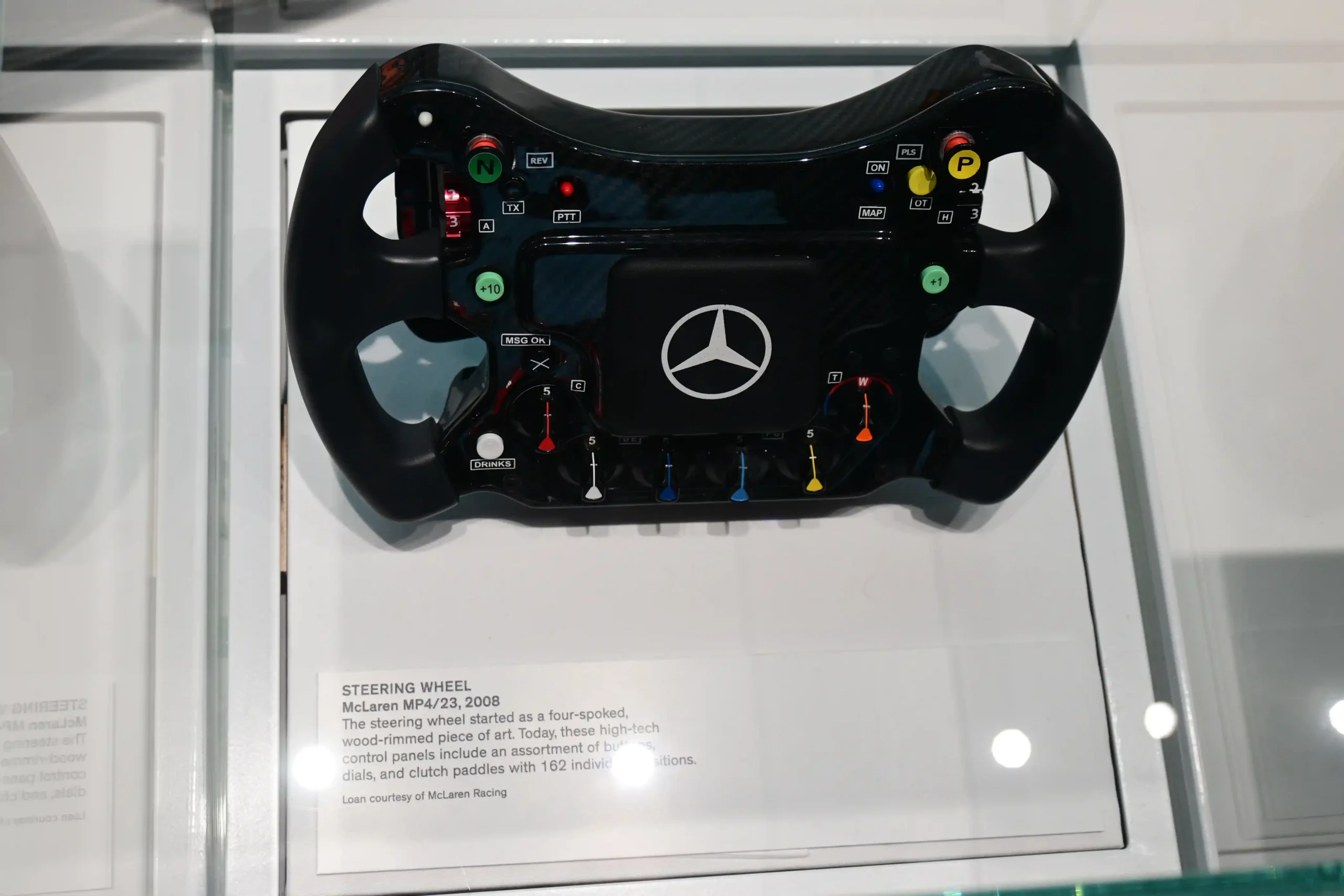
Modern F1 drivers control the clutch by hand. One or two paddles sit behind the steering wheel.
Before lights out, the clutch hovers close to a calibrated bite point. Small hand movement changes rear-wheel torque.
What Is the Bite Point?
It is the clutch position where meaningful torque begins reaching the drivetrain.
Teams measure it during practice starts. The driver then repeats that feel on the grid.
Why Hold the Brakes?
Brake pressure helps keep the car stationary while engine revs rise.
If clutch torque exceeds the holding force, the car creeps. The driver may then pull the clutch again.
What Does Anti-Stall Do?
Anti-stall protects the engine when revs fall too low during clutch engagement.
It can interrupt a launch and cost positions. However, it does not excuse movement before the official signal.
Can the Driver React to a Neighbor?
Yes, and that is a common human risk. Peripheral movement can trigger an automatic response.
Drivers therefore focus on the gantry. Another car’s motion may be an error rather than lights out.
How Do Teams Practice Starts?
Practice sessions include designated start areas, often near the pit exit.
Engineers tune clutch maps, rev targets and paddle positions from those runs.
Read our guides to how a clutch works, paddle shifters and brake balance.
What Is the Penalty for a False Start in F1?
No. The 2026 regulations allow a five-second penalty, 10-second penalty, drive-through or stop-and-go. FIA guidance says the choice depends on the extent of the breach. Limited movement normally brings five seconds, while a major advantage can justify a stronger sanction.
How Do Stewards Choose?
They consider how far the car moved and what advantage followed.
Wrong-position cases can be serious because the driver may begin one or more grid places ahead.
Are Penalty Points Automatic?
No. The 2026 Penalty Guidelines list zero Super Licence points for the standard offense.
A separate dangerous act could still be considered under another article.
Can the Driver Be Disqualified?
Disqualification is not the normal B5.11.1 penalty range.
Nevertheless, ignoring a sanction or committing another serious breach can create further consequences.
Can Five Seconds Change a Podium?
Absolutely. Modern F1 fields often finish within a few seconds.
A time addition can move a driver behind several cars after the checkered flag.
Can the Driver Still Win?
Yes, if the car builds a large enough gap.
However, serving the penalty during a pit stop often costs more than the headline number.
Our guide to drive-through penalties explains the pit-lane sanction.
How Is a False-Start Penalty Served?
When a driver serves a five- or 10-second penalty during a pit stop, the car must remain untouched for the full period. Touching the driver or car with a hand, tool or equipment counts as work. Without another stop, the time is added after the race.
Race Control informs the team and displays the sanction.
The driver stops in the designated pit-stop position.
No mechanic touches the car or driver for five or 10 seconds.
After the hold, the crew can change tires or perform other legal work.
The sanction is added to the final elapsed time.
Why Does Five Seconds Cost More?
The delay disrupts the normal pit-stop sequence. The car may also rejoin behind traffic.
Consequently, a written five-second sanction can cost eight, 10 or more seconds strategically.
What if a Mechanic Touches the Car Early?
The team has failed to serve the penalty correctly.
Stewards can impose a further sanction. Crews therefore use clear visual and radio countdowns.
How Soon Must a Drive-Through Be Served?
After notification, the driver may cross the timing line no more than twice before entering the pit lane.
Safety Car and VSC conditions can alter how those crossings are counted.
What Happens in the Final Laps?
If a drive-through or stop-and-go arrives too late to serve, stewards can convert it into elapsed-time additions.
The current rules use 20 seconds for a drive-through and 30 seconds for a stop-and-go.
Lewis Hamilton’s 2026 British Grand Prix False Start
Lewis Hamilton received a five-second penalty because his Ferrari moved after the third red light and before lights out. Stewards reviewed timing, video and in-car footage. The yellow Pirelli lettering rotated upward and forward, proving limited wheel movement before the signal.
The Silverstone decision offers a precise example of the current rule.
Hamilton did not launch several feet. Instead, his car made a limited forward movement.
What Evidence Was Decisive?
The stewards used video, timing information and onboard footage.
They highlighted the tire lettering because it created a stable reference for wheel rotation.
Why Did Limited Movement Still Count?
The decision stated that limited movement does not cancel the infringement.
Any movement inside the protected interval constitutes a false start.
Why Was the Penalty Five Seconds?
The stewards called five seconds the standard penalty for minor movements.
Hamilton had not gained the sort of major grid advantage that would justify a drive-through.
What Did It Do to His Strategy?
He had to remain stationary before his crew began pit-stop work.
That delay affected track position and the timing of his first stop.
What Should Fans Learn From the Case?
A false start does not need to look spectacular. A small rotation is enough when it occurs at the wrong moment.
The case also shows why onboard video now plays such a large role.
Why an Incorrect Grid Position Can Be More Serious
Yes. Starting one or more positions ahead can create a larger competitive advantage than a small creep. The regulations let stewards choose a drive-through or stop-and-go when the extent of the breach makes a simple time penalty insufficient.
Wrong-position cases demonstrate why “false start” is broader than “jump start.”
A driver may wait for lights out yet still begin from the wrong place.
What Advantage Does the Driver Gain?
Every grid slot changes the distance to Turn 1. It also changes the racing line and nearby traffic.
Starting two places forward can be especially valuable on a narrow circuit.
Why Not Always Give 10 Seconds?
A fixed time penalty may not remove the actual advantage.
A drive-through forces the car through the pit lane and usually costs far more track position.
Does the Same Rule Apply After a Red Flag?
Yes. A standing-start resumption uses the false-start requirements again.
The driver must occupy the correct box and remain stationary during the protected light sequence.
Can the Front-Right Tire Alone Cause the Breach?
Yes. The regulation says no part of either front-tire contact patch may sit outside the lines.
Therefore, one misplaced tire is enough.
A small creep steals time. A wrong grid slot can steal distance, racing line and position before the race begins.
False Start vs. Jump Start, Fast Reaction and Stalled Start
A legal start begins after every red light goes out. A jump start is early movement. A wider false start also includes incorrect grid placement or failed transponder positioning. A stalled start is different because the car fails to launch rather than moving too soon.
| Situation | What Happens | Likely Outcome |
|---|---|---|
| Fast legal reaction | The car first moves immediately after lights out. | No penalty. |
| Jump start | The car moves during the protected red-light window. | False-start penalty range. |
| Wrong grid position | A front-tire contact patch sits outside the box or the car occupies another slot. | Time penalty or stronger sanction. |
| Stalled start | The car fails to move or enters anti-stall. | No false-start penalty by itself. |
| Formation-lap breach | The driver breaks the pre-start lap procedure. | Separate sporting decision. |
| Rolling start | The field begins while already moving. | Different start rules apply. |
Can a Reaction Be “Too Good”?
Not when movement starts after the signal.
Reaction time can be exceptionally short. The electronic record still shows whether it was positive or negative.
Is Anti-Stall a False Start?
No. Anti-stall usually slows or stops the launch.
However, the clutch sequence that triggered it may also have produced a brief early movement.
Is a Formation-Lap Mistake the Same Offense?
No. The formation lap has its own rules concerning order, overtaking and pit-lane starts.
The false-start article applies once the car is in the standing-start procedure.
Does a Safety Car Restart Use the Five Red Lights?
A normal rolling Safety Car restart does not. The leader controls pace within the restart rules.
A standing restart after a red flag does use the grid and false-start procedure.
Read our guides to the Safety Car, F1 flags and F1 qualifying.
How a False-Start Penalty Changes Race Strategy
Yes. A five-second hold can break an undercut, return the car into traffic and remove a planned double-stack pit stop. If the driver avoids another stop, the team must build a gap larger than the pending time addition before the finish.
The written penalty rarely tells the full strategic story.
Five stationary seconds can become a much larger loss when pit-lane traffic and tire warm-up are included.
Why Extend the First Stint?
The team may seek clean air before serving the penalty.
However, worn tires can erase the advantage. Engineers compare degradation against the likely rejoin traffic.
Can the Driver Avoid Another Stop?
Sometimes. The time is then added after the finish.
The driver must create a gap larger than the sanction to preserve the position.
How Does a Safety Car Change the Calculation?
A Safety Car compresses the field. That hurts a driver carrying an unserved post-race addition.
Meanwhile, a pit stop under neutralization can reduce the relative pit-lane loss.
Why Is a Drive-Through So Damaging?
The car travels through the full pit lane at the speed limit.
At many circuits, the total loss exceeds 20 seconds. Passing opportunities may never recover that time.
Can Teammates Help?
A teammate may create a gap naturally through race pace and strategy.
However, deliberate obstruction remains subject to other sporting rules.
Our guide to ERS in Formula 1 explains one system drivers use during the launch and recovery.
F1 False Start Explained: Common Misunderstandings
F1 False Start Explained also means separating the official rule from familiar television shorthand.
“The Car Can Move Until the Fifth Red Light”
False. The protected stationary window begins after the third red light.
“Only a Full Launch Counts”
False. Limited tire rotation can establish movement before the signal.
“No Position Gained Means No Penalty”
False. The start signal must remain equal even when the driver later loses ground.
“The Front Wing Defines the Grid Position”
False. The rule uses the contact patches of both front tires.
“Every False Start Is Five Seconds”
False. The sanction can reach a drive-through or stop-and-go.
“A Sensor Makes the Final Decision”
False. Stewards evaluate timing, positioning, video and the circumstances.
“A Driver Must Move Forward”
False. The car must remain stationary, so meaningful movement in either direction can matter.
“Penalty Points Are Automatic”
False. The current guideline assigns zero automatic points to the standard offense.
F1 False Start Explained FAQs
What is a false start in Formula 1?
A false start occurs when a car moves before the signal, cannot be detected correctly by its transponder position, or starts with a front-tire contact patch outside its grid box.
When must an F1 car remain stationary?
The car must remain stationary from the illumination of the third red light until all red lights go out.
How does the FIA detect a false start?
The FIA combines transponder timing, positioning and marshalling data, onboard footage and external video.
What is the penalty for a false start in F1?
Stewards can impose five seconds, 10 seconds, a drive-through or a stop-and-go, depending on the extent of the breach.
F1 False Start Explained: Conclusion
F1 False Start Explained begins with the official signal. Every driver must wait for lights out.
Since 2026, the car must remain stationary after the third red light illuminates.
That requirement continues through the fourth light, fifth light and final hold.
However, movement is only one part of the rule.
The transponder must sit where timing equipment can detect the car’s first movement.
Both front-tire contact patches must also stay inside the grid-box lines.
Consequently, a stationary car can still commit a false start.
The FIA combines electronic records with visual evidence.
Timing and positioning data establish the event sequence.
Meanwhile, onboard footage can show the tire rotating before lights out.
Hamilton’s 2026 Silverstone case demonstrated that method.
His movement was limited, but the tire lettering made it clear.
The standard five-second sanction followed.
More serious cases can bring 10 seconds, a drive-through or stop-and-go.
Wrong-position cases may justify escalation because the driver gains real grid distance.
Serving a time penalty also costs more than the number suggests.
The crew cannot touch the car during the stationary hold.
Therefore, pit strategy and rejoin traffic amplify the loss.
The launch itself remains a delicate balance of clutch torque, brake pressure and reaction speed.
A legal start reacts to darkness. A false start anticipates it or begins from the wrong place.
F1 False Start Explained is ultimately a fairness rule. Every car must receive the same starting moment.
Sources
The regulations, procedure and current cases in this article were checked against official FIA and Formula 1 material available on July 20, 2026.