What Is Nomex in F1? The Fireproof Material Behind Formula 1 Safety
Nomex in F1 is a flame-resistant aramid fiber used in the F1 driver suit, gloves, balaclava, socks, and fireproof underwear. It does not melt or drip like normal fabric. Instead, it helps create a thermal barrier that gives a driver vital seconds to escape after a fire.
A Formula 1 fireproof suit is not a costume. It is survival equipment built for heat, flame, sweat, speed, and brutal crash risk.

What is Nomex in F1? In plain racing language, it is the material that helps stop a cockpit fire from becoming instantly fatal. Formula 1 drivers sit inside a tight cockpit, surrounded by fuel systems, electronics, hot brakes, and carbon-fiber structures.
Therefore, the clothing must do more than look professional. A Nomex F1 suit must slow heat transfer, resist flame, breathe well, and stay light enough for a driver to race at full intensity. It sits alongside the halo in F1, the HANS device, and the F1 car monocoque as part of the modern survival system.
That is why a Formula 1 fireproof suit matters. The fastest car means nothing if the driver cannot get out alive after impact.
What Does Nomex Mean in Formula 1?
Nomex is a trademarked flame-resistant fiber developed by DuPont. It belongs to the aramid fiber family, which means it is engineered for heat resistance, strength, and protective clothing use. DuPont describes Nomex fibers as heat- and flame-resistant fibers that do not melt, drip, or support combustion in air.
In F1, the word “Nomex” is often used as shorthand for the full set of driver fire protection. However, the suit is only one layer of the story. Drivers also wear flame-resistant underwear, socks, gloves, boots, and a balaclava under the helmet.
Meanwhile, other safety items protect different threats. Kevlar in F1 cars helps with strength and impact resistance. Nomex focuses mainly on heat and flame protection around the body.
Why Do F1 Drivers Wear Nomex Racing Suits?
F1 drivers wear a Nomex racing suit because fire is still one of motorsport’s oldest dangers. Crashes are rarer than before, yet they can still involve fuel leaks, hot components, and trapped bodywork. A racing driver needs time to unclip belts, remove the steering wheel, and climb out.
That time is the point. A Nomex racing suit helps provide valuable seconds during on-track collisions and pit accidents. Moreover, its flame resistance is built into the fiber, so it is not simply a surface coating that washes away.
As a result, Nomex overalls are used across professional motorsport. In Formula 1, they work with F1 headrests, seatbelts, helmets, and medical crews to reduce the chance of serious burns after a major incident.
How Does Nomex Protect Formula 1 Drivers?
Nomex protects by resisting ignition and slowing heat transfer. When exposed to intense heat, the fibers can char instead of melting onto the skin. This charred layer helps form a barrier between the driver and the flame.
However, the fabric is only part of the design. The air trapped between suit layers also matters because air is a useful insulator. Therefore, a multi-layer racing suit can slow heat better than a thin single layer of fabric.
Formula 1’s own safety-history guide explains that modern suits use lightweight Nomex layers for breathability and heat protection. It also notes that mandatory fireproof underwear uses similar material for added protection under the suit.
Race analyst view: A fireproof racing suit is not built to let a driver stand in flames. It is built to keep the driver alive long enough to escape.
What Is an F1 Racing Suit Made Of?
A modern F1 racing suit material package usually includes multiple layers of Nomex or similar FIA-approved flame-resistant fabric. The suit has elastic panels, stretch zones, shoulder epaulettes, cuffs, zippers, and sponsor panels. Still, each part must respect safety rules.
The race suit must also stay comfortable. Drivers lose fluid during a race, and cockpit heat can be punishing. Therefore, the best suit balances protection with breathability, low weight, and movement. Too much bulk can hurt steering feel and cockpit exit speed.
This is important during heavy G-force in F1. A driver must breathe, brace, shift position, and react quickly. A stiff, heavy fire suit would make that job harder.

What Is the FIA Standard for F1 Driver Suits?
Modern racing driver protective clothing is governed by FIA standards. The key rule set is FIA Standard 8856-2018, which covers protective clothing for automobile drivers against heat and flame.
The FIA also lists driver safety equipment through its Safety Equipment & Homologation section. That area covers equipment such as helmets, Frontal Head Restraints, suits, and other items authorized in FIA championships.
In practical terms, an FIA approved racing suit must pass lab testing before it becomes legal for top-level competition. This is why serious racewear from Alpinestars, OMP, Sparco, PUMA, and other suppliers is treated as safety equipment, not fashion.
| Item | Main Job | Why It Matters |
|---|---|---|
| Nomex suit | Body fire protection | Slows heat and flame exposure |
| Balaclava | Head and neck protection | Covers skin below the helmet |
| Gloves | Hand protection | Hands touch belts, wheel, and cockpit edges |
| Fireproof underwear | Extra thermal layer | Reduces direct heat transfer to skin |
Is Nomex Completely Fireproof?
No. “Fireproof” is the common racing word, but “flame-resistant” is more accurate. Nomex is designed to resist flame and heat. However, no racing suit gives unlimited protection.
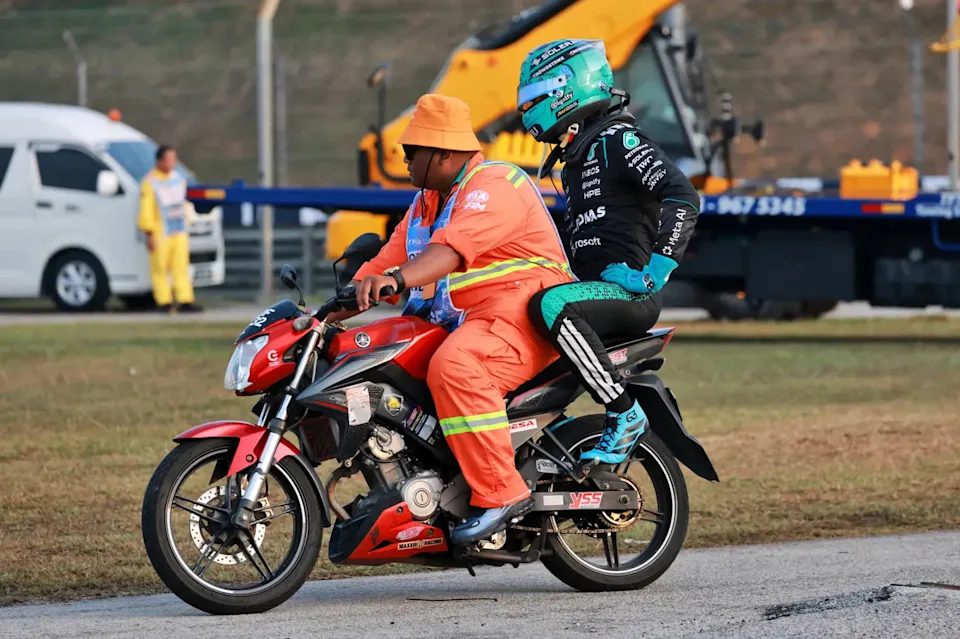
That distinction matters after major crashes. Fire safety also depends on fast marshals, medical response, cockpit access, belts, gloves, and the driver’s condition. You can see the wider safety picture in guides on what causes crashes in motor racing, F1 marshals, and F1 flags.
Therefore, a fireproof racing suit is best understood as escape-time technology. It reduces injury risk while the rest of the rescue system goes to work.
Nomex vs Carbon Fiber, Kevlar, and Other F1 Materials
Nomex protects the driver’s body from flame. Carbon fiber builds the survival cell and body structure. Kevlar adds toughness in selected areas. In other words, each material has a different job.
That is why the safety package must be viewed as a system. The bodywork in F1 manages aerodynamics and packaging. The monocoque protects the driver in the crash. Meanwhile, the Nomex suit protects the skin when heat becomes the main threat.
Modern F1 safety has improved because these systems now work together. Formula 1 highlights Nomex clothing, the halo, survival cell design, and cockpit protection as part of wider safety progress.
Final Verdict
What is Nomex in F1? It is one of the quiet heroes of driver safety. Fans see the sponsors, colors, and team branding first. However, underneath that design is a technical fire barrier.
A proper Formula 1 fireproof suit gives a driver crucial seconds when things go wrong. It works with the helmet, HANS, halo, survival cell, marshals, and FIA safety rules. As a result, Nomex remains one of the most important materials in motorsport safety equipment.
FAQs About Nomex in F1
What is Nomex in F1?
Nomex in F1 is a flame-resistant aramid fiber used in racing suits, gloves, balaclavas, socks, and underwear. It helps protect drivers from fire and heat.
Why do F1 drivers wear Nomex?
F1 drivers wear Nomex because it gives critical escape time during a fire. It resists flame, does not melt like normal fabric, and helps reduce burn risk.
Are Formula 1 suits fireproof?
Formula 1 suits are usually called fireproof, but flame-resistant is more accurate. They protect for a limited period while the driver escapes or receives help.
What material are F1 suits made from?
F1 suits are made from FIA-approved flame-resistant materials, commonly including Nomex. The full kit also includes gloves, boots, underwear, and a balaclava.
What is the difference between Nomex and Kevlar?
Nomex is mainly used for heat and flame resistance. Kevlar is known for strength and tear resistance. F1 uses both materials in different safety roles.