Use of Autoclave In F1 Cars: Carbon Fibre Manufacturing Explained
The use of autoclave in F1 cars is to cure carbon fibre composite parts under controlled heat, pressure, and vacuum. This process helps teams build lightweight, stiff, strong, and consistent parts for the monocoque, floor, wings, diffuser, bodywork, suspension pieces, and crash structures.
An autoclave is not a glamorous part of Formula 1. However, it sits at the centre of how modern F1 cars become light, stiff, safe, and repeatable.

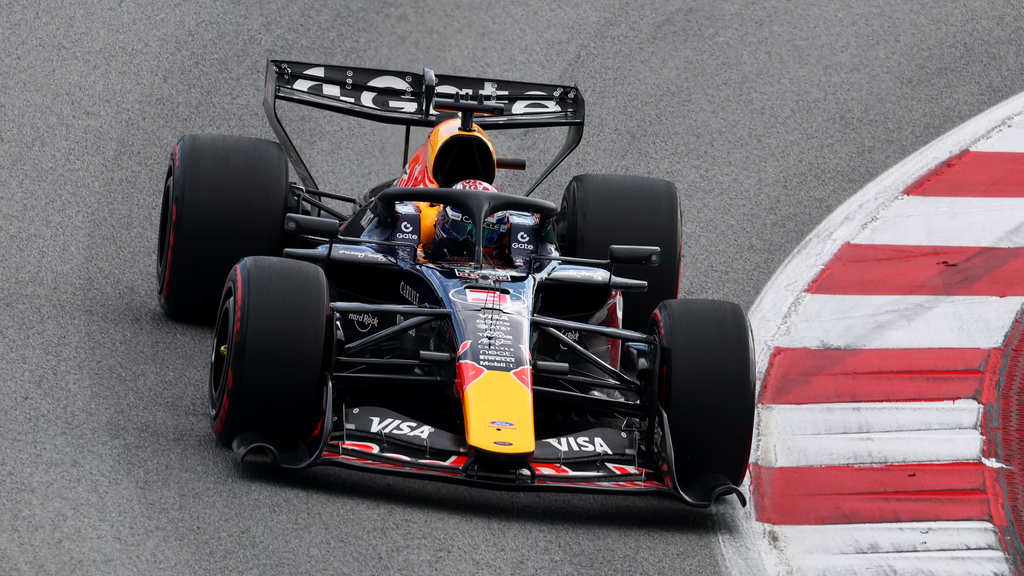
Use of autoclave in F1 cars starts with one basic truth: Formula 1 is a carbon fibre sport. The car may look like painted bodywork, but much of the structure is composite material.
Teams use autoclaves to cure prepreg carbon fibre parts. In simple terms, they put layered carbon fibre and resin into a sealed pressure vessel, then cure it with heat and pressure.
This topic connects directly with F1 car monocoque, Kevlar in F1 cars, Nomex in F1, and F1 bodywork.
The result is a part that is light, stiff, and accurate. Moreover, the process gives engineers repeatability, which matters when a team builds many race-spec components through a season.
What Is An Autoclave In Formula 1?
An autoclave in Formula 1 is a large pressure oven used for composite manufacturing. It controls temperature, pressure, vacuum, and time during curing.
F1 teams use it after carbon fibre layup. The part is placed in a mould, vacuum bagged, checked, and then cured through a precise cycle.
That cycle hardens the resin and bonds the carbon fibre layers into one laminate. Therefore, a soft stack of material becomes a race-ready structural part.
Race analyst view: The autoclave is where carbon fibre stops being fabric and starts becoming a Formula 1 component.
How Does Autoclave Curing Work In F1?
The process begins with prepreg carbon fibre. Racecar Engineering describes prepreg as fibres that are already impregnated with a polymer matrix.
Technicians cut the sheets, follow a layup schedule, and place each ply in a mould. The fibre direction is important because strength follows the load path.
Next, the part is vacuum bagged. This removes trapped air and helps compact the laminate before the autoclave cycle.
Inside the autoclave, heat activates the resin. Meanwhile, pressure consolidates the laminate and reduces voids. As a result, the finished part becomes stronger and more consistent.
| Step | What Happens | Why It Matters |
|---|---|---|
| Prepreg cutting | Carbon fibre sheets are cut to shape | Controls accuracy and material direction |
| Carbon layup | Layers are placed in the mould | Builds strength along load paths |
| Vacuum bagging | Air is pulled from the part | Reduces voids and improves consolidation |
| Autoclave curing | Heat and pressure cure the resin | Creates a stiff, reliable composite part |
Which F1 Parts Are Made Using Autoclaves?
Autoclaves are used for many carbon fibre components in Formula 1. These can include floors, diffusers, wings, engine covers, suspension fairings, brake ducts, and bodywork panels.
Alpine has explained that giant autoclaves can produce components such as engine covers, front wings, bodywork sections, floors, diffusers, and suspension parts.
Mercedes also describes a wider process where carbon fibre parts are laminated, cured in autoclaves, machined, tested, trimmed, assembled, inspected, and then sent to the build department.
This links with F1 diffusers, endplates in F1, downforce, and clean air in F1.

Why Do F1 Teams Use Autoclaves?
F1 teams use autoclaves because carbon fibre quality is not only about the material. It is also about how the material is cured.
Pressure helps squeeze the laminate into the mould. Heat cures the resin. Vacuum helps remove air. Together, they improve strength, stiffness, surface finish, and repeatability.
This is vital for aerodynamic parts. A floor edge, wing element, or diffuser surface must match the design closely. Otherwise, airflow changes and lap time disappears.
Therefore, autoclave curing supports both structure and aerodynamics. It helps teams build parts that are light enough for performance and strong enough for track loads.
How Autoclaves Support The F1 Safety Cell
The most important carbon fibre structure is the monocoque. It surrounds the driver and forms the survival cell.
Alpine describes the carbon fibre monocoque as a safety cell around the driver, combining lightness with crash-resistant behaviour. That is why composite quality is not just a performance issue.
A Formula 1 survival cell must resist huge forces. It must also hold safety items, cockpit structures, and impact systems in the correct places.
For more safety context, read about the F1 cockpit, Halo in F1 cars, HANS in F1, and F1 headrests.
Can F1 Parts Be Made Without An Autoclave?
Some composite parts can be made with out-of-autoclave methods. However, Formula 1 often demands the highest laminate quality and tightest tolerance.
That is why autoclaves remain important in race-car manufacturing. They offer controlled pressure and temperature that simple oven curing cannot always match.
However, the autoclave is not magic. A poor layup, wrong fibre direction, bad debulk, or contaminated mould can still ruin a part.
The process depends on skilled technicians. In fact, Formula 1 composite manufacturing is a mix of human craft, digital design, inspection, and advanced equipment.
Autoclave Curing Vs Normal Oven Curing
A normal oven mainly adds heat. An autoclave adds heat plus pressure, while the part remains under vacuum.
This matters because pressure compacts the laminate more effectively. Consequently, the finished carbon fibre part can have fewer voids and better consolidation.
For F1, that difference matters. The car must be light, but it must also survive kerbs, vibration, aerodynamic load, and crash testing.
This connects with bottoming out in F1, ballast in F1 cars, the FIA, and car handling.
Final Verdict
The use of autoclave in F1 cars is central to modern carbon fibre manufacturing. It helps turn prepreg carbon fibre into light, stiff, accurate, and repeatable racing parts.
Autoclaves support the monocoque, bodywork, floors, diffusers, wings, and many other composite parts. However, the machine is only one part of the story.
The real advantage comes from the full process: design, ply schedule, mould quality, layup skill, vacuum bagging, curing cycle, machining, inspection, and testing. For beginners, the answer is simple. F1 teams use autoclaves to make carbon fibre parts stronger, lighter, and more reliable.
FAQs About Use Of Autoclave In F1 Cars
What is an autoclave in Formula 1?
It is a high-pressure oven used to cure carbon fibre composite parts under heat, pressure, and vacuum.
Why do F1 teams use autoclaves?
They use autoclaves to make carbon fibre parts lighter, stronger, stiffer, and more consistent.
What is prepreg carbon fibre?
Prepreg carbon fibre is fibre material already impregnated with a controlled amount of resin.
How are F1 carbon fibre parts manufactured?
Teams cut prepreg, lay it in moulds, vacuum bag it, cure it in autoclaves, machine it, inspect it, and assemble it.
Does autoclave curing make carbon fibre stronger?
It can improve laminate quality by compacting layers, reducing voids, and controlling resin curing.
Does every F1 team use autoclaves?
Modern F1 teams rely heavily on advanced composite manufacturing, including autoclave-cured carbon fibre parts.