New Hampshire NASCAR 2026 Preview: Flat-Track Favorites & Predictions
Who has the best combination of Loudon history, current form and flat-track speed? Here is the data behind the leading contenders, the sleeper picks and our race prediction for the 2026 Dollar Tree 301.
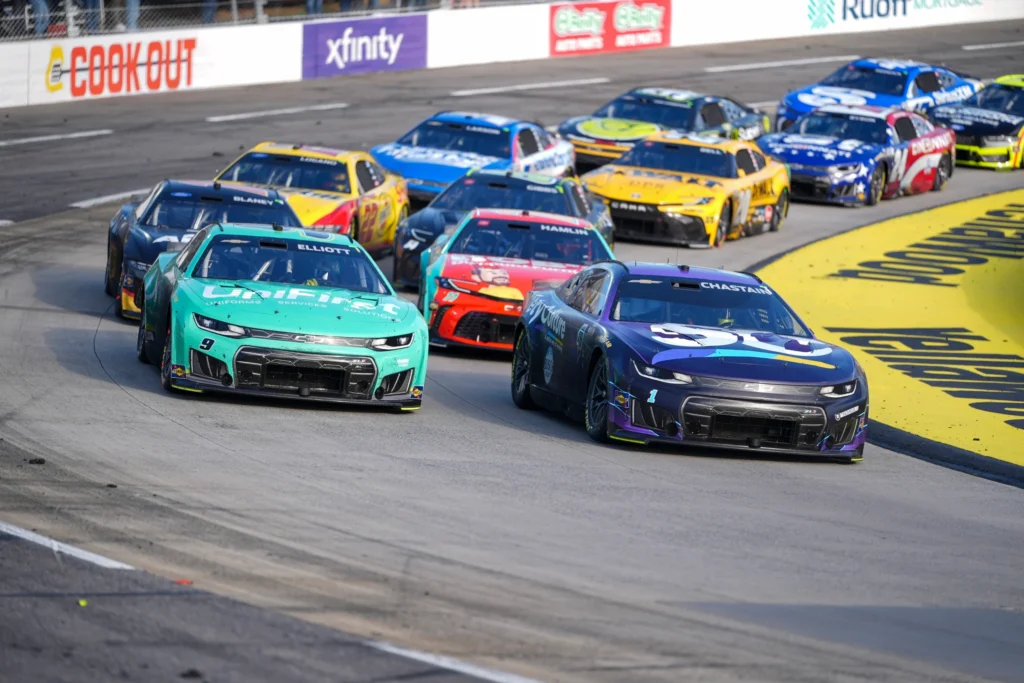
New Hampshire NASCAR 2026 arrives at exactly the right moment for a form-versus-history debate. The Cup Series reaches Loudon on Sunday, August 23 with only two regular-season races left, and the track is one of the least forgiving ovals on the calendar. New Hampshire Motor Speedway measures 1.058 miles, its straights are banked at only one degree and the turns vary from two to seven degrees. That low banking puts a premium on braking, rotation, rear grip and track position.
The headline contenders come from two familiar camps. Joe Gibbs Racing brings the strongest body of long-term New Hampshire results through Denny Hamlin and Christopher Bell, while Team Penske returns to a track it dominated in 2025. Ryan Blaney won last year’s race, Joey Logano led 147 laps and started from pole, and the Penske pair combined to lead 263 of 301 laps. Logano now returns in even hotter form after winning Richmond on August 15, his second Cup victory in four races.
This preview uses official NASCAR and New Hampshire Motor Speedway information available through August 20, 2026. Predictions below are editorial analysis, not reported results. Practice and qualifying have not yet set the starting lineup, so those sessions can still change the order of the favorites.
New Hampshire NASCAR 2026 race facts
The 2026 Dollar Tree 301 is scheduled for Sunday, August 23 at 3:00 p.m. ET. New Hampshire Motor Speedway lists the Cup race as the penultimate event of the regular season. NASCAR’s official entry-list release calls it the 25th points-paying race of the 36-race season and lists 36 cars for the event. The race is scheduled for 301 laps around the 1.058-mile oval, a distance of roughly 318.5 miles.
The weekend also matters because NASCAR’s championship structure changed for 2026. The top 16 drivers in points after Race 26 advance to The Chase. New Hampshire is Race 25, so the field leaves Loudon with only Daytona remaining before the cutoff. That creates a different kind of pressure than the old win-and-in system: finishing 10th instead of 20th can be every bit as important as gambling for a victory if a driver is protecting a points position.
Cup practice and qualifying are scheduled for Saturday morning, with NASCAR’s television guide listing the combined window at 10:30 a.m. ET on truTV. The Dollar Tree 301 follows Sunday at 3:00 p.m. ET on USA Network, with HBO Max streaming and PRN/SiriusXM NASCAR Radio audio coverage.
What makes New Hampshire Motor Speedway difficult?
Calling New Hampshire a “short track” does not fully explain the challenge. At 1.058 miles, Loudon is longer than Martinsville and Bristol, but the driving problems are closer to a flat short track than a conventional intermediate oval. The straightaways are 1,500 feet long and just one degree banked. The corners offer variable banking from only two to seven degrees. Cars carry meaningful straight-line speed into a corner that does not provide much banking to help them turn.
That changes the technical priorities. A driver must slow the car without locking the front tires, get the nose to rotate in the center, then return to throttle without overloading the rear tires. If the front refuses to turn, the car washes toward the outside lane and gives away corner-exit speed. If the rear becomes too loose, the driver cannot attack the throttle and becomes vulnerable down the straight. A setup that feels secure early can become a liability as rubber builds and the temperature changes.
New Hampshire also punishes small positioning mistakes. Passing can be difficult when two cars are evenly matched because the preferred line is valuable and the braking zones are relatively narrow. That makes restarts, pit-road execution and lane choice more important. A car that is fifth-fastest on a long run can win if it controls track position at the right time. A car that is quickest in clean air can spend dozens of laps trapped behind traffic if a caution catches the strategy wrong.

Why flat-track specialists tend to matter here
The best Loudon drivers usually share a few habits. They are comfortable attacking the brake pedal deep into the corner, they can change their line without upsetting the car, and they are precise enough to repeat the same entry and exit for long green-flag runs. That is why drivers with strong records at places such as Richmond, Phoenix, Martinsville and Gateway often deserve extra attention when NASCAR reaches New Hampshire.
The comparison is not perfect. Each track has its own surface, tire behavior and geometry. But the skill set overlaps. Richmond in particular is useful because the Cup Series raced there only eight days before New Hampshire. The Richmond result therefore gives us both a flat-track-style reference and a very recent snapshot of team form.
At Loudon, raw speed matters. But usable speed — the ability to brake, rotate, launch and repeat — often matters more.
Current form entering New Hampshire
Denny Hamlin enters Loudon with the clearest points advantage in the Cup garage. NASCAR’s post-Richmond Chase update lists Hamlin first with 969 points, 115 ahead of Ryan Blaney. Ty Gibbs sits third on 842, Tyler Reddick fourth on 831, Chase Briscoe fifth on 715, and Chase Elliott and Christopher Bell are tied at 695. Kyle Larson is eighth on 660.
Those numbers matter because the race for the Chase is not simply about collecting winners. NASCAR’s 2026 format rewards regular-season points directly, and the field has two races left to determine the top 16. Hamlin, Blaney, Gibbs, Reddick, Briscoe, Elliott and Bell had already mathematically secured Chase positions after Richmond. Larson, Logano, Chris Buescher, Carson Hocevar, William Byron, Daniel Suárez and Bubba Wallace occupied eighth through 14th.
Logano is the driver carrying the hottest obvious momentum. He won Richmond and has now won twice in four races. NASCAR’s Chase check-in also notes that he has climbed from 20th to ninth in the standings over a six-race span. That rise is important for this preview because Logano’s New Hampshire résumé was strong long before the current streak: two victories and 10 top-five finishes in 27 Cup starts.
Chase Briscoe is another driver whose form deserves more attention than his name may receive in casual predictions. At Richmond he led a race-high 171 of 400 laps and finished second. NASCAR reports six top-six finishes in his last seven races entering New Hampshire, and he has three top-10 finishes in five Loudon starts. That combination of current pace and relevant track history makes him a serious contender rather than a speculative sleeper.
Post-Richmond championship snapshot
| Rank | Driver | Points | New Hampshire angle |
|---|---|---|---|
| 1 | Denny Hamlin | 969 | 3 Loudon wins; 19 top-10s in 32 starts |
| 2 | Ryan Blaney | 854 | Defending winner; led 116 laps in 2025 |
| 3 | Ty Gibbs | 842 | Strong season, but best Loudon finish is 16th |
| 4 | Tyler Reddick | 831 | Two sixth-place finishes in his last three Loudon starts |
| 5 | Chase Briscoe | 715 | Six top-six finishes in last seven races |
| 6T | Chase Elliott | 695 | Fifth at New Hampshire in 2025 |
| 6T | Christopher Bell | 695 | 2 Loudon wins; 4 top-10s in 6 starts |
| 8 | Kyle Larson | 660 | 9 top-10s in 15 starts; 10.9 average finish |
Who are the favorites for New Hampshire NASCAR 2026?
The best way to rank New Hampshire favorites before practice is to combine three categories: proven Loudon performance, recent 2026 form and team strength on flat or short ovals. No single category should dominate. A great career record can hide a weak current car, while a hot streak can be misleading if a driver has repeatedly struggled to pass or preserve tires at this track.
Christopher Bell
Bell has the cleanest recent Loudon win profile: two Cup victories and four top-10 finishes in six starts. He also entered Richmond as one of the most reliable short-track performers in the field. Sixth place at New Hampshire in 2025 was actually a step down from his usual standard here.
Ryan Blaney
Blaney won the 2025 race after leading 116 laps and is second in the 2026 standings. Penske’s 2025 Loudon pace was overwhelming, and Blaney has already won twice in 2026, including Phoenix — another low-banked track where braking and rotation matter.
Denny Hamlin
Hamlin leads the 2026 standings and owns three New Hampshire wins plus 19 top-10 finishes in 32 starts. His record is too deep to ignore, especially after a fourth-place Richmond result that extended his large points lead.
Joey Logano
Logano arrives after winning Richmond and has two wins in his last four races. He owns two Loudon victories, 10 top fives in 27 starts and led a race-high 147 laps from pole in 2025. Few drivers bring a stronger blend of form and track history.
Christopher Bell: the statistical centerpiece
Bell is my pre-practice favorite because his New Hampshire results are too consistent to dismiss. NASCAR’s current Chase analysis credits him with two wins and four top-10 finishes in six Cup races at Loudon. He also won the 2024 Cup race here and was the pre-weekend Racing Insights favorite in 2025 before Blaney overtook him after practice and qualifying. That distinction is useful: it shows Bell’s baseline is elite, but it also reminds us that Saturday data can legitimately change the forecast.
Bell’s style fits the track. He is comfortable using the brake pedal to manipulate rotation, and his dirt/open-wheel background has always helped him manage a car on the edge of rear grip. In Cup competition, that does not automatically create speed, but it gives him options when the ideal line changes. If Toyota unloads with competitive long-run pace, Bell should be able to attack rather than wait for strategy to rescue him.

Ryan Blaney: the benchmark from 2025
If the 2026 race develops like last year’s event, Blaney is the obvious driver to beat. He started second, led 116 laps and controlled the final 39 to beat Josh Berry by 0.937 seconds. More importantly, the performance was not isolated. Penske and its technical partners had the fastest group across the entire weekend. Logano won the pole, Blaney lined up alongside him, and Wood Brothers driver Berry started third. In the race, Blaney and Logano combined to lead 263 of 301 laps.
Blaney’s current season adds weight to the argument. He is second in points and has won in 2026 at Phoenix and EchoPark Speedway. The Phoenix victory is especially relevant because flat-oval confidence tends to transfer better to Loudon than speed at a high-banked superspeedway. Blaney does not need to recreate every detail of 2025. He only needs the No. 12 to unload somewhere near the same operating window.
Denny Hamlin: the safest high-floor pick
Hamlin may be the strongest prediction if the question is “Who is least likely to disappear from the top 10?” rather than “Who has the highest single-race ceiling?” Three wins and 19 top-10s in 32 New Hampshire starts represent a huge sample. He is also leading the 2026 standings by 115 points after Richmond and has shown little reason to expect a sudden collapse at one of his best track types.
The caution is 2025. Hamlin ran around the top 10 for much of that race but finished 12th after an incident involving teammate Ty Gibbs. Penske had more raw pace that weekend. If Ford arrives with the same advantage, Hamlin may need strategy and execution to overcome it. But if the manufacturers are close, the No. 11 should be in the winning conversation deep into the final stage.
Joey Logano: momentum meets home-region confidence
Logano is a Connecticut native and New Hampshire functions as his home-region Cup race. That storyline matters less than the numbers: two wins, 10 top-five finishes in 27 starts, a 2025 pole and 147 laps led last season. Now add the 2026 form. He has moved from 20th to ninth in the standings in six races and won two of the last four, including Richmond.
Richmond is not a duplicate of New Hampshire, but the sequence required from the driver — heavy braking, patient center rotation and controlled throttle application — overlaps enough to matter. Logano’s best races often come when he can manipulate restarts, defend aggressively and keep track position. Loudon provides all three opportunities.
Other drivers who can realistically win
Chase Briscoe
Briscoe’s recent run makes him impossible to leave outside the contender group. He finished second at Richmond after leading 171 laps, and NASCAR’s Chase update gives him six top-six finishes in his last seven starts. At New Hampshire, he has three top-10s in five races. That is not Bell-level dominance, but it is a strong base combined with arguably the best current run of his Cup career.
Kyle Larson
Larson has never won a Cup race at New Hampshire, which is the obvious gap on his résumé, but his consistency is excellent: NASCAR lists nine top-10 finishes in 15 starts and a 10.9 average finish. He finished seventh in 2025 and sixth at Richmond last week. Larson is often more dangerous on tracks where he can build speed through multiple lanes, so Loudon is not the most natural fit on paper. Still, his floor is high enough that a fast Hendrick car immediately turns him into a win threat.
William Byron
Byron finished third in the 2025 New Hampshire race, his first top-10 at the track in eight attempts. That performance is more valuable than his older track average because it came with the current car and under the same basic competitive era. He followed it with a ninth-place result at Richmond in 2026. Byron has not yet built Bell- or Hamlin-level Loudon consistency, but last year showed the Hendrick No. 24 can run near the front here.
Chase Elliott
Elliott surged from 27th on the grid to finish fifth at New Hampshire in 2025, one of the most impressive recovery drives in the field. He also finished fifth at Richmond in 2026, ending a long stretch without a top 10. The concern is whether that Richmond result represents the start of a performance rebound or simply one good night. His New Hampshire ceiling is strong enough to keep him in the top-eight conversation.
Dark-horse and sleeper picks for the Dollar Tree 301
Berry finished second at New Hampshire in 2025 and was part of a dominant Ford group that included Team Penske. He also finished eighth at Richmond last weekend. If the Wood Brothers unload with the same short-track balance they showed a year ago, Berry has genuine top-five potential and an outside path to the win.
Berry is not a random long shot. In 2025 he recovered from a spin on Lap 82 and still closed to within 0.937 seconds of Blaney. That tells us two things: the car had real speed, and Berry remained effective even after losing track position. New Hampshire often magnifies the value of short-track instincts, and Berry built much of his reputation on exactly that style of racing.
Chris Buescher
Buescher is ninth in the broader Chase bubble conversation after Richmond and generally performs well in races where mechanical grip and disciplined tire use matter more than outright aerodynamic load. His 18th-place finish at New Hampshire in 2025 was not a highlight, so the pick requires more projection than Berry. Still, RFK’s short-track capability and Buescher’s precision make him a top-10 sleeper if Saturday pace is encouraging.
Michael McDowell
McDowell finished eighth at New Hampshire in 2025, better than several playoff contenders, and that result shows he can translate a strong setup into track position at Loudon. He is unlikely to rank among the five pre-race favorites, but this is the kind of circuit where a well-balanced car and a clean pit sequence can keep an experienced driver in contention much longer than expected.
Tyler Reddick
Calling a five-time 2026 winner a “dark horse” would be misleading, so Reddick belongs in a separate category: high-upside contender with mixed recent momentum. He is fourth in points, but NASCAR notes a difficult stretch before an 11th-place Richmond finish stopped the slide. His recent New Hampshire record includes two sixth-place finishes in his last three appearances. If 23XI finds long-run balance, Reddick can move quickly from secondary pick to front-line favorite.
New Hampshire NASCAR 2026 strategy outlook
A useful Loudon prediction cannot stop at driver rankings. New Hampshire creates strategic leverage because clean air and track position are valuable, tire wear can change through a run, and passing becomes harder when the field settles into similar lap times. Crew chiefs therefore have to decide when to protect position and when to chase tire advantage.
1. Track position can be worth more than perfect tire life
At a high-degradation track, four fresh tires can overwhelm a track-position deficit. New Hampshire is more complicated. Fresh rubber helps, but traffic can erase part of the advantage because the corners are flat and the preferred lane matters. That is why two-tire calls, short-pitting and staying out under late cautions can all become realistic options. The winning crew chief may be the one who correctly identifies when passing difficulty becomes more important than tire delta.
2. Restarts are miniature races
The first two or three corners after a restart can decide 20 laps of track position. Drivers can attack side-by-side before the field strings out, and the choice of lane becomes critical. Logano is particularly dangerous in these situations because he is willing to defend aggressively and use every legal inch of track. Blaney and Bell are also excellent at timing throttle application when grip is limited.
3. Brake management matters over 301 laps
New Hampshire demands repeated heavy deceleration. Teams need enough brake performance to attack without overheating components or forcing the driver into conservative entries late in the race. The challenge is not simply stopping the car. Brake migration, pedal feel and balance all affect whether the driver can point the nose toward the apex. A small loss of confidence on corner entry can become several tenths of a second per lap.
4. Pit-road mistakes are expensive
NHMS lists pit-road speed at 45 mph. A speeding penalty, uncontrolled tire or slow stop can bury a contender in traffic, and the difficulty of passing makes recovery harder than at many intermediate tracks. The 2025 race reinforced the point: Penske’s cars were fastest, but even Logano acknowledged that beating Blaney would have required winning on pit road and in the details.
5. Saturday practice should move the prediction board
NASCAR’s 2026 schedule gives the Cup field a meaningful Saturday practice session before qualifying. That is important for prediction accuracy. In 2025, Racing Insights initially projected Bell as the favorite, then updated the projection to Blaney after practice and qualifying. Blaney went on to win. The lesson is straightforward: historical statistics set the baseline, but actual weekend speed should have the final word.
Prioritize 10-lap average speed, falloff over a longer run, brake stability and whether a team can run both the lower and upper portions of the variable banking. A single qualifying lap matters for track position, but raceable balance is the stronger Sunday indicator.
Why New Hampshire matters beyond the race win
The 2026 Cup season uses a points-based Chase qualification system. The top 16 after Race 26 advance, and New Hampshire is Race 25. NASCAR’s post-Richmond analysis therefore frames Loudon as the penultimate opportunity to shape the field before Daytona, a track where drafting volatility can erase a points cushion in one incident.
That makes New Hampshire strategically valuable to bubble drivers. Larson, Logano, Buescher, Hocevar, Byron, Suárez and Wallace occupied positions eight through 14 after Richmond. None can assume Daytona will be calm. A 45-point day at Loudon could create breathing room; a mechanical failure could transform Daytona into a desperation race.
Logano’s recent climb is the model for what is possible. NASCAR reports that he moved from 20th to ninth in six races. Hocevar represents the opposite trend after consecutive poor finishes at Iowa and Richmond dropped him from fifth after Indianapolis to 11th. New Hampshire can continue either trajectory because its flat layout often separates cars that are mechanically balanced from those relying on aerodynamic efficiency.
For the already secure leaders, the goal is different. Hamlin is protecting the regular-season No. 1 position and the points advantage that comes with it. Blaney is trying to reduce a 115-point deficit while maintaining second. Bell and Elliott are tied at 695, so every stage point can influence where they begin The Chase. Even without a cutoff emergency, there is little incentive to treat Loudon as a low-risk Sunday.
Who will win New Hampshire NASCAR 2026?
| Prediction rank | Driver | Why the case works | Risk |
|---|---|---|---|
| 1 | Christopher Bell | Two Loudon wins, four top-10s in six starts, elite short-track profile | Penske was clearly faster here in 2025 |
| 2 | Ryan Blaney | Defending winner, second in points, Penske dominated 2025 event | Needs 2025-level long-run balance to repeat |
| 3 | Joey Logano | Richmond winner, two Loudon wins, 147 laps led here last year | Recent surge still leaves less season-long consistency than Hamlin |
| 4 | Denny Hamlin | Points leader, three track wins, 19 top-10s in 32 starts | Finished 12th here during Penske’s 2025 dominance |
| 5 | Chase Briscoe | Six top-six finishes in seven races; second at Richmond | Less winning history at Loudon than top four |
| 6 | Kyle Larson | Nine top-10s in 15 Loudon starts; 10.9 average finish | No Cup victory at New Hampshire |
| 7 | Josh Berry | Runner-up in 2025; eighth at Richmond | Smaller body of Cup evidence than established stars |
| 8 | William Byron | Third here in 2025; Hendrick showed strong race pace | Only one Loudon top-10 through eight starts before 2026 |
Pre-practice pick: Christopher Bell. His two wins and four top-10 finishes in six New Hampshire starts give him the strongest modern track-specific profile. Blaney is the closest challenger because he is the defending winner, while Logano’s Richmond form makes him the driver most likely to jump to No. 1 if Penske again tops Saturday’s long-run charts.
Bell gets the narrow edge because he has repeatedly converted Loudon speed into results across different seasons. The prediction is not a claim that Toyota will automatically be fastest. In 2025, Ford overturned the pre-weekend expectation once cars reached the track. That is why this ranking should be treated as a Thursday baseline rather than a fixed forecast.
If Blaney is quickest over 10 consecutive laps in Saturday practice, I would move him level with or ahead of Bell. If Logano qualifies on the front row while maintaining strong long-run speed, his combination of current momentum and track position could make him the best race-day pick. Hamlin remains the safest fallback because his record is so deep and his 2026 points form so stable.
Projected top five
- Christopher Bell — winner pick.
- Ryan Blaney — defending winner and biggest threat.
- Joey Logano — hottest driver entering the weekend.
- Denny Hamlin — highest-floor veteran pick.
- Chase Briscoe — form-based breakout candidate.
Best dark horse
Josh Berry is the sleeper I would keep closest to the primary group. A runner-up finish here in 2025 is much stronger evidence than a generic “short-track specialist” label, and his eighth at Richmond shows the current program can still deliver a competitive flat-track race. If Berry qualifies inside the top 10, he becomes a legitimate podium threat.
Biggest Saturday swing factor
The most important unresolved question is whether Team Penske still owns the setup advantage it displayed last September. If Blaney and Logano again control the practice averages, the prediction should tilt toward Ford. If Bell and Hamlin match them on long runs, JGR’s superior historical record at the track becomes much more persuasive.
Five storylines to watch during the Dollar Tree 301
Can Penske repeat its 2025 domination?
Blaney and Logano leading 263 of 301 laps last year was not a marginal advantage. It was control of the race. The quickest way to understand the 2026 weekend is to see whether that advantage survives a new season. Saturday practice should answer much of that question.
Can Bell turn his record into another win?
Bell has already proven New Hampshire is one of his strongest Cup venues. If he runs in the top three early, the race may become a strategic duel between his JGR Toyota and the Penske Fords rather than a broad multi-team contest.
Does Hamlin protect the regular-season lead?
A 115-point lead over Blaney is substantial with two races remaining, but Hamlin’s goal is not merely to qualify for The Chase; he wants to finish the regular season first and maximize his reset advantage. New Hampshire is historically one of the safest tracks for him to score heavily.
Who leaves the bubble before Daytona?
Daytona is the least comfortable place to need a clean points day. Drivers from Larson through Wallace will want to leave Loudon with enough margin that the final regular-season race does not become a survival exercise. Stage points can therefore shape strategy even among cars that are not racing for the win.
Can a sleeper use track position to steal the race?
New Hampshire is ideal for an upset built on execution. A timely caution, a two-tire stop or a restart from the preferred lane can place a Berry, Buescher or McDowell ahead of faster cars. Once there, the flat corners make immediate passing difficult. That is the pathway for a dark horse.
New Hampshire NASCAR 2026 FAQ
Who is favored to win the 2026 NASCAR race at New Hampshire?
Christopher Bell, Ryan Blaney, Denny Hamlin and Joey Logano form the strongest pre-practice group. Bell is this preview’s narrow winner pick because he has two wins and four top-10s in six Loudon starts. Blaney is the defending winner, Hamlin owns three New Hampshire wins, and Logano arrives after winning Richmond.
When is the New Hampshire NASCAR race in 2026?
The Dollar Tree 301 is scheduled for Sunday, August 23, 2026 at 3:00 p.m. ET at New Hampshire Motor Speedway in Loudon. USA Network is scheduled to carry the Cup race, with HBO Max streaming and PRN plus SiriusXM NASCAR Radio providing audio coverage.
Why is New Hampshire Motor Speedway difficult?
New Hampshire is a 1.058-mile oval with only two to seven degrees of banking in the turns and one degree on the straights. Drivers have to brake hard, rotate the car through a flat corner and preserve rear grip on exit. Passing can also be difficult once the field spreads out, making track position and restarts especially valuable.
Who is the dark-horse pick for New Hampshire NASCAR 2026?
Josh Berry is the strongest sleeper in this preview. He finished second at New Hampshire in 2025 after recovering from an early spin, and he finished eighth at Richmond last weekend. His Wood Brothers Ford also benefits from technical alignment with the Penske organization that dominated Loudon last year.
Conclusion: history says Bell and Hamlin, recent speed says Penske
The 2026 New Hampshire NASCAR preview comes down to a compelling split. Joe Gibbs Racing owns the strongest long-term track evidence through Christopher Bell and Denny Hamlin. Bell has won twice in only six Loudon Cup starts, while Hamlin has three victories and 19 top-10 finishes. Team Penske, however, owns the most relevant single-race evidence. Ryan Blaney won in 2025, Joey Logano started from pole and led the most laps, and together they controlled 263 of 301 laps.
Current form makes that split even tighter. Hamlin leads the standings, Blaney is second, Briscoe has six top-six finishes in seven races, and Logano arrives immediately after a Richmond win that gave him two victories in four starts. No serious preview should pretend one driver has a decisive edge before the cars run Saturday.
My pre-practice prediction is Christopher Bell to win the Dollar Tree 301, with Blaney second on the contender board and Logano third. Bell’s New Hampshire conversion rate is exceptional, and his short-track skill gives him the right profile for a race that rewards braking confidence and mechanical grip. But this is one of the weekends where practice data should carry real weight. If Penske again owns the long-run charts, Blaney or Logano becomes the smarter Sunday pick.
The larger story is the Chase. New Hampshire is the penultimate regular-season race, and the points earned here determine how much risk drivers must carry into Daytona. That pressure will influence stage racing, pit strategy and late-race aggression even among cars that never lead. The winner may collect the lobster, but dozens of positions behind him can still alter the championship.
Sources
- NASCAR — Chase check-in before New Hampshire (Aug. 17, 2026)
- NASCAR — 2026 Cup Series entry list for New Hampshire
- New Hampshire Motor Speedway — Dollar Tree 301 event page
- New Hampshire Motor Speedway — official track information and dimensions
Article information reflects official material available through August 20, 2026. Starting positions and final practice-based projections can change after Saturday’s on-track sessions.