Richmond NASCAR 2026 Preview: Short-Track Contenders & Predictions
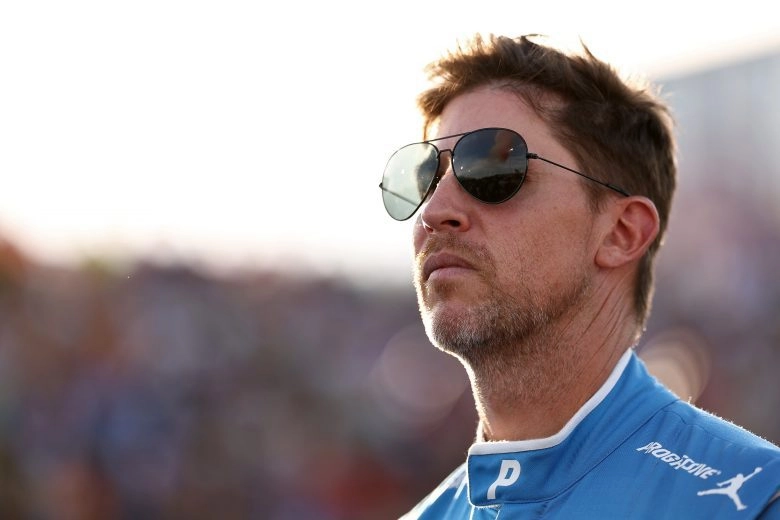
Richmond rewards drivers who can save the rear tires, survive traffic and keep the car balanced for 400 laps. Denny Hamlin arrived as the championship benchmark, while Austin Dillon chased a rare third straight Richmond victory.
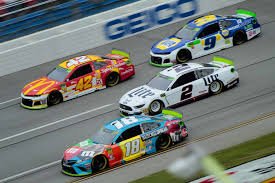
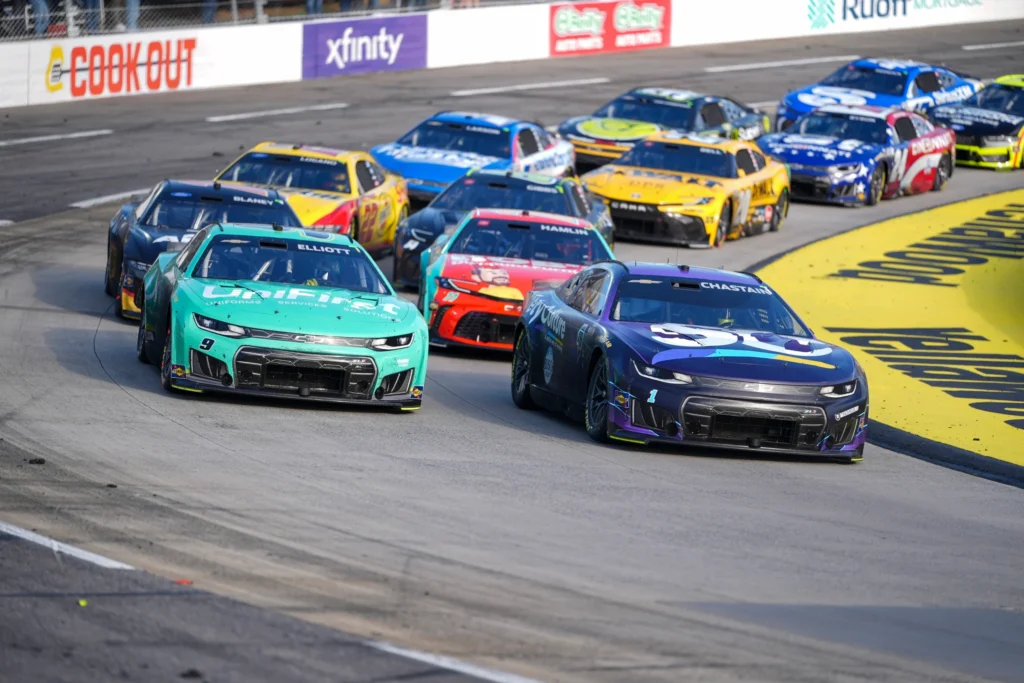
Richmond is the kind of track that exposes a car over time. One fast qualifying lap can put a driver near the front, but the Cook Out 400 is usually decided by tire falloff, long-run balance, traffic and pit timing.
The 2026 race arrived late in the regular season with Denny Hamlin leading the championship picture, Tyler Reddick trying to recover his early-season dominance and Ryan Blaney firmly established as a title-level threat. Meanwhile, Austin Dillon entered as the two-time defending Richmond winner.
This preview is written as a pre-race analysis. All winner picks below are editorial predictions based on verified form, Richmond history and 2026 short-track performance, not race results.
Richmond NASCAR 2026 Preview: Who Was the Best Pick?
Denny Hamlin was the preferred outright pick. He entered August as the Cup Series points leader, NASCAR’s own data rated him exceptionally well on short tracks, and he led 292 of 400 laps at Martinsville earlier in 2026 before finishing second to Chase Elliott.
| Driver | Why he mattered | Richmond / short-track signal | Prediction tier |
|---|---|---|---|
| Denny Hamlin | 2026 points leader entering August | Elite short-track rating; 292 laps led at Martinsville | Favorite |
| Chase Elliott | Won Martinsville in March | Beat Hamlin with strategy and late-race execution | Favorite |
| Ryan Blaney | Major 2026 title threat | Fourth at Iowa; third at Richmond in 2025 | Contender |
| William Byron | Won Iowa one week before Richmond | Fresh short-track momentum | Contender |
| Austin Dillon | Two-time defending Richmond winner | Won 2024 and 2025 Richmond summer races | Dark horse |
Richmond is not a place where one stat tells the whole story. Historical track performance matters, but so does current long-run speed.
That is why Hamlin stood out. His 2026 form and short-track record overlapped rather than pointing in opposite directions.
For broader context, see our 2026 NASCAR points standings and car-racing explainer.
Top Richmond NASCAR 2026 Contenders
Denny Hamlin: the strongest all-around case
Hamlin’s Richmond case started with the track itself. Few active Cup drivers have been as consistently strong on flat and technical short tracks.
NASCAR’s June 2026 data analysis gave Hamlin a 105.2 average Driver Rating on short tracks over the previous three seasons. That figure was far stronger than Tyler Reddick’s 73.4 over the same track type.
The 2026 Martinsville race strengthened the argument. Hamlin led a race-high 292 laps, won both stages and looked like the clear driver to beat before Elliott’s short-pit strategy and late restart changed the race.
He also carried championship momentum into the final regular-season stretch. NASCAR described Hamlin as arguably being in some of the best form of his career after three consecutive wins from Nashville through Pocono.
Richmond therefore matched both his historical strengths and his current season profile.
Chase Elliott: proven 2026 short-track winner
Elliott’s Martinsville win mattered because it showed he could beat Hamlin in a race where the No. 11 had superior track position for most of the afternoon.
Alan Gustafson’s short-pit call on Lap 261 moved Elliott forward, and he controlled the race after taking the lead on a later restart.
That combination of driver discipline and crew-chief strategy is valuable at Richmond, where tire timing can change the order during long green runs.
Elliott also entered Richmond as one of NASCAR’s most complete drivers. He did not need a chaotic race to contend.
Ryan Blaney: perhaps the most balanced Ford option
Blaney’s 2026 summer form made him impossible to overlook.
NASCAR’s July analysis showed his five-race Driver Rating trend had climbed above both Hamlin and Reddick at that moment. The same analysis noted that Richmond was one of the tracks where Blaney ranked among the better Next Gen-era drivers.
He then finished fourth at Iowa on August 9 after starting sixth and leading 29 laps.
Richmond had historically been a difficult venue for him, but his third-place finish in the 2025 Cook Out 400 was his first career top five at the track and evidence that the gap was closing.
William Byron: Iowa momentum arrives at the right time
Byron entered Richmond immediately after winning the 2026 Iowa Corn 350.
He started second, led 141 laps and beat Chase Briscoe by 1.192 seconds. Iowa is not identical to Richmond, but both reward mechanical grip, tire control and long-run balance.
That made Byron a more interesting Richmond contender than his older Richmond record alone might suggest.
Momentum in NASCAR is not magic, but setup knowledge can transfer between similar low-banked tracks.
Christopher Bell: always dangerous on technical short tracks
Bell’s 2026 story was unusual. He entered August without a win despite six runner-up finishes, including three in a four-race span.
That suggests speed without complete conversion.
Richmond has historically suited Bell’s style because he can manage corner entry without giving up too much center speed.
If Joe Gibbs Racing brought the same short-track strength it showed at Martinsville, Bell had the machinery to fight for the win.
Austin Dillon: the obvious Richmond-specific dark horse
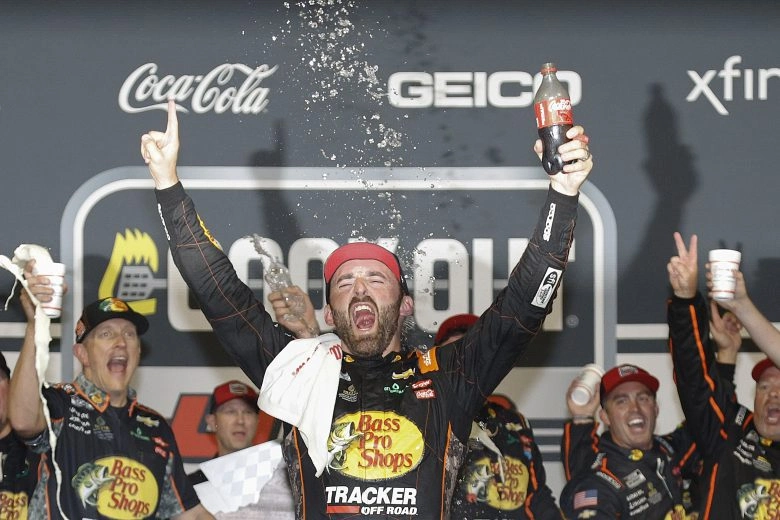
Dillon entered as the two-time defending winner of the Cook Out 400.
In 2025 he led 107 laps, including the final 49, and beat Alex Bowman by 2.471 seconds.
NASCAR specifically highlighted his attempt to win Richmond for a third consecutive year. A third straight victory would put him in rare company.
His overall 2026 form did not make him a conventional favorite. His Richmond form did.
Why Richmond Raceway Is So Difficult
Richmond is a 0.75-mile D-shaped oval with 14 degrees of banking in the turns. The challenge is not outright speed. It is keeping the rear tires alive while rotating the car through traffic for 400 laps.
The track combines short-track traffic with a rhythm closer to a small intermediate oval.
Drivers brake into the corners, roll the center and then manage throttle on exit. If the rear tires spin too much, lap time falls away quickly.
Tire falloff changes the order
A driver can lead early in a run and become vulnerable twenty laps later.
That is why practice averages matter more than the headline fastest lap.
In the 2025 Richmond weekend, Kyle Busch set the fastest practice lap and led the 5-, 10-, 15-, 20-, 25- and 30-lap averages. He still finished only 16th.
That does not make practice useless. It shows that race execution, track position and cautions still matter.
Our grip guide and handling explainer explain why rear-tire condition changes performance.
Multiple grooves create options
Richmond can produce a lower groove and a usable higher lane.
That gives drivers choices in traffic. A leader may move up to protect the tires, while a trailing car can attack the shorter lower line.
Lapped traffic is part of the race
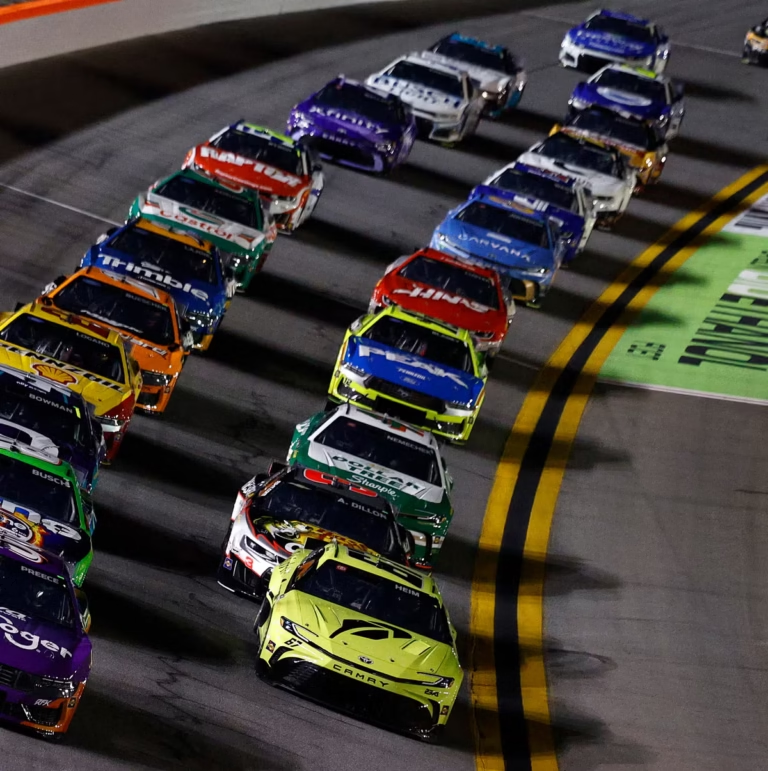
Four hundred laps on a 0.75-mile track means leaders regularly catch slower cars.
Bowman specifically pointed to lapped traffic after finishing second to Dillon in 2025. He felt traffic forced him to work the rear tires harder than he wanted while chasing the lead.
That is a classic Richmond problem. The fastest car is not always the car with the cleanest route through traffic.
Track temperature changes the balance
The 2026 race was scheduled for Saturday night.
As the track cools, grip levels and preferred lines can change. Teams therefore need a setup that remains adjustable rather than perfect only in afternoon practice.
Which Drivers Had the Best 2026 Short-Track Form?
Hamlin had the strongest statistical short-track case, but Elliott owned the most important 2026 short-track win at Martinsville. Blaney’s summer form and Byron’s Iowa victory put both firmly in the top contender group.
Martinsville: Elliott wins, Hamlin dominates
Martinsville offered the clearest pure short-track reference.
Hamlin controlled most of the race and led 292 of 400 laps. Elliott won by 0.565 seconds after a successful short-pit strategy and strong late restart.
Joey Logano finished third, Ty Gibbs fourth and William Byron fifth.
That race demonstrated two Richmond-relevant lessons. First, Hamlin had elite raw short-track pace. Second, strategy could still beat the fastest car.
Iowa: Byron, Briscoe and Blaney arrive hot
Iowa was the most recent short-oval reference before Richmond.
Byron won after leading 141 laps. Chase Briscoe finished second after leading 81, Brad Keselowski was third and Blaney fourth.
Ryan Preece climbed from 33rd to fifth, showing impressive race pace and traffic management.
Austin Dillon finished tenth, another encouraging signal for the two-time Richmond winner.
Why Iowa is useful but not identical
Iowa is 0.875 miles and has different banking and surface characteristics.
Still, both tracks place a premium on mechanical grip and long-run balance.
Teams can carry lessons about tire usage and rear-traction control even when the setup itself is different.
Our timing guide explains why long-run averages are more useful than one-lap speed when comparing these tracks.
Richmond NASCAR 2026 Race Strategy
Richmond races often become a contest between fresh tires and track position.
A driver can stay out to protect the lead or pit for grip and try to drive back through traffic.
Long-run speed matters more than the first ten laps
A setup that fires off fast but burns the rear tires can look excellent early and disappear later.
Crew chiefs therefore study 20- and 30-lap averages during practice.
Undercutting on fresh tires
Pitting before a rival can create several laps on fresher rubber.
If tire falloff is large, those laps may be enough to jump the rival during the pit cycle.
The risk is a caution immediately after the stop. That can trap the early stopper a lap down or deep in traffic depending on timing.
Our pit-stop guide explains the tradeoff.
Staying out for track position
Late in the race, some crew chiefs may choose to keep the car on track rather than surrender the front row for tires.
That can work if the driver controls the restart and the run is short.
It can fail badly if the race stays green and the fresher tires come through.
Stage points versus final-race strategy
Teams near the Chase cutline may value stage points differently from drivers already secure near the top of the standings.
A bubble driver can stay out to collect stage points even if that creates a less ideal final-race sequence.
This is where championship context changes race strategy.
See our championship scoring guide.
Caution timing
Short-track cautions can reset everything.
A yellow during green-flag stops can reorder the field. A late caution can force every crew chief into a tire-versus-track-position decision.
Our racing flags guide explains the neutralization process.
Richmond’s 2026 Chase Implications
Richmond came with only two regular-season events remaining afterward: New Hampshire and Daytona.
Under NASCAR’s 2026 Chase format, the top 16 drivers in points after Race 26 advance. There is no automatic win-and-in rule.
That makes every stage point important.
Hamlin’s race for the No. 1 seed
Hamlin entered August with the points lead after taking control from Reddick during the summer.
The top seed matters because NASCAR’s 2026 Chase reset gives the regular-season leader a larger starting-point advantage.
Richmond was a chance for Hamlin to extend that advantage at one of his best track types.
Reddick needed momentum
Reddick won five of the first nine races and looked like the early title favorite.
His summer was much less consistent. NASCAR noted that he finished 25th or worse in four of seven races during one stretch.
Richmond was therefore important even if he was not the favorite. A clean top five would help rebuild confidence before the Chase.
Blaney was still in the conversation
Blaney’s summer performance had pushed him into the title fight.
His strong Next Gen numbers at tracks like Richmond made the Cook Out 400 a realistic opportunity to close ground.
Dillon’s different objective
Dillon sat well outside the Chase field entering August.
Because wins no longer guaranteed a Chase berth in the 2026 system, even a third straight Richmond victory would not automatically solve his points situation.
Still, another win would be historically significant and a major statement for Richard Childress Racing.
Richmond NASCAR 2026 Predictions
These picks are based on pre-race form, historical Richmond performance and verified 2026 short-track results. They are editorial predictions, not reported race results.
Winner prediction: Denny Hamlin
Hamlin is the pick because he checked the most boxes.
He had the strongest short-track Driver Rating evidence, championship-leading form and a dominant Martinsville run.
Richmond also reduces some of the weaknesses that can appear for him on road courses or superspeedways.
If the No. 11 controls the rear tire over long runs, Hamlin has the profile of the driver to beat.
Best non-Hamlin pick: Chase Elliott
Elliott is the best alternative because he already beat Hamlin on a Virginia short track in 2026.
He also has a crew chief willing to use strategy aggressively when track position is available.
Best Ford pick: Ryan Blaney
Blaney’s fourth at Iowa and improved Richmond performance make him the preferred Ford option.
His 2025 third-place Richmond finish removed some of the concern created by his older record at the track.
Momentum pick: William Byron
Winning at Iowa one week earlier makes Byron impossible to ignore.
He showed long-run speed, led 141 laps and arrives with fresh confidence.
Dark horse: Austin Dillon
This is the obvious track-history play.
Dillon’s broader 2026 season did not justify favorite status, but winning Richmond twice in a row cannot be dismissed.
If RCR unloads with the same long-run balance as 2025, he can contend again.
Sleeper: Brad Keselowski
Keselowski finished third at Iowa after leading 68 laps.
He also has years of short-track experience and an RFK program that has shown Richmond speed with both Keselowski and Chris Buescher.
Top-five prediction
| Projected finish | Driver | Reason |
|---|---|---|
| 1 | Denny Hamlin | Best combination of 2026 form and short-track strength. |
| 2 | Chase Elliott | Martinsville winner with proven strategy execution. |
| 3 | Ryan Blaney | Strong summer form and improved Richmond performance. |
| 4 | William Byron | Fresh Iowa win and strong long-run balance. |
| 5 | Christopher Bell | Technical short-track skill and JGR strength. |
Race-shape prediction: tire management decides the final green run
The most likely race shape is a long final stint where the winner has to protect rear grip while navigating lapped traffic.
That favors drivers who can adjust their line rather than attack every corner at maximum throttle.
Five Drivers Who Could Change the Race Without Winning
Ryan Preece
Preece finished fifth at Iowa after starting 33rd. That kind of traffic progress matters at Richmond.
He also won the Richmond pole in 2025 at 121.381 mph.
Brad Keselowski
Keselowski’s Iowa podium showed strong short-oval form.
He can also influence the race through pit strategy and long-run tire management.
Ty Gibbs
Gibbs entered August fourth in the standings and had already clinched a Chase place.
At Martinsville, he finished fourth after running near the front throughout the event.
Chase Briscoe
Briscoe finished second at Iowa after leading 81 laps.
That is strong evidence of current low-banked oval pace.
Chris Buescher
Buescher has a Richmond win in the Next Gen era and has repeatedly shown strong results at the track.
Even when he is not the headline favorite, his car tends to stay competitive over long runs.
What to Watch in Practice and Qualifying
30-lap averages
One fast lap is less important than the car that maintains speed after the tires lose peak grip.
That is why practice-average charts are so useful at Richmond.
Right-rear falloff
Drivers will report whether the rear becomes loose on corner exit.
Excess wheelspin is a warning that the car may struggle over a full stint.
Qualifying position
Starting near the front helps, but Richmond is not a qualifying-only race.
In 2025, Dillon won from 11th while Blaney finished third from 20th and Logano fourth from 38th.
That race is a reminder that long-run speed can overcome a poor grid position.
Our qualifying guide explains how starting position is determined.
Richmond NASCAR 2026 Preview FAQs
Conclusion: Hamlin Was the Pick, but Richmond Had More Than One Winning Path
The Richmond NASCAR 2026 preview centered on one driver: Denny Hamlin.
His championship form, short-track statistics and Martinsville dominance made him the strongest all-around choice for the Cook Out 400.
However, Richmond rarely rewards one-dimensional speed.
Chase Elliott had already shown he could beat Hamlin with strategy. Ryan Blaney arrived with strong summer form and a much-improved Richmond result from 2025. William Byron entered one week after winning Iowa. Christopher Bell carried the technical skill and Joe Gibbs Racing short-track strength to contend.
Then there was Austin Dillon. A third consecutive Richmond win would have been a remarkable achievement, and his 2025 victory showed that the No. 3 team understood how to make the track work over a long run.
The most important variable remained tire management. Richmond punishes wheelspin and rewards patience.
The driver who could protect the rear tires while moving through lapped traffic was likely to be strongest when the race reached the final 50 laps.
My pre-race top five was Hamlin, Elliott, Blaney, Byron and Bell, with Dillon as the dark horse and Keselowski as the sleeper.
That combination balanced current 2026 form with the unique demands of Richmond Raceway rather than relying on track history alone.