Gresini Racing 2026: Lineup, Engine & Form Guide
Ducati’s most storied independent team enters 2026 with a factory-backed challenger and a rising star. We profile Gresini Racing — its Álex Márquez and Fermín Aldeguer line-up, its Desmosedici machinery, the Fausto Gresini legacy behind the name, and where the team stands heading into a pivotal season.
Gresini Racing 2026: Lineup & Form Guide
Ducati’s top independent team, its Márquez–Aldeguer line-up, the Desmosedici, and the Fausto Gresini legacy.
In a MotoGP grid dominated by factory squads, Gresini Racing has spent years proving that an independent team can punch with the giants. Running Ducati machinery from its base in Faenza, Italy, the team has become the most successful privateer operation of the modern era — and in 2026 it fields one of the most intriguing line-ups on the grid.
Few teams carry the emotional weight that Gresini does, and fewer still manage to marry that heritage with genuine on-track competitiveness. In an era when Ducati’s dominance has reshaped MotoGP, being the manufacturer’s flagship independent squad puts Gresini in a uniquely strong position — close enough to the factory to win, independent enough to keep its own identity.
This is World of Speed’s complete guide to Gresini Racing’s 2026 campaign: the two riders and their contrasting stories, the Ducati Desmosedici that powers them, the emotional history behind the Gresini name, and an honest look at where the team sits in the pecking order. For the wider grid picture, our complete MotoGP 2027 rider market maps every seat.
Gresini Racing 2026 — At a Glance
Gresini Racing is an Italian independent team competing in MotoGP with Ducati Desmosedici machinery. Long the standard-bearer for what a well-run privateer squad can achieve, it enters 2026 with a driver pairing that blends a proven front-runner with one of the sport’s most promising young talents.
| Detail | 2026 |
|---|---|
| Team name | Gresini Racing MotoGP |
| Base | Faenza, Italy |
| Category | MotoGP (independent team) |
| Machinery | Ducati Desmosedici |
| Rider 1 | Álex Márquez #73 |
| Rider 2 | Fermín Aldeguer #54 |
| Founder | Fausto Gresini |
Team details, riders and machinery are confirmed for the 2026 season. Where we assess Gresini’s competitiveness or form, that’s World of Speed’s analysis — clearly separated from the confirmed facts.
The 2026 Rider Line-Up
Gresini’s 2026 line-up pairs experience with youth, and both riders carry compelling storylines into the season.


Álex Márquez — the established leader
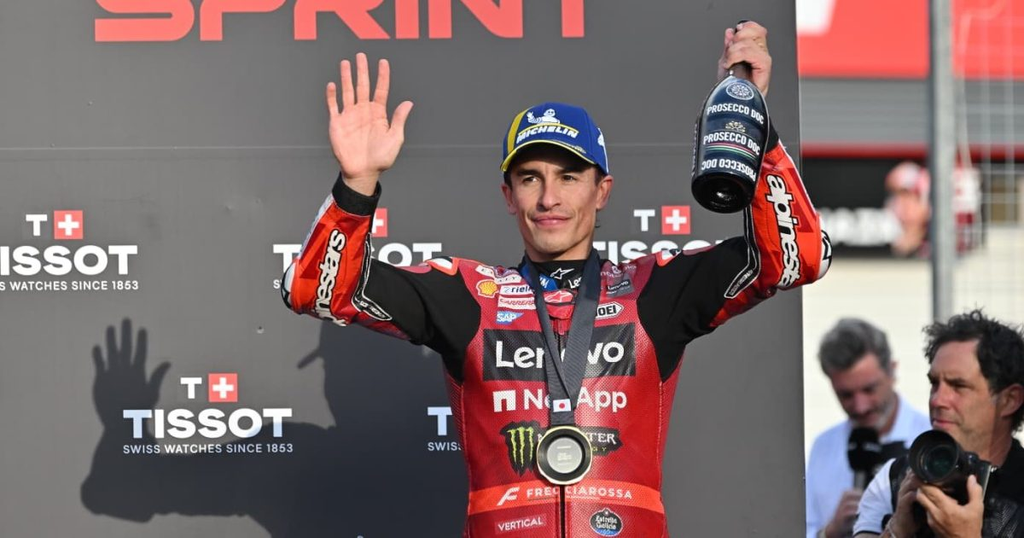
The younger brother of eight-time world champion Marc, Álex Márquez has stepped fully out of the family shadow to become a genuine MotoGP front-runner in his own right. After years of building his craft, he has developed into one of the most consistent points-scorers on the grid — a regular podium contender and race-winner who leads Gresini’s charge as its senior rider. For 2026 he secured factory-specification Ducati machinery, a significant step up that underlines both his stature and Ducati’s faith in him.
His journey is a study in patience and reinvention. Early in his premier-class career he was often dismissed as riding on his surname; season by season he silenced that narrative through results, until the paddock came to rate him purely on merit. That arc — from doubted younger brother to genuine Ducati asset entrusted with the best equipment — is one of the more satisfying redemption stories on the current grid, and it anchors Gresini’s 2026 with a leader in his prime.
That factory-spec deal matters enormously in a Ducati-heavy grid. Traditionally, independent teams run year-old bikes; handing Álex the latest equipment effectively erases the usual privateer disadvantage and turns Gresini into a de facto works entry at the sharp end. It’s the clearest signal yet of how highly the Bologna manufacturer rates him. If you want the background on his family and career, our profile of the Ducati-bound Pedro Acosta sits alongside a grid full of similar rising talents.
Fermín Aldeguer — the young prospect
On the other side of the garage is Fermín Aldeguer, one of the most hyped Spanish talents to reach MotoGP in years. A dominant force in the Moto2 category before his promotion, Aldeguer arrived with enormous expectations and has been steadily learning the demands of the premier class aboard the Ducati. His deal reportedly carries options for future seasons, reflecting the long-term belief the team and Ducati have in his ceiling.
What makes Aldeguer especially interesting is the pressure that comes with his billing. Riders anointed as future champions before they have proven themselves in the premier class carry a heavy burden — the expectation can be as much a hindrance as a help. How he manages that, and how quickly he closes the gap to his experienced team-mate, will tell us a great deal about whether the hype is justified. Sharing a garage with a rider of Álex Márquez’s calibre gives him the perfect yardstick against which to measure his progress.
The pairing gives Gresini an ideal balance: a proven leader to deliver results now, and a high-potential youngster being developed for the future. It’s exactly the structure a smart independent team wants — competitive today, with an eye on tomorrow.
The Machinery — Ducati Desmosedici

Gresini competes with the Ducati Desmosedici GP, the machine that has redrawn MotoGP’s competitive order in recent seasons. Powered by Ducati’s fearsome 90-degree V4 engine, the Desmosedici combines prodigious straight-line speed with a sophisticated aerodynamics and ride-height-device package that has made it the benchmark bike on the grid. When most of the field is chasing one manufacturer, being a Ducati team is a powerful starting point.
The key variable for an independent squad is always which version of that bike it receives. For 2026, Álex Márquez’s factory-specification machinery means Gresini isn’t fighting with last year’s tools — a crucial advantage on a grid where the margins between the works and satellite Ducatis can decide podiums. To understand what makes these engines so special, our explainer on how engines work and our guide to turbo versus naturally aspirated designs cover the fundamentals of performance powertrains.
There’s a strategic dimension to the machinery question too. Ducati has spent recent seasons spreading its bikes across a large portion of the grid, gathering data from many riders and refining the Desmosedici faster than rivals can develop their own machines. Gresini is a key part of that ecosystem — a trusted customer whose riders contribute to Ducati’s vast pool of development information. In return, the team gets access to a bike that has set the standard, and, for its lead rider, the very latest version of it.
Ducati has supplied the majority of the MotoGP grid in recent years, and its Desmosedici has been the bike to beat. For an independent team like Gresini, running Ducati — and especially factory-spec Ducati — means starting each weekend with genuinely race-winning equipment rather than a development compromise.
The Gresini Legacy
No profile of Gresini Racing is complete without the man behind the name. Fausto Gresini was a two-time 125cc world champion as a rider before founding his own team, building it into one of grand prix racing’s most respected independent operations across multiple categories. The squad became known for developing talent and for a fighting, family-run spirit that set it apart from the corporate factory outfits.
Fausto’s death in early 2021 was a profound loss for the paddock, and the team has since been led by his family, who have carried his name and values forward with visible pride. Every result the team scores now carries that added emotional resonance — a tribute to a founder who remains woven into the team’s identity. It’s part of why Gresini enjoys such warmth and support up and down the MotoGP grid.
Gresini Racing is more than a team on the entry list — it’s the living legacy of a beloved champion, run by his family and carried forward with every podium.
The team’s roots stretch back to the late 1990s, when Fausto stepped off the bike and into team ownership, and it has since fielded machinery from multiple manufacturers across the smaller classes and the premier category. Along the way it launched and nurtured the careers of numerous grand prix stars, earning a reputation as a place where young talent could be developed properly rather than burned out. That developmental instinct is exactly what makes the current pairing of a proven leader and a rising prospect feel so true to the team’s DNA.
That heritage, combined with its status as a leading Ducati customer, gives Gresini a distinctive place in the sport: commercially independent yet competitively front-line, emotionally rooted yet ambitious. Few teams balance sentiment and performance so effectively.
A record of overachievement
Across its long history in grand prix racing, Gresini has repeatedly delivered results that its budget and independent status had no right to produce. It has taken race wins and championship silverware in the smaller categories and, in the MotoGP era, established itself as the team other privateers measure themselves against. That track record of overachievement is not luck; it reflects a culture of maximising every resource, nurturing talent, and racing with a chip on the shoulder that bigger, better-funded outfits sometimes lack.
2026 Form & Outlook
On paper, Gresini enters 2026 as the strongest independent team on the grid, and arguably a match for some factory squads. The combination of Álex Márquez on factory-spec machinery and a highly-rated young team-mate gives it a realistic ambition of regular podiums and the odd race win, rather than simply leading the privateer class. In a Ducati-dominated era, a well-armed Ducati satellite is a genuine threat every weekend, and Gresini is the best-armed of them all. That alone reframes what success looks like for the team: not simply beating the other independents, but gatecrashing the fight at the very front.
It helps that expectations are grounded in recent evidence rather than hope. Álex Márquez has already shown he can beat factory riders on merit, not just inherit results through attrition, and a full factory-spec package removes his last excuse. For a team of Gresini’s size to be discussing race wins rather than merely respectable midfield finishes is a marker of just how far it has climbed — and of how thoroughly Ducati machinery has rewritten what an independent squad can aspire to.
The realistic ceiling depends on how the wider Ducati hierarchy shakes out. Álex Márquez’s task is to be the best of the non-works Ducatis — and, on his day, to beat the factory bikes outright, something he has shown himself capable of. For Aldeguer, 2026 is about converting raw speed into consistent results, cutting the mistakes that come with inexperience, and confirming the promise that made him such a coveted signing.
The competitive context matters, too. With Ducati machinery spread widely across the grid, the fiercest battles are often Ducati-versus-Ducati — and Gresini’s benchmark is as much the factory Lenovo team and the other satellite Ducatis as it is the rival manufacturers. Beating those in-house comparisons is how Gresini measures a successful weekend, and how Ducati itself judges which of its riders deserve the best equipment and support going forward.
Consistency will be the deciding factor. In modern MotoGP, where sprint races on Saturdays double the points-scoring opportunities and punish every mistake twice over, the teams that thrive are those that bank points relentlessly across both days. Gresini’s ambition of finishing best-of-the-rest — or better — hinges on Álex Márquez maintaining his trademark reliability while Aldeguer minimises the costly weekends. Do that, and a top-team challenge in the constructors’ and teams’ standings is well within reach.
Expect Gresini to be the leading independent team and a frequent podium threat through Álex Márquez, with Fermín Aldeguer’s development the key secondary storyline. On the best weekends, don’t be surprised to see a Gresini Ducati fighting for the win outright.
2027 & Beyond — A New Era Looms
As competitive as the 2026 line-up looks, it also marks the end of an era. The MotoGP rider market for 2027 has been unusually active, and Gresini’s current pairing is set to change as its riders’ contracts reach their conclusion — part of a wider reshuffle that touches nearly every team on the grid. The team is expected to enter 2027 with a revised line-up as the driver market’s dominoes fall.
That makes 2026 a season to savour for Gresini’s current fans — potentially the last with this specific combination of riders. Exactly who moves where, and who arrives to replace them, is mapped out in our complete MotoGP 2027 rider-market guide, which tracks every confirmed and rumoured seat across the championship. It’s the same silly-season churn reshaping grids across motorsport, echoing the driver market drama in IndyCar.
For World of Speed readers, the takeaway is simple: enjoy 2026 for what it is — a strong, well-armed Gresini line-up with a real shot at the podium most weekends — while keeping one eye on a 2027 that will look different. Team profiles like this one are snapshots of a moving picture, and few corners of the grid are moving as fast right now as the rider market.
Whatever the 2027 picture holds, Gresini’s identity is secure: an independent team, proudly carrying a champion’s name, competing at the front on Ducati machinery. The faces in the garage may change, but the spirit that Fausto Gresini instilled — punching above your weight, family first — endures. To understand the governing framework these teams operate within, our explainer on motorsport’s governing bodies gives useful context.
Gresini Racing 2026 — Frequently Asked Questions
The independent team that races like a factory
Gresini Racing’s 2026 season captures everything that makes the team special: a proven front-runner in Álex Márquez armed with factory-spec Ducati power, a gifted young talent in Fermín Aldeguer learning fast, and a proud, family-run identity built on the legacy of a two-time world champion. It is the benchmark for how an independent team should be run — competitive, ambitious and beloved. That it does so while carrying the name of a departed founder, run by the family he left behind, only deepens the story: Gresini races not just for points, but for a legacy.
With change on the horizon for 2027, this may be a season to savour for Gresini supporters. However the grid reshuffles, the team’s place in MotoGP history — and its ability to fight the factories on merit — is beyond doubt. For everything happening across the two- and four-wheeled worlds, our MotoGP and motorsport coverage keeps you across every move.