6 Hours of São Paulo 2026 Preview: Hypercar Contenders, LMGT3 Favorites & Predictions
Toyota leads the championship after Le Mans. Cadillac returns to the scene of its maiden WEC win. Interlagos has produced a different winner four years in a row. Something has to give at the shortest circuit on the calendar.
6 Hours of São Paulo 2026 Preview: Hypercar Contenders, LMGT3 Favorites & Predictions
Toyota leads after Le Mans. Cadillac returns to where it made history. Interlagos has a new winner every year — something has to give.
The 2026 FIA World Endurance Championship reaches its midpoint this weekend as the Rolex 6 Hours of São Paulo returns to Autódromo José Carlos Pace — Interlagos — for Round 4 of the eight-event season. This is the first flyaway race of the year, and the championship arrives in Brazil on the back of a Le Mans that reshuffled everything.
Toyota Gazoo Racing sits at the top of both the Drivers’ and Manufacturers’ standings after the #7 TR010 Hybrid of Mike Conway, Kamui Kobayashi, and Nyck de Vries charged from deep on the grid to claim a sixth Le Mans victory for the Japanese marque. BMW is second in the manufacturers’ fight. Ferrari needs a response. And Cadillac — the team that made São Paulo its own last year with a historic WEC one-two — returns to Interlagos desperate to rekindle that magic.
In LMGT3, the title fight is equally compelling. The #33 TF Sport Corvette leads both driver and team standings, though championship leader Nicky Catsburg misses this round due to an IMSA clash. A 35-car field — 17 Hypercars and 18 LMGT3s — takes on 4.309 km of anti-clockwise São Paulo asphalt. Here is everything you need to know.
Full Weekend Schedule — São Paulo 2026
All times below are listed in local Brazil time (BRT / GMT-3) alongside Eastern Time (ET) for U.S. viewers. São Paulo is one hour ahead of ET in the summer. Free Practice is on Friday, Qualifying and Hyperpole on Saturday, and the six-hour race starts Sunday morning in Brazil — which means early risers in the U.S. catch the start live.
Source: FIA WEC Official (fiawec.com) · Saturday times approx — confirm at fiawec.com · BRT = GMT-3 · ET = GMT-5
The 2026 Rolex 6 Hours of São Paulo is available live on FIAWEC+, the official streaming platform of the FIA World Endurance Championship. MotorTrend and selected cable providers also carry WEC coverage in the United States. The race starts at 10:30 AM ET Sunday July 12, making it very watchable for East Coast morning viewers. For the latest broadcast guide, always check fiawec.com.
Hypercar Contenders: Who Can Win at Interlagos?
Toyota Gazoo Racing is the pre-race favorite, leading both the Drivers’ and Manufacturers’ championships after winning the 2026 24 Hours of Le Mans. The #7 TR010 Hybrid crew of Conway, Kobayashi, and de Vries heads the standings on 75 points. Cadillac Hertz Team JOTA is the most dangerous challenger — it won this exact race in 2025 and holds the Hypercar lap record at Interlagos in both qualifying and race trim.
🇯🇵 Toyota Gazoo Racing — Championship Leader, History Maker
Toyota arrives in São Paulo as both the form team and the historical record holder at Interlagos. The Japanese manufacturer has won at this circuit more than any other current Hypercar marque, and the TR010 Hybrid has been significantly updated for 2026 after Toyota revealed the car with a new specification in January. Consequently, the #7 crew of Conway, Kobayashi, and de Vries heads the Drivers’ standings on 75 points — an 18-point lead over the second-placed BMW crew of Rast, Frijns, and Van der Linde after their Le Mans podium.
Mike Conway will mark a personal milestone in São Paulo, becoming only the third driver to make 90 FIA WEC starts — joining teammate Buemi and Manthey’s Richard Lietz in that exclusive company. Furthermore, the sister #8 Toyota of Buemi, Hartley, and Hirakawa is not far behind in the standings and could take the lead if strategy or misfortune splits the two cars. Toyota’s biggest risk at Interlagos is complacency. The circuit has a habit of refusing repeats, and the last four races here have produced four different winners.
🇩🇪 BMW M Team WRT — The Model of Consistency
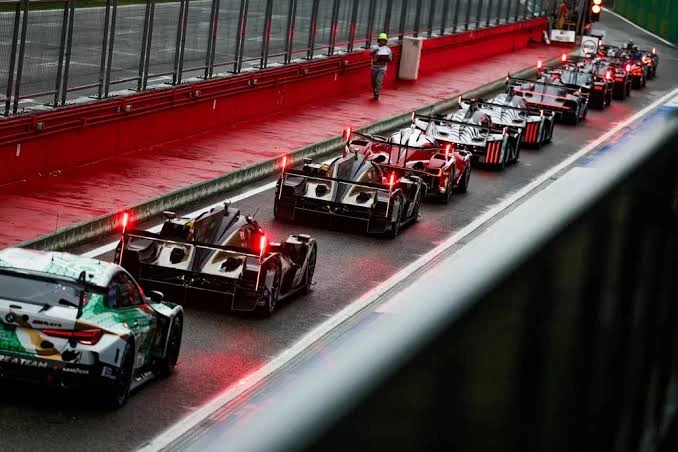
BMW has been the surprise package of the 2026 WEC season. René Rast, Robin Frijns, and Sheldon van der Linde — the #20 crew — delivered BMW’s first outright win in global endurance racing in almost 27 years at Spa-Francorchamps in May 2026. They followed that breakthrough with a runner-up finish at Le Mans. Second in the Manufacturers’ standings, BMW arrives in Brazil not as a dark horse but as a genuine favourite.
Moreover, the #20 crew sits second in the Drivers’ championship on 71 points. Van der Linde is also individually prominent in the standings. BMW’s challenge at Interlagos will be understanding whether its consistency-driven approach translates to Interlagos’s unique characteristics — a short, undulating anti-clockwise layout that can amplify setup differences between cars in ways that longer circuits mask. To understand more about how WEC Hypercar technology compares across manufacturers, our deep dive covers the engineering picture.
🇺🇸 Cadillac Hertz Team JOTA — Returning Champions
Will Stevens and Norman Nato return to Interlagos as the drivers who made history here. In 2025, the #12 Cadillac V-Series.R led a stunning one-two for the American manufacturer — JOTA’s first-ever WEC victory — making Stevens and Nato winners on every continent the series has visited. However, 2026 has been a frustrating year since then. Cadillac has not returned to the podium since São Paulo, managing only fourth at Le Mans as its best post-Brazil result.
Furthermore, the #12 enters this race as a two-driver pairing only — Alex Lynn remains sidelined by a neck injury, leaving Stevens and Nato to share the car without a third driver. This reduces flexibility during driver change windows. However, the V-Series.R still holds the Hypercar lap record at Interlagos in both qualifying and race trim, and track knowledge for Stevens and Nato on a circuit where memory matters could offset the crew disadvantage. The Cadillac narrative this weekend practically writes itself — can the returning champions rediscover their Brazilian form?
The last four WEC races at Interlagos have produced four different winners. No circuit in WEC history has ever made it five different manufacturers in a row.
— Read Motorsport / World of Speed Analysis, July 2026🇮🇹 Ferrari AF Corse — Under Pressure to Respond
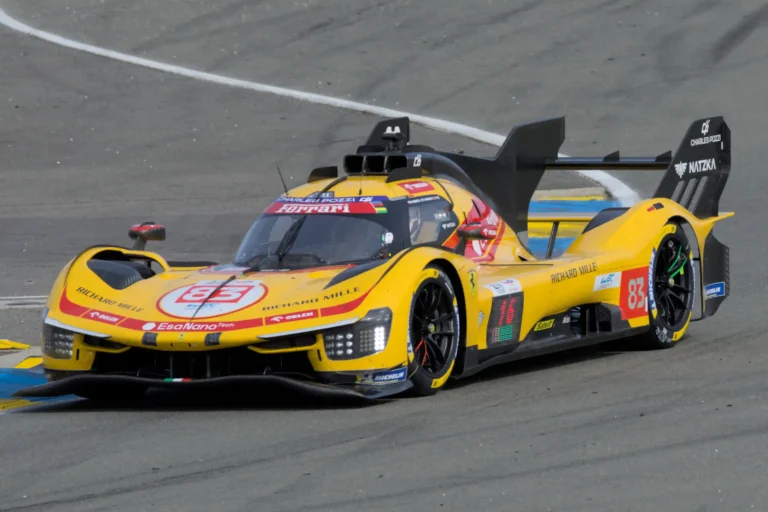
Ferrari needs a result in São Paulo. The 499P endured a highly disappointing Le Mans, and the Interlagos circuit has not been kind to the Prancing Horse in the Hypercar era so far. However, Ferrari arrives with strong crews — Alessandro Pier Guidi, Antonio Giovinazzi, and James Calado in one car; Antonio Fuoco, Miguel Molina, and Nicklas Nielsen in the other. The #50 crew of Pier Guidi sits fifth in the Drivers’ standings on 39 points, and a first Interlagos Hypercar podium for Ferrari would be a significant statement at the championship’s halfway point.
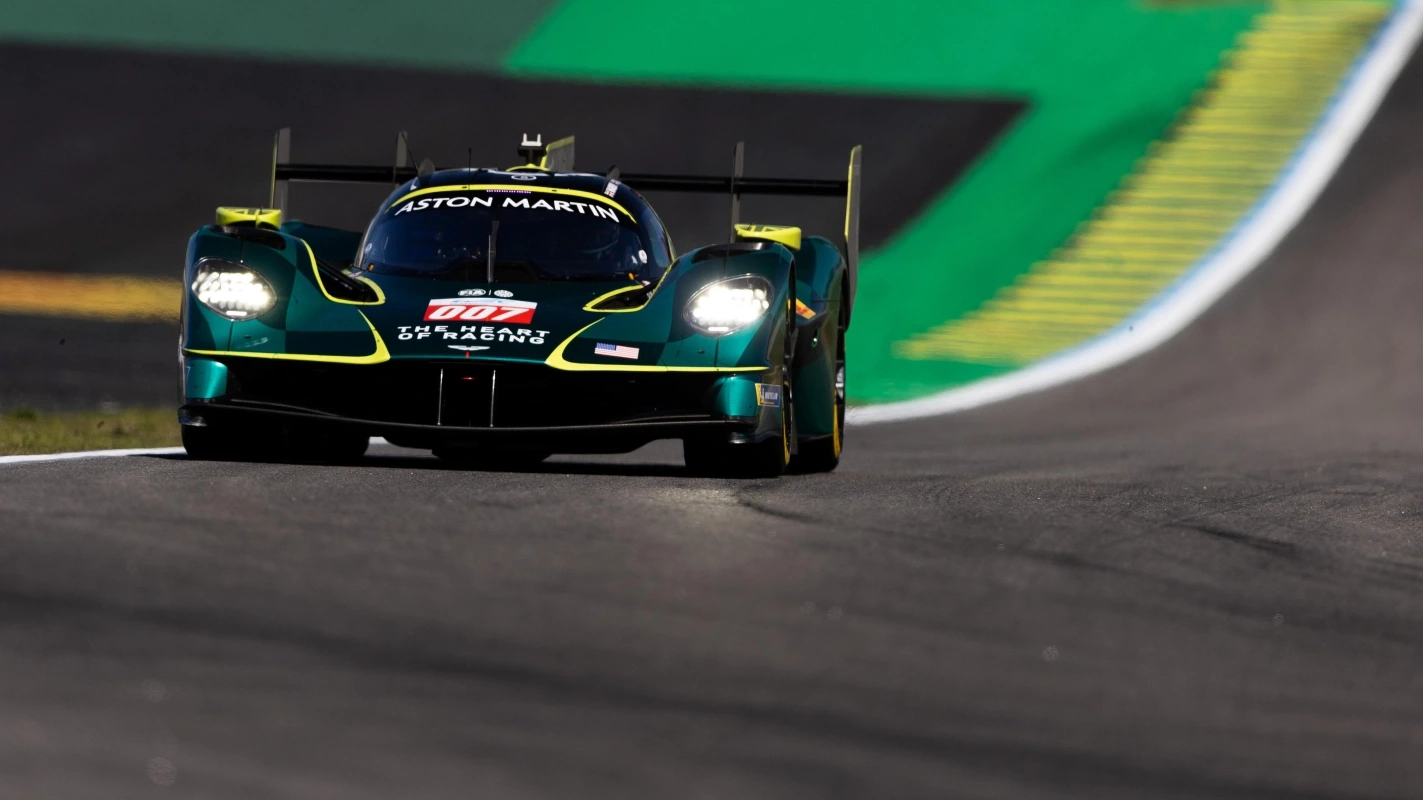
Meanwhile, Alpine Endurance Team enters São Paulo with the #36 crew of da Costa, Milesi, and Habsburg on 28 points in the standings. The French squad has shown flashes of pace but needs to convert raw speed into results. Peugeot TotalEnergies brings arguably its deepest driver lineup of the season — Van Wijk/Müller/Bamber in one 9X8 and Vandoorne/Cassidy/Duval in the other — making the French hypercar a genuine top-six contender if their pace holds. Aston Martin’s pair of Valkyries enter São Paulo as two-driver pairings, slimming down from their usual three-driver crews.
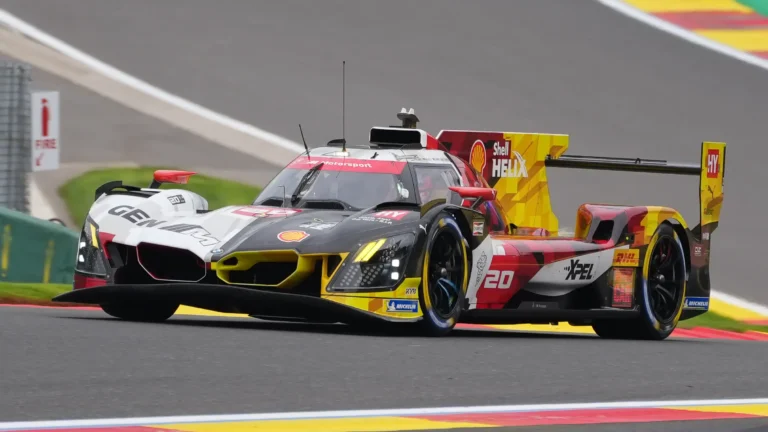
🇰🇷 Genesis — The Newcomer Story at Interlagos
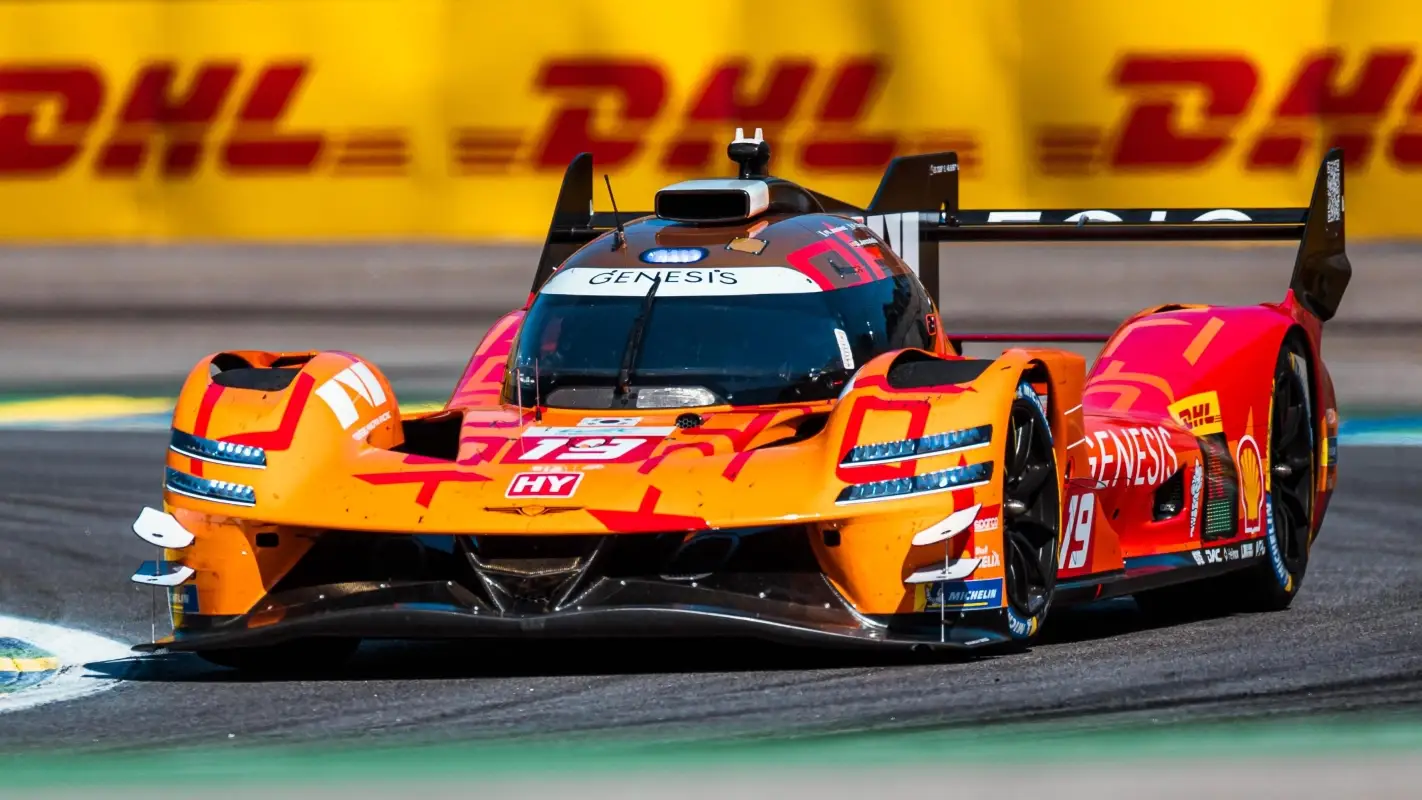
Genesis Magma Racing represents one of the sport’s most compelling new entries. The Korean manufacturer brings a different kind of narrative to São Paulo — a brand making its endurance racing mark in the backyard of Brazilian motorsport passion. Their São Paulo effort adds a home-crowd angle too, with Pipo Derani — a Brazilian factory driver from the WEC field — racing as part of an attention-grabbing entry that Brazil’s passionate fanbase will be tracking closely. With almost 85,000 fans packing Interlagos last year, home-crowd dynamics matter here.
Hypercar Drivers’ Championship — Entering São Paulo
| Pos | Car / Crew | Manufacturer | Points |
|---|---|---|---|
| 1st | #7 Conway / Kobayashi / de Vries | Toyota | 75 pts |
| 2nd | #20 Rast / Frijns / van der Linde | BMW | 71 pts |
| 3rd | #21 van der Linde (BMW #21) | BMW | 61 pts |
| 4th | #8 Buemi / Hartley / Hirakawa | Toyota | 56 pts |
| 5th | #50 Pier Guidi / Giovinazzi / Calado | Ferrari | 39 pts |
| 6th | #36 da Costa / Milesi / Habsburg | Alpine | 28 pts |
Source: FIA WEC Official · Standings entering Round 4.
LMGT3 Favorites: 18 Cars, One Class Win Up for Grabs
Jonny Edgar and Nicky Catsburg in the #33 TF Sport Corvette Z06 GT3.R lead both the LMGT3 Drivers’ Championship and the LMGT3 Teams’ Championship. However, Catsburg is absent for São Paulo due to an IMSA clash at Mosport, replaced by Argentinian Nico Varrone. TF Sport’s #33 Corvette also won the LMGT3 class at Le Mans 2026.
The LMGT3 class at São Paulo 2026 features 18 cars spread across multiple manufacturers — Chevrolet (Corvette Z06 GT3.R), Lexus (RC F GT3 and LC500h), Aston Martin (Vantage AMR GT3), BMW (M4 GT3 EVO), Ferrari (296 GT3), Porsche (911 GT3 R via Manthey), and Ford (Mustang GT3). This is one of the deepest grids in LMGT3 history, and Interlagos’s short lap and tight sections ensure the battles are close and contact is always possible.
🏆 #33 TF Sport Corvette Z06 GT3.R — Championship Leader, Missing Key Driver
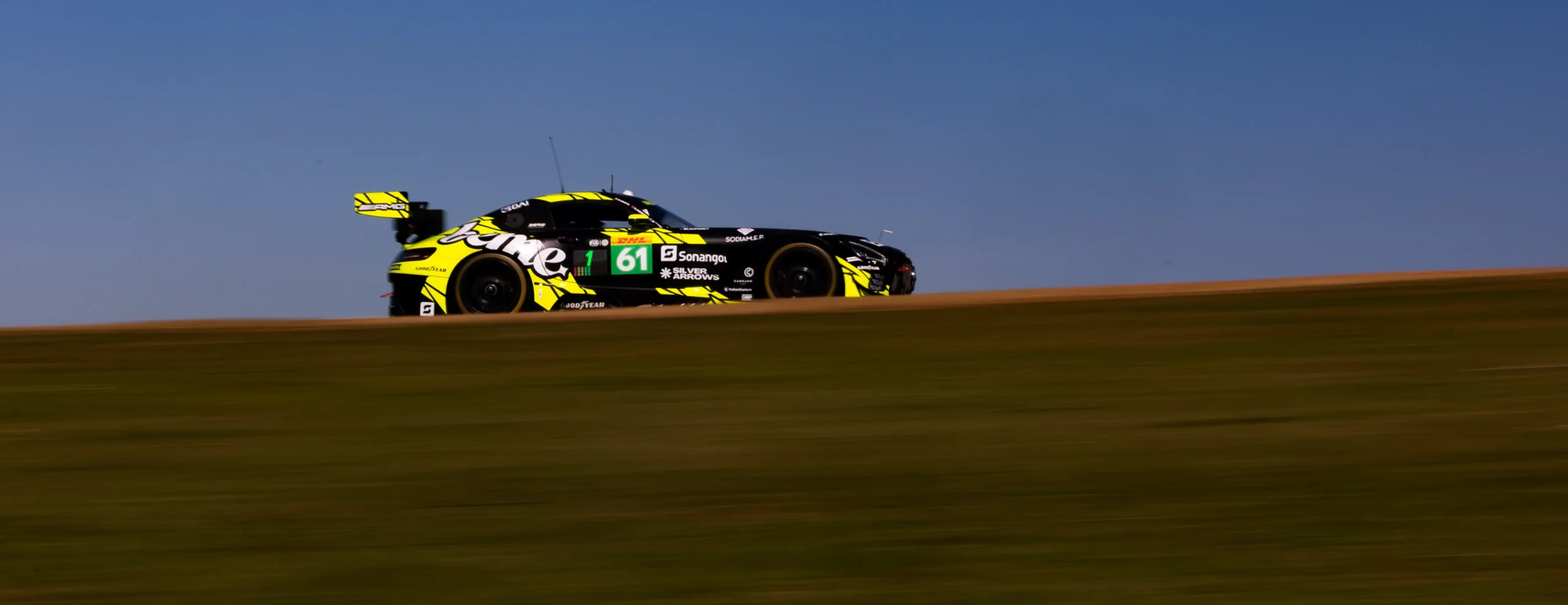
The dominant LMGT3 story heading into São Paulo is a team navigating championship leadership while temporarily losing their lead driver. Nicky Catsburg — who leads the Drivers’ standings with Jonny Edgar — misses this round due to his IMSA GTD Pro commitments at Mosport. In his place comes Nico Varrone, the Argentine Corvette factory driver who won the LMGTE Am WEC title in 2023 alongside Catsburg and Keating, making this a familiar partnership in an unfamiliar context.
Furthermore, Varrone is currently competing in Formula 2 with Van Amersfoort Racing — the car he pilots in F2 rounds being a world away from the Corvette Z06 GT3.R — yet his endurance racing pedigree is genuinely strong. He won at Le Mans in the Am class and knows Keating’s driving style intimately. The #33’s Le Mans class victory shows the car’s pace is legitimate. Therefore, despite the crew disruption, this Corvette remains one of the class favorites at Interlagos.
🔴 Heart of Racing — Aston Martin Vantage GT3
Heart of Racing’s Aston Martin makes for an interesting entry at São Paulo. Regular driver ‘Dudu’ Barrichello — the son of Rubens Barrichello, who is Brazilian and has ties to the Interlagos crowd — cannot race on home soil due to a clashing GTD commitment with THOR Team. In his place, Kobe Pauwels returns as an Imola-style “super-sub” in the #23 Aston Martin Vantage AMR. Meanwhile, the Heart of Racing operation is a known quantity in LMGT3 — sufficiently fast to challenge for class wins when the setup and strategy align.
🇯🇵 Lexus — Quiet Force in LMGT3
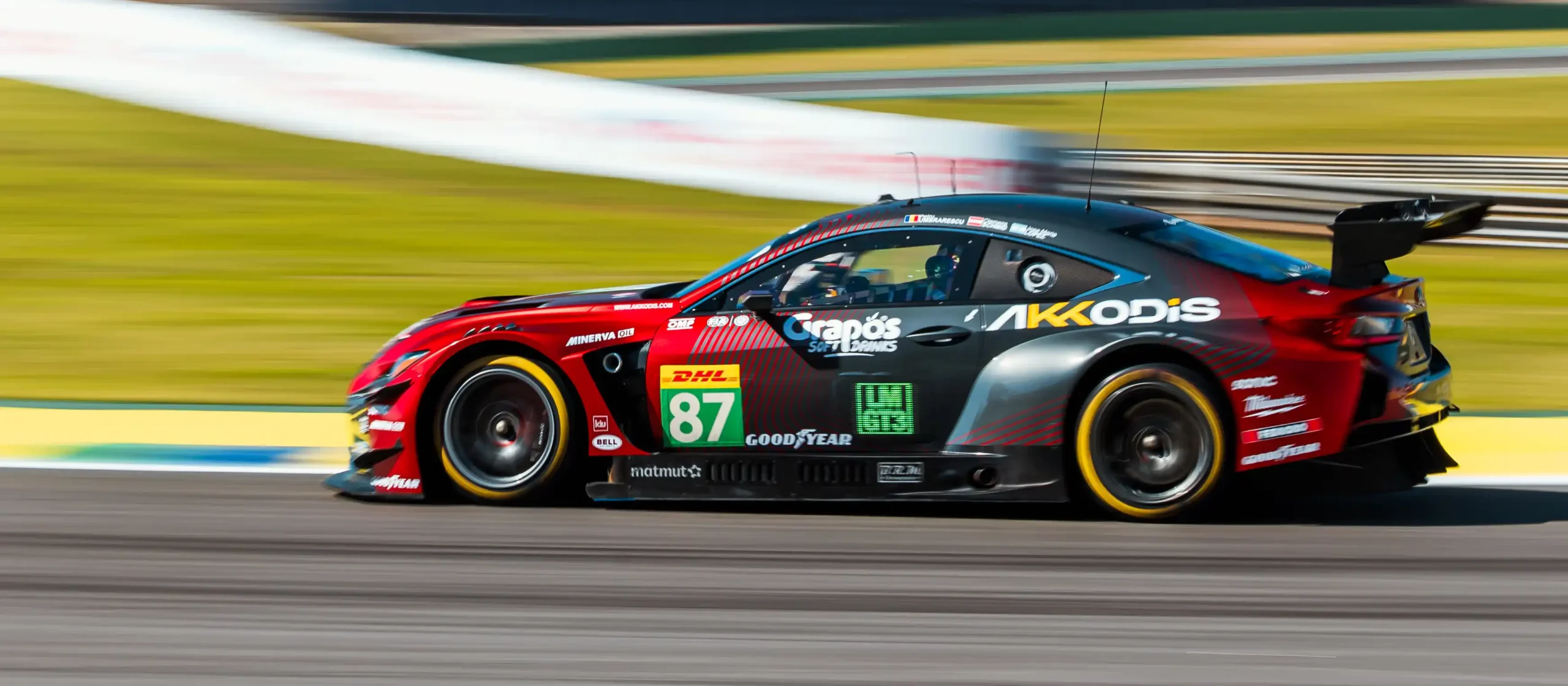
Lexus has built a quiet but genuine reputation in LMGT3. The Akkodis ASP Team entries running the RC F GT3 have shown consistent top-five class pace across the season, and Esteban Masson returns to the #78 entry after his Le Mans LMP2 outing with Forestier Racing by Panis. The Lexus LC500h GT3 entries round out the Japanese manufacturer’s LMGT3 assault — a class where GT3 car engineering means the gap between manufacturers is often smaller than it looks on a spec sheet.
🇩🇪 Manthey Porsche — Post-Factory Era Takes Shape
Porsche Penske Motorsport’s withdrawal from the Hypercar class was one of the biggest stories of the 2025–26 off-season. Manthey Racing subsequently took full control of Porsche’s LMGT3 operations, and the 911 GT3 R in Manthey’s hands has been a familiar podium contender throughout the season. Richard Lietz — who will reach the same 90-start milestone as Mike Conway this weekend in São Paulo — brings decades of Porsche endurance racing experience to a team finding its feet in a new structure. Understanding the power and torque characteristics that define different GT3 architectures helps explain why Manthey’s setup philosophy has kept the 911 competitive despite the manufacturer’s broader WEC exit.
LMGT3 Entry Snapshot — São Paulo 2026
| Car | Team | Drivers | Status |
|---|---|---|---|
| #33 Corvette Z06 GT3.R | TF Sport | Edgar / Varrone / Keating | Championship Leader |
| #23 Aston Martin Vantage | Heart of Racing | Pauwels (sub for Barrichello) | Sub crew |
| #78 Lexus RC F GT3 | Akkodis ASP | Masson + crew | Full season |
| Manthey 911 GT3 R | Manthey Racing | Lietz + crew | Lietz 90th start |
| BMW M4 GT3 EVO | Various | Farfus + crews | Home hero |
Interlagos: Why This Circuit Is Like No Other in WEC
The Autódromo José Carlos Pace (Interlagos) is the shortest circuit on the 2026 FIA WEC calendar at 4.309 km, runs anti-clockwise with 15 corners (8 left, 7 right), sits almost 800 metres above sea level, and historically produces a different overall winner almost every year. No team that has won at the previous round has gone on to win at São Paulo in the WEC era. The altitude forces every team to manage cooling, engine performance, and tyre behaviour differently compared to any other round.
Interlagos holds a unique place in South American motorsport history — and in the WEC calendar’s logic. It is simultaneously the shortest lap on the schedule, the only circuit in the Americas, and the only round where the combination of high altitude, anti-clockwise direction, and compressed racing action consistently produces unexpected results. The last four WEC visits here have ended with four different manufacturers on top. That is not a statistical anomaly — it reflects the circuit’s ability to equalise car performance in ways that longer tracks cannot.
The 4.309 km layout runs anti-clockwise through a natural bowl carved into São Paulo’s urban southern edge. Hypercars touch around 305 km/h on the main straight before the heavy braking zone at the end of the lap, while roughly half the lap is spent at full throttle across the flowing middle sector. The altitude — almost 800 metres above sea level — forces teams to recalibrate engine cooling, brake temperatures, and aerodynamic balance, since thinner air provides less cooling and less aerodynamic load simultaneously.
Furthermore, São Paulo’s weather is genuinely unpredictable. In July, the city sits in its dry winter season, but afternoon thunderstorms are historically not impossible. Interlagos has produced rain-affected sessions in previous WEC rounds, and weather strategy — knowing when to switch between dry and wet tyres — has historically been as decisive as pure pace at this venue. Understanding how safety car periods reshape endurance race strategy is essential context for following what typically happens here during rain-affected moments.
Track position matters disproportionately at Interlagos. Historical data from both WEC and F1 at this circuit confirms that no WEC overall winner at Interlagos has started from below fifth on the grid. Qualifying matters more here than at almost any other endurance venue. Meanwhile, the circuit’s compact nature means traffic management during driver changes and lapped-car situations shapes the result as significantly as raw pace — a reminder that endurance racing strategy, not just speed, decides this race. For context on how pit strategy works in racing, our explainer covers the fundamentals.
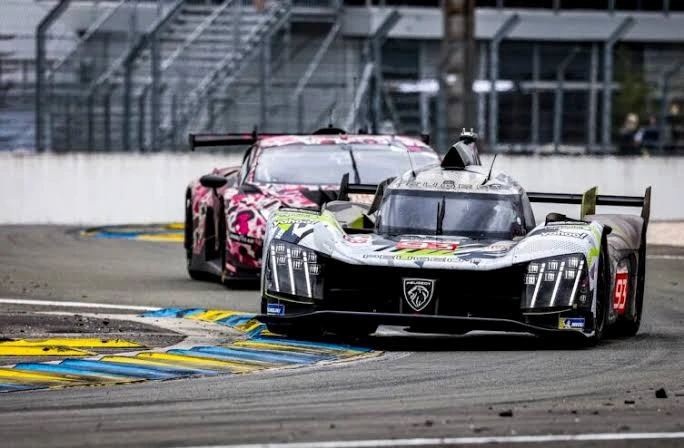
São Paulo in July is officially dry season, but Interlagos’s position in a natural bowl creates localised conditions that can diverge sharply from broader city forecasts. Rain has influenced WEC sessions at this circuit before, and teams that bring the broadest tyre strategy flexibility typically fare best when conditions shift mid-race. The unpredictability is part of what makes São Paulo one of the most genuinely exciting rounds of the season.
Race Predictions: Who Wins the 6 Hours of São Paulo?
Toyota Gazoo Racing’s #7 car (Conway/Kobayashi/de Vries) is the race favorite in Hypercar based on championship form and Interlagos history, with Cadillac the most dangerous threat given its 2025 win and lap record ownership. In LMGT3, the #33 TF Sport Corvette with Varrone deputising is the points-leader favourite, though Manthey Porsche and Lexus represent genuine podium threats.
The headline prediction for the Hypercar race is Toyota, and it’s hard to argue strongly against it — but equally hard to feel certain. The TR010 Hybrid’s form is legitimate, and Conway, Kobayashi, and de Vries have operated as a unit long enough to minimise the small errors that sometimes cost races at a circuit this compact. However, Cadillac’s record at Interlagos is too strong to dismiss, and Stevens and Nato are motivated in a way that’s palpable. BMW may lack a specific Brazilian track advantage, but Rast and Frijns have shown all season that consistency translates to points. If Toyota falters, BMW is positioned to capitalise better than anyone.
Ferrari needs to score here. The standings gap is not yet critical, but another quiet result starts to make the championship mathematically harder. Pier Guidi is a proven winner in difficult conditions, and a top-three result for either Ferrari would reset the narrative heading into the second half of the season. Meanwhile, the Alpine and Peugeot entries both carry enough pace to threaten the top five if the strategy aligns. In a race where championship scoring mathematics becomes critical at the halfway mark, every classified finish matters.
The WEC has visited Interlagos five times in its modern era (2012, 2024, and the last three consecutive years). Each of those races produced a different overall winner. If that pattern holds in 2026, it means Toyota — despite being the clear favourite — would lose. No circuit in WEC history has ever managed six different class winners in six consecutive visits. Whether history continues or Toyota breaks the pattern is arguably the most compelling analytical question heading into Sunday’s race.
Frequently Asked Questions
Conclusion: Interlagos Has Its Own Script — And It Rarely Follows the Favourite
The 6 Hours of São Paulo 2026 arrives at the perfect moment. The championship is genuinely open — Toyota leads, but BMW is close behind, Ferrari needs a result, and Cadillac is hunting for a return to form. In LMGT3, the #33 Corvette enters with a crew change but leading the standings, and the depth of competition guarantees nothing is settled before the chequered flag.
Interlagos has a personality all its own. It is short, intense, altitude-affected, and historically unpredictable. The fact that it has produced a different Hypercar winner in each of its last four WEC visits is not a coincidence — it reflects a circuit that exposes setup weaknesses, punishes mistakes under traffic, and rewards teams that manage the complete race rather than those who simply have the fastest car. Qualifying is disproportionately important, strategy through safety car periods often determines the result, and the weather can always add one more layer of unpredictability.
Toyota is the right favourite. But being right and being wrong in Brazil have historically been closer together than most expect. Follow the full 6 Hours of São Paulo race coverage live on worldofspeed.org.
About this preview
All results, standings, lap times, entry list changes, and circuit specifications are sourced from FIA WEC Official (fiawec.com), RACER.com, Pit Debrief, and Read Motorsport as of July 10, 2026. Saturday qualifying times are approximate based on the FIA WEC official schedule and may be subject to adjustment — always confirm at fiawec.com before viewing plans.
This article is written for a U.S.-based motorsport audience. Race start time is 10:30 AM ET on Sunday July 12, 2026. The 2026 Rolex 6 Hours of São Paulo is available live on FIAWEC+ — the official streaming platform of the FIA World Endurance Championship.