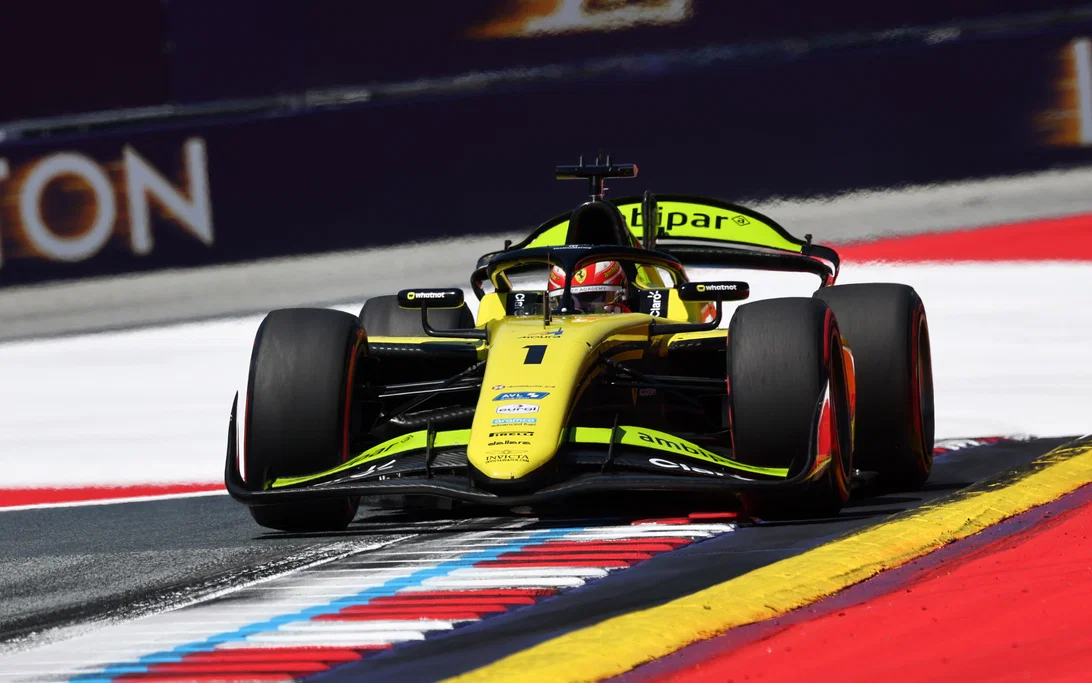
Silverstone F2 2026 Qualifying Results: Pole Position and Full Classification
Rafael Camara fired in a 1:39.690 on his final flying lap to claim his third pole of the 2026 Formula 2 season — more than two tenths clear of the field at the British Grand Prix support event.
Silverstone F2 2026 Qualifying Results: Pole Position and Full Classification
Camara’s stunning 1:39.690 final lap secured his third pole of the season — over two tenths clear at the British GP support event.
Rafael Camara took pole position for the 2026 Formula 2 feature race at Silverstone, setting a 1:39.690 on his decisive final flying lap during Friday afternoon’s 30-minute qualifying session. The Invicta Racing driver finished over two tenths (0.201 seconds) clear of second-placed Alex Dunne, with ART Grand Prix’s Kush Maini completing the top three by just 0.001 seconds.
It was Camara’s third pole of the 2026 FIA Formula 2 Championship — an emphatic statement at a circuit where the Brazilian had arrived under pressure from the leading championship contenders. Championship leader Gabriele Mini, meanwhile, qualified tenth and faces the reverse-grid Sprint starting position that accompanies that result, with Nikola Tsolov fifth in a session that reshuffled the title battle considerably.
This is the full report from qualifying, covering the session narrative, the complete classification, championship implications, and what every result means for Sunday’s Feature Race at Silverstone. All session times are Eastern Time (ET) for U.S. readers — qualifying took place at approximately 9:15 AM ET on Friday July 4, 2026.
Rafael Camara (Invicta Racing) claimed pole position at the 2026 Silverstone F2 qualifying session with a 1:39.690 — his third pole of the season. Alex Dunne (Rodin Motorsport) qualified second at 0.201s back, with Kush Maini (ART Grand Prix) third by a margin of just 0.001s from Dunne.
The Session: How Friday’s Qualifying Unfolded
Qualifying for the 2026 FIA Formula 2 British Grand Prix support event took place at Silverstone’s Grand Prix layout on Friday afternoon, following Free Practice earlier in the day — a session that had seen Alex Dunne set the pace for Rodin Motorsport ahead of Rafael Camara and Dino Beganovic. The 30-minute qualifying session directly sets the Feature Race starting grid, while the reverse of the top 10 determines the Sprint Race grid for Saturday.
Half the field headed out first as the session went green, with drivers beginning their warm-up laps almost immediately on Pirelli’s soft compound. Dino Beganovic opened the competitive times before DAMS Lucas Oil’s Roman Bilinski improved to take provisional top spot with a 1:41.123. Kush Maini then moved ahead, with championship leader Gabriele Mini sitting only 13th early in proceedings.
Alex Dunne, who had set the Free Practice benchmark earlier in the day, lost his first qualifying attempt to a track limits deletion — a costly moment for the Irish driver, who had to recover quickly. He found a clean lap on his second effort to head the timesheets at the conclusion of the first run, with Maini slotting into second, Camara third, and Rafael Villagomez fourth. Tsolov was eighth at that stage.
All cars returned to the pit lane at the halfway point for fresh sets of soft tyres — the decisive phase of the session was about to begin. With twelve minutes remaining, the entire field pushed back out for their final flying laps on new rubber. This was where the session was won and lost.
Roman Bilinski moved to the front immediately on the second run. Then Nikola Tsolov fired in a 1:39.972 with purple sectors in all three parts of the lap to take provisional pole — a genuinely rapid lap that made Tsolov the clear leader as drivers queued to respond. Championship contender Mini sat in the top 10, uncomfortably close to the reverse-grid pole that comes with a 10th-place qualifying finish.
Then came the moment that settled the session. Rafael Camara, starting his final lap from as far back as 16th on the timesheets at one point during the second run, crossed the line with a 1:39.690. It was over two tenths faster than anything the session had produced. All three sectors were competitive, and the Invicta Racing driver’s composure on his crucial final lap was the defining act of the afternoon.
Camara was 16th on the timesheets entering his final lap. He crossed the line on pole by over two tenths. That is what the best qualifying drivers do.
— World of Speed F2 Analysis · Silverstone, July 2026Dunne responded on his own final attempt but fell exactly 0.201 seconds short — a margin that sounds small but is actually significant in the tightly bunched world of Formula 2 qualifying. Maini completed the top three with just 0.001 seconds separating him from Dunne in second. Bilinski held fourth for DAMS Lucas Oil, with Tsolov falling from his briefly held provisional top spot to fifth. The championship leader Mini, who had appeared to be managing his qualifying position deliberately, ended up 10th — which in the reverse grid Sprint format means starting from Sprint Race pole for Saturday.
Championship leader Gabriele Mini was noted by the stewards for a potential unsafe release during the qualifying session, but following investigation it was decided no further action was necessary. Mini will therefore start the Feature Race from 10th place and the Sprint Race from reverse-grid pole as normal. To understand how F2 qualifying format works, see our full explainer.
Full F2 Silverstone 2026 Qualifying Classification
This is the official qualifying classification from Silverstone, setting the Feature Race grid for Sunday. Positions 1–10 are reversed for Saturday’s Sprint Race. All lap times are from the 30-minute session on Friday July 4, 2026.
| Pos | Driver | Flag | Team | Best Lap | Gap | Sprint Grid |
|---|---|---|---|---|---|---|
| P1 | Rafael Camara | 🇧🇷 | Invicta Racing | 1:39.690 | — | P10 → Sprint P1* |
| P2 | Alex Dunne | 🇮🇪 | Rodin Motorsport | 1:39.891 | +0.201s | P9 in Sprint |
| P3 | Kush Maini | 🇮🇳 | ART Grand Prix | 1:39.892 | +0.202s | P8 in Sprint |
| P4 | Roman Bilinski | 🇵🇱 | DAMS Lucas Oil | — | ~+0.28s | P7 in Sprint |
| P5 | Nikola Tsolov | 🇧🇬 | Campos Racing | 1:39.972 | +0.282s | P6 in Sprint |
| P6 | Tasanapol Inthraphuvasak | 🇹🇭 | ART Grand Prix | — | — | P5 in Sprint |
| P7 | Joshua Dürksen | 🇵🇾 | Invicta Racing | — | — | P4 in Sprint |
| P8 | Rafael Villagomez | 🇲🇽 | Van Amersfoort Racing | — | — | P3 in Sprint |
| P9 | Ritomo Miyata | 🇯🇵 | Hitech Grand Prix | — | — | P2 in Sprint |
| P10 | Gabriele Mini | 🇮🇹 | MP Motorsport | — | — | P1 in Sprint ★ |
| P15 | Colton Herta | 🇺🇸 | Hitech Grand Prix | — | — | P11+ Sprint |
*Sprint grid reverses the Feature Race qualifying top 10 positions. Source: FIA Formula 2 Official / RACER.com. Some intermediate lap time gaps TBC from official full classification.
Camara’s Pole: Third of the Season and Best Yet
Rafael Camara arrived at Silverstone listed third in the 2026 F2 Drivers’ Championship standings. His Silverstone pole was his third of the season and his most dominant by margin, averaging 212.735 km/h around the 5.891 km circuit — a time that put him more than two tenths clear of any other driver in the session.
Rafael Camara came to Silverstone with a point to prove. The Brazilian driver, campaigning for Invicta Racing, had won his only race of the 2026 season in Barcelona, but pole positions had started to stack up alongside that — and this one may be the most complete qualifying performance he has put together all year.
What makes Camara’s Silverstone pole particularly noteworthy is the manner in which it was achieved. For much of the decisive second run, he appeared buried down the order — as far back as 16th on the live timesheets as other drivers produced their final laps. However, as Tsolov briefly sat at the front with a purple-sector lap, Camara was building his own run methodically through Silverstone’s demanding sequence of corners. His 1:39.690 arrived with authority.
Moreover, the gap to the rest of the field tells its own story. Over two tenths to second place in a spec series — where every driver uses identical Dallara F2 2024 chassis equipment — is a substantial margin. It reflects genuine driver superiority on that final lap, not setup advantages or strategic differences. To understand what pole position means in racing and why it matters so significantly for race strategy, our full explainer covers the topic in detail.
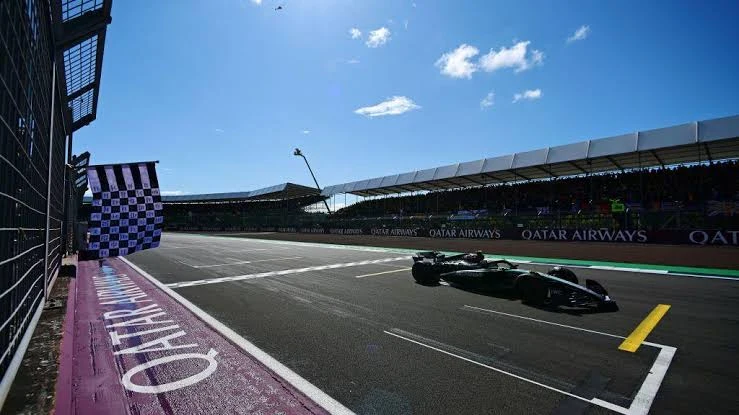
Camara completed 11 laps during the qualifying session — a number that reflects efficient tyre management in the first run before focusing everything on that final decisive effort. Invicta Racing’s strategy of a conservative first run followed by a maximum-effort second set proved decisive, with the team reading the session progression correctly and giving their driver the clearest possible shot at pole on fresh rubber.
Furthermore, Silverstone’s layout suits the kind of commitment Camara showed on that final lap. The Hamilton Straight sets up a heavy braking zone at Turn 1, while the high-speed Maggotts-Becketts-Chapel complex in the middle sector demands complete front-end confidence — a corner sequence that separates clean qualifying laps from merely good ones. Camara was clean throughout. Dunne was also strong but could not find the final tenth or two that would have made it a real contest at the sharp end.
Starting from the front of the Feature Race grid gives Camara a structural advantage at a circuit where overtaking, while possible, is not guaranteed. Pit stop strategy plays a significant role in F2 feature races — all drivers must complete a mandatory stop to change all four tyres — but track position at the start remains the most reliable predictor of race success at Silverstone. Camara controls his own destiny heading into Sunday.
Dunne, Maini, and the Millimetre Behind
The story of P2 and P3 is a remarkable snapshot of how tight Formula 2 can be. Alex Dunne, the Irish Alpine Academy driver racing for Rodin Motorsport, produced a 1:39.891 — a strong lap that on most other weekends would have been comfortably enough for pole. His 0.201-second gap to Camara felt large in context, but it was Dunne’s strongest qualifying position of the 2026 season at that point, and he arrives at Sunday’s Feature Race in prime starting position.
Kush Maini in third was separated from Dunne by exactly 0.001 seconds — one single millisecond. ART Grand Prix’s Indian driver, who is also an Alpine Academy member alongside Dunne, produced a 1:39.892. The two drivers will start the Feature Race from second and third row positions respectively, with Maini on the cleaner side of the grid in the race-day setup. In a spec series, positions like these are decided by moments of driver brilliance and session timing rather than car advantages. How F1 and feeder series qualifying work follows similar principles — precision and composure under pressure is everything.
Championship Impact: Four Drivers, 28 Points Between Them
The 2026 FIA Formula 2 title fight entering Silverstone Round 7 was separated by just 28 points across four drivers. Gabriele Mini led on 108 points, Nikola Tsolov second on 106, with Rafael Camara and Alex Dunne also in contention — making this one of the tightest title fights the championship has seen in recent years.
Four drivers separated by 28 points entering Round 7. That is the defining context for everything that happened in Friday’s qualifying session at Silverstone. The F2 championship is genuinely wide open, and a single qualifying session has now materially shifted the dynamics of how the weekend will play out for each of the title contenders.
Gabriele Mini arrived at Silverstone with 108 points and the championship lead — just two points ahead of Tsolov’s 106. The Italian driver’s qualifying session, which saw him finish tenth, was either a calculated acceptance of the Sprint Race starting position that comes with 10th on the reverse grid, or a session where the front-running pace simply wasn’t there. Either way, the effect is the same: Mini starts Sunday’s Feature Race from the back half of the grid, needing to work through traffic to score the points that protect his championship lead.
Championship Standings — Entering Silverstone Round 7
Standings before Silverstone Round 7. Source: FIA Formula 2.
For Nikola Tsolov, qualifying fifth is a mixed result. The Bulgarian championship contender, who races for Campos Racing and is widely linked with a potential promotion to Racing Bulls in Formula 1, produced competitive pace throughout — his 1:39.972 provisional pole lap during the session showed his pace — but could not match Camara’s final lap delivery. Fifth on the Feature Race grid is still a competitive position, and Tsolov will also benefit from a strong Sprint Race result to take points from Mini before Sunday. To understand how racing championships are scored and why consistency at Silverstone matters, our explainer breaks down the mathematics.
Colton Herta, the sole American in the 2026 F2 field, had his practice session curtailed by mechanical issues with his Hitech Grand Prix entry. The IndyCar-experienced American qualified 15th — a difficult result, though one that places him in an interesting position for the Sprint Race given the reverse-grid dynamics. U.S. motorsport fans watching via Formula 2’s broadcast partners will be tracking his Feature Race recovery from row eight of the grid. For broader context, how IndyCar compares to F1 is a question Herta knows better than almost anyone on the F2 grid.
F2 at Silverstone runs two races — the Sprint and the Feature — giving drivers double the points opportunity of a typical single-race round. For a championship separated by 28 points, a weekend where one driver wins both races and another finishes mid-pack could be transformative. The qualifying result has already shaped those probabilities: Camara is the favourite for Feature Race points, Mini is best placed for the Sprint, and Tsolov has a path through the middle of both.
Sprint Race Starting Grid — The Reverse Top 10
Under F2’s Sprint Race format, the top 10 finishers in qualifying have their positions reversed for Saturday’s shorter race. This means championship leader Gabriele Mini, who qualified 10th, starts Saturday’s Sprint from pole position — a potentially significant points opportunity if he can convert it into a race victory. Ritomo Miyata (P9 in qualifying) lines up second on the Sprint grid, with Rafael Villagomez (P8) alongside him.
| Sprint Pos | Driver | Team | Qualifying Pos |
|---|---|---|---|
| Sprint P1 | Gabriele Mini 🇮🇹 | MP Motorsport | Q10 → Sprint Pole |
| Sprint P2 | Ritomo Miyata 🇯🇵 | Hitech Grand Prix | Q9 |
| Sprint P3 | Rafael Villagomez 🇲🇽 | Van Amersfoort Racing | Q8 |
| Sprint P4 | Joshua Dürksen 🇵🇾 | Invicta Racing | Q7 |
| Sprint P5 | Tasanapol Inthraphuvasak 🇹🇭 | ART Grand Prix | Q6 |
| Sprint P6 | Nikola Tsolov 🇧🇬 | Campos Racing | Q5 |
| Sprint P7 | Roman Bilinski 🇵🇱 | DAMS Lucas Oil | Q4 |
| Sprint P8 | Kush Maini 🇮🇳 | ART Grand Prix | Q3 |
| Sprint P9 | Alex Dunne 🇮🇪 | Rodin Motorsport | Q2 |
| Sprint P10 | Rafael Camara 🇧🇷 | Invicta Racing | Q1 (Pole) |
The Sprint Race grid produces a fascinating inversion. The fastest qualifier — Camara — starts from tenth in the Sprint, while the slowest qualifier in the top ten — Mini — starts from pole. Furthermore, Tsolov in qualifying fifth becomes sixth on the Sprint grid, meaning he faces a tough run to catch the leader in a race that covers roughly 120 km and runs for approximately 45 minutes. Safety car interventions frequently reshape Sprint races, and at Silverstone that possibility is always present given the circuit’s tight chicanes and fast corners where contact can happen.
The Sprint Race result will itself affect the championship dynamics heading into Sunday, making every position in Saturday’s race strategically significant for the title fight. Drivers finishing outside the top 10 in the Sprint do not benefit from the reverse grid format — they simply start from their qualifying grid position for Sunday’s Feature Race.
The Silverstone F2 Sprint Race takes place on Saturday July 5, with lights out approximately 8:15 AM ET. The Feature Race follows on Sunday July 6. F2 races are broadcast as part of the British Grand Prix weekend coverage on Sky Sports F1 in the UK, and available for U.S. audiences via ESPN+ and F1TV Pro. For the full 2026 F1 and support series broadcast guide, see our full TV and streaming guide.
Silverstone Circuit: Why This Track Makes F2 Qualifying Special
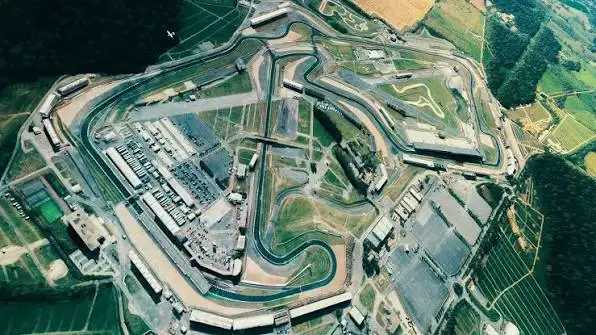
Silverstone Circuit in Northamptonshire, England, holds a unique place in motorsport history. The venue traces its origins to a Royal Air Force bomber station from World War II — the perimeter roads and runways were converted for racing purposes after the war. The first British Grand Prix at Silverstone was held in 1948, and on May 13, 1950, the circuit hosted the inaugural FIA Formula 1 World Championship race. That history is baked into every corner of the place.
In its modern Grand Prix configuration, the track measures 5.891 km (3.660 miles) across 18 corners. The famous Hamilton Straight — renamed in 2020 — gives cars a long run to the Arena section before the Maggotts-Becketts-Chapel complex, which is arguably the most demanding sequence of high-speed corners in all of Formula 2 racing. Getting that sequence right in qualifying is where tenths of a second are regularly found or lost.
Furthermore, F2 has raced at Silverstone since the current championship’s predecessor, GP2, began competing at the circuit in 2005. Many of the sport’s greatest talents have sharpened themselves on Silverstone’s demanding layout before graduating to Formula 1. The best F1 drivers of all time virtually all have significant Silverstone history, and the circuit remains one of the purest tests of commitment and precision in open-wheel racing.
Frequently Asked Questions
Conclusion: Camara Commands Silverstone, Championship Braces for a Pivotal Weekend
Rafael Camara’s pole position at Silverstone was the kind of performance that reminds you why qualifying matters in Formula 2. Over two tenths clear of a field that includes the championship’s two leaders, produced on a circuit that punishes errors and rewards commitment — it was his best qualifying lap of the 2026 season and arguably the standout performance of the British Grand Prix support programme on Friday.
Heading into the Feature Race on Sunday, Camara controls the front of the grid. Mini starts from 10th with work to do. Tsolov is fifth and perfectly placed to gather points from a clean race. Dunne is second and dangerous at a circuit where his Rodin Motorsport car showed strong pace throughout Free Practice. With 28 points separating four drivers before a double-points weekend, the Silverstone F2 round has every ingredient for a championship-defining moment. Follow the full British Grand Prix weekend coverage on worldofspeed.org.
About this report
All qualifying results, lap times, and championship standings in this article are sourced from official FIA Formula 2 results, RACER.com, RacingNews365, and Pit Debrief as of July 4, 2026. Lap time gaps for positions P4–P10 reflect the precision confirmed in named sources; full intermediate times are from official F2 classification. Sprint Race lights-out time is approximate pending official confirmation — always verify against the FIA Formula 2 official schedule before viewing plans.
This article is written for a U.S.-based motorsport audience. All session times have Eastern Time (ET) conversions included where relevant. For live British Grand Prix weekend coverage, follow worldofspeed.org/f1/british-grand-prix-2026-schedule/.