Rally Estonia 2026:
Full Schedule, Stages, TV & Streaming Guide
Everything you need to follow WRC Delfi Rally Estonia 2026 — complete stage timetable, ET start times, SS1–SS18 breakdown, live streaming options, full entry list, and championship context.
Rally Estonia 2026:
Full Schedule, TV & Streaming Guide
Stage timetable, ET times, TV channels, entry list, and championship stakes — July 16–19 in Tartu.
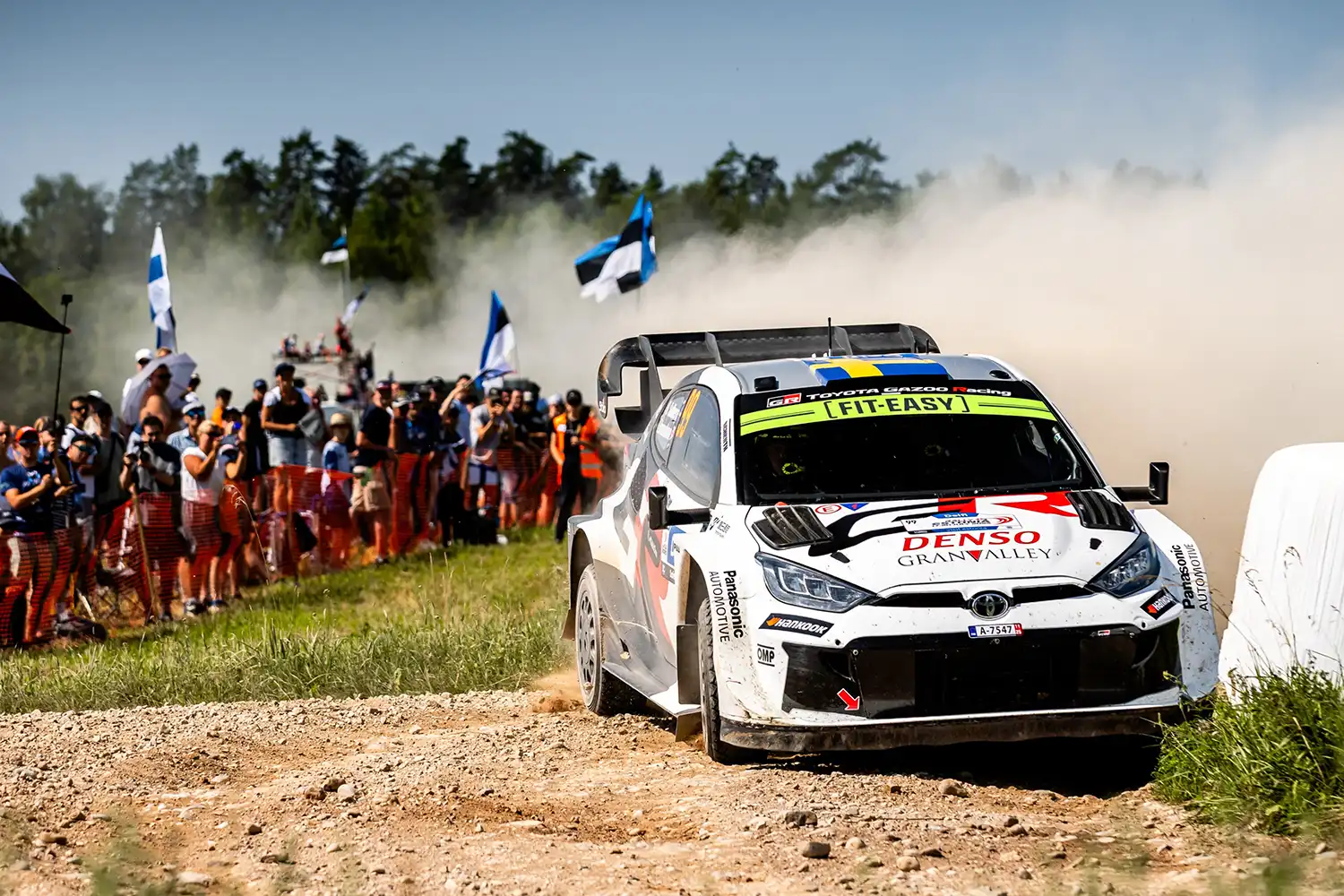
WRC Delfi Rally Estonia 2026 kicks off on July 16 and runs through July 19 — and if you’ve been watching this championship closely, you already know this is the event where everything tends to shake loose. Round 9 of the 2026 FIA World Rally Championship returns to Tartu for the seventh consecutive year, bringing 18 special stages and 301.80 competitive kilometers across the fast forest roads of southern Estonia.
This is one of the quickest events on the WRC calendar. Average stage speeds here regularly push past 130 km/h (80 mph), which puts it in the same breath as Rally Finland in terms of flat-out commitment. The roads are mostly smooth gravel — wide in places, narrow and forested in others — with the kind of blind crests and compression zones that require total trust in the pace notes. Back off for even a fraction too long and you’ll lose time. Push a little too hard over a crest you haven’t fully read, and you’ll be parking in the trees.
For U.S.-based fans, the main question is simple: when do the stages run, and where do you watch? This guide answers both, in full detail. We’ve got the complete timetable in Eastern Time, every stage listed with distance and notes, all eleven Rally1 entries, the TV and streaming options by country, and a championship breakdown that explains why the result here will matter deeply to the title fight heading into Finland.
Rally Estonia 2026 — Event at a Glance
2026 Season
Stages
Distance
Total
Cars
| Detail | Information |
|---|---|
| Official Name | WRC Delfi Rally Estonia 2026 |
| Dates | July 16–19, 2026 (Thur–Sun) |
| WRC Round | Round 9 of 14 |
| Headquarters / Service Park | Estonian National Museum, Tartu |
| Ceremonial Start | Tartu Town Hall Square (Raekoja plats) — Thursday evening |
| Shakedown | Kastre — 4.08 km — Friday morning |
| Surface | Gravel (with short tarmac sections on several stages) |
| Competitive Distance | 301.80 km (187.53 miles) — 18 stages |
| Stage Area | Tartu, Otepää, Elva, Kanepi, Kambja, Kastre, Nõo, Peipsiääre, Mustvee |
| Power Stage / Final Stage | SS17/18 — Kääriku (24.39 km) — Sunday |
| Defending Winners | Oliver Solberg & Elliott Edmondson (2025) |
| Event Website | rallyestonia.ee |
The format is notably compact this year. Rally director Urmo Aava confirmed the event will run in a roughly 48-to-50-hour window — Shakedown on Friday morning, competitive stages from Friday afternoon, and the Power Stage finish on Sunday around 2:00 PM local time (7:00 AM ET). Thursday is now a fan-focused promotional day with a ceremonial start at Tartu Town Hall Square, autograph sessions, and a new Rally1 demonstration run.
The 2026 WRC season introduced mandatory rest regulations requiring total rest hours across a rally to at least match total competition hours. Midday service was cut from 40 minutes to 30 minutes. Engine replacement carries a 60-minute penalty and removes a crew from points scoring. These changes reshape how teams plan each day’s running.
Rally Estonia 2026 — Full Stage Timetable
Rally Estonia 2026 runs July 16–19 with the following structure:
- Thursday, July 16: Recce, ceremonial start, fan day (no competitive stages)
- Friday, July 17: Shakedown (morning) + SS1–SS7 (afternoon) — first competitive day starts ~6:00 AM ET
- Saturday, July 18: SS8–SS16 — longest day; two loops; starts ~3:00 AM ET
- Sunday, July 19: SS17–SS18 (Kääriku Power Stage) — finish ~7:00 AM ET
Estonia is on EEST (Eastern European Summer Time) = UTC+3. For U.S. fans on Eastern Time (ET), subtract 7 hours. So a stage starting at 13:00 EEST is 6:00 AM ET. Mountain Time (MT) subtract 9 hours. Pacific Time (PT) subtract 10 hours.
22:00 EEST
10:00 EEST
13:00 EEST
14:15 EEST
15:00 EEST
17:30 EEST
18:45 EEST
19:30 EEST
21:30 EEST
10:00 EEST
11:30 EEST
14:30 EEST
16:00 EEST
18:00 EEST
19:15 EEST
20:30 EEST
21:45 EEST
23:00 EEST
10:15 EEST
12:30 EEST
14:00 EEST
Stage start times are based on published itinerary approximations. Road closures, weather, safety delays, and late-stage start rules can affect the schedule. Always cross-reference with wrc.com or the official Rally Estonia website on event days for live updates.
Rally Estonia 2026 Stage-by-Stage Guide
Rally Estonia 2026 has 18 special stages covering 301.80 competitive kilometers.
The stages span three competitive days — seven on Friday, nine on Saturday, and two Power Stage passes on Sunday. The longest single stage is Peipsiääre at 24.35 km; the shortest is SSS7 Elva linn at 1.56 km.
Friday Stages — First Blood on Gravel
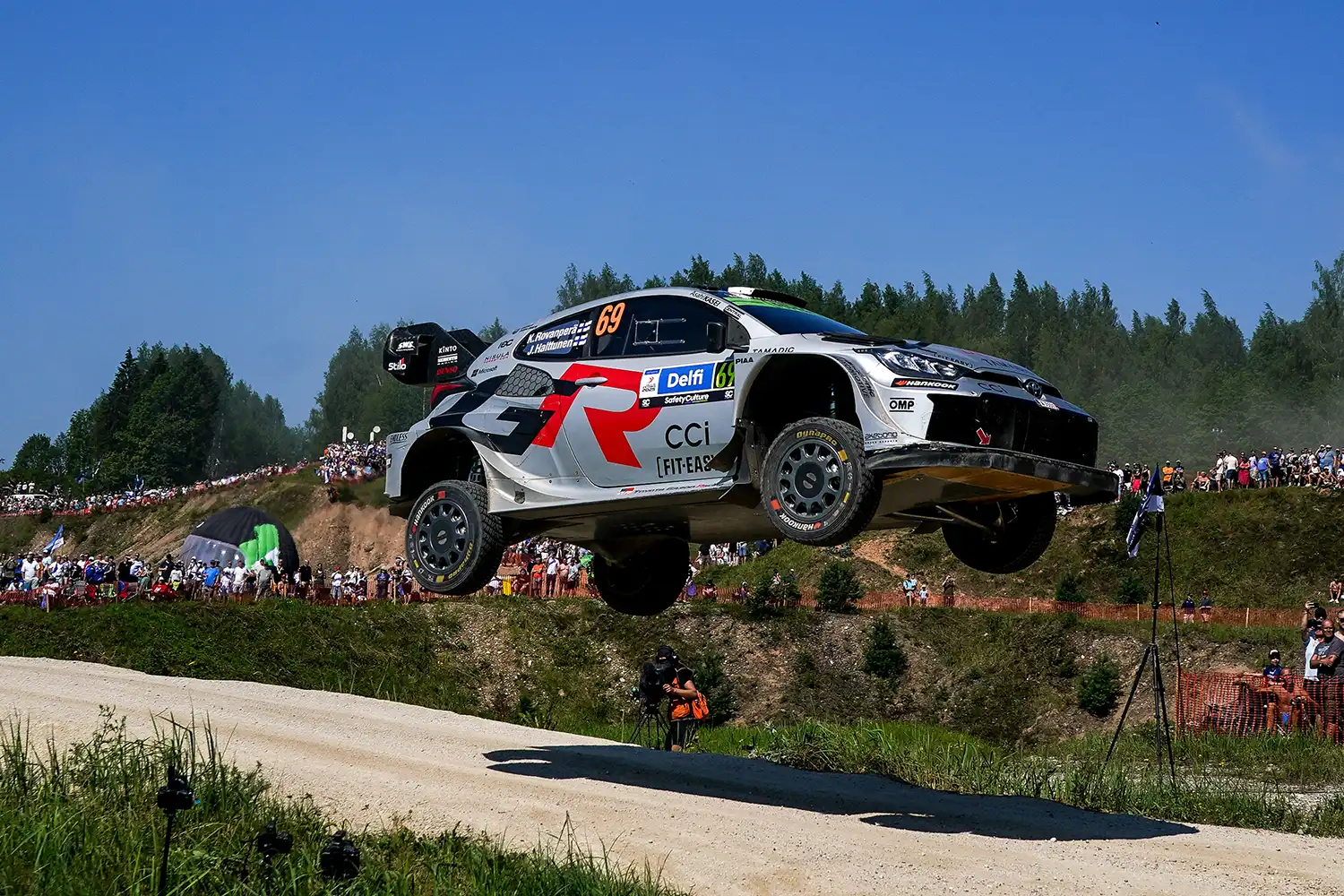
The opening day is set up as two loops of three stages, finishing with a Super Special in the town of Elva. Raanitsa (21.45 km) is the longest stage Friday has to offer and the one that tends to define the early rally order. It starts on fast, wide, flowing roads with a big jump at the 7 km mark, before surface changes from the pale compact gravel to looser, more difficult material push cars around in the second half. Ott Tänak suffered a heavy accident here back in 2024 when the stage was on the ERC calendar — a reminder that it demands full commitment.
Karaski (11.97 km) is a nice rhythm stage by Estonia standards. A sideways-inducing jump appears 400 meters in, a hairpin opens things up at 2.3 km, and there’s a fast tarmac passage mid-stage before the road narrows considerably at the finish. It rewards drivers who are smooth rather than spectacular. Kanepi (17.43 km) is the third stage of the loop and carries a big jump at 8.9 km followed by a series of crests on open ground before tightening into a narrower forest finish — one that cost Ott Tänak two punctures and a retirement back in 2021.
The Elva linn Super Special (1.56 km) wraps Friday up. It’s all tarmac, runs through the town of Elva, and ends with a long donut around a roundabout. Televised, fan-packed, and a good early read on which crews have found a rhythm and which are still searching for their setup.
Saturday Stages — The Big Day
Saturday is the most physically demanding day of the event, running two complete loops across Peipsiääre, Mustvee, Kambja, and Otepää, finishing with the Tartu vald Super Special at the service park. Peipsiääre (24.35 km) is the day’s standout. It enters a quarry arena with a man-made jump 740 meters from the start — Esapekka Lappi took out his hybrid unit there in 2023 after a heavy landing. After leaving the quarry via another jump at 2 km, the stage opens into fast mid-width forest roads, then tightens considerably near the finish. This stage runs alongside the Peipsi lake region and covers ground that genuinely feels unlike anything else on the WRC calendar.
Mustvee (11.37 km) is deceptive. The opening is wide and fast, but ditches run alongside the narrower sections that follow, and the stage becomes very tight in a densely forested area at 8 km. Worth noting: the updated surface data shows 22% of Mustvee’s surface is tarmac — significantly more than most crews realize from the notes alone.
Kambja (23.74 km) runs close to 24 kilometers and carries consecutive big jumps at the 7 km mark. A sandy and technical section around 16 km — with grass growing down the middle of the road in places — is where you’ll often see the rally’s biggest time swings. The 2026 edition removed a chicane at 18.60 km compared to previous versions. Otepää (15.16 km) is the only stage significantly revised from 2025, with a new finish section borrowed from the Antsla Rahvaralli event earlier this year. The stage includes a Mickey Mouse arena section with another man-made jump at 18.7 km — it can get very rutted on the second pass, which matters for championship positions heading into Sunday.
Finally, Tartu vald Super Special (1.76 km) runs on roads inside the Majoraadi park next to the service area. Rocks line the route to punish cutting and add danger for any car that runs wide. Armin Kremer broke suspension here in 2023; Pierre-Louis Loubet damaged his Puma on this stage in 2022. Short doesn’t mean safe.
Sunday — The Power Stage Decides It All
Kääriku (24.39 km) is the same Power Stage from 2025 and serves as both the 17th and 18th stage — run twice on Sunday morning. It opens fast and wide, with long corners and cambered turns, before narrowing significantly at the 8.4 km junction. Two jumps at 10.4 km launch cars into a tarmac section, which transitions back to gravel for the technical forest finale. The stage finishes on tarmac right alongside Kääriku’s sports complex.
The Power Stage bonus points — awarded to the top five fastest times on the final pass — have already decided championships and could do so again here. With Evans just 11 points ahead of Katsuta, every bonus point matters.
| SS | Stage Name | Day | Distance | Notes |
|---|---|---|---|---|
| 1/4 | Raanitsa | Friday | 21.45 km | Longest Friday stage; surface changes; big jump 7 km |
| 2/5 | Karaski | Friday | 11.97 km | Sideways jump 400 m in; tarmac passage; narrow finish |
| 3/6 | Kanepi | Friday | 17.43 km | Crests on open ground; big jump 8.9 km; forest finish |
| 7 | Elva linn (SSS) | Friday | 1.56 km | All tarmac Super Special; long donut before finish |
| 8/10 | Peipsiääre | Saturday | 24.35 km | Quarry arena; man-made jump 740 m; lake region roads |
| 9/11 | Mustvee | Saturday | 11.37 km | 22% tarmac; ditched narrow section; tight forest at 8 km |
| 12/14 | Kambja | Saturday | 23.74 km | Big jumps 7 km; sandy grass section 16 km; chicane removed |
| 13/15 | Otepää ⭐ | Saturday | 15.16 km | New finish for 2026; arena section; man-made jump 18.7 km |
| 16 | Tartu vald (SSS) | Saturday | 1.76 km | Service park road; rocks alongside; suspension risk |
| 17/18 | Kääriku 🏆 | Sunday | 24.39 km | Power Stage; fast-to-narrow; two jumps; tarmac finish |
Where to Watch Rally Estonia 2026 Live
How to Watch Rally Estonia 2026 in the USA:
- Rally.TV (rally.tv) — the official WRC streaming platform; every stage live and on demand, including all onboard cameras and expert analysis. Available in the US. Monthly and annual pass options.
- WRC.com — free live timing, live text updates, stage-by-stage results, and championship standings at no cost.
- DAZN — carries WRC in selected international markets; check availability at dazn.com.
- WRC YouTube Channel — official highlights and select stage replays post-event (free).
For U.S. fans, Rally.TV is the primary and most complete way to follow Rally Estonia 2026. The platform carries every special stage live, with multiple camera feeds including onboard cameras, and makes all content available on demand after each stage runs. A monthly subscription unlocks the full experience. If you’re not ready to subscribe, wrc.com provides free live timing that lets you track every crew’s split times and overall standings in real time — not as immersive as video, but perfectly functional for serious rally fans who understand how to read timing sheets.
| Region | Broadcaster / Platform | Type |
|---|---|---|
| USA | Rally.TV (rally.tv) | Streaming — Subscription |
| UK | Red Bull TV, Rally.TV | Free (Red Bull) / Sub (Rally.TV) |
| Australia | Rally.TV, Stan Sport | Subscription |
| France | Canal+, Rally.TV | Pay TV / Streaming |
| Finland | Ruutu, Rally.TV | Streaming |
| Germany | DAZN, Rally.TV | Subscription |
| Estonia (Local) | Delfi TV / ETV | Free / Streaming |
| Global | Rally.TV | Subscription — Full Coverage |
Friday stages start around 6:00 AM ET — early, but manageable before work if you set alerts. Saturday’s opening stages run from 3:00 AM ET — realistically that’s a Saturday-morning DVR situation for most people. Sunday is the most watchable day in the U.S. time zone, with the Power Stage from roughly 3:15 AM–7:00 AM ET. Rally.TV’s on-demand feature means you can watch every stage replay whenever it suits you. For more on watching motorsport live, see our guide on where to watch Formula 1 — many of the same platforms apply across series.
Rally Estonia 2026 — Full Entry List (Rally1)
Rally1 Driver Lineup for WRC Delfi Rally Estonia 2026:
- Toyota (5 cars): Elfyn Evans (#33), Takamoto Katsuta (#18), Oliver Solberg (#99), Sami Pajari (#5), Sébastien Ogier (#1)
- Hyundai (3 cars): Adrien Fourmaux (#16), Thierry Neuville (#11), Esapekka Lappi (#4)
- M-Sport Ford (3 cars): Jon Armstrong (#95), Josh McErlean (#55), Mārtiņš Sesks (#22)
Toyota enters all five of its full-season drivers — who currently sit first through fifth in the 2026 WRC standings — making this the most concentrated championship battle the team has managed in years. Championship leader Elfyn Evans holds an 11-point advantage over Takamoto Katsuta, with reigning champion Sébastien Ogier a further 26 points back after his victory at the Acropolis Rally Greece.
Oliver Solberg returns to Estonia as the defending race winner, having won here in 2025 on his Rally1 debut. He’s since become a full-time Toyota driver and described this event as “a very special place to me.” Sami Pajari, Toyota’s youngest driver and a Finnish natural on fast gravel, will also be a factor. Ogier returns to Estonian stages for the first time since 2021, which is a notable wrinkle — he hasn’t driven these roads in this generation of car, though his motivation after winning in Greece is obvious.
Katsuta arrives at a personal milestone: Estonia marks his 100th WRC event entry. He’s described the fast gravel rounds in Estonia and Finland as among his favorites, and the timings align well for him — running second on the road behind Evans means less road-sweeping disadvantage on the rougher second passes. Meanwhile, Jon Armstrong of M-Sport has shown genuine pace at several rounds and earned his first ever WRC stage win earlier this season, with team principal Rich Millener noting it proves the Northern Irish rookie belongs at the top level.
“Estonia should be more of a flat-out fight. All of our drivers enjoy driving on fast roads and can be strong there; Oliver took an amazing win there last year.”
— Juha Kankkunen, Toyota Gazoo Racing WRT Deputy Team PrincipalChampionship Stakes at Rally Estonia 2026
Estonia arrives at a pivotal point in the 2026 WRC title fight. Elfyn Evans leads the drivers’ championship by 11 points over Takamoto Katsuta, with Sébastien Ogier a further 26 points back in third after his Acropolis victory. The manufacturers’ standings are just as tight — Toyota currently holds the constructors’ lead, but Hyundai and M-Sport are both pushing hard to close the gap in the championship’s gravel-heavy second half.
The interesting dynamic this year is that all five of Toyota’s drivers sit inside the top five in the championship. That creates internal pressure that doesn’t exist for Hyundai or M-Sport. Evans is the leader, but he’s not in a position to ask Katsuta or Solberg to hold back — each of them has their own championship points to fight for. On fast stages like Estonia’s, where road sweeping order matters less than outright pace, all five Toyota cars will genuinely race each other.
For Hyundai, this event is a chance to extend the title fight rather than let Toyota coast. Adrien Fourmaux has been building toward a breakthrough win in the second half of the season, and Estonia’s fast gravel suits the i20 N’s characteristics better than some of the rough rocky events earlier in the year. Neuville won Estonia in 2022; he knows these stages. Furthermore, the McLaren Formula E withdrawal earlier this year is a reminder of how quickly the motorsport landscape shifts — teams and manufacturers enter and exit, which is why every championship point in an ongoing title fight has compounding value.
M-Sport’s situation is different. They’re racing for results rather than championship position at this stage, and Estonia suits them to push without the same conservatism the title leaders must exercise. Armstrong, McErlean, and Sesks will all be driving to prove their worth and gather data for the second half of the season.
| Pos | Driver | Team | Points | Gap to Lead |
|---|---|---|---|---|
| 1 | Elfyn Evans | Toyota | – | Leader |
| 2 | Takamoto Katsuta | Toyota | – | –11 pts |
| 3 | Sébastien Ogier | Toyota | – | –37 pts |
| 4 | Sami Pajari | Toyota | – | Top 5 |
| 5 | Oliver Solberg | Toyota | – | Top 5 |
Note: Exact points totals will be updated post-Acropolis Rally. Gaps shown are relative to Evans entering Estonia. Check worldofspeed.org/f1/formula-1-standings/ for F1 standings, and wrc.com for the current WRC table.
Up next after Estonia is Rally Finland from July 30 to August 2. With six rounds remaining after Finland, neither title contender can afford to throw points away on risky moves — but they also can’t cede time to each other by being overly conservative on stages this fast. Expect the real fight to happen on Raanitsa, Peipsiääre, and Kambja — stages long enough for time to bleed away on every run.
What Makes Rally Estonia Unique
Rally Estonia is a relatively new WRC fixture — it first joined the calendar as a COVID-era addition in 2020 — but it has already carved out a reputation as one of the most beloved events in the series. It grew out of a long national rally heritage, and the local enthusiasm for the sport is genuine rather than manufactured. Tens of thousands of spectators line the stages each year, and the organization consistently draws praise from teams and drivers who regard the event as one of the best-run on the calendar.
The character of the Estonian stages is distinctive. Roads are mostly smooth gravel, but they come in a variety of widths — wide and flowing in the open sections, tight and forested in others. The surface changes between stages. Some roads have tarmac inserts running into gravel. Crests are often blind. Jump distances can be significant on the faster sections, and cars routinely leave the ground for several meters at a time. The combination of high average speeds — regularly exceeding 130 km/h — and the constant demand for precision makes Estonia a true benchmark event for both driver skill and car setup.
The base in Tartu, Estonia’s second-largest city and the European Capital of Culture 2024, adds a quality of life dimension that teams genuinely appreciate. The Estonian National Museum service park is professional and well-organized. The ceremonial start on Tartu Town Hall Square draws thousands into the city center. And the rally covers a region — the forests and lake districts around Peipsiääre, the hills around Otepää — that is genuinely beautiful to drive and watch in.
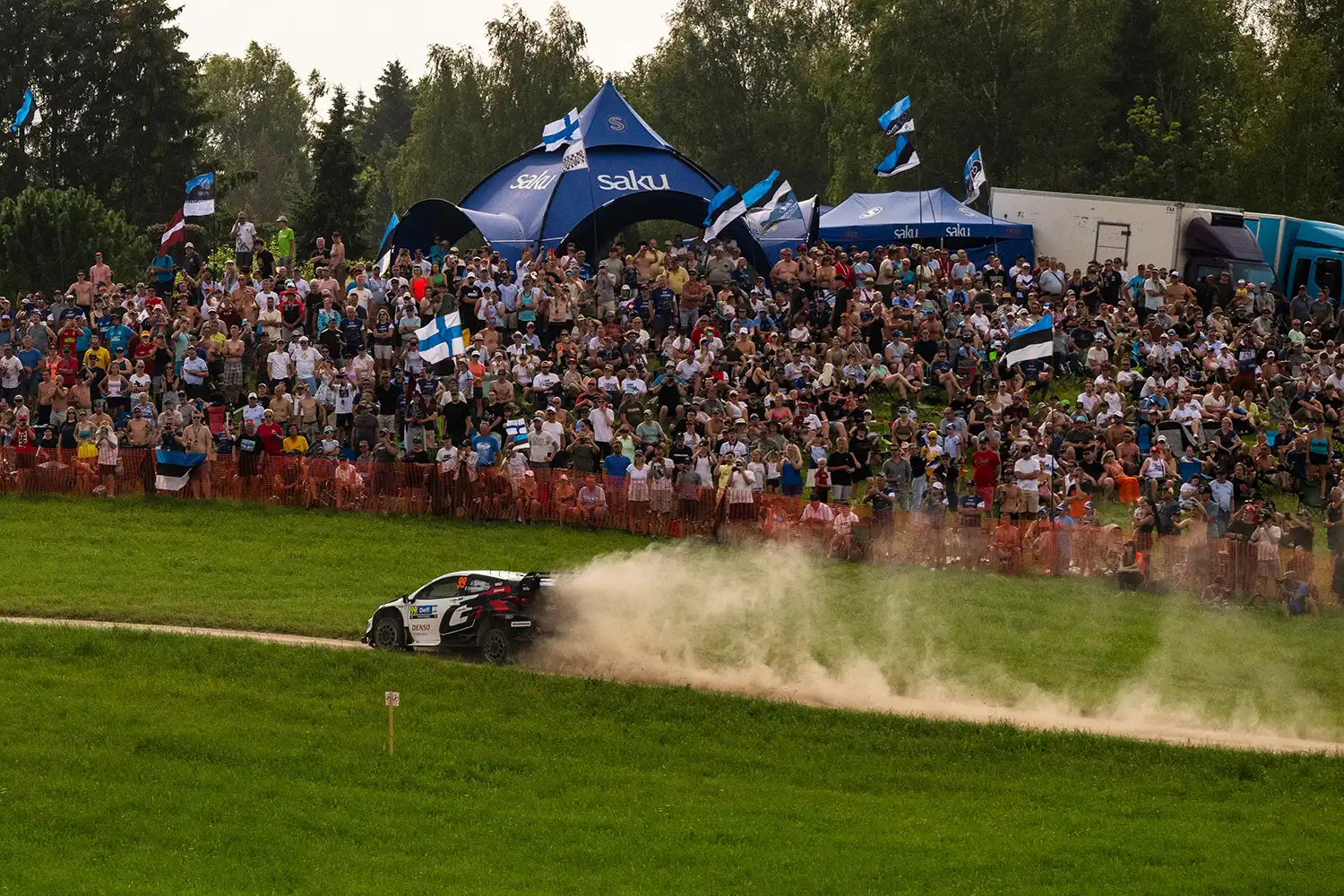
The event has already delivered memorable moments in its short WRC history. Kalle Rovanperä scored his first WRC win here in 2021. Oliver Solberg’s stunning 2025 victory — his Rally1 debut for Toyota — is already the kind of story that grows in the retelling. Estonia has form for producing the unexpected, which is part of what makes it compelling to watch even in years where one manufacturer seems to have the pace advantage.
For those wanting to attend in person, the service park at the Estonian National Museum is free entry every day. Spectator zones are spread across the region, from arena-style areas with big screens and facilities to quiet forest vantage points where the rally has more of its old-school character. The history of motorsport is full of events that started small and became essential; Rally Estonia is clearly on that trajectory.
The service park at the Estonian National Museum, Tartu (Muuseumi tee 2) is open to the public on all rally days at no charge. Watch teams work right next to the WRC service area, explore simulators, partner zones, food stalls, merchandise, and daily meet-and-greets. It’s the best value pass in European rallying.
Rally Estonia 2026 — Frequently Asked Questions
Bottom Line on Rally Estonia 2026
Round 9 of the 2026 WRC season lands in Tartu this week with a title fight that’s as close as anything the championship has produced in recent memory. Elfyn Evans holds an 11-point lead, but 11 points on these stages is nothing — a single mechanical issue, a single gravel trap, a single moment of hesitation on a blind crest, and the standings flip. Katsuta, Ogier, Solberg, and Pajari all have reasons to push hard, which makes this much more than a simple Toyota parade on home gravel.
Hyundai and M-Sport are not here to make up the numbers either. Fourmaux specifically has called victories in the second half of the season his target, and the i20 N has the pace on fast gravel to challenge if the conditions align. Armstrong at M-Sport has already shown he can take stage wins — on a circuit like Estonia’s, where commitment is rewarded over circuit-car precision, there’s no reason a motivated M-Sport driver can’t steal a result.
For U.S. fans, set your alerts, grab a Rally.TV subscription if you don’t already have one, and pay particular attention to Raanitsa, Peipsiääre, and the Sunday Power Stage at Kääriku. Those three stages will define the rally’s story. Follow all the WRC and motorsport coverage at worldofspeed.org.